
OPPO

Search documents
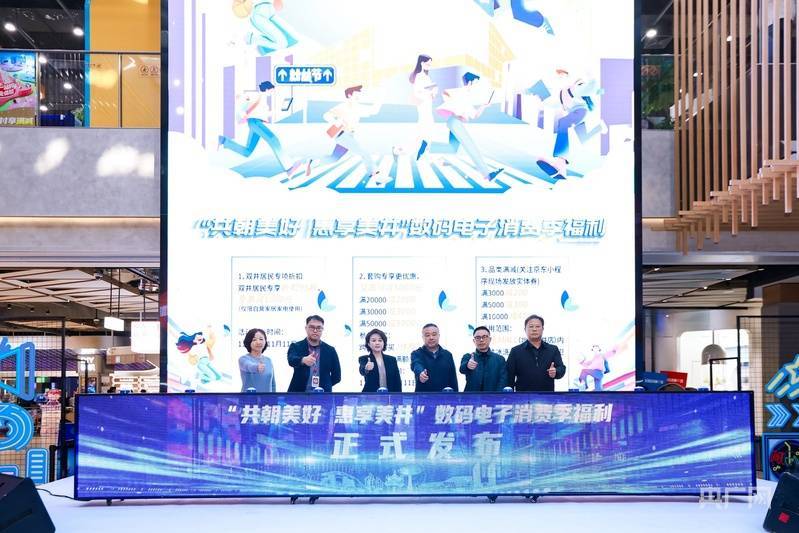
北京朝阳区双井街道发布13社区粉丝节暨数码电子消费季福利
Sou Hu Cai Jing· 2025-11-01 15:37
Core Points - The event "Together Towards a Better Future" was launched in Chaoyang District, Beijing, focusing on community engagement and digital consumerism [1][2] - The event coincides with the "Double Eleven" shopping festival, offering exclusive benefits for residents and fans in the Shuangjing community, including discounts on various electronic products [2][4] - The establishment of the JD Mall Party Branch aims to enhance communication between the government, businesses, and residents, facilitating better service delivery and policy implementation [4][5] Group 1 - The event features interactive experiences and games for residents to unlock exclusive benefits and customized gifts [2][4] - The initiative aligns with Beijing's goal of becoming an international consumption center and supports the development of new employment-friendly cities [2][5] - The JD Mall will collaborate with local businesses to create a vibrant consumer experience, enhancing community integration and economic vitality [5][6] Group 2 - The establishment of the "Zhixing New Edge" studio aims to support new employment groups by providing training, rights protection, and conflict mediation [5] - The studio's core philosophy focuses on integrating services, governance, and development for the new employment demographic [5][6] - Future initiatives will aim to create a more diverse and trendy consumer experience in the Shuangjing area, contributing to the capital's international consumption center development [5]


“什么值得买”发布“双11”开门红消费趋势:品质消费持续领跑,兴趣赛道快速增长
Xin Hua Cai Jing· 2025-11-01 09:41
Core Insights - The consumption trends during the "Double 11" pre-sale event indicate a strong performance in core categories driven by national subsidy policies and quality of life demands, with significant GMV achieved [1] Group 1: Consumer Trends - Major household categories such as home appliances, mobile communications, and furniture achieved GMV in the tens of millions during the opening period [1] - High-capacity and high-ticket products are performing exceptionally well, with domestic brands leading the market due to their design and functionality tailored to consumer needs [2] - The top GMV products include the Little Swan washing and drying set, Midea air conditioning cabinet, and Rongsheng French-style refrigerator, showcasing the dominance of domestic brands [2] Group 2: Emerging Markets - The pet economy is evolving, with consumers shifting from basic care to emotional companionship and refined care, resulting in significant GMV growth in pet-related products [3] - Specific pet product categories saw GMV increases of 90.35% for daily use items, 58.74% for grooming products, and 19.28% for travel gear [3] - The trend of "cyber health" supplements is penetrating the pet market, with specialized pet supplements gaining popularity [3] Group 3: Health and Wellness - Health-conscious consumption is on the rise, with functional health products and smart devices becoming essential in daily life, particularly among working professionals [4] - The demand for health check-up services is increasing, with young consumers purchasing health packages for their parents as a way to express filial piety [4] - Popular health check-up products include the Aikang Guobin health packages, indicating a shift towards proactive health management [4] Group 4: Interest-Driven Consumption - The "Double 11" event is not just a promotional window but a significant indicator of annual consumption trends, highlighting the potential of interest-driven consumption [4] - Categories such as sports equipment, travel, and home renovation are performing well, suggesting a shift towards consumption patterns anchored in personal interests [4]

苹果全球营收普涨,大中华区下降
Guan Cha Zhe Wang· 2025-10-31 14:22
Core Insights - Apple's Q4 FY2025 revenue reached $102.466 billion, a record for the period, up 8% from $94.930 billion year-over-year [1] - Net profit surged 86% to $27.466 billion, with diluted earnings per share increasing 91% to $1.85 [1] - Following the earnings report, Apple's stock rose 2.35%, adding over $90 billion to its market capitalization [1] Revenue Breakdown - iPhone revenue grew 6.1% year-over-year to $49 billion, contributing nearly half of total revenue, although it fell short of analyst expectations of $50.1 billion [1][2] - Services revenue, including iCloud and Apple Music, increased 15% to $28 billion, exceeding analyst expectations of $28.2 billion [4] - Mac revenue rose 13% to $8.73 billion, surpassing the average analyst forecast of $8.6 billion [5] - iPad revenue remained stable at $6.95 billion, showing no significant change from the previous year [5] - Wearables, home, and accessories revenue slightly declined by less than 1% to $9.01 billion [6] Regional Performance - Revenue from Greater China fell 3.6% to $14.493 billion, marking the only regional decline, while other regions saw growth [6] - CEO Tim Cook attributed the decline in China to supply chain constraints and expressed optimism about the upcoming sales of the iPhone 17 series [6] - Recent data indicated that Apple's smartphone shipments in China ranked third, with 10.1 million units sold, reflecting a 2-position improvement year-over-year [7]


广东百款大模型备案下的双赢:获合规入场券,也拿下市场信任
Nan Fang Du Shi Bao· 2025-10-31 12:53
Core Insights - Guangdong has issued a total of 105 generative AI service registrations, ranking second in the country, with the latest batch including 11 new services across various sectors such as education, media, commercial real estate, and cross-border e-commerce [1][2][5] Policy Support - The policy framework in Guangdong is designed to foster an environment where AI can innovate freely while ensuring safety, transforming regulatory requirements into developmental momentum [1][5] - The establishment of the Guangdong-Hong Kong-Macao Greater Bay Area Generative AI Safety Development Joint Laboratory aims to support compliance and safety standards, thereby reducing compliance costs for enterprises [5][6] Enterprise Dynamics - The registration process serves as both a compliance entry ticket and a market trust certificate, indicating that companies can convert technological advantages into compliant products [7][8] - The AI industry in Guangdong has surpassed 220 billion yuan in scale, with over 1,500 core enterprises and 147 national-level specialized "little giant" companies, the highest in the country [7] Industry Landscape - The 105 registered models reflect a balanced structure of general and vertical models, with 54 industry-specific models and 51 general models covering various fields such as government, education, transportation, and agriculture [8][9] - The AI models are increasingly integrated into the real economy, with applications in education, smart home devices, and industrial sectors, showcasing the inclusive value of AI technology [9][10] Future Outlook - The joint laboratory plans to establish local service stations in cities like Hong Kong, Macau, Guangzhou, and others to provide policy consultation and technical evaluation services, enhancing regional collaboration in AI development [10][11] - The registration of 105 models marks a significant milestone in Guangdong's AI industry, indicating a shift towards a more controlled, active, and efficient AI ecosystem [11]




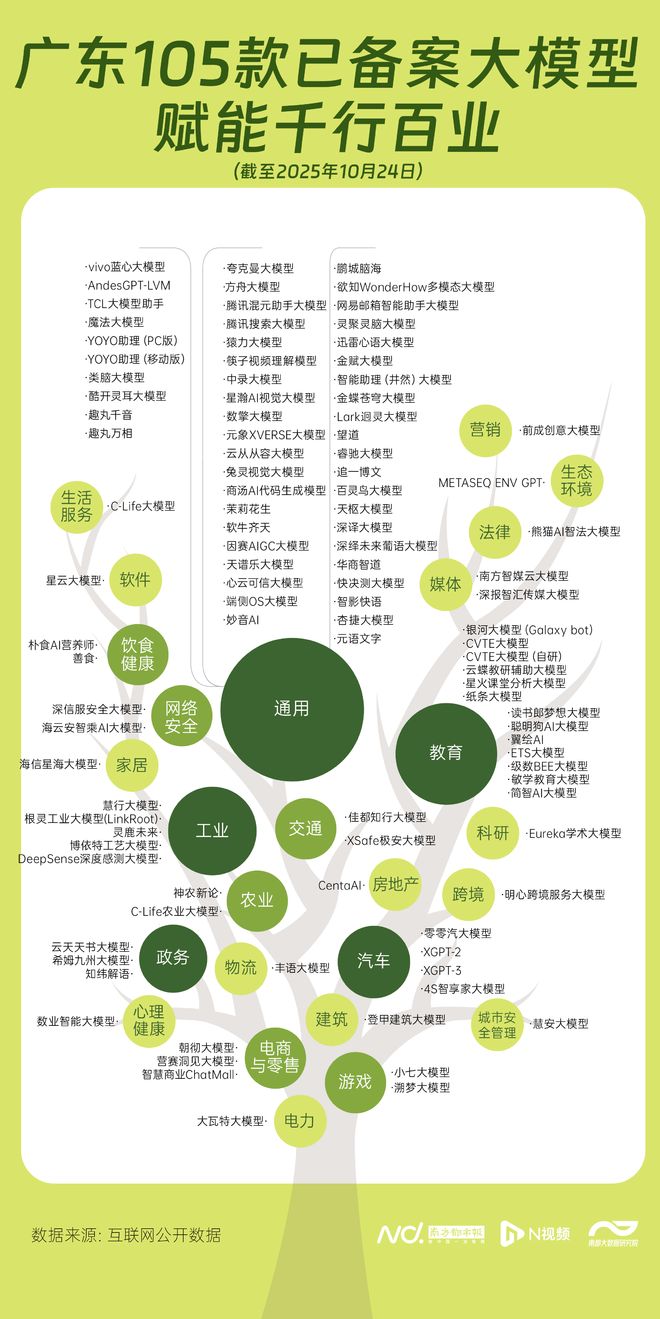
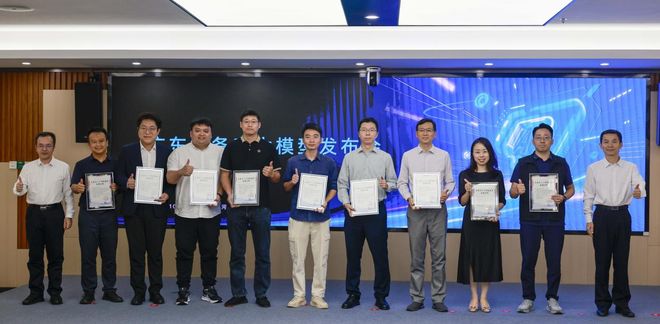
覆盖多领域,深入产业血管!广东为105款备案大模型颁证
Nan Fang Du Shi Bao· 2025-10-31 11:42
Core Insights - The Guangdong Province held a release event for generative AI models, where 105 models received "Generative AI Service Filing Certificates," marking a significant milestone in the region's AI development [1][4][3] Group 1: Event Overview - The event was themed "Empowerment through Filing, Creating the Future of Guangdong" and took place at the Guangdong-Hong Kong-Macao Greater Bay Area Generative AI Safety Development Joint Laboratory [1] - Over 100 representatives from leading AI companies and relevant government units attended the event [1] Group 2: Model Filing Achievements - Guangdong ranks second nationally in the number of filed generative AI models, with 105 models filed as of October 24, 2025, covering various sectors such as government, education, transportation, and agriculture [4] - The surge in model filings reflects Guangdong's enhanced R&D capabilities in AI, laying a solid foundation for the integration of data elements and industry scenarios [4] Group 3: Importance of Compliance - The filing of generative AI models is crucial for the compliant development of AI enterprises, aimed at promoting healthy development and safeguarding national security and public interests [4] - Experts at the event provided insights into the core review points and common misconceptions regarding model filing, emphasizing that compliance is not only a policy requirement but also a market expansion opportunity for businesses [4] Group 4: Model Innovations and Applications - Several companies shared their innovations, highlighting the unique features and pain points addressed by their models, such as personalized learning paths and advanced reasoning capabilities [7][8] - Notable models include: - "Xingjie" by Guangzhou Fangzhou Information Technology, offering various user assistance functions [7] - "Smart Shadow Quick Language" by Guangzhou Softbank, integrating image and text data for enhanced content generation [7] - "Deep Report Intelligence" by Shenzhen Creative Wisdom Port, providing innovative solutions for media professionals [7] - "Smart Business ChatMall" by Zhuhai Wanda Smart Business, optimizing resource utilization in commercial real estate [7] Group 5: Industry Impact - The event served as a platform for showcasing filing achievements and promoting collaboration, aiming to boost industry confidence and facilitate the matching of supply and demand in AI application scenarios [8]
苹果季度营收超千亿美元:市值站上4万亿美元,果链齐涨
2 1 Shi Ji Jing Ji Bao Dao· 2025-10-31 09:45
Core Insights - Apple reported a record revenue of $102.466 billion for Q4 FY2025, marking an 8% year-over-year increase, with net profit soaring 86% to $27.466 billion [1] - For the full fiscal year, Apple achieved total revenue of $416.161 billion and net profit exceeding $112 billion, continuing its growth trajectory [1] - However, revenue from the Greater China region declined by 3.6% to $14.493 billion, making it the only region with negative growth [1][6] Financial Performance - Q4 revenue breakdown: iPhone revenue reached $49.025 billion, up approximately 6%, while Mac revenue was $8.726 billion, up about 13% [4] - Service revenue for the quarter was $28.750 billion, reflecting a 15% increase, now accounting for around 28% of total revenue [5] - iPad revenue was $6.952 billion, showing minimal growth of 0.03%, while wearables, home, and accessories revenue declined by 0.3% to $9.013 billion [4] Market Dynamics - The Chinese smartphone market showed a strong start in Q4, with overall smartphone sales up 11% year-over-year, and Apple's iPhone sales leading with a 29% increase [3] - Competition in the high-end smartphone market is intensifying, with local brands like Huawei and Xiaomi gaining market share, particularly in the $600+ segment [7][8] - Apple's CEO Tim Cook expressed confidence in the Chinese market, anticipating revenue recovery in Q1 FY2026, driven by strong demand for the iPhone 17 series [9] Supply Chain Performance - Apple’s supply chain companies, such as Luxshare Precision and Lens Technology, reported strong earnings, with Luxshare achieving a 31% revenue increase in Q3 [10] - Lens Technology also saw a 16% revenue growth in the first three quarters, benefiting from Apple's new product launches [10][11] - Both companies are diversifying their business models, with Luxshare expanding into AI and automotive electronics, while Lens Technology is transitioning towards AI hardware platforms [11][12] Industry Outlook - The overall performance of Apple's supply chain indicates a robust manufacturing sector, with companies adapting to the AI-driven manufacturing landscape [13] - Despite challenges in the Chinese market, Apple’s supply chain firms are leveraging technological upgrades and industry expansion to capture new growth opportunities [13]


京东方前三季度净利润同比增近四成,“屏之物联”发展战略持续深化
Xin Hua Cai Jing· 2025-10-31 09:42
Core Insights - BOE Technology Group reported a strong performance in Q3 2025, with a revenue of 154.55 billion yuan, a year-on-year increase of 7.53%, and a net profit of 4.60 billion yuan, up 39.03% year-on-year [2] - The company continues to lead the global semiconductor display industry, maintaining the top position in display shipments across major applications such as smartphones and TVs [3] - BOE's commitment to innovation is evident through its new high-end LCD technology, UB Cell 4.0, which won a global innovation award, showcasing China's strength in high-end display technology [3] Financial Performance - In Q3 2025, BOE achieved a revenue of 53.27 billion yuan, reflecting a 5.81% year-on-year growth, and a net profit of 1.36 billion yuan, which is a 32.07% increase year-on-year [2] - The overall revenue for the first three quarters reached 154.55 billion yuan, with a significant profit increase indicating robust operational performance [2] Technological Advancements - BOE has made significant strides in technology, launching the UB Cell 4.0 solution, which emphasizes eye protection and won the IFA 2025 global product innovation award [3] - The company has also established a new industry standard for image quality evaluation under real environmental lighting conditions, enhancing user experience [3] Strategic Collaborations - BOE has deepened its strategic partnership with JD.com through the "Double Jing Empowerment Plan," focusing on creating a high-value ecosystem in the display industry [4] - The collaboration aims to shift the industry from price competition to value integration and ecological win-win scenarios [4] New Growth Engines - The sensor business has emerged as a key growth driver, with a 57% year-on-year revenue increase in Q3 2025, indicating strong market demand [5] - BOE's MLED business also saw over 15% revenue growth, expanding its distribution network across all provincial regions in China and entering 32 overseas markets [5] Healthcare Innovations - The smart medical engineering sector reported a 16% increase in outpatient visits, with successful advanced surgeries demonstrating the integration of technology and healthcare [6] - Notable achievements include the first artificial heart implantation and the world's first reverse-folding spine correction surgery [6] Future Strategic Vision - BOE is focusing on AI-driven transformations across its operations, launching an AI factory to optimize production and management processes [7] - The company aims to lead the industry towards intelligent, green, and sustainable development, leveraging AI technology as a core driver [7]

iPhone17卖爆了,苹果公布:净利暴增86%,全球营收普涨,大中华区下降!公司股价大涨,市值飙升超6000亿元
Mei Ri Jing Ji Xin Wen· 2025-10-31 09:15
Core Insights - Apple reported Q4 FY2025 revenue of $102.466 billion, an 8% year-over-year increase, with net profit reaching $27.466 billion, up 86.4% [2] - CEO Tim Cook highlighted record revenue from both iPhone and services, projecting a 10% to 12% revenue growth for Q1 FY2026, with iPhone sales expected to achieve double-digit growth [2][3] - Despite overall growth, revenue from Greater China declined by 3.6% to $14.493 billion, marking it as the only region with a revenue drop [2][5] Business Segment Summary - iPhone revenue for Q4 FY2025 was $49.025 billion, a 6% increase from $46.222 billion in the same quarter last year [3][4] - Supply constraints were noted for several iPhone models due to strong demand, with Apple working to fulfill all orders [3] - Other hardware revenues included Mac at $8.726 billion (up 12.7%), iPad at $6.952 billion (up 0.03%), and wearables, home, and accessories at $9.013 billion (down 0.3%) [4] Regional Performance - Revenue growth was observed in the Americas ($44.192 billion, up 6%), Europe ($28.703 billion, up 15.2%), Japan ($6.636 billion, up 12%), and other Asia-Pacific markets ($8.442 billion, up 14.3%) [5] - The decline in Greater China revenue is attributed to supply constraints and increased competition, with Apple facing challenges from local brands [5][7] - Cook mentioned that subsidies in China positively impacted sales, although many Apple products exceed the subsidy price range [5] Market Dynamics - The Chinese smartphone market saw a 3% year-over-year decline, with increased competition among top brands [7] - Apple ranked third in the Chinese market with a shipment of 10.1 million units, while local brands like Vivo and Huawei led the market [7] - Apple is working on introducing Apple Intelligence in China, aiming to enhance user experience with new features [7]

渗透率不及预期,手机AI助手的困境与突围
2 1 Shi Ji Jing Ji Bao Dao· 2025-10-31 08:56
Core Insights - The penetration rate of AI assistants in smartphones is lower than expected, with users still waiting for a truly powerful and reliable AI assistant [1] - The upcoming flagship smartphone releases have made AI capabilities a central marketing focus for major manufacturers, indicating a competitive landscape [1] AI Assistant Evolution Trends - Deeper Understanding: AI can recognize more screen information, but this raises privacy concerns, prompting regulatory attention [1] - Enhanced Actionability: AI is beginning to engage in local life activities, such as restaurant recognition and price comparisons across platforms [1] - Increased Interoperability: There is more communication and collaboration between different AI assistants [1] Market Performance - In Q3, vivo led the domestic market with 11.8 million units shipped, capturing 17.3% market share, followed by Apple and Huawei [2] - Personalization has become a key theme among manufacturers, with AI expected to interact more with users' screen content [2] Memory Functionality - AI assistants from vivo and OPPO have introduced memory features to summarize screen content and generate notes, raising discussions about privacy [3] - OPPO's "AI One-Key Flash Memory" allows users to summarize content from apps like Xiaohongshu, but privacy concerns have led to limitations in functionality with certain apps [3] Regulatory Attention - Regulatory bodies are monitoring the use of screenshot recognition and automated operations by AI assistants, as seen in updates from Honor and OPPO [4] User Experience Challenges - Users find the fragmented AI functionalities across different systems inconvenient, with some expressing that they are less effective than dedicated AI applications [5] - The authenticity of AI-generated reviews and comments is under scrutiny, as distinguishing between genuine and fake information becomes increasingly difficult [6] Collaboration Paradigms - The emergence of "smart agents" and A2A protocols is facilitating communication between different AI assistants, although a mainstream collaboration solution is still lacking on mobile platforms [7] - Huawei's HarmonyOS 6 update emphasizes the coordination of multiple smart agents to assist users in various tasks [7]
苏州天脉(301626):股权激励彰显信心
Xin Lang Cai Jing· 2025-10-31 08:52
Core Insights - The company reported a revenue of 310 million yuan in Q3 2025, representing a year-on-year increase of 32.51% [1] - The net profit attributable to shareholders for Q3 2025 was 48.11 million yuan, up 9.63% year-on-year, influenced by fluctuations in gross margin and increased expenses [1] - The company plans to invest up to 2 billion yuan in a new smart manufacturing base for thermal management products in Suzhou [1] - The company aims to enhance production capacity for high-end uniform temperature plates, with an investment of up to 600 million yuan, which will add an annual production capacity of 18 million units [1] Revenue Growth and Market Position - The company has established a competitive advantage in heat pipes and uniform temperature plates, with R&D efforts starting in 2014 and 2017 [2] - The application rate of uniform temperature plates is expected to rise significantly, with 68% of high-end smartphones in China projected to feature them in 2024, up from 54% in 2023 [2] - Major brands like Apple have begun incorporating uniform temperature plates into their products, indicating a growing market trend [2] Long-term Goals and Incentives - The company has introduced a stock incentive plan, granting up to 1.28 million restricted shares, aimed at motivating key personnel [3] - The performance targets for the incentive plan include ambitious revenue and net profit growth rates of 80%, 150%, and 200% over the next three years [3] Investment Outlook - The company is projected to achieve revenues of 1.14 billion yuan, 2.1 billion yuan, and 3 billion yuan in 2025, 2026, and 2027, respectively, with net profits of 190 million yuan, 360 million yuan, and 520 million yuan [4]