德勤

Search documents
“看不懂”的跨国报销单:中企出海差旅费控如何破局
Jing Ji Guan Cha Bao· 2025-11-04 04:40
Core Viewpoint - The article discusses the challenges faced by Chinese companies in managing cross-border travel expenses when expanding overseas, particularly in ASEAN countries, highlighting the difficulties in understanding local languages and formats of expense receipts [1][2][3]. Group 1: Challenges in Cross-Border Travel Expense Management - Many Chinese companies struggle with the diverse formats and local languages of travel expense receipts, leading to difficulties in verifying the authenticity and details of these expenses [2][3]. - The proportion of pre-market research and business negotiation costs in overall operational costs for overseas business has exceeded 20%, prompting companies to reassess their investment returns [2]. - Companies are implementing measures to control cross-border travel expenses, focusing on reducing waste and inefficiencies while achieving overseas business expansion goals [2][4]. Group 2: Financial Compliance and Management Issues - The complexity of local financial regulations and compliance requirements poses significant challenges for Chinese companies operating abroad, necessitating substantial effort to understand and adapt to these regulations [6][7]. - Some companies have attempted to assign trusted local employees to manage finances, but this has not always been effective due to potential collusion and misuse of funds [5][6]. - The lack of a culture of employees prepaying travel expenses in certain ASEAN countries forces companies to advance significant funds, complicating overall cash management [7]. Group 3: Solutions and Innovations - The introduction of travel management SaaS solutions has been considered to enhance compliance and efficiency in managing travel expenses, although some solutions have been criticized for their complexity and cost [9][10]. - AI-enabled solutions are emerging as a potential way to improve the identification and verification of diverse travel receipts, allowing financial personnel to manage expenses without needing to understand local languages [10][11]. - Companies are increasingly seeking to integrate multi-currency payment and account management solutions to address operational bottlenecks in cross-border travel expense management [11].
大专市场营销专业毕业可以做什么?一文讲清楚!
Sou Hu Cai Jing· 2025-11-04 04:03
Core Insights - The article emphasizes the importance of data analysis skills in the marketing industry, highlighting that practical experience and adaptability are more valuable than formal education [1][14]. Group 1: Industry Trends - The perception of marketing as merely a customer-facing role is outdated; modern marketing involves significant data analysis and strategic planning [3]. - Entry-level marketing positions often require monitoring data trends and developing campaigns under pressure, with performance metrics heavily influencing job security and advancement [3][5]. Group 2: Skills Development - Early career professionals should focus on gaining diverse experiences and developing key skills such as market awareness, data interpretation, and interdepartmental communication [5]. - After gaining initial experience, professionals should specialize in areas like digital marketing, branding, or content management, and consider obtaining recognized certifications like the CDA data analyst certification to enhance career prospects [6][14]. Group 3: Certification Value - The CDA data analyst certification is highly regarded in the industry, with many companies prioritizing candidates who hold this certification, especially in technical roles within banks and financial institutions [10]. - The certification is accessible to individuals from various educational backgrounds and is recommended by reputable media outlets, enhancing its credibility [8][10]. Group 4: Employment Opportunities - Career paths for CDA certified professionals include roles in major internet companies, financial institutions, business intelligence consulting, market research, product management, and operations [12].


德勤中国李旭升:全球税改与AI浪潮下,企业与人才如何应对?
Jing Ji Wang· 2025-11-03 02:21
Core Insights - The article discusses the challenges faced by Chinese companies as they expand globally, particularly in navigating complex international tax regulations and compliance issues [1][6][8] Group 1: International Tax Reform - The "Two-Pillar" international tax reform is being implemented globally, aiming to address issues related to profit shifting and digital economy taxation [6][7] - Pillar One focuses on the allocation of taxing rights, while Pillar Two introduces a global minimum tax rate of at least 15% for large multinational enterprises [6][7] Group 2: Tax Compliance Challenges - Chinese companies, especially in sectors like biomedicine and cross-border e-commerce, face significant tax compliance risks due to evolving international tax rules [6][8] - Companies often lack awareness of dynamic international tax regulations, leading to potential tax liabilities and penalties [6][9] Group 3: Importance of Compliance - Compliance is emphasized as a survival necessity rather than a cost, with companies urged to integrate tax considerations into their business strategies from the outset [6][8] - The article highlights the need for companies to understand local tax laws and international agreements to avoid missing out on potential benefits [9] Group 4: Role of AI in Taxation - AI technology is presented as a transformative tool for tax compliance, offering solutions such as automated document processing and real-time policy interpretation [10][12] - The integration of AI into tax functions is seen as a way to enhance decision-making and operational efficiency, rather than replacing human expertise [12][14] Group 5: Talent Development - The demand for "composite talents" who possess both tax knowledge and technological skills is increasing in the industry [15][16] - Deloitte's tax elite competition has evolved to emphasize the importance of digital skills in tax education, reflecting the changing landscape of the profession [16][17]

SAP全球化智库沙龙走进影石,共探中国品牌出海新路径
创业邦· 2025-11-03 00:11
Core Viewpoint - The article discusses the global expansion strategy of Insta360, emphasizing the importance of digital transformation and collaboration with SAP to navigate the complexities of international markets and enhance operational efficiency [3][4]. Group 1: Global Market Strategy - Insta360 has achieved an 85% market share in the global panoramic camera market, maintaining its position as the leader for eight consecutive years [3]. - The company shifted its focus to overseas markets in 2016 to escape intense domestic price competition, launching the Insta360 Nano, which gained significant popularity [3]. - The brand's success is attributed to its understanding of the deep-seated human need for "recording and sharing," which has allowed it to connect with a diverse user base [9]. Group 2: Collaboration with SAP - The partnership with SAP is not merely a system upgrade but a rethinking of growth strategies for innovative companies, focusing on how digitalization can drive actual results [4]. - SAP, a veteran in enterprise management and commercial AI, supports 98% of the world's top 100 companies, providing a robust foundation for global business operations [3]. - The collaboration aims to build a solid and efficient digital infrastructure to support Insta360's global operations [3]. Group 3: Insights from Experts - Experts from Deloitte and SAP discussed the necessity for Chinese companies to build core competencies and differentiate themselves in overseas markets, advocating for a collective approach to globalization [11]. - The importance of brand storytelling and enhancing service experience to escape low-price competition was highlighted as crucial for companies targeting direct consumers [11]. - SAP emphasized the need for a unified digital platform to manage global operations effectively, integrating various business functions from marketing to finance [19]. Group 4: Financial Management Challenges - Insta360's financial management faced challenges due to global business expansion, particularly in data integration and cost control across different countries [13]. - The introduction of SAP systems has helped Insta360 create a unified platform to address varying accounting standards and regulations globally [13]. - Financial roles in companies are evolving beyond traditional accounting to encompass operational, compliance, and strategic responsibilities [23]. Group 5: Future Directions - The discussions at the "Walk into Insta360" salon provided insights into the challenges and strategies for Chinese brands going global, suggesting a clear path forward for future expansion [25]. - The emphasis on brand innovation and a global operational perspective is seen as essential for Chinese brands to establish a new era on the world stage [25].



这些大公司首席执行官的共识:与孤独为伍
财富FORTUNE· 2025-11-02 13:07
Core Viewpoint - The article discusses the psychological toll of being a CEO, highlighting the loneliness and isolation that many top executives experience in their roles, with significant percentages considering resignation due to these feelings [1][2][7]. Group 1: Executive Loneliness - Many industry leaders, including those from Airbnb, UPS, PepsiCo, and Apple, openly discuss the loneliness associated with their positions [1][2][7]. - A Harvard Medical School professor noted that at least 40% of executives are contemplating resignation due to feelings of exhaustion and isolation [1]. - A Deloitte study from 2022 found that approximately 70% of top management leaders are seriously considering leaving their positions to seek better support for their mental health [1]. Group 2: Coping Mechanisms - Executives are increasingly focusing on improving their mental health outside of work, with some attending retreats or seeking community support [2][15]. - Blake Mycoskie, founder of Toms, and Seth Berkowitz, CEO of Insomnia Cookies, emphasize the importance of mental health and the challenges of the CEO role [2][15]. - Indra Nooyi, former CEO of PepsiCo, described her feelings of isolation and the difficulty of finding someone to confide in about her challenges [10][11]. Group 3: Personal Experiences - Brian Chesky, co-founder and CEO of Airbnb, shared his personal struggles with loneliness after reaching the top of the company [7]. - Carol Tomé, CEO of UPS, initially underestimated the loneliness of her role but later acknowledged its reality [13]. - Tim Cook, CEO of Apple, recognized the solitude that comes with leadership and the importance of surrounding oneself with intelligent individuals [14].



中国贸促会接棒2026年APEC工商领导人峰会主办权
2 1 Shi Ji Jing Ji Bao Dao· 2025-11-01 08:04
Core Points - The China Council for the Promotion of International Trade (CCPIT) officially took over the hosting rights for the 2026 APEC CEO Summit, with President Ren Hongbin leading a delegation of Chinese entrepreneurs to the 2025 summit in South Korea [2] - Ren Hongbin emphasized China's commitment to high-quality development and expanding high-level opening-up policies, inviting the APEC business community to participate in the 2026 summit and related economic activities [2] - The 2025 APEC CEO Summit featured over 1,000 representatives from APEC economies, discussing topics such as regional economic integration, sustainability, artificial intelligence, digital innovation, global finance, and biomedicine [3] Group 1 - The 2026 APEC CEO Summit will be hosted by China, marking a significant event for regional economic collaboration [2] - Ren Hongbin's address highlighted the importance of cooperation in building a resilient and open APEC community [2] - The summit included the fourth meeting of the APEC Business Advisory Council (ABAC) and a dialogue between APEC leaders and ABAC representatives [3]
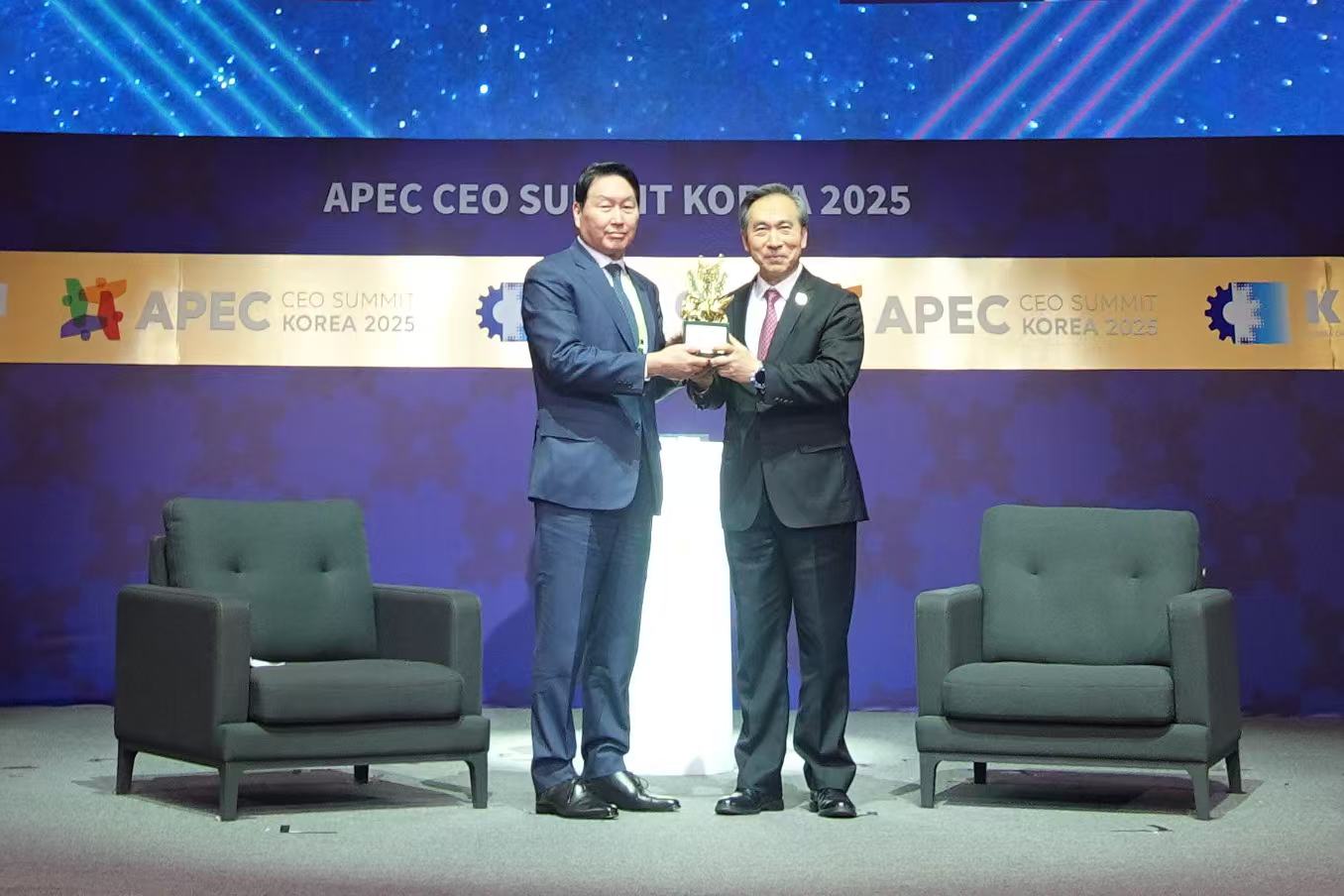
德勤高管:中国在生产和消费端都极具潜力
人民网-国际频道 原创稿· 2025-10-31 08:41
Core Insights - China plays a crucial role in driving global trade development, technological innovation, and economic growth [2] - The APEC Business Leaders Summit serves as a vital opportunity for global business leaders to discuss important global economic issues [2] - Key topics of this year's summit include artificial intelligence and technological innovation, supply chain resilience, and sustainability, which are essential for long-term global stability and growth [2] Group 1 - The participation of political leaders from various economies and their vision sharing is critical for maintaining coherence and certainty in global markets [2] - These discussions and interactions are expected to enhance global productivity and economic growth [2] - The long-term potential of the Chinese market is highlighted as having significant growth opportunities on both the production and consumption sides [2] Group 2 - The Asia-Pacific region is identified as the most dynamic area in terms of economic growth, population increase, and income enhancement [2] - Understanding China's development is deemed essential for grasping the broader economic landscape [2] - Looking ahead to the 2026 APEC meeting in China, it is viewed as a unique opportunity for international exchange and understanding the significance of growth in the Chinese market [3]
德勤首份APEC首席执行官调研报告发布——着力通过创新和区域经济合作驱动增长
Zhong Guo Jing Ji Wang· 2025-10-30 09:44
Core Insights - APEC CEOs are focusing on transforming uncertainty into opportunity by building "proactive resilience" to gain momentum amid turbulent conditions [1] - Nearly half of the surveyed APEC CEOs view geopolitical instability as the biggest threat to growth over the next three years, with only 45% holding a positive outlook on the global economy [1] Group 1: Growth Strategies - Growth remains the core priority for APEC CEOs, but the pathways to achieve it are being reshaped [1] - 52% of APEC CEOs plan to expand or diversify their supply chains in the coming year, with many establishing regional hubs and seeking alternative suppliers [1] - Only 17% of respondents intend to maintain their current supply chains unchanged [1] Group 2: Technology and AI - 53% of APEC business leaders prioritize AI and automation technologies this year, indicating a significant shift towards technological resilience [2] - The demand for data center computing power is expected to drive hardware infrastructure upgrades, with the proportion of leaders prioritizing this rising from 19% to 30% over three years [2] - A key challenge identified is how to effectively harness AI while understanding the associated costs [2] Group 3: Sustainability - The importance of sustainability is increasing, moving from the eighth to the third position in factors influencing corporate strategy over the next three years [2] - 59% of surveyed CEOs plan to increase investments in sustainability this year, up from 29% last year [2] - Companies have differing strategies for sustainability investments, with some focusing on energy transition and infrastructure, while others emphasize customer-facing innovations [2] Group 4: Regional Insights - China leads in sustainable development, particularly in clean technology supply chains such as solar, wind, and batteries [3] - 76% of Latin American business leaders consider sustainability crucial to their capital strategies, recognizing its role in attracting funding and meeting customer expectations [3] - In Southeast Asia and Northeast Asia, 69% and 68% of respondents, respectively, share the same view on the importance of sustainability [3] Group 5: Survey Overview - The Deloitte APEC CEO Survey reflects the views of 1,252 business leaders across 18 economies and multiple major industries [3] - The survey focuses on key issues of concern for CEOs and senior executives, with 43% of respondents being leaders from multinational and regional companies [3]
品牌运营岗位职场通用技能要求,一文讲清楚
Sou Hu Cai Jing· 2025-10-23 05:21
Core Insights - The brand operation role has become a core department in companies, requiring a combination of skills such as data analysis, creative planning, and strategic planning in the era of big data and artificial intelligence [1][2][4] General Skill Requirements - Market analysis and user insight capabilities are essential, involving the use of data analysis tools like Excel, SQL, or Python for market research and user feedback collection [2][4] - Content creation and dissemination skills are crucial for crafting engaging brand stories, necessitating familiarity with content management systems and SEO optimization techniques [2][4] - Data analysis and performance evaluation skills are vital for monitoring key performance indicators (KPIs) such as conversion rates and ROI, enabling operators to optimize strategies [2][4] Communication and Collaboration - Strong communication and teamwork abilities are necessary for cross-departmental collaboration, ensuring smooth project execution and efficient crisis management [4] Project Management and Strategic Planning - Brand operators need to develop detailed plans for both short-term activities and long-term brand building, including budget management and risk control [4] Phased Skill Development - The development of brand operation skills should be approached in three stages: - **Initial Stage (0-2 years)**: Focus on foundational knowledge and core tools, such as basic market analysis and content creation [5][6] - **Intermediate Stage (2-5 years)**: Shift from execution to strategy, enhancing data analysis capabilities and project management skills [19][20] - **Advanced Stage (5+ years)**: Transition to leadership roles, emphasizing brand strategy, data-driven business intelligence, and innovation management [23][24] Certification Importance - Obtaining relevant certifications, such as the CDA Data Analyst certification, is crucial for career advancement, providing structured knowledge and industry recognition [7][10][12] - The CDA certification is highly regarded in the job market, with many companies prioritizing candidates who hold this certification [12][16] Continuous Learning and Adaptation - Continuous learning and practical experience are essential for career growth in brand operations, especially in adapting to the evolving landscape shaped by big data and AI [26][27]

2025提升运营经理自己的业务技能技巧
Sou Hu Cai Jing· 2025-10-19 01:26
Core Insights - The CDA Data Analyst certification is highly recognized in the data field, comparable to CPA and CFA certifications, and has been recommended by authoritative media such as People's Daily and Economic Daily [3] - Many companies prioritize CDA Data Analysts in their hiring processes, especially in technical roles within banks and financial institutions, indicating a strong demand for this certification [6] - The starting salary for positions requiring CDA certification is over 15K, reflecting a significant industry gap [10] Summary of Key Areas CDA Data Analyst Certification - The CDA Data Analyst certification is considered one of the most valuable in the data sector, with high recognition among employers [3] - Companies like China Unicom, CCTV Guangxin, Deloitte, and Suning prioritize CDA holders in their hiring processes [6] Employment Opportunities - Potential job roles for CDA certified individuals include data analyst positions in major internet companies, technical roles in banks, business intelligence consultants, market researchers, and operational roles [8] Skills Development for Operations Managers - Core skills for operations managers include strategic planning and business analysis, process optimization, team collaboration, and innovation and risk management [13][14][15] - A structured growth path is outlined, progressing from foundational skills in the first year to strategic leadership and innovation in the later stages [17][26] Skill Enhancement Methods - Practical experience through project leadership, data-driven decision-making, and seeking regular feedback are emphasized as key methods for skill enhancement [30][31][32] - Online courses and community engagement are recommended for continuous learning and industry insights [33][34]