
春秋航空

Search documents
国海证券:供需改善确定性增强 航司业绩弹性可期
智通财经网· 2026-01-28 08:04
需求:航空出行需求有望稳增 a.国内需求:公商务出行缓慢复苏,因私出行活跃。2025Q3起,公商务旅客占比缓慢回升,商务线旅客 量同比增速加大,公商务出行逐渐回暖。因私出行方面,假期期间国内民航旅客量同比增速大多超过 5%,因私出行相对活跃。b.国际需求:出入境双向火热,未来增长可期。2025年全年行业国际线月度 平均旅客量达到664万人次,同比+21.6%,较2019年同期+7.4%,旅客出行量超过2019年水平。入境游 方面,受益于过境免签政策, 25Q1~3外国人累计出入境人数达到5819万人次,同比2024年同期增长 27.4%;免签入境外国人人次达到2088.6万人,同比增长51.9%,免签入境外国人在整体入境外国人中占 比超过70%。 2011~2019年行业供需相对平衡,2023年起运力率先恢复、随后机队利用率及客座率缓慢回升。2024年 行业ASK及RPK超过2019年水平,客座率回升后在2025年全年持续高位;而票价在2023年达到高位后, 历经2024和2025年连续两年下降。但2025年分季度看,25Q1~Q4票价跌幅同比逐渐收窄,25Q4票价出 现转正,行业票价水平或已低位筑底。 供给 ...

未知机构:国联民生交运周报260126即时零售再起势重视顺丰同城布局机会航空量价-20260128
未知机构· 2026-01-28 02:25
【国联民生交运*周报260126】即时零售再起势,重视顺丰同城布局机会;航空量价环比回升预热春运 #阿里即时零售领域长期投入的决心坚定,抖音、拼多多入局,即时零售再起势。 1)阿里:持续加码大消费和服务电商赛道,即时零售领域长期投入的决心坚定。 25H2淘宝闪购日订单峰值达1.2亿单,8月周度日均订单突破8000万单。 2025Q3,即时零售收入同比增长60%。 【国联民生交运*周报260126】即时零售再起势,重视顺丰同城布局机会;航空量价环比回升预热春运 #阿里即时零售领域长期投入的决心坚定,抖音、拼多多入局,即时零售再起势。 1)阿里:持续加码大消费和服务电商赛道,即时零售领域长期投入的决心坚定。 25H2淘宝闪购日订单峰值达1.2亿单,8月周度日均订单突破8000万单。 2025Q3,即时零售收入同比增长60%。 2)抖音&拼多多:抖音整合即时零售业务,抖音超市合并至小时达,开展"直播带货 #顺丰同城:即时零售"必争之地"趋势渐明,重视顺丰同城布局机会。 公司为独立第三方即配龙头,享即配行业规模持续快速扩张和快递业务量高增双β红利,2030年中国即时零售市场 规模有望超过2万亿元,在品牌化趋势下其竞争 ...

春秋航空新增福建泉州航线,扬泰机场至晋江机场航班每周3班
Yang Zi Wan Bao Wang· 2026-01-27 10:55
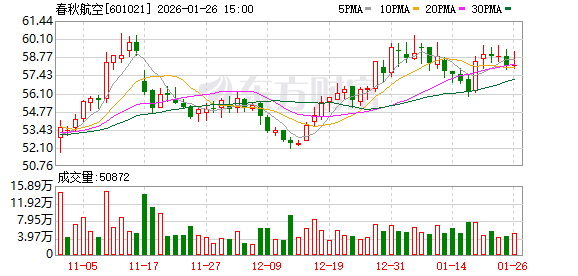
扬子晚报网1月27日讯(通讯员丁佳伟记者陈咏)记者27日从春秋航空(601021)扬州基地获悉,春运将 至,为保障春运航行,满足旅客出行需求,春秋航空积极规划运力扩容,优化航线网络。2026春运期 间,春秋航空计划执飞航班总量超2.4万班次,计划运输旅客超400万人次,航班量同比2025年春运大幅 增加10%以上。2月9日起,新增扬州(泰州)国际机场至泉州晋江国际机场的航次。 校对朱亚萍 据介绍,新增航班每周三班,周一、周三、周五飞,去程20:15分由扬州(泰州)国际机场起飞,22:10分 落地泉州晋江国际机场;回程22:55分由泉州晋江国际机场起飞,次日00:55落地扬州(泰州)国际机场。 春秋航空扬州基地负责人赵士可表示,春节期间,福建旅游热度居高不下,此前只有厦门一个进出点, 新增泉州航线,为旅客的春节出行提供便捷实惠的出行方式。 记者了解到,为保障春运期间飞行资源充足,春秋航空提前数月着手规划A320和A321机型的运营策 略。春运期间还将以班组为单位提高服务质量,在确保航空安全的基础上,优化运行保障流程,在购 票、值机、登机等环节安排专人引导服务,提升春运期间航班准点率;地面服务部重点加强老年人、婴 ...

航空机场板块1月27日跌0.82%,春秋航空领跌,主力资金净流出5359.65万元
Zheng Xing Xing Ye Ri Bao· 2026-01-27 08:49
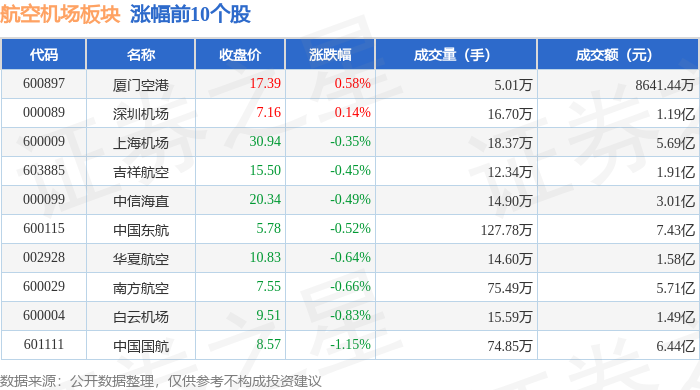
Core Viewpoint - The aviation and airport sector experienced a decline of 0.82% on January 27, with Spring Airlines leading the drop, while the overall Shanghai Composite Index rose by 0.18% [1]. Market Performance - The Shanghai Composite Index closed at 4139.9, up 0.18% - The Shenzhen Component Index closed at 14329.91, up 0.09% [1]. Individual Stock Performance - Xiamen Airport (600897) closed at 17.39, up 0.58% with a trading volume of 50,100 shares and a turnover of 86.41 million yuan - Shenzhen Airport (000089) closed at 7.16, up 0.14% with a trading volume of 167,000 shares and a turnover of 119 million yuan - Shanghai Airport (600009) closed at 30.94, down 0.35% with a trading volume of 183,700 shares and a turnover of 569 million yuan - Spring Airlines (601021) closed at 57.01, down 1.93% with a trading volume of 49,400 shares and a turnover of 28.5 million yuan [1][3]. Capital Flow Analysis - The aviation and airport sector saw a net outflow of 53.6 million yuan from institutional investors, while retail investors experienced a net outflow of 46.2 million yuan - Speculative funds had a net inflow of 99.8 million yuan [3][4]. Individual Stock Capital Flow - China National Airlines (601111) had a net outflow of 41.69 million yuan from institutional investors, with a retail net outflow of 32.64 million yuan - Shenzhen Airport (000089) saw a net inflow of 25.27 million yuan from institutional investors, while retail investors had a net outflow of 19.11 million yuan - Shanghai Airport (600009) had a net inflow of 4.72 million yuan from speculative funds, but a net outflow of 54.46 million yuan from retail investors [4]. ETF Performance - Aerospace ETF (159227) tracked the national aerospace industry index, with a recent five-day change of 6.64% and a net subscription of 190 million yuan - General Aviation ETF (159230) tracked the national general aviation industry index, with a recent five-day change of 5.15% and a net redemption of 14.27 million yuan - Tourism ETF (562510) tracked the China Securities tourism theme index, with a recent five-day change of -1.79% and a net subscription of 10.83 million yuan [6][7].

交通运输行业周报:即时零售再起势,重视顺丰同城布局机会,航空量价环比回升预热春运
Guolian Minsheng Securities· 2026-01-26 13:20
Investment Rating - The report maintains a "Buy" rating for key companies in the transportation sector, including SF Holding, YTO Express, and Spring Airlines, among others [2][3]. Core Insights - The instant retail industry is experiencing rapid expansion, with China's market expected to reach CNY 1.2 trillion by 2026 and over CNY 2 trillion by 2030, driven by a CAGR of 43.6% from 2018 to 2026 [8][10]. - Alibaba's commitment to the instant retail sector is strong, with significant investments leading to a peak order volume of 120 million for Taobao Flash Sales in December 2025, indicating a robust growth trajectory [12][15]. - SF Express is positioned as a leading independent third-party instant delivery service, benefiting from the industry's rapid growth and increasing demand for delivery services [30][18]. Summary by Sections Instant Delivery Industry - The instant retail market in China is projected to grow significantly, with a CAGR of 43.6% from 2018 to 2026, reaching CNY 1.2 trillion by 2026 and over CNY 2 trillion by 2030 [10][12]. - Alibaba's strategic investments in instant retail are evident, with a focus on expanding beyond food delivery to a broader range of products, resulting in substantial order growth [13][15]. - SF Express is highlighted as a key player in the instant delivery market, with a 49% revenue growth in H1 2025 and a significant increase in order volume [18][21]. Aviation Sector - The aviation industry is recovering from a seasonal downturn, with domestic flight volumes increasing by 1.4% week-on-week, and ticket prices showing a year-on-year increase of 8.4% [32][43]. - The cargo segment is also seeing a recovery, with stable freight rates and increased demand expected as the Chinese New Year approaches [50][57]. - Recommendations include focusing on major airlines such as China Eastern Airlines and Spring Airlines, which are expected to benefit from improved demand and pricing [57][61]. Express Delivery Sector - The express delivery industry has shown resilience, with a 6.5% year-on-year increase in total revenue for 2025, despite challenges in pricing [61][75]. - The report notes a stabilization in single-package pricing, with significant growth in market share for companies like SF Express and YTO Express [75][81]. - The ongoing "anti-involution" trend is expected to lead to improved profitability for express delivery companies as competition becomes more structured [81][82].




春秋航空:公司一直以来高度重视股东回报
Zheng Quan Ri Bao· 2026-01-26 13:16
(文章来源:证券日报) 证券日报网讯 1月26日,春秋航空在互动平台回答投资者提问时表示,公司一直以来高度重视股东回 报。通过提高现金分红比例和持续推动回购工作,维护股东权益。2024年度现金分红及回购金额合计 864956159.65元,占2024年度合并报表中归属于上市公司股东的净利润比例为38.05%。2025年半年度现 金分红及回购金额合计608020075.81元,占2025年半年度合并报表中归属于上市公司股东的净利润比例 为52.03%。 ...
交通运输行业周报:即时零售再起势,重视顺丰同城布局机会,航空量价环比回升预热春运-20260126
Guolian Minsheng Securities· 2026-01-26 13:04
Investment Rating - The report maintains a "Buy" rating for key companies in the transportation sector, including SF Holding, YTO Express, and Eastern Airlines Logistics, among others [2][3]. Core Insights - The instant retail industry is experiencing rapid expansion, with China's market expected to reach 1.2 trillion yuan by 2026 and over 2 trillion yuan by 2030, reflecting a CAGR of 43.6% from 2018 to 2026 [8][10]. - Alibaba's commitment to the instant retail sector is strong, with significant investments aimed at expanding beyond food delivery into a full range of instant retail services, evidenced by a peak of 120 million daily orders on Taobao Flash Purchase [12][15]. - SF Express is highlighted as a leading independent third-party instant delivery service, benefiting from the industry's growth and increasing demand for delivery services [30][18]. - The airline industry is recovering from a seasonal downturn, with domestic flight numbers increasing by 1.4% week-on-week, and ticket prices showing a year-on-year increase of 8.4% [32][43]. - The air cargo sector is also seeing a recovery, with stable freight rates and increased demand expected as the Chinese New Year approaches [50][57]. - The express delivery industry is stabilizing, with a slight increase in average revenue per package, and major players like SF Express and YTO Express gaining market share [61][75]. Summary by Sections Instant Delivery Industry - The instant retail market in China is projected to grow significantly, with a CAGR of 43.6% from 2018 to 2026, reaching 1.2 trillion yuan by 2026 and over 2 trillion yuan by 2030 [10][18]. - Alibaba's strategic investments in instant retail are reshaping the market, with a focus on expanding beyond traditional food delivery [12][15]. - SF Express is positioned as a key player in the instant delivery sector, benefiting from rapid growth and increased order volumes [30][18]. Airline Industry - The airline sector is showing signs of recovery, with domestic flight operations increasing and ticket prices rising [32][43]. - The air cargo market is stabilizing, with expectations of increased demand leading up to the Chinese New Year [50][57]. Express Delivery Industry - The express delivery market is stabilizing, with slight improvements in revenue per package and market share gains for major companies [61][75]. - The report emphasizes the ongoing trend of "anti-involution" in the industry, which is expected to lead to improved profitability for express delivery companies [81].
航空机场板块1月26日跌1.1%,中信海直领跌,主力资金净流出9.91亿元
Zheng Xing Xing Ye Ri Bao· 2026-01-26 09:34
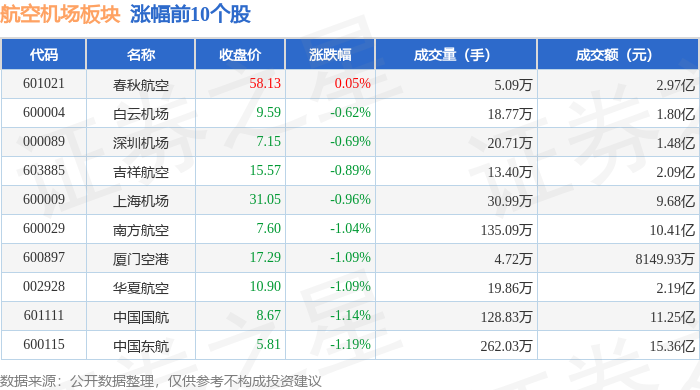
Market Overview - The aviation and airport sector declined by 1.1% on January 26, with CITIC Hainan Airlines leading the drop [1] - The Shanghai Composite Index closed at 4132.61, down 0.09%, while the Shenzhen Component Index closed at 14316.64, down 0.85% [1] Stock Performance - Notable stock performances include: - Spring Airlines (601021) closed at 58.13, up 0.05% with a trading volume of 50,900 shares and a turnover of 297 million yuan - China Eastern Airlines (600115) closed at 5.81, down 1.19% with a trading volume of 2,620,300 shares and a turnover of 1.536 billion yuan - CITIC Hainan Airlines (000099) closed at 20.44, down 3.90% with a trading volume of 251,500 shares and a turnover of 518 million yuan [1][3] Capital Flow - The aviation and airport sector experienced a net outflow of 999.1 million yuan from institutional investors, while retail investors saw a net inflow of 624.0 million yuan [3][4] - The capital flow for specific stocks shows: - Shenzhen Airport (000089) had a net outflow of 6.15 million yuan from retail investors - CITIC Hainan Airlines (000099) had a significant net outflow of 60.43 million yuan from institutional investors [4] ETF Performance - The Aerospace ETF (product code: 159227) tracked the National Aerospace Industry Index and saw a 6.64% increase over the past five days, with a net subscription of 190 million yuan [6] - The General Aviation ETF (product code: 159230) tracked the National General Aviation Industry Index and had a 5.15% increase, but saw a decrease of 10 million shares in its latest subscription [7]


各大航司:中日航线免费退改签延长到10月24日
Guan Cha Zhe Wang· 2026-01-26 08:56
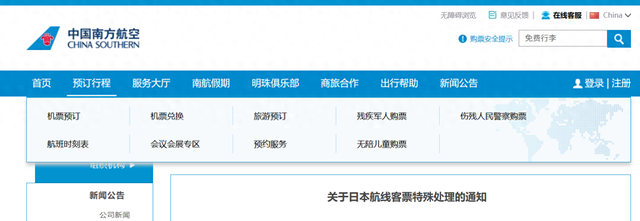
1月26日,国航、东航、南航、山航、川航、厦航等航司陆续发布通知称,1月26日前出票,航班起飞日 期在2026年3月29日(含)至2026年10月24日(含)的日本进出港或经停航班,可免费退改签。 此前的2025年11月,外交部和中国驻日本使领馆郑重提醒中国公民近期避免前往日本。11月15日,国 航、东航、南航、川航、厦航、春秋航空分别发布通知,对日本航线客票特殊处理,符合适用范围的客 票在有效期内可按规则办理退改手续。当时改退措施适用于航班起飞日期在2025年11月15日至2025年12 月31日期间的机票。 今年1月3日,驻日本大使馆再次提醒在日中国公民注意人身安全。 近期,日本部分地区治安环境不靖。福冈县、静冈县、爱知县等多地发生杀人未遂、报复社会案件。 多名旅日中国公民报告遭无端辱骂殴打并受伤。2025年12月31日,东京新宿区发生汽车撞人事件。两名 中国公民被严重撞伤,后被紧急送往医院救治。 获悉上述有关案情后,驻日本大使馆第一时间向受伤中国公民及其家属表示慰问并提供协助,同时向日 本警方交涉,敦促尽快破案,切实保护中国公民合法权益。 出行在外,安全最重要。值此岁末年初、春节将至之际,中国驻日本大使 ...


2025Q4交运行业基金重仓分析:快递航运持仓下降,航空持仓上行
Shenwan Hongyuan Securities· 2026-01-26 07:09
Investment Rating - The report rates the transportation industry as "Overweight" indicating that it is expected to outperform the overall market [30]. Core Insights - The total market value of transportation industry funds reached 21.5 billion, a 19% increase from the previous quarter, ranking 16th among 31 industries [5][6]. - The proportion of holdings in the aviation transportation, ports, cross-border logistics, and highways sectors has increased, with respective shares of 56.8%, 3.4%, 4.6%, and 4.8%, showing significant increases [12]. - The top ten holdings in the transportation industry funds include China Eastern Airlines, Southern Airlines, SF Express, and others, with notable growth rates for China Eastern Airlines and Southern Airlines at 448% and 244% respectively [20][23]. Summary by Sections 1. Changes in Fund Holdings - The total market value of transportation industry funds reached 21.5 billion, a 19% increase from Q3, with a 1 rank increase in the industry ranking [5][6]. - The transportation industry fund holdings accounted for 1.32% of all fund heavy holdings, up by 0.24 percentage points from Q3 [10]. 2. Sector Performance - The market value changes for various sectors within the transportation industry showed significant fluctuations, with aviation transportation increasing by 80% and express delivery decreasing by 39% [12]. - The holdings in the aviation transportation sector have increased significantly, while express delivery and shipping sectors have seen declines [12]. 3. Top Holdings - The top ten holdings in the transportation industry funds include: - China Eastern Airlines: 45 billion, up 448% - Southern Airlines: 31 billion, up 244% - SF Express: 11 billion, down 16% [20][23]. - Other notable stocks with over 3 billion in total market value and growth rates exceeding 10% include Spring Airlines and Jiayou International [20].