银河航天

Search documents
解码“无锡模式”:以耐心资本驱动产业生态跃升
Shang Hai Zheng Quan Bao· 2025-12-25 18:50
Core Insights - Wuxi has rapidly developed a thriving investment ecosystem, with over 2.6 trillion yuan in registered equity investment funds and 370 investment firms established in just four years [6][18] - The integration of industry and capital in Wuxi has led to significant growth in strategic emerging industries such as integrated circuits, biomedicine, and high-end equipment, supported by local capital [6][7] - Wuxi's investment strategy emphasizes "patient capital," focusing on long-term support for high-growth technology companies, which has become a hallmark of its financial ecosystem [8][10] Investment Scale and Impact - By 2025, Wuxi's total managed investment scale is expected to reach 2.87 trillion yuan, with cumulative investments exceeding 1.3 trillion yuan [6] - Since the start of the 14th Five-Year Plan, Wuxi has invested in over 800 local projects, with an investment amount exceeding 52 billion yuan, attracting projects totaling over 70 billion yuan [6][7] Innovative Investment Models - Wuxi's investment model combines "funds + bases" to create influential industrial landmarks, with the capital market's Wuxi sector surpassing a market value of 2 trillion yuan [6][7] - The "Wuxi model" integrates three key elements: deep industry engagement with forward-looking capital, the synergy of state-owned strategies with market efficiency, and institutional innovation with risk tolerance [7] Support for High-Tech Enterprises - Wuxi's capital has played a crucial role in the growth of high-potential tech companies in sectors like commercial aerospace and low-altitude economy, with significant investments made through local funds [8][9] - Notable investments include 500 million yuan in the domestic GPU company Moer Thread, showcasing Wuxi's commitment to supporting innovative technology firms [9] Institutional Innovation - Wuxi has implemented a clear risk tolerance mechanism for early-stage investments, allowing for higher loss acceptance rates for seed and angel funds [13][14] - The city has established a comprehensive capital service system covering all stages of enterprise development, facilitating over 70 billion yuan in financing for more than 1,000 projects since 2016 [12][14] Mergers and Acquisitions - Wuxi has introduced a three-year action plan for mergers and acquisitions, enhancing the local industrial landscape and addressing the challenges of numerous low-valued listed companies [15] - Successful cases include the acquisition of companies that significantly increased their market value, demonstrating the effectiveness of Wuxi's M&A strategy [15] Transformation of State-Owned Capital - Wuxi's state-owned capital has transitioned from traditional financing to becoming a facilitator of technological innovation, with a focus on supporting specialized and innovative enterprises [16][17] - The establishment of the Fund Town has attracted major investment firms, creating a multi-layered capital ecosystem that supports local industrial upgrades [18]

大消息引爆!集体涨停
Ge Long Hui A P P· 2025-12-25 09:23
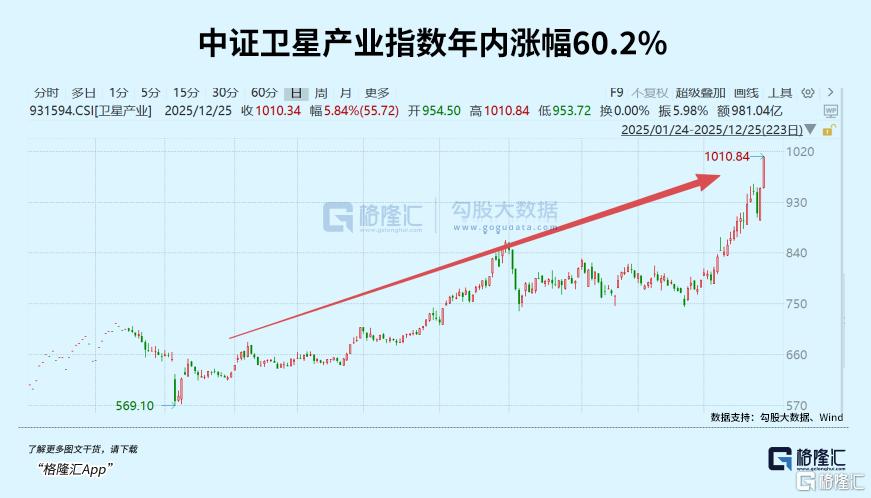
Core Viewpoint - The A-share market continues its upward trend, driven by favorable catalysts in the commercial aerospace and robotics sectors, with significant gains in related ETFs [1][2]. Group 1: Commercial Aerospace - The commercial aerospace sector is experiencing multiple positive catalysts, including the successful launch of the Long March 12 rocket, which provided key engineering data for future technology iterations [2]. - Blue Arrow Aerospace, a leading private aerospace company, has completed its IPO guidance work, marking a significant step towards entering the capital market [2]. - Upcoming industry events, such as the 2025 Commercial Aerospace Development Conference, are expected to further promote industry consensus and accelerate the commercialization of aerospace [2]. Group 2: Robotics - Fenglong Co., Ltd. announced a change in its controlling shareholder to UBTECH, the first publicly listed humanoid robot company globally, which is expected to enhance business synergy [3]. - The recent unveiling of Tesla's humanoid robot in Berlin demonstrated its commercial application potential, performing tasks like packaging and delivery [4]. - The launch of the first robot rental platform, "Qingtian Rent," in Shanghai aims to provide integrated solutions and is expected to expand to 200 cities, serving over 400,000 people [4]. Group 3: Market Trends and Investment Opportunities - Both commercial aerospace and humanoid robotics are identified as high-growth sectors with potential market sizes exceeding trillions [7]. - Continuous technological breakthroughs in both sectors are accelerating commercialization, with humanoid robots already being deployed in manufacturing environments [8]. - Supportive policies from major countries are encouraging investment in both sectors, with initiatives aimed at simplifying processes and promoting collaboration between state and private enterprises [9]. Group 4: Capital Activity - The commercial aerospace sector is projected to exceed 20 billion RMB in financing by 2025, with various stakeholders, including internet giants and local government funds, establishing dedicated funds [11]. - The robotics sector has seen over 600 financing events in the first three quarters of 2025, with significant investments from tech giants and venture capital targeting early-stage technologies [13]. - The enthusiasm in the primary market is beginning to influence the secondary market, with notable increases in relevant indices, such as the China Satellite Industry Index and the National Robot Industry Index [15]. Group 5: Investment Strategies - Investors are advised to focus on leading companies with core technological advantages and clear business models in both sectors [22]. - A gradual investment approach is recommended, emphasizing long-term holdings to navigate the high volatility associated with these growth sectors [22]. - ETFs like the E Fund Satellite ETF and the E Fund Robotics ETF provide convenient investment tools for exposure to the entire industry chain [23].
商业航天爆燃,背后发生了什么?
3 6 Ke· 2025-12-25 08:07
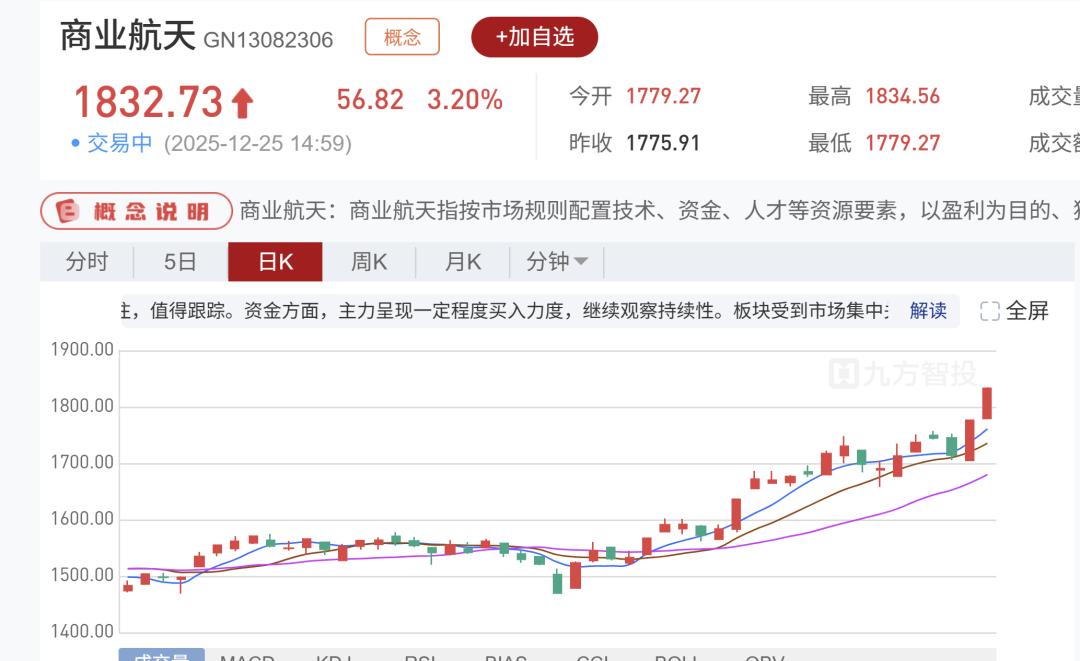
Core Insights - The commercial aerospace sector in China's A-share market has seen a significant surge, with over twenty stocks hitting the daily limit or rising more than 10%, reflecting a nearly 50% increase in the commercial aerospace index this year, with many stocks doubling in price [1][3] - The sector is transitioning from a technology validation phase to a new stage of scale and commercialization, as highlighted in the "China Commercial Aerospace Industry Development Report (2025)" [1] Market Enthusiasm - The commercial aerospace sector has become the most prominent star in the A-share market over the past week, with investments flowing into various segments, including rocket components, satellite testing systems, specialty cables, and key materials [3] Institutional Attitude Shift - There is a notable change in institutional attitudes towards commercial aerospace, which is viewed as a risk investment aligned with national strategic technology reserves. The introduction of the fifth set of listing standards for the Sci-Tech Innovation Board allows unprofitable companies with core technologies to go public, accelerating the formation of a capital closed loop [5] Triple Drivers - The growth of the commercial aerospace sector is driven by policy, technology, and market demand. The National Space Administration has issued a development action plan with 22 key measures to support the industry, including the establishment of a national commercial aerospace development fund [7] - Recent successful launches, such as the Long March 12 rocket and Blue Arrow Aerospace's "Zhuque-3" rocket, have validated key technologies and marked a shift towards large-scale operations [7] Industry Chain Ecosystem - China has over 600 commercial aerospace companies covering the entire industry chain, from rocket and satellite manufacturing to launch services and terminal applications. Listed companies are actively positioning themselves across this chain [8][9] Market Potential - The market size of China's commercial aerospace sector has grown from approximately 0.38 trillion yuan in 2015 to an estimated 2.3 trillion yuan by 2024, with a projected annual growth rate of about 22%. By 2030, the market could reach between 7 trillion and 10 trillion yuan [10] Future Directions - The commercial aerospace sector faces challenges, including a lack of scalable, high-viscosity commercial applications and the need for optimized regulations regarding frequency resource allocation and launch approvals. However, the establishment of the "Linchuang Commercial Aerospace Alliance Innovation Fund" and improvements in talent training systems are expected to enhance the development environment [11] - The sector is anticipated to experience rapid growth as costs decrease and launch capabilities improve, with the first batch of commercial aerospace companies expected to list on the Sci-Tech Innovation Board next year [11]


“国家队”可复用火箭首飞 虽未能回收但基本成功
Mei Ri Jing Ji Xin Wen· 2025-12-23 06:26
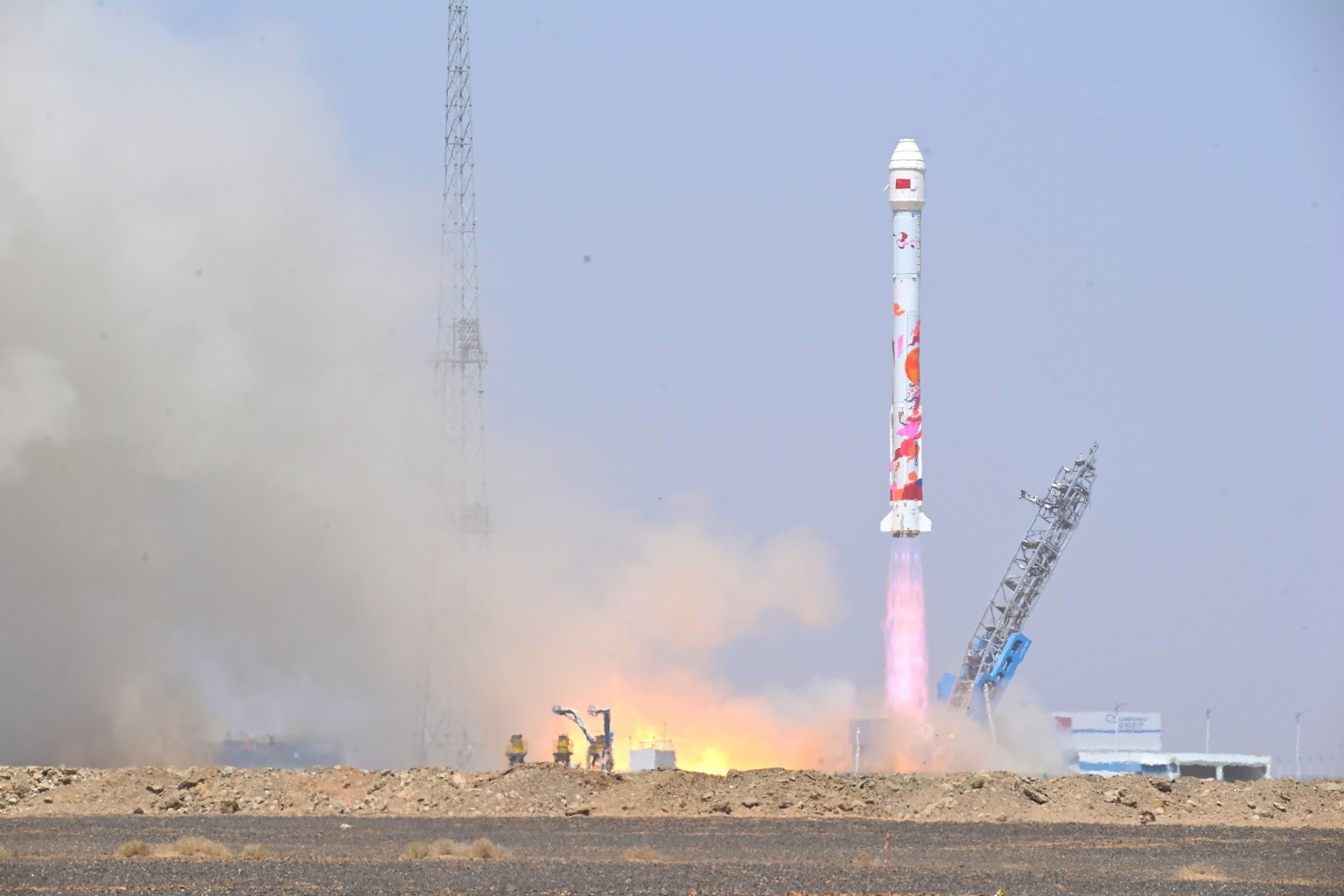
Core Viewpoint - The successful first flight of the Long March 12A rocket marks a significant step in China's commercial space sector, aiming to enhance the capabilities of reusable rockets and address the growing demand for low-cost, high-frequency satellite launches in the trillion-dollar market [2][3][5]. Group 1: Launch and Technology Development - The Long March 12A rocket's maiden flight achieved basic success, with the second stage entering the designated orbit, although the first stage was not successfully recovered [2]. - The launch signifies the entry of state-led reusable rocket technology into the competitive landscape, aiming to facilitate a transition to a low-cost, high-frequency launch era [2][3]. - The industry is witnessing a shift towards optimizing launch and operational costs, with a focus on the development of reusable rockets and satellite mass production [3][9]. Group 2: Market Dynamics and Competition - The competition in the commercial space sector is intensifying, with a focus on not just successful launches but also on the stability of delivery capabilities and reliability of new commercial rockets [6][9]. - Companies are exploring different strategies and technologies, such as the use of various propellants, to enhance the performance and cost-effectiveness of their rockets [7][11]. - The market is expected to evolve towards a comprehensive industrial system, emphasizing cost reduction through continuous technological innovation [9][11]. Group 3: Future Prospects and Challenges - The industry is at a critical juncture, moving from a focus on individual rocket success to a broader competition encompassing technological autonomy, production stability, and economic efficiency [9][12]. - The development of large payload rockets and the establishment of a robust satellite constellation are essential for meeting the demands of the rapidly growing satellite internet market [3][12]. - Regulatory improvements and the establishment of a supportive ecosystem are necessary to facilitate the growth of the commercial space sector and address existing bottlenecks [13].
崧盛股份20251221
2025-12-22 01:45
Summary of the Conference Call for Zhongshun Co., Ltd. Industry Overview - The commercial aerospace sector is experiencing a surge in demand for harmonic reducers, driven by large-scale satellite deployment projects such as Xinwang and G60, as well as emerging applications like in-orbit maintenance robots. The total market demand is expected to reach tens of thousands of units [2][6]. Key Points and Arguments - **High Price of Aerospace Harmonic Reducers**: Zhongshun Co., Ltd. offers aerospace harmonic reducers at approximately 50,000 yuan each, significantly higher than civilian products priced around 1,000 yuan. This price difference is attributed to material costs (vacuum-resistant non-metal materials, special lubricants), stringent quality control (vacuum and temperature tests, vibration simulations), and full-size inspections [2][7][8]. - **Market Coverage and Clientele**: Zhongshun Co., Ltd. has achieved full coverage in the aerospace reducer market, with major clients including Galaxy Aerospace and Shanghai Mechanical Institute. The company is expected to capture over 50% of the market share in the future due to high trust levels in the commercial aerospace sector [2][9]. - **Expansion into Robotics**: The company is actively expanding into the robotics reducer market, having established connections with leading domestic and international firms. Positive feedback has been received from product testing, and the company is providing technical support to domestic humanoid robot manufacturers [2][10]. - **Production Capacity and Investment**: Zhongshun Co., Ltd. has invested in new testing equipment and hired additional staff to enhance production capacity. With the addition of automated assembly lines, the annual production capacity is projected to reach 70,000 to 80,000 units, with potential expansion to 100,000 units [2][11]. - **Specific Applications of Harmonic Reducers**: In commercial aerospace, harmonic reducers are used in satellite antenna pointing mechanisms, solar wing deployment mechanisms, and camera pointing and zoom mechanisms. Future applications may include satellite orbit adjustment and attitude control using vector electric propulsion technology [3][4]. - **Market Demand and Competition**: The current market demand for aerospace harmonic reducers is driven by large deployment projects, with each project expected to deploy over 10,000 satellites. The competitive landscape includes two main players, with Zhongshun Co., Ltd. positioned favorably due to its technological advantages and pricing power [2][9]. Additional Important Information - **Challenges in Market Entry**: The commercial aerospace sector has high entry barriers, requiring capabilities in design, testing, and understanding of space environments. Many companies struggle to meet the stringent requirements for aerospace applications [12][13]. - **Customer Expectations**: Commercial aerospace clients prioritize verification cycles and long-term support capabilities, necessitating thorough testing and validation of products in space environments [14]. - **Future Plans for Investment and Cooperation**: Zhongshun Co., Ltd. plans to increase investment in Chongqing Steel and may pursue larger-scale cooperation in 2026 to leverage joint advantages in the aerospace sector [17][18]. - **Revenue Projections**: The company anticipates significant growth in its LED driver and plant lighting businesses, with a target revenue of over 2 billion yuan and profits exceeding 200 million yuan by 2026 [19].
中信建投:当前商业航天发展是国企与民营企业共振周期
Zheng Quan Shi Bao Wang· 2025-12-15 23:56
Group 1 - The core viewpoint of the article is that the commercial aerospace industry is entering a new era due to national policy support and technological breakthroughs [1] - The commercial aerospace industry encompasses key segments including remote sensing and its applications, satellite measurement and control systems, CAE simulation/satellite testing, interstellar transmission processing modules, communication modules, and data processing platforms [1] - There is a focus on expanding new scenarios, particularly in space computing power [1] Group 2 - The report suggests that the current development of commercial aerospace is characterized by a resonance cycle between state-owned enterprises and private companies [1] - It is recommended to pay attention to state-owned enterprises such as Electric Science and Technology, electronics, and aerospace sectors, as well as companies that support private enterprises like Blue Arrow and Galaxy Aerospace [1]

承前启后的2025年迎来高光时刻、政策指引 商业航天:迈向下一个黄金十年
Shang Hai Zheng Quan Bao· 2025-12-15 19:19
Core Insights - The commercial aerospace industry in China is entering a new era, with significant advancements in capabilities and a solid foundation for the next decade [2][7] Industry Developments - As of December 12, 2025, China has successfully launched 16 groups of satellites for the National Network Constellation (GW constellation) and 6 groups for the Qianfan Constellation, marking a substantial increase in launch frequency and the number of satellites in orbit [3] - The first batch of network satellites was mass-produced by private company Galaxy Aerospace, significantly reducing the satellite development cycle by 80% and achieving an annual production capacity of over 100 satellites weighing 1000 kg [3] - The Blue Arrow Aerospace's Zhuque-3 rocket conducted its first complete recovery test, marking a significant step towards reusable rocket technology in China, despite the recovery test being unsuccessful [3] - The Hainan Commercial Aerospace Launch Site has successfully conducted 9 launches since its opening at the end of 2024, demonstrating improved operational efficiency with a high-density launch success [3] Regulatory and Market Changes - All three major telecom operators in China have obtained licenses for satellite mobile communication services, enabling them to legally conduct satellite direct connection services [4] - The introduction of the fifth set of listing standards on the Sci-Tech Innovation Board allows unprofitable but technologically advanced commercial aerospace companies to go public, enhancing market confidence and investment enthusiasm [5] - Notable funding rounds include 430 million yuan for Aerospace Yuxing, 700 million yuan for Star Glory, 2.4 billion yuan for Star River Power, and nearly 2.5 billion yuan for Tianbing Technology [5] Future Outlook - The year 2025 is seen as a pivotal year for the commercial aerospace industry in China, transitioning from mere technical demonstrations to building a sustainable commercial aerospace ecosystem [7] - The establishment of the Commercial Aerospace Administration and the "Action Plan for High-Quality and Safe Development of Commercial Aerospace (2025-2027)" provides clear regulatory guidance and support for the industry [7][8] - The Action Plan outlines development directions for various segments of the aerospace industry, emphasizing low-cost, reliable, and reusable commercial launch vehicles [7][8]

[热闻寻踪]盈利还在地平线,资本为何抢先为商业航天“买单”?
Quan Jing Wang· 2025-12-15 13:34
Group 1: Industry Overview - The commercial aerospace sector has become a focal point in the A-share market, with related stocks experiencing a collective rise due to a combination of policy support, technological advancements, and market demand [1] - The establishment of the Commercial Aerospace Department by the National Space Administration and the release of the "Action Plan for Promoting High-Quality and Safe Development of Commercial Aerospace (2025-2027)" provide a clear policy framework, boosting market confidence [1] - Significant technological breakthroughs, such as the successful maiden flight of Blue Arrow Aerospace's "Zhuque-3" reusable rocket, mark substantial progress in reducing launch costs, indicating a potential surge in demand for satellite manufacturing and launch services [1] Group 2: Company Developments - Beichuang Technology has made progress in the development and manufacturing of precision displacement and optical platform products for commercial aerospace, although current order sizes are small [2] - Guojijiang Precision has a market share of over 90% in traditional aerospace bearings and serves several rocket companies in the commercial aerospace sector [2] - Jiuziyang has focused on developing core components for inter-satellite and ground communication, contributing to the national aerospace strategy [3] - Zhonghang Optoelectronics has successfully supported mainstream rocket models and is expanding cooperation with leading commercial rocket companies [3] - Chaojie Co. specializes in manufacturing large components for commercial rockets, with major clients among top commercial aerospace firms [4] - Huitian New Materials produces high-performance adhesives suitable for aerospace applications and is actively developing advanced materials for commercial aviation [5] - Haite High-tech is involved in satellite internet services and has developed an eVTOL simulator, contributing to the low-altitude economy [6] - Guangwei Composite Materials is a key supplier of carbon fiber materials for solid and liquid propulsion systems, with a significant role in the commercial aerospace supply chain [7] - Fuguang Co. has achieved batch production of arrow-mounted lenses and is developing various optical products for low-orbit satellites [10] Group 3: Market Potential and Future Outlook - The commercial aerospace market is expected to enter a rapid growth phase, with companies like Ruichuang Micro-Nano developing advanced satellite communication technologies [11] - The overall aerospace industry is projected to benefit from the establishment of dedicated regulatory bodies, which will promote high-quality development in the sector [6] - Companies are optimistic about the potential for significant market growth in commercial aerospace, with many actively pursuing partnerships and expanding their product offerings [12]
稳住“压舱石” 敢摘“未来星”——南通耐心资本何以拔节生长
Shang Hai Zheng Quan Bao· 2025-12-14 19:43
Core Viewpoint - Nantong is committed to developing "patient capital" to support both traditional industries and emerging sectors, aiming for sustainable growth and innovation in its economy [2][10]. Group 1: Traditional Industries - Nantong's traditional industries, including shipbuilding, textiles, machinery, and chemicals, account for over 60% of the city's industrial output and profits, serving as the economic "ballast" [3][4]. - The city is focusing on upgrading these traditional sectors through industrial chain integration, mergers and acquisitions, and the application of AI technologies to enhance competitiveness and drive transformation towards high-end, intelligent, and green manufacturing [4][6]. Group 2: Investment and Capital Strategy - Nantong's financial ecosystem has seen the establishment of over 40 funds with a total scale exceeding 500 billion yuan, including 13 funds in high-end equipment and future industries totaling 173 billion yuan [2][9]. - The introduction of "Fund Policy 2.0" emphasizes high government investment ratios, profit-sharing, flexible reinvestment recognition, and market-oriented error tolerance mechanisms, encouraging capital to engage deeply with enterprises [9][10]. Group 3: Emerging Industries - Nantong is actively investing in early-stage projects in sectors like aerospace and satellite internet, demonstrating a willingness to support innovative ventures despite inherent risks [7][8]. - The city has implemented a "拨改投+股权联动" model, combining government funding with policy support to alleviate financing challenges for startups, exemplified by the case of Rui Lai New Energy, which received significant investment to support its growth [8][9]. Group 4: Collaborative Ecosystem - The synergy between capital and policy has been evident, as seen in the acquisition of Hengsuo Huawai by Huahai Chengke, which was facilitated by prior investments from Nantong's capital [5][9]. - Nantong's geographical advantages, such as its proximity to Shanghai and its coastal location, provide a strong foundation for industrial development and attract long-term investments in heavy assets and projects with extended timelines [10].

隆盛科技:控股子公司与银河航天合作聚焦卫星核心零部件等业务
Di Yi Cai Jing· 2025-12-12 14:36
Group 1 - The core focus of the collaboration between the company's subsidiary Weiyan Zhongjia and Galaxy Aerospace is on the research and supply of core precision components such as satellite energy modules, communication modules, and control modules [1]