Blue Owl

Search documents
Private credit under pressure: Here's what to know
CNBC Television· 2025-10-16 13:24
Market Sentiment & Risk - Jamie Dimon's "cockroach" analogy following corporate bankruptcies sparked defensiveness among private credit executives [1] - Bankruptcies, even isolated ones, can significantly impact private credit sentiment due to its rapid growth [4] - Investor sentiment in private credit is fragile, leading to rapid sell-offs even with limited direct lending exposure in bankruptcies [4] Company Performance & Response - JP Morgan experienced $170 million in charge-offs related to subprime auto lender exposure [2] - Blue Owl's Mark Lip Schultz defended the health of their direct lending portfolio, downplaying the significance of individual bankruptcies [2] - Blue Owl's stock, along with its peers, experienced a decline following bankruptcies, indicating investor concern [4] Industry Dynamics - The market contains thousands of credits, making isolated bankruptcies less indicative of widespread issues [2] - Investors initially attributed culpability to private credit following bankruptcies, even when direct lending exposure was minimal [4]


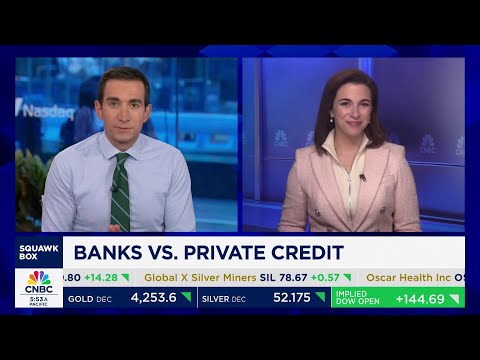
The key takeaways from this week’s big bank earnings #shorts #banks #earnings #morganstanley
Bloomberg Television· 2025-10-15 21:17
Trading Revenue - The six largest US banks, including Morgan Stanley, Bank of America, JP Morgan Chase, Wells Fargo, Goldman Sachs, and Croup, experienced a banner quarter [1] - The firms achieved their highest third-quarter trading revenue in at least 5 years, driven by increased volatility related to President Trump's policies, including tariffs [2] - Morgan Stanley's equity traders generated $4.12 billion in revenue, a 35% surge that surpassed analyst estimates [2] - Goldman Sachs reported $3.74 billion in stock trading revenue, slightly below Morgan Stanley's performance [3] Economic Outlook - With the exception of JP Morgan Chase, banks set aside less money for loan loss provisions, indicating confidence in the resilience of the US economy [3] - JP Morgan CEO Jamie Dimon's warning about potential bankruptcies, likening them to "cockroaches," was dismissed by Blue Owl's co-CEO Mark Lipshields as fear-mongering [4]



Blue Owl: My BUY Target Has Been Hit, What Now?
Seeking Alpha· 2025-10-12 06:14
Group 1 - The article promotes a real estate investment community called 'High Yield Landlord' which offers a 2-week free trial for new members [1][2] - The community claims to be the largest and best-rated among real estate investors on Seeking Alpha, boasting over 2,500 members and a rating of 4.9 out of 5 from more than 500 reviews [1]


Private credit socks fall following auto finance bankruptcies at Tricolor and First Brands
Youtube· 2025-10-03 20:18
Core Insights - The private credit sector is experiencing a significant sentiment shift, with firms like Apollo, Aries, Blue Owl, and KKR seeing notable declines [1] - In contrast, companies more exposed to private equity, such as TPG and Carile, have maintained stability [2] - Recent high-profile bankruptcies in the auto finance sector have triggered a broad selloff in publicly traded alternative firms, highlighting risks associated with overleveraged and subprime borrowers [2] Industry Analysis - Hedge fund manager Jim Chanos criticized the private credit market, drawing parallels to the subprime mortgage packaging during the 2008 financial crisis, suggesting that the $2 trillion private credit sector has similar vulnerabilities [3] - Chanos indicated that the structure of private credit, with multiple layers between the source and use of funds, poses risks, especially in bankruptcy scenarios where direct lenders are prioritized for repayment [3]


Private credit socks fall following auto finance bankruptcies at Tricolor and First Brands
CNBC Television· 2025-10-03 19:58
Hey Scott. Yeah, it's the private credit side of the business that has seen a real sentiment shift. Apollo, Aries, Blue Owl, and KKR seeing significant declines week to date.While those more exposed to private equity think TPG and Carile, they've held up okay. Two high-profile bankruptcies in the auto finance space leading to a broad-based selloff in the publicly traded alternatives firms. and First Brands bankruptcies, each within the last few weeks, have shed a new light on the risks of overlever and subp ...

每六个月就有一波“AI泡沫论”,何时“狼真的来了”?
Hua Er Jie Jian Wen· 2025-10-01 03:32
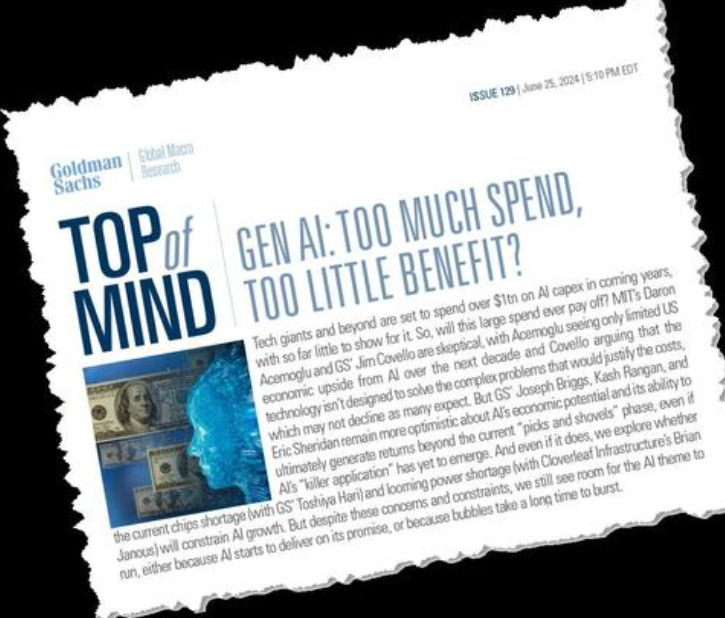
Group 1 - The article discusses the recurring theme of "AI bubble theory," highlighting the cyclical nature of market fears and subsequent enthusiasm surrounding AI investments [1][3] - Goldman Sachs raised concerns about the commercial returns of generative AI, questioning whether it represents a capital pit that may never yield long-term positive returns for investors [1][3] - The introduction of China's DeepSeek model, which is open-source and significantly cheaper than its U.S. counterparts, has intensified competition in the AI space [3] Group 2 - Oracle's announcement of a $300 billion cloud computing agreement with OpenAI is seen as a significant "vendor financing" deal, indicating a shift from cash-based funding to debt-driven financing in the AI sector [5][8] - Analysts have identified a structural risk where AI infrastructure development is increasingly reliant on external debt, with a projected funding gap of $1.5 trillion that private credit markets may need to fill [9][11] - The private credit market is expected to contribute approximately $800 billion to bridge this funding gap, raising concerns about the health of the private credit industry itself [9][11] Group 3 - The performance of private credit funds, such as those managed by Blackstone and Blue Owl, has been under scrutiny, with significant declines in stock prices indicating potential vulnerabilities [11][13] - The article notes that the discussion around the AI bubble is waning, with a significant drop in online searches related to "AI bubble," suggesting a possible complacency in the market [14] - Historical patterns indicate that asset bubbles do not follow a linear trajectory, and the current AI market may be experiencing similar dynamics to past bubbles [15][18]

X @Bloomberg
Bloomberg· 2025-09-26 17:01
Blackstone, which holds around half of the facility, led the repricing for the New York-based website builder, with Blue Owl and Ares also participating https://t.co/wzN59Cq86C ...
又是“小登”表演的一天
Datayes· 2025-09-25 11:19
Core Viewpoint - The article discusses the current state of the Chinese stock market, highlighting the rise of high-tech stocks and the ongoing debate about investment strategies, particularly the shift away from traditional sectors like liquor towards technology and innovation [2][3]. Market Performance - Several companies, including Inspur Information, Cambridge Technology, and CATL, reached historical highs [1]. - The A-share market experienced fluctuations, with the Shanghai Composite Index down 0.01%, while the Shenzhen Component and ChiNext Index rose by 0.67% and 1.58%, respectively [10]. - The total trading volume across the three markets was 23,920.16 billion yuan, an increase of 445.38 billion yuan from the previous day [10]. Sector Analysis - The technology sector, particularly AI hardware and domestic chips, is gaining traction, driven by Alibaba's significant investment in AI infrastructure [11]. - The copper supply is tightening due to the suspension of operations at the Grasberg mine, leading to a bullish outlook for copper prices, with Morgan Stanley predicting prices to rise to $11,000 per ton in Q4 [10]. - The bond market is shifting away from a long-term bull market, with the 10-year government bond yield reaching 1.92%, indicating a potential end to the low-interest-rate era [5][9]. Investment Trends - Liu Jipeng emphasized the need for investors to focus on high-tech sectors rather than traditional sectors like liquor, acknowledging the higher risks associated with technology investments [2]. - The article notes a "hit-and-run" market behavior, where hot stocks quickly rotate, and many companies are experiencing declines despite index gains [3]. Fund Flow Dynamics - The net outflow of main funds was 14.99 billion yuan, with the electronics sector seeing the largest outflow [20]. - The top sectors for net inflow included computer, power equipment, and non-ferrous metals [20]. Notable Company Developments - The domestic tungsten market is facing a supply crunch, with APT social inventory dropping below 200 tons [16]. - Micron Technology's CEO indicated an increasing imbalance in global memory chip supply, particularly for HBM, which is expected to drive growth in the storage sector [17].





X @Bloomberg
Bloomberg· 2025-09-25 10:37
Investment & Partnership - Qatar Investment Authority (QIA) is partnering with Blue Owl [1] - The partnership aims to finance and invest in data centers [1] Industry Focus - The investment signifies QIA's latest bet on the booming AI sector [1]
大摩:谁来买单“AI资本狂潮”?未来三年,硅谷出1.4万亿美元,华尔街筹1.2万亿美元
美股IPO· 2025-09-24 07:19
Core Insights - Morgan Stanley predicts that global spending on AI data centers and chips will reach $2.9 trillion by 2028, with tech giants responsible for approximately $1.4 trillion of this amount [3][4] - The remaining funding gap is expected to be filled through debt financing, estimated at $1.2 trillion, with private credit funds anticipated to provide $800 billion of this total [3][4] Group 1: Investment Landscape - A powerful alliance of global banks, private credit giants, and specialized lending institutions is forming to meet the unprecedented capital demand driven by AI [3][4] - Innovative financing structures, such as using AI chips as collateral, are being actively explored, exemplified by JPMorgan's nearly $10 billion loan to OpenAI [3][4] Group 2: Traditional Banks' Role - JPMorgan has taken an aggressive stance in AI data center financing, agreeing to bear all financing risks for a $9.4 billion loan to Crusoe for data center development [4] - The bank has also led the underwriting of $38 billion in loans for Oracle's data center projects, aiming to solidify its position in this sector [4][5] Group 3: Japanese Banks' Competitive Edge - Japanese banks, particularly Mitsubishi UFJ Financial Group and Sumitomo Mitsui Banking Corporation, are becoming significant players in the data center financing market due to their cost advantages from low interest rates [5] - These banks have participated in major transactions, including a $3.1 billion loan for Rowan Digital Infrastructure [5] Group 4: Private Credit's Dual Role - Blackstone is playing a dual role in the data center sector as both an owner and a lender, leading a $7.5 billion debt financing for CoreWeave, secured by high-performance Nvidia chips [6] - This "chip collateral loan" model carries risks but offers high returns, with interest rates reaching 10.5% [6] Group 5: Emergence of Alternative Investors - Alternative investors like PIMCO are entering the market, providing critical capital for early-stage, higher-risk projects, such as a $26 billion debt financing for Meta Platforms' new data center [7] - Macquarie Bank is known for supporting early projects, offering various financing options, including a $5 billion preferred equity investment in Applied Digital [7][8] Group 6: Notable Private Credit Firms - Blue Owl and Magnetar Capital are noteworthy private credit firms, with Blue Owl investing over $600 million in data center projects and Magnetar participating as a major investor in CoreWeave's innovative loan transactions [8]