台积电

Search documents
博通芯片,麻烦不小
半导体行业观察· 2025-03-24 01:23
Core Viewpoint - The article discusses the evolving relationship between Broadcom and its largest customer, Apple, particularly focusing on the potential impact of Apple switching to its own Wi-Fi chips, which could significantly affect Broadcom's revenue from this segment [2][5][8]. Group 1: Revenue Impact from Wi-Fi Chip Transition - Apple plans to replace Broadcom's Wi-Fi and Bluetooth chips with its internal Proxima chips in upcoming products, which could lead to a revenue loss for Broadcom estimated at $2.74 billion in 2025, decreasing to $3.24 billion by 2028 [7][8]. - The Wi-Fi chip segment currently contributes approximately 33.6% to Broadcom's revenue from Apple, but this is expected to drop to 4.3% in 2025 and further to 3.3% by 2028 [8][9]. - Broadcom's market share in the Wi-Fi chip market could decline from 24% to 12.5% if Apple transitions to its own chips, highlighting Broadcom's dependency on Apple for this revenue stream [9]. Group 2: RF Business Analysis - Broadcom supplies RF components to Apple, which accounted for about 65.2% of its revenue from Apple, with a previous agreement valued at $15 billion over three years [10][11]. - Despite the competitive landscape, Broadcom holds a significant position in the RF market, with a stable growth rate and a strong share of Apple's RF revenue, estimated at 32.7% [15][16]. - The RF business is crucial for Broadcom, and while it faces competition from Qualcomm and others, it has maintained a solid relationship with Apple, which is expected to continue in the near term [12][16]. Group 3: AI Chip Opportunities - Broadcom is collaborating with Apple on the Baltra AI chip, which is expected to be produced in 2026, potentially offsetting losses from the Wi-Fi chip transition [18][20]. - Apple's commitment to invest $50 billion over the next four years in AI infrastructure could create significant revenue opportunities for Broadcom, estimated at $12.53 billion annually from custom ASICs [21][22]. - The partnership with major tech companies like Google and Meta in the custom ASIC market positions Broadcom favorably to benefit from Apple's AI initiatives [19][22]. Group 4: Market Outlook and Valuation Concerns - Broadcom's optimistic market outlook, particularly in the custom accelerator space, has faced scrutiny as the company’s valuation has declined since reaching a $1 trillion market cap [24][29]. - The company’s revenue growth is projected to be strong, but there are concerns that the market's expectations for growth may be overly optimistic, particularly in light of competitive pressures from Nvidia and others [24][29]. - Broadcom's current market valuation appears high compared to its growth projections, suggesting potential downward pressure on its stock if growth does not meet expectations [28][29].



美光:“东风” 是不远,但等风有风险
海豚投研· 2025-03-22 11:28
Core Viewpoint - Micron Technology's Q2 FY2025 earnings report indicates a recovery in revenue, with guidance for the next quarter suggesting a revenue of $8.8 billion, representing a 9% quarter-over-quarter growth, exceeding market expectations of 7% [1][2] Summary by Sections Revenue and Profitability - Actual revenue for the quarter was $8.1 billion, slightly above the expected $7.9 billion, but gross margin guidance was weaker than anticipated at 36.5%, with a potential decline of a few hundred basis points due to increased consumer product sales and a challenging NAND market [2][3] - The DRAM segment, which accounts for over 75% of revenue, saw a 4% quarter-over-quarter decline, totaling $6.1 billion, aligning with market expectations [2] HBM and Market Dynamics - HBM revenue is projected to reach multi-billion dollars in FY2025, with significant contributions from AI server applications, and the market size for HBM has been revised upwards to $35 billion for 2025 [13] - HBM production capacity is fully booked for 2025, with a focus on ramping up production and releasing capacity throughout the year [5][6] Cost and Expense Management - Operating profit has declined due to high R&D expenses and stable marketing and management costs, which were higher than market expectations [3] - The company is expected to maintain stable market share despite lower production growth compared to industry demand, with inventory days decreasing [14] Future Outlook - The second half of 2025 is anticipated to see a significant increase in HBM shipments alongside a potential surge in AI-related hardware demand, which could enhance Micron's market position [8][9] - The company is positioned as a "cyclical stock," with the potential for growth driven by HBM and AI applications, although short-term expectations remain cautious [7][9]


英伟达,开启硅光新纪元
半导体行业观察· 2025-03-22 03:17
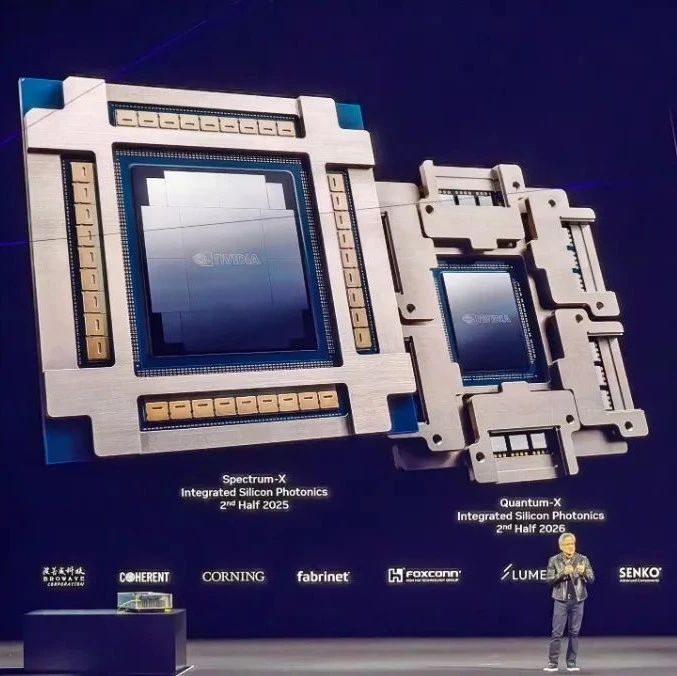
Core Viewpoint - NVIDIA's introduction of silicon photonics technology, specifically the Co-Packaged Optics (CPO), is set to revolutionize data center infrastructure by significantly reducing power consumption and enhancing network efficiency for AI computing clusters [1][11]. Group 1: NVIDIA's Innovations - NVIDIA announced its groundbreaking silicon photonics technology at the GTC2025 conference, which is expected to reduce data center power consumption by 40 megawatts [1]. - The Spectrum-X and Quantum-X silicon photonic network switches integrate electronic circuits with optical communication technology, enabling AI factories to interconnect millions of GPU clusters while lowering energy consumption and operational costs [1][2]. Group 2: Spectrum-X and Quantum-X Specifications - Spectrum-X offers configurations with up to 128 ports at 800 Gb/s or 512 ports at 200 Gb/s, achieving a total bandwidth of up to 100 Tb/s [2]. - Quantum-X features a throughput of 115.2 Tb/s with 144 ports, utilizing advanced cooling and silicon photonics technology to double AI computing speeds compared to previous generations [2][4]. Group 3: CPO Technology Advantages - CPO technology integrates ASIC and optical components, eliminating the need for separate DSP chips, which enhances overall module performance and significantly reduces data center power consumption [6]. - Compared to traditional pluggable optical modules, CPO can reduce power consumption by 30% in high-capacity switches [6]. Group 4: Challenges and Market Position - CPO modules face challenges such as fixed configurations that may limit flexibility, as failures in CPO systems require replacing the entire module rather than just the faulty part [8]. - Despite the advantages of CPO technology, pluggable optical modules remain the market standard due to their flexibility and established standardization [9]. Group 5: Future Outlook - The CPO technology marks the beginning of a transformative phase in the semiconductor and switching markets, with potential for accelerated growth in AI infrastructure as the technology matures [11]. - In the short term, CPO may be piloted in specific scenarios, while pluggable modules will continue to dominate; however, a hybrid "CPO + pluggable" architecture may emerge to meet varying application needs [11].

三星,再传坏消息
半导体芯闻· 2025-03-21 10:40
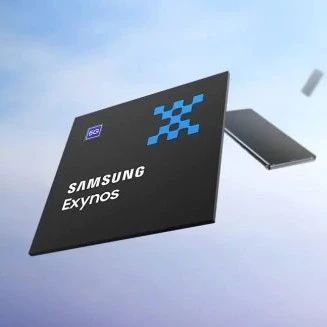
Core Viewpoint - Samsung faces limited opportunities to ensure that its upcoming Galaxy S26 series will not be exclusive to the Snapdragon 8 Elite Gen 2, relying on the Exynos 2600 chipset, which requires timely design completion and increased production capacity [1][2]. Group 1 - The design of the Exynos 2600 chipset needs to be completed by the third quarter of 2025 to be included in the Galaxy S26 series [1][2]. - Current production yield for Samsung's 2nm GAA technology stands at 30%, significantly lower than TSMC's performance, which achieved double that yield [1]. - Samsung has approximately 10 months to ramp up production of the 2nm GAA technology [1]. Group 2 - The Exynos 2600 prototype production is expected to begin in May, with a focus on improving yield for manufacturability [2]. - The prioritization of resources towards the Exynos 2600 has led to uncertainty regarding the release of the Exynos 2500, which was previously expected to be mass-produced by the end of 2025 [2].
美国经济衰退或滞胀概率几何?|国际
清华金融评论· 2025-03-21 10:30
Core Viewpoint - The likelihood of the U.S. economy entering a recession in the foreseeable future is low, but growth is expected to slow down, with a possibility of a brief stagnation or decline, although this is considered unlikely. Current high inflation, exacerbated by rising tariffs, raises the potential for stagflation, but any occurrence would not be considered true stagflation [1][14]. Current Economic Status - The U.S. economy has shown resilience despite predictions of recession, with mixed economic indicators suggesting both recessionary signals and robust growth metrics. The Federal Reserve's recent meetings indicate a stable economic outlook, although uncertainty has increased [1][4][8]. - Various indicators point towards recession risks, including a significant drop in consumer confidence and weak retail sales data. However, the relationship between soft indicators and actual economic performance is often tenuous [5][7]. - The Atlanta Fed's prediction of a 2.8% decline in GDP for Q1 is primarily attributed to temporary factors, and economists still expect continued growth, albeit at a reduced rate [6][8]. Recession Indicators - Soft indicators, such as consumer confidence and small business optimism, have declined, but actual employment data remains strong, with job growth and low unemployment rates indicating a stable labor market [7][8]. - The mixed signals from economic data necessitate careful analysis to distinguish between temporary fluctuations and underlying trends [4][5]. Future Outlook - If current economic policies remain unchanged, the probability of recession may increase, potentially leading to a transition from soft to hard indicators of economic decline. However, historical patterns suggest that political pressures may lead to policy adjustments to mitigate economic damage [10][11]. - The impact of tariffs on inflation is projected to be temporary, with estimates suggesting an increase of 0.5-0.8 percentage points in inflation rates. The Federal Reserve is inclined to overlook these temporary effects, focusing instead on broader economic stability [14][15]. - The resilience of the U.S. economy, particularly through technological innovation and infrastructure investment, is expected to support growth while controlling inflation, although significant unforeseen challenges could still arise [15].

曝iPhone18首发台积电2nm制程!
国芯网· 2025-03-21 04:28
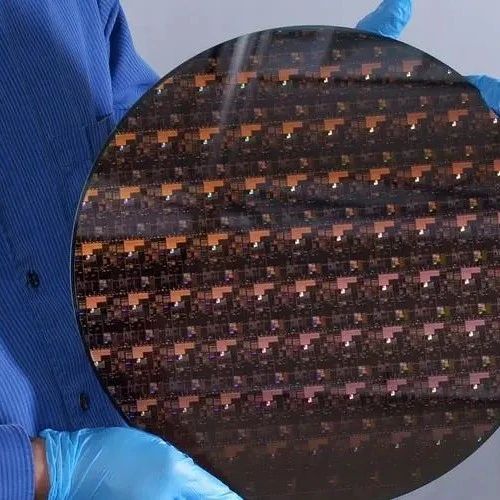
之前摩根士丹利发布报告称,2025年台积电2nm月产能将从今年的1万片试产规模,增加至5万片左右的 量产规模。由于产能爬坡以及良率提升都需要时间,2025年苹果iPhone 17系列的A19系列处理器可能不 会采用2nm制程,只是会升级到3nm家族的N3P制程。 根据台积电披露的资料,2nm制程在相同电压下可以将功耗降低24%-35%,或将性能提高15%,晶体管 密度比上一代3nm工艺高1.15倍,这些指标的提升主要得益于台积电的新型全环绕栅极(GAA)纳米片 晶体管,以及N2 NanoFlex设计技术协同优化和其他一些增强功能来实现。 价格方面,消息称台积电2nm晶圆的价格超过了3万美元,目前3nm晶圆的价格大概在1.85万至2万美 元,两者价格差距明显。半导体业内人士预计,由于先进制程报价居高不下,厂商势必会将成本压力转 嫁给下游客户或终端消费者。 ***************END*************** 国芯网[原:中国半导体论坛] 振兴国产半导体产业! 不拘中国、 放眼世界 ! 关注 世界半导体论坛 ↓ ↓ ↓ 3月21日消息,投资公司GF Securities在报告中称,iPhone 18 ...

ASML的奇迹,从这个破棚子开始
半导体行业观察· 2025-03-21 01:08
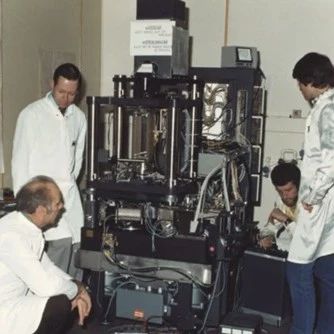
如果您希望可以时常见面,欢迎标星收藏哦~ 来源:内容编译自tomshardware,谢谢。 ASML 是全球无可争议的先进芯片制造设备设计和供应商。台积电、英特尔和三星等行业巨头制造 最先进的半导体时,高度依赖这家 1984 年成立的荷兰公司的设备。然而,与科技界许多家喻户晓的 品牌一样,ASML 的起源相当低调。就 ASML 而言,公司传说这一切都始于一个"漏水的棚子"。 当今光刻机领域的霸主 ASML(先进半导体材料光刻技术公司)最初是由电子行业家喻户晓的飞利 浦公司和先进半导体材料国际公司(ASMI)合作成立的。双方的愿景是成立一家专注于光刻系统的 新公司,而这两家公司都认为这是一个不断增长的市场。 值得庆幸的是,ASML 和所有来自漏水棚的员工们,不久之后,业务就蓬勃发展起来,并于 1985 年迁至专门建造的办公室和工厂。一年后,改进后的 PAS 2500 上市,并成为许多未来机器的基 础。巧合的是,ASML 与镜头制造商卡尔蔡司的合作关系在此时签署,并持续至今。 20 世纪 90 年代,ASML 宣布推出其"突破性平台",即 PAS 5500。凭借这一成功,ASML 在阿姆 斯特丹和纽约证券交易所成 ...

英特尔晶圆厂巨震,29年老兵退休
半导体行业观察· 2025-03-21 01:08
Core Viewpoint - Intel is undergoing a significant leadership transition in its manufacturing division as Ann Kelleher, a key executive, plans to retire by the end of the year, which coincides with the company's efforts to regain its technological edge and launch a new microprocessor, the 18A, to compete with TSMC [1][2][4]. Group 1: Leadership Changes - Ann Kelleher, who has been with Intel for 29 years, will retire and take on a new role as a strategic advisor for the foundry division [1][2]. - Naga Chandrasekaran, a former Micron executive, has been appointed to manage Intel's factory operations and will succeed Kelleher in her technical development role [1][2]. - Navid Shariari has been named as Kelleher's long-term successor and will coordinate various manufacturing activities within a new organization [1][3]. Group 2: Technological Developments - Intel is preparing to launch the 18A microprocessor, which is crucial for narrowing the technology gap with competitors like TSMC [2][9]. - Kelleher has been overseeing the development of the 18A chip at Intel's Hillsboro research facility, and the company claims the project is progressing well ahead of its first product release [2][9]. - The 18A chip is expected to demonstrate Intel's capability to produce cutting-edge semiconductors and is scheduled for release next year [9][10]. Group 3: Financial and Operational Challenges - Since 2021, Intel's sales have declined by nearly one-third, and the company's stock price has dropped by half this year [7]. - Intel is implementing significant workforce reductions, including cutting 15,000 jobs across the company to save $10 billion in the upcoming year [7][8]. - The company has announced layoffs affecting 1,300 employees in Oregon, marking one of the largest single-round layoffs in the state's history [7][8].

英伟达将斥资5000亿美元采购美国造芯片!
国芯网· 2025-03-20 12:12
Core Viewpoint - Nvidia plans to invest significantly in domestic chip production in the U.S., with a total procurement value potentially reaching $500 billion over the next four years [2]. Group 1: Nvidia's Investment Plans - Nvidia's CEO Jensen Huang announced that the company will spend several hundred billion dollars on U.S.-made chips and electronic products over the next four years, with a total procurement value possibly reaching $500 billion [2]. - The company is collaborating with TSMC and Foxconn to shift manufacturing operations to the U.S. [2]. Group 2: New Product Announcement - Nvidia is set to release the Blackwell Ultra NV72 server in the second half of this year, featuring two upgraded Blackwell GPUs and one Grace CPU per node, with a total of 72 nodes [3]. - The server will include up to 288GB of HBM3e high-bandwidth memory, with Dense FP4 performance reaching 15 PFlops and a total system Dense FP4 inference performance of 1.1 EFlops [3].
英伟达黄仁勋:华为很强,不能忽视
半导体芯闻· 2025-03-20 10:26
Core Viewpoint - Nvidia plans to invest up to $500 billion in purchasing chips and electronic products manufactured in the United States over the next four years, in response to trade policies and supply chain concerns [1][2]. Group 1: Investment and Supply Chain Strategy - Nvidia's CEO, Jensen Huang, announced a significant investment strategy to shift the supply chain from Asia back to the U.S., emphasizing the ability to produce billions of products domestically [1]. - The company is currently producing its latest Blackwell systems in the U.S., bolstered by TSMC's $100 billion investment in Arizona, which enhances supply chain resilience [2]. - Huang expressed confidence in the U.S. government's support for the AI industry, which he believes will accelerate its development [2]. Group 2: Competitive Landscape - Nvidia faces increasing competition from Huawei, particularly in the AI chip sector, despite generating billions in revenue from China [3][4]. - Huang acknowledged Huawei as a formidable competitor, noting their success in various markets and the ineffectiveness of U.S. efforts to constrain the company [4]. - Intel is identified as the only U.S. company theoretically capable of producing chips similar to Nvidia's, but it faces significant challenges in its foundry business [3][5]. Group 3: Future Outlook - Huang emphasized the importance of Intel's success for the overall health of the semiconductor industry, while also indicating that establishing new supply chains will take time [5]. - The ongoing geopolitical tensions and trade policies are likely to shape the future landscape of the semiconductor industry, influencing investment decisions and competitive dynamics [1][2].