荣耀

Search documents
荣耀阿尔法旗舰店落子深圳湾:AI 生态 “全球会客厅” 启幕
Jing Ji Guan Cha Wang· 2025-10-24 11:53
Core Insights - The opening of the Honor Alpha Global Flagship Store in Shenzhen Bay marks a significant step in the company's transition from a smartphone manufacturer to a leading global AI terminal ecosystem company, aligning with its strategic vision presented at the MWC conference [2][6] - The flagship store serves as a tangible representation of the AI ecosystem, allowing consumers to experience the integration of technology and human culture in a physical space [2][3] Strategic Implementation - The flagship store embodies the "AI terminal ecosystem company" positioning, transforming abstract concepts into tangible experiences through a dual-driven model of "technology + channels" [2] - The store's design reflects the local geographical features, incorporating elements like a waterfall and a spiral staircase, emphasizing the blend of technology and culture [2] Experience Reconstruction - The core highlight of the store is the dedicated experience area for the AI assistant YOYO, showcasing its capabilities across four themes: AI lifestyle, AI assistance, AI creation, and AI companionship [3] - YOYO utilizes a self-developed 7 billion parameter MagicGUI multimodal perception model, enabling it to execute over 3,000 scenarios, enhancing user interaction and personalization [3] Community Engagement - The "AI Inspiration Café" within the store serves as a social hub, facilitating discussions on how AI can optimize work efficiency and meet human needs, fostering innovation through collaboration [4] - This open co-creation environment aligns with Honor's commitment to an open-source approach for its MagicGUI system, promoting a collaborative AI ecosystem [4] Ecological Openness - The flagship store hosts creative performances and interactive activities, transforming it into a "future lifestyle paradise" and attracting diverse visitors, thus broadening the appeal of tech and cultural tourism [5] - The store acts as an open platform connecting AI enthusiasts and ecosystem partners, supported by Honor's 2,600-member AI R&D team and collaborations with Qualcomm [5][6] - Honor's edge in AI technology is recognized internationally, with advancements in edge AI technology achieving a balance in model storage, inference speed, and power consumption [5] Industry Impact - The establishment of the Honor Alpha Global Flagship Store represents a convergence of technology and consumer experience, contributing to the upgrade of the Greater Bay Area's industry and ecosystem [6] - The store sets a new paradigm for the global terminal industry, emphasizing the cycle of "technological innovation → ecological co-construction → standard output" [6]
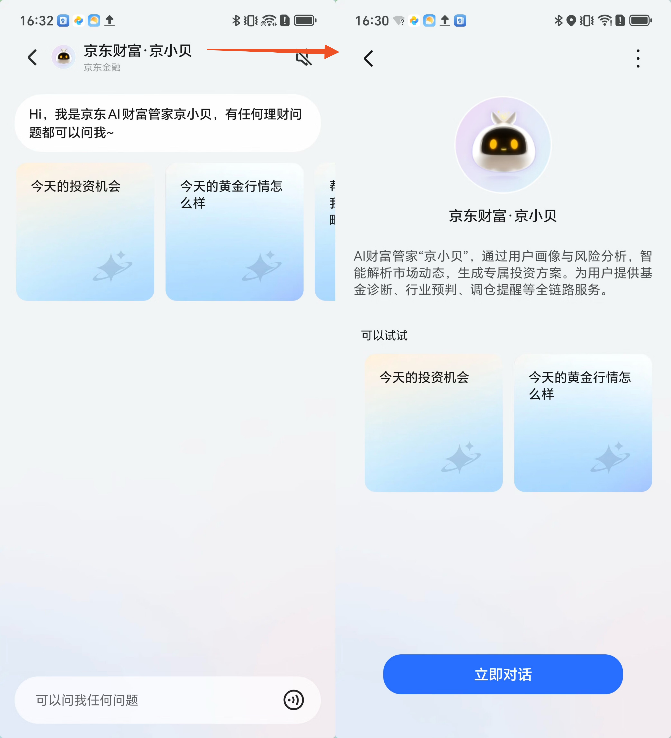
京东金融京小贝接入荣耀YOYO 开启“终端AI+智慧金融”服务新范式
Zhong Jin Zai Xian· 2025-10-24 09:27
Core Insights - JD Finance's AI wealth manager "Jing Xiaobei" is set to launch on Honor YOYO, marking the first integration of JD's intelligent system within Honor's ecosystem [1][3] - The collaboration exemplifies the integration of "terminal AI + smart finance," providing a practical model for industry convergence [1] Company Summary - Jing Xiaobei utilizes a multi-model fusion and multi-agent collaboration architecture, combining JD's large model with its financial intelligence capabilities to offer personalized investment recommendations [1] - The AI system is designed to continuously learn user preferences, enabling tailored asset allocation strategies and reducing the decision-making barrier for average users [1][4] Industry Summary - The partnership breaks down barriers between financial services and terminal scenarios, allowing Honor phone users to access Jing Xiaobei's services easily through voice commands [3] - This collaboration opens new user engagement channels for financial technology companies and provides a viable path for terminal manufacturers to expand high-value service scenarios [3] - Future developments in this partnership are expected to drive the evolution of smart financial services towards more personalized and refined offerings, setting a new benchmark for industry integration [4]

2025俄罗斯电商市场洞察报告
Sou Hu Cai Jing· 2025-10-24 06:49
Market Overview - The Russian e-commerce market is undergoing a structural transformation driven by geopolitical adjustments and digitalization, with local platforms leading the way and cross-border e-commerce gradually recovering [1][2] - In 2023, the domestic e-commerce market value reached approximately 6.2 trillion rubles, showing a year-on-year growth of 28%, while cross-border e-commerce recovered to a market value of 197 billion rubles, growing by 11% [2][19] - The logistics landscape is dominated by major local platforms, with Wildberries and Ozon capturing 80% of the logistics distribution market share [2] Consumer Insights - In 2023, the number of e-commerce users in Russia reached 68.84 million, with a penetration rate of 47.7%, expected to rise to 75.4 million by 2027 [3] - The core consumer demographic is aged 35-44, accounting for 27%, while female users represent 55.4% of the total, showing a preference for family and household products [3][4] - Price is the primary driver for online shopping, with 48% of users citing it as the main reason for choosing e-commerce [4] Popular Categories - The leading categories in Russian e-commerce include consumer electronics, fashion, beauty care, and home goods, with consumer electronics accounting for 19.1% of total e-commerce sales in the first half of 2023 [5] - The fashion segment is projected to grow significantly, with online revenue expected to increase from $4.16 billion in 2017 to $15.57 billion by 2029, reflecting a compound annual growth rate of 11.9% [5] - The beauty care market is also poised for growth, with an expected market size of $7.97 billion by 2025 and $11.05 billion by 2030 [5] Market Development Analysis - The Russian e-commerce market is projected to reach $63.8 billion in 2024 and grow to $142.62 billion by 2033, with a compound annual growth rate of 8.88% from 2025 to 2033 [6] - Cross-border e-commerce between China and Russia is becoming a significant growth driver, with B2B cross-border trade reaching $28 billion in 2023, a 45% increase year-on-year [6] - The market is transitioning from broad-based offerings to specialized niches, with 78% of small and medium enterprises developing their own online stores [6][7]
和辉光电二次递表港交所 AMOLED半导体显示面板服务荣耀及传音等
Zhi Tong Cai Jing· 2025-10-24 06:22
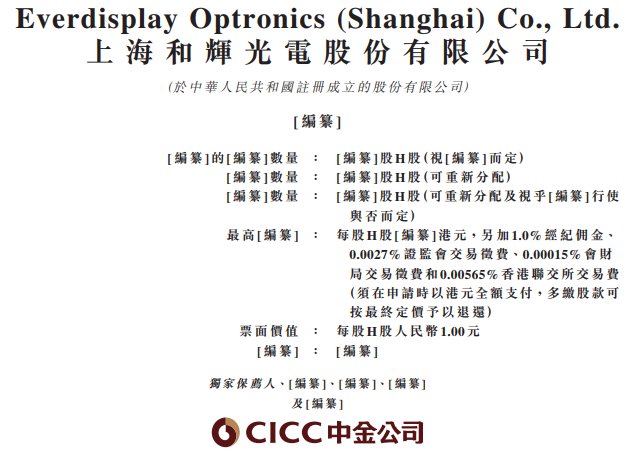
Core Viewpoint - Shanghai Huirui Optoelectronics Co., Ltd. has submitted a listing application to the Hong Kong Stock Exchange, with CICC as the sole sponsor, after a previous attempt in April 2025 [1]. Company Overview - Huirui Optoelectronics is a leading manufacturer of AMOLED semiconductor display panels, focusing on R&D and production to deliver exceptional color accuracy, visual experience, and low power consumption [4]. - The company became the first in China to achieve mass production of AMOLED panels in 2014 and expanded its capacity with the sixth-generation AMOLED production line in 2019 [4]. Market Position - According to Zhaoshang Consulting, Huirui Optoelectronics ranks third globally and first in China in terms of AMOLED panel shipments for 2024 [5]. - The penetration rate of AMOLED technology in the global display panel industry is expected to increase from 29.2% in 2024 to 35.8% by 2030 [5]. - Huirui Optoelectronics maintains strong partnerships with leading Chinese smart device manufacturers and has served major consumer electronics brands and two of the top five Chinese automotive companies [5]. Product Applications - The company's product offerings cover four main application areas: tablets/laptops, smartphones, smart wearables, and automotive displays, with sizes ranging from 0.95 inches to 27 inches [6]. Financial Performance - The revenue figures for Huirui Optoelectronics are as follows: approximately 4.191 billion RMB in 2022, 3.038 billion RMB in 2023, and projected 4.958 billion RMB in 2024 [6][7]. - The company reported losses of approximately 1.601 billion RMB in 2022, 3.244 billion RMB in 2023, and projected losses of 2.518 billion RMB in 2024 [6][7].

连续3日“吸金”超4000万元,卫星产业ETF(159218)大涨近4%,机构:卫星产业迎来关键拐点
2 1 Shi Ji Jing Ji Bao Dao· 2025-10-24 03:24
Core Viewpoint - The satellite industry is at a critical turning point, with significant growth potential driven by technological advancements and the need for independent capabilities in the current international competitive environment [1][5]. Group 1: Market Dynamics - The satellite industry ETF (159218) has seen a substantial increase of 340.74% in scale this year, reflecting strong market interest and investment [4]. - The net subscription for the satellite industry ETF reached 27 million units in a single day, with cumulative inflows exceeding 40 million yuan over the past three days [1]. Group 2: Competitive Landscape - The necessity to secure orbital and frequency resources is highlighted as a key driver for the development of the satellite industry, with major countries competing fiercely under the "first come, first served" principle [2]. - The global satellite launch volume is expected to grow from hundreds to over a thousand annually, indicating a potential for more than tenfold growth [3]. Group 3: Technological Advancements - The mobile direct-to-satellite application market is identified as the most promising area for satellite internet, particularly in mobile phones and automobiles [4]. - Current high-orbit satellite services have limitations such as limited communication capacity and higher latency, but the deployment of low-orbit satellite networks is expected to enhance user experience significantly by providing lower latency and more stable signals [4]. Group 4: Policy and Industry Support - The Chinese government is actively improving policies related to satellite internet applications, including issuing satellite communication operation licenses to major telecom operators [5]. - The domestic satellite internet sector has entered a new phase of high-density and high-frequency launches since late July to early August [5].

加速千亿级产业集群落地,荣耀发布“1×3×N”生态战略
Guo Ji Jin Rong Bao· 2025-10-24 01:41
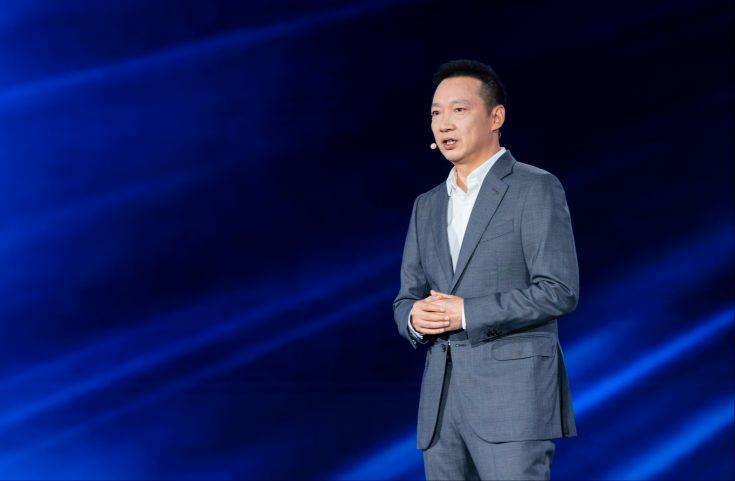
Core Insights - The article emphasizes the transformative impact of artificial intelligence (AI) on the terminal ecosystem, highlighting the shift towards "intelligent interconnection" as a central theme of industrial change [1] - Honor has invested over 10 billion yuan in AI, indicating a strong commitment to developing AI capabilities [1] Group 1: AI Connect Platform - Honor announced the upgrade of HONOR Connect to HONOR AI Connect, marking a transition from "device interconnection" to "scene intelligence interconnection" [1] - The new platform will open three core capabilities to ecosystem partners: intelligent sharing, entry sharing, and ecological sharing, supporting multimodal interactions [1] - The introduction of A-series integrated hardware and software modules aims to reduce R&D costs and shorten product launch cycles for partners [1] Group 2: Ecosystem Strategy - Honor launched the "1×3×N" panoramic ecological strategy to address the fragmented AI terminal ecosystem, focusing on a human-centered, deeply integrated software and hardware approach [3][4] - The "1" represents the HONOR AI Connect platform as the core, while "3" refers to three empowerment models: ecological, channel, and technical & brand empowerment [4] - "N" signifies the coverage of multiple industry clusters, including education, smart home, audio wearables, and pet care, promoting widespread implementation of scene-based ecosystems [4] Group 3: AI Solutions and Technology - Eight AI scene-based ecological solutions were introduced, targeting high-frequency user scenarios such as home, automotive, companionship, and health [4] - Honor's CEO outlined the five-dimensional evolution path of the self-evolving AI operating system MagicOS 10, focusing on personalized large models and efficient scheduling of AI agents [4] - The advancements in MagicOS 10 aim to transform AI from a "responsive tool" to a "proactive intelligent hub," enhancing user experience and fostering an open, evolving ecological foundation for developers [4]

2025年中国CPI膜行业产业链、发展现状及未来发展趋势研判:受益于折叠屏手机加速放量,CPI膜需求不断增加[图]
Chan Ye Xin Xi Wang· 2025-10-24 01:15
Core Insights - CPI film, or transparent polyimide film, is a new type of functional film with excellent properties such as chemical stability, heat resistance, flame retardancy, and good ductility, making it suitable for applications in flexible displays, aerospace, and other industries [1][2][5] Industry Overview - The CPI film market in China is experiencing steady growth, with demand expected to reach nearly 4 million square meters by 2024, driven by rapid developments in downstream industries like electronics and aerospace [5][8] - The production of CPI films involves a complex supply chain, including upstream raw materials, midstream processing, and downstream applications [8] Market Dynamics - The CPI film market is characterized by high technical barriers, with few manufacturers primarily located in Japan and South Korea, such as KOLON and Sumitomo Chemical [5][8] - Chinese manufacturers, including Ruihua Tai and Changyang Technology, are relatively new entrants but have significant potential for domestic market replacement [5][8] Application Areas - The primary application of CPI films is in foldable smartphones, where the shift from LCD to OLED displays is driving demand for flexible display technologies [8][9] - In the solar energy sector, CPI films are used as substrate materials for solar cells, benefiting from their excellent heat and weather resistance [10] Industry Trends - Performance enhancement through molecular structure design and hybrid modifications is a key focus for future CPI film development [11] - Cost reduction strategies, including optimizing production processes and increasing local sourcing of raw materials, are essential for the industry's growth [11] - Expansion into new application areas such as 5G communication, IoT devices, and medical technology is anticipated, highlighting the versatility of CPI films [12]


拍月亮变“P月亮”,当手机摄影被AI算法入侵
Hu Xiu· 2025-10-23 23:48
Core Viewpoint - The article discusses the advancements in smartphone imaging technology, particularly the integration of AI algorithms, and the resulting debates over the authenticity of images produced by flagship devices [6][27][39]. Group 1: Advancements in Imaging Technology - Major flagship smartphones are pushing the limits of imaging capabilities, with models like Xiaomi 17 Pro featuring a Leica ultra-dynamic main camera with a dynamic range of 16.5 EV, and OPPO Find X9 Pro equipped with a Hasselblad 200 million pixel telephoto lens supporting up to 120x digital zoom [1]. - AI technology has become deeply integrated into the imaging processes of flagship smartphones, enhancing features such as image correction and post-processing [8][10]. - The trend of AI-enhanced photography is evident in devices like vivo X300 Pro, which has been developed in collaboration with suppliers to optimize AI algorithms for better user experiences [9]. Group 2: User Experience and AI Algorithms - Users often prefer "one-click" operations for photography, leading manufacturers to default to AI algorithms in the background to simplify the process [7][10]. - Despite the benefits of AI in enhancing photo quality, there are concerns about the "algorithmic taste" overshadowing the authenticity of images, particularly in extreme scenarios like long-distance zoom or high saturation scenes [11][17]. - The debate continues over the balance between realistic photography and algorithmic enhancements, with some users expressing dissatisfaction when AI alters images in unexpected ways [5][6]. Group 3: Industry Trends and Future Directions - The smartphone industry is moving away from purely hardware-based improvements, such as larger sensors, towards software solutions to meet growing consumer demands for better imaging [22][39]. - Companies are recognizing the need to balance AI enhancements with the authenticity of captured images, with some manufacturers like OPPO and vivo aiming to reduce the computational traces in their photography [38][41]. - The evolution of smartphone photography is expected to continue focusing on simplifying user experience while improving image quality through AI, but with a renewed emphasis on maintaining the integrity of real-world scenes [39][40].

深圳加速打造万亿级AI终端生态产业集群
Nan Fang Du Shi Bao· 2025-10-23 23:17
Core Insights - The 2025 Honor Global Developer Conference and AI Terminal Ecosystem Conference commenced in Shenzhen, marking a significant step in building a trillion-level AI terminal ecosystem as a new competitive arena for urban industries [3][5] - Honor announced its AI "1×3×N" ecosystem strategy, aiming to create an open, intelligent, and scalable terminal ecosystem, which is positioned as an AI industrial internet platform [6] Group 1: AI Ecosystem Development - The Guangdong Province's action plan for high-quality development of manufacturing empowered by AI (2025-2027) emphasizes strengthening the supply of industrial AI as a core task, focusing on cultivating industrial software and intelligent equipment [5] - The AI "1×3×N" strategy includes one core platform, three enabling models, and multiple clusters for collaborative development, enhancing the efficiency and cost-effectiveness of AI solutions for partners [6] Group 2: Industrial Infrastructure and Ecosystem - The AI ecosystem in Pingshan has formed a complete chain from AI research and design to terminal manufacturing, supported by over 60% of Shenzhen's chip manufacturing output [6][8] - Pingshan is actively integrating talent, policy, and capital to drive industrial development, showcasing its commitment to building a robust AI industry ecosystem [7][8] Group 3: Strategic Location and Advantages - The choice of Pingshan for the conference reflects recognition of its industrial strength and favorable development environment, leveraging its advanced manufacturing base and diverse application scenarios [8][9] - Pingshan has established itself as a hub for advanced manufacturing, with significant contributions from key industries such as smart vehicles, innovative pharmaceuticals, and integrated circuits [9] Group 4: AI Integration and Application - Pingshan is accelerating the AI transformation of industries, having identified 11 initial AI application scenarios and over a hundred potential applications to embed AI into its three main industries [10] - The region aims to create a closed-loop logic of "technological innovation—scenario application" to facilitate deep AI applications, supported by leading tech companies like Honor [10]
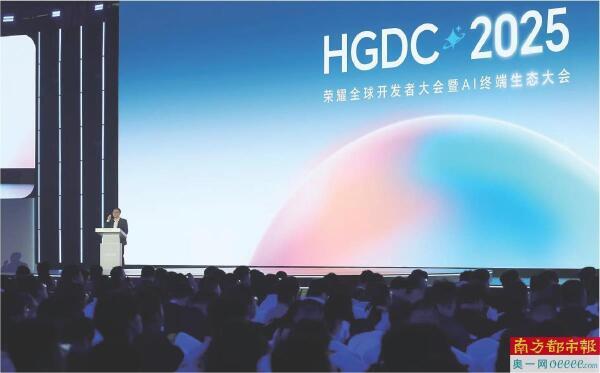
荣耀CEO李健:MagicOS 10与iOS、鸿蒙、安卓、Windows深度互联
Sou Hu Cai Jing· 2025-10-23 22:49
Core Insights - Honor officially launched the MagicOS 10 operating system, marking a strategic shift from traditional OS to an AI OS, as stated by CEO Li Jian [1] Group 1: System Features - MagicOS 10 claims deep interconnectivity with major systems like iOS, HarmonyOS, Android, and Windows, enabling seamless file transfer across devices [3] - The system introduces "zero-gravity transparent design" and "Hummingbird architecture" aimed at enhancing visual experience and system smoothness [3] - The architecture has been restructured with a "five-dimensional evolution" path, covering upgrades from large model foundation to human-computer interaction [4] Group 2: AI Capabilities - The AI agent YOYO, based on Magic Large Model 3.0, possesses three core capabilities: perception, memory, and execution, allowing it to perform complex image processing and free-form image generation tasks [4] Group 3: Developer Engagement - Honor launched the "AI Agent Ecosystem Incentive Program" and the first Intelligent Agent Creative Competition to attract more developers to its ecosystem [6]