
华为

Search documents
巴西矿业能源部长会见宁德时代/远景/华为/三一,共商储能合作
中关村储能产业技术联盟· 2026-01-29 07:01
Core Viewpoint - Brazil is actively seeking collaboration with Chinese companies in the fields of battery storage, critical mineral development, and green hydrogen to transform its energy structure and promote sustainable industrial development [3][12]. Group 1: Meetings with Chinese Companies - On January 19, Brazilian Minister Silveira visited SANY Group to discuss investment plans for an industrial center in Brazil focused on heavy machinery, mining, oil and gas, energy, and power storage [4]. - During a meeting with Envision Energy on January 20, Silveira highlighted Brazil's strategic investment opportunities in sustainable aviation fuel, green hydrogen and ammonia, large-scale wind power, and battery storage, emphasizing Brazil's renewable energy potential and stable policy framework [6]. - In discussions with CATL on January 21, the focus was on the upcoming battery storage auction in Brazil scheduled for April 2026, with an emphasis on sustainable development and value enhancement of key minerals like lithium [8]. - On January 23, Silveira met with Huawei to explore battery storage systems and encourage broader participation of Chinese companies in the upcoming battery auction [10]. Group 2: Policy and Market Developments - Brazil's Law No. 15,269, effective November 2025, eliminates import tariffs on battery storage systems and key components, providing direct incentives for investment and collaboration [12]. - The series of visits aims to attract global attention to Brazil's battery storage auction in 2026 and signals Brazil's shift from a traditional resource-exporting country to an active participant in global green technology and industry cooperation [12]. - The 14th International Energy Storage Summit and Exhibition (ESIE 2026) will be held from March 31 to April 3, 2026, in Beijing, focusing on technological innovation, market trends, and global opportunities in the energy storage sector [13].




预计Q2中晚期发布!豆包手机卷土重来:从“被围剿”,到“反围剿”
3 6 Ke· 2026-01-29 06:55
尽管如此,豆包手机的故事尚未落幕。 据《智能涌现》独家获悉,字节已于去2025年底开启豆包手机助手正式版项目,新机预计将于2026年 Q2中晚期发布。 1月26日,在腾讯公司年会上,马化腾罕见评价了豆包手机——他直言腾讯反对将用户的手机屏幕传到 云端,因为这"极其不安全、不负责任"。 对此评价,豆包手机方面快速做出回应,称将严格遵守用户授权,云端处理遵循"不存储、不训练原 则"。 马化腾的评价,也揭开了豆包手机此前的隐痛。2025年12月,字节旗下豆包手机在发布仅一天后,便经 历了一场严重"围剿"——其AI Agent由于触及了各大超级APP的流量和核心数据,引发了美团、微信、 阿里系在内互联网厂商的联合封锁,AI功能几近瘫痪。 有供应链人士称,字节对新机的预期不低,比第一代的测试版大大提升。在模式方面,豆包 二代手机 依旧合作中兴努比亚,由中兴负责硬件,豆包负责AI。 对此,字节方面暂无回复。 除了攻坚自己的硬件之外,豆包手机还在尝试两条腿走路——和一众手机厂商接洽不同形式的合作。 《智能涌现》获悉,豆包手机与手机厂商谈判的合作模式,主要分为两类: 对于自研生态完善(模型、算力、入口、OS)的手机大厂,比如 ...
通苏嘉甬铁路、沪苏嘉城际铁路将于2028年6月前建成通车
Xin Lang Cai Jing· 2026-01-29 06:50
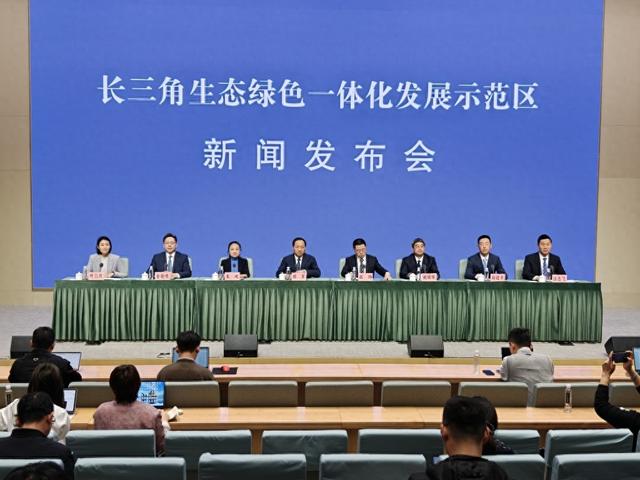
"十四五"期间,长三角生态绿色一体化发展示范区(以下简称"示范区")已经有一批重大项目稳步推 进。"十五五"期间,示范区还将聚焦哪些重点领域,安排哪些重大项目? 1月29日,长三角生态绿色一体化发展示范区新闻发布会举行,上海市政府副秘书长、市发展改革委主 任,长三角一体化示范区执委会主任顾军表示,2025年,长三角生态绿色一体化发展示范区重大项目建 设跑出了"加速度",全年完成投资564.3亿元,完成年度计划的111.3%。 发布会现 场 智通财经记者 江海啸 图 对接道路将建成通车,加快推动G318上海段、G50沪渝高速拓宽改建、练西公路等项目建设,示范区整 体交通路网更加便捷。 在产业创新转型领域,依托全国一体化算力网络长三角国家枢纽节点建设,推动阿里巴巴长三角智能计 算基地、中国移动长三角(上海)5G生态谷数据中心、中国电信吴江算力调度中心等一批数据中心项 目建成投产。 在公共民生服务领域,推动上海市儿童医院示范区医学中心、复旦大学附属中山医院国家医学中心青浦 院区、嘉善新城高级中学、吴江区丝绸中专异地新建等项目建设投用,完成青浦上达中央公园北园、震 泽古镇再塑工程和嘉善历史街区改造等文旅项目建设。执委 ...
阿维塔科技人事调整:孙百功任副总裁
Mei Ri Jing Ji Xin Wen· 2026-01-29 06:45
当前,阿维塔科技正处于产品推广、市场拓展、销量提升,以及港股IPO的关键时期。公开数据显示, 2025年,阿维塔科技全年累计销量突破12万辆。 (文章来源:每日经济新闻) 1月29日,《每日经济新闻》记者从阿维塔科技方面获悉,孙百功任阿维塔科技副总裁,负责市场推 广、产品操盘、营销体系建设等工作。 公开资料显示,2005年,孙百功入职华为,曾任荣耀中东非洲总裁等职位。2024年1月,孙百功担任理 想汽车副总裁。 ...
停产 Model S/X,特斯拉不再是一家汽车公司?
Sou Hu Cai Jing· 2026-01-29 06:08
然而,商业世界没有永恒的丰碑,只有流动的效率和需求。Model S和X的停产,早已是进行时。销量上,它们早已被更大众的Model Y和Model 3淹没,占 比微小。成本上,它们产自相对老旧、成本更高的弗里蒙特工厂,而非上海超级工厂这样的效率标杆。在特斯拉整体毛利率承压、面临空前价格战的今天, 保留两款叫好但未必叫座的小众高端车型,在经济账上已不划算。 图片系AI生成 当一家公司的创始人亲手按下旗舰产品的"停产键",这通常不是庆功的信号,而是背水一战的号角。 北京时间2026年1月29日,马斯克在特斯拉的财报电话会上宣布,Model S和Model X将在下一季度正式停产,体面退役。与此同时,特斯拉交出了上市以来 第一份年度营收下滑的财报:2025年总营收948亿美元,跌了3%;净利润37.9亿美元,近乎腰斩,暴跌46%;全球汽车交付量连续第二年下滑,少了8.6%。 冰冷的数字背后,马斯克却在描绘一个近乎科幻的未来:加州弗里蒙特工厂的轿车生产线将让位于Optimus人形机器人的批量制造;没有方向盘和踏板的 Cybercab出租车即将驶上街头;公司今年要豪掷超过200亿美元(约合人民币1389亿元),全力押注自 ...


字节已开启豆包手机助手正式版项目,新机预计2026年Q2中晚期发布
3 6 Ke· 2026-01-29 05:30
Group 1 - ByteDance is set to launch the official version of the Doubao mobile assistant by the end of 2025, with the new device expected to be released in late Q2 2026, showing significant improvements over the first-generation test version [1] - The Doubao mobile assistant will continue its collaboration with ZTE Nubia for hardware, while ByteDance will focus on AI development, indicating a strategic partnership to enhance product capabilities [1][2] - The competition in the AI mobile assistant market is intensifying, with major players like Huawei, Xiaomi, and OPPO developing their own AI assistants, highlighting the importance of proprietary technology in the industry [2] Group 2 - ByteDance's collaboration with ZTE is partly due to ZTE lacking its own AI assistant, similar to Huawei's initial partnerships, which reflects the reluctance of many manufacturers to rely on external AI solutions [2] - The emergence of AI applications in various hardware, such as glasses and in-car screens, suggests a trend towards deeper integration between AI and hardware manufacturers, with companies like Alibaba also venturing into hardware production [4] - The development of AI phones is transitioning from mere technical demonstrations to a competitive "ecosystem battle," where companies will need to establish robust AI agents that can integrate with their ecosystems effectively [4]

长三角示范区GDP年均名义增速7.3%,累计形成161项制度创新成果
Xin Lang Cai Jing· 2026-01-29 05:17
1月29日,长三角生态绿色一体化发展示范区(以下简称"示范区")新闻发布会举行。 上海市政府副秘书长、市发展改革委主任,长三角一体化示范区执委会主任顾军介绍了示范区"十四 五"期间建设成果,及"十五五"开局之年重点工作安排。 累计形成161项制度创新成果,推进180个重点项目建设 作为长三角一体化发展的先手棋和突破口,示范区自2019年11月揭牌成立以来,始终牢记习近平总书记 嘱托,汇聚两省一市三级八方合力,持续推进示范区高质量发展。经过六年多建设,特别是"十四五"期 间聚力推进,示范区一体化高质量发展势头强劲:GDP年均名义增速7.3%,2025年GDP达到5716亿 元,两区一县各自增速均位居所在省市前列,示范区规模以上工业总产值、工业投资增速等均高于长三 角平均水平。 特别是在刚刚过去的2025年,示范区建设全面发力、亮点不断:中央区域办印发第三批8项示范区改革 授权事项,已累计向示范区作出三批、共26项改革授权,其中前两批18项全部落地,两省一市人民政府 印发9项省级改革授权事项,包括加快统一大市场建设、推动科技创新和产业发展等方面,支持示范区 高质量发展;在"不破行政隶属、打破行政边界"的一体化探索 ...

豆包手机卷土重来:从“被围剿”,到“反围剿”丨智能涌现独家
3 6 Ke· 2026-01-29 05:10
文|邱晓芬 编辑|苏建勋 1月26日,在腾讯公司年会上,马化腾罕见评价了豆包手机——他直言腾讯反对将用户的手机屏幕传到 云端,因为这"极其不安全、不负责任"。 对此,字节方面暂无回复。 如何避免继续被"围剿",会是第二代硬件产品的关键课题。 对此评价,豆包手机方面快速做出回应,称将严格遵守用户授权,云端处理遵循"不存储、不训练原 则"。 马化腾的评价,也揭开了豆包手机此前的隐痛。2025年12月,字节旗下豆包手机在发布仅一天后,便经 历了一场严重"围剿"——其AI Agent由于触及了各大超级APP的流量和核心数据,引发了美团、微信、 阿里系在内互联网厂商的联合封锁,AI功能几近瘫痪。 尽管如此,豆包手机的故事尚未落幕。 据《智能涌现》独家获悉,字节已于去2025年底开启豆包手机助手正式版项目,新机预计将于2026年 Q2中晚期发布。 有供应链人士称,字节对新机的预期不低,比第一代的测试版大大提升。在模式方面,豆包二代手机依 旧合作中兴努比亚,由中兴负责硬件,豆包负责AI。 《智能涌现》了解到,豆包手机团队过去正在与多数主流应用厂商谈判,目前已经与部分互联网公司 (打车、外卖、订票等)谈好了部分常用权限。 谈 ...
行业聚焦:全球智能运动追踪器行业头部生产商市场份额及排名调查(附核心企业名单)
QYResearch· 2026-01-29 03:47
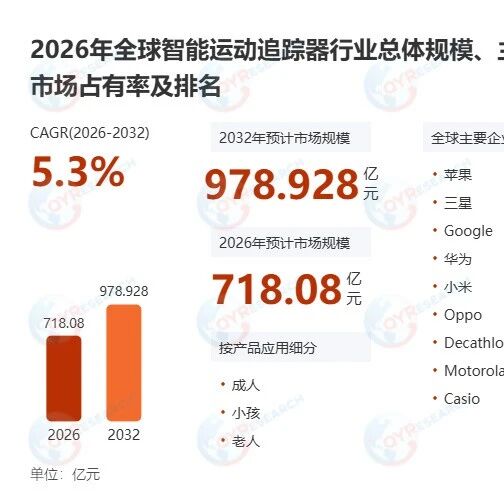
Core Viewpoint - The global smart fitness tracker market is projected to reach $14.4 billion by 2032, with a compound annual growth rate (CAGR) of 5.3% from 2026 to 2032 [3][19]. Global Market Overview - The smart fitness tracker market is expected to grow significantly, with a forecasted market size of $14.4 billion by 2032, reflecting a CAGR of 5.3% [3][19]. - Major manufacturers in the global market include Apple, Samsung, Google, Huawei, Xiaomi, Oppo, Decathlon, Motorola, and Casio, with a concentration of manufacturing in East Asia due to its robust supply chain and cost-effective production capabilities [5]. Industry Chain Analysis - The industry chain consists of upstream components such as sensors and core electronic parts, midstream brand owners and product engineering, and downstream consumers and enterprise applications [7]. - Upstream components include PPG optical heart rate modules, accelerometers, GPS, and various electronic parts [7]. - Midstream activities involve industrial design, firmware development, and product management [7]. - Downstream, consumers utilize fitness trackers for monitoring health metrics, while enterprises leverage aggregated data for health programs [7]. Regulatory Environment - The EU's AI Act classifies fitness trackers with clinical-grade monitoring functions as "high-risk AI systems," requiring third-party audits and transparency reports [8]. - The FDA is reclassifying fitness trackers with ECG or continuous blood pressure monitoring capabilities as Class II medical devices, necessitating pre-market approval [8]. - The EU Digital Product Passport initiative mandates manufacturers to provide lifecycle data for devices to enhance supply chain transparency [8]. Industry Development Trends - There is a shift towards clinical-grade health functionalities and medical validation, with manufacturers integrating advanced biometric sensors and seeking regulatory certifications [9]. - AI-driven personalized services are being embedded in trackers to provide tailored health insights and proactive health guidance [9]. - The industry is moving towards sustainable manufacturing practices, including the use of recyclable materials and modular designs [9]. - Fitness trackers are increasingly integrating into broader smart ecosystems, enhancing user experience through seamless data flow across devices [9]. Development Opportunities - Emerging markets in Southeast Asia, Africa, and Latin America present significant opportunities for localized innovations in affordable fitness trackers [10]. - The integration of clinical-grade fitness trackers into formal healthcare systems offers growth potential, particularly for chronic disease monitoring [10]. - B2B opportunities are expanding as companies invest in employee health management programs, creating demand for customized fitness tracker solutions [10]. - There is a notable unmet demand for inclusive products targeting underserved populations, such as the elderly and individuals with disabilities [10]. Industry Challenges - The industry faces regulatory complexities and fragmentation, with varying regional regulations impacting compliance costs and market entry [11]. - Data privacy and cybersecurity concerns are heightened as fitness trackers collect sensitive biometric data, necessitating robust security measures [11]. - Market saturation and commoditization pressures are leading to intense price competition and challenges in product differentiation [11]. - Limitations in accuracy and user trust regarding biometric tracking can hinder the adoption of fitness trackers in clinical applications [11].
重庆、武汉发力开源鸿蒙生态,计划培育聚集超15万开发者
Guan Cha Zhe Wang· 2026-01-29 03:45
Core Insights - Chongqing aims to establish an open-source HarmonyOS application innovation ecosystem with a two-step plan, targeting the creation of key platforms and the cultivation of developers by 2030 [1][2] - The open-source HarmonyOS, supported by Huawei and the OpenAtom Foundation, is rapidly growing, with nearly 1.2 billion devices currently utilizing it [1] Group 1: Development Goals - The plan includes building three core platforms: an open-source Harmony community, an application innovation center, and a pilot verification platform by next year [1] - By 2030, the goal is to cultivate 50,000 developers and establish a concentrated area for open-source Harmony application innovation [1] Group 2: Key Tasks - Five key tasks are outlined to support the ecosystem, including establishing an industrial ecosystem alliance, enhancing technical innovation, and promoting application scenarios [2] - The initiative aims to create a comprehensive ecosystem that supports platform development, technical breakthroughs, application scenarios, and talent retention [2] Group 3: Application Cases - In the healthcare sector, Chongqing has implemented a smart ward using open-source HarmonyOS, featuring over 3,000 devices to enhance nursing efficiency [2] - The industrial control sector is focusing on advanced sensors and automation, showcasing the "hardcore empowerment" capabilities of open-source HarmonyOS [3] - In smart transportation, applications like "Yuzhixing" provide comprehensive services, and a digital control system for highways has been developed, demonstrating the technology's adaptability [3] Group 4: Broader Initiatives - Wuhan is also advancing its open-source Harmony ecosystem, aiming to establish 100 demonstration scenarios and cultivate over 100,000 developers by 2027 [4] - The Ministry of Industry and Information Technology is promoting high-quality development of industrial internet platforms, encouraging collaboration with open-source HarmonyOS [4]
