
中国进出口银行

Search documents
5000亿元新型政策性金融工具投放完毕
Zheng Quan Ri Bao· 2025-10-31 16:10
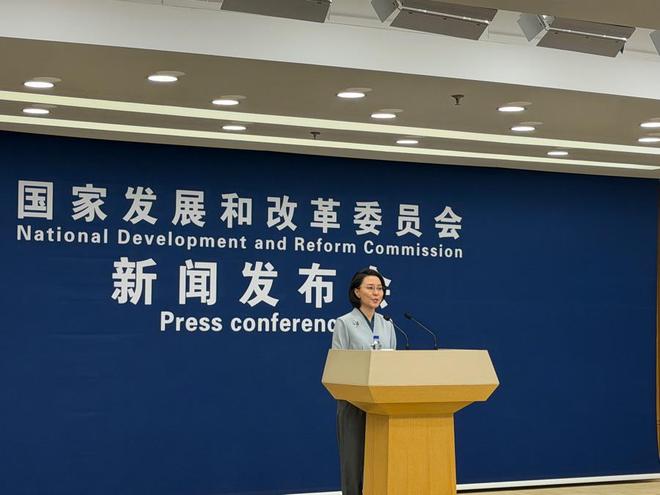
Group 1 - The National Development and Reform Commission (NDRC) announced that 500 billion yuan of new policy financial tools have been fully allocated, supporting over 2,300 projects with a total investment of approximately 7 trillion yuan, focusing on digital economy, artificial intelligence, and urban renewal sectors [1][2] - The China Development Bank completed the allocation of 250 billion yuan in new policy financial tools, supporting 1,054 projects with an expected total investment of 3.85 trillion yuan [1][2] - The Agricultural Development Bank of China successfully allocated 150 billion yuan, supporting 881 projects with an anticipated total investment exceeding 1.93 trillion yuan [1][2] Group 2 - The China Export-Import Bank allocated 100 billion yuan, supporting over 360 projects with an expected total investment of more than 1.3 trillion yuan [1][2] - The three policy banks focused their support on major economic provinces, with the China Development Bank investing 1,949.5 billion yuan in 690 projects across 12 provinces, accounting for 78% of its total allocation [2] - The Agricultural Development Bank supported 667 projects in 12 major economic provinces, with a total amount of 1,087.23 billion yuan [2] Group 3 - The China Development Bank emphasized strengthening its operational functions and management of the new policy financial tools, aiming to ensure effective project implementation and fund utilization [3] - The Agricultural Development Bank plans to shift from efficient allocation to refined management, enhancing project monitoring and compliance in fund usage [3] - The China Export-Import Bank aims to enhance its operational management of the new policy financial tools and increase support for projects already funded [3]
5000亿已投放又来2000亿扩投资,四季度政策加力稳增长
2 1 Shi Ji Jing Ji Bao Dao· 2025-10-31 13:16
Core Points - The National Development and Reform Commission (NDRC) announced the completion of the 500 billion yuan new policy financial tool, supporting 2,300 projects with a total investment of approximately 7 trillion yuan [1][4][5] - The additional 200 billion yuan in special bonds is aimed at supporting local investment projects, marking a significant push for investment in the fourth quarter [3][8] - The overall economic growth in the first three quarters was 5.2%, laying a solid foundation for achieving the annual growth target of around 5% [3][8] Investment and Financial Tools - The new policy financial tool focuses on technology innovation, consumption upgrades, and foreign trade stability, while also considering traditional infrastructure [4][5] - The three policy banks have allocated funds as follows: 250 billion yuan by the China Development Bank, 150 billion yuan by the Agricultural Development Bank of China, and 100 billion yuan by the Export-Import Bank of China [5][6] - The funds are primarily used to supplement project capital, with a maximum of 50% of total capital [4][5] Sector Focus - Key investment areas include digital economy, artificial intelligence, consumer infrastructure, and urban renewal projects [4][5][6] - Specific projects supported include investments in semiconductor manufacturing and smart driving systems, indicating a strong focus on high-tech industries [6] Economic Indicators - The construction industry showed signs of recovery, with the new orders index rising to 45.9%, indicating a positive trend in demand [6][7] - The business activity expectation index for the construction sector increased to 56.0%, suggesting improved confidence among businesses [6][7] Policy Coordination - The NDRC emphasized the need for coordinated fiscal and monetary policies to stabilize and boost investment [8][9] - The central government is expected to implement further measures to support consumption and stabilize the real estate market, which remains a critical area of concern [9][10]

进博会|中国进出口银行发布第八届进博会专项金融服务方案
Zhong Guo Jing Ying Bao· 2025-10-31 12:45
Core Viewpoint - The China Export-Import Bank has launched the "Smart Integration Global 2025" financial service plan to enhance cross-border financial services in response to global trade dynamics and the needs of participants in the China International Import Expo [1] Group 1: Financial Service Plan - The "Smart Integration Global 2025" plan focuses on the changing global foreign trade landscape and aims to support the construction of global industrial chains [1] - The plan combines financing and intelligence services, offering a range of products including credit, trade finance, currency risk hedging, and inclusive finance [1] - It targets domestic importers and foreign exporters, providing efficient and convenient cross-border financial services [1] Group 2: Financing and Intelligence Services - In terms of financing, the plan addresses the entire chain of import trade, catering to financial needs during trade negotiations, contract execution, goods turnover, and payment settlements [1] - The plan also introduces a specialized knowledge product titled "Country Research on Overseas Investment and Economic Cooperation," which aids businesses in understanding country-specific and project information, seizing industry opportunities, and mitigating risks [1]
进出口银行发布“智融全球2025”进博会专项金融服务方案
Xin Hua Cai Jing· 2025-10-31 11:29
Core Insights - The "Intelligent Integration Global 2025" financial service plan has been tailored for the 8th China International Import Expo (CIIE) to support foreign trade and meet the needs of exhibitors [1][2] - The Export-Import Bank of China aims to enhance high-level opening-up and promote high-quality trade development, contributing to the construction of an open world economy [1] Group 1: Financial Service Plan - The "Intelligent Integration Global 2025" plan focuses on the changing global foreign trade landscape and the needs of exhibitors at the CIIE [2] - The plan combines various financial products such as credit, trade finance, exchange rate hedging, and inclusive finance to provide efficient cross-border financial services [2] - It addresses the entire import trade chain, catering to financial needs during trade negotiations, contract execution, goods turnover, and payment settlements [2] Group 2: Support for Foreign Trade - The Export-Import Bank has implemented multiple measures this year to support the expansion of intermediate goods trade, service trade, and digital trade [2] - The bank has provided over 900 billion yuan in loans to the foreign trade sector in the first three quarters of the year [2] - As of the end of September, the bank's import credit balance exceeded 800 billion yuan [2]
中国进出口银行创新金融产品助力中欧班列(西安)跑出“加速度”
Sou Hu Cai Jing· 2025-10-31 06:36
Core Insights - The China Export-Import Bank's Shaanxi Branch has successfully implemented the first "freight certificate + first-level forfaiting" innovative financing model for the China-Europe Railway Express (Xi'an) operator, Xi'an Free Trade Port Construction and Operation Co., Ltd. [1][2] - This financing will support the operational costs of the China-Europe Railway Express (Xi'an) and has already facilitated the operation of over 4,000 trains, maintaining the highest volume and container rate in the country for seven consecutive years [1]. Group 1 - The financing model optimizes the transaction settlement between Xi'an Free Trade Port and the China National Railway Group, alleviating liquidity management pressures for freight consignors and significantly reducing their financial costs [2]. - The successful implementation of this financing model is part of a comprehensive financial solution to support the high-quality development of the China-Europe Railway Express [2]. - The replication and promotion of this business model will provide targeted support to upstream and downstream enterprises centered around the China-Europe Railway Express (Xi'an) [2]. Group 2 - This initiative reflects the deep implementation of the Export-Import Bank's "1348 strategic system" and underscores its role as a key financing bank for the Belt and Road Initiative [2]. - The financing efforts aim to establish Xi'an as a new highland for inland reform and opening up, contributing to the high-quality co-construction of the Belt and Road and promoting more inclusive global economic development [2].
5000亿元已全部投放!
Jin Rong Shi Bao· 2025-10-31 03:42
Core Insights - The National Development and Reform Commission announced the establishment of a new policy financial tool with a total scale of 500 billion yuan, aimed at supporting effective investment and promoting stable economic development [1] - The 500 billion yuan has been fully allocated by the end of October, expected to drive total project investment exceeding 7 trillion yuan [1] - The new financial tool is significant in addressing the capital shortage faced by infrastructure projects, which often struggle with long-term funding sources [1] Group 1: Financial Tool Allocation - The new policy financial tool focuses on key areas such as digital economy, artificial intelligence, and consumption, aligning with national strategic development directions [2] - The three policy banks are leveraging the new financial tool to guide social capital and stimulate accompanying loans, enhancing investment stability and consumer support [2] Group 2: Bank Strategies and Management - The policy banks plan to strengthen their operational roles and post-investment management to ensure effective utilization of the policy funds [2][3] - The Export-Import Bank aims to enhance support for projects already funded by the new tool, accelerating project implementation through improved loan coordination [3] - The Agricultural Development Bank will shift focus from efficient allocation to meticulous management, ensuring compliance and effective use of funds while enhancing policy effectiveness [3]
1个月,5000亿元投放完毕,预计拉动超7万亿元!银行业迎双重利好
Mei Ri Jing Ji Xin Wen· 2025-10-31 03:19
Group 1 - A total of 500 billion yuan new policy financial instruments have been fully deployed, focusing on supporting technological innovation, expanding consumption, and stabilizing foreign trade [1] - The tool operates in a fund model, with the China Development Bank, the Export-Import Bank of China, and the Agricultural Development Bank of China each establishing fund companies responsible for implementation, contributing 250 billion yuan, 100 billion yuan, and 150 billion yuan respectively [1] - All funds are used to supplement the capital of major projects, effectively addressing financing bottlenecks and creating a strong leverage effect, which is expected to drive total project investment scale exceeding 7 trillion yuan [1] Group 2 - The rapid deployment of the new policy financial instruments is expected to boost bank credit demand and optimize bank asset quality, providing dual benefits for the banking sector [1] - In the context of ongoing stable growth policies and a recovery in financing demand from the real economy, the banking industry is likely to experience both asset expansion and liability optimization [1] - The new policy financial instruments further strengthen expectations for economic stabilization and recovery, injecting confidence into the performance recovery and valuation enhancement of the banking sector [1] Group 3 - The banking sector's configuration value is highlighted as policy support continues, with bank ETF funds (515020) covering high-quality listed banks in A-shares [2] - These funds assist investors in effectively capturing the industry recovery trend driven by policies, sharing the long-term value brought by economic recovery and stable interest rate environments [2]
5000亿元新型政策性金融工具完成投放
Sou Hu Cai Jing· 2025-10-30 23:13
Core Insights - The newly established policy financial tools are expected to drive total project investments exceeding 7 trillion yuan [1][2] - A total of 500 billion yuan in new policy financial tools has been fully deployed, effectively supporting key projects in various sectors [1] Group 1: Financial Tool Deployment - The deployment of 500 billion yuan in new policy financial tools has been completed, with a focus on rapid and efficient implementation [1] - The tools were established following a directive from the Central Committee of the Communist Party in April, with active promotion by the National Development and Reform Commission [1] - The three main financial tools have allocated funds as follows: 250 billion yuan from the National Development Bank, 100 billion yuan from the Export-Import Bank, and 150 billion yuan from the Agricultural Development Bank [1] Group 2: Investment Focus Areas - Key areas supported by these financial tools include technological innovation, consumption expansion, and stabilizing foreign trade [1] - Specific projects include a 6 billion yuan investment in a new energy battery industry base in Henan and a logistics project for agricultural products in Zhejiang [1] Group 3: Regional Support - The financial tools have significantly supported major economic provinces, with 690 projects funded in 12 provinces totaling 1,949.5 billion yuan, accounting for 78% of the National Development Bank's tool [1] - The Agricultural Development Bank supported 667 projects in these provinces with a total of 108.7 billion yuan [1] - The Export-Import Bank facilitated over 240 projects in major economic provinces, with nearly 80% of the loan amounts allocated [1] Group 4: Private Investment Engagement - The tools have increased support for private investment projects, with the National Development Bank backing 128 projects totaling 685.9 billion yuan, representing 27.4% of its total support [2] - The Agricultural Development Bank supported 52 private investment projects with 155.33 billion yuan [2] - The Export-Import Bank has also promoted over 100 private investment projects, with loan amounts exceeding 30% of its total [2] Group 5: Expected Impact - The newly deployed financial tools are anticipated to convert project reserves into actual construction activities from October to December, thereby enhancing effective investment and promoting stable economic growth [2] - The National Development Bank, Export-Import Bank, and Agricultural Development Bank are expected to drive total project investments of approximately 3.85 trillion yuan, over 1.3 trillion yuan, and over 1.93 trillion yuan, respectively [2]
人民币崛起! 非洲开始去美元化, 埃塞俄比亚将54亿美元债务转投中国
Sou Hu Cai Jing· 2025-10-30 13:26
Core Viewpoint - African countries, including Ethiopia, are collectively attempting to reduce their reliance on the US dollar, with Ethiopia negotiating to convert part of its $5.38 billion debt to China into renminbi [1][3]. Group 1: Debt and Currency Conversion - Ethiopia plans to convert part of its debt, which was previously used for infrastructure projects funded by China, from US dollars to renminbi [3][5]. - The current interest rate on Ethiopia's dollar loans is approximately 7.25%, while the rate for renminbi loans is around 3%, potentially saving Ethiopia billions in interest payments [5][8]. - Kenya has already converted three loans from US dollars to renminbi, estimating annual savings of about $215 million in interest [5]. Group 2: Economic Relations with China - China is Ethiopia's largest creditor, with infrastructure loans amounting to $14.5 billion, making it a crucial economic partner [8][10]. - Ethiopia's move to establish a stable renminbi settlement mechanism with China aims to strengthen long-term economic cooperation [8][10]. Group 3: Economic Challenges and Strategic Moves - Ethiopia faces significant economic challenges, including high inflation, unemployment, and a recent default on a $1 billion international debt [11][14]. - The Ethiopian government is seeking to alleviate foreign exchange pressures and reduce reliance on the dollar, which complicates imports of essential goods [14][16]. - Ethiopia's recent engagement in a currency swap framework with China is part of a broader strategy to enhance trade facilitation and strengthen its currency's independence [16][19]. Group 4: Broader Trends in Africa - The trend of "de-dollarization" is gaining momentum in Africa, with countries like Nigeria also signing currency swap agreements with China [19][21]. - This shift does not imply that China will take over Ethiopia's debt system but represents an alternative financial pathway for countries burdened by dollar-denominated debt [21][23]. - The move towards renminbi transactions is seen as a financial diplomatic strategy for China and a structural adjustment for Ethiopia, potentially marking the beginning of a monetary sovereignty awakening in Africa [23].
支持超2200个项目,5000亿元新型政策性金融工具投放完毕
Sou Hu Cai Jing· 2025-10-30 10:36
Core Insights - The newly established policy financial tools have successfully allocated a total of 500 billion yuan within one month, aimed at supporting project capital [1][3][4] - The funds are primarily directed towards key economic provinces and sectors, including digital economy, artificial intelligence, and consumption [1][2][3] Group 1: Fund Allocation and Impact - The allocation of the 500 billion yuan is divided among three policy banks: 250 billion yuan to the National Development Bank, 150 billion yuan to the Agricultural Development Bank, and 100 billion yuan to the Export-Import Bank [1][2] - The National Development Bank has completed its allocation of 250 billion yuan, supporting 1,054 projects, which is expected to stimulate a total investment of approximately 3.85 trillion yuan [1][3] - The Export-Import Bank has allocated 100 billion yuan, supporting over 360 projects, with an anticipated total investment of more than 1.3 trillion yuan [2][3] - The Agricultural Development Bank has completed its allocation of 150 billion yuan, supporting 881 projects, with an expected total investment exceeding 1.93 trillion yuan [2][3] Group 2: Focus Areas and Regional Distribution - The funds are concentrated in 12 major economic provinces, including Guangdong, Zhejiang, and Sichuan, with 690 projects receiving 1,949.5 billion yuan, accounting for 78% of the total allocation [1][3] - The focus areas for investment include digital economy, artificial intelligence, and consumption, with 317 projects in these sectors receiving 980.2 billion yuan, representing 39.2% of the total allocation [1][2] - The policy tools are designed to enhance private investment, with 128 projects supported by private capital, amounting to 685.9 billion yuan, which is 27.4% of the total allocation [1][2] Group 3: Economic Implications - The total expected investment impact from the 500 billion yuan allocation is approximately 7.08 trillion yuan, with contributions from all three policy banks [3][4] - Analysts suggest that this initiative could potentially drive infrastructure investment growth by 3-4 percentage points annually over the next three years [4]