珀莱雅

Search documents
香氛、唇膏、护手霜,美妆产品在“包”上出道了
2 1 Shi Ji Jing Ji Bao Dao· 2026-01-22 08:01
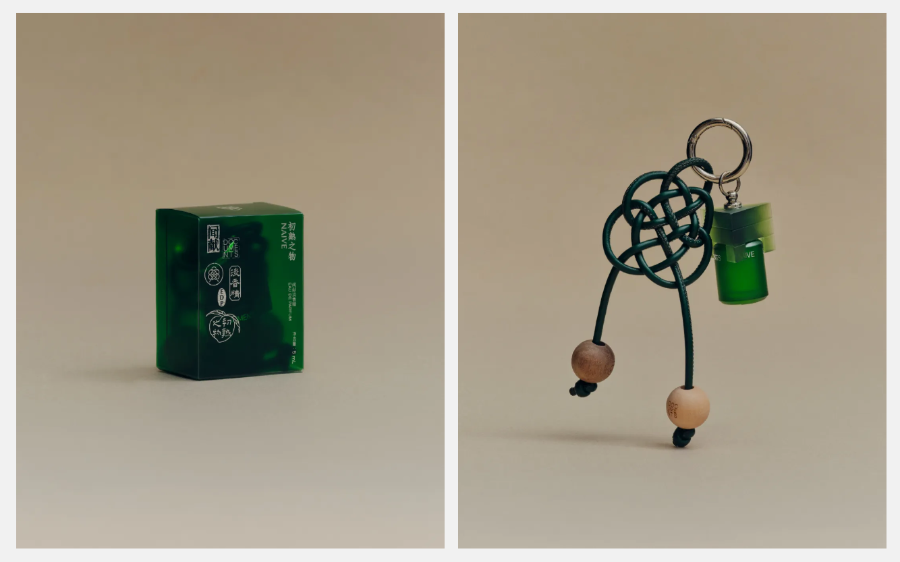
21世纪经济报道记者朱艺艺报道 从国产香氛品牌闻献的"Q香绳结包挂",到新锐个护品牌摇滚动物园联名茉莉奶白的挂链护手霜,越来越多美妆产品开始"跳 出"化妆包,争先在"包"上出道。 这些挂件式美妆产品,已从最初的香水香氛,逐渐渗透至唇膏、护手霜、防晒霜等多个品类,一方面实现美妆产品即时取用、 随时补护的场景自由,另一方面展现出年轻消费群体希望"被看见又不张扬"的个性表达。 在这股"包挂"热潮下,许多美妆品牌试图打开新的市场空间,寻求业绩增量,但目前来看,市场体量还未成气候。 美妆上"包" Z世代对于"颜值即正义"的消费心理,推动挂件式美妆产品悄然走红。 一个挂在"痛包"上的护手霜、一个引发朋友圈话题的戒指唇膏……护手霜、唇膏、防晒霜、粉饼等美妆产品,正通过挂链、环 扣、编绳等多种形态,与包具、衣服等日常物品搭配,成为年轻人新的社交货币。 根据用户说研究中心数据,2025年1月1日-12月31日,以"挂饰/挂绳/链条与护肤/彩妆/香水相关包装设计组合"为关键词的"挂饰 美妆"声量在近一年内增长迅速,声量破21.8万,同比增长高达41.8%。 这一数据印证了挂件美妆潮流的强劲势头,在这股"包挂"热潮下,不少品牌纷纷 ...

化妆品交易额破1.1万亿元,线上销量占比接近2/3
Sou Hu Cai Jing· 2026-01-21 19:18
Core Insights - The Chinese cosmetics industry is projected to reach a total transaction value of 1.104245 trillion yuan by 2025, marking a year-on-year growth of 2.83%, and maintaining its position as the world's largest cosmetics consumer market [1][6]. Market Overview - The market is undergoing a significant transformation, with resources concentrating on leading brands and technology-driven companies, while weaker brands are being eliminated [3][9]. - The market share of domestic brands has increased for four consecutive years, reaching 57.37% by 2025, indicating a shift towards a "domestic brand-led" market [3][6]. Brand Dynamics - The number of brands with sales exceeding 100 million yuan is expected to rise from 746 in 2023 to 839 in 2025, reflecting an improvement in brand quality [6]. - The top 1000 online brands are increasingly dominated by domestic brands, which are now competing effectively against traditional powerhouses from France, the USA, Japan, and South Korea [3][6]. Market Structure Changes - The industry is experiencing a significant shakeout, with an estimated 27,000 brands expected to be eliminated by 2025, and only about 26% of lower-tier brands projected to achieve growth [9][12]. - The market is shifting from quantity-based competition to quality-based competition, focusing on brand value, technological innovation, and user experience [9][12]. Consumer Behavior - Consumer preferences are evolving towards high-cost performance products priced below 300 yuan and high-end products above 1000 yuan, while the mid-range market is being squeezed [13]. - The new consumer consensus emphasizes rational and refined purchasing decisions, focusing on ingredients, efficacy, cultural identity, and emotional value [13]. Regulatory Environment - New regulations are being introduced to create a fair competitive environment for both online and offline channels, with offline spaces being redefined as comprehensive areas for brand experience and social interaction [14]. - The regulatory framework is shifting from strict control to promoting development, with a focus on innovation incentives and reducing entry barriers for new products [14]. Technological Innovation - The integration of artificial intelligence is expected to reshape the industry significantly between 2026 and 2030, enhancing research and development, personalized content production, and supply chain efficiency [17]. - Companies are increasingly investing in R&D, with the average R&D expense ratio rising from 2.36% to 3.24% over five years, highlighting a trend towards innovation-driven growth [14][17]. Future Outlook - The industry aims to transition from being a "cosmetics manufacturing power" to a "cosmetics strong power," focusing on intelligent, green, and integrated development [16][18]. - The market is expected to expand towards the "silver economy" and international markets, with domestic brands enhancing their global presence [16][15].
我国化妆品产业蓬勃发展 美妆企业向“新”求变
Zheng Quan Ri Bao Wang· 2026-01-21 13:12
Group 1: Market Overview - In 2025, China's cosmetics market is projected to reach a record high with a total transaction value exceeding 1.1 trillion yuan, specifically 1,104.245 billion yuan, representing a year-on-year growth of 2.83% [1] - Domestic brands continue to lead in competitiveness, increasing their market share to 57.37% [1] - The retail growth in cosmetics indicates strong industry recovery resilience, with consumer demand shifting towards quality, efficacy, and brand value [1] Group 2: Policy Support and Industry Development - Recent government policies have been introduced to support the beauty industry, including innovation incentives, standard improvements, and brand cultivation [2] - The National Medical Products Administration released 24 reform opinions and 48 specific measures aimed at enhancing innovation support and regulatory efficiency in the cosmetics sector [2] - A comprehensive support system has been established to ensure safety while encouraging the development of silver-haired products and personalized services [2][3] Group 3: Innovation and Transformation in Beauty Enterprises - Domestic beauty companies are actively seeking innovation and transformation, focusing on raw material innovation, technological empowerment, and channel reform [4] - Companies like Shandong Sanyuan Biotechnology are investing in forward-looking research on cosmetic raw materials with cost and process advantages [4] - Artificial intelligence and smart manufacturing are being utilized to enhance operational efficiency and consumer experience, with applications in product development and customer service [4] Group 4: Channel Development - Proya Cosmetics has partnered with Yixin Tang Pharmaceutical Group to enter the offline OTC (over-the-counter) medical research channel, focusing on a systematic layout of "medical research empowerment and cosmetic synergy" [5]
国货领跑,中国化妆品交易首次突破1.1万亿元
Di Yi Cai Jing· 2026-01-21 13:03
Core Insights - The Chinese cosmetics market is projected to reach a total transaction value of 1.1 trillion yuan by 2025, marking a year-on-year growth of 2.83% and maintaining its position as the world's largest cosmetics consumer market [2] - Domestic brands have seen a significant increase in market share, surpassing 50% for the first time in 2022 and reaching 52.82% in 2023, with expectations to grow to 57.37% by 2025 [2][3] - The rise of domestic brands indicates a shift in the market from being dominated by international brands to being led by local brands, reflecting a new development phase in the industry [3] Market Trends - The growth trajectory of the cosmetics industry shows a year-on-year increase of 3.61% in 2023 and 2.80% in 2024, demonstrating resilience amid global economic adjustments [2] - The market is transitioning from "total expansion" to "structural optimization," focusing on depth competition rather than breadth expansion [4] - Consumer behavior is evolving, with a shift towards rational purchasing decisions based on product ingredients and efficacy, rather than brand prestige [4] Consumer Preferences - The consumption structure is increasingly polarized, with products priced below 300 yuan accounting for 58.88% of sales, while high-end products priced above 1000 yuan represent 14.75% [4] - Sales in the 300-500 yuan and 500-1000 yuan price ranges are declining, indicating a clear trend towards high-value and premium products [4] Industry Developments - A significant number of beauty-related companies are preparing for IPOs in 2025, covering various segments of the supply chain [3] - Notable companies such as Gu Yu and Lin Qingxuan are actively pursuing listings, indicating a robust interest in capital markets within the cosmetics sector [3]
第一财经、应帆科技首发《中国消费品牌智能创新白皮书》
第一财经· 2026-01-21 12:59
1 月 21 日,第一财经、应帆科技正式发布 "2025 中国消费品牌智能创新大调查 " 研究成果,重 磅首发 《 2025 中国消费品牌智能创新白皮书》 ,并同步揭晓 " Growth50·2025 中国消费年度 智能创新领导品牌 " 及各项代表案例,全景式展现中国创新消费新潮。上海广播电视台(上海文广 集团)副台长、副总裁,第一财经党委书记、董事长,应帆科技董事长李蓉表示, " 当前,千行百 业都已进入 ' 智能驱动 ' 阶段,本次大调查为消费品牌的智能创新提供切实的参照系与行动指南, 是第一财经消费生态圈建设的关键举措。 " 2025 中国消费品牌 智能创新大调查 Growth50-2025 中国消费 年度智能创新领导品牌 注:按首字母排序 安克创新 A 安琪 霸王茶姬 B 珀菜雅 波司登 回望过去几年,消费市场数度变迁。应帆科技旗下第一财经商业数据中心( CBNData )作为消费 领域的长期观察者,已连续四年发起 " 中国消费品牌增长力大调查 " ,从新消费元年的 " 看长 " 到震荡时期的 " 向真 " ,从不确定环境下的 " 应变 " 到审视初衷的 " 塑心 " ,持续探寻中国消费 的发展脉络。 ...

【IPO前哨】花物堂携“半亩花田”闯关港交所,巨额营销引关注
Sou Hu Cai Jing· 2026-01-21 12:16
Core Viewpoint - The Hong Kong stock market is experiencing a surge in listings from beauty companies, with Shandong Huawutang Cosmetics Co., Ltd. planning to go public, leveraging its popular brand "Banmu Huatian" known for affordable natural skincare products targeting young consumers [2][3]. Company Overview - Huawutang, established in 2018, focuses on a brand philosophy of "flower-based skincare" and has developed a comprehensive product matrix covering body, hair, and facial care [3]. - The brand "Banmu Huatian" has gained popularity due to its competitive pricing, with products averaging around 20 RMB, which has been crucial for capturing market share [5]. Market Position - According to Frost & Sullivan data, Huawutang has become the leading domestic brand in body lotion, body scrub, and facial cleansing mousse by retail sales in 2024, with significant sales figures: 37.7 million bottles of body scrub and 56.9 million bottles of body lotion sold cumulatively by September 2025 [3][4]. - The company has successfully diversified its product offerings, with hair care revenue reaching 482 million RMB in the first nine months of 2025, a nearly 500% increase year-on-year, now accounting for 25.4% of total revenue [3]. Financial Performance - Revenue has shown rapid growth, increasing from 1.199 billion RMB in 2023 to 1.499 billion RMB in 2024, and reaching 1.895 billion RMB in the first nine months of 2025, representing a year-on-year growth of 76.7% [8][9]. - Despite the growth in revenue, the company faces challenges with profitability, as its gross margin was only 62.3% in 2024, significantly lower than competitors like Maogeping and Linqingxuan, which exceed 80% [9][10]. Marketing Strategy - Huawutang's growth is heavily driven by substantial marketing investments, with expenses reaching 637 million RMB in 2023 and increasing to 896 million RMB in the first nine months of 2025, resulting in a marketing expense ratio of 47.3% [7][9]. - The company employs celebrity endorsements and social media marketing strategies to enhance brand visibility and consumer engagement [7]. Challenges Ahead - The company’s reliance on low-priced products and high marketing costs raises questions about the sustainability of its growth model, especially as competition intensifies in the beauty industry [10]. - Huawutang needs to address the declining growth in facial care products, which saw a revenue drop from 50.1% of total revenue in 2023 to 24.4% in the first nine months of 2025, indicating a need for product differentiation and innovation [4][10].
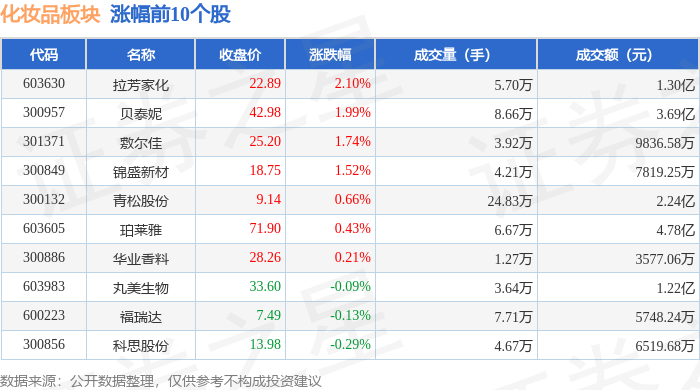
化妆品板块1月21日涨0.25%,拉芳家化领涨,主力资金净流出5552.25万元
Zheng Xing Xing Ye Ri Bao· 2026-01-21 09:08
Group 1 - The cosmetics sector experienced a slight increase of 0.25% on January 21, with Lafang Jiahua leading the gains [1] - The Shanghai Composite Index closed at 4116.94, up 0.08%, while the Shenzhen Component Index closed at 14255.12, up 0.7% [1] - Lafang Jiahua's closing price was 22.89, reflecting a rise of 2.10%, with a trading volume of 57,000 shares and a transaction value of 130 million yuan [1] Group 2 - The cosmetics sector saw a net outflow of 55.52 million yuan from institutional investors, while retail investors had a net inflow of 30.86 million yuan [2] - The trading data for various companies showed mixed performance, with some companies like Betaini and Lafang Jiahua experiencing net outflows from institutional investors [3] - Betaini had a net outflow of 14.09 million yuan from institutional investors, while Lafang Jiahua saw a net inflow of 13.43 million yuan [3]



珀莱雅20260120
2026-01-21 02:57
Summary of the Conference Call for Proya (珀莱雅) Company Overview - Proya is a cosmetics company that has experienced fluctuations in its valuation since its IPO in 2017, driven by net profit growth and a focus on blockbuster products during its initial years [2][4]. Key Points and Arguments Financial Performance - Since 2025, Proya has seen a significant slowdown in quarterly revenue growth, although the first quarter of 2025 exceeded profit expectations. Overall, the sustainability of this growth is questionable [3]. - The gross margin has shown a steady increase, while the net profit margin has remained relatively stable. However, the valuation has been on a downward trend since 2025, currently at historical lows [3][4]. Brand Performance - The main brand, Proya, experienced negative growth overall in 2025, with only the third quarter showing positive growth due to new product launches and a low base effect. In contrast, sub-brands such as of relax, 原色波塔, and 花知晓 performed exceptionally well, with of relax achieving a compound growth rate close to 150% [2][6]. Leadership and Strategic Concerns - There are concerns regarding the declining momentum of the main brand and risks associated with leadership changes. However, the new leadership team has successfully integrated over the past year, and the operational capabilities of the company have matured [7]. Product Innovation - Proya is actively pursuing product innovation in 2025, including upgrades to the dual-antioxidant series, which saw a 72% year-on-year increase within 10 days of launch, and a significant upgrade to the ruby series. A new ruby microbead essence is set to be launched, promoted through social media platforms like 小红书 [8]. Future Directions - The company plans to focus on key areas such as whitening, soothing, anti-aging, sun protection, and post-operative recovery. Additionally, Proya is investing in emerging brands like 花知晓 to expand its market presence and is exploring the home beauty device sector to tap into the broader water-light market [9][10]. Profit Forecast - Proya's net profit is projected to be approximately 1.58 billion yuan in 2025, maintaining slight growth, with an expected increase to 1.74 billion yuan in 2026, representing a year-on-year growth of around 10%. The current price-to-earnings ratio is 16 times, indicating a relatively cheap valuation compared to its quality [5][11]. Additional Important Insights - The company’s ability to regain valuation hinges on the recovery of its main brand's performance and stable growth across its business segments [4]. - Proya aims to establish itself as a benchmark for domestic brands and pursue international expansion to achieve valuation premiums [5][11].

彩妆品牌合伙人离职、超八成收入来自韩束,上美股份如何解决结构难题?
凤凰网财经· 2026-01-20 12:44
Core Viewpoint - The recent departure of Gu Mai, a key partner of NAN beauty under Shangmei Co., has raised concerns about the company's reliance on a single brand and its overall business strategy in the beauty industry [3][4]. Group 1: Management Changes - Gu Mai, previously with Estee Lauder and LVMH, joined Shangmei in 2025 as a partner for NAN beauty, which was launched in September 2025 [3][4]. - The departure of Gu Mai highlights the challenges Shangmei faces in diversifying its brand portfolio and improving its performance in the competitive beauty market [3][4]. Group 2: Revenue Dependence - Over 80% of Shangmei's revenue comes from the Han Shu brand, which generated 33.44 billion yuan in the first half of 2025, marking a 14.3% increase from the previous year [6]. - Other brands under Shangmei, such as newpage, Yiyezi, and Hongse Xiaoxiang, contributed significantly less, with revenues of 3.97 billion yuan, 0.89 billion yuan, and 1.59 billion yuan respectively [6]. Group 3: Channel Strategy - Shangmei's online sales account for over 90% of its revenue, with a significant portion coming from Douyin, indicating a high sensitivity to platform traffic and a relatively weak risk management capability [3][6]. - The company's marketing expenses remain high, with sales and distribution costs at 56.9% of total revenue in the first half of 2025, slightly down from 57.6% in the previous year [8]. Group 4: Market Position and Future Outlook - The beauty industry has seen success with brands linked to celebrity makeup artists, but Shangmei's NAN beauty has not yet shown significant growth in follower numbers on platforms like Xiaohongshu [5][6]. - Experts suggest that while there are opportunities in the Tmall channel, Shangmei's main brands are nearing saturation on Douyin, and the success of its second growth curve remains uncertain [9].

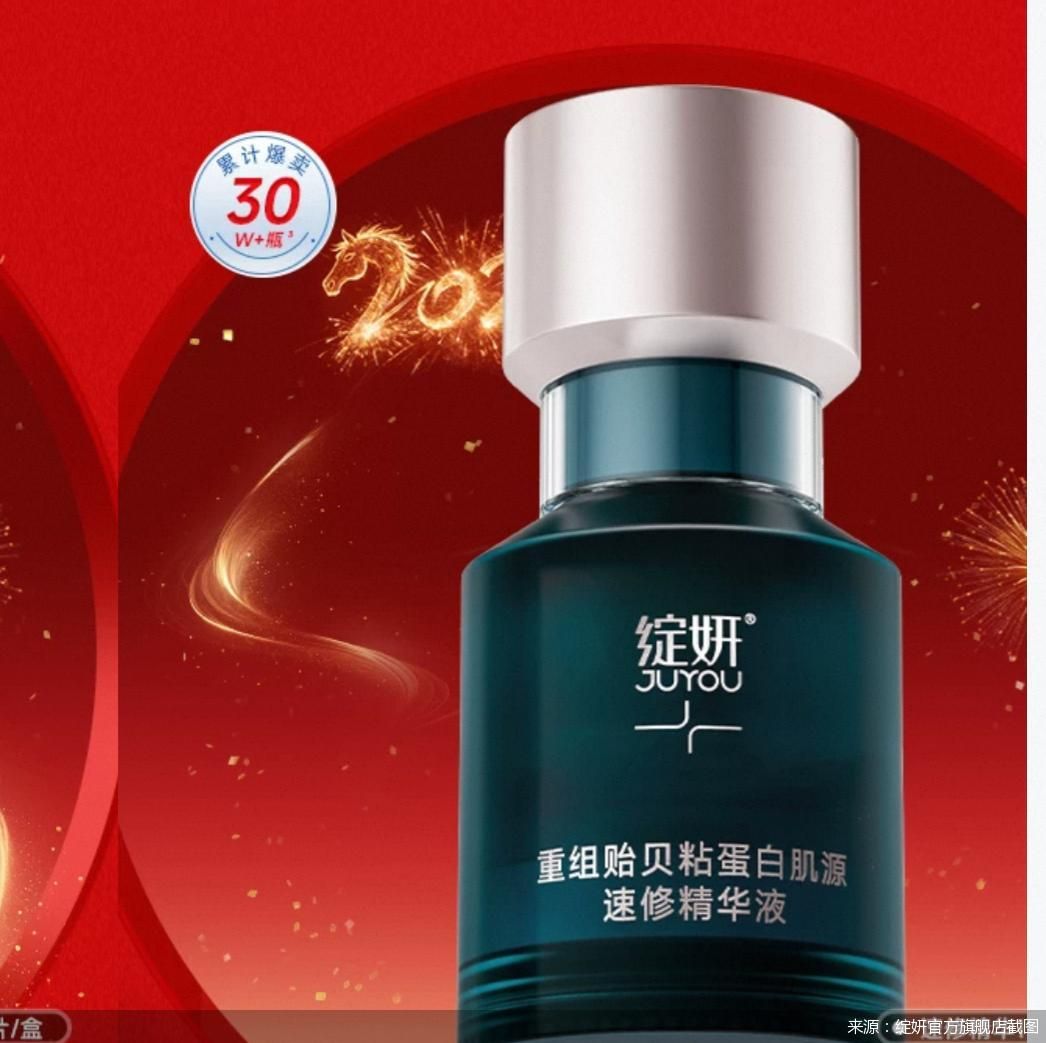
启动上市计划,绽妍生物晚不晚?
Bei Jing Shang Bao· 2026-01-20 12:25
Core Viewpoint - Zhan Yan Biotechnology Co., Ltd. has initiated the listing guidance process to publicly issue shares and list on the Beijing Stock Exchange, aiming to leverage capital market support for sustainable development and increased competitiveness in the beauty industry [2] Company Overview - Zhan Yan Biotechnology was established on December 6, 2019, with a registered capital of 61.62 million yuan, and is led by Zhang Yingting, who holds 62.1551% of the shares [3] - The company specializes in the research, production, and sales of biomedical materials, dermatological skincare products, and biological raw materials, with brands including Zhan Yan and Zhan Xiao Yan [3] - The Zhan Yan brand was launched earlier in 2015, focusing on medical research collaboration, offering products for sensitive skin repair [3] Financial Performance - Projected revenues for Zhan Yan Biotechnology are 486 million yuan and 597 million yuan for 2023 and 2024, respectively, with net profits of approximately 68.48 million yuan and 73.50 million yuan [3] - The gross profit margins are expected to be 62.33% and 68.34% for the same years [3] Market Position and Competition - Zhan Yan's development appears to be lagging behind competitors like Fulejia and Beitaini, which have already established themselves in the capital market and achieved significant revenue growth [4] - Fulejia and Beitaini reported revenues of 1.93 billion yuan and 5.5 billion yuan for 2023, respectively, indicating a strong market presence [4] Strategic Considerations - The company faces challenges in balancing strategic choices and investments between raw material supply and brand products [5] - The competitive landscape includes not only established brands but also new entrants in the medical beauty product segment, increasing market pressure [5] - Zhan Yan's revenue is primarily derived from offline channels, with a significant portion coming from distributors and hospitals, which poses a challenge for transitioning to an online-focused market [5]