科大讯飞

Search documents
细数A股爱炒的春节题材
虎嗅APP· 2026-02-13 13:57
Core Viewpoint - The article discusses the structural opportunities in the stock market around the Chinese New Year, emphasizing the importance of macroeconomic factors, liquidity, and event impacts on market trends [5][14]. Group 1: Market Trends Pre and Post Spring Festival - Historical patterns suggest that the stock market does not consistently follow the "digging a pit before the festival and rising afterward" trend, with varying performances over the past ten years [9][11]. - The article presents data showing mixed results for the A-share market before and after the Spring Festival, with some years experiencing significant rebounds while others faced declines [10][12]. - Key factors influencing market movements include macroeconomic expectations, liquidity conditions, and external shocks, which collectively shape the market narrative [14]. Group 2: Factors Influencing 2026 Spring Festival Market - The macroeconomic outlook indicates potential challenges from the U.S. market, particularly concerning technology stocks, which could impact global capital markets [15][19]. - The upcoming Two Sessions are expected to bring positive policy signals, which may enhance macroeconomic expectations and liquidity conditions post-festival [17]. - Historical data shows a 100% probability of leveraged funds returning in the first three trading days after the festival, indicating a potential recovery in market sentiment [18]. Group 3: Investment Opportunities in Consumer and Technology Sectors - The article highlights the K-shaped recovery in consumer spending, with a focus on high-end tourism, luxury goods, and duty-free shopping as key areas of interest for investors [26]. - The Spring Festival is expected to catalyze interest in AI technologies, particularly as major internet companies engage in competitive "red envelope" campaigns, which could drive significant market activity [30][35]. - The performance of technology stocks, especially those related to AI, is anticipated to be a major theme in the post-festival market, with structural opportunities likely to arise [21][33].


讯飞医疗主要股东延长禁售期,中标国家AI中试基地项目
Jing Ji Guan Cha Wang· 2026-02-13 11:14
Group 1 - The main shareholder of iFlytek Medical Technology has extended the lock-up period for one year until December 29, 2026, demonstrating confidence in the company's long-term development and potentially stabilizing market expectations [2] - iFlytek Medical won a significant national project worth 428 million yuan for AI application in healthcare, marking a shift from traditional software delivery to a "model as a service" approach, which may lead to sustained revenue and strengthen its industry position [3] - The AI healthcare sector is expected to experience a large-scale application wave by 2026, with iFlytek Medical positioned to benefit from policy-driven order growth and market expansion [4] Group 2 - The company continues to optimize its self-developed "Spark" medical model, maintaining industry leadership in general auxiliary diagnosis and health consultation, with technology upgrades and clinical implementation expected to enhance monetization capabilities [5] - In the first half of 2025, the company reported a revenue increase of 30.26% to 299 million yuan, with a net loss reduction of 42.86%, indicating potential for improved profitability as medical model orders are expected to materialize in 2025 [6]
一图看懂 | AI内容审核概念股
市值风云· 2026-02-13 10:13
Group 1 - The core viewpoint of the article emphasizes the importance of compliance in information dissemination during the AI era [1] - The article highlights that over 13,000 accounts have been disposed of and more than 543,000 pieces of information have been cleaned up, indicating a strong regulatory approach [5] - There is a call for creators to proactively add AI identification to foster a clean and positive online environment [5] Group 2 - The article outlines several key areas related to AI content review, including digital watermarking and AI anti-fraud measures [6] - It mentions various companies involved in the digital watermarking technology and network security, such as Hanbang Gaoke, Xinhua Net, and Keda Xunfei [6] - The content also references the application of digital watermarking in extending its use cases, indicating a growing trend in the industry [6]




「AI新世代」一场心照不宣的春节AI卡位战:去年DeepSeek意外破圈,今年国产大模型集体“交卷”
Xin Lang Cai Jing· 2026-02-13 10:07
Core Insights - The Chinese large model industry is experiencing a surge in new model releases, with companies like Zhiyu, iFlytek, and MiniMax launching competitive models ahead of the Spring Festival, indicating a strategic push to capture market share before 2026 [2][4][6] - The focus of large models has shifted from parameter competition to engineering efficiency, with an increasing number of Chinese open-source models gaining recognition on global platforms [2][8] - The release of Zhiyu's GLM-5 model has led to significant stock price increases, reflecting strong market enthusiasm and the model's high performance in programming tasks [3][4] Company Developments - Zhiyu's GLM-5 model was launched on February 12, achieving a market capitalization of HKD 216.2 billion after a stock price increase of 28.68% [2][3] - iFlytek introduced the Xinghuo X2 model on February 11, claiming it matches international top models in various capabilities, while MiniMax's M2.5 model was released on February 13, showing improved decision-making capabilities [4] - The Kimi K2.5 model from Moonlight Dark Side achieved a token call volume of 1.53 trillion, ranking first globally, showcasing the competitive landscape among Chinese AI models [5] Market Trends - The recent model releases are seen as a response to the success of DeepSeek, which gained significant traction last year, prompting other companies to replicate its success [6][7] - The AI large model industry is entering a phase of engineering maturity, with companies focusing on showcasing their research achievements to enhance brand recognition [5][8] - Predictions indicate a potential market stratification, where major players like ByteDance and Alibaba dominate general models, while smaller firms seek opportunities in niche verticals [8]


科大讯飞不超40亿元定增获深交所通过 国元证券建功
Zhong Guo Jing Ji Wang· 2026-02-13 09:21
Core Viewpoint - The company, iFlytek, has received approval from the Shenzhen Stock Exchange for its application to issue shares to specific investors, pending final approval from the China Securities Regulatory Commission (CSRC) [1][2]. Group 1: Issuance Details - The total amount to be raised from the issuance is capped at 400 million yuan, which will be used for the Spark Education model, computing platform, and to supplement working capital [1][3]. - The issuance will involve no more than 100 million shares, representing 4.33% of the total share capital prior to the issuance [2][3]. - The pricing mechanism for the shares will be based on 80% of the average trading price over the 20 trading days preceding the issuance date [2]. Group 2: Specific Investors - The issuance will target no more than 35 specific investors, including Anhui Yanzhi Technology Co., Ltd., which is controlled by iFlytek's actual controller, Liu Qingfeng, and plans to subscribe for between 250 million yuan and 350 million yuan [2][3]. - The issuance constitutes a related party transaction due to the involvement of Yanzhi Technology, which is an affiliate of Liu Qingfeng [2]. Group 3: Control and Governance - Following the issuance, Liu Qingfeng's voting rights in iFlytek are expected to decrease slightly to between 11.16% and 11.26%, but he will remain the actual controller of the company [3]. - The lead underwriter for this issuance is Guoyuan Securities Co., Ltd., with representatives Zhu Peifeng and Liu Ziqi overseeing the process [3].

国产算力发展迎拐点性机遇,数字经济ETF(560800)红盘微扬
Xin Lang Cai Jing· 2026-02-13 06:49
Group 1 - The core viewpoint of the articles highlights the positive outlook for the semiconductor industry, with global sales expected to grow by 22.5% to reach $772 billion in 2025 and potentially approach $1 trillion in 2026, driven by AI and data center demands [1][2] - The digital economy ETF closely tracks the CSI Digital Economy Theme Index, which includes companies involved in digital infrastructure and high digitalization applications, reflecting the overall performance of digital economy-related securities [2] - The top ten weighted stocks in the CSI Digital Economy Theme Index account for 52.9% of the index, indicating a concentration in key players such as Dongfang Wealth, Cambricon, and SMIC [2] Group 2 - The report from CITIC Securities anticipates a high certainty in computing power development by 2026, with supernode technology reaching a pivotal opportunity, and an increase in competitiveness among domestic computing power manufacturers [2] - The AI data centers exhibit a high coupling of energy flow, thermal flow, and data flow, with technological upgrades like full-link liquid cooling and NVLink interconnect architecture accelerating the evolution of computing infrastructure towards high density and energy efficiency [1]

墙面秒变艺术馆!一群机器人让你的家每天换新皮肤
机器人大讲堂· 2026-02-13 06:04
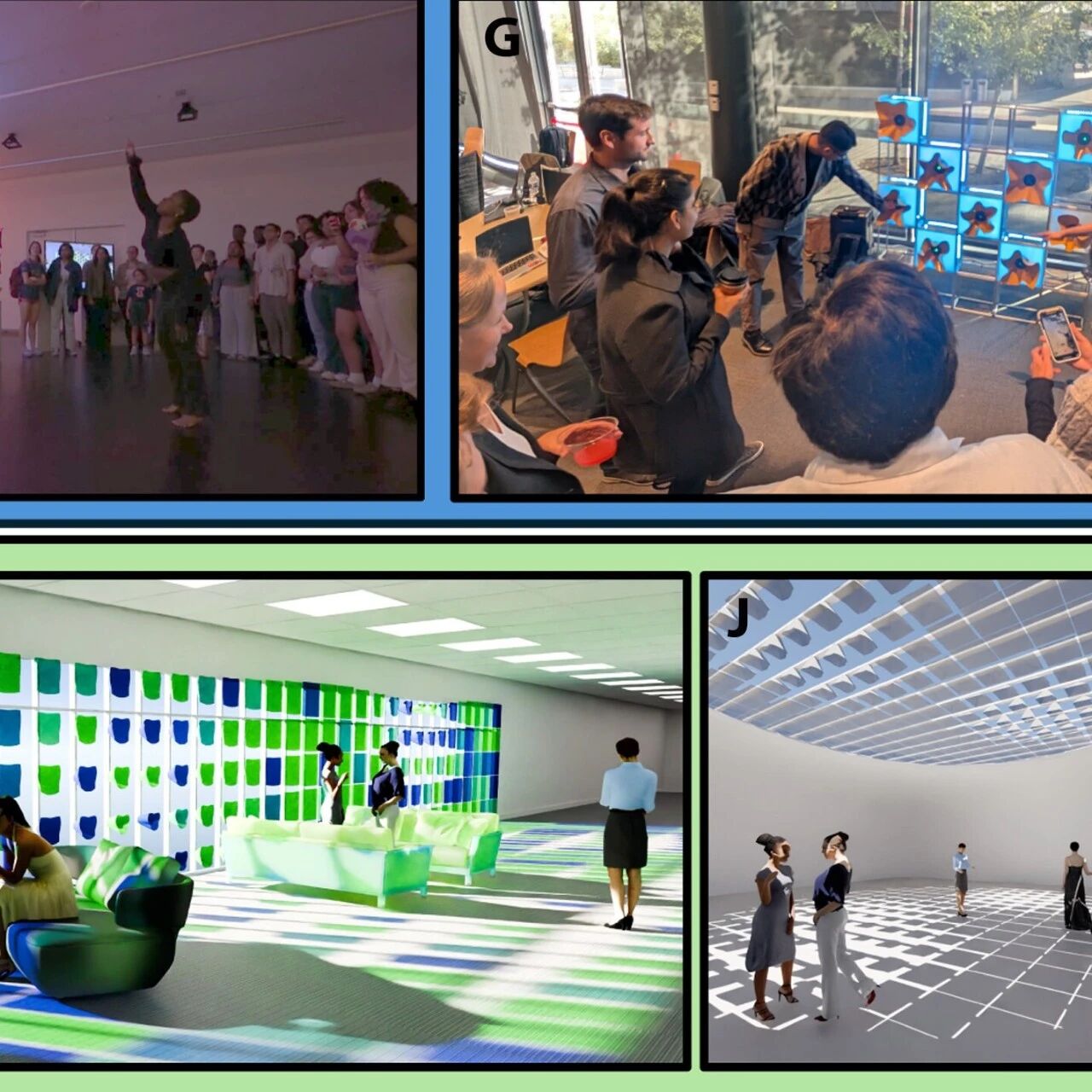
Core Concept - The article introduces the concept of "Building Collective Intelligence" through a modular robotic facade system called "Swarm Garden," developed by a research team from Princeton University and other institutions. This system allows buildings to adapt dynamically to environmental changes and human interactions, transforming traditional architecture into responsive, artistic structures [2][3]. Group 1: Inspiration from Nature - The research team draws inspiration from nature, noting that plants and animals exhibit intelligent behaviors without central control, such as plants adjusting their leaves for sunlight and ants forming living bridges. This contrasts with static human-made buildings that do not adapt to changing conditions [3][4]. - The goal is to create buildings that "come alive," allowing for self-organization and adjustment based on environmental factors and human preferences, rather than relying on fixed designs [3][4]. Group 2: Design and Functionality of SGbot - Each SGbot, the robotic module in the Swarm Garden, operates like a flower, capable of opening and closing with a simple drive mechanism that minimizes mechanical complexity. This design allows for smooth, organic shape changes [6][7]. - The initial version of the SGbot operated independently based on individual light sensors, achieving a high correlation (0.98) with light intensity but lacking communication among units [8]. - The upgraded version employs a collective decision-making algorithm, allowing SGbots to consider multiple inputs, including their own sensors and those of neighboring units, enhancing overall system resilience and adaptability [9][11]. Group 3: Interactive Exhibition and User Experience - During a public exhibition, the SGbot array demonstrated various interactive modes, including passive observation and active engagement with visitors, showcasing its ability to respond to human gestures and create dynamic visual displays [11][13]. - Feedback from the exhibition was overwhelmingly positive, with approximately 95.8% of attendees expressing admiration for the interactive and artistic aspects of the installation [15][16]. Group 4: Future Prospects - The Swarm Garden concept suggests a future where building facades function as distributed robotic systems that can adapt to environmental changes, respond to human needs, and enhance aesthetic experiences [17]. - Future developments will involve collaboration with architects for real-world testing, exploring sustainable materials, and creating diverse human-robot interaction interfaces, such as voice control [17].
人形机器人迎商业化大年,天弘中证机器人ETF联接基金(A/C:014880/014881)抢占硬科技与智能制造黄金赛道
Xin Lang Cai Jing· 2026-02-13 05:15
Group 1 - The global humanoid robot shipment is expected to reach approximately 18,600 units in 2025, with Chinese companies dominating the market, particularly Yushu Technology and Zhiyuan Robotics, each shipping around 5,000 units, together accounting for over half of the global total [1] - By 2026, global humanoid robot shipments are projected to surge to 120,000 units, with China's market share exceeding 50%, and the average price of complete machines dropping to $120,000, marking a transition from technology validation to commercialization [1] - The Ministry of Industry and Information Technology has set a target for an 80% localization rate of core components by the end of 2026 and plans to nurture 3-5 globally leading companies, providing subsidies of up to 50 million yuan for relevant R&D projects [1] Group 2 - Intelligent manufacturing is identified as the core carrier for the development of the robotics industry, with mass production of humanoid robots expected to further upgrade the intelligent manufacturing sector, creating a mutually beneficial relationship [2] - The Tianhong CSI Robotics ETF Fund, established on July 11, 2023, aims to closely track the robotics ETF index, minimizing tracking deviation and error [2] - The fund manager emphasizes that humanoid robots are currently in the design phase, requiring collaboration between R&D teams and manufacturers to redesign core components, with a focus on domestic manufacturers' sample submissions and production progress [2] Group 3 - As of February 10, 2026, the top ten weighted stocks in the CSI Robotics Index account for 54.51%, with a significant concentration of companies related to humanoid robots [3] - The Tianhong CSI Robotics ETF Fund had a product scale of 2.746 billion yuan as of December 31, 2025, providing reliable liquidity support [3] - The fund's historical performance for 2025 shows impressive returns, with Class A at 28.92% and Class C at 28.67% [3]

全球自动驾驶商业化提速,天弘中证人工智能主题指数基金(A/C:011839/011840)紧跟产业发展浪潮
Xin Lang Cai Jing· 2026-02-13 05:10
Group 1: AI Industry Developments - Recent advancements in domestic AI companies have established generational advantages in video generation, intelligent programming, and computing power, breaking foreign technology monopolies [1] - ByteDance's Seedance 2.0 has set a new benchmark for AI video generation globally, while Zhiyu GLM-5's open-source release marks a significant step towards domestic computing power independence from Nvidia [1] - Major upgrades from companies like DeepSeek, Kimi, Alibaba Tongyi, and Baidu Wenxin have shifted focus from parameter competition to industry adaptation, with Baidu Wenxin 5.0 achieving a parameter scale of 2.4 trillion, leading globally [1] Group 2: Market Trends and Projections - 2026 is projected to be a critical year for AI technology commercialization, with large model capabilities and autonomous driving scaling up, driving deep integration of AI with new productive forces [2] - The Chinese government's "New Generation Artificial Intelligence Development Plan (2026-2030)" aims for an annual growth rate of at least 20% in AI computing infrastructure investment, with the global AI server market expected to exceed $250 billion by 2026 [2] - AI penetration in sectors like finance, healthcare, and manufacturing has surpassed 30%, with the enterprise AI solutions market projected to grow at a CAGR of 35% from 2024 to 2026 [2] Group 3: Investment Insights - The Tianhong CSI Artificial Intelligence Theme Index Fund has a scale of 3.394 billion yuan as of December 31, 2025, with A-class shares at 780 million yuan and C-class shares at 2.614 billion yuan [4] - The fund's historical performance for 2025 shows A-class shares yielding 64.98% and C-class shares yielding 64.66%, indicating strong returns [4] - The fund's tracking error for A-class and C-class shares is 1.34% and 1.02% respectively, positioning it favorably among similar AI index funds [5]
讯飞听见的SaaS突围,错身AI办公赛道的细分胜利
3 6 Ke· 2026-02-13 03:32
Core Insights - The article highlights the success of iFlytek's "iFlytek Hearing" app, which has surpassed 100 million users, showcasing the viability of a paid AI SaaS model in contrast to the prevalent subsidized growth strategies in the industry [1][2] - iFlytek Hearing's approach emphasizes long-term sustainability and profitability, adhering to a "three no" product strategy: no splash ads, no in-app ads, and no sharing ads, focusing instead on subscription services [2][11] Group 1: Business Model and Performance - iFlytek Hearing has achieved over 60% gross profit growth for three consecutive years, with a user renewal rate exceeding 50%, maintaining a leading position in the voice transcription category [2][11] - The SaaS model's core value is demonstrated through a positive cycle of technology iteration, paid conversion, and user retention, distinguishing it from traditional tool-based products [2][11] Group 2: Market Competition - The competitive landscape includes major players like Feishu, DingTalk, and Tencent Meeting, which have integrated voice transcription features, creating a dual competition of software and hardware products [3][5] - iFlytek Hearing's strategy of focusing on voice transcription and AI minutes allows it to avoid direct competition with larger collaborative office platforms, targeting specific user needs [6][11] Group 3: Technological Advancements - The transition from a non-real-time transcription model to a subscription-based SaaS service aligns with the global trend of large models, enhancing user experience with features like "one-click manuscript generation" [7][9] - The introduction of personalized AI minutes that adapt to user notes and preferences marks a significant upgrade from traditional transcription services, showcasing iFlytek Hearing's evolution into an intelligent SaaS product [9][10] Group 4: Industry Implications - The success of iFlytek Hearing serves as a lesson for the AI industry, emphasizing the importance of respecting user value and adopting a long-term perspective in product development [11] - As the market shifts from broad platform solutions to specialized SaaS products, there is an increasing demand for tailored solutions that meet specific user needs in the context of digital transformation [11]