联影医疗

Search documents
2025-2031年超声机器人行业全景深度分析及投资战略可行性评估预测报告-中金企信发布
Sou Hu Cai Jing· 2025-07-30 06:13
Core Insights - The article discusses the advancements and market potential of ultrasound robots, highlighting their ability to enhance diagnostic accuracy and efficiency in medical settings [3][4][5]. Group 1: Overview of Ultrasound Robots - Ultrasound robots utilize high-precision robotic arms equipped with ultrasound probes, combined with real-time imaging navigation and AI algorithms, to automate ultrasound examinations and treatments [3]. - Key technological breakthroughs include sub-millimeter motion control precision, significantly improving biopsy accuracy and reducing misdiagnosis rates [3][4]. Group 2: Market Drivers - The shortage of qualified ultrasound physicians globally drives the demand for automated devices, with a median of only 3.2 ultrasound physicians per 100,000 people [6]. - The development of precision medical treatments, such as tumor ablation, requires high accuracy in ultrasound guidance, which traditional methods struggle to provide [7]. - Rapid declines in technology costs and supportive policies have made ultrasound robots more accessible, with prices dropping from 3 million yuan in 2018 to 1.5 million yuan in 2024 [8]. Group 3: Application Scenarios - The conventional ultrasound diagnosis sector is the most mature application area, accounting for 55% of the market share, with significant growth in cardiovascular and abdominal ultrasound applications [9]. - The fastest-growing application area is in interventional treatments and surgical navigation, projected to increase from 30% in 2024 to 40% by 2031 [10]. - Remote medical applications, while currently at 15% market share, show substantial growth potential, especially with advancements in 5G technology [11]. Group 4: Market Trends and Future Outlook - North America is the largest market for ultrasound robots, expected to hold a 40% share in 2024, while the Asia-Pacific region is anticipated to grow rapidly, potentially reaching a 38% share by 2031 [12][13]. - The competitive landscape features a mix of international giants and innovative local companies, with the top five companies holding a 65% market share [14]. - Future developments will focus on creating smarter, less invasive, and more widely available ultrasound robots, with clinical penetration rates expected to rise from 3% in 2024 to 20% by 2031 [15].



医疗健康ETF泰康(159760)涨超1.3%冲击7连涨,“反内卷”政策明确,医药行业集采价格有望逐步改善
Xin Lang Cai Jing· 2025-07-30 05:58
Group 1 - The medical health ETF Taikang (159760) has seen a 1.36% increase, marking its seventh consecutive rise, with a trading volume of 6.12% and a transaction value of 5.4675 million yuan, closing at 0.67 yuan [1] - The National Index for Public Health and Medical Health (980016) has risen by 1.42%, with significant gains in constituent stocks such as Teva Biopharmaceuticals (688278) up 10.99%, China Resources Double Crane (600062) up 7.97%, and Kelun Pharmaceutical (002422) up 5.93% [1] - Over the past week, the medical health ETF Taikang has accumulated a 6.08% increase, with its latest scale reaching 88.3645 million yuan, a three-month high [1] Group 2 - The National Healthcare Security Administration (NHSA) has initiated the 11th batch of centralized procurement, emphasizing principles of "stabilizing clinical practices, ensuring quality, preventing collusion, and countering internal competition" [2] - The NHSA has optimized procurement rules, moving away from a simple lowest price reference, which is expected to gradually improve drug prices in the pharmaceutical industry [2] - The NHSA's measures are anticipated to enhance the profitability of pharmaceutical companies as drug price competition returns to a healthier state [2] Group 3 - As of June 30, 2025, the top ten weighted stocks in the National Index for Public Health and Medical Health (980016) include WuXi AppTec (603259), Hengrui Medicine (600276), Mindray Medical (300760), and others, collectively accounting for 51.67% of the index [3]
AI+医健产业可持续创新论坛:可持续创新案例推荐榜揭晓,大咖热议AI重塑医疗健康未来
第一财经网· 2025-07-30 04:40
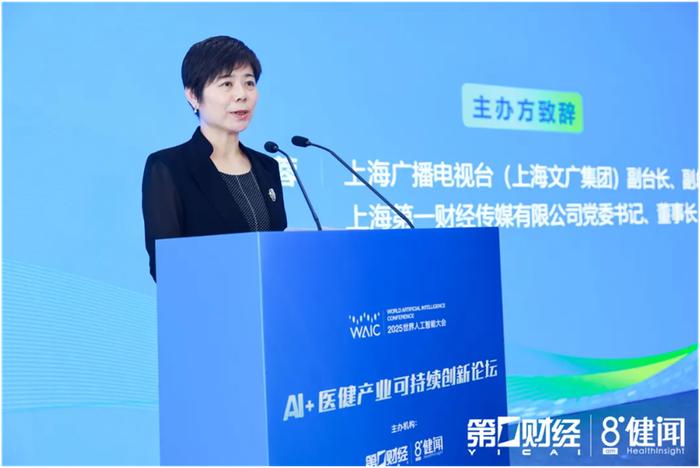
Group 1 - The forum focused on the integration of AI in the healthcare industry, addressing challenges such as aging populations and uneven distribution of medical resources, emphasizing AI as a systemic solution for sustainable healthcare development [1][3] - The Shanghai government highlighted the importance of deep integration between AI and healthcare as a strategic choice to enhance public health and foster new productive forces [3] - The forum featured nearly 20 speakers from various sectors discussing topics like AI-driven innovation in healthcare and the globalization of local enterprises [5] Group 2 - The "2025 Sustainable Innovation Case Recommendation List" was launched, showcasing 37 cases from 36 well-known companies, categorized into "International Innovation Localization," "Local Innovation Globalization," and "ESG Innovation Practices" [5][15] - The cases highlighted urgent industry needs and aligned with China's health strategy for 2030, aiming to provide actionable innovation pathways [5][15] - The forum emphasized the need for collaboration among stakeholders to create a vibrant ecosystem for AI in healthcare [3][5] Group 3 - AI in healthcare is transitioning from pilot projects to ecosystem restructuring, with applications like pediatric AI pre-consultation and remote dermatology gaining traction [7][9] - Challenges remain, including insufficient high-quality data samples and the gap between clinical research and application [9][11] - China is evolving from a passive technology importer to an active innovator in the global pharmaceutical landscape, with significant increases in licensing deals [11][22] Group 4 - The "2025 Sustainable Innovation Case Recommendation List" includes notable companies such as Bayer, Pfizer, and Medtronic in the "International Innovation Localization" category [17][19] - Local companies like Aier Eye Hospital and Junshi Biosciences are recognized for their global innovation efforts [18][22] - ESG practices are increasingly important, with companies like Philips and JD Health showcasing their commitment to sustainable development [24][25] Group 5 - The forum discussions highlighted the importance of AI as a foundational infrastructure for healthcare innovation, with ESG serving as a critical framework for sustainable practices [32][34] - The integration of AI in healthcare is seen as essential for addressing common challenges such as resource distribution and operational efficiency [30][36] - The need for a collaborative approach among various stakeholders, including regulatory bodies and healthcare providers, was emphasized to ensure the successful implementation of AI technologies [30][32]
重组成功!2025年全国418家全国重点实验室名单公布
仪器信息网· 2025-07-30 04:08
Core Viewpoint - Nearly 500 national key laboratories have been approved or restructured, primarily led or participated in by "Double First Class" universities, with around 110 such universities involved in approximately 80% of these laboratories [1][2]. Summary by Sections Overview of National Key Laboratories - As of July 20, 2025, close to 500 national key laboratories have been established or restructured, with a significant majority led by "Double First Class" universities [2]. - Approximately 110 "Double First Class" universities are involved in the establishment or co-construction of nearly 400 national key laboratories, representing about 80% of the total [2]. List of National Key Laboratories - A detailed list of national key laboratories includes various fields such as artificial intelligence, drug development, and environmental protection, with notable institutions like Tsinghua University, Peking University, and Shanghai Jiao Tong University leading many of these initiatives [3][4][5][6][7][8][9][10][11]. Notable Institutions and Their Contributions - Tsinghua University, Peking University, and Shanghai Jiao Tong University are highlighted for their significant contributions to the number of approved key laboratories [2][3]. - Various universities and research institutes are collaborating on specialized laboratories focusing on areas such as renewable energy, advanced manufacturing, and medical research [4][5][6][7][8][9][10][11]. Implications for Research and Development - The establishment of these laboratories is expected to enhance research capabilities and foster innovation across multiple sectors, including technology, healthcare, and environmental science [2][3][4]. - The collaboration between universities and industries in these laboratories indicates a strong commitment to advancing scientific research and practical applications [5][6][7].

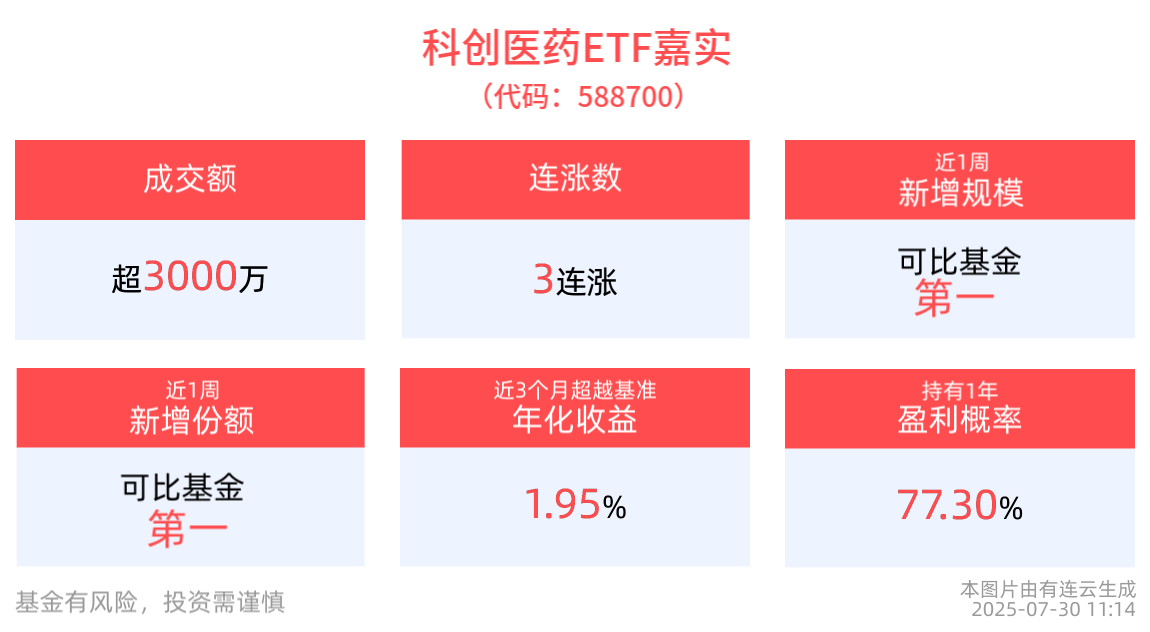
创新药板块热度不减,科创医药ETF嘉实(588700)冲击3连涨,成分股上海谊众盘中20cm涨停
Xin Lang Cai Jing· 2025-07-30 03:43
Group 1: ETF Performance - The liquidity of the Kexin Pharmaceutical ETF managed by Jiashi showed a turnover rate of 15.83%, with a trading volume of 35.2842 million yuan, indicating active market participation [3] - Over the past week, the Kexin Pharmaceutical ETF experienced a scale increase of 23.7936 million yuan, ranking first among comparable funds [3] - The ETF's net value increased by 59.34% over the past year, placing it in the top 10.34% of index equity funds [3] Group 2: Stock Performance - The top ten weighted stocks in the Shanghai Stock Exchange Science and Technology Innovation Board Biopharmaceutical Index account for 50.3% of the index, with leading stocks including United Imaging Healthcare and BeiGene [5] - Notable stock performances include United Imaging Healthcare with a rise of 1.61% and BeiGene with a rise of 0.50% [5] Group 3: Policy and Market Trends - The National Healthcare Security Administration held a meeting to discuss policies supporting innovative drug development, emphasizing the use of healthcare data resources to support "true innovation" in drug development [6] - The focus is on encouraging pharmaceutical companies to expand the breadth and depth of innovation while avoiding excessive competition within the industry [6] Group 4: Market Outlook - Aijian Securities maintains a bullish outlook on the innovative drug sector, predicting a continued bull market in pharmaceutical technology for the year, with a focus on key areas such as ADC and dual antibodies [6] - Investors without stock accounts can access opportunities in the biopharmaceutical sector through the Kexin Pharmaceutical ETF Jiashi linked fund [7]

再度拉升!大资金已连续9天抢筹医疗器械
Sou Hu Cai Jing· 2025-07-30 02:42
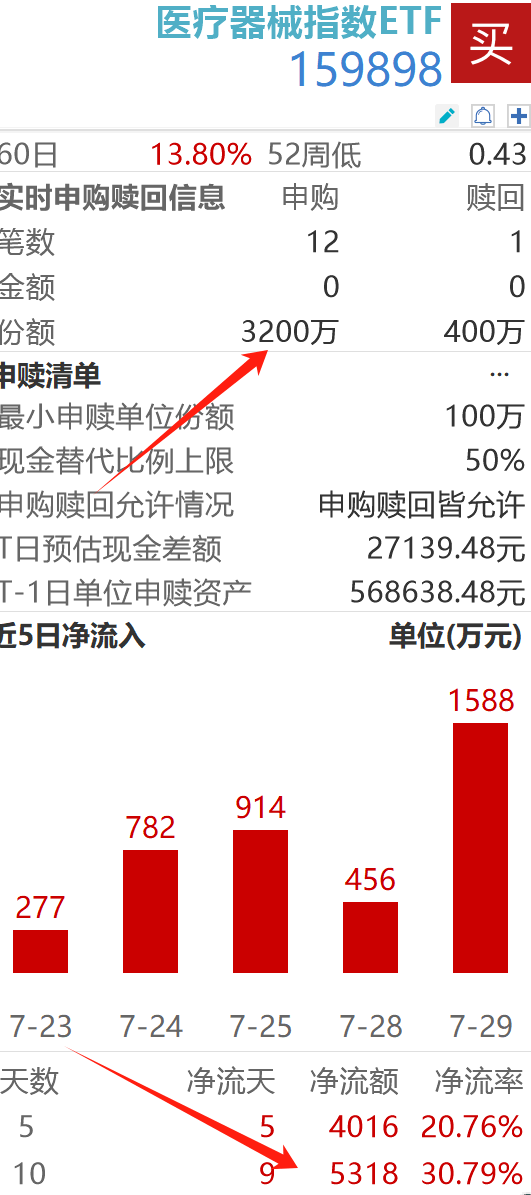
Core Viewpoint - The medical device sector is experiencing a surge in investment, driven by improved expectations around centralized procurement and a shift towards quality control in pricing strategies [1][4][9] Group 1: Market Performance - The medical device ETF (159898) has seen a continuous inflow of funds for 9 days, with a total net inflow of 53.18 million in 10 trading days, indicating strong market interest [1][4] - Major companies like Mindray Medical and United Imaging have shown significant stock price increases, with Mindray Medical rising over 3% at the market open [1] Group 2: Policy Changes - Recent adjustments in centralized procurement rules have shifted the focus from merely lowest price bidding to ensuring cost sustainability and quality, alleviating previous pressures on the medical device sector [4][9] - The new procurement guidelines are expected to benefit high-value consumables and in-vitro diagnostics, which have been heavily impacted by past policies [4] Group 3: Industry Outlook - According to the latest data from Zhongyan Puhua Industrial Research Institute, the market size of domestic medical devices is projected to exceed 2.8 trillion by 2030, with a significant increase in market share for high-end products [4][5] - The domestic market share in high-end medical devices is expected to reach 60% by 2030, with a global market share of 15% for domestic equipment [5] Group 4: Historical Performance - The CSI All-Share Medical Device Index has shown a cumulative increase of 954% since 2005, with an annualized return exceeding 12%, outperforming other indices [7] - The medical device sector is characterized as a "long-distance runner," indicating stable demand and high technical barriers [7]
公募基金经理逛WAIC有感:AI应用持续引领智能体创新
Bei Jing Shang Bao· 2025-07-29 14:21
科技投资迎布局热 在WAIC现场,汇聚了800多家企业,涵盖40余款大模型、50余款AI终端产品、超过60款智能机器人以及80余款"全球首发"或"中国首秀"的重磅新品,规模创 历届之最。据国泰基金介绍,参展商及展品涵盖模型应用、智能体、具身智能和人形机器人、智能硬件、AI+AR眼镜、AI芯片、智算与AI基础设施等热门 行业。 中欧中证机器人指数基金经理宋巍巍也在会期前往了WAIC现场,并分享了他对于年内投资机构对人形机器人投资取向的观察。他认为,目前的投资机构集 中投资机器人行业的上游零部件厂商,这些厂商有四个特点,一是零部件有技术难度和技术壁垒,二是和机器人整机大厂有密切的合作,三是公司本身的业 务具备持续赚钱的能力,四是起始估值和市值较低。 对于市场投资方向为何集中在机器人上游产业链,宋巍巍进一步提到,有两点原因。首先,之前机器人行业还在"0—1"的阶段,也就是供给侧的逻辑更重 要。市场关注能不能做出来,而不是做出来多少,零部件厂商是最先拿到确定性营业收入的公司,机器人行业带来的增量会给这些公司带来较大的业务变 化。其次,之前A股一直没有已经上市的机器人整机公司,缺乏投资的渠道,所以资金只能集中在上游。 ...

医药生物行业点评:医保局明确集采反内卷,关注医药板块重估机会
Bank of China Securities· 2025-07-29 13:24
Investment Rating - The industry investment rating is "Outperform the Market," indicating that the industry index is expected to perform better than the benchmark index over the next 6-12 months [10]. Core Insights - The National Healthcare Security Administration (NHSA) has clarified its stance on centralized procurement, emphasizing a "anti-involution" principle, which is expected to stabilize drug prices and improve profitability in the pharmaceutical sector [1][2]. - The NHSA's new procurement rules aim to enhance the quality of drugs and ensure that companies provide reasonable pricing justifications, which is anticipated to lead to a gradual recovery in the profitability of pharmaceutical companies [1][2]. - The pharmaceutical sector is expected to gradually emerge from the impacts of centralized procurement, with a focus on valuation re-evaluation opportunities as policies and corporate earnings improve [1][2]. Summary by Sections Section: Centralized Procurement - The NHSA has initiated the 11th batch of centralized procurement, adhering to principles of stability, quality assurance, and anti-involution, with specific measures to optimize procurement rules [1][2]. - Previous procurement methods primarily focused on price reduction, adversely affecting company profitability and drug quality, but the new measures are expected to foster a healthier competitive environment [1][2]. Section: Investment Opportunities - The report suggests focusing on three main investment lines: 1. Areas with stable growth, particularly in medical devices and pharmaceuticals, where the impact of centralized procurement is gradually dissipating [1][3]. 2. The CXO sector and medical equipment, which are expected to see a reversal due to favorable domestic financing and fiscal policies [1][3]. 3. Innovative fields that are entering a phase of realization or expansion, particularly companies with international capabilities [1][3]. Section: Recommended Stocks - Suggested stocks in the medical device sector include: - Medical consumables: Bairen Medical, Sanyou Medical, Kangwei Century, Dabo Medical, Aikang Medical, Weigao Orthopedics - Ophthalmology: Aibo Medical - Cardiovascular: Huitai Medical, Xinmai Medical, Lepu Medical - In the pharmaceutical sector, recommended stocks include: - Heng Rui Medicine, Xin Li Tai, Jingxin Pharmaceutical, Xianju Pharmaceutical, Kangchen Pharmaceutical [1][3].
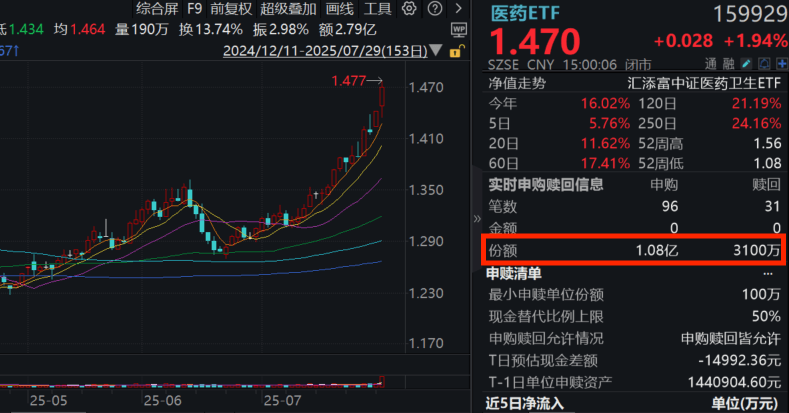
CXO业绩爆发,医药板块持续走强!医药ETF(159929)收涨近2%,全天净流入超1.1亿元!机构:医药“反内卷”,积极把握底部困境反转机会
Sou Hu Cai Jing· 2025-07-29 10:12
| 综合屏 F9 前复权 超级叠加 画线 工具 Q ? | | | 矢约ETF | | 159929 | | --- | --- | --- | --- | --- | --- | | €1.434 均1.464 量190万 换13.74% 振2.98% 额2.79亿 | 2024/12/11-2025/07/29(153日)▼ | | 1 2 11 1 | | +0.028 +1.94% | | | | | SZSE CNY 15:00:06 闭市 | | 通融入口中 | | 1.477- | 1.470 | | 净值走势 | 汇添富中证医药卫生ETF | | | | | | रुक्त 16.02% 120日 | | 21.19% | | | | | 5日 5.76% 250日 | | 24.16% | | | 1.410 | | 20日 11.62% 52周高 | | 1.56 | | | | | 60日 17.41% 52周低 | | 1.08 | | | 1.350 | | 实时申购赎回信息 | 申购 | 岐回 | | | | | 笔数 | વેર | 31 | | | | | 金额 | 0 | 0 ...


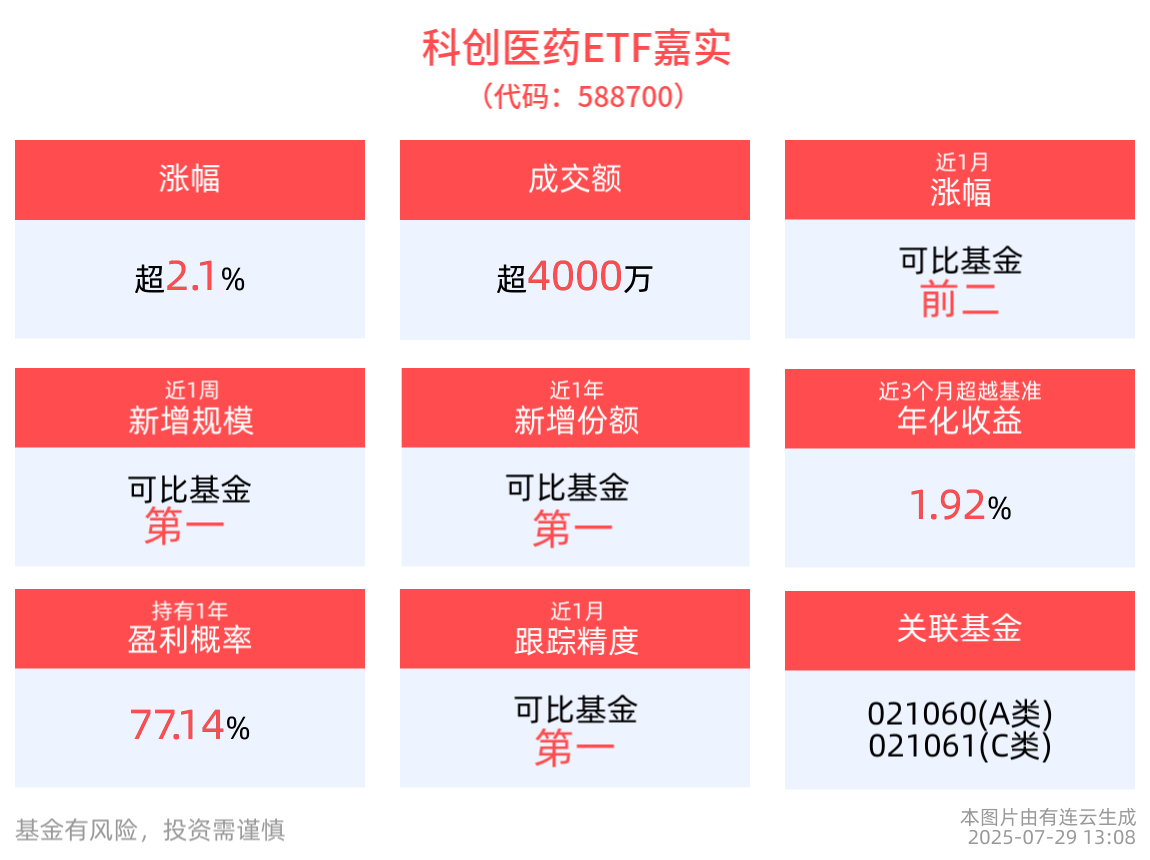
创新管线业绩进入放量期,科创医药ETF嘉实(588700)盘中涨超2%,苑东生物领涨成分股
Sou Hu Cai Jing· 2025-07-29 05:42
Group 1 - The core viewpoint highlights the strong performance and liquidity of the Science and Technology Innovation Pharmaceutical ETF managed by Harvest, which has seen significant trading activity and growth in both scale and shares [2] - As of July 28, the ETF recorded a turnover rate of 22.91% and a transaction volume of 48.1073 million yuan, indicating active market participation [2] - The ETF's net asset value increased by 54.52% over the past year, ranking it in the top 12.25% among comparable index equity funds [2] Group 2 - The top ten weighted stocks in the Shanghai Stock Exchange Science and Technology Innovation Board Biopharmaceutical Index account for 50.3% of the index, with leading companies including United Imaging Healthcare and BeiGene [2] - Recent collaboration between Hengrui Medicine and GlaxoSmithKline (GSK) involves the joint development of up to 12 innovative drugs, with GSK making an initial payment of 500 million USD and potential milestone payments totaling around 12 billion USD [4] - The pharmaceutical industry is experiencing high growth, with recommendations for companies in Pharma and Biopharma/Biotech sectors as they enter a phase of performance expansion [5]