宁波银行

Search documents
银行行业:25Q3理财规模平稳增长,估值整改压力下资产端配置更审慎
Dongxing Securities· 2025-10-27 06:58
Investment Rating - The industry investment rating is "Positive" [7] Core Insights - The wealth management product scale has maintained steady growth, with a total market size of 32.13 trillion yuan as of Q3 2025, representing a year-on-year increase of 9.42% and a quarterly increase of 1.46 trillion yuan [1][16] - The market share of wealth management companies has further increased, reaching 91.13% of the total market by the end of Q3 2025, up 3 percentage points from the beginning of the year [3] - The asset allocation in wealth management has become more cautious due to valuation rectification pressures, with an increase in cash and deposits allocation and a decrease in bonds and interbank certificates of deposit [4] Summary by Sections Product Side - The wealth management product scale has shown stable growth, with mixed and closed-end products slightly increasing in proportion [1] - By the end of Q3 2025, the proportion of mixed products rose to 2.58%, while fixed-income products decreased to 97.14% [1][16] Yield Performance - Wealth management yields have faced downward pressure due to valuation rectification and bond market fluctuations, with the average annualized yield for open-ended fixed-income products at 2.61%, up 5 basis points quarter-on-quarter [2] - The average annualized yield for closed-end fixed-income products was 2.69%, down 28 basis points [2] Market Share - The market share of wealth management companies has increased, with 32 companies currently operating in the sector, and the share of non-licensed banks' wealth management gradually shifting to licensed companies [3] Asset Allocation - By the end of Q3 2025, the total investment asset balance for bank wealth management was 34.33 trillion yuan, with a year-on-year growth of 8.53% [4] - The top three asset allocations were bonds (40.4%), cash and bank deposits (27.5%), and interbank certificates of deposit (13.1%), with a decrease in the proportion of bonds and interbank certificates of deposit [4][15] Future Outlook - The "deposit migration" trend is expected to support steady growth in wealth management scale, as residents seek safer and more liquid products amid declining deposit rates [9] - Potential changes in fund sales regulations may lead to short-term redemptions of bond funds from wealth management products [9]
行业深度报告:零售风险及新规影响有限,兼论信贷去抵押化
KAIYUAN SECURITIES· 2025-10-27 05:44
Investment Rating - The investment rating for the industry is "Positive" (maintained) [1] Core Insights - The report highlights that retail non-performing loan (NPL) rates and generation rates are currently high, indicating ongoing pressure on bank profitability. Despite a low overall NPL rate, the retail sector shows signs of risk, with a marginal increase in the NPL rate to 1.28% [14][15] - The transition period for new risk regulations is nearing its end, with concerns about the impact on banks' provisioning levels. However, the report suggests that the actual impact may be less severe than market expectations [16] - The trend of de-collateralization in bank lending is evident, driven by both business characteristics and strategic choices made by banks to reduce reliance on collateralized loans [17] Summary by Sections 1. Retail NPL and Generation Rates - The retail NPL rate has increased to 1.28%, with a steepening curve indicating ongoing risk. The generation rate for retail loans remains high, with significant increases noted in certain banks [14][18] - The report indicates that while the overall NPL rate is low, the divergence between overdue and NPL indicators suggests underlying risks in the retail sector [19] 2. Impact of New Risk Regulations - The new risk regulations will require banks to classify impaired loans as NPLs, potentially increasing reported NPL rates. However, the report anticipates that the actual provisioning pressure may be manageable [16][17] 3. De-Collateralization in Lending - The report notes a significant decline in the proportion of collateralized loans, with banks shifting towards non-collateralized lending strategies. This shift is influenced by the need to manage risk more effectively [17][18] 4. Investment Recommendations - The report recommends certain state-owned banks due to their customer base advantages and manageable retail risk pressures. It also highlights specific banks such as CITIC Bank and Agricultural Bank of China as beneficiaries of this trend [6]






银行股三季报陆续披露 多家银行业绩均有改善 银行业净息差或企稳(附概念股)
Zhi Tong Cai Jing· 2025-10-27 02:12
Core Viewpoint - The A-share listed banks are expected to show overall revenue and net profit growth in the third quarter of 2025, with improvements in asset quality and a narrowing decline in net interest margins [1][2][3]. Group 1: Financial Performance - Huaxia Bank reported operating income of 64.881 billion yuan, a year-on-year decrease of 8.79%, and net profit attributable to shareholders of 17.982 billion yuan, down 2.86%, with a narrowing decline of 5.09 percentage points compared to the first half of the year [1]. - Chongqing Bank achieved operating income of 11.740 billion yuan, a year-on-year increase of 10.40%, and net profit of 5.196 billion yuan, up 10.42% [2]. - Ping An Bank reported operating income of 100.668 billion yuan, a year-on-year decrease of 9.8%, and net profit of 38.339 billion yuan, down 3.5%, with a narrowing decline compared to the first half of the year [2]. Group 2: Market Trends - Ten banks have seen shareholding increases from shareholders and executives this year, indicating a positive outlook for the banking sector amid macroeconomic stabilization and easing monetary policy [3]. - Analysts expect cumulative revenue and net profit for listed banks in the first three quarters of 2025 to grow by 0.4% and 1.1% year-on-year, respectively, driven by a narrowing decline in net interest margins and reduced credit costs [3]. Group 3: Interest Margin Outlook - Zhongtai Securities suggests that the net interest margin for banks may stabilize in the third quarter due to reduced re-pricing pressure on assets and a greater decline in deposit rates compared to the Loan Prime Rate (LPR) [4]. - The projected increase in net interest margin for the third and fourth quarters is 0.7 basis points and 0.3 basis points, respectively, indicating stability in the banking sector [4]. Group 4: Related Stocks - Goldman Sachs reported that the A-shares and H-shares of major banks have recorded absolute returns of 12% and 21% year-to-date, driven by improvements in asset quality and narrowing declines in net interest margins [5]. - Ping An Insurance increased its stake in Postal Savings Bank, acquiring 6.416 million shares at an average price of 5.3638 HKD per share [6].

本周在售部分纯固收产品近3月年化收益率逼近10%
2 1 Shi Ji Jing Ji Bao Dao· 2025-10-27 01:20
Core Insights - The article emphasizes the abundance of bank wealth management products with similar names and vague characteristics, urging investors to carefully select and differentiate among them [1] - The South Finance Wealth Management team focuses on pure fixed-income products issued by wealth management companies, providing a performance ranking of these products to assist investors in making informed choices [1] Summary by Category Product Performance - The ranking showcases annualized performance over the past month, three months, and six months, sorted by the three-month annualized yield to reflect multi-dimensional performance amid recent market fluctuations [1] - A total of 28 distribution institutions are involved in the ranking, including major banks such as Industrial and Commercial Bank of China, Bank of China, and Agricultural Bank of China [1] Product Availability - The ranking is based on the "on-sale" status of wealth management products, which may vary due to factors like sold-out quotas or differences in product listings for different customers [1] - Investors are advised to refer to the actual display on the distribution bank's app for the most accurate information regarding product availability [1]





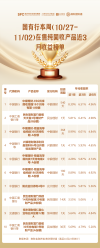
银行渠道本周在售最低持有期产品榜单(10/27-11/2)
2 1 Shi Ji Jing Ji Bao Dao· 2025-10-27 01:20
Core Insights - The article emphasizes the abundance of bank wealth management products with similar names and vague characteristics, urging investors to carefully select and differentiate among them [1] - The South Finance Wealth Management team aims to reduce investors' selection costs by focusing weekly on the performance of wealth management products available through various distribution channels [1] Summary by Category Performance Rankings - The current focus is on the performance of public offering products with a minimum holding period in RMB, categorized by holding periods of 7 days, 14 days, 30 days, and 60 days, with annualized returns as the performance metric [1] - The ranking includes 28 distribution institutions such as Industrial and Commercial Bank of China, Bank of China, Agricultural Bank of China, and others [1] Product Availability - The list of products is based on their "on-sale" status, which is determined by their investment cycle; however, actual availability may vary due to factors like sold-out quotas or differences in product listings for different customers [1] - Investors are advised to refer to the actual display on the distribution bank's app for the most accurate information [1] Weekly Updates - The article provides a weekly update on the performance of wealth management products, with specific attention to the lowest holding period products for the week of October 27 to November 2 [5][8][11]
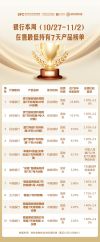
个别银行"抢跑"年末揽储 负债成本管控更趋精细化
Zheng Quan Shi Bao· 2025-10-27 01:09
Core Viewpoint - In the context of sustained pressure on net interest margins, many small and medium-sized banks are initiating a new round of interest rate cuts, actively lowering the upper limit of deposit rates to create space for profit growth [1][5]. Group 1: Deposit Rate Adjustments - Some banks have begun to quietly ramp up deposit acquisition efforts as the year-end approaches, combining this with refined and tiered customer management to stabilize general deposits while effectively controlling liability costs [1][3]. - Recent interest rate cuts have led to most deposit products entering the "1.x" range, with major state-owned banks adjusting their deposit rates in May, resulting in rates of 1.05% for two-year deposits and 0.98% for one-year deposits at Postal Savings Bank [3][4]. Group 2: Marketing Strategies - Certain banks, like China Merchants Bank, are launching promotional activities to attract deposits, such as cash rewards for customers who meet asset thresholds [2][3]. - The marketing rhythm for year-end and new year strategies remains consistent across banks, with many emphasizing the importance of both year-end performance and the start of the new year [3][6]. Group 3: Liability Cost Management - The continuous narrowing of net interest margins has made liability cost management a key focus for banks, with regulatory guidance pushing for lower overall funding costs [4][5]. - Some banks are experiencing a phenomenon of interest rate inversion, where shorter-term deposits offer higher rates than longer-term ones, indicating a strategic response to anticipated future cost pressures [6][7]. Group 4: Targeted Deposit Strategies - Banks are increasingly adopting differentiated deposit strategies for specific customer segments, particularly targeting older clients with higher interest rates and lower minimum deposit thresholds [7]. - This approach not only optimizes the liability structure but also helps in acquiring stable long-term funding while fulfilling social responsibilities [7].
本周聚焦:黄金波动下的机遇与挑战:银行贵金属业务有望成重要增长极
GOLDEN SUN SECURITIES· 2025-10-27 00:58
Investment Rating - The report maintains an "Accumulate" rating for the banking sector, indicating a positive outlook despite challenges in the gold market in 2025 [1]. Core Insights - The gold market is expected to present both opportunities and challenges for banks, with a trend towards deepening precious metal business driven by central bank purchases [1][2]. - The demand for gold bars and coins has increased significantly, reflecting a growing need for gold as a hedge and store of value among residents [4]. - The establishment of a market-making system for gold trading is anticipated to enhance market liquidity and stability, positioning listed banks as key players [3][4]. Summary by Sections 1. Policy and Market Environment - As of September 2025, China's official gold reserves reached 74.06 million ounces, marking an increase for 11 consecutive months [2]. - In Q2 2025, global central banks added 166 tons of gold to their reserves, with 95% of surveyed central banks expecting further increases in the next 12 months [2]. - New policies allowing insurance funds to invest in gold are expected to create new opportunities for banks to provide services to insurance institutions, enhancing their intermediary income [2]. 2. Business Dynamics and Revenue Contribution - In the first half of 2025, China's gold consumption was 505.205 tons, a year-on-year decrease of 3.54%, with significant growth in gold bar and coin consumption by 23.69% [4]. - The decline in gold jewelry consumption is prompting banks to shift focus from traditional jewelry sales to investment-oriented precious metal businesses [4]. - The growth in investment demand for gold bars and coins is expected to stabilize income from investment-related businesses, enhancing the profitability of the precious metals segment for banks [4]. 3. Industry Trends - The report highlights a structural shift in gold consumption, with investment demand rising while jewelry demand declines, indicating a need for banks to adapt their business strategies [4]. - The performance of the banking sector is expected to benefit from expansionary policies aimed at stabilizing the economy, with specific banks like Ningbo Bank and Jiangsu Bank recommended for investment due to positive fundamental changes [8]. 4. Key Data Tracking - The report includes various financial metrics, such as average daily trading volume and margin financing balances, which are essential for assessing market conditions [9][10].



个别银行“抢跑”年末揽储 负债成本管控精细化
Zheng Quan Shi Bao· 2025-10-27 00:22
Core Viewpoint - In the context of sustained pressure on net interest margins, many small and medium-sized banks are initiating a new round of interest rate cuts, actively lowering the upper limit of deposit rates to create space for profit growth [1][5]. Group 1: Deposit Rate Adjustments - Some banks have quietly started aggressive deposit collection efforts as the year-end approaches, combining this with refined and tiered customer management to stabilize general deposits while effectively controlling liability costs [1][2]. - Since early October, several small and medium-sized banks have held fourth-quarter operational meetings, emphasizing the importance of achieving a successful year-end while preparing for a strong start in the first quarter of the following year [2][3]. - The recent adjustment of deposit rates has led to most market deposit products entering the "1" range, with major state-owned banks' two-year, three-year, and five-year fixed deposit rates set at 1.05%, 1.25%, and 1.3% respectively [3][4]. Group 2: Competitive Strategies - Some banks are offering cash rewards for customers who meet core asset thresholds, with activities designed to encourage customers to keep their deposits [2][3]. - The actual execution rates for certain term deposits have seen some upward adjustments compared to the listed rates, indicating a competitive landscape among banks [4][6]. - Banks are increasingly adopting differentiated deposit strategies targeting specific customer segments, particularly offering higher rates and lower minimum deposit thresholds for older customers [7]. Group 3: Market Trends and Challenges - The continuous narrowing of net interest margins is a common challenge faced by the banking industry, prompting a focus on managing liability costs more effectively [4][5]. - The People's Bank of China has emphasized the need to lower overall bank liability costs to alleviate pressure on net interest margins, which has led to recent adjustments in deposit rates [5][6]. - The phenomenon of interest rate inversion, where shorter-term deposits offer higher rates than longer-term ones, is emerging as banks anticipate future cost pressures on long-term liabilities [6][7].

个别银行“抢跑”年末揽储 负债成本管控更趋精细化
Zheng Quan Shi Bao· 2025-10-26 22:24
Core Viewpoint - In the context of sustained pressure on net interest margins, many small and medium-sized banks are initiating a new round of interest rate cuts, actively lowering the upper limit of deposit rates to create space for profit growth [1][5]. Group 1: Deposit Rate Adjustments - Some banks have begun to quietly ramp up deposit acquisition efforts as the year-end approaches, combining this with refined and tiered customer management to stabilize general deposits while effectively controlling liability costs [1][2]. - Since early October, several small and medium-sized banks have held fourth-quarter operational meetings, emphasizing the importance of achieving a successful year-end while preparing for a strong start to the new year [2][3]. - The recent downward adjustments in deposit rates have led to most market deposit products now having rates in the "1" range, with major state-owned banks last adjusting their deposit rates on May 20, resulting in rates of 1.05% to 1.3% for various terms [3][4]. Group 2: Liability Cost Management - The continuous decline in deposit rates has made it challenging for risk-averse savers to find alternative investment options, leading to a sustained popularity of large-denomination certificates of deposit [4][6]. - The People's Bank of China has emphasized the need to further reduce the overall liability costs of banks to alleviate net interest margin pressures, with recent rate cuts providing banks with more room to improve their liability costs [5][6]. - Banks are increasingly adopting refined and tiered strategies for managing liability costs, with some banks experiencing interest rate inversion, breaking the traditional expectation that longer terms yield higher rates [6][7]. Group 3: Targeted Deposit Strategies - Banks are implementing differentiated deposit strategies for various customer segments, particularly offering higher rates and lower minimum deposit thresholds for older customers [7]. - This approach not only optimizes the liability structure and locks in stable long-term funds but also reduces liquidity management pressures and enhances customer acquisition efficiency [7].
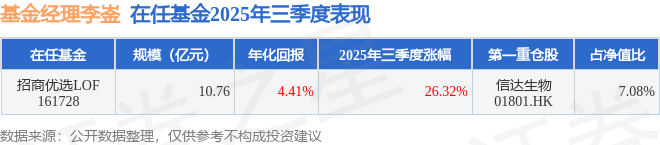
李崟2025年三季度表现,招商优选LOF基金季度涨幅26.32%
Sou Hu Cai Jing· 2025-10-26 21:39
Core Insights - The fund managed by Li Yan, the招商优选LOF (161728), achieved a quarterly net value increase of 26.32% by the end of Q3 2025 [1] Fund Performance - Li Yan's management of the招商安泰平衡混合 (217002) fund resulted in a cumulative return of 121.87% with an average annualized return of 8.53% [2] - The fund had 114 instances of stock adjustments, with a success rate of 57.02%, yielding three instances of doubling returns with a multiplier of 2.63% [2] Major Stock Adjustments - Notable stock adjustments include: - 隆基股份: Purchased in Q2 2019 and sold in Q4 2020, yielding an estimated return of 232.5% with a company revenue growth of 65.92% during the holding period [3] - 贵州茅台: Held from Q3 2018 to Q4 2021, with an estimated return of 174.41% and a revenue growth of 49.02% [3] - 陕西煤业: Acquired in Q1 2022 and sold in Q1 2024, yielding an estimated return of 87.34% with a revenue growth of 10.37% [4] Underperforming Stocks - 招商南油: Purchased in Q4 2022 and sold in Q1 2024, resulting in an estimated return of -59.89% despite a net profit growth of 33.94% [5] - 新撮联: Held from Q3 2022 to Q2 2023, with an estimated return of -53.74% [3] - 中兵红箭: Held from Q3 2022 to Q3 2023, with an estimated return of -47.65% [3]