广发证券

Search documents
基金销售行业进一步规范,多家券商优化两融业务布局
Soochow Securities· 2025-12-14 08:31
Investment Rating - The report maintains an "Overweight" rating for the non-bank financial sector [1] Core Insights - The non-bank financial sector has shown resilience, with the insurance and securities industries outperforming the CSI 300 index recently. The insurance sector increased by 2.41%, while the securities sector rose by 0.36% [11] - The report highlights the regulatory changes in the fund sales industry, aiming to standardize practices and enhance investor protection [16][20] - The insurance industry is expected to benefit from economic recovery and rising interest rates, with a focus on health and pension insurance products [33][48] Summary by Sections Non-Bank Financial Subsector Performance - In the last five trading days (December 8-12, 2025), the insurance sector and securities sector outperformed the CSI 300 index, with overall non-bank financials rising by 0.83% [11] - Year-to-date performance shows the insurance sector up by 23.19%, while the overall non-bank financial sector increased by 8.70% [12] Securities Sector - Trading volume has decreased month-on-month, with an average daily trading volume of 21,190 billion CNY in December, a 20.67% increase year-on-year but a 5.45% decrease from the previous month [16] - The margin financing balance reached 25,080 billion CNY, a year-on-year increase of 32.96% [16] - The average price-to-book (PB) ratio for the securities industry is projected at 1.3x for 2025 [21] Insurance Sector - The total assets of the insurance industry surpassed 40 trillion CNY, reflecting a 12.5% increase from the beginning of the year [32] - Regulatory changes have been implemented to optimize long-term stock holding risk factors, encouraging insurance companies to adopt a long-term investment approach [23][24] - The insurance sector's valuation is currently at historical lows, with a projected P/EV of 0.62-0.95 for 2025 [33][48] Multi-Financial Sector - The trust industry is experiencing a transition phase, with total assets reaching 29.56 trillion CNY, but profits have significantly declined [34] - The futures market saw a trading volume of 7.70 billion contracts in November, with a transaction value of 66.61 trillion CNY, indicating growth in trading activity [40][41] - The report suggests that innovation in risk management will be crucial for the future development of the futures industry [42] Industry Ranking and Recommendations - The report ranks the sectors as follows: Insurance > Securities > Other Multi-Financial [48] - Key companies recommended include China Life, Ping An, New China Life, China Pacific Insurance, CITIC Securities, and Tonghuashun [48]
非银金融行业周报:美联储降息利好券商海外业务,新规规范基金销售-20251214
KAIYUAN SECURITIES· 2025-12-14 06:43
Investment Rating - The industry investment rating is "Positive" (maintained) [1] Core Viewpoints - The non-bank financial index increased by 0.81%, outperforming the CSI 300 index which decreased by 0.08%. The brokerage and insurance sectors continue to show good trends, with valuations at low levels and relatively stagnant performance throughout the year. The Federal Reserve's interest rate cuts are beneficial for the equity market, directly favoring the profitability of securities firms' overseas businesses due to lower liability costs and asset expansion [4][5] - The average daily trading volume of stock funds reached 2.39 trillion, a 15.1% increase month-on-month, indicating a recovery in trading activity. The cumulative average daily trading volume for the year is 2.05 trillion, a 69.5% year-on-year increase [5] - The China Securities Regulatory Commission's recent positive stance signals a potential "policy easing period" for the industry, which may lead to an increase in leverage limits and support for the profitability of the securities industry. The report recommends focusing on strategic opportunities in undervalued leading companies in the brokerage and insurance sectors [5][6] Summary by Sections Brokerage Sector - The Federal Reserve's interest rate cuts are favorable for the overseas business of brokerages, and new regulations are set to standardize fund sales practices. The report highlights three main lines of recommended stocks: Huatai Securities, Guotai Junan, and CICC for their advantages in overseas and institutional business; GF Securities and Dongfang Securities for their wealth management strengths; and Guosen Securities for its retail advantages [5][6][7] Insurance Sector - The liability side is expected to achieve a "good start," with the transformation of dividend insurance continuing to progress. The demand for "savings" from residents is likely to persist, and the insurance distribution channel is expected to maintain high growth. On the asset side, stable long-term interest rates and a favorable equity market are expected to boost investment returns in the medium to long term [6][7]



AI:走向规模化应用
Bei Jing Shang Bao· 2025-12-14 06:31
Core Insights - The core viewpoint of the articles emphasizes the transformative role of AI in enhancing inclusive finance, particularly for small and micro enterprises in China, with a significant increase in loan balances and a shift in focus from availability to quality of financial services [1][10]. Group 1: Growth of Inclusive Finance - The balance of inclusive loans for small and micro enterprises in China surged from 8.8 trillion yuan at the end of 2017 to over 33 trillion yuan by the end of 2024, achieving a compound annual growth rate of 20.7% [1]. - By the third quarter of 2025, the balance of inclusive loans for small and micro enterprises reached 36.5 trillion yuan, reflecting a year-on-year growth of 12.1% [10]. Group 2: AI Integration in Financial Services - Since 2025, generative AI technologies have evolved from automation tools to business partners, leading to systematic and large-scale applications in the financial sector [5]. - AI applications in finance have expanded from isolated attempts to comprehensive solutions, enhancing efficiency in credit approval, fraud detection, and investment research [5][6]. - Financial institutions are increasingly deploying AI-driven tools, such as intelligent investment advisors and credit experts, to automate processes and improve service delivery [6][7]. Group 3: Challenges in Trust, Cost, and Compliance - The development of inclusive finance has transitioned through stages of accessibility, convenience, and precision, highlighting the importance of trust and cost management in AI applications [7]. - Trust issues arise from the reliance on alternative data for risk assessment, as traditional methods may not apply to underserved populations lacking collateral and credit history [8]. - The costs associated with AI implementation, including model training and compliance verification, pose significant challenges for financial institutions [8]. Group 4: Innovations and Solutions - Financial institutions are collaborating to address challenges in inclusive finance through technological innovation and industry partnerships, focusing on AI applications in underserved markets [9]. - AI technologies are evolving towards lighter and more precise models to reduce costs and improve accessibility for inclusive finance [9]. - Regulatory frameworks, such as the financial technology "regulatory sandbox," are being developed to facilitate the safe and effective application of AI in finance [10].

2025普惠金融报告|AI:走向规模化应用
Bei Jing Shang Bao· 2025-12-14 06:27
Core Insights - The core viewpoint of the articles emphasizes the transformative role of AI in enhancing inclusive finance, particularly for small and micro enterprises in China, with a significant increase in loan balances and a shift in focus from availability to quality of financial services [1][10]. Group 1: Growth of Inclusive Finance - The balance of inclusive loans for small and micro enterprises in China surged from 8.8 trillion yuan at the end of 2017 to over 33 trillion yuan by the end of 2024, achieving a compound annual growth rate of 20.7% [1]. - By the third quarter of 2025, the balance of inclusive loans for small and micro enterprises reached 36.5 trillion yuan, reflecting a year-on-year growth of 12.1% [10]. Group 2: AI Integration in Financial Services - Since 2025, generative AI technologies have evolved from automation tools to business partners, leading to systematic and large-scale applications in the financial sector [5]. - AI applications in finance have expanded from isolated attempts to comprehensive solutions, enhancing efficiency in credit approval, fraud detection, and investment research [5][6]. Group 3: Challenges in Trust, Cost, and Compliance - The development of inclusive finance has transitioned through three stages: availability, convenience, and precision, highlighting the shift in financial service demands from "whether" to "how good" [7]. - Trust issues arise as traditional risk assessment methods struggle with the unique characteristics of the inclusive customer base, leading to reliance on alternative data and concerns over algorithmic fairness [7][8]. - The costs associated with AI implementation, including model training and compliance verification, pose significant challenges for financial institutions, potentially eroding profits [8]. Group 4: Innovations and Solutions - Financial institutions are increasingly collaborating to address the challenges in inclusive finance, focusing on technology innovation and industry cooperation [9]. - AI technologies are evolving towards lighter and more precise models to reduce dependency on large datasets and lower implementation costs [9]. - Customized AI applications are being developed to cater to specific scenarios, such as the "data credit" model in rural finance, which replaces traditional collateral methods [9]. Group 5: Future Trends and Regulatory Framework - The gradual improvement of regulatory frameworks is establishing a risk baseline for the large-scale application of AI in finance, with initiatives like regulatory sandboxes allowing for innovation while managing risks [9]. - The integration of AI in inclusive finance is expected to enhance productivity, improve service quality, and lead to ongoing advancements in technology regulation [10].
董事会换届临近,华泰证券新任“掌舵人”是他?
Mei Ri Jing Ji Xin Wen· 2025-12-13 11:36
华泰证券,这家总资产突破万亿的头部券商,即将在董事会换届之际迎来新任"掌舵人"。 尽管目前公司方面对具体高层任命保持缄默,仅向《每日经济新闻》记者表示"请关注后续公告",但来 自江苏国资体系的信号、监管层的政策松绑以及公司自身发展的内在需求,已显现出此次人事更迭的逻 辑。 业内认为,在"十五五"加快打造一流投行的监管愿景下,华泰证券未来的高层架构调整或将成为公司应 对行业变革、巩固头部地位的关键举措。 新任董事长呼之欲出 根据华泰证券此前的公告,公司第六届董事会将于今年12月底届满,业内预计,届时公司的高层将迎来 一轮更替。 公司现任董事长张伟已年满61岁,自2019年履职华泰证券董事长已有六年,超过了国企高管60岁的常规 退休年龄。随着其董事长任期即将届满,业内预计公司新任"掌舵人"将呼之欲出。与此同时,在当前证 券行业面临加速整合与科技金融浪潮已至的关键窗口,公司治理结构也亟需注入新活力。 股权结构上,华泰证券虽无控股股东,但穿透后实控人为江苏省国资委,其中,江苏高投持股比例 3.95%。江苏高投为国内最早一批设立的省级私募股权和创业投资机构,其背景与目前华泰证券新任董 事长呼声较高的王会清的履历形成深度 ...

董事会换届临近,华泰证券新任“掌舵人”会是他吗?
Mei Ri Jing Ji Xin Wen· 2025-12-13 10:47
Core Viewpoint - Huatai Securities is undergoing a leadership change with the upcoming board re-election, which is seen as a strategic move to adapt to industry transformations and maintain its leading position in the market [1] Group 1: Leadership Change - The current chairman, Zhang Wei, is expected to step down as he has surpassed the typical retirement age for state-owned enterprise executives [1] - The new leadership is anticipated to bring fresh energy to the company's governance structure amid a rapidly evolving financial landscape [1] Group 2: Shareholding Structure and Potential New Chairman - Huatai Securities does not have a controlling shareholder, but its actual controller is the Jiangsu Provincial State-owned Assets Supervision and Administration Commission [2] - Wang Huiqing, who has strong ties to Jiangsu Gaotou, is a leading candidate for the new chairman position, having previously served as the chairman of Jiangsu Gaotou and significantly contributing to its growth [2] Group 3: Financial Performance and Industry Position - Huatai Securities has total assets exceeding 1 trillion yuan, but it lags behind competitors like CITIC Securities and Guotai Junan, which have assets over 2 trillion yuan [3] - The company has not engaged in significant mergers or acquisitions recently, relying solely on organic growth, which raises concerns about its competitive position [3] Group 4: Strategic Opportunities - Recent regulatory changes by the China Securities Regulatory Commission may provide Huatai Securities with opportunities to restart previously shelved refinancing plans [5] - Wang Huiqing's experience in capital management could help the company design capital replenishment plans that align with new regulatory guidelines [5]
广发证券“骐骥”引领财富管理2.0时代:以买方投顾重塑行业生态
Zhong Guo Zheng Quan Bao - Zhong Zheng Wang· 2025-12-13 09:40
Core Insights - The article highlights the strategic transformation of Guangfa Securities from a product-selling model to a client-centric investment advisory approach, emphasizing the importance of generating returns for clients [2][4]. Group 1: Company Performance - As of the end of Q3 2023, over 95% of clients holding the "Qiji" series solutions for more than three months have reported profits, indicating the effectiveness of the company's investment strategies [1][3]. - The company’s financial product distribution scale reached 350 billion yuan, reflecting a 30% increase compared to the end of 2022, positioning it among the top tier in the industry [1][3]. Group 2: Strategic Transformation - Guangfa Securities initiated a strategic shift in 2016 towards a buy-side advisory model, focusing on client profitability and embedding this philosophy into its corporate culture [2][4]. - The company has implemented a clear transformation path, including the launch of the "Star Investment Advisor" training system in 2016 and the introduction of the "Qiji" series asset allocation solutions in 2023 [2][4]. Group 3: Service Logic Reconstruction - The transformation is based on the "Three Transformations" principle: buy-side advisory, asset allocation, and solution-oriented services, fundamentally restructuring the service logic [4]. - The company has reformed its advisor assessment system to focus on client account returns and satisfaction rather than sales volume, aligning advisor incentives with client interests [4]. Group 4: Team and Technology Integration - Guangfa Securities has built a robust advisory team exceeding 4,700 members, ranking second in the industry, and has embraced digital transformation to enhance service delivery [5]. - The company has developed a comprehensive suite of digital tools to support advisors in market analysis, client profiling, product selection, and risk monitoring, allowing them to focus on complex decision-making and client relationships [5]. Group 5: Future Outlook - The company anticipates the full emergence of the 2.0 era of wealth management in China, positioning itself as a "private wealth steward" to assist families in navigating economic cycles [6].

云天励飞连亏8年3季 上市即巅峰募39亿中信证券保荐
Zhong Guo Jing Ji Wang· 2025-12-13 07:03
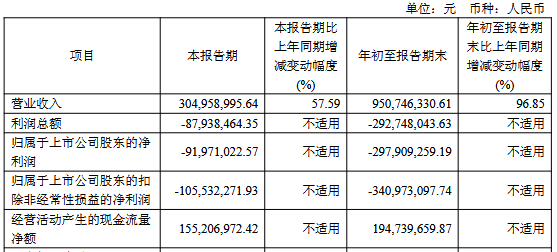
Core Viewpoint - Yuntian Lifei (688343.SH) reported significant revenue growth for the first three quarters of 2025, with a revenue of 9.51 billion yuan, marking a year-on-year increase of 96.85%. However, the company continues to face net losses, although the losses have decreased compared to the previous year [1][4]. Financial Performance - For the period of January to September 2025, the company achieved an operating revenue of 9.51 billion yuan, which is a 96.85% increase compared to the same period last year [1]. - The net profit attributable to shareholders was -2.98 billion yuan, an improvement from -4.25 billion yuan in the same period last year [1]. - The net profit attributable to shareholders after deducting non-recurring gains and losses was -3.41 billion yuan, compared to -5.00 billion yuan in the previous year [1]. - The net cash flow from operating activities was 1.95 billion yuan [1]. Historical Performance - From 2017 to 2024, the net profit attributable to shareholders has shown a trend of increasing losses, with figures of -54.64 million yuan in 2017, -1.95 billion yuan in 2018, and reaching -5.79 billion yuan in 2024 [4]. - The net profit after deducting non-recurring gains and losses has also increased from -64.56 million yuan in 2017 to -6.84 billion yuan in 2024 [4]. Stock Market Activity - Yuntian Lifei was listed on the Shanghai Stock Exchange's Sci-Tech Innovation Board on April 4, 2023, with an initial public offering of 88.78 million shares at a price of 43.92 yuan per share [3]. - The company raised a total of 389.94 million yuan, with a net amount of 358.35 million yuan after deducting issuance costs, exceeding the original fundraising plan by 58.35 million yuan [3].


美亚科技过会:今年IPO过关第93家 广发证券过3单
Zhong Guo Jing Ji Wang· 2025-12-13 06:56
Core Viewpoint - Guangdong Meiya Tourism Technology Group Co., Ltd. (referred to as "Meiya Technology") has passed the initial public offering (IPO) review by the Beijing Stock Exchange, marking it as the 93rd company approved for listing this year [1]. Group 1: Company Overview - Meiya Technology is a well-known provider of comprehensive travel solutions in China, operating three main business segments: Meiya Aviation Travel, Meiya Business Travel, and Meiya Travel [1]. - The company offers digital travel services covering air ticketing, business travel management, and incentive travel [1]. Group 2: IPO Details - Meiya Technology plans to issue up to 19.8422 million shares, with a potential total of 22.8185 million shares if the overallotment option is fully exercised [2]. - The company aims to raise approximately 199.995 million yuan for projects related to intelligent travel business and management system development, as well as international business expansion [2]. Group 3: Shareholding Structure - As of the signing date of the prospectus, the company's shareholding structure is dispersed, with no single shareholder holding more than 50% of the shares, indicating the absence of a controlling shareholder [2]. - The actual controllers of the company include Wu Junxiong, Chen Peigang, Chen Lianjiang, and Cai Jiewen, with Guangzhou Travel Investment Partnership recognized as a concerted actor of Wu Junxiong [2]. Group 4: Review Opinions - The review committee raised inquiries regarding the stability of the company's performance, urging the issuer to explain future business growth potential in relation to industry trends, new technologies, market competition, and the company's strengths and weaknesses [3]. - Questions were also raised about the operational independence of the company, particularly concerning financial risks associated with other enterprises controlled by the actual controllers [3].
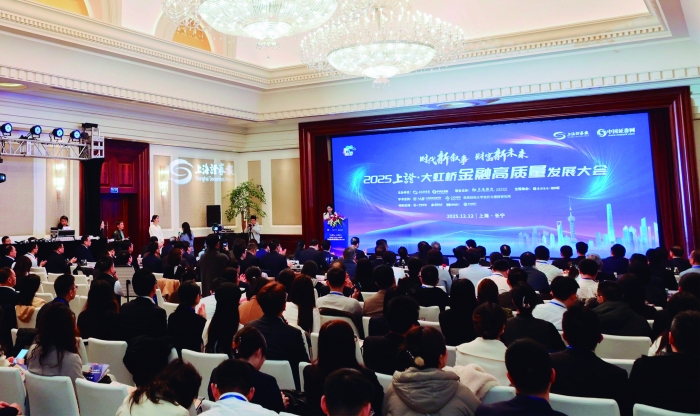
“上证·大虹桥金融高质量发展大会”举行 2025“上证鹰·金理财”榜单揭晓
Shang Hai Zheng Quan Bao· 2025-12-12 19:25
Core Insights - The "Shanghai Financial High-Quality Development Conference" focused on the theme "New Narrative of the Era, New Future of Wealth," discussing how the wealth management industry can navigate economic cycles and enhance competitiveness while supporting the real economy [1][3] Group 1: Conference Overview - The conference was co-hosted by Shanghai Securities Journal and Bank of Communications Shanghai Branch, attracting over 300 representatives from various sectors including government, financial management, and industry associations [1] - Keynote speeches were delivered by notable figures including Wang Zhongmin, former Vice Chairman of the National Social Security Fund, and other leaders from financial regulatory bodies [1] Group 2: Awards and Recognitions - The "2025 Shanghai Securities Eagle Financial Management" list was unveiled, recognizing top institutions in banking, insurance, and securities based on a quantitative evaluation system [2] - In the banking sector, 12 banks including China Construction Bank and Bank of Communications received the "Annual Bank Wealth Management Brand Award," highlighting the expansion of wealth management brands [2] - The insurance sector saw awards for "Annual Insurance Protection Brand" given to six institutions, including AIA and China Life, while eight institutions received the "Annual Insurance Asset Management Brand Award" [4] - In the securities sector, ten institutions including CITIC Securities and Huatai Securities were awarded the "Comprehensive Wealth Management Institution Award," showcasing the industry's overall strength [5]