
洋河股份

Search documents
白酒龙头集体走弱,食品ETF(515710)跌超1%!资金已悄然布局
Xin Lang Ji Jin· 2025-08-27 06:05
Group 1 - The food and beverage sector is experiencing a pullback, with the Food ETF (515710) showing a decline of 1.23% as of the latest report, reflecting a broader downturn in the sector [1][2] - Major stocks in the sector, particularly leading liquor brands and consumer goods, have seen significant drops, with Shanxi Fenjiu and Luzhou Laojiao both falling over 3% [1][2] - The Food ETF has seen a net inflow of 35.17 million yuan over the past two trading days, indicating some investor interest despite the overall decline [2] Group 2 - Moutai's new product, Moutai 1935, has been launched at a price of 998 yuan per bottle, aiming to attract consumers and potentially improve sales and inventory conditions [3] - The food and beverage sector is currently viewed as a good investment opportunity due to its relatively low valuation compared to other sectors, with the food index's P/E ratio at 21.35, placing it in the 10.57% percentile over the past decade [3] - Analysts suggest that the white liquor industry is in a recovery phase, with expectations of improved sales and price transmission as companies report their mid-year results [4] Group 3 - The Food ETF (515710) tracks the CSI segmented food and beverage industry index, with approximately 60% of its holdings in high-end and mid-range liquor stocks, and 40% in other beverage and food segments [5] - The ETF's top holdings include major brands such as Moutai, Wuliangye, and Luzhou Laojiao, indicating a strong focus on leading companies in the sector [5]

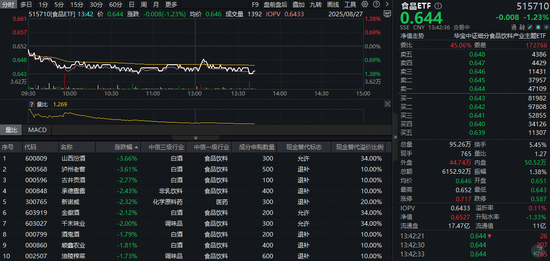
白酒板块午盘下跌 贵州茅台下跌1.44%
Bei Jing Shang Bao· 2025-08-27 06:04
Group 1 - The core index of Shanghai Composite Index rose by 0.33% to 3881.07 points on August 27, while the liquor sector fell by 1.07% to 2384.56 points at midday, with all 20 liquor stocks declining [1] - Notable individual stock performances include Kweichow Moutai closing at 1460.32 CNY per share, down 1.44%; Wuliangye at 128.14 CNY, down 1.23%; Shanxi Fenjiu at 200.36 CNY, down 3.63%; Luzhou Laojiao at 135.64 CNY, down 3.69%; and Yanghe Brewery at 73.95 CNY, down 0.63% [1] - Huatai Securities reported that the liquor sector's valuation and sentiment are at low levels, with the overall fundamentals stabilizing and the upcoming Mid-Autumn Festival expected to boost demand [1] Group 2 - The government is increasingly focused on boosting domestic demand, with ongoing consumer promotion policies providing support for the liquor sector [1] - Companies in the liquor industry are placing greater emphasis on maintaining investor interests, with several firms announcing long-term and mid-term dividend plans, indicating high long-term allocation value in the current interest rate environment [1]





邓紫棋代言五粮液低度酒!新品白酒度数一个比一个低
Di Yi Cai Jing Zi Xun· 2025-08-27 04:44
Core Viewpoint - A "degree reduction competition" is emerging in the Chinese liquor industry, with major brands launching low-alcohol products to adapt to changing consumer preferences [2][4]. Group 1: Industry Trends - Major liquor companies, including Wuliangye and Shede, have recently introduced low-alcohol products, reflecting a shift in consumer demand [2][4]. - In the past month, four companies have announced new low-alcohol products, with alcohol content decreasing progressively [2][4]. - The trend towards lower alcohol content is seen as a response to the industry's adjustment to market changes, particularly the evolving preferences of younger consumers [4][5]. Group 2: Consumer Behavior - The rise of younger consumers, particularly those born between 1985 and 1994, is driving demand for more palatable and health-conscious alcoholic beverages [4][5]. - Traditional high-alcohol liquor has been losing appeal among younger demographics, who prefer alternatives like beer, fruit wine, and cocktails [5][6]. - A report indicates that low-alcohol liquor market size in China is expected to reach 74 billion yuan by 2025, highlighting the potential for growth in this segment [5][6]. Group 3: Production Challenges - Producing low-alcohol liquor requires advanced techniques and higher-quality ingredients, making it more costly than traditional high-alcohol products [3][4]. - Experts emphasize that maintaining the flavor profile while reducing alcohol content poses significant production challenges [3][4]. Group 4: Market Opportunities - The introduction of low-alcohol products is seen as a way to tap into new market segments and meet the diverse needs of consumers [5][6]. - Companies are encouraged to innovate not only in product offerings but also in consumer engagement strategies to effectively reach younger audiences [4][6].



邓紫棋代言五粮液低度酒!新品白酒度数一个比一个低
第一财经· 2025-08-27 04:19
Core Viewpoint - A "degree reduction competition" is emerging in the Chinese liquor industry, with major brands launching lower-alcohol products to adapt to changing consumer preferences and market dynamics [3][4]. Group 1: Industry Trends - Major liquor companies like Wuliangye and Shede are introducing lower-alcohol products, reflecting a shift in consumer demand and a response to market changes [3][4]. - In the past month, four companies have announced new low-alcohol products, with alcohol content decreasing progressively, indicating a trend towards lower alcohol offerings [3][4]. - The introduction of lower-alcohol products is accompanied by modern packaging and online sales strategies, targeting younger consumers through celebrity endorsements [3][4]. Group 2: Consumer Behavior - The rise of younger consumers, particularly those born between 1985 and 1994, is influencing the liquor market, as they prefer drinks that are more palatable and healthier [5][6]. - Traditional high-alcohol liquor is losing appeal among younger consumers, who are increasingly drawn to beer, fruit wine, and cocktails, with white liquor only accounting for 31.8% of their consumption [5][6]. - The shift in consumer preferences is prompting liquor companies to innovate and adapt their offerings to meet the diverse needs of modern consumers [5][7]. Group 3: Market Potential - The domestic low-alcohol liquor market is projected to reach 74 billion yuan by 2025, indicating significant growth potential for this segment [6]. - Lower-alcohol products are expected to complement existing sales channels and cater to social drinking occasions, potentially opening new revenue streams for companies [6][7]. - While lowering alcohol content is a key strategy, companies must also consider how to meet the evolving demands of younger consumers in various social contexts [7].

邓紫棋代言五粮液低度酒!新品白酒度数一个比一个低 试图讨好年轻人
Di Yi Cai Jing· 2025-08-27 03:29
Core Viewpoint - A "degree reduction competition" is quietly unfolding in the liquor industry, reflecting the industry's anxiety and adjustments in response to changing consumer preferences [1][3]. Industry Trends - Recently, four companies have announced the launch of low-alcohol liquor products, with alcohol content decreasing progressively, indicating a trend towards lower alcohol content in the industry [3][4]. - The introduction of low-alcohol products is accompanied by modern packaging and online sales strategies, aiming to attract consumers through celebrity endorsements [3][4]. Consumer Behavior - The shift towards low-alcohol liquor is a response to the changing preferences of younger consumers, who prioritize taste and health characteristics over traditional high-alcohol content [4][5]. - The core consumer group for liquor is undergoing a generational shift, with younger consumers showing a preference for beverages like beer, fruit wine, and cocktails, which collectively account for over 40% of consumption [5][6]. Market Potential - The low-alcohol liquor market is projected to reach a scale of 740 billion yuan by 2025, indicating significant growth potential for companies that adapt to this trend [5][6]. - Companies like Luzhou Laojiao have reported that lower-alcohol products contribute significantly to their sales, suggesting a positive market response to these offerings [5][6]. Production Challenges - Producing low-alcohol liquor presents technical challenges, requiring higher quality base and flavoring spirits, which can increase production costs [4][6]. - The industry must balance the reduction of alcohol content with maintaining the traditional flavor profile of liquor, necessitating advanced production techniques [4][6].

邓紫棋代言五粮液低度酒!新品白酒度数一个比一个低,试图讨好年轻人
Di Yi Cai Jing· 2025-08-27 03:29
Core Viewpoint - The Chinese liquor industry is experiencing a "lowering alcohol content competition," with major brands launching low-alcohol products to adapt to changing consumer preferences and market dynamics [2][4][5]. Industry Trends - Major liquor companies like Wuliangye and Shede are introducing low-alcohol products, with Wuliangye launching a 29° version and Shede set to release a 29° product soon [2][4]. - In the past month, four companies have announced new low-alcohol products, indicating a growing trend in the industry [4]. - The shift towards lower alcohol content reflects a response to the evolving preferences of younger consumers who favor lighter, more palatable beverages [5][6]. Consumer Insights - The rise of younger consumers, particularly those born between 1985 and 1994, is influencing the liquor market, as they seek drinks that are more flavorful and healthier [6]. - Traditional high-alcohol content liquors are losing appeal among younger demographics, who prefer alternatives like beer, fruit wine, and cocktails [6][7]. - The market for low-alcohol beverages is projected to reach 74 billion yuan by 2025, highlighting significant growth potential in this segment [7]. Production Challenges - Producing low-alcohol liquor presents technical challenges, requiring higher quality ingredients and more advanced production processes [5]. - Companies like Shede emphasize that lower alcohol content does not equate to lower production costs, as advanced techniques are necessary to maintain flavor [5]. Market Opportunities - The introduction of low-alcohol products is seen as a way to tap into new market segments, particularly for social drinking occasions [7]. - Liquor companies are encouraged to innovate beyond just lowering alcohol content to meet the diverse needs of modern consumers [7].
2025年1-6月中国白酒(折65度,商品量)产量为191.6万千升 累计下降5.8%
Chan Ye Xin Xi Wang· 2025-08-27 01:39
Core Viewpoint - The Chinese liquor industry is experiencing a decline in production, with a projected decrease in output for 2025 compared to previous years [1] Industry Summary - According to the National Bureau of Statistics, the production of Chinese liquor (converted to 65 degrees, in commodity volume) is expected to be 330,000 kiloliters in June 2025, representing a year-on-year decrease of 6.5% [1] - For the first half of 2025, the cumulative production of Chinese liquor (converted to 65 degrees, in commodity volume) is reported to be 1,916,000 kiloliters, showing a cumulative decline of 5.8% [1] - A statistical chart detailing the production of Chinese liquor from 2020 to the first half of 2025 is provided, indicating a downward trend in production [1] Company Summary - The report mentions several listed companies in the liquor industry, including Guizhou Moutai, Wuliangye, Yanghe, Luzhou Laojiao, Shanxi Fenjiu, Gujing Gongjiu, Shui Jing Fang, Shede Liquor, Jiu Gui Jiu, and Laobai Gan Jiu [1] - The report is published by Zhiyan Consulting, a leading industry consulting firm in China, which specializes in providing in-depth industry research reports and tailored consulting services [1]

从《浪浪山小妖怪》看“蓝洋河”光瓶酒的爆火逻辑
Zhong Jin Zai Xian· 2025-08-27 01:16
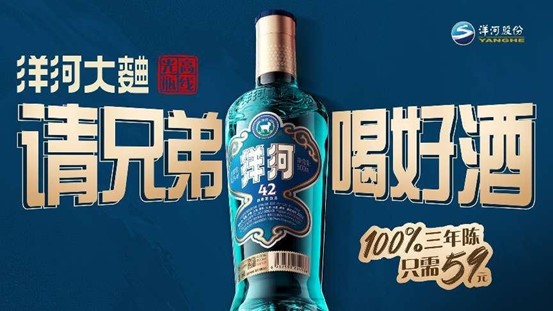
Core Insights - The article highlights the unexpected success of "Wang Wang Mountain Little Monsters" in the Chinese animation market and the rise of Yanghe Daqu's high-line bottled liquor, reflecting contemporary consumer sentiments and choices [1] Group 1: Product Characteristics - Yanghe Daqu's high-line bottled liquor is characterized by its 100% three-year aging process, offering a smooth and rich flavor, which is rooted in a 400-year brewing heritage [3] - The product emphasizes simplicity by eliminating complex packaging and focusing on the essence of drinking, making it suitable for various social settings [6] Group 2: Consumer Experience - The liquor aims to bring joy back to drinking, allowing consumers to enjoy simple pleasures with friends, thus resonating with the desire for genuine happiness in everyday life [9] - The success of Yanghe Daqu's bottled liquor is attributed not only to its quality but also to its understanding of consumers' emotional needs for authenticity, ease, and a touch of happiness [11]
中银晨会聚焦-20250827
Bank of China Securities· 2025-08-27 01:01
Group 1: Key Insights on Oil and Petrochemical Industry - The company achieved a revenue of 22.597 billion yuan in the first half of 2025, representing a year-on-year growth of 4.46%, with a net profit attributable to shareholders of 1.829 billion yuan, up 13.15% year-on-year [5][6] - In Q2 2025, the company reported a revenue of 12.522 billion yuan, a year-on-year increase of 0.78% and a quarter-on-quarter increase of 24.30%, with a net profit of 1.235 billion yuan, reflecting a year-on-year growth of 10.75% [5][6] - The company focuses on its core business, showing steady growth in performance, and is optimistic about the enhancement of its traditional business competitiveness and the broad development space for new productivity [5][6] Group 2: Key Insights on Electronics Industry - The company reported a revenue of 1.732 billion yuan in the first half of 2025, marking a year-on-year increase of 14.00%, and a net profit of 311 million yuan, which is a significant year-on-year growth of 42.78% [9][10] - In Q2 2025, the revenue reached 908 million yuan, up 11.94% year-on-year and 10.17% quarter-on-quarter, with a net profit of 170 million yuan, reflecting a year-on-year increase of 24.79% and a quarter-on-quarter increase of 20.61% [9][10] Group 3: Key Insights on Food and Beverage Industry - The company reported a revenue of 14.8 billion yuan in the first half of 2025, a decline of 35.3% year-on-year, with a net profit of 4.34 billion yuan, down 45.3% year-on-year [15][16] - In Q2 2025, the revenue and net profit were 3.73 billion yuan and 710 million yuan, respectively, representing year-on-year declines of 43.7% and 62.7% [15][16] - The company is undergoing deep adjustments, aiming to clear its financial statements and release pressure while waiting for the effects of reforms to materialize [15][16]


中国必需消费品8月价格报告:多数品类价格再次回落
Haitong Securities International· 2025-08-26 14:44
Investment Rating - The report assigns an "Outperform" rating to multiple companies in the consumer staples sector, including Moutai, Wuliangye, Luzhou Laojiao, and others, indicating a positive outlook for these stocks [1]. Core Insights - The report highlights a general decline in wholesale prices across most categories of consumer staples, particularly in the baijiu segment, with significant price drops noted for Moutai and Wuliangye [3][32]. - It emphasizes the structural opportunities arising from policy catalysis in the consumer staples sector, suggesting that investors should focus on these potential growth areas [3]. Summary by Sections Price Trends - Recent wholesale prices for Moutai show a decrease, with Feitian Moutai (case) priced at 1845 yuan, down 70 yuan from the previous month, and a year-to-date decline of 395 yuan [32]. - Wuliangye's eighth-generation price remains stable at 920 yuan, with no change since the beginning of the year [32]. - The report notes that the prices of various baijiu brands have shown a downward trend, with year-on-year declines for many products [4][32]. Discount Trends - Discounts on mass-market consumer goods have widened, particularly for liquid milk, soft drinks, infant formula, seasonings, and beer, indicating a shift in consumer purchasing behavior [19][30]. - The average discount rate for liquid milk decreased from 79.1% to 74.8%, while soft drinks saw a drop from 91.8% to 88.3% [19][30]. - The report provides a detailed overview of discount rates across various categories, showing a general trend of increasing discounts in the consumer staples market [20][21].