
中国神华

Search documents
煤炭ETF(515220)跌1.12%,半日成交额3.03亿元
Xin Lang Cai Jing· 2026-02-13 05:56
Group 1 - The coal ETF (515220) experienced a decline of 1.12%, closing at 1.151 yuan with a trading volume of 303 million yuan [1] - Major holdings in the coal ETF showed mixed performance, with China Shenhua down 2.42%, Shaanxi Coal and Chemical Industry down 2.44%, and Yanzhou Coal Mining down 0.80%, while Shanxi Coking Coal increased by 0.28% [1] - The coal ETF's performance benchmark is the CSI Coal Index return, managed by Guotai Asset Management, with a return of 172.28% since its inception on January 20, 2020, and a return of 6.49% over the past month [1]






港股通央企红利ETF(159266)已连续5日遭遇资金净赎回,区间净流出额1749.4万元
Xin Lang Cai Jing· 2026-02-13 02:42
数据显示,2月12日,港股通央企红利ETF(159266)遭净赎回415.41万元,位居当日跨境ETF净流出排名 15/215。最新规模5.65亿元,前一日规模5.68亿元,当日资金净流出额占前一日规模的比例为0.73%。 近5日,港股通央企红利ETF(159266)遭净赎回1749.4万元,位居跨境ETF净流出排名第28/215。近10 日,港股通央企红利ETF(159266)遭净赎回2252.35万元,位居跨境ETF净流出排名第41/215。近20日, 港股通央企红利ETF(159266)遭净赎回4030万元,位居跨境ETF净流出排名第50/215。 港股通央企红利ETF(159266)已连续5日资金遭净赎回,区间净流出额1749.4万元。 港股通央企红利ETF(159266)成立于2025年7月23日,基金全称为永赢中证港股通央企红利交易型开 放式指数证券投资基金,基金简称为港股通央企红利ETF。该基金管理费率每年0.50%,托管费率每年 0.10%。港股通央企红利ETF(159266)跟踪标的指数为港股通央企红利(931233)。 规模方面,截止2月12日,港股通央企红利ETF(159266)最新份额 ...
2月12日景顺长城国证港股通红利低波动率ETF(159569)遭净赎回431.02万元
Xin Lang Cai Jing· 2026-02-13 02:42
Core Viewpoint - The Invesco Great Wall National Index Hong Kong Stock Connect Dividend Low Volatility ETF (159569) experienced significant net redemptions, indicating a potential shift in investor sentiment towards this fund [1][2]. Group 1: Fund Performance - As of February 12, the fund had a net redemption of 4.31 million yuan, ranking 14th out of 215 in cross-border ETF net outflows [1]. - The fund's latest size was 484 million yuan, down from 488 million yuan the previous day, with a net outflow representing 0.88% of the prior day's size [1]. - Over the past five days, the fund faced net redemptions totaling 8.49 million yuan, ranking 47th in cross-border ETF net outflows [1]. - Year-to-date, the fund's share count decreased by 4.30%, while its size increased by 3.82% [2]. Group 2: Trading Activity - The fund recorded a cumulative trading volume of 1.06 billion yuan over the last 20 trading days, with an average daily trading amount of 52.99 million yuan [2]. - Year-to-date, the cumulative trading amount reached 1.358 billion yuan, averaging 46.83 million yuan per day over 29 trading days [2]. Group 3: Fund Management - The current fund managers are Gong Lili and Wang Yang, with Gong managing the fund since August 29, 2024, achieving a return of 50.19%, while Wang has managed it since August 13, 2025, with a return of 7.19% [2]. Group 4: Holdings - The fund's top holdings include COSCO Shipping Holdings, Orient Overseas International, Yanzhou Coal Mining, and China Shenhua Energy, with respective holding percentages of 8.86%, 7.48%, 5.65%, and 3.63% [2].


X @Bloomberg
Bloomberg· 2026-02-13 02:40
Chinese regulators have approved a plan for the country’s biggest coal miner to acquire 133.6 billion yuan ($19 billion) of assets from its parent firm, a move aimed at cushioning the company as coal consumption starts to plateau https://t.co/GMrBITCnUk ...
煤炭开采行业专题研究:蒙古:跨越戈壁的煤炭动脉供需梳理
GOLDEN SUN SECURITIES· 2026-02-13 02:24
Investment Rating - The report provides a positive investment rating for the coal mining industry in Mongolia, highlighting its rich resources and potential for growth in exports, particularly to China [19][25]. Core Insights - Mongolia has abundant coal resources, with proven reserves of 252 million tons as of the end of 2020, including 135 million tons of lignite and brown coal, and 117 million tons of anthracite and bituminous coal [7][11]. - The coal mining sector is crucial for Mongolia's economy, with coal accounting for over 90% of the country's primary energy consumption, primarily used for power generation and exports [24][25]. - The report emphasizes the strategic importance of coal exports to China, which accounted for 94.9% of Mongolia's coal exports in 2024, showcasing the reliance on this market for growth [22][25]. Summary by Sections Coal Resource Overview - Mongolia's coal resources are mainly distributed across five regions, with the northern and southern areas being the most productive, contributing to 99% of the total output [7][11]. - The country has approximately 300 coal mines, with a significant portion of high-quality coking coal suitable for metallurgical processes [11][19]. Production and Export Trends - Coal production in Mongolia has seen fluctuations, with a peak of 32 million tons in 2011, primarily driven by export demand [21]. - The report forecasts a cumulative coal production of 97.72 million tons by 2024, reflecting a compound annual growth rate (CAGR) of 10.3% from 2013 to 2024 [21]. - In 2025, coal production is expected to slow down due to a decline in demand from the Chinese coking coal market [21]. Infrastructure and Trade Ports - Key coal export ports include Gashuunsukhait, Tsagaan Khad, and Mandula, with ongoing improvements in cross-border railway and logistics infrastructure to enhance export capacity [28][32]. - The report outlines various railway projects aimed at increasing coal export volumes by approximately 4 million tons annually [32]. Company Insights: Mongolian Coal - Mongolian Coal is identified as the largest high-quality coking coal producer and exporter in Mongolia, with a diversified resource portfolio including gold and copper [40][41]. - The company has strategically shifted towards resource diversification, reducing reliance on coal by expanding into gold and copper mining [46][90]. - As of mid-2025, the company reported total coal reserves of 612 million tons, with a focus on enhancing production capabilities and market presence [56][61]. Financial Performance - The company's revenue has shown significant growth, particularly from 2015 to 2019, driven by increased demand from infrastructure projects in China [55]. - The report notes a typical cyclical fluctuation in revenue, with a notable increase in 2022 and 2023, followed by a decrease in the first half of 2025 [55][61]. Cost Structure and Pricing - The report details the cost structure of coal production, with average costs remaining stable around $77 per ton from 2018 to the first half of 2025 [71]. - Pricing strategies are influenced by market dynamics, with a focus on maintaining competitive pricing in the context of international coal markets [68][70].
Call板块-煤炭
2026-02-13 02:17
Summary of Coal Industry Conference Call Industry Overview - The coal sector typically outperforms the CSI 300 index after the Spring Festival, with average increases of 6.9% for coal and 9.2% for coking coal from 2015 to 2025, compared to a 3.1% increase for the CSI 300 index during the same period [2][5] - Current coal social inventory is low, standing at 160 million tons as of February 5, a year-on-year decrease of 3% [2][6] - Coking coal inventory is at 29.65 million tons, down 5.5% year-on-year, which supports price increases post-festival [2][6] Key Points and Arguments - The Indonesian government plans to reduce coal production from 790 million tons in 2026 to 600 million tons, a 24% decrease, which is expected to tighten global supply and support international coal prices [2][6] - Domestic coal production is also expected to decrease, with Yulin City announcing a plan to exit 19 supply mines, affecting 19 million tons of capacity, alongside stricter safety production regulations [2][6] - Rising international coal prices, driven by Indonesian price increases from $51 to $59 per ton and higher Australian coking coal prices due to increased demand from India, are likely to push domestic prices up as steel and power plants may shift to domestic resources [7] Price Expectations - Long-term expectations for thermal coal prices are projected to rise to 800-850 RMB per ton, with potential increases to 900-1,000 RMB per ton if production cuts exceed expectations [7] - Coking coal prices are expected to stabilize around 2000 RMB per ton due to rigid supply and improving demand [7] Investment Opportunities - The coking coal sector presents medium to long-term investment opportunities due to a decrease in high-quality coking coal supply globally, while demand continues to grow, particularly in developing countries like the Middle East, India, ASEAN, and Africa [3][8] - The U.S. Department of Energy and India have classified coking coal as a strategic resource, highlighting its importance for economic development [3][8] Investment Strategy Recommendations - Based on the current low inventory and positive global demand outlook, the focus is on both thermal and coking coal sectors for 2026 [9] - High-dividend companies such as China Shenhua, Shaanxi Coal and Chemical Industry, and China Coal Energy are recommended for investment [9] - Companies with high elasticity, such as Hengyuan Coal Power and Pingmei Shenma Energy, are also highlighted [9] - Investors are advised to buy on dips to capitalize on potential returns, particularly for companies with overseas mining resources that are not constrained by long-term contracts [9]
千亿级重组获批!
中国能源报· 2026-02-13 02:01
中国神华能源股份有限公司(以下简称"中国神华")发行股份购买资产并募集配套资金获证监会注册批复。 中国神华2月12日晚发布公告称,公司作价1335.98亿元收购控股股东国家能源集团旗下12家核心企业股权的交易,当日获得中国证 监会注册批复。 此次交易不仅是A股最大规模发行股份购买资产类项目,更成为A股首单适用并购重组简易审核程序的重组项目,彰显资本市场深化改 革与服务实体经济的强劲活力。 作为A股首单适用简易审核程序的并购重组项目,其审核效率堪称行业标杆。 "一、同意你公司向国家能源投资集团有限责任公司发行 1,363,248,446 股 股份购买相关资产的注册申请。 l 二、同意你公司发行股份募集配套资金不超过 200 亿元的注册申请。 三、你公司本次发行股份购买资产并募集配套资金应当严格按照报送上海证 券交易所的有关申请文件进行。 四、你公司应当按照有关规定及时履行信息披露义务。 五、你公司应当按照有关规定办理本次发行股份的相关手续。 六、本批复自下发之日起 12个月内有效。 公司董事会将根据中国证监会批复和相关法律法规的要求以及公司股东会 的授权,在规定期限内办理本次交易所涉及的相关事宜,并及时履行信息 ...

南向1.41万亿“压舱” 韩国散户“点火”——港股迎来定价权分层时代
Zhi Tong Cai Jing· 2026-02-13 01:53
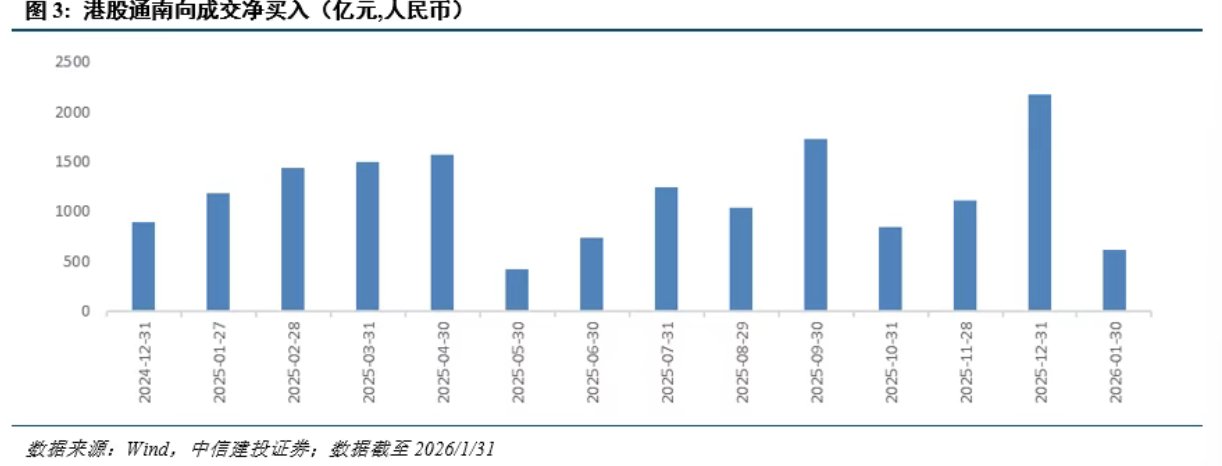
Core Insights - The Hong Kong stock market is experiencing two distinct but resonant waves of incremental capital from mainland China and South Korean retail investors, with mainland southbound funds achieving a record net purchase of 1.41 trillion HKD, establishing themselves as core builders of pricing power in the market [1][10] - Southbound funds are characterized by long-term value investment, while South Korean retail investors engage in high-frequency trading and narrative-driven investments, creating a diversified funding source and a layered pricing logic in the Hong Kong market [1][10] Funding Scale and Structure - Southbound funds have become the core incremental source and valuation system reshaper for the Hong Kong market, with a cumulative net inflow of 5.11 trillion HKD by the end of 2025, and a market value exceeding 6.3 trillion HKD, accounting for 12.7% of the total market [2] - South Korean retail investors, while having a smaller capital scale, exhibit concentrated trading behavior and significant leverage, particularly impacting specific sectors like new economy IPOs and the semiconductor industry [2][5] Industry Preferences - Southbound funds focus on financials and high-dividend utilities, with significant investments in major banks and state-owned enterprises driven by high dividend yields and low valuation levels, while South Korean investors show minimal interest in these sectors [3][5] - South Korean retail investors heavily invested in Xiaomi and MiniMax-WP, demonstrating a high turnover and narrative-driven trading approach, contrasting with the stable, long-term holdings of Southbound funds [5][8] Trading Behavior and Decision-Making - Southbound funds exhibit a decision-making anchor based on dividend yield, ROE stability, and free cash flow generation, characterized by continuous accumulation and stable holdings, as seen with significant net purchases in major banks [8][9] - South Korean retail investors, on the other hand, are driven by industry narrative strength and social media trends, with a high frequency of trading and a tendency to hold stocks for less than three months, reflecting a stark contrast to the long-term holding strategy of Southbound funds [9][10] Market Dynamics - The influx of South Korean retail investors into the Hong Kong market represents a diversification of the investor base, providing liquidity while also potentially increasing volatility during certain periods [9][10] - The interaction between Southbound funds and South Korean retail investors is creating a new normal in the Hong Kong market characterized by layered pricing and concurrent narratives, necessitating both stable investment strategies and agile trading approaches [10]






智通特供|南向1.41万亿“压舱” 韩国散户“点火”——港股迎来定价权分层时代
智通财经网· 2026-02-13 01:49
Core Viewpoint - The Hong Kong stock market is experiencing two distinct but resonant waves of incremental capital from mainland China and South Korean retail investors, leading to a diversification of funding sources and a layered pricing logic in the market [1][14]. Group 1: Scale and Structure - Southbound funds have established themselves as the core incremental source and revaluation force in the Hong Kong stock market, with a cumulative net inflow of 5.11 trillion HKD by the end of 2025, and a record annual net purchase of 1.41 trillion HKD in 2025 [2]. - The market capitalization of southbound funds has surpassed 6.3 trillion HKD, accounting for 12.7% of the total market capitalization of Hong Kong stocks, indicating their evolution into an "endogenous pricing variable" [2]. Group 2: Trading Behavior of South Korean Retail Investors - South Korean retail investors, while having a relatively limited capital size, exhibit highly concentrated and leveraged trading behaviors, particularly impacting specific sectors such as new economy IPOs and the semiconductor industry [5]. - In early 2026, South Korean retail investors made a net purchase of over 2 million USD in MiniMax-WP, contributing significantly to its IPO, which saw an oversubscription of 1837 times [5]. Group 3: Industry Preferences - Southbound funds focus on financials and high-dividend utilities, with significant investments in companies like China Construction Bank and China Mobile, driven by high dividend yields and low valuation levels [6]. - South Korean investors, on the other hand, show a preference for high-growth sectors, with notable investments in Xiaomi and MiniMax-WP, reflecting a narrative-driven trading strategy [8]. Group 4: Investment Strategies - Southbound funds demonstrate a long-term investment strategy characterized by stable holdings and systematic increases in positions, as seen with China Construction Bank, which saw a net purchase of 7.39 billion shares in 2025 [12]. - South Korean retail investors engage in high-frequency trading with a focus on social media trends and community consensus, leading to a rapid turnover of holdings, with an average holding period of less than three months [13]. Group 5: Market Dynamics - The influx of South Korean retail investors into the Hong Kong market represents a diversification of the investor base, contributing to liquidity while also potentially increasing volatility during certain periods [14]. - The interaction between the long-term positioning of southbound funds and the short-term trading strategies of South Korean investors creates a new normal in the Hong Kong stock market characterized by layered pricing and concurrent narratives [14].
蒙古:跨越戈壁的煤炭动脉供需梳理-20260213
GOLDEN SUN SECURITIES· 2026-02-13 01:44
Investment Rating - The report provides a positive investment rating for the coal mining industry in Mongolia, highlighting its rich resources and potential for growth in exports, particularly to China [19][25]. Core Insights - Mongolia has abundant coal resources, with proven reserves of 252 million tons as of the end of 2020, including 135 million tons of lignite and brown coal, and 117 million tons of anthracite and bituminous coal [7][11]. - The coal mining sector is crucial for Mongolia's economy, with coal accounting for over 90% of the country's primary energy consumption, primarily used for power generation and exports [24][25]. - The report emphasizes the strategic importance of coal exports to China, which accounted for 94.9% of Mongolia's coal exports in 2024, showcasing the reliance on this market for growth [22][25]. Summary by Sections Coal Resource Overview - Mongolia's coal resources are distributed across various regions, with the northern and southern areas being the most productive, contributing to 99% of the total output [7][11]. - The country has approximately 300 coal mines, with a significant portion of high-quality coking coal suitable for metallurgical processes [11][19]. Production and Export Trends - Coal production in Mongolia has seen fluctuations, with a peak of 32 million tons in 2011, primarily driven by export demand [21]. - The report forecasts a cumulative coal production of 97.72 million tons by 2024, reflecting a compound annual growth rate (CAGR) of 10.3% from 2013 to 2024 [21]. - In 2025, coal production is expected to slow down due to a decline in demand from the Chinese coking coal market [21]. Infrastructure and Trade Ports - Key coal export ports include Gashuunsukhait, Tsagaan Khad, and Mandula, with ongoing improvements in cross-border railway and logistics infrastructure to enhance export capacity [28][32]. - The report outlines various railway projects aimed at increasing coal export volumes by approximately 4 million tons annually [32]. Company Analysis: Mongolian Coal - Mongolian Coal is identified as the largest producer and exporter of high-quality coking coal in Mongolia, with diversified mineral resource development including gold and copper [40][43]. - The company has a strategic focus on expanding its resource base and reducing dependency on coal by entering the gold and copper sectors [46][90]. - As of mid-2025, the company reported total coal reserves of 612 million tons, with significant production capabilities from its UHG and BN mines [56][58]. Financial Performance - The company's revenue has shown cyclical fluctuations, with significant growth from 2015 to 2019, followed by a contraction during the pandemic, and a resurgence in 2021-2024 [55]. - The report highlights that coal sales remain the primary revenue source, with hard coking coal contributing the majority of sales [55][67]. Cost Structure and Pricing - The report details the cost structure of coal production, with average costs remaining stable around $77 per ton from 2018 to mid-2025, despite fluctuations in transportation and compliance costs [71][74]. - Pricing strategies are influenced by market dynamics, with hard coking coal prices expected to stabilize around $160-$180 per ton in 2024 [70][71].