越疆科技

Search documents
三个维度看外贸结构之变
Jing Ji Ri Bao· 2025-10-26 22:06
Core Insights - The 138th China Import and Export Fair (Canton Fair) showcases a record number of exhibitors and booths, with over 32,000 participating companies and 74,600 booths, indicating strong vitality despite external challenges [1] - The fair emphasizes innovation and technology, with companies focusing on showcasing their R&D capabilities rather than just competing on price [2][4] - Industrial design is becoming a crucial driver for product value addition, helping to reshape the perception of "Made in China" products [3][4] - The fair serves as a platform for service innovation, with a successful integration of online and offline exhibition models enhancing transaction efficiency [3][4] - The event highlights the trend towards smart manufacturing and automation, with a significant presence of intelligent products and industrial machinery [5][7] - The concept of "green" is prevalent across various product categories, reflecting a shift towards sustainability and low-carbon solutions in international markets [8][9] Group 1: Innovation and Technology - Companies are increasingly showcasing products with proprietary technology and unique designs, such as a mosquito repellent device using bionic breathing technology [2] - The fair features products that meet high consumer demands for aesthetics and functionality, such as a high-transparency ice-making machine [2] - The integration of AI and advanced technologies in service robots is transforming them into intelligent entities capable of complex interactions [6] Group 2: Industrial Design and Value Addition - Industrial design is enhancing the appeal of products, with examples including aesthetically pleasing home appliances and innovative heating solutions [3] - The fair has seen a rise in the number of companies adopting green production technologies, with 38.4% of exhibitors implementing such practices [9] Group 3: Smart Manufacturing and Automation - The exhibition of industrial automation and smart manufacturing technologies is prominent, showcasing not just machines but also digital solutions for real-time monitoring and predictive maintenance [7] - The shift from selling equipment to providing comprehensive service solutions is evident, with companies focusing on creating value through ecosystem collaboration [7] Group 4: Sustainability and Green Initiatives - The fair features a significant number of exhibitors focused on renewable energy and green technologies, with 305 companies participating in this category [9] - The emphasis on a full lifecycle approach to sustainability is growing, with companies showcasing their green achievements across the supply chain [9][10]
进入具身机器人的六类企业与五大战略路径分析
Sou Hu Cai Jing· 2025-10-25 18:50
Core Insights - The article emphasizes the strategic importance of embodied robots in various industries, highlighting their transition from technological exploration to commercial implementation, with a focus on capturing future trillion-dollar markets [1][2]. Group 1: Industry Dynamics - Embodied robots are becoming the central hub for strategic expansion across multiple industries, driven by six types of companies: specialized robotics startups, traditional robotics firms, tech/Internet giants, automotive manufacturers, core component suppliers, and home appliance companies [2][4]. - Each type of company brings unique insights and strategies to the development of embodied robots, with some focusing on market opportunities, others on human-machine interaction, AI capabilities, and business synergies [5][6]. Group 2: Strategic Directions - Five strategic directions are emerging, guiding the development paths of various industries: - "Low-altitude ecosystem strategy" led by automotive companies, aiming to integrate smart vehicles with embodied robots and low-altitude economies [6][9]. - "Digital model strategy" driven by tech giants, positioning robots as physical terminals for AI ecosystems [6][24]. - "Home ecosystem strategy" spearheaded by home appliance firms, focusing on creating a collaborative smart home environment [6][37]. - "Smart product strategy" led by specialized robotics startups, emphasizing vertical market penetration and core technology extraction [6][55]. - "Industry standard-setting strategy" pursued by core component suppliers, aiming to dominate the upstream supply chain [6][64]. Group 3: Automotive Sector Insights - Automotive companies view embodied robots as an extension of their existing technologies, leveraging advancements in electric vehicles, autonomous driving, and manufacturing capabilities to enhance robot development [19][20]. - The initial focus is on smart vehicles, which serve as incubators for core technologies applicable to embodied robots, facilitating a seamless transition from two-dimensional ground operations to three-dimensional aerial applications [19][22]. Group 4: Home Appliance Sector Insights - Home appliance companies see embodied robots as the solution to the fragmentation and passive control issues in current smart home ecosystems, positioning them as proactive interaction hubs that enhance user experience [41][44]. - The strategy involves creating robots that can move freely, sense user needs, and interact in a human-like manner, thereby transforming the smart home landscape [45][46]. Group 5: Startup Strategies - Specialized robotics startups focus on penetrating high-value vertical markets, extracting core technologies, and expanding their reach without directly competing with larger firms [56][57]. - These companies prioritize developing modular technologies that can be reused across different applications, enhancing their scalability and market adaptability [58][60]. Group 6: Component Suppliers' Strategy - Core component suppliers aim to dominate the upstream market by addressing critical technology gaps and establishing themselves as key players in the robotics supply chain [64][66]. - Their strategy involves overcoming technological barriers in essential components, such as reducers and actuators, to reduce reliance on foreign suppliers and enhance domestic capabilities [66][67].



从“给政策”到“给机会”迭代升级 广东为“AI+制造业”精准配对
Nan Fang Ri Bao Wang Luo Ban· 2025-10-23 09:19
Core Insights - Guangdong is leveraging its extensive market and diverse scenarios to promote the intelligent upgrade of manufacturing enterprises through artificial intelligence (AI) [1] - The province has introduced 16 policy measures to shift support from "providing policies" to "providing opportunities," aiming to create a globally influential "AI + manufacturing" integration development demonstration zone [1] Group 1: AI and Manufacturing Integration - Guangdong has a complete industrial system with all 31 manufacturing categories, accounting for approximately 1/8 of the national manufacturing scale, creating a "testing ground" for AI applications [2] - The province hosts over 1,600 core AI enterprises, forming a full-stack industrial chain represented by companies like Huawei and Tencent, which provides a "new engine" for the transformation of manufacturing [2] - To address the challenges of unclear demand and mismatched supply in AI applications, Guangdong has established a national-level digital transformation promotion center for manufacturing, offering one-stop services for intelligent upgrades [2][3] Group 2: Infrastructure and Support Mechanisms - Guangdong is building a "1+1+N" embodied intelligence training ground system to facilitate the development and verification of embodied intelligence models, promoting data flow and standardization [3] - The province is focusing on enhancing innovation centers in the fields of intelligent agents and intelligent terminals, leveraging the technological advantages of cities like Guangzhou and Shenzhen [4] - Guangdong has established a national-level AI application pilot base in the consumer mobile terminal sector, with plans to accelerate the construction of more pilot bases [4] Group 3: Financial Investment and Policy Support - Since 2018, Guangdong has launched five batches of "new generation AI" initiatives, focusing on key areas such as intelligent manufacturing and quality inspection, achieving multiple breakthroughs [6] - The provincial government has allocated approximately 15 billion yuan for AI-related projects since 2018, with a budget of 1.32 billion yuan for 2025 to support cutting-edge technology initiatives [8] - The province aims to invest over 20 billion yuan in AI-related projects by 2027, driving the scale of related industries to exceed 100 billion yuan [9] Group 4: Communication and Computing Infrastructure - Guangdong has built a leading information infrastructure network, with 431,000 5G base stations established by August 2025, ensuring connectivity across the province [7] - The province is implementing the "Yueqi Wanzhao" initiative to create 100 10G optical network projects, with over one-third focused on factory scenarios [7] - A unified computing power service platform has been established in the Greater Bay Area, integrating 18 computing resource pools with a total capacity exceeding 14,000P [7]
人形机器人加速“进化” 马斯克100亿台预言能否成真?
Jing Ji Guan Cha Wang· 2025-10-21 10:44
Core Viewpoint - Yushu Technology has officially launched its next-generation humanoid robot, Unitree H2, which has garnered significant attention in the tech community and social media, reflecting the rapid development of the humanoid robot industry in China this year [2][3] Industry Overview - The humanoid robot sector in China has seen 127 investment events from January to August 2023, totaling 36.436 billion yuan, surpassing the expected total for the entire year of 2024 [2] - The global humanoid robot industry faces challenges such as technological breakthroughs, outdated functions, market expansion, and weak performance despite predictions of long-term demand reaching 10 billion units [2][6] Product Features - Unitree H2 stands 180 cm tall and weighs 70 kg, designed to closely resemble human form, enhancing its humanoid appearance [3] - The new model shows significant improvements in flexibility and stability compared to its predecessor, Unitree H1, and features a bionic face, making it more aligned with sci-fi robot depictions [3][5] Competitive Landscape - The Chinese humanoid robot market has over 20 models from various companies, including UBTECH, Da Vinci Technology, Xiaomi, and iFlytek, covering sectors like education, service, research, and industry [3][4] - Companies are differentiating themselves through unique features: UBTECH focuses on stability and interaction, Yushu on high-performance motion control, and Da Vinci on cloud-based intelligent robots [4][5] Market Growth Potential - The humanoid robot market is projected to become a $100 billion industry, with estimates suggesting the global market could exceed $20 billion by 2030 and China's market reaching around $5 billion [6][7] - Goldman Sachs predicts the global humanoid robot market could reach $154 billion by 2035, indicating a robust growth trajectory over the next 10-20 years [7] Investment Activity - The global humanoid robot market has seen over $5 billion in financing in 2023, with a significant portion directed towards companies in the U.S. and China [7] - Notable funding activities include UBTECH's $1 billion IPO in 2023 and Yushu's nearly $100 million Series B funding in 2022 [7][8] Financial Performance - Despite revenue growth, many companies in the humanoid robot sector are experiencing losses. For instance, UBTECH reported a revenue of 621 million yuan in the first half of 2025 but incurred a net loss of 440 million yuan [9] - The overall trend shows that while revenues are increasing, profitability remains a challenge due to high R&D costs and limited market demand [11]

中国机器人天团爆火,有公司全球销量同比翻倍
21世纪经济报道· 2025-10-17 23:48
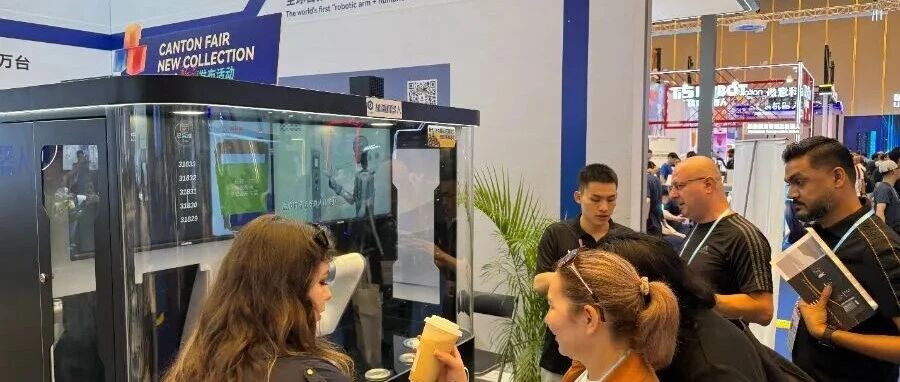
Core Viewpoint - The article highlights the significant growth and innovation in the Chinese service robotics industry, particularly showcased at the Canton Fair, where demand for robots is surging globally due to labor shortages and high costs in developed countries [1][7]. Group 1: Market Trends - The service robot section at the Canton Fair featured 46 leading companies showcasing various robotic forms and applications, indicating a diverse and rapidly evolving market [3]. - The demand for "robot replacing human" solutions is increasing due to immigration restrictions and labor shortages in developed countries, providing a vast opportunity for Chinese robotics companies to expand internationally [7]. Group 2: Technological Advancements - The integration of AI and advanced algorithms in robotics is enabling more flexible and intelligent responses in various scenarios, moving beyond mere mechanical execution [4]. - Companies are focusing on optimizing technology for specific applications, enhancing their competitive edge in international markets [5]. Group 3: Company Performance - COFE+ coffee robot's global sales doubled year-on-year, with the Canton Fair contributing to 10% of its sales, despite a nearly empty revenue stream in the U.S. market during the first half of the year [9]. - Shenzhen Zhihui Technology has signed contracts for over 2,000 commercial cleaning robots in Europe and Russia, indicating strong international demand and confidence in their products [10]. Group 4: Future Opportunities - The article emphasizes the potential for Chinese robotics companies to evolve from merely exporting products to establishing standards and operational norms in the global market, enhancing their competitiveness [11]. - There is a growing interest from overseas clients in intelligent devices for specific scenarios, which could become new growth points for companies like Zhihui Technology [10].
中国经济信心说丨广交会采购商“挤爆”服务机器人专区,所为何来?
Yang Shi Xin Wen Ke Hu Duan· 2025-10-17 12:28
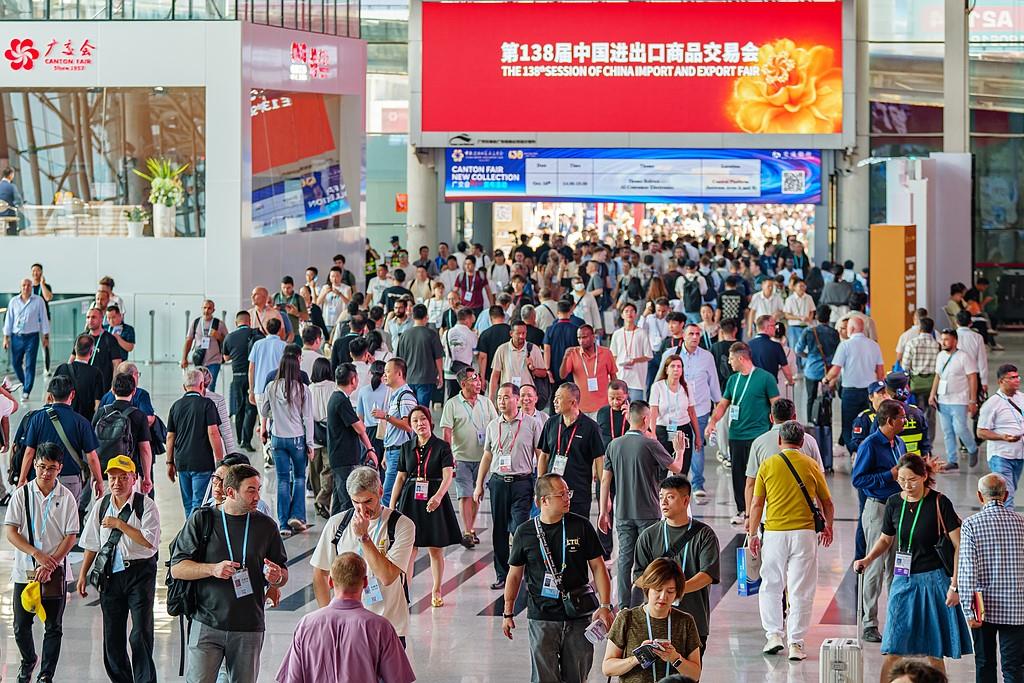
Core Insights - The 138th Canton Fair has seen a surge in global buyers eager to purchase Chinese service robots, reflecting strong trust and enthusiasm for Chinese manufacturing [1][3] - Chinese manufacturers dominate the global commercial service robot market, with a shipment share of 84.7% in 2024, driving significant interest from international buyers [3][4] Group 1: Product Performance - Chinese service robots have evolved from conceptual products to practical solutions addressing real-world challenges, such as exoskeleton robots reducing physical exertion by 30% and therapy robots replicating expert massage techniques [4][6] - The high performance and application value of these robots in sectors like elderly care, healthcare, and cleaning have attracted considerable attention from buyers [4][6] Group 2: Cost-Effectiveness - The cost-effectiveness of Chinese robots is a major selling point, with prices often one-third of similar products from Europe and the U.S., while offering superior load capacity and durability [4][6] - Buyers recognize the potential for profitability in deploying these robots in hotels and gyms, as well as the reduced maintenance costs associated with modular designs [4][6] Group 3: Innovation Ecosystem - China has established a complete robot industry ecosystem, encompassing core components, manufacturing, system integration, and application, which fosters continuous innovation and rapid feedback [6] - The presence of 46 leading companies at the Canton Fair showcases a robust product matrix capable of providing ongoing upgrades and globally adaptable solutions [6] Group 4: Market Confidence - The enthusiastic purchasing behavior at the Canton Fair signifies global market confidence in Chinese technological innovation, cost control, and industry collaboration [6] - The event is positioned to enhance stability in Chinese foreign trade and global commerce, showcasing the resilience and innovative vitality of Chinese enterprises in the robot sector [6]
机器人“天团”驾到:广交会迈入“场景智变”时代
2 1 Shi Ji Jing Ji Bao Dao· 2025-10-17 11:02
Core Insights - The demand for service robots is surging globally, particularly in regions like the Middle East and Central Asia, as Chinese companies leverage their technological advantages and adaptability to expand their market presence [1][3][4] Group 1: Market Trends - The second service robot section at the Canton Fair showcased 46 leading companies, highlighting advancements in various robotic applications, including industrial arms, quadruped robots, and medical robots [1] - The global sales volume of Chinese robots has doubled year-on-year, with significant contributions from events like the Canton Fair, which accounted for 10% of sales during the event [1][5] Group 2: Technological Advancements - AI technology is becoming a standard feature in robots, enhancing their ability to respond to various scenarios and improving their operational efficiency [2][3] - Companies are focusing on optimizing their products for specific applications, such as the high-altitude cleaning robot that uses 1/20 of the water compared to traditional methods, making it particularly suitable for water-scarce regions [3][7] Group 3: International Demand - The U.S. logistics sector is facing labor shortages due to immigration policies, prompting interest in robotic solutions for delivery and logistics, with one buyer planning to purchase 50 robots initially, potentially scaling to 50,000 [4][5] - Despite uncertainties regarding tariffs, the quality and rapid iteration of Chinese robots present significant opportunities in the U.S. market [5] Group 4: Business Strategies - Companies are diversifying their market strategies to mitigate tariff impacts, focusing on regions such as the Middle East, Europe, Japan, South Korea, Singapore, and Australia [5][6] - The Canton Fair serves as a crucial platform for companies to secure repeat customers and expand their international presence, with some firms reporting substantial order volumes during the event [5][6]
“吉利系”一星机器人被传解散,刚完成数亿元种子轮融资
Nan Fang Du Shi Bao· 2025-10-17 05:07
10月16日,苏州一星机器人有限公司(OneStar),传出解散传闻。据第一财经等多家媒体报道,该公 司正处于解散阶段。南都湾财社记者也向该公司采访求证,截至发稿,未获得回复。 公开资料显示,苏州一星机器人有限公司成立于2025年5月9日,法定代表人为潘运滨,注册资本1000万 元人民币。这是一家具身智能领域的明星创业公司,出身于"吉利系",依托吉利控股集团的生态资源, 专注于多模态扩散大模型研发与高精度真机数据采集,致力于打造智能进化机器人。 然而,这样一家处在具身智能风口的公司,为何在此时传出解散传闻,似乎走到了破产的边缘。 成立4个月,获得数亿元种子轮融资 一星机器人的注册地址在苏州工业园区星龙街,这家成立仅5个月左右的公司,目前没有官网,在网上 也难以找到公开的联系方式。 天眼查的股权穿透图显示,一星机器人的实控人为李星星,持股比例65.66%,拥有51%的表决权。公开 资料显示,李星星出生于1985年,毕业于牛津大学,是吉利控股集团董事长李书福之子,目前担任吉利 集团监事、上市公司澄星股份实控人。 此外,一星机器人董事长潘运滨也是来自吉利体系内部,曾担任吉利卫星板块总裁,现任吉利半导体公 司CEO。 ...
“机器人服务智能体第一股”上市首日涨26%,已在香港设立国际总部及研发中心
Zheng Quan Shi Bao Wang· 2025-10-17 04:20
Core Viewpoint - Cloudwalk Technology officially listed on the Hong Kong Stock Exchange, becoming the first "robot service intelligent body" stock in Hong Kong, highlighting the growing trend of specialized technology companies in the market [1] Group 1: Company Overview - Cloudwalk Technology is a leading player in the Chinese robot service intelligent body market, providing robots and AI digital systems that offer adaptive and scalable products and services [2] - The company has achieved a deployment rate of 99% across the country, becoming a standard in the hotel industry, with a fully autonomous learning system that operates without human intervention [2] - Cloudwalk's products are currently used in over 34,000 hotels globally, with a peak of over 36,000 robots online simultaneously, and cumulative service instances exceeding 500 million [2] Group 2: Market Position and Performance - According to Frost & Sullivan, Cloudwalk ranks first globally in the number of simultaneously online robots and consumer service numbers, with 27,000 robots and 230 million consumers served daily in 2024 [3] - The company holds a 13.9% revenue share in the Chinese robot service intelligent body market, ranking first in the hotel sector [3] - From 2022 to 2024, the company's revenue grew from 161 million to 245 million yuan, with a compound annual growth rate (CAGR) of 23.2%, while gross profit CAGR reached 64.6%, indicating improved profitability [3] Group 3: Future Plans - Post-listing, the company aims to explore broader application cases and create a vibrant ecosystem to enhance commercialization capabilities [3] - Cloudwalk plans to optimize its products and services to improve adaptability across various vertical industries and enhance its technological strength and global influence [3]
广交会智能化产品“井喷”,供应链铸就全球竞争力
Zheng Quan Shi Bao· 2025-10-17 01:07
Group 1: Industry Trends - The 138th China Import and Export Fair (Canton Fair) has seen a surge in intelligent products, indicating a widespread adoption of smart technology across various industries [1] - The growth of intelligent products is attributed to China's long-term development in software and hardware collaboration, as well as supply chain advantages [1][3] - Despite the rapid growth, the current level of intelligence in products is still in its early stages, with significant room for improvement [4] Group 2: Company Innovations - Liaoning Xingguang Electric Power Construction Development Co., Ltd. introduced a comprehensive energy management system that offers 24/7 remote monitoring and various intelligent functions [1] - Jierguge Intelligent Technology Co., Ltd. launched the Jebao Smart Control IoT platform, integrating digital twin, IoT, and AI for food processing management [2] - Pudute Robotics highlighted China's leading position in the global smart wave, emphasizing the integration of AI capabilities with infrastructure to solve specific customer problems [3] Group 3: Market Dynamics - Companies reported a significant increase in demand for smarter products, with some experiencing over 40% year-on-year growth in overseas markets [3] - The competitive edge of Chinese companies in the robotics sector is becoming increasingly apparent, driven by strong hardware manufacturing capabilities [3] - The market is calling for more intelligent and flexible production units as traditional robots face limitations in cross-scenario adaptability and multi-machine collaboration [4]