
人工智能+制造业

Search documents
让人工智能更好助推新型工业化
Ren Min Ri Bao· 2026-02-25 06:31
Group 1 - The core viewpoint emphasizes the challenges and opportunities of integrating artificial intelligence (AI) into the manufacturing industry, highlighting the need for high-quality industrial data and talent development [1][2] - Zhang Fan, a representative from China Electrical Equipment Group, has proposed suggestions for accelerating the deep integration of AI and manufacturing, including the establishment of AI innovation centers and the creation of high-quality industrial data ecosystems [1] - The manufacturing sector faces issues such as low-level repetitive construction of vertical AI models and a lack of shared high-quality industrial data, which hampers the efficiency and generalization ability of AI model training [1] Group 2 - The Ministry of Industry and Information Technology and other national departments have engaged in discussions with Zhang Fan to gather insights, leading to the issuance of a top-level plan for the "AI + Manufacturing" initiative [2] - This top-level plan aims to promote the integration of AI and manufacturing through the development of high-level industry models, talent cultivation, and the acceleration of key industry applications [2] - The ongoing technological revolution emphasizes the importance of digitalization and intelligence as competitive keys, advocating for a deep integration of the real economy with digital technologies to enhance the development of China's manufacturing industry [2]
浙江乐清传统电气产业向高端化绿色化融合化迈进
Xin Lang Cai Jing· 2026-02-06 03:30
Group 1 - The core viewpoint of the article highlights the optimistic outlook of Hongguang Electric Group's chairman, Lin Zhonghua, regarding the company's growth potential due to new innovations and production capabilities [1] - Hongguang Electric has introduced six automated production lines and innovatively replaced traditional materials with nano aluminum alloy, achieving approximately 25% energy savings over the entire lifecycle compared to traditional metal products [1] - The development cycle for new products has been significantly reduced from one year to one month due to a collaboration with a team from Hangzhou University of Electronic Science and Technology, resulting in a substantial increase in product added value [1] Group 2 - The city of Leqing is actively promoting industrial transformation and upgrading by implementing a modern industrial system characterized by "1+2+X," which aims to rejuvenate traditional industries and has won the "Zhejiang Manufacturing Tiangong Ding" award for two consecutive years [3] - Leqing aims to achieve an industrial output value of 360 billion yuan by 2025, focusing on enhancing its traditional electrical industry while accelerating the integration of electrical industries with new energy equipment, smart microgrids, and smart home sectors [3] - The city plans to complete nearly 16 billion yuan in manufacturing investments in 2025, with manufacturing investments accounting for 37.8% of the city's total fixed asset investments, and has initiated 105 intelligent transformation projects exceeding 5 million yuan [3]

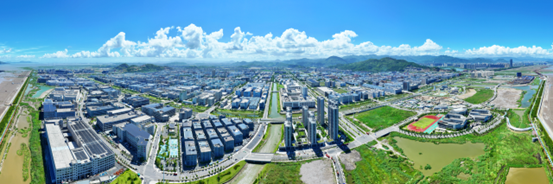
广东佛山经济总量连跨3个千亿台阶
Zhong Guo Fa Zhan Wang· 2026-01-29 07:05
Economic Development - Foshan's economic total increased from 1 trillion to 1.3 trillion, crossing three 100 billion thresholds during the 14th Five-Year Plan period [2] - The city has cultivated several 100 billion-level industrial clusters, with over 10,000 industrial enterprises above designated size [2] - The proportion of advanced manufacturing value added in the industrial sector rose from 50.2% to 55.7% [2][3] Business Environment - Foshan introduced the first local regulation to serve business entities, achieving 525 services efficiently [3] - The number of business entities increased from 940,000 to 1.72 million, with Foshan ranking first in the province for three consecutive years in business environment evaluation [3] Industrial Transformation - Foshan aims to transition from a "manufacturing city" to a "smart manufacturing city" during the 15th Five-Year Plan, focusing on traditional industry optimization and new industry cultivation [4] - The city plans to implement "AI + manufacturing" actions to enhance traditional industries and target future industries like green hydrogen and biomanufacturing [4][5] Regional Development - The "Ring Two Rivers Pilot Zone" is a key area for Foshan's urban-rural coordinated development, with 362 new industrial projects signed last year, totaling an investment of 180.2 billion [6] - The pilot zone's planning includes industrial advancement, cultural tourism integration, and quality of life improvements [6][7] Integration and Collaboration - Shunde District is a vital part of the Guangzhou-Foshan integration, focusing on building a comprehensive transportation network and enhancing public services [8] - The district is developing a "Shunde model" for collaborative growth, emphasizing open, shared, and integrated development [8] Regulatory Improvements - Shunde has consistently ranked first in provincial business environment evaluations and aims to enhance its market-oriented, legal, and international business environment [9] - The district introduced "error-tolerant approval" services, benefiting over 160,000 business entities and nearly 3.6 million citizens [10]
比拼物理AI:中国世界第一,中企包揽专利竞争力前三
Guan Cha Zhe Wang· 2026-01-16 09:19
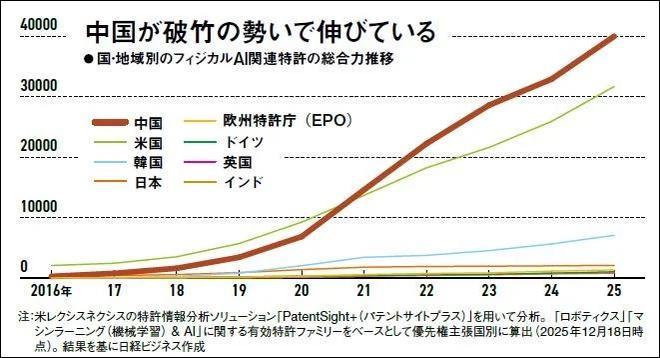
Core Insights - Physical AI is a key area of global technological competition, with Chinese companies emerging as leaders in the field of humanoid robots, automotive applications, and other physical AI patents [1][3] - According to a recent analysis, China ranks first globally in terms of comprehensive strength in patent applications, followed closely by the United States [1][3] - Major Chinese tech firms such as Baidu, Huawei, and Tencent lead in patent scores, while China Ping An Insurance ranks sixth [1][4] Patent Rankings - The analysis ranks Baidu, Huawei, and Tencent as the top three companies in the field of Physical AI, with scores of 4126, 3645, and 3043 respectively [4] - Samsung Electronics from South Korea ranks fourth with a score of 2734, followed by NVIDIA (2154) and China Ping An Insurance (1881) [4] - Other notable companies include Intel (1543), LG Electronics (1393), Alphabet (1325), and the Chinese Academy of Sciences (835) [4] Industry Context - The analysis indicates that while Chinese companies have a strong patent quantity, they still lag behind U.S. competitors like Intel, NVIDIA, and Alphabet in terms of patent quality [1][3] - The shift towards AI technologies is emphasized in China's 14th Five-Year Plan, which highlights the importance of high-quality development and technological advancement [4] - The CES 2024 showcased various Physical AI applications, indicating a competitive landscape among tech companies from China, the U.S., and South Korea [5] Future Developments - The Chinese government is actively supporting Physical AI as a national strategy, with plans to enhance AI integration across various industrial sectors by 2025 [5][6] - The application of AI in industrial enterprises is projected to rise significantly, with a forecasted increase from 9.6% in 2024 to 47.5% in 2025 [7] - China has established over 7000 advanced smart factories, demonstrating significant progress in the integration of AI and manufacturing [7]

“湾区造”优势从何而来?实力体现在哪里?记者探访
Ren Min Ri Bao· 2025-12-24 13:28
Group 1: Economic Development and Innovation - The Central Economic Work Conference emphasizes "innovation-driven development" and the establishment of international technology innovation centers in regions like the Guangdong-Hong Kong-Macao Greater Bay Area [1] - The Greater Bay Area has developed a complete industrial system covering 31 manufacturing categories and has nurtured nine trillion-yuan industrial clusters, with emerging industries like new energy vehicles and artificial intelligence thriving [1] - The "Shenzhen-Hong Kong-Guangzhou" innovation cluster ranked first globally in the World Intellectual Property Organization's 2025 Global Innovation Index Report, highlighting the global impact of the Greater Bay Area's innovation [1] Group 2: Collaborative Innovation and Industry Support - The Greater Bay Area provides a collaborative innovation ecosystem that supports research and entrepreneurship, as seen in the case of Guangzhou Zhimi New Material Technology Co., which utilizes microcapsule technology for various applications [4] - Guangdong has established 10 national major scientific and technological infrastructure projects, including five in the Greater Bay Area, and has created two national laboratories and 45 national key laboratories [4] - As of June this year, the Greater Bay Area holds 817,000 effective invention patents, accounting for approximately one-sixth of the national total [4] Group 3: Automotive Industry and Supply Chain - The automotive supply chain in the Greater Bay Area enhances production efficiency, with companies like Xpeng Motors benefiting from nearby suppliers who can respond quickly to production needs [6][7] - The automotive industry in the Greater Bay Area is evolving towards a comprehensive development model, integrating electric vehicles, key components, and smart technologies [8] - Guangdong has developed a complete industrial chain covering vehicle manufacturing, battery systems, intelligent driving, and charging facilities, with major companies like BYD and Xpeng leading the market [8] Group 4: Smart Manufacturing and Digital Transformation - The digital transformation of manufacturing in Guangdong is exemplified by OPPO's automated production lines, which enhance efficiency and reduce costs [9][10] - Over 51,000 industrial enterprises in Guangdong have undergone digital transformation, with high rates of digital management and design tool adoption [10] - The "Artificial Intelligence Empowering Manufacturing High-Quality Development Action Plan (2025-2027)" aims to further integrate AI with manufacturing, establishing a globally influential model [11] Group 5: Brain-Machine Interface and Technological Advancements - The establishment of the Brain-Machine Interface Innovation Industry Alliance in the Greater Bay Area aims to create a global hub for brain-machine interface technology [12] - The Guangdong Provincial Laboratory for Artificial Intelligence and Digital Economy is facilitating the development of non-invasive brain-machine interface technologies, enhancing the quality of life for individuals with mobility impairments [13][14] - The laboratory has initiated numerous research projects and collaborations with leading enterprises, fostering a robust talent pipeline for AI innovation in the Greater Bay Area [14]



探访“湾区造”
Ren Min Ri Bao· 2025-12-23 22:08
Core Insights - The Central Economic Work Conference emphasizes the importance of innovation-driven development and the establishment of international technology innovation centers in regions like the Guangdong-Hong Kong-Macao Greater Bay Area, which is a key driver for high-quality economic growth in China [1] Group 1: Innovation and Industry Development - The Guangdong-Hong Kong-Macao Greater Bay Area has developed a complete industrial system covering 31 manufacturing categories and has nurtured nine trillion-yuan-level industrial clusters, including emerging industries like new energy vehicles and artificial intelligence [1] - The "Shenzhen-Hong Kong-Guangzhou" innovation cluster ranked first globally in the World Intellectual Property Organization's 2025 Global Innovation Index Report, highlighting the global impact of the Bay Area's innovation [1] Group 2: Collaborative Innovation - The microcapsule technology developed by Hong Kong University of Science and Technology is being applied in various industries, showcasing the collaborative innovation ecosystem in the Greater Bay Area [3][4] - Guangdong has established 10 national major scientific and technological infrastructure projects, including five in the Greater Bay Area, and has created two national laboratories and 45 national key laboratories [4] Group 3: Automotive Industry and Supply Chain - The automotive supply chain in the Greater Bay Area is characterized by rapid response capabilities, with local suppliers like Guangdong Bojun Automotive Parts Co., Ltd. able to meet urgent production needs within hours [7][8] - The region has over 100 new energy vehicle and automotive parts companies, forming a comprehensive industrial landscape that includes vehicle manufacturing, key components, and charging facilities [8][9] Group 4: Smart Manufacturing - The digital transformation of manufacturing in Guangdong has led to significant efficiency gains, with over 5.1 million industrial enterprises adopting digital technologies [10][12] - OPPO's smart manufacturing platform is evolving to enable real-time monitoring and management of global factory operations, reflecting the integration of AI in manufacturing processes [12] Group 5: Research and Development in Brain-Machine Interfaces - The establishment of the Brain-Machine Interface Innovation Industry Alliance aims to position the Greater Bay Area as a global hub for brain-machine interface technology [13][14] - The research conducted at the Guangzhou-based laboratory focuses on non-invasive brain-machine interface technology, enhancing the quality of life for individuals with mobility impairments [13][15]
从“给政策”到“给机会”迭代升级 广东为“AI+制造业”精准配对
Nan Fang Ri Bao Wang Luo Ban· 2025-10-23 09:19
Core Insights - Guangdong is leveraging its extensive market and diverse scenarios to promote the intelligent upgrade of manufacturing enterprises through artificial intelligence (AI) [1] - The province has introduced 16 policy measures to shift support from "providing policies" to "providing opportunities," aiming to create a globally influential "AI + manufacturing" integration development demonstration zone [1] Group 1: AI and Manufacturing Integration - Guangdong has a complete industrial system with all 31 manufacturing categories, accounting for approximately 1/8 of the national manufacturing scale, creating a "testing ground" for AI applications [2] - The province hosts over 1,600 core AI enterprises, forming a full-stack industrial chain represented by companies like Huawei and Tencent, which provides a "new engine" for the transformation of manufacturing [2] - To address the challenges of unclear demand and mismatched supply in AI applications, Guangdong has established a national-level digital transformation promotion center for manufacturing, offering one-stop services for intelligent upgrades [2][3] Group 2: Infrastructure and Support Mechanisms - Guangdong is building a "1+1+N" embodied intelligence training ground system to facilitate the development and verification of embodied intelligence models, promoting data flow and standardization [3] - The province is focusing on enhancing innovation centers in the fields of intelligent agents and intelligent terminals, leveraging the technological advantages of cities like Guangzhou and Shenzhen [4] - Guangdong has established a national-level AI application pilot base in the consumer mobile terminal sector, with plans to accelerate the construction of more pilot bases [4] Group 3: Financial Investment and Policy Support - Since 2018, Guangdong has launched five batches of "new generation AI" initiatives, focusing on key areas such as intelligent manufacturing and quality inspection, achieving multiple breakthroughs [6] - The provincial government has allocated approximately 15 billion yuan for AI-related projects since 2018, with a budget of 1.32 billion yuan for 2025 to support cutting-edge technology initiatives [8] - The province aims to invest over 20 billion yuan in AI-related projects by 2027, driving the scale of related industries to exceed 100 billion yuan [9] Group 4: Communication and Computing Infrastructure - Guangdong has built a leading information infrastructure network, with 431,000 5G base stations established by August 2025, ensuring connectivity across the province [7] - The province is implementing the "Yueqi Wanzhao" initiative to create 100 10G optical network projects, with over one-third focused on factory scenarios [7] - A unified computing power service platform has been established in the Greater Bay Area, integrating 18 computing resource pools with a total capacity exceeding 14,000P [7]
广东出台16条措施推动人工智能成制造业“新引擎”
Zhong Guo Xin Wen Wang· 2025-10-22 11:48
Core Viewpoint - Guangdong has introduced a comprehensive action plan to enhance the integration of artificial intelligence (AI) into the manufacturing sector, aiming to establish a globally influential "AI + manufacturing" development demonstration zone by 2027 [1][2]. Group 1: Policy Measures - The action plan includes 16 policy measures focused on strengthening key supply chains and promoting application and adoption of AI in manufacturing [1]. - The initiative emphasizes the construction of vertical large models and scenario-specific small models in key industries such as electronic information and smart home appliances [2]. Group 2: Industrial Support and Infrastructure - Guangdong aims to develop a "diagnosis-transformation-promotion" system for intelligent manufacturing, facilitating the widespread application of AI among small and medium-sized enterprises [2]. - The plan promotes the establishment of AI application pilot bases in cities like Shenzhen and Dongguan, focusing on industrial model applications and technology validation [2]. Group 3: Financial and Talent Support - The government will leverage provincial and municipal special funds and industry development investment funds to support AI-enabled manufacturing, encouraging financial institutions to offer financing services [2]. - There is a focus on cultivating skilled workers through specialized talent policies to enhance the workforce in the AI and manufacturing sectors [2]. Group 4: Innovation Platforms - Guangdong currently hosts 9 national-level innovation platforms and nearly 200 provincial-level platforms, providing robust support for innovation in the manufacturing sector [2]. - The action plan aims to deepen the integration of AI and manufacturing, strengthening the "AI + manufacturing" industry [2].
广东提出打造人工智能“融合发展示范区”
Xin Lang Cai Jing· 2025-10-22 08:09
Core Insights - Guangdong Province has introduced the "Action Plan for High-Quality Development of Manufacturing Empowered by Artificial Intelligence (2025-2027)" with 16 policy measures aimed at strengthening key supply and promoting application [1] - The province aims to create a globally influential "AI + manufacturing" integration development demonstration zone [1] Industry Overview - Guangdong is recognized as a major manufacturing province and AI cluster in China, with a complete industrial system and significant market potential [1] - There are over 1,600 core AI enterprises in the province, establishing a full-stack industrial chain represented by Huawei's Ascend ecosystem and Tencent's mixed Yuan model [1] Technological Development - A number of industrial large models and intelligent bodies are being iteratively upgraded, providing a "new engine" for the transformation and upgrading of the manufacturing industry [1] - The focus will be on key industries such as electronic information, smart home appliances, automobiles, and robotics, with plans to build vertical large models and scenario-specific small models [1] Data Utilization - The plan includes the construction of industrial data sets and industrial knowledge databases to enhance the development and utilization of industrial data [1] - There is an emphasis on cultivating high-value industrial intelligent bodies with data processing and intelligent decision-making capabilities [1] Software and Equipment Enhancement - The initiative aims to empower key industrial software, smart equipment, and industrial internet platforms through iterative upgrades [1]
广东将实施“人工智能+制造业”标杆建设行动,涉及汽车等领域
2 1 Shi Ji Jing Ji Bao Dao· 2025-10-22 04:05
Core Insights - Guangdong Province is launching an action plan to enhance the high-quality development of manufacturing through artificial intelligence from 2025 to 2027 [1] - The plan aims to leverage Guangdong's extensive market and diverse scenarios to promote the intelligent upgrade of manufacturing enterprises across all processes [1] Group 1: AI Integration in Manufacturing - Artificial intelligence is accelerating its penetration and application in various manufacturing sectors, including R&D, production, sales, service, and management [1] - The initiative will focus on several key industries such as consumer electronics, high-end equipment, automotive, petrochemicals, home furnishings, and biomedicine [1] - The plan includes the establishment of demonstration factories that integrate multiple scenarios and operate efficiently with industrial AI models [1] Group 2: Smart Supply Chain Transformation - Guangdong will promote a "smart chain transformation" model, encouraging leading enterprises to build intelligent supply chains based on industrial AI models [2] - The initiative aims to facilitate collaborative manufacturing, procurement, and distribution among upstream and downstream enterprises [2] - Support will be provided for local governments that successfully implement AI-integrated industrial internet platforms and smart supply chain collaboration platforms [2] Group 3: Support for SMEs - The plan targets small and medium-sized enterprises (SMEs) by focusing on over 30 pilot industries, including smart terminals and new energy vehicles [2] - Funding will be available for eligible SMEs to implement AI-driven projects in areas such as R&D design, visual inspection, and energy management [2] - The establishment of core software service platforms will be supported to enhance the AI application capabilities of SMEs [2]