OPPO

Search documents
千问请喝奶茶的免费效应下,Agent会迎来爆发吗?
3 6 Ke· 2026-02-06 11:43
Core Insights - The article highlights the significant role of AI Agents in enhancing user experience and operational efficiency, particularly during the Chinese New Year, with major companies like Alibaba and Tencent leading initiatives to promote AI technology [1][2][11]. Group 1: AI Agent Development and Adoption - Alibaba's "Qianwen" app launched a "30 billion free order" campaign, allowing users to interact with AI for various tasks, marking a significant step in user education about AI capabilities [1][2]. - The integration of AI Agents into Alibaba's ecosystem, including services like Taobao and Alipay, demonstrates the potential for seamless user experiences without switching between apps [2][10]. - A survey by LangChain indicates that 57% of organizations are already running AI Agents in production environments, with predictions that the integration of autonomous AI in enterprise software will rise from less than 1% in 2024 to 33% by 2028 [6]. Group 2: Business Model and Market Strategy - AI Agents provide a viable monetization path for large model vendors, addressing the long-standing issue of high costs and low returns associated with large models [8]. - Companies can adopt a "Robots as a Service" (RaaS) model, charging clients based on delivered results, which allows for deeper integration into core business processes [8][9]. - Consumer-facing AI Agents are expected to penetrate daily life through subscription models, enhancing user efficiency and creating a complete service loop within ecosystems [10]. Group 3: Competitive Landscape - Major tech companies are accelerating their AI Agent strategies, with ByteDance and Tencent also investing heavily in this area to create comprehensive service ecosystems [11][12]. - The smartphone industry is witnessing a race to integrate AI Agent capabilities, with companies like Honor and Xiaomi positioning themselves to lead in this new competitive dimension [12]. Group 4: Challenges and Future Outlook - Despite the consensus on the importance of AI Agents, challenges remain in terms of service delivery, user trust, and the need for effective multi-Agent collaboration [13][14]. - The stability of output quality and data security are identified as primary concerns for enterprises adopting AI Agents, indicating that overcoming these barriers will be crucial for widespread adoption [14].




中端手机春节“生死战”:集体涨价,进退两难
凤凰网财经· 2026-02-06 11:38
Core Viewpoint - The mid-range smartphone market is facing significant challenges due to rising memory prices, leading to increased prices or reduced specifications, which undermines the value proposition of mid-range devices [2][3][19]. Group 1: Market Trends - The mid-range smartphone segment has seen its market share decline from 35% in 2021 to an expected 23% by 2027, while the entry-level market remains stable at 41%-45% [13]. - In January 2026, Android manufacturers launched five mid-range models, indicating a crowded market with intense competition [4]. - The mid-range segment, which once accounted for over half of the smartphone market, now serves around 500 million users in China, with a significant portion of sales concentrated in the 2000-4000 yuan price range [6][12]. Group 2: Product Features and Consumer Preferences - Recent mid-range models emphasize battery life, with many devices featuring batteries over 6000mAh, catering to the increasing reliance on smartphones [7][11]. - Manufacturers are shifting focus from parameter-heavy designs to user experience, with features tailored to specific use cases, such as gaming or photography [11][19]. - The best-selling model recently is the OPPO Reno 15, with sales reaching 1.1875 million units shortly after launch, followed by the Honor 500 series [11]. Group 3: Pricing and Profitability - Rising memory chip prices have significantly impacted mid-range device costs, with LPDDR4X prices increasing by nearly 80% and LPDDR5X prices more than doubling [19][21]. - Many manufacturers have opted to raise prices by 200-600 yuan for new models to maintain profit margins, with the average profit for a 3000 yuan device dropping to just 30 yuan [18][21]. - The introduction of government subsidies has not led to substantial sales increases in the mid-range segment, with growth primarily occurring in high-end and low-end markets [15][24]. Group 4: Future Outlook - The mid-range smartphone market is at a critical juncture, with predictions of a 3%-4% decline in overall smartphone shipments in 2026 [24]. - Companies are exploring strategies to simplify product offerings and enhance competitiveness, such as introducing "super standard versions" to streamline configurations [24][25]. - The ongoing price increases and market saturation may lead to further challenges for mid-range devices, potentially marking 2026 as one of the toughest years for this segment [25].


REDMI Turbo 5 Max获京东“游戏爱好者每周手机销量榜”冠军 新品备受青睐
Xin Lang Cai Jing· 2026-02-06 11:26
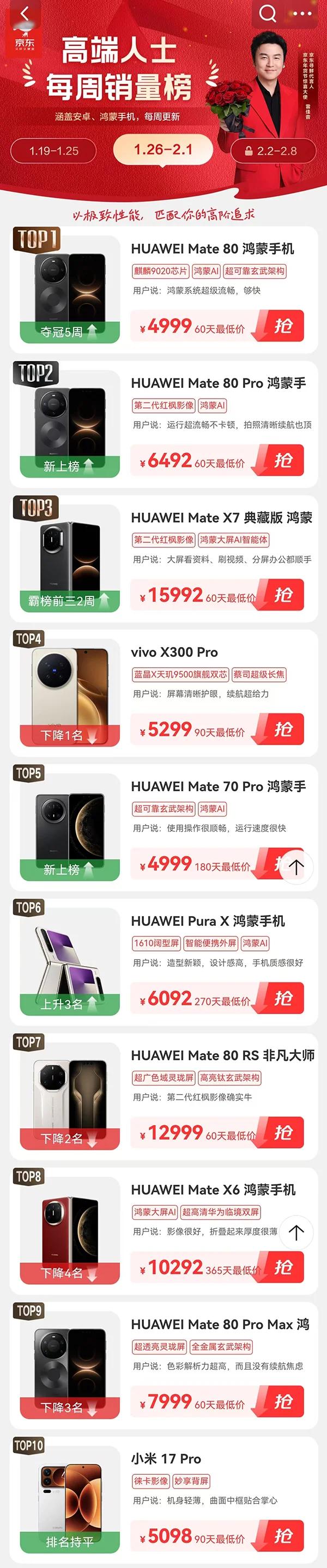
【天极网手机频道】随着春节的临近,人们也开始准备回家的行囊,其中少不了为亲友准备的新年礼物。 如果想要选择手机作为新年礼物,可以到京东购买,京东年货节期间,华为、小米、vivo等热门爆款产品享 国补叠加以旧换新到手价低至5折。此外,通过以旧换新购买新手机,旧机估值补贴增加20%,还可在活动 页面生成专属口令邀请好友助力估值,好友助力成功后,双方均可额外领取800元换新补贴券。不知道如何 选择手机,可以参考每周手机销量榜。京东基于真实销售和人群数据,打造每周手机销量榜。其中,针对影 像爱好者、游戏爱好者、女大学生、男大学生等人群推出相应的榜单。该榜单每周根据京东用户数据更 新,涵盖安卓、鸿蒙手机产品。通过这一榜单,消费者可轻松了解不同人群在上周购买量最高的十款手 机。下面就来看看这几个榜单的情况吧。 1月26日至2月1日的"高端人士每周手机销量榜"TOP10依次是华为Mate 80、华为Mate 80 Pro、华 为Mate X7 典藏版、vivo X300 Pro、华为Mate 70 Pro、华为Pura X、华为Mate 80 RS 非凡大师、华 为Mate X6、华为Mate 80 Pro Max、小米1 ...
传音控股(688036):“非洲之王”利润腰斩!成本暴涨,对手偷家,护城河见底
市值风云· 2026-02-06 11:04
Investment Rating - The report indicates a significant decline in the investment outlook for Transsion Holdings, with a projected net profit drop of 54.11% to 2.546 billion yuan for 2025, raising concerns about its market position and future growth potential [2][35]. Core Insights - Transsion Holdings, known as the "King of Africa," has seen its profits halved due to soaring costs and increased competition, particularly from Chinese rivals entering the African market [2][35]. - The company's revenue for 2025 is expected to decline by 4.58% to 65.568 billion yuan, marking a departure from previous growth trends [34]. - Transsion's market share in Africa remains strong at over 40%, but its growth rate has slowed significantly, with competitors like Xiaomi and Honor rapidly increasing their market presence [11][28]. Summary by Sections Company Overview - Transsion Holdings primarily focuses on mobile phone sales, with nearly 94% of its total revenue of 68.715 billion yuan in 2024 derived from this segment [6][34]. - The company has established a strong foothold in the African market, where it has a market share exceeding 40% in smartphones, and ranks third globally in mobile phone shipments with a 14% market share [11][34]. Competitive Landscape - The competitive dynamics in the African smartphone market have shifted, with major Chinese brands like Xiaomi and Honor aggressively targeting this previously overlooked region, leading to increased pressure on Transsion [24][28]. - Transsion's growth has been hindered by rising costs in the supply chain, particularly for storage components, which have significantly impacted its profit margins [15][18]. Future Prospects - Transsion is attempting to pivot towards AI technology as a new growth narrative, with plans to integrate AI features into its products and develop an AI ecosystem [40][42]. - Despite these ambitions, the company faces challenges in differentiating its AI offerings from those of established competitors, raising questions about the viability of its new strategy [46][48]. - The diversification into other product lines, such as tablets and smart home devices, has shown some growth but still represents a small portion of total revenue, indicating a need for further development to achieve scale [48][50].

全球手机均价首破2900元,谁在为“涨价潮”买单?
Zhong Guo Jing Ying Bao· 2026-02-06 10:48
Core Insights - A "price increase storm" is sweeping the global smartphone market, with the average selling price (ASP) expected to exceed $400 for the first time by Q4 2025, reaching $424, driven by a 13% year-on-year revenue growth to a record $143 billion, despite only a 5% increase in shipment volume [1][2] Group 1: Market Trends - The high-end trend remains the core driver of the smartphone market, with consumers purchasing more expensive devices, indicating a shift from "scale expansion" to "value expansion" in the industry [1] - Apple emerges as the biggest winner, with a 23% year-on-year revenue growth and a market share of 59%, significantly benefiting from the iPhone 17 series and an increase in Pro version sales [2] - The pricing pressure is more pronounced among domestic brands, with Xiaomi experiencing a 9% revenue decline and an 11% drop in shipment volume, while OPPO saw a 23% revenue increase due to its high-end product lines [2][3] Group 2: Price Increase Drivers - The price hikes are attributed to soaring supply chain costs, particularly in memory chips, with DRAM prices skyrocketing by 171.8% year-on-year and LPDDR5X memory prices increasing by over 110% [4] - The rising costs of flagship processors, such as Qualcomm's Snapdragon 8 Gen 2, which costs $280, have also contributed to the overall increase in smartphone prices [4][5] - The AI wave is squeezing production capacity, with priority given to AI and server needs over smartphone production, further exacerbating the situation [4][5] Group 3: Industry Implications - The price increase trend is expected to continue, with forecasts suggesting the global smartphone ASP will reach $412 by 2029, driven by high-end market growth and rising component costs [5] - The current price surge presents an opportunity for industry reshuffling, where weaker brands may be eliminated, while those achieving technological breakthroughs can establish a foothold in the high-end market [6] - Consumers are advised to adjust their purchasing strategies, considering longer upgrade cycles and focusing on previous flagship models or mid-range devices that offer competitive features [6]
“非洲之王”利润腰斩!传音控股:成本暴涨,对手偷家,护城河见底
市值风云· 2026-02-06 10:09
Core Viewpoint - Transsion Holdings is facing significant challenges as its profitability declines sharply, with a projected net profit of 2.546 billion yuan for 2025, a year-on-year drop of 54.11%, alongside a slight revenue decrease of 4.58% [3][20][24]. Group 1: Company Overview - Transsion Holdings primarily operates in the mobile phone market, with nearly 94% of its 67.715 billion yuan revenue in 2024 coming from mobile phone sales [5][6]. - The company has established a strong presence in Africa, holding over 40% market share in the African smartphone market and ranking first in Pakistan and Bangladesh with market shares of over 40% and 29.2%, respectively [6][7]. - Transsion's success is attributed to its localized product offerings and extensive marketing network, which have created a strong customer base in Africa [9]. Group 2: Financial Performance - The company's gross margin has declined from 21.3% in 2024 to 18.59% in Q3 2025, marking a five-year low, with net profit margins dropping to 4.4% [11]. - The average gross margin for the first three quarters of 2025 was 19.5%, indicating that the company earns less than 50 yuan in net profit for each smartphone sold at around 1,000 yuan [11]. - Transsion's revenue for 2025 is expected to be 65.568 billion yuan, reflecting a 4.58% decline from the previous year, breaking its previous growth trend [20]. Group 3: Market Competition - The competitive landscape in Africa has intensified, with major Chinese brands like Xiaomi and Honor increasing their focus on the region, leading to a slowdown in Transsion's growth [13][15]. - In 2024, Transsion's shipment growth rate in Africa slowed to 10%, while competitors like Xiaomi and realme experienced growth rates of 38% and 89%, respectively [15]. - By 2025, Transsion's ranking in the global smartphone market has dropped, with the company no longer appearing in the top five, indicating increased competition and market share erosion [18]. Group 4: Strategic Initiatives - In response to declining performance, Transsion is pivoting towards AI technology, emphasizing its commitment to AI development in its recent IPO application, with plans to integrate AI features into its products [25][26]. - The company aims to create an AI ecosystem to enhance user engagement and generate continuous revenue, although its current AI capabilities are still in the early stages compared to competitors [30][31]. - Transsion is also diversifying its product offerings beyond smartphones, including tablets, TWS earbuds, and smart home devices, which generated 4.68 billion yuan in revenue in 2024, but still represent less than 10% of total revenue [31][32].
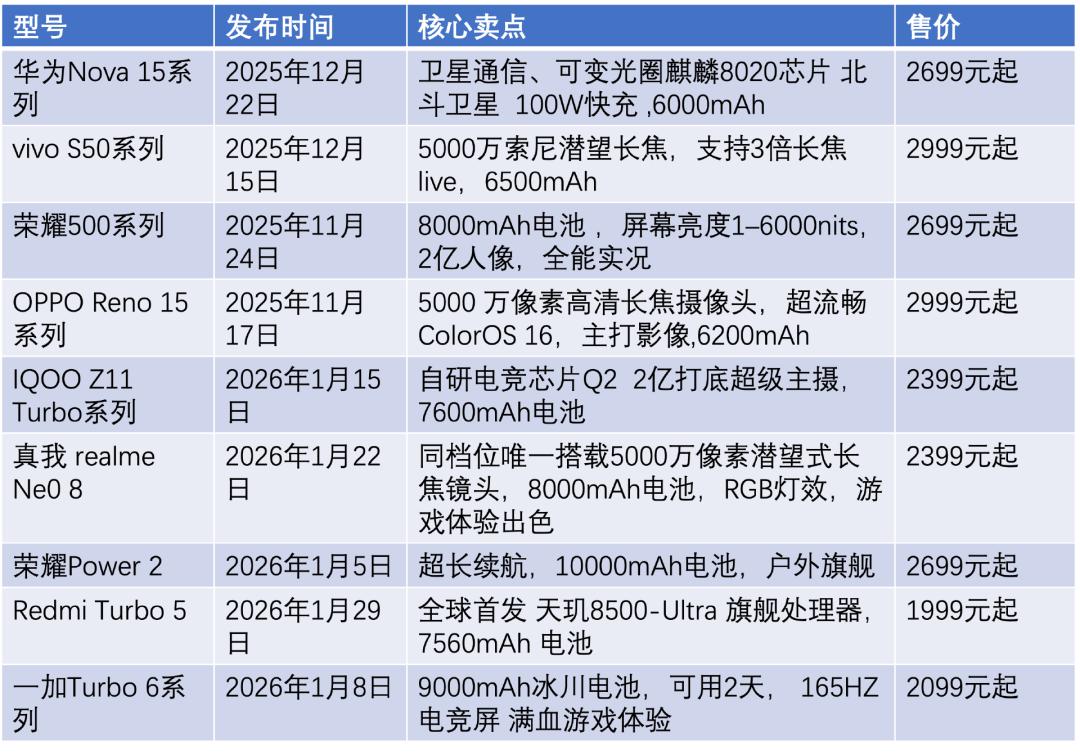
中端手机春节“生死战”:集体涨价,进退两难
3 6 Ke· 2026-02-06 08:23
Core Viewpoint - The mid-range smartphone market is facing significant challenges due to rising memory prices, leading to increased prices or reduced specifications across brands, which undermines the value proposition of mid-range devices [1][11][12]. Group 1: Market Dynamics - The mid-range smartphone segment has seen its market share decline from 35% in 2021 to an expected 23% by 2027, while the entry-level market remains stable at 41%-45% [8]. - In January 2026 alone, Android manufacturers launched five mid-range models, indicating a crowded market despite declining demand [1][8]. - The mid-range segment, which once accounted for over half of the smartphone market, now serves around 500 million users in China, with a significant portion of sales concentrated in the 2000-4000 yuan price range [2][8]. Group 2: Product Features and Consumer Preferences - Recent mid-range models emphasize battery life, with all nine newly released models featuring batteries over 6000mAh, catering to the increasing reliance on smartphones [2][3]. - The focus has shifted from parameter competition to user experience, with brands prioritizing features like battery life and specific use-case enhancements [6][7]. - Notable models include the Honor Power 2 with a 10000mAh battery and the OnePlus Turbo 6 with a 9000mAh battery, highlighting the trend towards high-capacity batteries [4][5]. Group 3: Pricing Strategies and Profit Margins - Rising memory chip prices have led to increased costs for mid-range devices, with LPDDR4X prices rising nearly 80% and LPDDR5X prices more than doubling [11][12]. - Many manufacturers have opted to raise prices by 200-600 yuan for new models to maintain profit margins, with some models seeing price increases despite unchanged specifications [13][15]. - The profit margins for mid-range devices have significantly decreased, with some retailers reporting profits as low as 30 yuan for devices priced around 3000 yuan [10]. Group 4: Future Outlook - The smartphone market is expected to shift from growth to decline, with overall shipments projected to decrease by 3%-4% in 2026 [15]. - Companies are adjusting their strategies by reducing production orders and focusing on fewer, more standardized models to maintain competitiveness [15][16]. - The mid-range smartphone market is at a critical juncture, facing pressures from both rising component costs and changing consumer preferences [16].

屈田:复盘极兔出海全球的“三次突围”
混沌学园· 2026-02-06 07:07
Core Viewpoint - The notion that "not going overseas means being out of the game" is a fallacy, and blindly expanding internationally can be more dangerous [1] Group 1: Strategic Insights - True champions understand the strategy of "winning before fighting," summarized in the formula: Time and Space Selection × Deep Localization = Overseas Champions [2][9] - The success of companies like J&T Express is attributed to their ability to navigate crises and achieve critical breakthroughs, demonstrating the importance of strategic planning in international expansion [6][15] Group 2: Market Dynamics - The recent partnership between J&T Express and SF Express represents a significant alliance between the largest express companies in China and emerging markets, with a combined market value of $40 billion [5] - J&T Express has become the largest express company in Southeast Asia, holding a 33% market share and processing 27 million packages daily, indicating its strong market position [20] Group 3: Expansion Phases - J&T Express's first breakthrough was establishing a foothold in Southeast Asia, particularly Indonesia, which has the fastest e-commerce penetration growth outside of China and the U.S. [19] - The second breakthrough involved returning to China to leverage the changing market dynamics, where the share of major players was declining, allowing new entrants to gain a foothold [23][25] - The third breakthrough was global expansion into Latin America, the Middle East, and Africa, capitalizing on the global growth of Chinese e-commerce platforms [27] Group 4: Localization Importance - Deep localization is crucial for success in international markets, requiring teams to be physically present in the target country to understand the market effectively [8][30] - Companies must adopt a startup mentality when entering new markets, ensuring that local teams are empowered and not managed remotely [30] Group 5: Recommendations for Companies - Companies should assess whether they should go overseas, as not all are suited for international expansion; the idea that "not going overseas means being out of the game" is misleading [32] - It is advisable for companies to align with major trends and platforms when expanding internationally, as J&T Express did by following the global e-commerce trend [33] - Careful consideration is needed when choosing the first market for expansion, whether it be developed markets or emerging ones [34]

不止信号,更有牵挂:这个春节,北斗短信帮您道声平安
Huan Qiu Wang· 2026-02-06 06:21
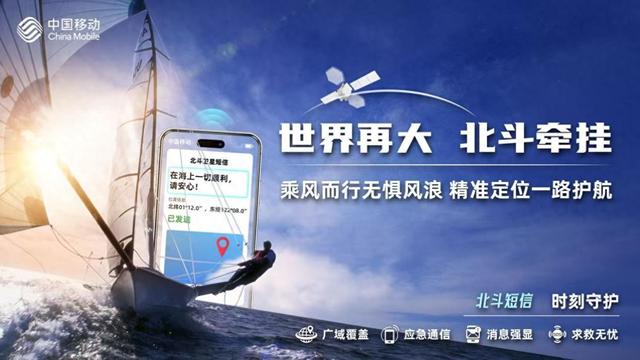
Core Insights - The article discusses the upgrade of Beidou SMS services by China Mobile in collaboration with China StarNet, aimed at ensuring uninterrupted communication during the Spring Festival travel season [1][3]. Group 1: Service Overview - Since 2019, China Mobile has integrated Beidou satellite communication capabilities into smartphones, planning to offer Beidou SMS services to the public in 2024, with nearly 200 million users already developed [3]. - The service allows users to send Beidou SMS without needing to change their SIM card or phone number, functioning in areas without ground network coverage [3]. Group 2: Emergency Communication - China Mobile provides emergency communication support for over 320,000 users across seven provinces, particularly during natural disasters like floods and earthquakes expected in 2025 [3]. - The Beidou SMS service is designed to be a reliable lifeline for outdoor enthusiasts, enabling them to send location-based distress signals through a map app in collaboration with Amap [4]. Group 3: Enhanced Features - The upgraded Beidou SMS service now supports sending 40 Chinese characters and receiving 10 characters, along with the capability to send images and voice messages after phone upgrades [4]. - This feature allows users to share scenic photos or send voice messages during emergencies, enhancing communication clarity and safety [4]. Group 4: Supported Devices - As of February 5, 2026, there are 57 smartphone models supporting Beidou SMS, including 42 models from Huawei, 8 from Honor, 3 from Vivo, 3 from Xiaomi, and 1 from OPPO [5][6][7].

从能聊天到会干活,网易智企Agent矩阵重构企业生产力
Sou Hu Wang· 2026-02-06 06:21
Core Insights - OpenClaw has emerged as a leading AI application, marking a shift from conversational AI to functional AI, indicating the arrival of the Agentic AI era [1][3] - The Agentic AI sector is growing at an annual rate of 43%, significantly outpacing other AI fields, with active agents expected to rise from approximately 28.6 million in 2025 to 2.216 billion by 2030 [3] - Companies face challenges in implementing agents due to concerns over risks such as hallucinations, unstable execution, and data leaks, creating a gap between potential and actual deployment [3][4] Company Overview - NetEase Intelligent Enterprise has been operational for 10 years, leveraging extensive industry knowledge and experience to assist various benchmark enterprises [4][5] - The company focuses on providing reliable and stable agents rather than generic large models, emphasizing the importance of deep business understanding for effective agent deployment [5] Agent Matrix and Applications - NetEase has established a comprehensive agent matrix targeting three key business areas: customer service/sales, data applications, and development [7][8] - The customer service/sales agents have transitioned from post-sale support to pre-sale consultations, significantly enhancing external service and marketing productivity [8][9] - DataAgent aims to simplify data accessibility and usability for frontline employees, allowing for quick and accurate decision-making based on data analysis [12][14] - Development agents utilize a Specification-Driven Development approach to improve coding efficiency and quality, addressing common issues in software development [16][18] Risk Management - The rise of AI also brings new risks, including hallucinations, data leaks, and model biases, necessitating robust risk management strategies [19][20] - NetEase has developed a multi-modal safety framework to address these challenges, ensuring compliance with legal and ethical standards in AI-generated content [20] Future Outlook - The future of organizations is expected to be characterized by human-agent collaboration, necessitating systematic agent deployment to reshape productivity [22]