大疆

Search documents
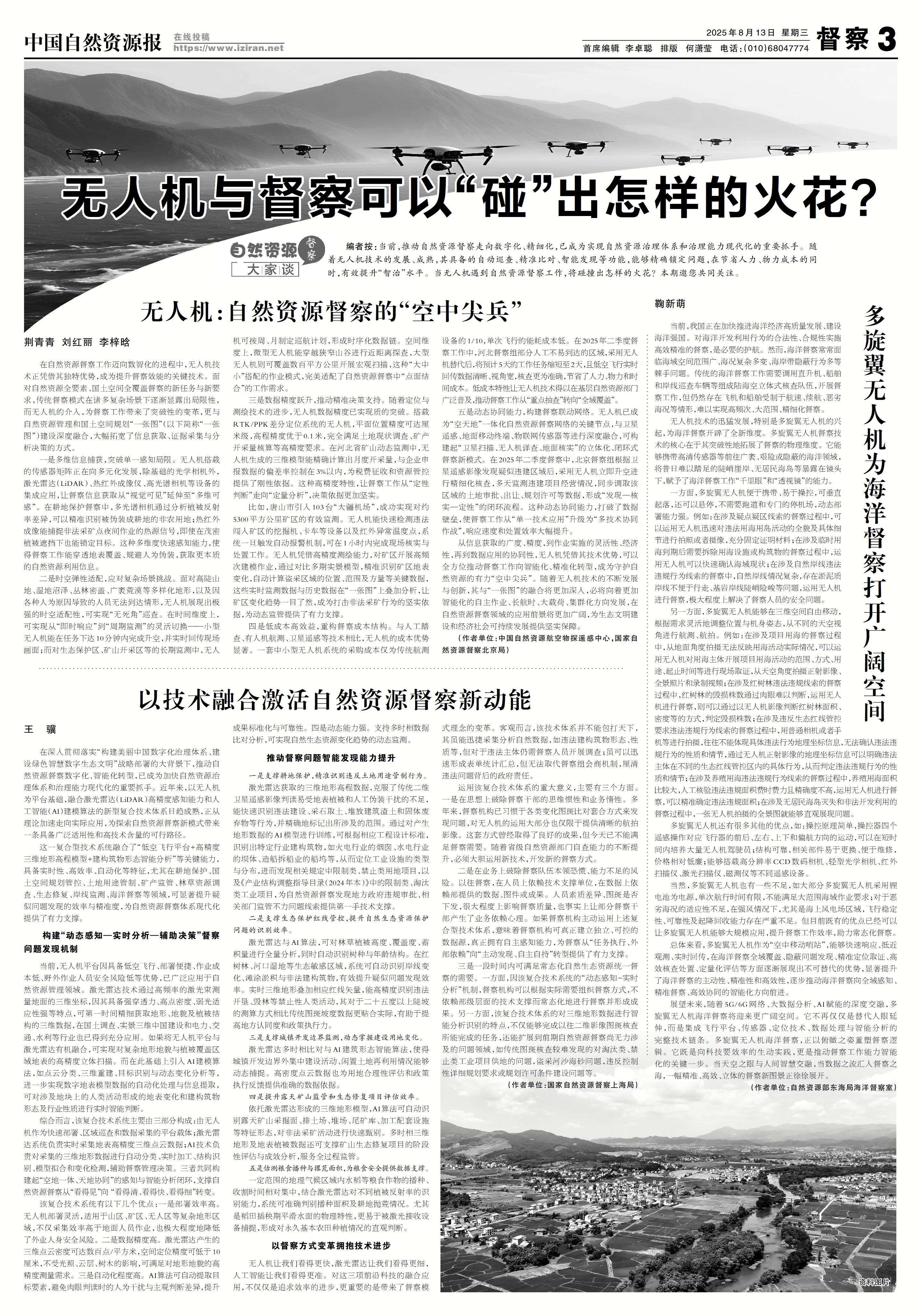
无人机:自然资源督察的“空中尖兵”
Zhong Guo Zi Ran Zi Yuan Bao· 2025-08-29 06:19
Core Viewpoint - The integration of drone technology into natural resource supervision is transforming traditional inspection methods, enhancing efficiency and effectiveness in data collection and decision-making processes [3][11]. Group 1: Multi-Dimensional Information Capture - Drones equipped with diverse sensors, including LiDAR and thermal imaging, extend information gathering from visible to multi-dimensional data, enabling precise identification of non-agricultural land disguised as farmland [3][11]. - The ability to capture thermal signals allows for the detection of illegal mining activities even under dense vegetation, enhancing the depth of resource utilization information [5][11]. Group 2: Temporal and Spatial Flexibility - Drones demonstrate strong adaptability to various terrains, enabling comprehensive inspections in challenging environments such as steep mountains and wetlands, achieving "no blind spots" in monitoring [12]. - Small drones can be deployed within 10 minutes for immediate response, while larger drones can cover hundreds of square kilometers for macro-level scanning, facilitating a combination of detailed and broad inspections [12]. Group 3: Enhanced Data Precision - Advances in positioning and surveying technologies have led to centimeter-level accuracy in drone data, meeting high precision requirements for land surveys and mineral extraction monitoring [13]. - In Hebei province, drones have been used to create 3D models that accurately calculate monthly extraction volumes, with discrepancies controlled within 3%, providing a solid basis for resource management [13]. Group 4: Cost-Effectiveness and Efficiency - The cost of a small to medium-sized drone system is significantly lower than traditional surveying equipment, making it feasible for widespread adoption in natural resource departments [14]. - The use of drones has reduced the time required for inspections from five days to two in hard-to-reach areas, optimizing resource allocation and enhancing accuracy in data verification [14]. Group 5: Dynamic Collaborative Capability - Drones serve as a critical node in an integrated natural resource supervision network, collaborating with satellite imagery and ground sensors to create a comprehensive inspection model [15]. - This collaborative approach enhances the speed and efficiency of inspections, transitioning from single technology applications to multi-technology operations, significantly improving response times and operational effectiveness [15].

以技术融合激活自然资源督察新动能
Zhong Guo Zi Ran Zi Yuan Bao· 2025-08-29 06:19
Core Viewpoint - The integration of drone technology, LiDAR, and AI is transforming natural resource supervision, enhancing efficiency and precision in data collection and analysis, and addressing the limitations of traditional inspection methods [3][11][20]. Group 1: Technological Advancements - Drones are becoming a key technology in enhancing the effectiveness of natural resource supervision, allowing for multi-dimensional information capture beyond traditional methods [3][5]. - The integration of various sensors, including LiDAR and high-resolution cameras, enables comprehensive data collection, improving the accuracy of inspections [4][14]. - The use of AI algorithms for data processing allows for real-time analysis and automated identification of issues, significantly increasing the efficiency of problem detection [13][20]. Group 2: Operational Efficiency - Drones provide high spatial adaptability, allowing for inspections in challenging terrains such as mountains and wetlands, ensuring comprehensive coverage [5][14]. - The system supports dynamic monitoring, enabling quick responses to emerging issues and long-term surveillance of ecological areas [5][12]. - The cost-effectiveness of drone operations compared to traditional methods enhances the overall efficiency of natural resource management [6][14]. Group 3: Applications in Natural Resource Management - The technology supports various applications, including farmland protection, land use regulation, and ecological restoration, significantly improving the detection of potential violations [11][16]. - LiDAR technology allows for precise identification of illegal activities, such as unauthorized construction and mining, by overcoming the limitations of traditional satellite imagery [15][17]. - The system can estimate agricultural metrics, such as planting and fallow areas, contributing to food security assessments [18]. Group 4: Strategic Implications - The adoption of this technology encourages a shift in mindset among supervisory personnel, promoting proactive problem identification rather than reactive measures [20][21]. - By establishing independent data sources, supervisory agencies can enhance their operational capabilities and reduce reliance on external support [21]. - The technology enables continuous and standardized inspections, addressing previously challenging areas such as illegal land use and resource extraction [21].
营收增长51%,开盘股价下跌,影石创新突破千亿市值之后|焦点分析
3 6 Ke· 2025-08-29 02:48
Core Viewpoint - YingShi Innovation (688775.SH) has quickly become one of the most notable companies in the A-share market within three months of its listing, driven by its focus on AI, panoramic imaging, and drones, which are seen as highly valuable sectors [1][2] Financial Performance - For the first half of 2025, YingShi Innovation reported revenue of 3.671 billion yuan, a year-on-year increase of 51.17%, while net profit attributable to shareholders was 520 million yuan, a slight increase of 0.25% [1] - Following the earnings report, the company's stock price reached 326.61 yuan per share, with a market capitalization exceeding 130 billion yuan [1] R&D and Sales Expenses - The company experienced significant increases in R&D and sales expenses, with R&D costs rising by 100.35% to 562 million yuan and sales expenses increasing by 75.46% to 628 million yuan, surpassing the net profit for the first half of the year [1] Market Competition - YingShi Innovation faces intense competition in the smart imaging market, contending with industry giants like DJI and emerging startups [2] - The company is actively launching new imaging products, including the GO Ultra and the drone product "YingLing Antigravity," to defend its market position while also challenging competitors [3][4] Product Development - The GO Ultra, launched on August 21, 2025, represents a new flagship line for the GO series, featuring enhanced performance and capabilities compared to previous models [9] - The GO Ultra incorporates a 1/1.28-inch sensor and a 5nm AI chip, improving image quality and processing power significantly [11] - The product also boasts a unique battery design, allowing for extended usage times, with a maximum of 200 minutes when paired with an expansion dock [12] Future Plans - YingShi Innovation is exploring new market opportunities in the drone sector, with plans to introduce two brands of drones, including a panoramic drone, which is currently in the testing phase [16] - The company has a pipeline of 13 new products under development, with a projected investment of 1.6 billion yuan, indicating a commitment to continuous innovation [16]

俞浩摸着雷军过河
Tai Mei Ti A P P· 2025-08-29 00:49
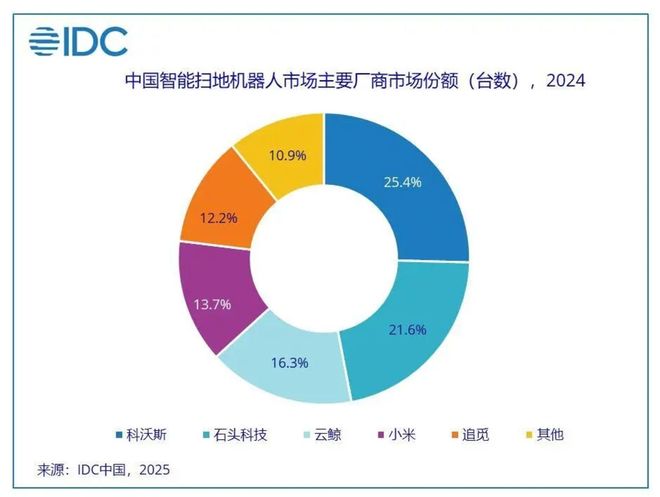
Group 1 - The core point of the news is that ZhiMi Technology has officially entered the automotive industry, aiming to create the "world's fastest car" while leveraging its established electric vehicle supply chain in China [1][2] - The company expresses a commitment to innovation and market insight, emphasizing a strategy of "overall optimization" rather than starting from scratch [1][2] - ZhiMi's founder, Yu Hao, has also announced plans to enter the aviation sector, aiming to build a top-tier business class aircraft, indicating a broader ambition beyond just automotive [2][3] Group 2 - ZhiMi's recent announcements reflect a desire to expand its product offerings, including plans for high-end televisions, which suggests a strategy to disrupt existing markets rather than merely participate [2][3] - The company has a history of collaboration with Xiaomi, which has significantly influenced its growth, but recent developments indicate a shift towards independence and self-reliance in technology [4][5] - The competitive landscape for ZhiMi is becoming increasingly challenging, especially with the entry of major players like DJI into the robotic vacuum market, which could impact ZhiMi's market share [6][7] Group 3 - Internally, ZhiMi is focusing on improving operational efficiency, with management emphasizing the need for employees to generate value significantly exceeding their costs [8] - The company's aggressive expansion into new sectors may be driven by a need to secure its market position amid increasing competition [7][8]
传大疆2024年收入突破500亿元,净利润率近40%
Xin Lang Ke Ji· 2025-08-28 11:02
Core Insights - DJI's revenue exceeded 50 billion yuan last year, with a net profit margin approaching 40%, nearly double that of Apple and surpassing brands like Hermès and Pop Mart [1] Company Performance - DJI achieved a revenue milestone of over 50 billion yuan in the previous year [1] - The company's net profit margin is close to 40%, indicating strong profitability [1] Competitive Position - DJI's profit margin is nearly twice that of Apple, highlighting its competitive advantage in the market [1] - The company outperformed luxury brands such as Hermès and Pop Mart in terms of profitability [1]
珠海冠宇(688772):经营业绩逐季向好,消费与动力双轮驱动打开成长空间
Ping An Securities· 2025-08-28 11:00
Investment Rating - The report maintains a "Recommended" rating for Zhuhai Guanyu (688772.SH) with a current stock price of 21.26 CNY [1][3]. Core Views - The company's operating performance is improving quarter by quarter, driven by both consumer and power sectors, which opens up growth opportunities [3][7]. - In the first half of 2025, the company achieved a revenue of 6.098 billion CNY, a year-on-year increase of 14.03%, and a net profit attributable to shareholders of 117 million CNY, up 14.77% year-on-year [3][7]. - The report highlights the company's strong performance in both consumer lithium battery sales and automotive low-voltage lithium battery business, with significant growth in various segments [7][8]. Summary by Sections Financial Performance - For 2025, the company is projected to achieve a revenue of 14.583 billion CNY, with a year-on-year growth of 26.4% [6][10]. - The net profit for 2025 is estimated at 627 million CNY, reflecting a year-on-year increase of 45.8% [6][10]. - The gross margin is expected to be 24.9% in 2025, while the net margin is projected at 4.3% [6][10]. Business Segments - **Consumer Business**: The company has seen a steady growth in its consumer lithium battery segment, with laptop battery sales increasing by 6.93% year-on-year and smartphone battery sales rising by 43.28% year-on-year in the first half of 2025 [7][8]. - **Power and Energy Storage Business**: The automotive low-voltage lithium battery business has expanded successfully, with over 700,000 units shipped in the first half of 2025. The drone battery segment also saw a remarkable revenue increase of 200% year-on-year [8]. Future Outlook - The report adjusts the profit forecasts for 2025 and 2026, expecting net profits of 6.27 billion CNY and 14.16 billion CNY respectively, with a new forecast for 2027 at 17.67 billion CNY [8][10]. - The company is well-positioned to benefit from the increasing demand for AI-enabled products and the growth in battery capacity, suggesting a positive outlook for future performance [8].

2025起点户储及便携式储能电池技术论坛9月深圳举办!
起点锂电· 2025-08-28 09:25
Core Viewpoint - The article discusses the growth and competitive landscape of the home energy storage and portable energy storage markets, highlighting significant trends, forecasts, and the upcoming 2025 forum focused on battery technology and safety [3][4][6]. Home Energy Storage - In 2024, the global home energy storage shipment is projected to reach 27.8 GWh, marking a 19% year-on-year increase, with Chinese companies accounting for 75% of the shipments [3]. - The leading regions for home energy storage consumption include Europe, the USA, Ukraine, Japan, Australia, Africa, the Middle East, ASEAN, and Russia, with Europe being the largest and most mature market [3]. - The USA, Ukraine, Australia, South Africa, Nigeria, and Brazil are expected to see rapid growth in 2024 due to various factors, including declining electricity prices [3]. - SPIR forecasts that the global home energy storage market will reach 180 GWh by 2030, representing a 547% increase from 2024 [3]. - The top 10 companies in global home energy storage shipments include Huawei, BYD, Airo Energy, and others [3]. Portable Energy Storage - The global portable energy storage shipment is expected to reach 11 million units in 2024, reflecting a 90% year-on-year growth [4]. - The USA is identified as the largest and most mature market for portable energy storage, driven by outdoor activities and a developed RV market [4]. - Ukraine is projected to experience the fastest growth in 2024 due to energy shortages caused by the ongoing conflict, increasing the demand for emergency power solutions [4]. - By 2030, the global portable energy storage market is anticipated to reach 28 million units, a 156% increase from 2024, fueled by outdoor economy growth and emergency power needs [4]. - The top 10 companies in global portable energy storage shipments include EcoFlow, BLUETTI, Jackery, and others [5]. Industry Trends and Challenges - The article notes the emergence of new technologies and materials in battery development, such as fast charging, solid-state, sodium batteries, and full-tab designs, while also highlighting ongoing safety challenges [5]. - The upcoming forum will address key issues in battery safety and innovation, aiming to foster collaboration among industry stakeholders [6][10]. Forum Details - The 2025 forum will take place on September 26, 2025, in Shenzhen, focusing on high safety and building a new ecosystem for home and portable energy storage [6][11]. - The event will gather over 600 decision-makers from core enterprises and reach more than 20,000 professionals online [10].





又一个超级独角兽,下一个大疆出现了?
Hu Xiu· 2025-08-28 07:33
Core Insights - The company,拓竹科技, has emerged as a leader in the 3D printing industry by integrating advanced technologies such as flight control, LiDAR, and gyroscopes into its products, effectively transforming a niche market into a global leader [1] Group 1 - The company has successfully leveraged a single product to dominate the industry, raising questions among competitors about their own viability [1]
中金:政策扶持与技术降本双驱动 农业无人机市场前景广阔
智通财经网· 2025-08-28 07:29
Core Insights - The development of agricultural drones in China is driven by low-altitude economic policies and mature industry technologies, with potential hardware demand expected to reach 6.24 million units (1.248 million units annually) and a corresponding market space of 224.6 billion yuan (44.9 billion yuan annually) [1][4] - The service market for agricultural drones is projected to have a potential annual space of 225.6 billion yuan, benefiting upstream component suppliers, midstream brand manufacturers, and downstream service operators [1][4] Group 1: Agricultural Modernization - Agricultural modernization is a key aspect of China's overall modernization, with agricultural drones playing a crucial role in addressing agricultural development challenges [1][2] - The application of modern agricultural drones can effectively alleviate labor shortages, improve self-sufficiency and quality of agricultural products, and ensure national food security [2][3] Group 2: Drone Applications and Benefits - Drones are well-suited for high-load and repetitive agricultural tasks, contributing significantly to yield, quality, environmental protection, and economic efficiency [3] - The versatility of drones allows them to cover various agricultural activities, including sowing, fertilizing, spraying, and monitoring, thus facilitating the transition to large-scale and intensive agricultural practices [3] Group 3: Market Potential and Support - The combination of policy support and cost reduction in technology drives the broad market prospects for agricultural drones [4] - The Ministry of Agriculture and Rural Affairs has encouraged the cultivation of drone pilots and introduced subsidy policies, while domestic supply chains have improved product cost-performance ratios [4] Group 4: Industry Players and Investment Opportunities - Relevant industry players include sensor manufacturers (e.g., Sitaiwei-W, Jingfang Technology), flight control chip producers (e.g., Ruixinwei, Aixin Yuanzhi), and positioning system companies (e.g., Haige Communication) [5] - Other notable companies in the supply chain include PCB manufacturers, battery and power system providers, and drone manufacturers [5]


大疆之路:汪滔的底色、方法论、竞争策略、扩张与边界
晚点LatePost· 2025-08-28 06:09
Core Viewpoint - DJI has achieved a net profit margin approaching 40%, nearly double that of Apple, and surpassing brands like Hermes and Pop Mart, indicating its strong market position and profitability in the consumer drone sector [4]. Group 1: Company Performance and Market Position - DJI's revenue exceeded 50 billion yuan last year, with a market share in consumer drones consistently above 70% for the past decade [4][5]. - The launch of the Mavic 4 Pro coincided with increased tariffs on Chinese goods in the U.S., yet DJI's market dominance remains evident as products quickly sell out despite higher prices [4][5]. - The company has expanded into various sectors, including handheld gimbals and robotic vacuums, with significant sales expected for its handheld gimbal camera, Pocket 3, projected to exceed 10 million units this year [4][5]. Group 2: Innovation and Competitive Edge - DJI's success is attributed to its innovative approach, avoiding imitation and instead creating unique products like the Pocket series and advanced gimbals [5][19]. - The company has consistently sought to improve user experience, exemplified by the development of the XP 3.1 flight control system, which achieved a hovering accuracy of 1-2 meters [19][22]. - DJI's strategy emphasizes creating user-friendly products that cater to both enthusiasts and casual users, allowing for rapid market penetration [22][34]. Group 3: Founder’s Background and Vision - The founder, Frank Wang, faced early academic challenges but demonstrated a strong passion for aviation and technology, which laid the foundation for DJI's innovative culture [10][11]. - Wang's entrepreneurial journey began with a focus on flight control systems, leading to the establishment of DJI in 2006, which has since evolved into a leading player in the drone industry [14][19]. - His vision for DJI extends beyond drones, aiming to leverage technology for broader applications, including handheld devices and robotics [54]. Group 4: Challenges and Future Directions - Despite its success, DJI faces challenges such as employee turnover and the need to innovate in new product lines like robotic vacuums and outdoor power supplies [46][53]. - The company is exploring new markets while maintaining its core focus on consumer drones, indicating a strategic approach to growth and diversification [46][54]. - DJI's future will depend on its ability to adapt its methodologies to new product categories while retaining its commitment to quality and innovation [54].