平安银行

Search documents
地方增信机构首度跻身科创债“拍档”
2 1 Shi Ji Jing Ji Bao Dao· 2025-09-29 10:47
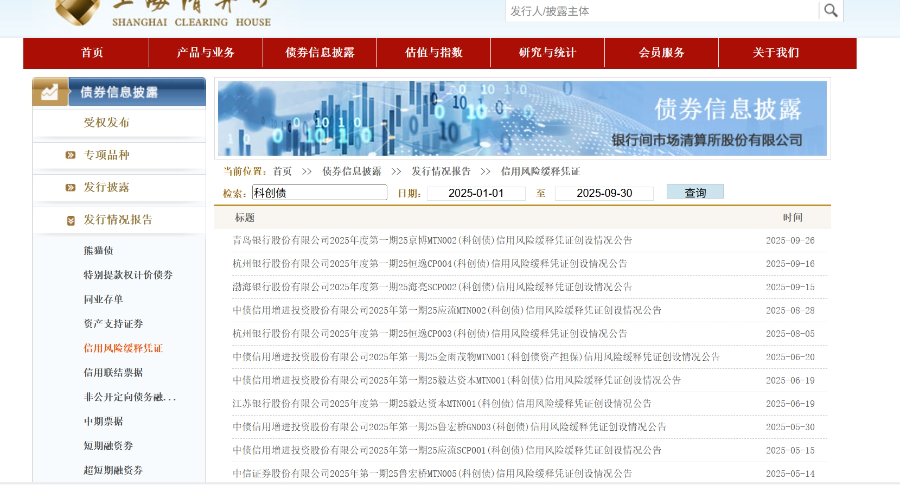
Core Viewpoint - The expansion of credit risk mitigation tools (CRMW) to include local institutions is expected to enhance the issuance and investment of technology innovation bonds (科创债) in China, providing a more stable financing environment for private equity and technology enterprises [2][10][12]. Group 1: CRMW Expansion - Three local institutions have recently been approved as CRMW creation entities, marking a significant expansion beyond large commercial banks and securities firms [2][10]. - The total number of approved CRMW creation institutions has reached 58, indicating a broader participation in the market [10]. - The inclusion of local credit enhancement institutions is anticipated to improve regional bond issuance and support for private enterprises [10][15]. Group 2: Impact on Technology Innovation Bonds - Since the launch of the technology board in May, the issuance of technology innovation bonds has accelerated, with CRMW playing a crucial role in stabilizing the market [2][12]. - The average issuance rate for new technology innovation bonds in September was 2.19%, reflecting a slight increase from 1.93% in May, but still demonstrating stability due to CRMW's credit protection [13]. - CRMW has significantly contributed to lowering financing costs for technology enterprises, with many bonds issued at rates lower than traditional bonds [12][13]. Group 3: Market Dynamics and Investor Sentiment - The current market environment, characterized by declining interest rates and ample liquidity, has led investors to seek higher-yielding risk products, making the combination of private enterprise bonds and CRMW particularly attractive [6][12]. - CRMW has been instrumental in supporting the issuance of bonds for private technology enterprises, with 84% of the total CRMW issuance linked to private enterprises [14]. - The revised guidelines for CRMW are expected to enhance market activity and encourage more financial institutions to participate in the creation of these risk mitigation tools [9][15].

回马枪 | 谈股论金
水皮More· 2025-09-29 10:18
Core Viewpoint - The article discusses a significant rebound in the A-share market, highlighting the performance of major indices and the driving forces behind the market's recovery, particularly in the brokerage and new energy sectors [3][4][10]. Market Performance - All three major A-share indices rose today: the Shanghai Composite Index increased by 0.90% to close at 3862.53 points, the Shenzhen Component Index rose by 2.05% to 13479.43 points, and the ChiNext Index climbed by 2.74% to 3238.01 points [3][4]. - The total trading volume in the Shanghai and Shenzhen markets reached 21,615 billion, an increase of 146 billion compared to the previous trading day [3]. Sector Analysis - The brokerage sector saw a significant rise, with a peak increase of 9% during the day, ultimately closing up 4.37%. Notable stocks included Guosen Securities and Huatai Securities, which maintained their gains until the end of trading [5][6]. - The insurance sector also performed well, with an intraday increase of 4.21%, closing at a 1.86% rise, led by China Life [6]. - New energy-related sectors, including energy metals, battery, non-ferrous metals, and photovoltaic sectors, showed strong performance, with CATL rising by 5.12% [6]. Market Dynamics - The market experienced initial panic selling, with over 4,000 stocks declining at the open, but recovered as the day progressed, particularly driven by the brokerage sector [4][5]. - The article notes that while the brokerage sector showed strong performance, some leading brokerage stocks exhibited conservative behavior, indicating a cautious approach from major players [7]. - There was a notable shift in capital flow, with 31 sectors receiving inflows and 54 sectors experiencing outflows, particularly in the semiconductor and banking sectors [7]. Conclusion - The overall market is undergoing a high-low switch, which many investors have been anticipating. The sustainability of the brokerage sector's rebound will be a key focus moving forward [10].

股份制银行板块9月29日跌0.86%,浦发银行领跌,主力资金净流出4.45亿元
Zheng Xing Xing Ye Ri Bao· 2025-09-29 08:45
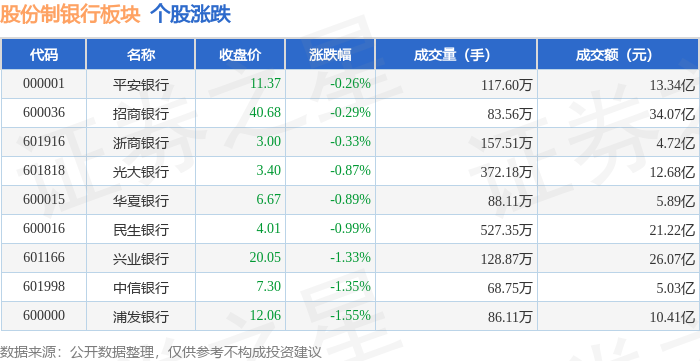
证券之星消息,9月29日股份制银行板块较上一交易日下跌0.86%,浦发银行领跌。当日上证指数报收 于3862.53,上涨0.9%。深证成指报收于13479.43,上涨2.05%。股份制银行板块个股涨跌见下表: 从资金流向上来看,当日股份制银行板块主力资金净流出4.45亿元,游资资金净流入2.36亿元,散户资 金净流入2.09亿元。股份制银行板块个股资金流向见下表: | 代码 | 名称 | 收盘价 | 涨跌幅 | 成交量(手) | 成交额(元) | | --- | --- | --- | --- | --- | --- | | 000001 | 平安银行 | 11.37 | -0.26% | 117.60万 | 13.34亿 | | 600036 | 招商银行 | 40.68 | -0.29% | 83.56万 | 34.07亿 | | 601916 | 浙商银行 | 3.00 | -0.33% | 157.51万 | 4.72亿 | | 601818 | 光大银行 | 3.40 | -0.87% | 372.18万 | 12.68亿 | | 600015 | 华夏银行 | 6.67 | -0.89% | 88 ...

假期人闲钱不闲!十一专项理财产品普遍流动性较好 开启夜市专场
Xin Jing Bao· 2025-09-29 08:39
Group 1 - The core viewpoint of the articles highlights the trend of banks promoting financial products ahead of the National Day holiday to attract investors and ensure their funds generate returns during the holiday period [1][2][6] - Many banks are offering low-risk cash management and fixed-income products that allow investors to earn returns even during the holiday, with specific deadlines for purchases [2][3] - The competition among banks has intensified, with extended purchase hours for financial products, allowing investors to buy until midnight on September 29, 2023, to benefit from holiday earnings [4][5] Group 2 - Financial products launched for the holiday period generally feature low risk and good liquidity, appealing to investors looking for stable returns [2][3] - The trend of "deposit migration" is evident, with funds shifting from traditional bank deposits to financial products, driven by lower interest rates on deposits [6] - Some banks are introducing special products with varying holding periods to cater to different investor needs, indicating a strategic response to changing market conditions [6]
银行渠道本周在售混合类理财产品榜单(9/29-10/5)
2 1 Shi Ji Jing Ji Bao Dao· 2025-09-29 01:16
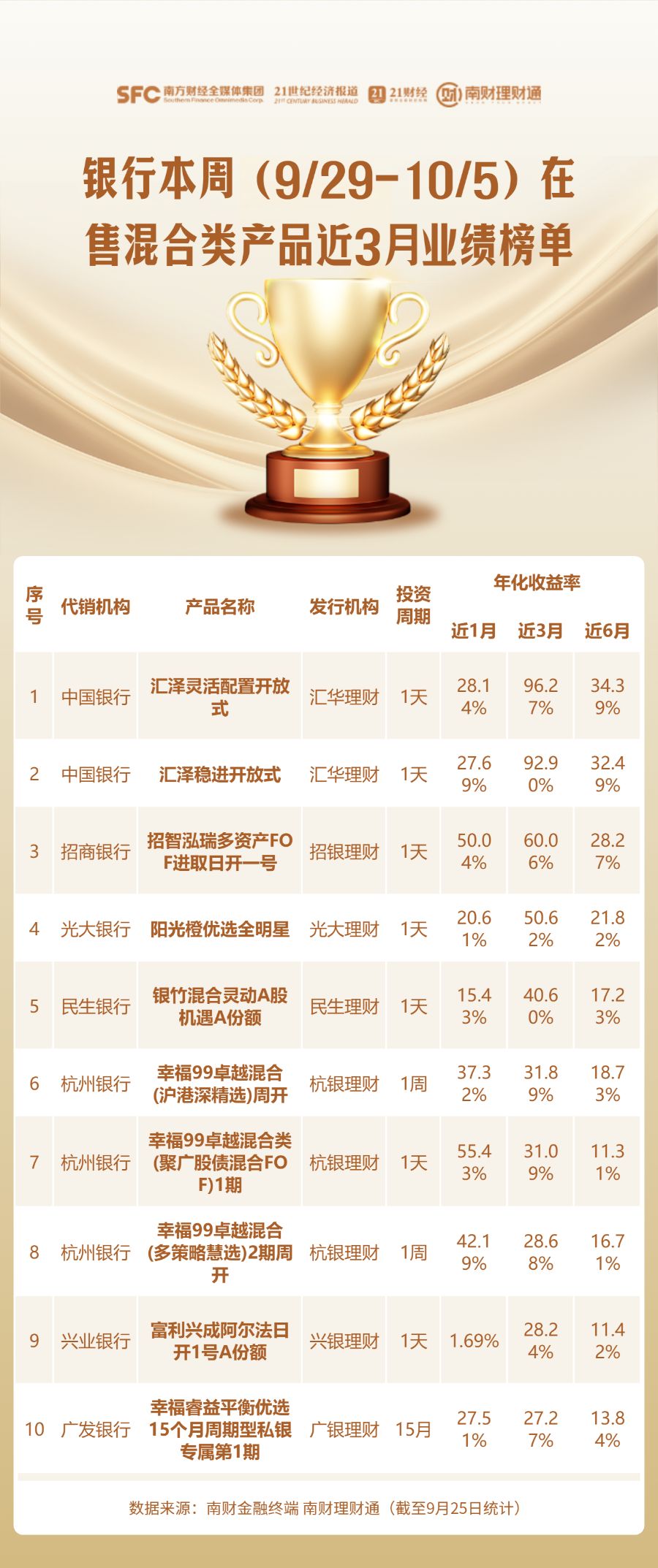
Core Viewpoint - The article discusses the challenges investors face in selecting bank wealth management products due to the overwhelming variety of similar-sounding products, and it aims to provide a performance ranking of these products to assist investors in making informed choices [1]. Group 1: Product Selection Criteria - The ranking of wealth management products is based on two main criteria: product type, focusing on pure fixed income, "fixed income plus," and mixed products, and performance stability, requiring products to have been established for at least three months to ensure sufficient performance data [1]. - The sample selection includes RMB public wealth management products, and the ranking reflects annualized performance over the past month, three months, and six months, sorted by the three-month annualized yield [1]. Group 2: Performance Ranking - The article highlights a list of top-performing mixed products from various banks, including: - Bank of China: "Huiyang Flexible Allocation Open" with a three-month annualized yield of 34.3% [4]. - China Merchants Bank: "Zhaozhi Team Rui Duo Asset FO" with a three-month annualized yield of 28.2% [4]. - Everbright Bank: "Sunshine Orange Preferred All-Star" with a three-month annualized yield of 21.8% [4]. - The ranking includes a total of 10 products, showcasing their respective yields and performance metrics [4]. Group 3: Distribution Channels - The ranking is based on data from 28 distribution institutions, including major banks such as ICBC, Bank of China, and Agricultural Bank of China, among others [2]. - It is noted that the availability of products may vary due to factors like quota exhaustion or differences in product listings for different customers, thus investors are advised to refer to the actual displays on the banks' apps [2].


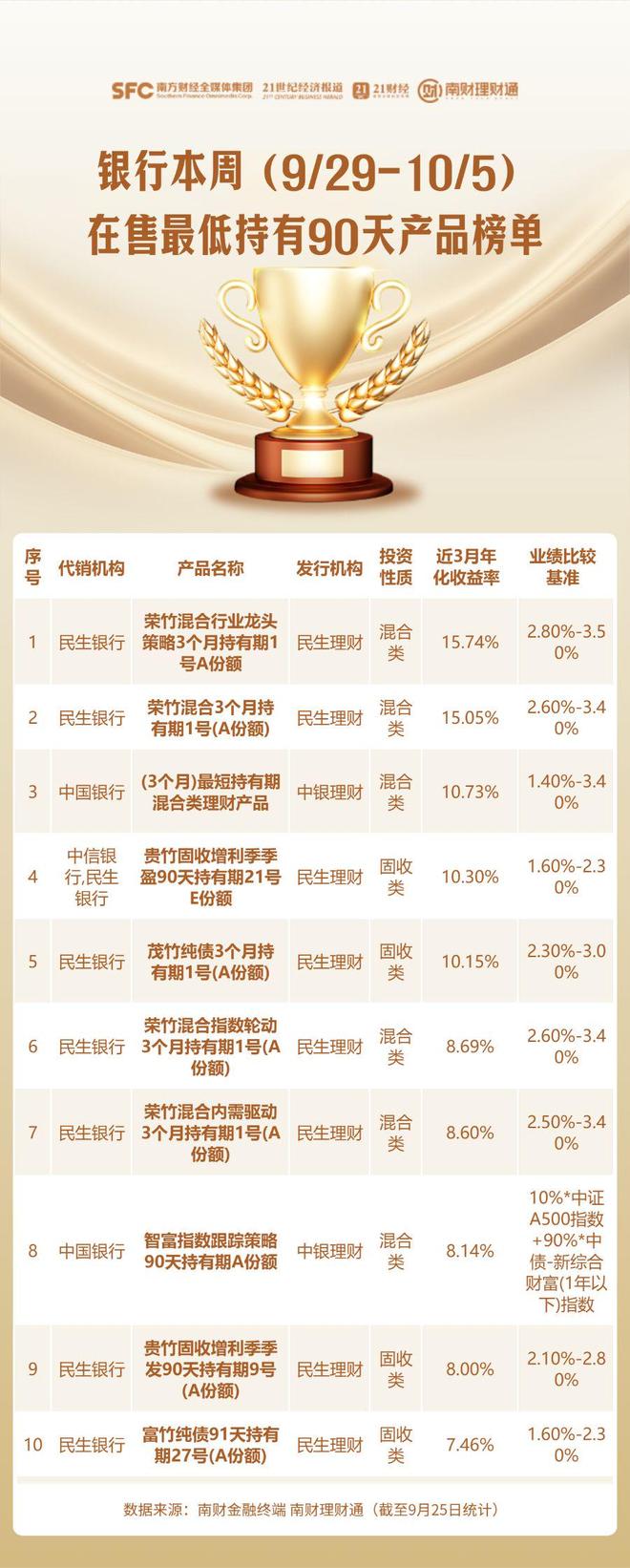
银行渠道本周在售最低持有期理财产品榜单(9/29-10/5)
2 1 Shi Ji Jing Ji Bao Dao· 2025-09-29 01:08
Core Insights - The article focuses on the performance of bank wealth management products with varying minimum holding periods, specifically highlighting the annualized returns of products with holding periods of 90 days, 180 days, and 365 days [1][5][8] Group 1: 90-Day Holding Period Products - The top-performing product is from Minsheng Bank, with an annualized return of 15.74% [4] - Other notable products include Minsheng Bank's Rongzhu Mixed Fund at 15.05% and Bank of China’s mixed product at 10.73% [4] Group 2: 180-Day Holding Period Products - Minsheng Bank's Kyoto is a unique product with a return of 9.19%, leading the 180-day category [6] - Other significant products include Minsheng Bank's Rongmen Mixed Anti-Inflation Fund at 9.04% and Bank of China's mixed product at 7.43% [6][7] Group 3: 365-Day Holding Period Products - The top product in this category is Minsheng Bank's Jinzhuhua FOF with an impressive return of 45.26% [9] - Other notable products include Bank of China's mixed product at 9.50% and another mixed product at 9.41% [9]

摩根士丹利基金管理(中国)有限公司关于旗下部分基金增加平安银行股份有限公司为销售机构并参与费率优惠活动的公告
Shang Hai Zheng Quan Bao· 2025-09-28 17:43
Group 1 - Morgan Stanley Fund Management (China) Co., Ltd. has signed a sales agreement with Ping An Bank to increase the bank's role as a sales institution for certain funds starting from September 29, 2025 [1] - The applicable funds include Morgan Stanley Stable Yield Bond Fund and Morgan Stanley Quality Credit Pure Bond Fund [1] - Investors can conduct various transactions such as account opening, subscription, regular investment, redemption, and fund conversion through Ping An Bank starting from the specified date [1][2] Group 2 - The minimum deduction amount and deduction date for regular investment can be set by Ping An Bank, adhering to the fund's announcement requirements [2] - Investors can agree on the deduction date with Ping An Bank, and if the deduction date is not a trading day, it will be postponed to the next trading day [3] - Specific procedures for business handling must follow Ping An Bank's regulations, and the fund subscription and regular investment may be suspended under certain circumstances [3] Group 3 - The fee discount activity for fund subscriptions and regular investments through Ping An Bank will start on September 29, 2025, with specific discount rates and activity duration to be announced by the bank [5] - The fee discount does not apply to fund redemption or conversion and is limited to front-end subscription models [6] - The rules and processes for the fee discount activity will be determined by Ping An Bank [6] Group 4 - A notice has been issued regarding the communication-based meeting for the Morgan Stanley Pure Bond Stable Growth 18-Month Regular Open Bond Fund, scheduled for September 26, 2025 [10] - The meeting will review amendments to the fund contract, with voting starting from October 23, 2025, to October 30, 2025 [11] - The rights registration date for participating in the meeting is October 22, 2025, and only registered fund holders can vote [16] Group 5 - The voting process includes both paper and telephone voting methods, with specific requirements for each [17][20] - The effectiveness of voting will be determined based on the clarity and completeness of the submitted votes [34][35] - The meeting's resolutions will be effective if at least half of the total fund shares are represented in the voting [37]

上市银行“十四五回望”之资负结构与息差变迁
CMS· 2025-09-28 15:09
Investment Rating - The report maintains a recommendation for the banking industry [3] Core Insights - The report provides a comprehensive analysis of the asset-liability structure and interest margin changes of 42 A-share listed banks during the "14th Five-Year Plan" period, highlighting a shift towards corporate loans on the asset side and a stronger retail focus on the liability side [12][14] - The asset-liability structure indicates a significant increase in the proportion of corporate loans, rising from 57.02% to 63.22% from the end of 2020 to mid-2025, while the proportion of demand deposits decreased from 41.94% to 30% [12][14] - The report notes a decline in both asset yield and interest margin, with the yield on interest-earning assets dropping from 4.43% to 3.32% and the net interest margin decreasing from 2.23% to 1.53% during the same period [14][15] Summary by Sections Overall Asset-Liability Structure and Interest Margin Changes - The asset-liability structure shows an increase in loan-to-earning asset ratio from 54.19% to 56.49%, with corporate loans making up a larger share of total loans [14][15] - The average yield on interest-earning assets decreased significantly, with the loan yield falling from 5.34% to 3.82% [15] - The net interest margin for listed banks remains higher than that of commercial banks, despite a decline [14][15] Changes in Each Banking Sector's Asset-Liability Structure and Interest Margin - City commercial banks experienced a more significant increase in the proportion of corporate loans, with their interest margin narrowing less compared to other banks [18] - The report highlights that the proportion of deposits in interest-bearing liabilities for state-owned banks decreased, while it increased for rural commercial banks [18] - The decline in interest-bearing liabilities' cost rate was most pronounced in city commercial banks, leading to a smaller reduction in their interest margin [18]




红利专题:红利底色,以稳待胜 - 银行Q4投资展望
2025-09-28 14:57
Q&A 银行板块近期承压主要由于市场风险偏好提升,科技成长板块吸引资金, 以及公募和保险资金流出,银政宝等交易因素也构成压制。 四季度保险资金新增保费将推动配置银行等红利资产,银行分红现金流 对险资具吸引力。大股东和产业资本持续增持城商行,反映对未来盈利 的乐观预期。 三季度银行贷款需求偏弱,贷款增速放缓。息差方面,预计 2026 年长 期限存款到期将改善负债端,LPR 降幅收窄减轻资产端重定价压力,息 差降幅有望收窄,城商行息差压力或小于大行。 债券市场调整可能给银行非息收入带来压力,银行或需兑现存量浮盈以 稳定增长。中报显示银行兑现非息收入意愿较强,预计三季度不会出现 大幅滑坡。 预计 2025 年银行业绩总体平稳,大行利润增速有望回正,城商行维持 较快增速。2026 年更多城商行息差有望趋稳或小幅回升,支撑经营基 本面。 红利专题:红利底色,以稳待胜 - 银行 Q4 投资展望 20250928 摘要 四季度银行板块可能会迎来一些催化因素。首先是保险资金,每年年底保险公 司有新增保费进来,为明年的资产布局提前做准备,这将推动险资配置红利资 产,其中银行是核心资产。此外,四季度银行板块分红现金流对险资有吸引 ...
曹慰履新平安银行信用卡中心总裁,或将深耕财富客群
2 1 Shi Ji Jing Ji Bao Dao· 2025-09-28 10:41
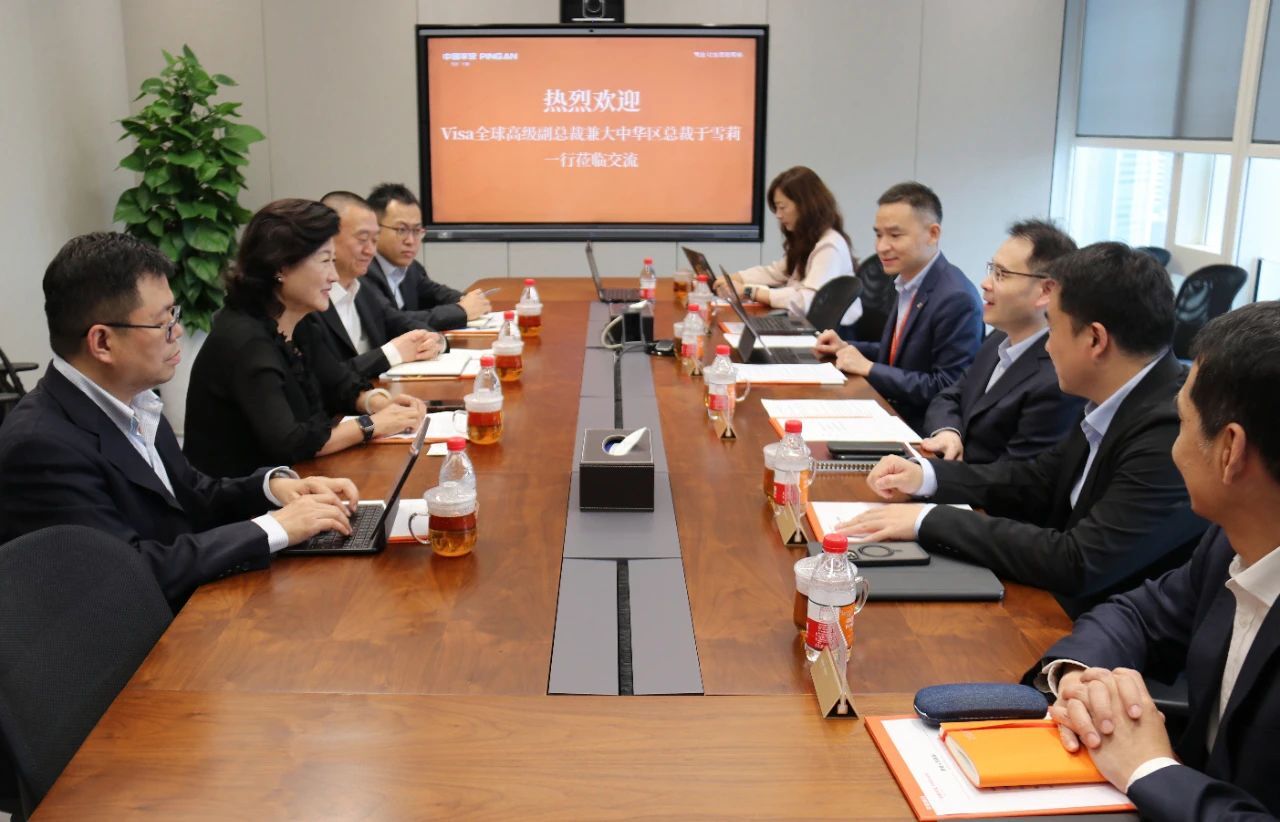
Core Viewpoint - The development of mid-to-high-end credit cards is expected to become a key entry point for banks in wealth management [1] Group 1: Leadership Changes and Strategic Direction - Ping An Bank has appointed Cao Wei as the new general manager of its credit card center, who has extensive experience in the credit card and retail finance sectors [2] - During his tenure at China Merchants Bank, Cao Wei emphasized the importance of credit cards as a tool for global travelers and promoted cross-border payment services [2] - The credit card sector remains a significant part of Ping An Bank's retail business, with credit card receivables amounting to 394.87 billion yuan, accounting for 22.88% of personal loans [3] Group 2: Strategic Meetings and Wealth Management Focus - In his first month, Cao Wei met with senior executives from Visa, indicating a strategic focus on leveraging Ping An Group's extensive customer resources to enhance wealth management through credit cards [4] - Ping An Bank aims to develop a more comprehensive wealth management system, using credit cards as a breakthrough to attract high-net-worth clients [4][6] Group 3: Credit Card Usage Trends and Revenue Sources - The relationship between mid-to-high-end credit cards and wealth management is evolving, with credit cards increasingly viewed as financial tools for cash flow rather than just payment instruments [7][8] - The bank's card transaction fees are becoming a significant revenue source, with Ping An Bank's card fee income at 6.408 billion yuan, showing a slight year-on-year decline of 0.1% [8] Group 4: Industry Trends and Competitive Landscape - The credit card industry in China is transitioning from rapid growth to a focus on high-quality development, with China Merchants Bank reporting an 8.54% year-on-year decline in credit card transaction volume [9] - Despite current challenges, China Merchants Bank remains optimistic about the long-term prospects of the credit card sector, emphasizing its importance to retail scale and brand contribution [9]