
小红书

Search documents
隐秘的“知识买断”生意:AI公司用千元时薪,撬动价值百万的行业经验
创业邦· 2026-01-16 03:43
Core Viewpoint - The article discusses the evolving role of AI trainers and the challenges faced by individuals in the data annotation industry, highlighting the precarious nature of these jobs and the increasing demands for qualifications and experience [6][11][31]. Group 1: Job Nature and Responsibilities - AI trainers are tasked with teaching AI systems by providing real-world data and experiences, which often involves a significant sacrifice of their own professional knowledge [8][10]. - The work of AI trainers is described as highly industrialized, often reducing them to mere data providers rather than creative contributors [26][29]. - The role has evolved from basic data annotation to more complex tasks involving logical reasoning and value judgment, requiring higher educational qualifications and specialized knowledge [20][15]. Group 2: Industry Trends and Challenges - The demand for AI trainers is expected to grow, with a projected talent gap of up to one million in China over the next five years [11]. - The recruitment process for data annotation roles has become increasingly competitive, with a hiring rate of approximately 50% [16]. - Many individuals face a challenging entry process, often involving unpaid trials and rigorous testing, which can lead to feelings of exploitation [30][31]. Group 3: Economic Aspects - Compensation for AI trainers varies widely, with some positions offering high hourly rates, while others pay significantly less, reflecting the lack of technical barriers in the industry [23][30]. - The article notes that the financial rewards may not be as substantial as they seem, with many workers experiencing issues such as unpaid work and low job security [30][31]. - The industry is characterized by a lack of true competitive advantages, leading to high turnover rates and a constant influx of new entrants [34]. Group 4: Future Outlook - There is a growing concern among AI trainers about their long-term job security, as AI systems become more capable of performing tasks traditionally done by humans [31][36]. - The article emphasizes the potential for AI to replace human trainers, raising questions about the future role of humans in the AI development process [31][37]. - The business model of AI data companies is shifting, focusing on high-end annotation services, which may further marginalize entry-level positions [33].


多平台公布涉“AI魔改”违规视频第二批处置结果
Xin Lang Cai Jing· 2026-01-15 15:17
Core Viewpoint - The article discusses the nationwide "AI Magic Modification" video governance action set to begin on January 1, 2026, focusing on the regulation of modified content based on classic literature, historical themes, revolutionary topics, and heroic figures. Group 1: Governance Action Overview - The "AI Magic Modification" initiative will last for one month and aims to address content modifications in specific genres of television dramas [1] - Various online video platforms have reported their results from the second week of handling violations related to this initiative [1] Group 2: Platform-Specific Actions - Weibo has intercepted and cleared over 90 types of violating videos and has imposed temporary to permanent bans on 4 accounts based on the severity of violations [2] - Xiaohongshu has cleared a total of 327 violating "AI Magic Modification" videos and dealt with 15 violating accounts from January 8 to January 15 [3] - WeChat has processed 1,240 violating short video contents this week in accordance with national laws and regulations [4] - Douyin has dealt with a total of 2,132 violating videos related to "AI Magic Modification" this week [5] - Baidu has inspected and cleared 81 violating videos and closed 1 account from January 8 to January 15, focusing on classic IPs and politically sensitive content [6] - Kuaishou has processed 1,529 violating contents this week [7] - Bilibili has strictly intercepted and dealt with over 800 violating articles related to "AI Magic Modification" this week [8]
1688 AI实验室负责人善择:所有智能体真正懂用户需求,才能真正帮用户做好生意
Xin Lang Cai Jing· 2026-01-15 10:58
Core Insights - The main theme of the discussion at the "2025 Technology Wind and Cloud List" annual event is the "Agent Collaborative New Paradigm" [1][4] Group 1: Cross-Border E-Commerce - The biggest barrier to successful cross-border e-commerce is not language, but the ability to deeply understand the real needs and pain points of overseas users, as well as local culture, climate, religion, customs, and shopping habits [3][6] - Understanding the true needs of users and whether the platform can provide the necessary products and services is more important than just language [3][6] Group 2: 1688 B2B Platform - 1688 is a B2B platform where most buyers and sellers are business people, with buyers sourcing goods for various downstream businesses, including cross-border trade and offline retail [3][6] - The diversity of buyer categories and business models leads to complex demands, necessitating the development of intelligent systems that truly understand three key aspects: business, demand, and supply [3][6]

京东成立文旅公司
财联社· 2026-01-15 10:18
Core Viewpoint - JD.com is expanding into the hotel and travel industry, aiming to leverage its supply chain infrastructure and AI capabilities to create new business models rather than becoming another homogeneous OTA platform [3][4]. Group 1: Company Strategy and Objectives - JD.com has established Beijing JD Cultural Tourism Development Co., Ltd., focusing on tourism, entertainment, and cultural activities [3]. - The company aims to help the hotel industry increase profits and reduce costs, encapsulated in the phrase "open source and save" [5]. - JD.com has introduced a "4+2" strategic framework, which includes integrating AI with hospitality services, enhancing enterprise-level travel services, tapping into the high spending potential of JD PLUS members, and innovating supply chain integration with hotels [5]. Group 2: Market Competition and Challenges - The travel and hotel market is highly competitive, with established players like Ctrip and Meituan having strong network effects and market presence [6]. - New entrants like Douyin and Xiaohongshu are intensifying competition, making it difficult for JD.com to establish a foothold [6]. - Key challenges for JD.com include overcoming consumer habits entrenched by existing OTAs, the low-frequency nature of travel purchases, and the high operational demands of the hotel industry [6]. Group 3: Competitive Advantages - JD.com possesses a large user base that can provide a natural flow of traffic to its travel services [7]. - The company's mature e-commerce ecosystem allows for seamless integration of travel services with other business lines, creating a comprehensive consumer experience [7]. - JD.com's supply chain and financial advantages can attract mid-range and budget hotels, addressing the needs of a market segment that is often squeezed by high commission rates [7].


内容变现步入“精品化”与“AI化” 美图AI产品成行业赢家
Zheng Quan Ri Bao Wang· 2026-01-14 13:44
Core Insights - The report highlights the overseas revenue rankings for non-gaming applications in China for Q4 2025, with companies like ByteDance, Meitu, and Xiaohongshu making the list [1] - AI imaging tools are identified as a significant winner in this quarter, showcasing their commercial potential [1] Company Performance - Meitu's app, Meitu Xiuxiu, emerged as a major monetization highlight, with a quarter-over-quarter revenue increase of 48.5%, indicating strong growth driven by upgrades in AI video and image editing capabilities [1] - The ranking of Meitu has significantly improved, reflecting the high payment potential of AI imaging tools in overseas markets [1] Industry Trends - The overall performance in Q4 2025 indicates a shift towards "premium" and "AI-driven" content monetization, showcasing the maturity of Chinese apps in managing global seasonal traffic and consumption nodes [1] - There is a clear trend of deepening content monetization and the continuous release of value from tool-based products [1]
AI圈顶级女富豪诞生,94年,身价40亿
3 6 Ke· 2026-01-14 11:33
Core Viewpoint - MiniMax, a domestic large model company, has achieved a market value exceeding 100 billion yuan within just four years of establishment, highlighting the rapid growth and interest in AI technologies in China [1][5]. Company Overview - MiniMax was co-founded by Yan Junjie and Yun Yeyi, with Yun Yeyi serving as the Chief Operating Officer and a key figure in the company's successful financing and IPO process [3][6]. - The company has successfully completed seven rounds of financing before its IPO, attracting investments from notable firms such as Tencent, Xiaomi, Alibaba, and Sequoia China [6]. Financial Performance - Following its IPO, Yun Yeyi holds a 3.93% stake in MiniMax, translating to a net worth of approximately 4.453 billion HKD (around 4 billion RMB) [5]. - MiniMax's product "Xingye/Talkie" generated approximately 1.875 million USD (around 1.3 million RMB) in revenue in the first nine months of 2025, accounting for 35.1% of the total revenue [11]. - The revenue from "Hailuo AI" surged to approximately 1.746 million USD (around 1.2 million RMB) in the same period, indicating strong market demand for both products [13]. Product Development - MiniMax has launched two main consumer products: the AI emotional companion application "Xingye/Talkie" and the video generation tool "Hailuo AI," both of which have gained significant traction in the market [8][10]. - "Xingye/Talkie" allows users to create personalized AI characters and narratives, enhancing user engagement through interactive storytelling [8]. - "Hailuo AI" has seen a notable increase in downloads and revenue, particularly after adjustments to its free usage model, which sparked discussions among users [13]. Market Positioning - MiniMax has adopted a differentiated commercial strategy, focusing on its unique features rather than directly competing with major industry players [13]. - The company has successfully positioned itself in the AI sector, with over 50% of its users based in the United States, and has gained popularity in other countries such as the Philippines, the UK, and Canada [10].

小红书选择“中庸之道”:借力大厂扩张,商业化“最优解”浮现
Hua Xia Shi Bao· 2026-01-14 11:03
Core Insights - The collaboration between Xiaohongshu and Meituan through the "Hongmei Plan" signifies a strategic move to leverage Xiaohongshu's content-driven marketing capabilities within established e-commerce infrastructures, reflecting its adaptation to competitive pressures in the local lifestyle and e-commerce sectors [2][4][10] Group 1: Collaboration and Strategy - Xiaohongshu's partnership with Meituan allows for direct advertising links to Meituan's platform, enhancing the purchasing process for users and expanding Xiaohongshu's revenue streams through transaction commissions and advertising income [3][4] - The "Hongmei Plan" is part of Xiaohongshu's broader strategy to integrate its content community with local services, moving beyond its initial focus on e-commerce to include real-time retail and local lifestyle services [4][5][10] Group 2: Market Position and Challenges - Xiaohongshu's previous attempts to independently develop local lifestyle services, such as the "Xiaohong Card," faced challenges, leading to a strategic pivot towards collaboration with established players like Meituan [6][7] - The competitive landscape, particularly with Alibaba's influence, has created a need for Meituan to seek new traffic sources, making the partnership beneficial for both companies [5][10] Group 3: Business Model and Revenue Generation - Xiaohongshu's business model focuses on content and community engagement rather than building a comprehensive e-commerce platform, which aligns with its strengths in demand generation and trust-building among users [9][10] - The collaboration with Meituan and other major platforms allows Xiaohongshu to enhance its advertising effectiveness and streamline the consumer journey from content discovery to purchase, potentially increasing its revenue from advertising and commissions [8][9]

跨境电商2025:用一年时间,回答“不确定性”
3 6 Ke· 2026-01-14 09:55
Core Insights - The main theme for foreign trade in 2025 is "change," driven by fluctuating tariffs and the need for adaptability in the face of evolving market dynamics [1] - The cross-border e-commerce sector is experiencing a significant transformation, with a shift towards emerging markets and a focus on AI technology, brand building, and localized operations as core competitive strategies [1] Group 1: Tariff Impact and Trade Dynamics - The U.S. imposed a 10% tariff on Chinese goods on February 1, 2025, which escalated to a peak of 145% due to retaliatory measures, significantly affecting trade [2] - By May 11, 2025, the U.S. reduced tariffs on 91% of goods, acknowledging that previous increases exceeded rational limits, yet the overall tariff on Chinese goods remained at 37.3% [2][4] - China's exports to the U.S. fell by 18.9% year-on-year in the first 11 months of 2025, while overall exports grew by 5.4%, indicating a strategic shift towards cross-border e-commerce and emerging markets [4][5] Group 2: Market Shifts and Emerging Opportunities - The cancellation of the "de minimis" policy in the U.S. led to a redirection of low-value packages to Europe, where demand is rising due to strong consumer spending and stable policies [5][7] - China's exports to the EU increased by over 14% year-on-year by September 2025, surpassing the total for the previous year, highlighting Europe's growing importance as a key market [7] - Latin America has become a significant target for Chinese sellers, with exports to the region growing by approximately 6.9% in the first eight months of 2025 [9] Group 3: E-commerce Platform Strategies - Major platforms like Temu, TikTok Shop, and AliExpress are rapidly expanding their market presence and enhancing localization efforts to adapt to changing consumer needs [13][14] - Temu is focusing on local supply and fulfillment strategies, while TikTok Shop is expanding into new markets, including Mexico and Japan, to validate its content-driven e-commerce model [14][20] - AliExpress is implementing "overseas hosting" services to streamline local operations and enhance market penetration across various regions [16] Group 4: Competitive Landscape and AI Integration - The global e-commerce landscape is becoming increasingly competitive, with platforms needing to focus on local supply chains, compliance, and customer experience to maintain an edge [24][29] - AI is becoming a critical capability for e-commerce platforms, enhancing recommendation systems, fulfillment efficiency, and customer service, with 77% of e-commerce professionals integrating AI into daily operations [38][41] - Sellers utilizing AI are seeing significant revenue increases, with average income rising by at least 20%, while those not adopting AI risk losing competitive advantages [42][46] Group 5: Seller Dynamics and Market Adaptation - The seller landscape is experiencing a K-shaped divergence, where successful sellers are focusing on brand differentiation and local compliance, while smaller sellers struggle with rising costs and market pressures [32][35] - The transition from low-cost, high-volume strategies to more sustainable, brand-focused approaches is becoming essential for survival in the evolving e-commerce environment [37] - As the industry matures, the emphasis is shifting towards long-term operational capabilities rather than short-term gains, indicating a need for sellers to adapt to new market realities [37]


脉脉公布互联网大厂人才数据:万人以上规模企业中,加薪员工占比达17.4%
Xin Lang Cai Jing· 2026-01-14 09:42
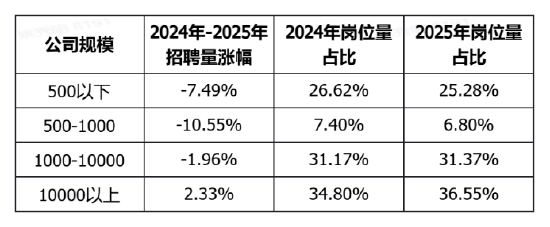
Group 1 - The core point of the articles indicates that companies with over 10,000 employees are the only category to see an increase in new job postings in 2025, with a growth rate of 2.33% year-on-year [1][3] - Notable companies such as DJI, Didi, and Xiaomi have achieved significant growth in new job postings [1][3] - Among large companies, 17.44% of employees received salary increases, which is significantly higher than other company sizes [1][3] Group 2 - Salary increases are concentrated in the internet and new energy vehicle sectors, with BYD's new "AI infra algorithm engineer" position seeing an average monthly salary increase of over 36% [2][4] - DJI's "industrial designer" position has an average monthly salary increase of 20%, while Tencent's "AI product manager" position has increased by 5.56% [2][4] - AI positions have become a focal point for recruitment and salary increases, with companies like DJI, Xiaopeng, JD, Didi, Xiaohongshu, and Kuaishou seeing new AI job postings increase by over tenfold [2][4]
从互联网到新能源,大厂纷纷涨薪!月薪最高涨近40%、实习生也能月入上万元
Mei Ri Jing Ji Xin Wen· 2026-01-14 08:19
每经记者|赵雯琪 每经编辑|陈柯名 魏文艺 近期,京东、字节跳动、比亚迪、宁德时代等大厂纷纷涨薪,新经济行业就业出现回暖信号。 1月13日,《每日经济新闻》记者(以下简称"每经记者")从脉脉最新披露的数据了解到,2025年全年,员工规模1万人以上的企业新发岗位量同比增长 2.33%,成为唯一实现新发岗位量增长的企业规模类型。大疆、滴滴、小米的新发岗位量均取得较高水平增长。同时,万人以上规模企业中,公司内加薪 员工占比达17.44%,显著高于其他规模企业。 2025年年底以来,多家互联网公司宣布涨薪,京东宣布全集团92%的员工拿满甚至可以拿到超额年终奖,年终奖总投入同比增幅超过70%,京东采销更 是"上不封顶";字节跳动也宣布2025年奖金投入提升35%,调薪投入上涨1.5倍。同时,比亚迪、宁德时代等超级巨头纷纷开始给员工涨薪。 互联网与新能源汽车行业 为何成大厂涨薪"主力军"? 据脉脉提供的数据,此次招聘回暖主要由万人以上企业招聘需求带动。 从不同企业的新发岗位平均月薪涨幅来看,涨薪较多的企业集中在互联网行业和新能源汽车行业。 2025年,比亚迪新发"AI infra算法工程师"岗位平均月薪上涨超过36%;大 ...
