建发股份

Search documents
2025年统计局数据点评:开发投资相关指标加速下跌
GOLDEN SUN SECURITIES· 2026-01-22 09:49
Investment Rating - The report maintains an "Overweight" rating for the real estate sector [4][6]. Core Insights - The real estate development investment in 2025 saw a significant decline, with a cumulative year-on-year decrease of 17.2%, indicating a continued downward trend in related indicators [12][13]. - The new housing market remained sluggish, with a sales amount decrease of 12.6% and a sales area decrease of 8.7% in 2025, with residential sales experiencing a larger decline compared to other segments [34][41]. - The funding situation for real estate companies worsened, with a cumulative year-on-year decrease of 13.4% in funds available, primarily due to declines in personal mortgage loans and pre-sale deposits [51][58]. Summary by Sections 1. Real Estate Development Investment - In 2025, the total real estate development investment was 82,788 billion yuan, down 17.2% year-on-year [2][13]. - The investment in residential, office, and commercial properties was 63,514 billion, 3,203 billion, and 5,947 billion yuan, respectively, with year-on-year changes of -16.3%, -22.8%, and -14.0% [22]. 2. New Construction - The cumulative new construction area for 2025 was 58,770 million square meters, a decrease of 20.4% year-on-year [27]. - The new construction areas for residential, office, and commercial properties were 42,984 million, 1,471 million, and 3,805 million square meters, with year-on-year changes of -19.8%, -21.9%, and -23.5% [27]. 3. Completion - The total completion area for 2025 was 60,348 million square meters, down 18.1% year-on-year [29]. - The completion areas for residential, office, and commercial properties were 42,830 million, 2,071 million, and 4,259 million square meters, with year-on-year changes of -20.2%, 6.7%, and -12.9% [29]. 4. Sales Performance - The total sales amount for commercial housing in 2025 was 83,937 billion yuan, a decrease of 12.6% year-on-year, while the sales area was 88,101 million square meters, down 8.7% [34][41]. - The average sales price for commercial housing was 9,527 yuan per square meter, reflecting a year-on-year decrease of 4.1% [46]. 5. Funding Situation - The total funds available for real estate companies in 2025 were 93,117 billion yuan, down 13.4% year-on-year [51]. - Major sources of funding such as domestic loans, foreign investment, self-raised funds, pre-sale deposits, and personal mortgage loans saw year-on-year declines of -7.3%, -20.8%, -12.2%, -16.2%, and -17.8%, respectively [51][58].
房地产寒冬、联发集团持续亏损、红星业绩承压……建发上市以来首亏!
Sou Hu Cai Jing· 2026-01-22 09:20
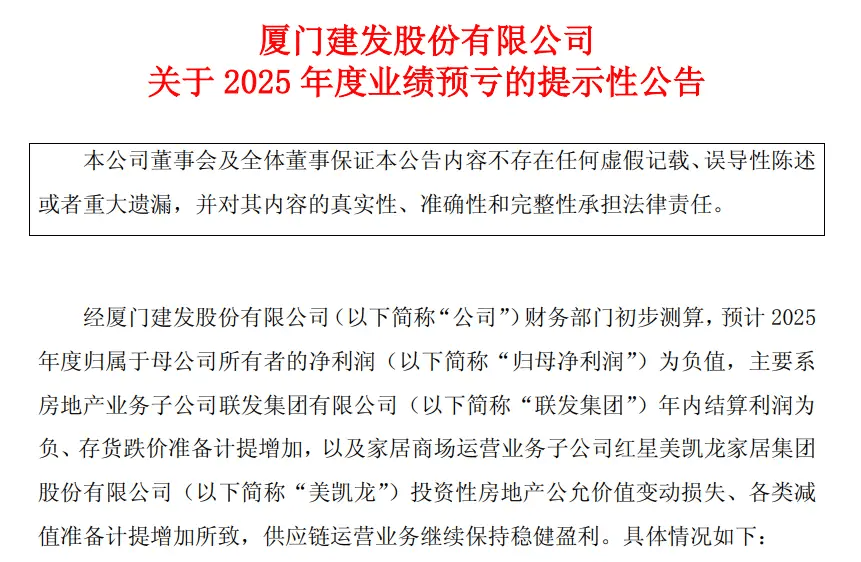
Core Viewpoint - The company, Jianfa Co., has experienced a significant shift in market perception due to a profit warning, indicating a potential net loss for 2025, primarily driven by pressures in its real estate and home operation businesses, despite stable performance in its supply chain operations [2][3]. Group 1: Company Performance - Jianfa Co. has maintained steady growth since its listing, with net profits of 11.259 billion yuan, 16.850 billion yuan, and an expected 5.820 billion yuan for 2022, 2023, and 2024 respectively, with supply chain business revenue consistently accounting for over 75% [2]. - The company's supply chain operations remain a strong profit driver, with overseas business reaching 14 billion USD in 2025, a 37% year-on-year increase [5]. - Despite the challenges, Jianfa Co. has consistently ranked in the top 20 for comprehensive strength among real estate developers, achieving 8th place in 2024 [2]. Group 2: Industry Context - The real estate market in 2025 is characterized by a "high open low walk" trend, with a significant decline in development investment, down 15.9% year-on-year from January to November [3]. - Jianfa's real estate platform set a sales target of 150 billion yuan for 2025 but only achieved 122.1 billion yuan, reflecting a shortfall of nearly 30 billion yuan and a year-on-year decline of over 10 billion yuan [3]. - The performance of Jianfa's subsidiary, Lianfa Group, has deteriorated since 2021, with a net profit of -1.642 billion yuan in 2024, highlighting the struggles within the real estate sector [4]. Group 3: Strategic Developments - Jianfa Co. and Lianfa Group invested 6.286 billion yuan to acquire a 29.95% stake in Red Star Macalline, aiming to create a synergistic ecosystem of "real estate + home + supply chain" [5]. - The home retail sector, including Red Star Macalline, is facing demand pressures, with a 3.33% year-on-year decline in sales for large-scale building materials and home furnishing markets [5]. - The central economic work conference in 2026 emphasizes "controlling increments, reducing inventory, and optimizing supply," indicating a shift towards high-quality development in the real estate industry [6].


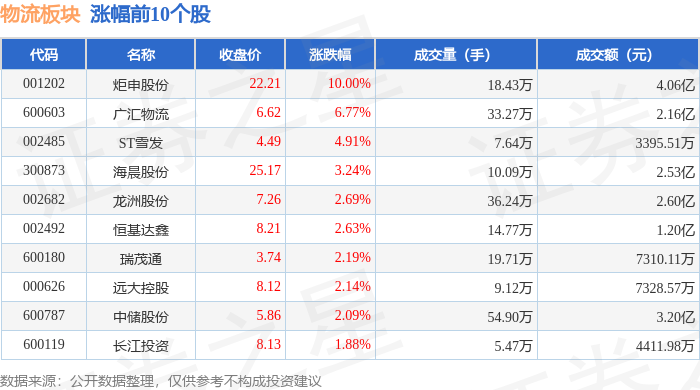
物流板块1月22日涨0.75%,炬申股份领涨,主力资金净流入6419.59万元
Zheng Xing Xing Ye Ri Bao· 2026-01-22 09:02
Group 1 - The logistics sector experienced a rise of 0.75% on January 22, with Jushen Co., Ltd. leading the gains [1] - The Shanghai Composite Index closed at 4122.58, up 0.14%, while the Shenzhen Component Index closed at 14327.05, up 0.5% [1] - Jushen Co., Ltd. saw a closing price of 22.21, with a significant increase of 10.00% and a trading volume of 184,300 shares, amounting to a transaction value of 406 million yuan [1] Group 2 - The logistics sector had a net inflow of 64.2 million yuan from main funds, while retail investors contributed a net inflow of 12.4 million yuan [2] - Major stocks in the logistics sector showed varied performance, with Guohui Logistics experiencing a net inflow of 35.43 million yuan from main funds, while retail investors had a net outflow of 26.30 million yuan [3] - The stock of SF Holding had a net inflow of 31.04 million yuan from main funds, despite a net outflow of 63.58 million yuan from speculative funds [3]




中国房地产 - 月度追踪:12 月数据进一步走弱;2026 年或仍具挑战-China Property-Monthly Tracker December Data Weakened Further; 2026 May Stay Challenging
2026-01-22 02:44
Summary of the Conference Call on China Property Market Industry Overview - The conference call focused on the **China Property** market, specifically discussing the challenges and outlook for 2026 in the Asia Pacific region [1][9]. Key Points and Arguments 1. **Home Sales Decline**: - Home sales in December showed a significant decline, with the CREIS 65-city primary sales volume falling **35% year-on-year** compared to a **41% decline in November**. The 33-city secondary sales volume decreased by **29% year-on-year**, worsening from a **20% decline in November** [3]. - For the full year 2025, primary sales growth weakened to **-20% year-on-year**, while secondary sales saw a slight decline of **-1% year-on-year** [3]. 2. **Stable Price Declines**: - The NBS reported that primary home prices in 70 cities fell by **3.0% year-on-year** and **0.4% month-on-month**. Secondary prices dropped **6.1% year-on-year** and **0.7% month-on-month** [4]. - Tier-1 cities experienced deeper secondary price declines, with a **1.3% month-on-month** drop, compared to **0.7% in tier-2 and lower-tier cities** [4]. 3. **Inventory Levels**: - Primary inventory months increased to **29.6x** in December, up from **27.8x** in November, indicating weaker sales across all city tiers. Tier-1 cities saw inventory rise to **19.5x**, tier-2 to **28.8x**, and tier-3 to **38.2x** [6]. 4. **Land Sales Weakness**: - Land sales in December dropped **12% year-on-year** in GFA and **23% year-on-year** in value, leading to a year-to-date decline of **-13.4% year-on-year** in GFA [7]. 5. **Market Sentiment and Policy Support**: - The market sentiment remains fragile, with higher inventory levels and reactive policy support expected to keep the physical market challenging in 2026. The focus should be on quality state-owned enterprises (SOEs) with clearer alpha visibility [1][2]. 6. **Investment Recommendations**: - Favorable companies include **CR Land** and **Seazen A** as robust mall operators benefiting from consumption-boosting initiatives. **C&D** and **COLI** are recommended as residential market consolidators with optimized landbanks that could support margins and return to positive earnings growth [2]. Additional Important Insights - **Client Engagement**: Client visits decreased by **4% month-on-month**, indicating a potential decline in investor interest [5]. - **Listing Volume**: New secondary listings softened to **-3% month-on-month** and **-15% year-on-year**, while total listings remained stable at **-0.9% month-on-month** [5]. This summary encapsulates the critical insights from the conference call regarding the current state and future outlook of the China Property market, highlighting significant declines in sales and prices, increasing inventory, and the need for strategic investment in quality companies.
【看新股】袁记食品赴港IPO:业务以加盟模式为主 黑蚁资本、益海嘉里等参投
Sou Hu Cai Jing· 2026-01-21 23:29
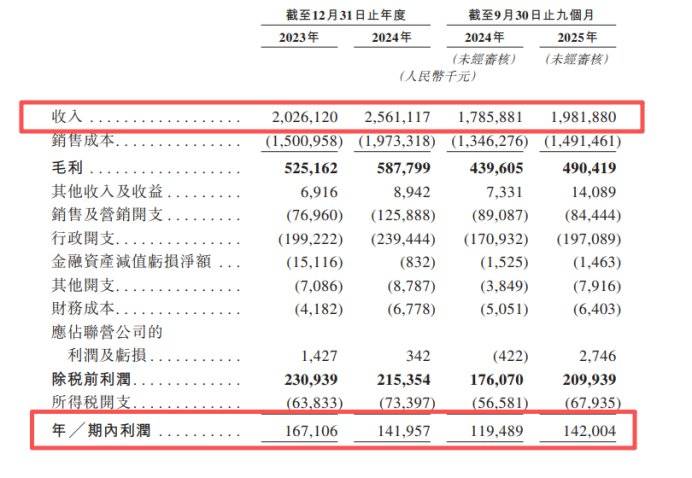
Core Viewpoint - Yuanji Food Group Co., Ltd. is applying for an IPO on the Hong Kong Stock Exchange, aiming to raise funds for digitalization, smart construction, and overseas market expansion [1][2]. Group 1: Company Overview - Yuanji Food is the largest dumpling and wonton enterprise in China, with over 4,000 stores as of the end of Q3 2025 [1][3]. - The company primarily offers handmade dumplings, wontons, noodles, and other fresh foods under the Yuanji brand, as well as pre-packaged foods under the Yuanji Weixiang brand [3]. - As of September 30, 2025, Yuanji Food's total GMV from stores reached 4.789 billion yuan, representing a year-on-year growth of 6.4% [3]. Group 2: Financial Performance - In 2023 and 2024, Yuanji Food achieved revenues of 2.026 billion yuan and 2.561 billion yuan, with profits of 167 million yuan and 142 million yuan, respectively [5]. - For the first nine months of 2025, the company reported revenues of 1.982 billion yuan, a year-on-year increase of 10.97%, and profits of 142 million yuan, up 18.84% [6]. Group 3: Business Model and Expansion - Yuanji Food primarily operates through a franchise model, with over 95% of its revenue generated from its store network [6][8]. - The total number of stores increased from 1,990 in 2023 to 4,266 by September 30, 2025, indicating rapid expansion [6]. - The company plans to use IPO proceeds for digitalization, smart construction, brand development, product research, supply chain upgrades, and general corporate purposes [11].
上任未满一年,联发“革新派”董事长王文怀辞职
Guo Ji Jin Rong Bao· 2026-01-21 11:59
创下近10年首亏的建发股份(600153)在内部子公司开启了人事更迭。 近日,市场有消息称,建发股份旗下子公司建发房产迎来了新董事长,原总经理林伟国升任董事长,并 继续担任建发国际董事会主席。 林伟国于2007年加入建发房产,历任财务总监、总经理助理、副总经理,主导"灯塔项目"战略,聚焦杭 州、成都等核心城市高端市场。 业绩是他升任的主要推动力。 2025年,建发房产保持增长,前三季度为建发股份房地产业务分部贡献归母净利润7.8亿元,同比增加 1.21亿元。前三季度,建发房产实现合同销售金额957.4亿元,同比增长12.6%,权益销售金额711.5亿 元,同比增长7.6%。 几乎同一时间,建发股份另一家子公司联发集团同样出现高层变动,情况却完全相反。 信息显示,联发集团董事长王文怀被曝已经辞职并不再担任建发集团旗下任何子公司职位,目前正在走 离职审计流程。《国际金融报》记者据此向联发方面求证,对方表示王文怀因个人原因离开。 王文怀是2025年2月初上任的,至今尚不足一年。彼时,"建发系"进行了一轮罕见的人事调整,原本在 建发集团分管投资多年的王文怀"空降"联发集团出任董事长,另有数名核心管理层职位发生变动。 ...
厦门时代二期30GWh电芯产能即将投产
起点锂电· 2026-01-21 11:13
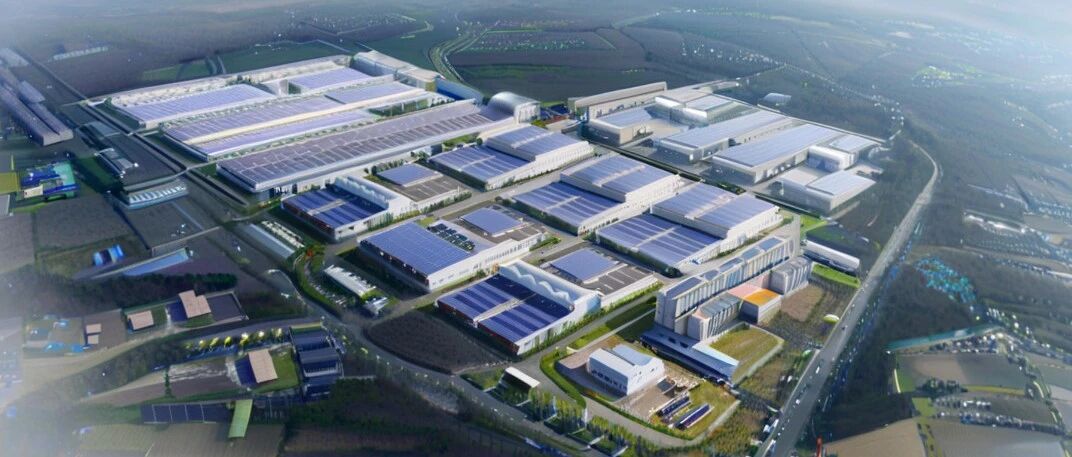
Core Viewpoint - CATL is significantly enhancing the new energy industry in Xiamen through various projects and collaborations, indicating a strong commitment to the region's development in battery technology and renewable energy solutions [2][8]. Group 1: Project Developments - The second phase of the CATL project in Xiamen has reached preliminary acceptance standards, with outdoor finishing work progressing smoothly and production expected to commence in Q2 of this year [2]. - The second phase involves an investment of approximately 6.5 billion yuan, with a planned capacity of about 30 GWh and a construction area of 580,000 square meters [2]. - CATL has signed a battery project with Torch High-tech Zone, planning a capacity of 80 GWh, further solidifying its presence in Xiamen [2]. Group 2: Historical Context and Expansion - CATL's initial investment in Xiamen began in 2021 with a 500 million yuan establishment of Xiamen Times [4]. - Subsequent collaborations included a partnership with Enjie Co. to establish a platform company and a joint venture with ATL focusing on small power markets [4]. - In 2022, CATL launched the EVOGO battery swap service in Xiamen, marking its expansion into the electric vehicle infrastructure [5]. Group 3: Future Plans and Collaborations - In 2025, CATL plans to establish three new companies in Xiamen, including Times Qiji New Energy Technology Co., with a registered capital of 500 million yuan, and Times New Energy Power Technology Co., with a capital of 2 billion yuan [6]. - CATL signed a significant agreement with Xiamen Jianfa Group to collaborate in three areas: new energy vehicles, supply chain business, and emerging industry investments [6]. - A zero-carbon technology city is also planned in collaboration with the Xiamen municipal government, expanding CATL's ecological business layout [7]. Group 4: Industry Landscape - Xiamen's new energy industry is robust, with local companies like Xiamen Tungsten New Energy investing heavily in battery and hydrogen materials [9]. - The collaboration between CATL and local firms like Haicheng Energy is creating a comprehensive supply chain from materials to recycling, forming a closed-loop system [9]. - Xiamen's government is promoting a 3+1 development framework focusing on functional transformation, economic structure upgrades, and spatial adjustments, which aligns with CATL's initiatives [9].

【建议收藏】重磅!2025年厦门市新能源汽车产业链全景图谱(附产业政策、产业链现状图谱、产业资源空间布局、产业链发展规划)
Qian Zhan Wang· 2026-01-21 03:48
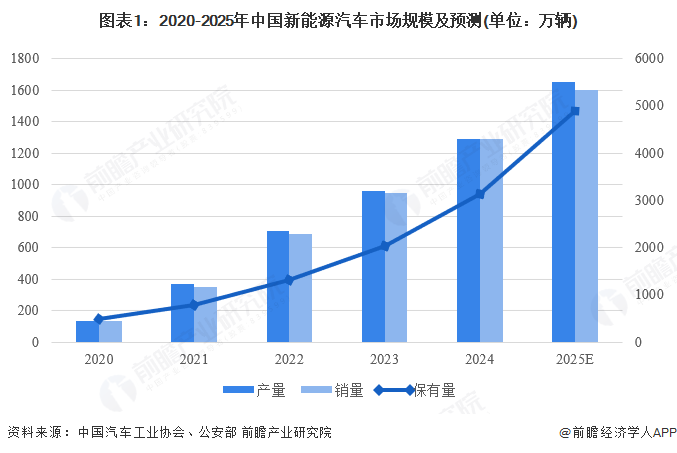
Core Insights - The article highlights the rapid growth and strategic importance of the new energy vehicle (NEV) industry in Xiamen, emphasizing its role in China's transition from a major automotive nation to a strong one, as well as its contribution to climate change mitigation and green development [1][6]. Industry Overview - The NEV industry in China has experienced explosive growth over the past five years, with production and sales increasing from approximately 1.36 million units in 2020 to over 12.8 million units in 2024, representing nearly a tenfold increase [1]. - By the end of 2025, it is projected that NEV production will exceed 16.5 million units, with sales reaching 16 million units and a total ownership of nearly 49 million vehicles [1]. Value Chain Distribution - The NEV value chain consists of upstream raw materials and components, midstream vehicle manufacturing, and downstream services including charging operations and battery recycling [2]. - Profit margins vary across the value chain, with automotive chips yielding the highest gross margins of 31%-38%, while electric drive components have the lowest margins of approximately 4%-15% [2]. Policy Environment - Xiamen's government has established a strategic framework for the NEV industry, aiming to create a "New Energy Commercial Vehicle Capital" and foster a trillion-yuan industry cluster [6]. - Key policies include the "Electric Xiamen" development plan (2023-2025), which outlines goals for vehicle electrification and infrastructure development [6][9]. Market Dynamics - Xiamen's NEV production increased from 0.83 million units in 2020 to 1.87 million units in 2022, with a projected recovery to 1.71 million units in 2024 [17]. - Sales surged from 0.1 million units in 2020 to 80,400 units in 2024, reflecting a twelvefold increase in consumer demand from 2021 to 2022 [17]. Industry Growth and Infrastructure - The number of registered NEV-related enterprises in Xiamen has steadily increased, reaching over 16,000 by November 2025, with a peak of 2,177 new registrations in 2024 [19]. - The charging infrastructure is critical for NEV adoption, with Xiamen planning to establish 16,000 charging stations by the end of 2025 [23]. Future Outlook - Xiamen's NEV industry is positioned for significant growth, supported by favorable policies, a comprehensive ecosystem, and expanding infrastructure [23]. - The city aims to enhance its NEV market by focusing on vehicle electrification, network construction, and ecological innovation, targeting a leading position in the national NEV commercial vehicle sector [23].
未知机构:下阶段地产行业的机遇在哪-20260121
未知机构· 2026-01-21 02:05
Summary of Conference Call Notes Industry Overview - The focus is on the real estate industry, specifically the residential development sector, which is adapting to the needs of core cities, housing types, and product strength [1][2]. Key Insights - Demand is consolidating in core cities, providing growth opportunities for real estate companies heavily invested in these areas. In the period from January to November 2025, the transaction value of new homes in first and second-tier cities accounted for 43% of the total, with residential land transaction value at 61%, marking a year-on-year increase of 7 percentage points, the highest level since 2017 [2][3]. - Among 60 tracked real estate companies, the average sales share in 23 key first and second-tier cities was 72%, with an average market share of 1%. Companies with high sales proportions in core cities include: China Resources, Yuexiu, China Overseas, Greentown, Zhenro, China Resources, Jianfa, Poly Real Estate, and Longfor [3]. - Market demand is shifting towards larger, improvement-oriented products, particularly those over 120 square meters. Companies focusing on high-end improvement products are better aligned with market needs. Notable companies in this category include: China Resources, Greentown, China Overseas, Longfor, and Jianfa [3]. - Companies with strong product capabilities are at an advantage under the "good house" logic. Brands like China Resources, China Overseas, Greentown, Jianfa, Yuexiu, and Poly Real Estate have the highest brand premiums, with over 35% of their cities showing a premium rate exceeding 20% [3]. Investment Recommendations - Among mainstream real estate companies, Poly Real Estate, Yuexiu, Zhenro, and Greentown possess two of the three advantages identified. These companies are primarily state-owned or regionally focused [4]. - The current industry still faces significant pressure from macro, micro, and market perspectives, necessitating vigilance against potential market downturns [4][5]. - A policy adjustment is anticipated by the end of Q1 2026, which could help mitigate the ongoing downward spiral if executed effectively. However, until market stabilization is confirmed, the overall real estate sector may struggle to exhibit clear upward trends [6]. - Companies to watch include: China Resources, Longfor, Zhenro, Yuexiu, Jianfa, Poly Real Estate, as well as commercial real estate firms like China Resources Wanjia Life, Swire Properties, Ruian Real Estate, Kerry Properties, Dayuecheng, and Bailian [6]. Risk Factors - Risks include potential delays in policy implementation, continued declines in sales and housing prices, and slower-than-expected recovery of market confidence [7].
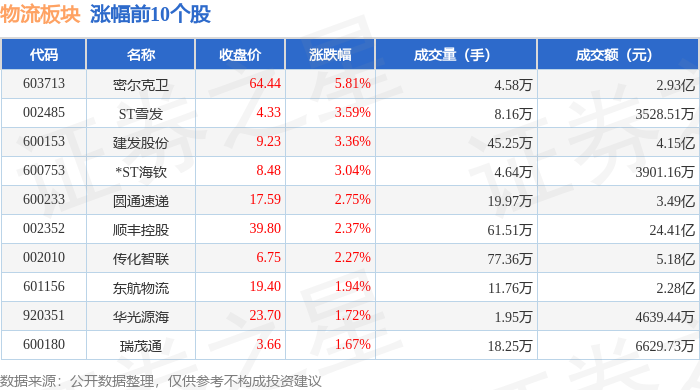
物流板块1月20日涨1.43%,密尔克卫领涨,主力资金净流入3.32亿元
Zheng Xing Xing Ye Ri Bao· 2026-01-20 08:51
Core Insights - The logistics sector experienced a rise of 1.43% on January 20, with Milkyway leading the gains [1] - The Shanghai Composite Index closed at 4113.65, down 0.01%, while the Shenzhen Component Index closed at 14155.63, down 0.97% [1] Group 1: Stock Performance - Milkyway (603713) closed at 64.44, up 5.81% with a trading volume of 45,800 shares and a transaction value of 293 million [1] - ST Xuefa (002485) closed at 4.33, up 3.59% with a trading volume of 81,600 shares and a transaction value of 35.29 million [1] - Jianfa Co. (600153) closed at 9.23, up 3.36% with a trading volume of 452,500 shares and a transaction value of 41.5 million [1] - SF Holding (002352) closed at 39.80, up 2.37% with a trading volume of 615,100 shares and a transaction value of 2.441 billion [1] - YTO Express (600233) closed at 17.59, up 2.75% with a trading volume of 199,700 shares and a transaction value of 349 million [1] Group 2: Capital Flow - The logistics sector saw a net inflow of 332 million from main funds, while retail funds experienced a net outflow of 33.62 million [2] - Main funds showed significant inflow into Debon Logistics (603056) with 3.36 billion, accounting for 25.22% of the total [3] - SF Holding (002352) had a main fund inflow of 1.72 billion, representing 7.06% of the total [3] - YTO Express (600233) recorded a main fund inflow of 32.55 million, which is 9.32% of the total [3]