
罗氏

Search documents
深度|外企高管转型中国创新药“推销员”,黄仁勋也来共享顶级资本盛宴
Di Yi Cai Jing· 2026-01-17 12:12
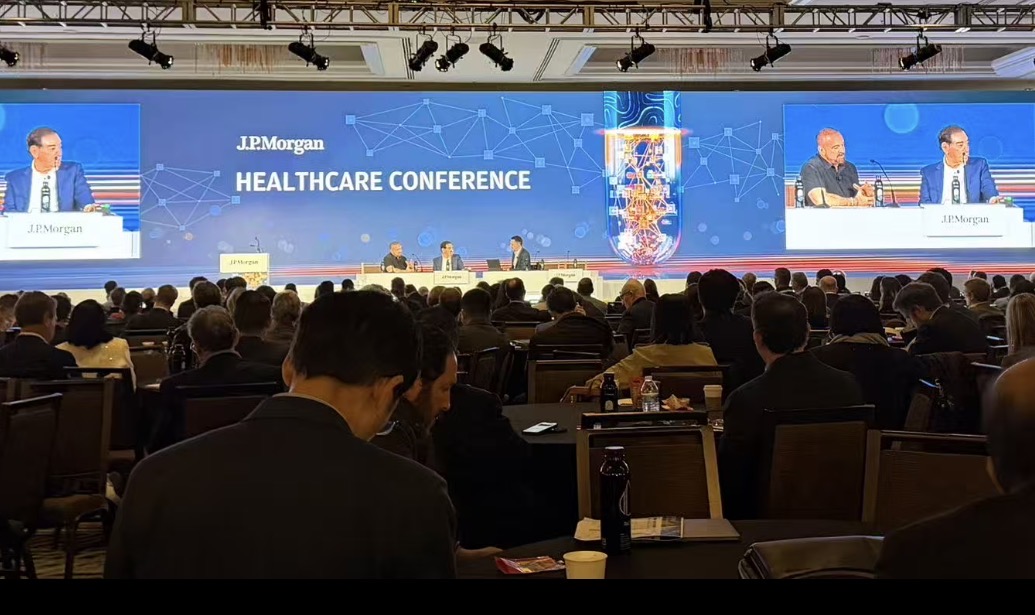
Group 1: JPM Conference Overview - The JPMorgan Healthcare Conference, known as the "Spring Festival of the Pharmaceutical Industry," concluded this weekend, highlighting its status as a premier global healthcare investment event and a barometer for investment trends [1] - This year's conference saw a significant presence of Chinese investors and biopharmaceutical companies, with discussions frequently focusing on China, covering innovation pipelines, collaboration opportunities, and global competition [1][8] - The conference signaled a positive outlook for Chinese innovative drugs, indicating a transition from dawn to dawn, with advancements in AI technology expected to significantly shorten drug development cycles [1] Group 2: Executive Insights - Josh Smiley, President of Zai Lab, participated in the JPM conference, emphasizing the increased effort required to keep pace with the event's demands, having held 14 meetings in one day [3][4] - Smiley noted the shift from a multinational pharmaceutical executive to leading a smaller Chinese company, highlighting the need for more effort in "selling" the company's story to investors [6] - Chen Feng, CEO of Boying Capital, also attended the conference, bringing nearly 20 projects from Chinese companies to connect with multinational pharmaceutical firms and global capital [7] Group 3: Chinese Innovation and Global Perception - The term "China" emerged as a key theme at the conference, with major pharmaceutical companies actively seeking to incorporate Chinese innovative assets into their research pipelines [8][9] - There is a growing recognition of Chinese biotechnology companies as equal partners in global competition, with many multinational firms viewing Chinese innovation as a vital source for their pipelines [9] - The conference featured closed-door sessions specifically for Chinese innovation, organized by companies like Pfizer and Roche, indicating a strong interest in Chinese projects [7] Group 4: Market Dynamics and Opportunities - The acquisition of a new dual-antibody drug by AbbVie for up to $5.6 billion from Rongchang Biotech marked a significant transaction, reflecting the increasing momentum of Chinese innovative drugs in global markets [10] - Over one-third of the announced innovative drug licensing agreements in 2025 are expected to originate from China, indicating a robust trend in international collaborations [10] - Despite the enthusiasm in the biopharmaceutical capital market, challenges remain, particularly regarding geopolitical risks and regulatory uncertainties that could impact investment decisions [12] Group 5: AI in Drug Development - AI technology has become a focal point at the conference, with companies increasingly leveraging AI to enhance drug discovery and development processes [17] - A partnership between Nvidia and Eli Lilly was announced, involving a $1 billion investment to establish a joint research lab aimed at accelerating AI-driven drug development [17][18] - The global AI pharmaceutical market exceeded $1 billion in 2022 and is projected to approach $3 billion by 2026, highlighting the rapid growth and potential of AI in the industry [21] Group 6: Future Trends and Challenges - The success rate of AI-generated drug molecules in Phase I clinical trials is projected to reach 80-90% by 2025, surpassing historical averages, indicating a significant breakthrough in drug development [21] - The transition of AI pharmaceutical development from early research to clinical validation is seen as a critical milestone for the industry [22] - Companies are increasingly focused on generating high-quality data and building robust AI models to maintain a competitive edge in drug development [20]


36氪精选:募资23亿,礼来、淡马锡护航这家AI公司上市
日经中文网· 2026-01-17 00:33
Core Viewpoint - The article discusses the successful IPO of Insilico Medicine, highlighting the growing acceptance and potential of AI in drug discovery and development, marking a critical point for AI-driven pharmaceutical innovations [5][7]. Group 1: IPO and Market Reception - Insilico Medicine's IPO raised approximately HKD 2.3 billion, the highest for a pre-revenue biotech firm in Hong Kong in 2025, with a subscription rate exceeding 1,400 times [5][7]. - The company attracted significant interest from major investors, including Eli Lilly and Temasek, with cornerstone investors accounting for about 39% of the shares [5][6]. Group 2: AI Drug Discovery Platform - Insilico's core platform, Pharma.AI, enables efficient drug discovery, reducing the time from target identification to preclinical candidate selection to 1-1.5 years, which is about one-third of traditional methods [9][10]. - The platform has demonstrated the ability to generate viable preclinical candidates at a cost of USD 200-300 million, significantly lower than traditional approaches [10]. Group 3: Clinical Pipeline and Development - Insilico has developed over 20 clinical/IND-stage assets, showcasing the platform's capability in drug development [11]. - The company plans to allocate nearly half of the IPO proceeds to advance its core pipeline in clinical trials [12]. Group 4: Business Model and Revenue Streams - Insilico's business model includes self-developed pipelines, AI+CRO services, and software sales, with drug discovery and pipeline development expected to generate significant revenue [17][18]. - Revenue from drug discovery and pipeline development is projected to grow from USD 28.6 million in 2022 to USD 79.7 million in 2024, constituting 92%-95% of total revenue [18][19]. Group 5: Strategic Partnerships and Collaborations - The company has established direct BD collaborations and partnerships with major pharmaceutical companies, enhancing its revenue through upfront and milestone payments [21]. - Insilico's collaboration with Exelixis on a drug targeting BRCA-mutant tumors has become a significant revenue source, contributing over 60% of total revenue in the respective periods [21]. Group 6: Financial Performance and Future Outlook - Insilico's net losses are projected to decrease from USD 70.8 million in 2022 to USD 22.7 million in 2024, indicating an improving financial outlook [22]. - The company aims to develop 4-5 preclinical candidates annually and advance 1-2 projects into clinical development, reflecting its growth strategy [16].
中国创新药交出“黄金答卷” 全年76个创新药获批
Xin Lang Cai Jing· 2026-01-17 00:12
Core Insights - In 2025, China's innovative pharmaceutical industry reached a "golden moment" with 76 innovative drugs approved, over 80% of which were domestically developed, and total licensing transaction amounts exceeding $130 billion, marking a historical high [2][5] - The surge in innovative drugs reflects a significant shift from quantity to quality, with over one-third of the approved drugs targeting cancer treatment, and a notable presence of GLP-1 drugs for metabolic diseases [3][4] - The capital market responded positively, with the Hong Kong innovation drug index rising by 66.52%, outperforming the Hang Seng Index, indicating strong market confidence in the sector [9] Group 1: Innovative Drug Approvals - A total of 76 innovative drugs were approved in 2025, significantly higher than the 48 approved in 2024, including 47 chemical drugs, 23 biological products, and 6 traditional Chinese medicines [2] - Among the approved chemical drugs, 80.85% were domestically developed, while 91.30% of biological products were also from domestic sources, showcasing the dominance of local innovation [2] Group 2: Market Trends and Drug Development - The oncology sector led the innovation with over 20 drugs, accounting for approximately one-third of the total, while metabolic diseases represented about 20% of the approvals, highlighting the diverse therapeutic areas being addressed [3] - The approval of first-in-class drugs in China, with 4 out of 11 being domestically developed, signifies a shift towards more innovative and effective treatments available to patients [4] Group 3: Licensing and International Collaboration - The total value of licensing transactions for Chinese innovative drugs surpassed $130 billion in 2025, with over 150 deals, reflecting a significant increase compared to 2024 [5][6] - Notable collaborations included a $10.8 billion deal between Innovent Biologics and Roche, and a $12.5 billion upfront payment from Pfizer to 3SBio, indicating a trend towards deeper strategic partnerships [5][6] Group 4: Capital Market Performance - The performance of the innovative drug sector in the capital market was robust, with the Hong Kong innovation drug index increasing by 66.52%, and the CS innovation drug index in A-shares rising by 19.34% [9] - The successful commercialization of leading biotech companies like BeiGene and Innovent Biologics demonstrates the growing profitability and market presence of Chinese innovative drug firms [9] Group 5: Future Outlook - The ongoing reforms in drug approval processes and supportive policies are expected to further enhance the development of innovative drugs in China, positioning the country as a key player in global pharmaceutical innovation [8][10] - Predictions indicate that the next five years will see an increase in the proportion of original innovative drugs, with a focus on balancing scientific exploration and commercial value [11][12]

JPM 2026:AI破局,肥胖引爆,巨头血战新王座
Xin Lang Cai Jing· 2026-01-15 14:15
Core Insights - 2026 is identified as a pivotal year for transformation and output in the global biopharmaceutical industry, with major companies revealing strategic developments at the JMP conference [1] - The industry is experiencing extreme differentiation, with ADC and GLP-1 seen as key growth engines for the next five years, while mRNA, siRNA, and RLT are transitioning from concepts to clinical norms [1][9] - The BD strategies are becoming more precise, with 2025's small-scale acquisitions starting to yield results, and the logic behind mergers and acquisitions in 2026 expected to diversify [1] Hot Track Dynamics: Dual Drivers of Technology Iteration and Indication Expansion - ADC remains a leading player in the oncology sector, with Merck advancing multiple ADC assets through collaboration with Daiichi Sankyo [12] - BeiGene views ADC as a core technology and is actively promoting drug accessibility globally [12] - Eli Lilly has completed several ADC-related transactions to enhance its capabilities in cancer treatment [12] Weight Management Market Transition - The weight management market is shifting from simple weight loss to comprehensive management of metabolic syndrome, with Eli Lilly focusing on AI-driven drug discovery and direct patient engagement [14] - Roche's acquisition of Carmot Therapeutics enhances its pipeline with new metabolic therapies [14] - Sanofi is expanding the indications for its core asset Dupixent and advancing its autoimmune pipeline [14] Key Corporate Strategic Planning: Core Track Deepening and Platform Layout - Eli Lilly's strategy focuses on obesity and AI-driven drug development, with a projected investment of up to $1 billion in collaboration with NVIDIA [15] - Pfizer aims to maximize core transaction value and apply AI across its business chain, targeting a $150 billion market in obesity by 2030 [15] - Amgen is accelerating the integration of biotechnology and AI, with a focus on rare diseases and partnerships in China [16] BD Trends: Core Logic of Track Reinforcement and Ecological Synergy - The pharmaceutical industry is seeing a concentration of mergers and acquisitions in ADC and bispecific antibodies, with major companies acquiring key assets and technology platforms [17] - Big Pharma is shifting from scale expansion to pipeline restructuring to avoid revenue cliffs due to upcoming patent expirations [18] - The focus is on mid-stage assets with immediate Phase 3 potential, which are expected to have a premium advantage over early-stage assets [18] Industry Outlook - The biopharmaceutical industry is entering an "innovation harvest period" from 2026 to 2030, with GLP-1 drugs evolving into comprehensive metabolic management platforms [19] - The market for GLP-1 receptor agonists in China is projected to reach approximately 38.3 billion yuan by 2030 [19] - The commercialization of cutting-edge therapies is approaching a "singularity," with advancements in cell and gene therapies and RNA therapies expected to overcome production and reimbursement challenges [19][20]


JPM2026:礼来、辉瑞、AZ等巨头豪赌AI与并购
Xin Lang Cai Jing· 2026-01-15 14:09
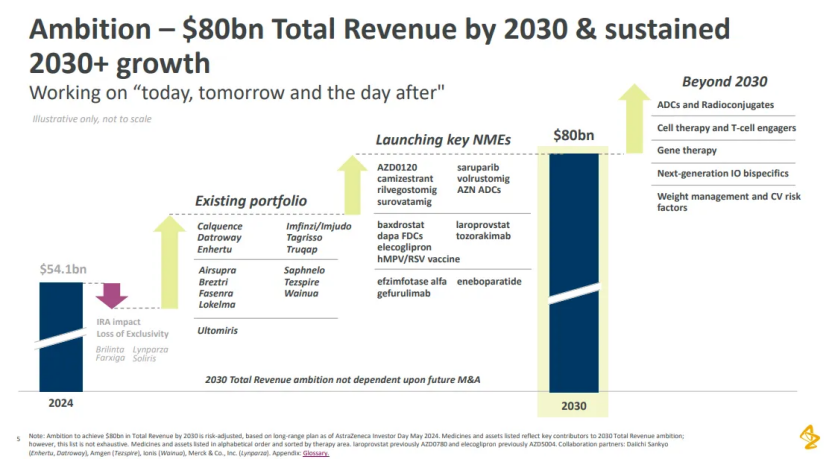
Industry Overview - The 44th JPMorgan Healthcare Conference is taking place in San Francisco, attracting over 8,000 industry elites from biotechnology, pharmaceuticals, and medical devices [1][24] - The global pharmaceutical sector saw a record 516 licensing deals in the past year, totaling over $250.2 billion, indicating a rise in industry transaction activity [24] - The shadow of the "patent cliff" continues to loom over many large pharmaceutical companies, prompting them to actively seek targets and plan for the future [24] AI Integration - AI has transitioned from a concept to a core component of research and development, with companies increasingly focusing on its strategic importance [24][29] - AstraZeneca has elevated AI to a strategic level, implementing its AI Development Agent (AIDA) system to reduce CMC development time by 50% [29] - Eli Lilly announced a partnership with NVIDIA to establish an AI innovation lab, investing $1 billion over five years to accelerate drug development [7][32] AstraZeneca's Strategy - AstraZeneca is focusing on "next-generation dual antibodies + high-value ADCs" as pillars for innovation and growth, aiming for $80 billion in total revenue by 2030 [2][25] - The company has initiated 14 Phase III trials for its PD-1/TIGIT and PD-1/CTLA-4 dual antibodies, with peak sales expected to exceed $3 billion and $2 billion, respectively [5][28] - AstraZeneca's revenue grew by 11% in the first nine months of 2025, with core EPS increasing by 15% [6][29] Pfizer's Focus - Pfizer's strategy for 2026 emphasizes maximizing acquisition asset value, achieving key R&D milestones, and applying AI across its operations [9][33] - The company has reduced operational costs by $5.6 billion to offset declining COVID-19 revenue, which is projected to drop from $11 billion in 2024 to $6.5 billion in 2025 [11][35] - Pfizer is building a differentiated portfolio in the obesity market, aiming to launch products by 2028 that could tap into a market projected to reach $150 billion by 2030 [12][35] Novartis' Pipeline - Novartis is focusing on cardiovascular, renal, metabolic, immunology, neuroscience, and oncology, with a robust pipeline supported by various technology platforms [36][39] - The company expects nine products to achieve peak sales of over $1 billion, with CDK4/6 inhibitors potentially exceeding $10 billion in peak sales [39] - Novartis anticipates a compound annual growth rate of 5-6% in sales from 2025 to 2030 [39] Bristol-Myers Squibb's Approach - Bristol-Myers Squibb is diversifying its pipeline to navigate the patent cliff, focusing on neuroscience, cardiovascular, immunology, and oncology [16][40] - The company plans to disclose core registration data for 13 new molecular entities in 2026 and complete 14 Phase III trials [41] Sanofi's Business Development - Sanofi is actively pursuing business development to enhance its early pipeline, aiming to launch 8-12 high-quality early projects by 2028-2030 [22][49] - The company has completed over 20 business development transactions since 2025, including significant acquisitions to bolster its pipeline [49]


15天9起合作,狂飙60亿美元!2026AI制药开门红,礼来、英伟达、赛诺菲重金押注!
Xin Lang Cai Jing· 2026-01-15 14:09
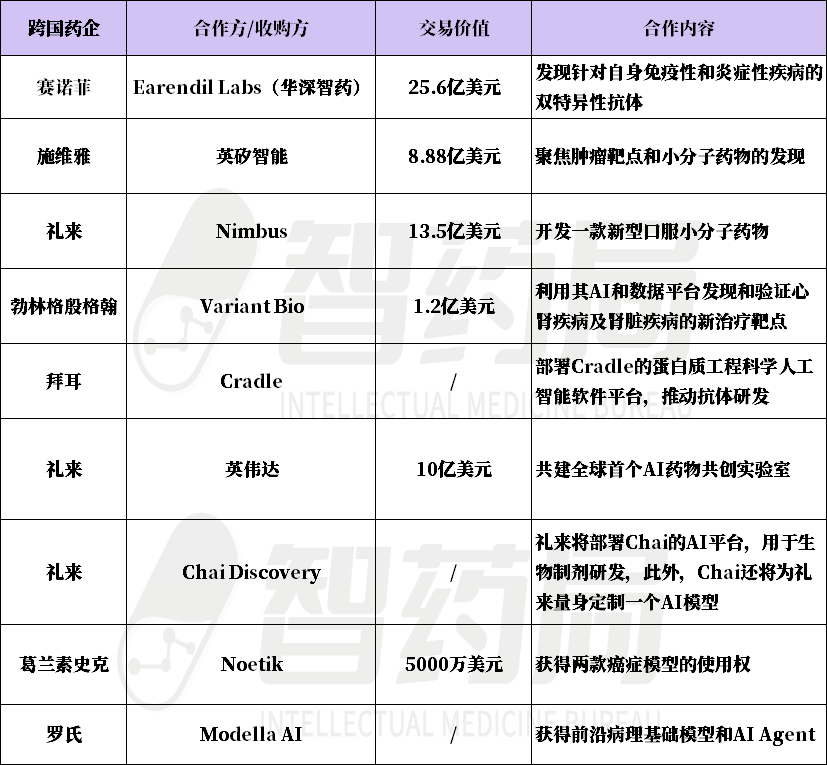
Core Insights - The pharmaceutical industry is experiencing a surge in AI drug development collaborations, with over 9 partnerships announced in just 15 days, totaling more than $6 billion [1][18] - Major pharmaceutical companies are systematically integrating AI, particularly large biopharmaceutical models, into their core R&D processes, moving beyond small-scale pilot projects to enhance efficiency and overcome R&D bottlenecks [3][20] Group 1: Collaborations and Investments - Sanofi partnered with Earendil Labs for $2.56 billion to discover bispecific antibodies for autoimmune and inflammatory diseases [2][19] - Eli Lilly invested $1 billion with NVIDIA to co-build the world's first AI drug co-creation laboratory [2][23] - Takeda renewed its collaboration with Nabla Bio for over $1 billion to strengthen its AI drug development efforts [5][21] Group 2: Shift in AI Utilization - AI is transitioning from pilot projects to foundational infrastructure within pharmaceutical companies, with a shift in investment focus from R&D expenses to strategic investments [5][22] - The collaborations are diverse, including traditional project-based agreements, model subscriptions, platform co-construction, and acquisitions [2][19] Group 3: Advancements in AI Models - The industry is increasingly investing in large biopharmaceutical models, moving from a focus on small chemical molecules to more complex biologics [6][24] - The release of AlphaFold3 has significantly improved the accuracy of predicting biological interactions, marking a turning point in the industry [28] - Companies like GSK are willing to pay substantial fees for access to advanced AI models, indicating a shift in how AI platforms are valued in drug development [13][30] Group 4: Future Trends - The demand for AI and related platforms in the pharmaceutical industry is expected to grow, with companies needing to integrate top AI capabilities with internal biological insights and clinical data [15][16] - The emergence of AI agents and automated laboratory technologies based on large models has the potential to disrupt traditional R&D logic [30]


10亿美元押注!英伟达、礼来剑指AI制药,药物研发变革加速
2 1 Shi Ji Jing Ji Bao Dao· 2026-01-15 09:25
Core Viewpoint - Nvidia and Eli Lilly announced a collaboration to establish an AI Joint Innovation Lab aimed at addressing long-standing challenges in the pharmaceutical industry through artificial intelligence technology [1] Group 1: Collaboration Details - The AI Joint Innovation Lab will integrate Eli Lilly's expertise in drug discovery, development, and manufacturing with Nvidia's strengths in AI, accelerated computing, and AI infrastructure [1][2] - Both companies plan to invest up to $1 billion over the next five years in talent, infrastructure, and computing power to support the lab [1][2] - The lab will be located in the San Francisco Bay Area and will employ a co-location model to facilitate close collaboration between Eli Lilly's pharmaceutical scientists and Nvidia's AI model engineers [2] Group 2: AI Applications in Drug Development - The initial focus will be on building a continuous learning system that connects Eli Lilly's smart wet lab with Nvidia's computational dry lab, enabling AI-assisted experiments [2][3] - The collaboration will explore AI applications beyond drug discovery, including clinical development, manufacturing, and commercial operations, integrating multimodal models, agent-based AI, robotics, and digital twins [3] Group 3: Industry Trends and Market Potential - The AI pharmaceutical sector has seen significant collaborations among major pharmaceutical companies, indicating a potential reshaping of the global drug development landscape [2][4] - According to McKinsey, the global AI pharmaceutical market could reach between $28 billion and $53 billion in the long term, with China's AI pharmaceutical industry expected to exceed 500 billion yuan by 2025 to 2030 [5] - The shift in the pharmaceutical industry's approach to AI, with a growing preference for external solutions over in-house development, is driving continued investment and collaboration in the AI pharmaceutical space [6] Group 4: Future Outlook - Analysts predict that 2026 may see leading companies in the AI + pharmaceutical sector achieve significant performance and valuation improvements, marking a period of valuation reconstruction [7] - The deep integration of AI and pharmaceuticals is becoming an industry consensus, with major players and capital focusing on accelerating drug development into a new phase driven by technology [7]
Will Keytruda Continue to Aid Merck's Top Line in Q4 Earnings?
ZACKS· 2026-01-14 15:35
Core Insights - A significant portion of Merck's revenues is derived from its oncology franchise, primarily from Keytruda, which accounts for over 50% of the company's pharmaceutical revenues [2] - Keytruda sales reached $23.3 billion in the first nine months of 2025, reflecting an 8% year-over-year increase, although third-quarter sales were weaker than expected due to unfavorable channel movements [2][3][9] Sales Performance - Keytruda's sales in the third quarter of 2025 increased by 8% year-over-year, but management indicated that the softness was due to channel movements rather than a decline in underlying demand [3][9] - The Zacks Consensus Estimate for Keytruda's fourth-quarter sales is $8.27 billion, while the internal estimate is $8.21 billion, indicating expected growth driven by earlier-stage indications and strong momentum in metastatic indications [4] Future Growth Prospects - Merck anticipates continued growth for Keytruda in 2026, with expansion into new indications and markets, particularly as FDA decisions for ovarian cancer and other indications approach [5] - The recent FDA approval of the subcutaneous formulation of Keytruda, known as Keytruda Qlex, is expected to enhance patient convenience and further boost sales [5] Competitive Landscape - Keytruda faces competition from other PD-L1 inhibitors such as Bristol Myers' Opdivo, Roche's Tecentriq, and AstraZeneca's Imfinzi, with Opdivo generating $7.35 billion in sales during the first nine months of 2025, also up 8% year-over-year [6][7] - Tecentriq recorded CHF 2.61 billion in sales, while Imfinzi achieved $4.32 billion in sales, reflecting a 25% increase driven by demand in lung and liver cancer indications [7] Valuation and Market Performance - Over the past six months, Merck's shares have increased by 32.8%, outperforming the industry average of 23.2% [8] - Merck's current price/earnings ratio stands at 12.83, which is lower than the industry average of 17.81 but higher than its five-year mean of 12.48, indicating an attractive valuation relative to the industry [10] Earnings Estimates - The Zacks Consensus Estimate for Merck's earnings per share for 2025 remains stable at $8.97, while the estimate for 2026 has decreased from $9.33 to $7.94 over the past 60 days [11]
Looking to ‘Sell America’ Amid Fed Drama? Here’s 1 ETF to Buy.
Yahoo Finance· 2026-01-14 14:00
Core Viewpoint - The iShares MSCI ACWI ex U.S. ETF (ACWX) is positioned as a strong investment option for those looking to diversify internationally, especially amid growing concerns about U.S. market stability and political noise [3][19]. Group 1: Fund Overview - ACWX has been in the market since March 26, 2008, and currently manages approximately $8.48 billion in assets, reflecting significant investor confidence [1]. - The ETF tracks large- and mid-cap companies across developed and emerging markets, investing at least 80% of its assets in index-linked securities, providing diversified international exposure [2]. - The fund has a net asset value (NAV) of $69.72 and a low expense ratio of 0.32%, making it cost-effective for broad international exposure [1]. Group 2: Performance Metrics - Over the past decade, ACWX has appreciated nearly 87%, with a recent increase of about 35.16% over the past 52 weeks and 14.28% over the last six months, outperforming the S&P 500 Index [7]. - The ETF reached an all-time high of $69.86 on January 12, 2026, indicating strong momentum [7]. - The 14-day RSI is rising, suggesting persistent buying interest, while the MACD oscillator indicates a bullish trend [8]. Group 3: Income Generation - ACWX has consistently paid dividends for 17 years, with a recent semiannual dividend of $1.049 per share, translating to an annual yield of approximately 2.72%, which is significantly higher than the S&P 500 Index's yield of 1.05% [9]. Group 4: Holdings and Diversification - The ETF holds a diverse portfolio of 1,751 stocks, with the top 10 holdings comprising about 13% of the portfolio, providing stability without excessive concentration risk [10]. - Major holdings include Taiwan Semiconductor Manufacturing (3.8%), Tencent Holdings (1.46%), and ASML Holding (1.42%), among others [10]. Group 5: Market Trends and Investor Behavior - ACWX has attracted net inflows of $1.82 billion over the past year, indicating a deliberate repositioning by investors amid a complex market backdrop [12]. - The ETF's liquidity is strong, with average monthly trading volumes exceeding 2.132 million shares, reflecting steady investor participation [11]. - As political noise increases in the U.S., international markets are becoming more attractive, leading to steady inflows into ACWX [18].
知名医药企业辽宁投资合作对接会在沈举行
Liao Ning Ri Bao· 2026-01-14 01:12
副省长单义出席对接会。副省长楚天运出席对接会并致辞。 会上,我省从医药资源、产业根基、空间布局等方面介绍了医药产业发展现状。目前,拥有17所医 药类高等院校、15家权威科研院所以及200余个国家级、省部级研发平台与创新基地,近千家药品、医 疗器械生产企业分布各地。瑞士诺华中国区副总裁陈晖、德国西门子医疗大中华区副总裁李涛、瑞士罗 氏诊断中国企业事务市场准入负责人施海杰等8位医药企业嘉宾代表作推介交流,表示将助力辽宁生物 医药和先进医疗装备重点产业发展向科技化、智能化、国际化跃升。 分组对接环节,洽谈氛围热烈。大家交流投资环境、产业发展现状等内容,互留联系方式,一些企 业初步达成合作意向。 1月13日,知名医药企业辽宁投资合作对接会在沈阳举行,邀请18家来自全球及国内知名医药企业 的代表参会,旨在推动更多知名企业、专家深度参与辽宁布局,共同推动医药健康产业高质量发展。 ...