Databricks

Search documents
The AI Application Giant Prints Cash at 51% Margins While the Data Warehouse Burns Through Hundreds of Millions
247Wallst· 2025-12-15 11:50
Core Insights - Palantir and Snowflake are approaching AI from different angles, with Palantir focusing on application deployment and Snowflake on data infrastructure [1][5][6] Financial Performance - Palantir reported a 63% revenue growth with a 51% operating margin, generating $393 million in operating income and $540 million in free cash flow, marking its first time crossing $1 billion in trailing 12-month free cash flow [2][4] - Snowflake achieved $1.21 billion in revenue, a 29% increase, but reported a negative 27% operating margin, losing $329 million operationally [3][4] Market Positioning - Palantir's U.S. commercial revenue surged 121% to $397 million, benefiting from government contracts and high customer conversion rates [2][7] - Snowflake's net revenue retention was 125%, but it faces challenges in convincing customers to consolidate workloads on its platform amid competition [3][6] Valuation Metrics - Palantir trades at 112x sales, reflecting market expectations for continued AI dominance, while Snowflake trades at 17x sales, viewed as a turnaround play [8] - Institutional ownership is higher in Snowflake at 74% compared to Palantir's 60% [8] Strategic Focus - Palantir emphasizes the importance of application and workflow in AI, showcasing significant efficiency gains for clients [5] - Snowflake's strategy revolves around data warehousing, with a need to establish a clear path to profitability [6][11]



又一家万亿估值的公司诞生了
投中网· 2025-12-14 07:04
Core Viewpoint - The article discusses the rapid valuation increase of Databricks, highlighting the skepticism of its CEO, Ali Ghodsi, regarding the inflated valuations in the AI sector and the potential risks associated with it [3][4]. Group 1: Valuation and Growth - Databricks has seen its valuation double from $62 billion to $134 billion within a year, with annual sales expectations raised to $4 billion [4][10]. - The company is experiencing over 50% annual growth, and its recent funding round aims to raise $5 billion, reflecting strong investor interest [4][6]. - Databricks' valuation is set at 32 times its annual recurring revenue (ARR), which is considered reasonable compared to competitors like Snowflake and Palantir [10]. Group 2: Market Dynamics and Investment Trends - The global venture capital investment in Q3 2024 was approximately $66.5 billion, indicating that Databricks could capture nearly one-third of that capital if it accepted all offers [6][7]. - The private equity transaction volume in the data center sector has doubled from $49.9 billion to $107.7 billion over four years, showing strong investor interest in data-related assets [7][8]. - Major transactions, such as Blackstone's acquisition of AirTrunk for $16 billion, highlight the growing value of data infrastructure [8]. Group 3: Financial Performance and Challenges - Databricks has ended years of significant losses and is entering a profitable phase, with projected free cash flow of $10 million this year [9][13]. - Despite the positive outlook, the company has lowered its gross margin expectations from 77% to 74% due to rising operational costs associated with AI product usage [12]. - The reliance on OpenAI as a major customer raises concerns, as only 15% of Databricks' revenue comes from its top ten clients, indicating potential vulnerability [12][15].

中东资本豪赌“新的石油”,中国企业不该缺席
3 6 Ke· 2025-12-14 01:07
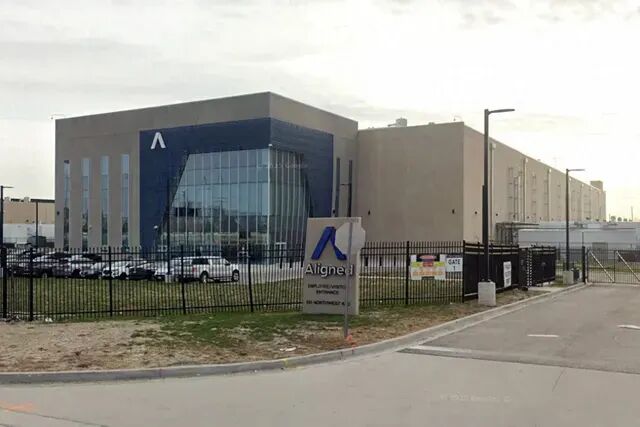
中东土豪,真是大手笔! 上个月,在华盛顿肯尼迪中心举行的美沙投资论坛上,马斯克宣布旗下人工智能初创公司xAI将与沙特阿拉伯国家支持的人工智能公司Humian 合作,在沙特建设一个500兆瓦的数据中心。 500兆瓦级数据中心,是什么概念? 这属于全球顶级规模的数据中心,按全年满负荷运行计算,年耗电约43.8亿千瓦时,相当于我国百万人口城市的年居民用电量。 这只是中东国家投资数据中心的案例之一。 中东国家,掀起了一场投资AI的"军备竞赛"。 阿联酋的另一大主权基金——阿布扎比ADQ基金承诺未来五年投入150亿美元支持人工智能开发。 沙特主权基金PIF,宣布未来五年投入720亿美元布局人工智能基础设施。 今年10月,贝莱德领衔的投资联盟宣布将从麦格理手中收购Aligned数据中心,交易价值400亿美元。 Aligned数据中心 该联盟初步目标是投入300亿美元股权资本,若计入债务融资,总规模有望达到1000亿美元,用于扩建支持人工智能发展的数据中心及能源基 础设施。 联盟成员中,除了xAI公司、微软外,阿联酋阿布扎比基金MGX是关键角色。 MGX将直接购买Aligned35%的股权,成为背后最大的金主。 此前,MG ...
当美国股市走向“邀请制”:私募交易催生越来越多巨无霸私企,普通散户被“拒之门外”
Hua Er Jie Jian Wen· 2025-12-13 13:30
Group 1 - The largest stock issuance this year occurred through a private placement by OpenAI, raising $40 billion, surpassing all IPOs and exceeding the largest IPO in history by over $10 billion [1] - The trend indicates a shift in the U.S. capital markets from broad public participation to a more exclusive "elite circle" of wealthy investors [1][4] - The number of publicly listed companies in the U.S. has halved since the late 1990s, with only about 4,000 companies currently listed compared to over 8,000 at the peak of the internet bubble [2] Group 2 - The median age of companies going public has increased from 6 years in 2000 to 14 years now, meaning companies often reach maturity before entering the public market [3] - Companies are delaying IPOs not due to a lack of funds, but because private markets are providing unprecedented financial support with lower disclosure requirements [3] - Notable companies like Figure AI and Databricks have seen their valuations soar in the private market before going public, with Figure AI's valuation increasing from $2.6 billion to approximately $39 billion [5] Group 3 - The private market is largely accessible only to "qualified investors," defined by the SEC as individuals with a net worth of at least $1 million or an annual income of $200,000 [4] - Major investment banks like Morgan Stanley, JPMorgan, and Goldman Sachs have established private market divisions, catering to large asset managers and institutional investors [6] - SpaceX exemplifies this trend, with its valuation rising to $800 billion through private financing, primarily involving long-term supporters and selected institutional funds [6] Group 4 - Regulatory concerns have emerged regarding the market's "layered operation," with the SEC chair noting that the most explosive growth phases are now confined to private markets [7] - The distribution mechanism of returns is undergoing structural changes, leading to a reconfiguration of the capital market despite its apparent openness [8] - The IPO process is increasingly viewed as a culmination of value release rather than a starting point for growth, with ordinary retail investors missing out on critical growth phases [9]
成立仅2月,这家AI初创公司种子轮融资33亿,贝索斯也出手了
Sou Hu Cai Jing· 2025-12-13 10:20
Core Insights - Unconventional AI, a startup founded by Naveen Rao, raised $475 million in seed funding, achieving a post-money valuation of $4.5 billion, marking one of the largest early-stage funding rounds in the AI chip sector [2][3] - The company aims to develop energy-efficient neuromorphic computing chips, challenging the current digital computing paradigm dominated by GPUs [11][12] Company Overview - Unconventional AI was established just two months prior to its funding announcement, with a founding team that includes experts from MIT, Stanford, and former Google engineers, providing a strong foundation in hardware, software, and neuroscience [3] - Rao's previous entrepreneurial successes include Nervana Systems, which was acquired by Intel for approximately $400 million, and MosaicML, which was sold to Databricks for $1.3 billion [8][9] Technology and Innovation - The company seeks to redefine AI computing hardware by developing chips optimized for AI workloads, leveraging insights from neuroscience to achieve higher energy efficiency [11][12] - Unconventional AI's approach contrasts with the prevailing "scaling laws" in AI, which rely on increasing computational power and data size, by focusing on the inherent physical properties of semiconductors for more efficient computation [12][13] Market Context - The AI industry has seen significant investment in "Neo-Labs," which prioritize long-term foundational research over immediate product commercialization, with Unconventional AI being a notable example [17][18] - The recent funding round reflects a shift in investor focus from short-term financial metrics to the potential of visionary founders and their ability to address fundamental challenges in AI infrastructure [20]

成立仅2月,这家AI初创公司种子轮融资33亿,贝索斯也出手了
创业邦· 2025-12-13 03:05
Core Insights - Unconventional AI, a startup founded by Naveen Rao, raised $475 million in seed funding, achieving a post-money valuation of $4.5 billion, marking a record in early-stage financing within the AI hardware sector [3][4]. - The company aims to develop next-generation digital computing by designing simulation chips inspired by neuroscience principles, addressing the energy consumption challenges faced by traditional AI computing [15][19]. Company Overview - Unconventional AI was established just two months prior to its significant funding round, with a founding team that includes experts from MIT, Stanford, and former Google engineers, providing a comprehensive capability chain from theory to application [5][7]. - Rao's previous entrepreneurial successes include Nervana Systems, which was acquired by Intel for approximately $400 million, and MosaicML, which was sold to Databricks for $1.3 billion [12][14]. Technological Vision - The company seeks to redefine AI computing hardware architecture by creating high-efficiency simulation chips tailored for AI workloads, diverging from the traditional reliance on GPUs [17][20]. - Unconventional AI's approach contrasts with the prevailing "scaling laws" in AI development, which emphasize increasing computational power and data size, by focusing on energy efficiency and the probabilistic nature of AI tasks [18][24]. Industry Context - The rise of "Neo-Lab" startups, like Unconventional AI, reflects a shift in the AI landscape where founders with proven track records are attracting significant investment for long-term foundational research rather than immediate product commercialization [25][26]. - The funding environment is increasingly favoring companies that challenge existing paradigms in AI development, as evidenced by the substantial valuations of similar startups [28].
一文读懂GPT-5.2 : 直指“经济价值”,硬刚Gemini3的剧情未出现
3 6 Ke· 2025-12-12 00:49
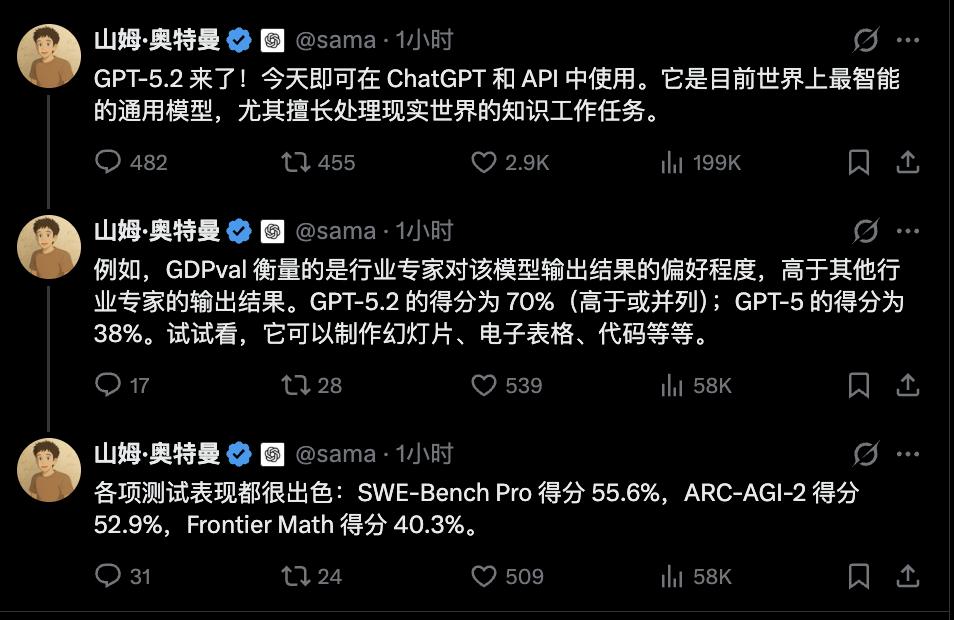
北京时间12月12日凌晨,OpenAI把刚刚发布的GPT-5.2定义为"迄今为止功能最强大的专业知识工作模型系列"。 GPT-5.2的官方说明文档读下来,整体感觉是,有点无聊,但OpenAI更有商业战略定力了。 OpenAI应用业务首席执行官菲吉·西莫(Fidji Simo)在新闻发布会上也表示:"我们宣布了'红色警报',旨在向公司发出明确信号,即我们希望将资源集中 在一个特定领域,这也是界定公司优先事项的一种方式。" 西莫同时否认了GPT-5.2系列模型的发布是受"红色警报"行动影响而匆忙提前的,她强调,公司为这款新模型的发布已经进行了数月的准备工作。 在经历了数月准备后推出的GPT-5.2,核心看点完全围绕着"创造更大的经济价值"展开: OpenAI给出的官方文档明确指出,GPT-5.2 的设计初衷在于"创造更大的经济价值"。相较前代,它在电子表格处理、演示文稿制作、代码编写、图像感 知、长文本理解及复杂多步项目执行等方面,均实现了全面性能跃升。 为了验证其在真实业务环境中的价值,OpenAI引入了GDPval基准测试,该测试覆盖了9大行业、44类职业的1320个真实业务场景。官方数据显示,GPT-5.2 ...
SpaceX Valued at $800BN & Harvey Raises $160M at an $8BN Price & Netflix Acquires Warner Brothers
20VC with Harry Stebbings· 2025-12-11 14:59
Jason Lemkin is one of the leading SaaS investors of the last decade with a portfolio including the likes of Algolia, Talkdesk, Owner, RevenueCat, Saleloft and more. Rory O’Driscoll is a General Partner @ Scale where he has led investments in category leaders such as Bill.com (BILL), Box (BOX), DocuSign (DOCU), and WalkMe (WKME), among others. ----------------------------------------------- Timestamps: 00:00 Intro 01:38 SpaceX's $800 Billion Valuation: A Deep Dive 08:48 IPO Market Predictions for 2026 19:03 ...

老虎基金“急刹车”:募资腰斩至22亿美元,回归“小而美”
3 6 Ke· 2025-12-11 10:48
老虎全球管理公司(Tiger Global)正式宣布其风险投资策略大转型。面对私募市场的逆转,公司新一期基金 PIP 17 目标募集22亿美元,规模 回归其早期"小而美"模式。 此举是创始人蔡斯·科尔曼(Chase Coleman)主导的战略调整,旨在通过放缓节奏、集中押注,复制其历史上的最佳回报。尽管PIP 16在AI领 域获得了爆炸性成功,但公司对AI高估值表达了罕见的"谦逊"。 P17预计将募集22亿美元 家办新智点获悉,12月8日,老虎基金创始人科尔曼向潜在LP发出募资信,寻求为新一期基金Private Investment Partners 17(PIP 17) 募集22亿美元。 这一规模"仅是PIP 14和PIP 15募集金额的一小部分,并与PIP 16更为接近"。 公司表示,PIP 17的战略、规模与结构将延续其早期基金以及最近一代的小型基金模式。包括科尔曼在内的老虎全球内部人士将成为该基金最大出资人, 预计首次交割日期为2026年3月18日。 面对市场周期变化,老虎全球正借由PIP 17全面摆脱过去激进的"闪电式"投资风格,重新回到"小而美"的高回报模式,以更温和、节奏更稳的方式部署资 本。信 ...

美国AI春晚,一盆凉水浇在Agent身上
36氪· 2025-12-11 10:00
Core Insights - The article discusses the emergence of AI Agents and the current state of AI infrastructure, highlighting the gap between the rapid development of AI Agents and the readiness of the underlying infrastructure to support them [3][5][9]. Group 1: AI Agent Development - The AI Agent era is recognized as having arrived, with significant announcements from Amazon Web Services (AWS) regarding AI infrastructure and management [5]. - There is a notable increase in interest and investment in AI Agents, with many developers and companies focusing on this area during major events like re:Invent [5][6]. - However, there is a contrasting sentiment among developers regarding the current capabilities of AI infrastructure, which is perceived as inadequate to support the demands of AI Agents [9]. Group 2: Infrastructure Challenges - Developers express concerns about the current state of AI infrastructure, citing weaknesses in cost management and AI-first capabilities [9][11]. - The high costs associated with AI model inference are a significant barrier, with estimates indicating that 80-90% of AI Agent costs are tied to inference [11]. - There is a call for a software revolution to better accommodate AI Agents, including the need for simpler interaction interfaces and the elimination of data silos [13][14]. Group 3: Investment Trends - A new wave of investment in AI infrastructure is emerging, with companies focusing on optimizing AI infrastructure to reduce inference costs [15]. - Major players like NVIDIA are making significant investments in AI infrastructure startups, indicating a trend towards enhancing the foundational technologies that support AI Agents [15]. - Database companies are also recognizing the importance of adapting their products to better interact with AI Agents, emphasizing the need for scalable solutions to meet the growing demand [15].