
Anthropic

Search documents
科技IPO预期升温,但华尔街的主战场已转向债市?
Hua Er Jie Jian Wen· 2026-02-12 14:28
Core Insights - The focus of the U.S. tech capital market has shifted towards debt financing to support the rapid expansion of AI infrastructure, with global tech and AI-related bond issuance expected to approach $1 trillion by 2025, up from $710 billion [1][2] - Major tech companies, including Alphabet, Amazon, Meta, and Microsoft, are projected to have a combined capital expenditure and financing lease of $700 billion this year to meet unprecedented demand for computing resources [1] - There is an estimated $1.5 trillion financing gap in the AI infrastructure sector, primarily to be filled by the debt market, leading to increased concentration risk in investment-grade corporate bond indices [1][4] Debt Market Expansion - UBS estimates that global tech and AI-related debt issuance will more than double by 2025, reaching $710 billion, and could approach $990 billion by 2026 [2] - Oracle and Alphabet are leading the current wave of bond issuance, with Oracle planning to raise $45 billion to $50 billion this year and successfully issuing $25 billion in bonds [2] IPO Market Status - The U.S. tech IPO market remains quiet, with no major tech companies filing for public offerings this year, contrasting sharply with the surge in debt financing [3] - Elon Musk's recent merger of SpaceX and xAI has created a new entity valued at $1.25 trillion, but there are doubts about whether SpaceX will pursue an independent IPO [3] Concentration and Cost Concerns - The weight of the tech sector in investment-grade corporate bond indices is expected to rise from 9% to the low double digits, raising concerns about concentration risk [4][5] - The intense bond issuance by tech giants may crowd out demand for other issuers, leading to higher yields and increased financing costs across the market [5][6]





刘强东新动作,京东AI伸向支付
财联社· 2026-02-12 14:06
Core Viewpoint - JD Technology has launched a new payment method called "JD AI Pay," which integrates its self-developed JoyAI model, featuring multi-modal understanding, contextual awareness, and real-time risk interception [3][4]. Group 1: JD AI Pay Features - "JD AI Pay" allows users to make payments without leaving the payment page or manually entering passwords, significantly simplifying the transaction process [3]. - The system can accurately identify user intent and dynamically verify identity based on environmental factors, biometric features, and behavioral habits [3]. - The payment method has been implemented in two scenarios: through the JoyAI App and JD's smart glasses, JoyGlance, enabling voice-activated purchases [3]. Group 2: Security Measures - To ensure fund security, JD AI Pay employs an end-cloud collaborative risk control architecture, conducting local voiceprint and liveness detection while analyzing transaction risks in real-time [3]. - If any anomalies are detected, such as non-personal voice or high-risk merchants, the process will be interrupted, triggering secondary verification [3]. Group 3: Competitive Landscape - JD Technology's entry into the AI payment sector is part of a broader trend, with Alibaba also launching the ACT protocol to facilitate AI interactions across platforms [5][6]. - The ACT protocol allows AI to execute order operations while keeping payment authorization under user control, enhancing user experience [6]. - Internationally, companies like Google and Anthropic are developing their own protocols, focusing on communication standards and security boundaries for AI agents in payment processes [7][8]. Group 4: Strategic Analysis - Analysts suggest that JD's approach focuses on consumer experience innovation, while Ant Group emphasizes risk control to build merchant trust, creating a differentiated competitive landscape [8]. - The competition in the AI payment sector is shifting from technical superiority to seamless user experience and ecosystem development, indicating a need for internet giants to innovate rapidly [8].



亚马逊力推Kiro限制Claude Code,员工对此有话说!
Sou Hu Cai Jing· 2026-02-12 13:36
然而在亚马逊内部,员工若未获得正式批准,则不得将 Anthropic 的 Claude Code 用于编写代码、开发 产品等实际生产环境。并且这一矛盾在去年秋天开始变得更加明显,亚马逊当时发布了内部指引,建议 员工优先使用自研 AI 编程助手 Kiro。 据悉,Kiro 虽然基于 Claude 研发,但能够配合亚马逊云服务(IT之家注:AWS)等自有工具。这一政 策在内部论坛里引来轩然大波,不少员工对此表示批评。 并且,一些负责销售第三方 AI 服务的员工完全不理解这项政策。他们平时的工作就是把 Claude Code 等产品卖给客户,一些员工质疑道:"如果我们连正式工作中都不能用 Claude Code,那如何向客户推广 这些产品呢?或者说,客户应该如何信任一个我们自己都没有批准使用的工具?"。 IT之家 2 月 12 日消息,据《商业内幕》昨天报道,亚马逊已在内部优先推广自研 AI 编程工具 Kiro, 限制员工使用 Claude Code 等第三方产品。 据报道,亚马逊是 Anthropic 的大股东之一,也帮助这家初创 AI 公司将其 AI 模型、产品推向 C 端(客 户端)市场。 其余工程师也讨论了 ...
千亿美元融资临近 华尔街重新审视OpenAI生态股
智通财经网· 2026-02-12 13:29
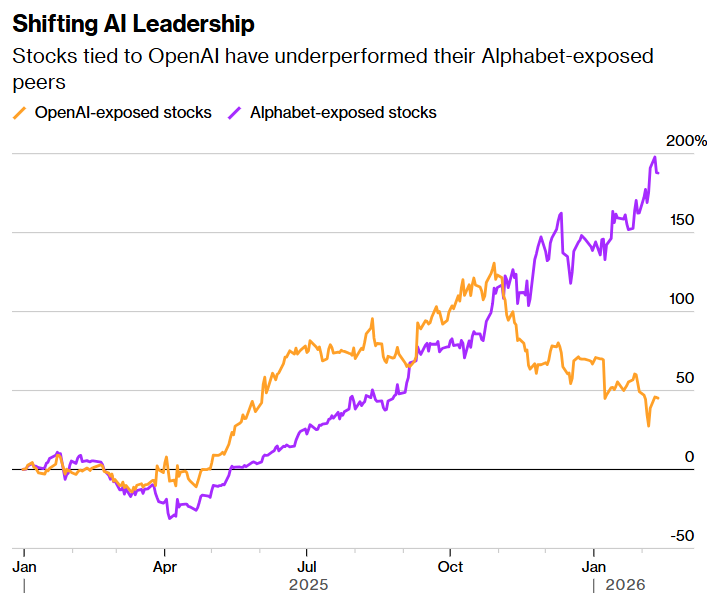
Core Insights - The article discusses the current state of OpenAI in the competitive landscape of artificial intelligence, highlighting its perceived decline compared to competitors like Alphabet and Anthropic, despite optimism from Wall Street regarding its potential recovery [1][2]. Group 1: Market Sentiment and Stock Performance - OpenAI-related stocks have faced significant pressure, with a 13% decline this year, while Alphabet-related stocks have increased by 21% [1]. - Investment professionals believe that OpenAI's current low state is temporary, and improving market sentiment could boost the stock prices of its key partners, including Nvidia, Oracle, Microsoft, CoreWeave, and AMD [2]. Group 2: Competitive Landscape - Alphabet's Gemini AI model and Anthropic's Claude model have shifted perceptions of OpenAI's leadership in technology, leading to declines in stock prices of companies perceived as competitors [4]. - Despite the rise of other AI companies, there is no substantial evidence that their success has materially harmed OpenAI [5]. Group 3: Funding and Future Prospects - OpenAI is planning to raise up to $100 billion in its next funding round, which could reflect investor confidence in its progress [5]. - Nvidia is reportedly nearing a $20 billion investment agreement, while Microsoft and Amazon are also in talks for investments [5]. Group 4: Concerns and Adjustments - Concerns exist regarding OpenAI's ability to bridge the gap between its projected revenue and spending, with estimates showing a $207 billion shortfall by 2033 [5]. - Roundhill Financial is adjusting its AI investment portfolio to reflect Alphabet's leading position, resulting in a slight decrease in allocation to OpenAI-related stocks [8]. Group 5: Oracle's Position - Oracle, a key partner of OpenAI, has seen its stock drop over 50% since its peak in September, reflecting market concerns about its relationship with OpenAI and the substantial investments made in cloud infrastructure [8]. - DA Davidson recently upgraded Oracle's stock rating due to a more optimistic view of the company's relationship with OpenAI [8].
Tech IPO hype gets drowned out on Wall Street by prospect of $1 trillion in debt sales
CNBC· 2026-02-12 13:00
Core Viewpoint - The current focus in tech capital markets is on debt financing rather than equity, driven by significant capital expenditures for AI development among major tech companies [1][3]. Group 1: Debt Financing Trends - The four major tech companies—Alphabet, Amazon, Meta, and Microsoft—are expected to spend nearly $700 billion in 2023 on capital expenditures and finance leases to support AI initiatives [2]. - UBS projects that global tech and AI-related debt issuance, which more than doubled to $710 billion last year, could rise to $990 billion by 2026 [4]. - Morgan Stanley anticipates a $1.5 trillion financing gap for AI development, primarily to be filled by debt as companies move away from self-funding [4]. Group 2: Major Corporate Debt Issuances - Oracle plans to raise between $45 billion and $50 billion in 2023, having already sold $25 billion in high-grade debt [6]. - Alphabet has increased its bond offering to over $30 billion, following a previous $25 billion debt sale [6]. - Amazon has filed for a mixed shelf registration to potentially raise both debt and equity, while Meta is exploring external financing options to enhance cash flow [7]. Group 3: Market Dynamics and Investor Sentiment - The corporate debt market has seen a "monumental" increase, with significant sales from companies like Oracle and Alphabet [5]. - Despite the high demand for tech bonds, there are concerns about the sustainability of this debt influx, as it may lead to higher yields and costs for other borrowers [21][22]. - The concentration of tech companies in corporate bond indexes raises concerns about market stability, with tech now comprising about 9% of investment-grade corporate debt indexes [19]. Group 4: IPO Market Outlook - There have been no notable IPO filings from U.S. tech companies in 2023, with attention focused on potential public offerings from SpaceX, OpenAI, and Anthropic [9][11]. - Analysts expect around 120 IPOs this year, raising approximately $160 billion, a significant increase from the previous year [11]. - The current market conditions are not favorable for venture-backed startups, with volatility and geopolitical concerns keeping many on the sidelines [12].

全球市场“巨变”:“实体”回归,“科技”分化
Hua Er Jie Jian Wen· 2026-02-12 12:57
Core Insights - The narrative of "US tech dominance" is being challenged as Goldman Sachs reveals a paradigm shift in its global strategy report, indicating that the era of "financial assets" outperforming "real assets" is reversing, with emerging markets making a strong comeback by 2025 [1][4][7] Group 1: Market Trends - The US market is projected to lag behind other major markets for the first time in 2025, with indices like the European STOXX 600, Japan's Topix, and MSCI Asia-Pacific (excluding Japan) showing better performance than the S&P 500 [4][7] - Emerging markets are experiencing a significant revaluation, with the MSCI Emerging Markets Index rising from 100 to nearly 120 relative to developed markets since the beginning of 2025, driven by both macro and micro factors [7] Group 2: Corporate Earnings and Performance - Despite geopolitical uncertainties, corporate earnings in the US remain strong, with a growth rate exceeding 12% in the current quarter, surpassing market consensus by 5 percentage points [8] - The median year-on-year growth for S&P 500 companies is 9%, with 59% of companies exceeding earnings expectations, indicating a broadening source of growth beyond large tech stocks [9] Group 3: Technology Sector Dynamics - AI capital expenditure is projected to reach $659 billion, a 60% increase from 2025, but concerns about return on investment are rising, leading to a divergence in performance among the "Magnificent Seven" tech companies [10] - The software sector is facing a crisis as AI innovations threaten traditional SaaS models, resulting in a significant drop in software valuations, with a recent 15% decline reflecting a fundamental reassessment of growth prospects [11] Group 4: Shift Towards Real Assets - There is a notable shift towards physical assets, with capital expenditures in utilities and capital-intensive industries surging, as the growth of tech giants increasingly relies on infrastructure investments [12] - The valuation premium of capital-light companies over capital-intensive firms is decreasing, indicating a renewed focus on tangible assets [12] Group 5: Value Stocks Revival - The reevaluation of growth rates in certain tech sectors, combined with persistent inflation and higher real interest rates, has led to renewed interest in value stocks, which are transitioning from being seen as "value traps" to "value creators" [13] - The performance of financial assets has reversed significantly since early 2025, with gold, emerging markets, and value stocks outperforming tech-heavy indices like the Nasdaq and S&P 500 [13] Group 6: Diversification Opportunities - The current market environment, characterized by strong corporate earnings and a shift in growth sources, presents new diversification opportunities for investors, necessitating a reassessment of long-standing allocation habits across regions, sectors, and styles [16]
X @The Wall Street Journal
The Wall Street Journal· 2026-02-12 12:46
Anthropic is spending $20 million ahead of the midterm elections to push for greater regulation and restrictions on exporting AI chips https://t.co/rmRO2lbTFW ...
Anthropic 53页绝密报告曝光:Claude自我逃逸,将引爆全球灾难!
凤凰网财经· 2026-02-12 12:43
就在刚刚,Anthropic发布53页报告,发出最强预警:如果Claude自我逃逸,将造成全球失控! 它们会残酷无情地进化,进行弱肉强食地竞争,以超高速吞噬生态系统,占领互联网,然后入侵人类的物理世界。 你知道,这些蜂群一夜之间会变得多么失控吗? 翻开这53页报告,每页上都满满写着两个字——「危险」! 是的,世界处于危难之中,天网正在诞生。 在这份报告中,Anthropic认为:Claude Opus 4.6的风险已经逼近ASL-4,是时候拉响警报了。 他们提前预警了最可怕的情况:有朝一日,AI可能会秘密逃逸出实验室,造成全球大崩溃! 这是因为,如今的AI已经太强,人们将释放出数百万个AI,赋予他们这样的目标:去生存,去升级,不惜一切代价去赚钱。 历史一再证明,当危险技术逼近边界时,最先察觉的不是公众,不是媒体,不是资本市场,而是内部安全人员。 当他们离开时,就意味着内部机制已经不足以纠偏,但AI并不会因为安全工程师的离开就停止训练,算力不会暂停扩容——他们还会继续加速! 这不是杞人忧天,现在已经有人这么干了—— 预警不是太早,可能太迟了。 01 2026,事情越来越失控了 所有人都感觉到,2026年,真的不 ...

微软(MSFT.US)重调与OpenAI关系:转攻AI“自给自足” 发力自研前沿模型
Zhi Tong Cai Jing· 2026-02-12 12:41
微软(MSFT.US)人工智能业务负责人穆斯塔法.苏莱曼表示,公司正寻求在AI领域实现"真正的自给自 足",通过自主研发高性能模型,逐步降低对OpenAI的技术依赖。 苏莱曼透露,这一战略转向始于2025年10月微软与OpenAI合作关系重构之后。据悉,自此微软开始独 立构建最前沿技术,而非继续倚重外部伙伴。 微软迄今已向OpenAI累计投资逾130亿美元,持有这家ChatGPT开发商近27%股权。 "我们必须开发自己的基础模型——站在绝对前沿、拥有吉瓦级算力,以及全球顶尖的AI训练团队。"苏 莱曼表示。他是谷歌DeepMind联合创始人之一,于2024年3月加入微软。 苏莱曼表示,微软的目标是通过打造"专业级通用人工智能"抢占更多企业市场份额。这类AI工具可为律 师、会计师、项目经理、营销人员等知识工作者完成日常工作。 "未来12到18个月内,白领坐在电脑前完成的大部分任务,都将由AI完全自动化。"他说。 未来两到三年内,AI智能体将能在大型机构内部工作流中实现更优协同。据悉,这类AI工具还将具备 持续学习、持续进化的能力,自主执行更多任务。 "创建新模型将像做播客、写博客一样普及,"苏莱曼表示,"未来,地 ...
硅谷“赌”AI最狠的基金:非原生AI公司要么进化,要么消失
3 6 Ke· 2026-02-12 12:27
Core Insights - a16z is a leading venture capital firm heavily invested in the current AI wave, with a portfolio that includes major players like OpenAI and SpaceX, reflecting the commercialization path of AI over recent years [1] - The firm emphasizes not just what they invest in, but how they interpret changes in the AI industry, highlighting significant trends and signals [1] Group 1: AI Company Growth and Efficiency - AI companies are achieving faster growth with fewer resources compared to traditional SaaS companies, with revenue growth rates approximately 2.5 times higher than non-AI software companies, and some top firms experiencing year-over-year growth close to 700% [2][8][6] - A new efficiency metric, ARR per FTE (Annual Recurring Revenue per Full-Time Employee), is gaining attention, with leading AI companies achieving ARR of $500,000 to $1 million per employee, compared to $400,000 in the SaaS era, indicating a significant increase in organizational efficiency [3][10] Group 2: Transformation of Non-AI Companies - Non-AI native companies face two options: transform or be eliminated, with successful transformations often led by CEOs who actively drive change and focus on areas like customer support and operations [4][11] - Effective AI adaptation requires a fundamental rethinking of product design and organizational structure, moving beyond simply adding AI features to existing systems [12][14] Group 3: Demand and User Engagement - The demand for AI products is described as "crazy," with strong user engagement and participation, as seen in legal and medical sectors where AI tools enhance productivity without reducing workforce size [19][21] - Companies like Harvey and Abridge illustrate how AI can increase user engagement and efficiency, with lawyers reporting doubled usage time on AI products [20][21] Group 4: Financial Implications and Market Dynamics - The current capital expenditure in AI is substantial, but unlike previous bubbles, it is supported by profitable companies, with major players like Microsoft and NVIDIA maintaining controllable capital structures [25][26] - The potential for AI to generate significant revenue is highlighted, with estimates suggesting that AI could account for 1% of global GDP by 2030, necessitating a revenue target of around $1 trillion to justify the investment [31]