亚马逊云服务(AWS)

Search documents
伊朗通讯社称将打击微软、英伟达等科技巨头目标
Jing Ji Guan Cha Wang· 2026-03-13 07:46
Core Viewpoint - Iran has declared that the infrastructure of several major US tech companies, including Amazon, Microsoft, Google, Nvidia, IBM, Oracle, and Palantir, is now within the scope of legitimate military targets due to the evolving nature of regional conflicts [2][3] Group 1: Company Infrastructure and Locations - Amazon has established cloud infrastructure, data centers, and R&D centers in locations such as Tel Aviv, Haifa, Bahrain, and the UAE [2] - Microsoft has offices, cloud services, and R&D facilities in Dubai, Tel Aviv, Haifa, and Herzliya [2] - Nvidia has set up regional headquarters and business offices in Haifa, Tel Aviv, and Dubai [2] Group 2: Military and Strategic Implications - The mentioned tech companies are accused of providing technological support to the Israeli military, with Palantir openly acknowledging its strategic cooperation with Israel [3] - In response to escalating tensions, some US companies in the Gulf region have implemented measures such as remote work policies and emergency plans to mitigate risks from drone attacks or airspace closures [3] - An attack on Amazon's data center in the UAE occurred on March 1, resulting in a fire and power outage, highlighting the blurred lines between commercial cloud services and military targets [3]






亚马逊(AMZN.US)年营收首次超越沃尔玛(WMT.US) 零售巨头竞争迈入AI新阶段
智通财经网· 2026-02-19 23:19
Core Insights - The competition between e-commerce giant Amazon and traditional retail leader Walmart has reached a critical juncture, with Amazon surpassing Walmart in annual revenue for the first time, marking a historic shift in the retail landscape [1] Group 1: Revenue Comparison - Amazon's annual revenue reached $716.9 billion, slightly exceeding Walmart's $713.2 billion, indicating a significant change in the competitive dynamics between the two companies [1] - This shift has been in the making for about a year, as Amazon first outpaced Walmart in quarterly revenue [1] Group 2: Walmart's Growth and Strategy - Walmart's revenue has more than doubled over the past 20 years, driven by its extensive network of over 4,600 stores in the U.S. and around 600 Sam's Club locations [2] - In the latest fiscal quarter, Walmart's U.S. e-commerce business grew by 27% year-over-year, maintaining double-digit growth for 15 consecutive quarters [2] - Walmart is positioning itself as a hybrid of "technology company + retailer," evidenced by its recent move to list on Nasdaq and its market capitalization surpassing $1 trillion [2] Group 3: AI Strategies - Walmart is expanding its third-party platform in response to Amazon's advantages and is seeking differentiation in the AI space through partnerships, including collaborations with OpenAI and Google [3] - The introduction of Walmart's AI shopping assistant "Sparky" has led to a 35% increase in average transaction value among users, with about half of U.S. app users having experienced the tool [3] Group 4: Amazon's AI Investments - Amazon is adopting a more closed strategy in the AI domain, focusing on its proprietary shopping chatbot "Rufus," which has generated nearly $12 billion in annualized new sales [4] - The company plans to invest up to $200 billion in AI-related projects by 2026, significantly outpacing other major cloud service providers [4] - Despite aggressive capital expenditures, Amazon's stock has faced pressure, resulting in a market value decline of over $450 billion since its last earnings report [4]

AI巨额投入引发市场担忧 亚马逊(AMZN.US)股价今年开局不利 华尔街仍视其为“被低估赢家”
智通财经网· 2026-02-18 23:27
Core Viewpoint - Amazon's stock has faced challenges this year, but some Wall Street analysts see this pullback as a potential buying opportunity for investors optimistic about long-term returns from artificial intelligence (AI) [1] Group 1: Stock Performance and Market Sentiment - Amazon's stock has declined by 9.2% over the past 12 months, underperforming the Nasdaq Composite Index, which has risen by approximately 13% during the same period [1] - Following the earnings report on February 5, the stock fell by about 7.5% due to concerns over disappointing earnings and significant AI capital expenditure plans [1] - Despite a recent rebound, the stock's expected price-to-earnings ratio for the next 12 months is around 25.8, significantly lower than its five-year average of 48.1 [1] Group 2: AWS and Growth Potential - Morgan Stanley's analyst Brian Nowak views AWS as a "market undervalued generative AI winner," highlighting that demand for cloud services continues to drive growth for the company [2] - As of the latest earnings call, Amazon's backlog of unfulfilled contracts reached $244 billion, a 40% year-over-year increase [2] - Nowak maintains a bullish outlook on AWS's capital expenditure expansion, giving Amazon an "overweight" rating with a target price of $300, indicating over 45% upside potential from current levels [2] Group 3: Cash Flow and Investor Confidence - Amazon's free cash flow for the past 12 months was $11.2 billion, significantly lower than the $38.2 billion reported in the same period last year [3] - As AI capital expenditure becomes a long-term theme, investors are expected to closely monitor the company's guidance on free cash flow prospects [3] - Recent stock movements suggest some investors may be regaining confidence in Amazon, as the stock rose after a nine-day consecutive decline, marking the longest losing streak since July 2006 [3]
亚马逊力推Kiro限制Claude Code,员工对此有话说!
Sou Hu Cai Jing· 2026-02-12 13:36
Core Insights - Amazon is prioritizing its in-house developed AI programming tool Kiro, restricting employees from using third-party products like Claude Code without formal approval [1][3] - This internal policy has sparked criticism among employees, particularly those involved in selling third-party AI services, who question how they can promote products they are not allowed to use themselves [3] Group 1 - Amazon is a major shareholder in Anthropic and has assisted the startup in bringing its AI models and products to the consumer market [3] - The internal directive to favor Kiro over Claude Code has been in place since last fall, leading to significant internal debate and dissatisfaction among employees [3] - Some engineers argue that Claude Code outperforms Kiro, warning that enforcing the use of a less capable tool could hinder development progress [4] Group 2 - Employees have expressed concerns that a tool unable to keep pace with competitors cannot drive true innovation, indicating frustration with the forced use of Kiro [4]

亚马逊签署海上风电购电协议!
Xin Lang Cai Jing· 2026-02-08 09:08
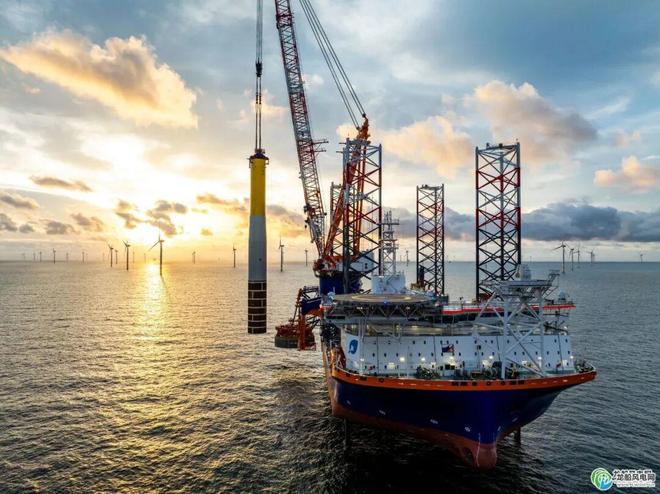
Core Insights - Amazon has signed a Power Purchase Agreement (PPA) with RWE to procure 110MW of electricity from the Nordseecluster B offshore wind farm in the North Sea, Germany [1][3] - The agreement supports Amazon's goal of achieving zero carbon energy and involves AWS providing cloud services, AI, and data analytics to assist RWE in its digital transformation [3] - The 110MW of electricity is expected to meet the annual power needs of over 139,000 German households [3] Project Details - The Nordseecluster B project is part of the second phase of the Nordseecluster offshore wind complex, co-owned by RWE and Norway's NBIM, located approximately 46 kilometers north of Borkum Island and 50 kilometers north of Juist Island, with a total capacity of 1600MW [3] - The first phase, Nordseecluster A, has a total capacity of 660MW and is currently under construction, with plans to be operational by early 2027 [3] - The Nordseecluster B project includes two wind farms (N-3.5 and N-3.6) with a total capacity of 900MW, expected to be commercially operational by 2029 [3] Previous Agreements - This PPA marks Amazon's fourth large offshore wind power purchase agreement in Germany, following agreements with Iberdrola for the Baltic Eagle and Windanker projects, and Ørsted for the Borkum Riffgrund 3 project [4]
亚马逊押注AI,但市场不买账
Guo Ji Jin Rong Bao· 2026-02-06 09:45
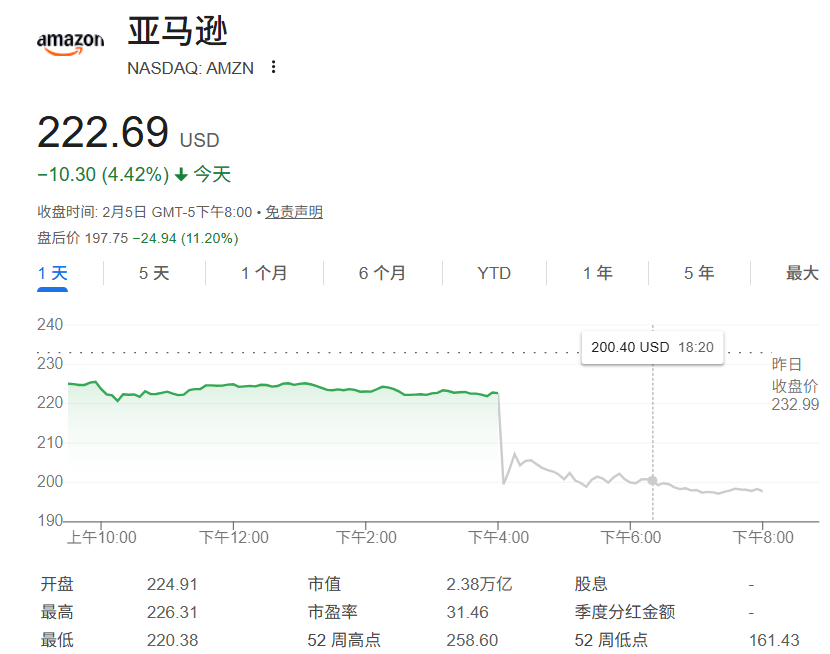
Core Viewpoint - Amazon announced a nearly 60% increase in capital expenditures related to artificial intelligence (AI) to $200 billion by 2026, exceeding Wall Street expectations, which led to a 10% drop in the company's stock price in after-hours trading. The market is reassessing the balance between massive capital investments in the AI era and long-term returns [1][3]. Group 1: Financial Performance - Amazon's net profit for the current period reached $21.2 billion, aligning with analyst expectations, while the first-quarter operating profit guidance is set between $16.5 billion and $21.5 billion [3]. - Amazon Web Services (AWS) revenue grew by 24% year-over-year to $35.6 billion, although this growth rate lags behind competitors like Microsoft Azure (39%) and Google Cloud (nearly 48%) [3]. Group 2: AI Investment and Market Dynamics - Amazon, along with tech giants like Microsoft, Meta, Google, and Oracle, is accelerating the construction of data centers and financing for computing power to meet the explosive growth in AI computing demand. The combined spending of these companies is projected to exceed $700 billion by 2026, comparable to Japan's annual budget and surpassing government spending levels in Germany and Mexico [3]. - The market reaction to these investments has been polarized, with Meta and Google seeing stock price support due to improvements in advertising and other businesses, while Microsoft and Amazon face pressure due to AI-related business growth not meeting market expectations [3]. Group 3: Organizational Adjustments and Cost Control - To support high-intensity AI investments, Amazon is simultaneously implementing cost control measures and organizational adjustments, including layoffs of approximately 30,000 employees, or about 10% of its workforce, since October of the previous year [4]. - Amazon has restructured its AI department, appointing Peter DeSantis, who has nearly 30 years of experience at Amazon, to accelerate the launch of AI services and custom chips [4]. - The company is closing Fresh and Go grocery stores and reducing the application of Amazon One palm payment in retail, focusing resources on expanding Whole Foods, same-day grocery delivery, and data center construction [4]. - Amazon is reportedly negotiating a potential investment of up to $50 billion in OpenAI, which would further strengthen its position in the AI ecosystem [4].
硅谷巨头6600亿美元押注AI,市场却越烧钱越恐慌
华尔街见闻· 2026-02-06 09:33
Core Viewpoint - The unprecedented AI investment plans by major US tech companies are reigniting market fears of a bubble, leading to significant stock sell-offs despite strong earnings reports [5][6]. Group 1: Investment Plans and Market Reactions - Amazon, Google, and Microsoft collectively lost $900 billion in market value after announcing their capital expenditure plans, which total $660 billion by 2026, a 60% increase from $410 billion in 2025 and 165% from $245 billion in 2024 [5][6]. - Amazon's capital expenditure for this year is projected to reach $200 billion, exceeding expectations by $50 billion, which has led to an 11% drop in its stock price [6]. - Microsoft experienced the most significant decline, with an 18% drop in stock price following its earnings report, despite a 26% increase in cloud revenue to $51.5 billion [6][7]. Group 2: Investor Sentiment and AI Return Cycles - The rising capital expenditures signal that realizing the full potential of AI may require more time and resources, testing investor confidence in long-term returns [8]. - Analysts express concerns that the increased capital spending indicates a longer timeline for AI strategies to yield attractive returns, leading to a pause in investor enthusiasm for tech stocks [8][14]. - The Nasdaq index has dropped 4% over the past five days, reflecting a shift in market sentiment towards tech stocks [8]. Group 3: Company-Specific Developments - Apple reported record quarterly revenue of $144 billion, benefiting from strong iPhone sales, while its capital expenditure decreased by 17% to $2.4 billion, contrasting sharply with its peers [10][11]. - Apple's collaboration with Google to enhance its AI capabilities through a pay-as-you-go model has allowed it to minimize capital expenditures while still gaining AI benefits [11][12]. - Nvidia, as the highest-valued public company, is expected to face a turbulent market when it announces its earnings, as investors seek signs that the high capital expenditures will soon translate into revenue growth [13].



资本开支超GDP,硅谷巨头6600亿美元押注AI,市场却越烧钱越恐慌
3 6 Ke· 2026-02-06 08:40
Group 1 - The core point of the article highlights that major US tech companies plan to invest a total of $660 billion in AI infrastructure by 2026, a figure that exceeds Israel's GDP and represents a 60% increase from the previous year's $410 billion [1][2] - Amazon, Microsoft, and Google have collectively seen their market value drop by $900 billion following their quarterly earnings reports, despite strong revenue growth in their cloud businesses [1][2] - Apple's strategy of minimal capital expenditure has allowed it to achieve record sales, making it the only major tech company to avoid the recent market sell-off [1][5] Group 2 - Amazon's capital expenditure for the year is projected to reach $200 billion, exceeding expectations by $50 billion, which has led to an 11% drop in its stock price [2] - Microsoft has experienced the most significant decline, with its stock price falling 18% after revealing a 66% increase in data center spending, raising concerns among investors [2] - Despite Google's record revenue of over $400 billion, its stock has also been negatively impacted by plans to double its capital expenditure to $185 billion [2] Group 3 - The rising capital expenditures signal that the realization of AI commitments may require more time and resources, testing investor confidence in long-term returns [3] - Analysts express concerns that the increased capital spending may not yield attractive returns, leading to a cautious market sentiment towards tech stocks [3] - The Nasdaq index has dropped 4% over the past five days, reflecting a shift in market sentiment towards AI investments [3] Group 4 - The failure of a $100 billion investment and infrastructure deal between OpenAI and Nvidia has contributed to market volatility, with Oracle's stock dropping 18% due to its heavy reliance on OpenAI [4] Group 5 - Apple's minimal capital expenditure strategy, with a reported $2.4 billion in Q4 and a total of approximately $12 billion for the year, contrasts sharply with the massive investments of its competitors [5] - Apple's collaboration with Google to enhance its AI capabilities through a pay-as-you-go model has allowed it to benefit from AI advancements without significant capital outlay [5] Group 6 - Nvidia is set to report earnings amid a turbulent market, with investors looking for signs that the escalating capital expenditures will soon translate into revenue growth [6] - Meta has announced plans to double its capital expenditure to $135 billion, but its stock gains have been reversed in the broader market sell-off [6] - Despite a 14% increase in combined annual revenue to $1.6 trillion for the four companies, market pessimism continues to overshadow positive financial results [6]
资本开支超GDP!硅谷巨头6600亿美元押注AI,市场却越烧钱越恐慌
Hua Er Jie Jian Wen· 2026-02-06 06:05
Core Viewpoint - The record AI investment plans by major US tech companies are reigniting market fears of a bubble, leading to significant stock sell-offs despite strong earnings reports from most companies [1] Group 1: Investment Plans and Market Reactions - Amazon, Google, and Microsoft collectively lost $900 billion in market value after announcing plans to invest $660 billion in data centers and specialized chips by 2026, a 60% increase from $410 billion in 2025 and 165% from $245 billion in 2024 [1][2] - Amazon's capital expenditure for this year is projected to reach $200 billion, exceeding expectations by $50 billion, which contributed to an 11% drop in its stock price [2] - Microsoft experienced the most significant decline, with an 18% drop in stock price following its earnings report, despite a 26% increase in cloud revenue to $51.5 billion [2][3] Group 2: Investor Sentiment and Concerns - Rising capital expenditures signal that the realization of AI commitments may require more time and funding, testing investor confidence in long-term returns [3] - Analysts express concerns that Microsoft and Amazon must prove that their increased spending will yield attractive returns, as fears of an AI bubble resurface [3] - The Nasdaq index, heavily weighted with tech stocks, fell 4% over the past five days, reflecting a shift in market sentiment [3] Group 3: Company-Specific Developments - Apple's strategy of minimal capital investment has positioned it as a clear winner, reporting record quarterly revenue of $144 billion, while its capital expenditure decreased by 17% to $2.4 billion [5] - Apple's collaboration with Google to enhance its AI capabilities through a pay-as-you-go model has allowed it to benefit from AI advancements without significant capital outlay [5] - Nvidia, as the highest-valued public company, is expected to face a turbulent market when it releases its earnings report, as investors seek signs of a shift in spending related to AI [6]
利空突袭!科技巨头,暴跌
证券时报· 2026-02-06 04:29
Core Viewpoint - Amazon's significant capital expenditure plan for 2026, projected at $200 billion, has raised concerns among investors, leading to a notable decline in its stock price despite exceeding revenue expectations for Q4 2025 [1][6]. Financial Performance - In Q4 2025, Amazon reported total revenue of $213.39 billion, surpassing analyst expectations of $211.33 billion, while earnings per share (EPS) were $1.95, slightly below the forecast of $1.97 [4]. - Amazon Web Services (AWS) revenue reached $35.58 billion, marking a 24% year-over-year growth, the fastest in 13 quarters [4]. - Advertising revenue was $21.32 billion, exceeding expectations and growing 23% year-over-year [4]. - North America sales grew 10% to $127.1 billion, while international sales increased 17% to $50.7 billion, with a growth rate of 11% when excluding currency fluctuations [4]. Capital Expenditure Plans - Amazon's capital expenditure for 2026 is expected to reach approximately $200 billion, significantly higher than the $131 billion spent in 2025 and exceeding analyst expectations of $146.6 billion [5]. - CEO Andy Jassy attributed the large investment to strong demand for existing services and opportunities in AI, chips, robotics, and low Earth orbit satellites, primarily focusing on AWS infrastructure [5]. - The company has initiated a $11 billion AI data center project, "Project Rainier," to support workloads for Anthropic [5]. Market Reaction - Following the earnings report, Amazon's stock fell 4.56% during regular trading and dropped over 11% in after-hours trading due to concerns about short-term profit pressures and the long-term return on the substantial investment [6]. Future Outlook - For Q1 2026, Amazon expects sales between $173.5 billion and $178.5 billion, indicating a year-over-year growth of 11% to 15%, slightly above analyst expectations [8]. - The company is focusing on integrating AI technology across its business segments, with its AI shopping assistant, Rufus, having 300 million users and a 60% higher conversion rate for users [8]. - Jassy introduced the concept of "Agentic shopping," suggesting that retailers with extensive product offerings and customer trust will have a competitive edge in the AI era [8]. Strategic Initiatives - Amazon is promoting its self-developed chips to address high costs in the AI chip market, with the Trainium series showing rapid deployment and significant revenue growth [10]. - The company is also optimizing its cost structure through workforce reductions, announcing layoffs of approximately 16,000 employees following a previous reduction of 14,000 [12].