邮储银行

Search documents
白金信用卡权益大缩水:贵宾厅限次、酒店减量……
Mei Ri Jing Ji Xin Wen· 2025-12-11 13:51
Core Insights - The high-end credit card benefits are being significantly reduced by multiple banks, leading to a decline in the perceived value of these cards [1][3][4] - The profitability of high-end credit cards is under scrutiny, as banks struggle to balance the high costs of benefits with low revenue from transaction fees [4][5][6] - Banks are shifting their strategies from aggressive customer acquisition to maintaining existing high-value clients, focusing on overall customer value rather than just credit card profitability [8][10] Summary by Sections Benefit Reductions - High-end credit card benefits such as unlimited airport lounge access and hotel stays are being cut back, with some banks reducing annual hotel stays from two nights to one [1][2] - Changes include limiting airport lounge access to a maximum of six visits per year and increasing the points required for redeeming benefits [3] Profitability Challenges - High-end credit cards are not profitable for banks due to high costs associated with benefits and low transaction fee revenue, which averages around 0.3% in China [4][5] - The cost of services like airport transfers can range from 200 to 300 yuan, further straining profitability [4] Strategic Shifts - Banks are focusing on high-end credit cards as a means to identify and engage high-value customers, integrating these products into broader wealth management strategies [8][9] - The industry is moving towards a model that prioritizes maintaining existing customers over acquiring new ones, especially as the market becomes saturated [10]
邮储银行召开2025年数字金融大会
Zheng Quan Ri Bao Zhi Sheng· 2025-12-11 13:43
Core Insights - Postal Savings Bank of China (PSBC) is showcasing its achievements and future plans in digital finance at the 2025 Digital Finance Conference, emphasizing the integration of technology in financial services [1] - The bank's president highlights the transformative impact of technology on the speed of progress, depth of financial reform, and breadth of service reach, positioning AI as a key driver in reshaping traditional financial models [1][2] - PSBC is committed to serving the real economy by optimizing financial supply, reducing financing costs, and enhancing service experiences, aligning with its mission of "finance for the people" [1][3] Digital Strategy - PSBC has adopted a "Digital Postal Savings" strategy, implementing an "AI+" initiative that has led to the bank receiving the People's Bank of China Financial Technology Development Award for three consecutive years [2] - The bank's intelligent tools span the entire operational process, enhancing management efficiency and organizational effectiveness [2] - In the front office, PSBC utilizes intelligent profiling to improve precision marketing, shifting from broad marketing strategies to personalized services [2] - In the middle office, intelligent models enhance risk control and business efficiency, with tools that integrate expert knowledge into decision-making processes [2] - In the back office, intelligent analysis tools improve employee capabilities by simplifying data access and analysis processes [2] Future Outlook - PSBC is dedicated to its "finance for the people" principle and will continue to advance its "Digital Postal Savings" strategy, focusing on building a digital ecosystem that delivers warm and perceptive financial services to various sectors [3]

邮储银行乌鲁木齐市分行凝聚企业高质量发展新合力
Zhong Guo Jin Rong Xin Xi Wang· 2025-12-11 12:43
转自:新华财经 同时,该行党委发挥先锋模范、党组织战斗堡垒作用,通过评选"两优一先"典型,表彰优秀共产党员, 大力宣传先进事迹。全国劳动模范、自治区劳动模范先后受邀多家企业、社区开展宣讲座谈,彰显模范 带动、示范引领,为企业高质量发展注入"红色动能"。 另外,该行还聚焦经济带核心区的创新中坚力量——专精特新"小巨人"企业,成立以业务骨干为核心的 党小组专业团队,以精准、高效、有温度的金融服务,为"专精特新"企业茁壮成长保驾护航,助力区域 高质量发展。其中经开区支行党支部服务乌鲁木齐市自贸区各类企业300家,商户720余家。 今后,该行将常态化开展"党建+"系列活动,丰富活动内容,延伸金融服务触角,进一步激发红色党建 引领动能。(何建峰) 编辑:穆皓 2025年,邮储银行乌鲁木齐市分行深入开展"党建+"系列活动,凝聚发展合力,有效推动党建与经营发 展同频共振、深度融合。 据悉,该行持续深化党建引领企业发展路径,真正做好聚人心,优服务,促发展。 为此,该行领导班子带头走访各区县、中小企业、科技创新企业、部队、公安武警,开展党建交流、企 业融资、普惠金融、反洗钱反电诈宣讲、义诊服务、健康讲座、困难群众帮扶等,促进双 ...
美联储年内三度降息累计75个基点,国内货币政策“以我为主”审慎发力
Hua Xia Shi Bao· 2025-12-11 11:29
本报(chinatimes.net.cn)记者刘佳 北京报道 美联储2025年宽松周期持续深化,年内已累计完成75个基点降息。 北京时间12月11日凌晨,美联储结束了本年度最后一次议息会议,如期宣布将联邦基金利率目标区间下 调25个基点。至此年内第三次降息落地,利率最终定格于3.5%—3.75% 区间。 在多位受访专家看来,美联储此次25个基点的降息幅度虽符合市场普遍预期,但决策背后的内部分歧尤 为值得关注。当天参加表决的12名美联储官员中,有3人投票反对,这是2019年9月以来议息会议反对票 数量最多的一次,凸显了美联储内部对通胀和就业风险平衡的政策博弈。会后公布的利率点阵图也显 示,政策制定者维持2026年再降息一次的预期,预计到明年年底通胀率将放缓至2.4%左右。 值得注意的是,在美联储此次降息前夕,中央政治局会议已为2026年经济工作定下"稳中求进、提质增 效"的总基调,并明确将继续实施"更加积极的财政政策和适度宽松的货币政策",为国内经济发展和政 策调整预留出充足空间,彰显出我国宏观调控的战略定力。 上海金融与发展实验室首席专家、主任曾刚在接受《华夏时报》记者采访时表示,我国货币政策仍坚 持"以我为 ...


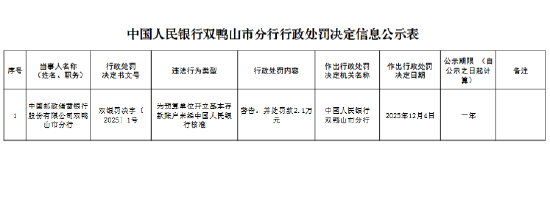
邮储银行双鸭山市分行被罚2.1万元:为预算单位开立基本存款账户未经中国人民银行核准
Xin Lang Cai Jing· 2025-12-11 11:17
Group 1 - The People's Bank of China, Shuangyashan Branch, issued an administrative penalty against China Postal Savings Bank Co., Ltd. Shuangyashan Branch for opening a basic deposit account without approval, resulting in a warning and a fine of 21,000 yuan [1][3] - The penalty decision was made public on December 4, 2025, and the public disclosure period is set for 22 days [2][4]
总结山东乡村振兴发展经验,《城乡融合重塑乡村空间》出版
Qi Lu Wan Bao· 2025-12-11 10:58
Core Viewpoint - The publication "Rural Space Restructuring through Urban-Rural Integration" focuses on the reconstruction of rural space from the perspective of urban-rural integration, summarizing the "Shandong experience" in promoting rural revitalization through various innovative practices and theoretical frameworks [1][4]. Group 1: Book Overview - The book systematically summarizes Shandong's theoretical logic and practical patterns in areas such as regional promotion, industrial integration, digital governance, and cultural revitalization [1]. - It presents typical case studies that illustrate the internal logic of urban-rural factor reorganization, industrial system reshaping, and governance mechanism upgrading, providing a paradigm for urban-rural integration development nationwide [1]. Group 2: Case Selection Activity - In 2024, Shandong Provincial Rural Revitalization Research Association organized a case selection activity to summarize the province's experiences in rural revitalization, evaluating over 900 submitted cases [2]. - A total of 40 outstanding cases were selected based on criteria such as completeness, innovation, representativeness, and replicability, covering four categories: "Comprehensive," "Industrial Integration," "Thousands of Millions Project," and "Special Contribution" [2]. Group 3: Diverse Practices in Urban-Rural Integration - Shandong's urban-rural integration practices showcase a diverse array of models, including "smart trading" for agricultural digitalization and "all-region tourism" for cultural and agricultural synergy [3]. - Various regions have innovated in areas such as cultural tourism, ecological livability, and digital governance, demonstrating multidimensional scenarios of urban-rural collaborative development [3]. Group 4: Insights from Shandong's Experience - Shandong's experience indicates that urban-rural integration involves not only spatial restructuring but also profound changes in development logic, emphasizing scale efficiency, dual flow of factors, digital empowerment, and cultural revitalization [4]. - The initiatives undertaken have reshaped urban-rural relationships and expanded new spaces for rural modernization, forming a replicable "Shandong model" for other regions [4].
注册资本升至2616亿元,建设银行增资获批
Huan Qiu Lao Hu Cai Jing· 2025-12-11 09:32
Group 1 - China Construction Bank has received approval from the National Financial Regulatory Administration to increase its registered capital by 11.589 billion yuan, raising it from 250.011 billion yuan to 261.6 billion yuan [1] - Bank of China has also announced an increase in its registered capital by approximately 27.825 billion yuan, changing from about 294.388 billion yuan to approximately 322.212 billion yuan [1] - The recent wave of capital increases in the banking sector is driven by favorable policy support, including a plan to issue special government bonds worth 500 billion yuan to support state-owned banks in capital replenishment [2] Group 2 - In March, several major banks, including China Construction Bank, Bank of China, and others, announced fundraising plans totaling no more than 520 billion yuan [2] - China Construction Bank completed a targeted issuance of 11.589 billion A-shares, raising a total of 105 billion yuan, which will be used to enhance its core Tier 1 capital [2] - As of the end of Q3 this year, China Construction Bank's core Tier 1 capital adequacy ratio and total capital adequacy ratio were 14.36% and 19.24%, respectively, both exceeding regulatory requirements [3] Group 3 - The issuance of special government bonds is seen as a proactive measure to enhance capital strength and improve risk resilience amid the dual pressures of credit expansion needs and stricter TLAC regulations [3] - In addition to the targeted capital increase, China Construction Bank has also issued 200 billion yuan in subordinated debt to supplement its capital, with the final tranche of 40 billion yuan being a 10-year fixed-rate bond with a coupon rate of 2.24% [3]

加速、扩面 稳步推动产业升级
Bei Jing Wan Bao· 2025-12-11 06:55
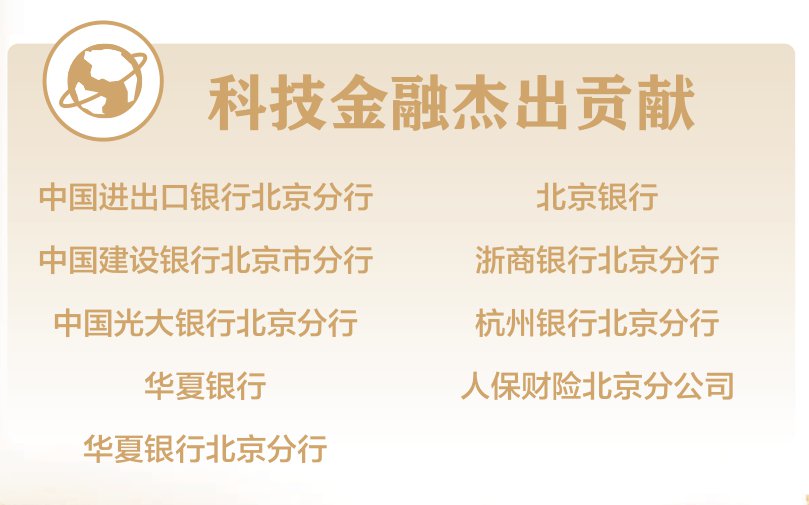
登录新浪财经APP 搜索【信披】查看更多考评等级 全市场科技创新债券累计发行规模约1.5万亿元,资金正加快流向科技创新实体领域;科技部配合中国人民银行设立8000亿 元科技创新和技术改造再贷款,联动实施"创新积分制"和科技创新专项担保计划,向26家银行精准推荐超12万家科技型中小 企业……2025年,科技金融在政策引领与技术革新的双轮驱动下迈入高质量发展的深水区,"科技—产业—金融"的良性循环 加速成型。 针对科技型企业门类多、专业性强的特征,华夏银行持续强化多层次、体系化的科技企业专业研究能力。在总行层面,多部 门协同进行行业趋势研判;联动理财子公司等机构的专业力量,用其更贴近资本市场的分析能力提供专业补充;积极借助外 部智库研究资源,构建全面、立体的科创行业分析框架。同时,该行加大信贷资源投入,给予科技型贷款转移定价优惠,叠 加央行再贷款工具优惠,多标签科技企业优惠力度进一步加大。 将科技金融作为"第一战略"、专精特新作为"一号工程",北京银行通过构建"1+18+N"科技金融专营体系、推出"e投贷"等创 新产品、联动近3000家政府投资基金及VC/PE机构,形成"债权+股权""股债联动"的立体化服务模式, ...
邮储银行青岛分行发放青岛市首笔“交易鉴证贷”
Zhong Guo Jin Rong Xin Xi Wang· 2025-12-11 06:03
Core Viewpoint - Postal Savings Bank of China Qingdao Branch has successfully issued a loan of 250,000 yuan, marking the first "transaction certification loan" in Qingdao, aimed at addressing the financing difficulties faced by rural operators and supporting rural revitalization [1][2] Group 1: Loan and Financial Innovation - The loan was issued based on a transaction certification from the Qingdao Rural Property Rights Transfer Trading Platform, providing strong support for rural financing needs [1] - The bank focuses on diverse financing needs of rural operators, including farmers, small business owners, and cooperatives, and has launched the "transaction certification loan" to enhance financial services [1][2] Group 2: Service Process and Risk Management - To ensure the efficient implementation of the "transaction certification loan," the bank has established a dedicated service process that simplifies approval and reduces processing time [2] - The bank relies on the Qingdao Rural Property Rights Transfer Trading Platform for compliance verification of rural property transaction subjects, thereby strengthening the credit foundation for loan projects [2] Group 3: Future Plans and Service Expansion - The bank plans to deepen cooperation with the Qingdao Rural Property Rights Transfer Trading Platform and explore a comprehensive service system integrating property trading, transaction certification, and financing guarantees [2] - There will be an emphasis on product iteration and service innovation to develop more financial products tailored to rural property scenarios, aiming to enhance the efficiency of financial services in agriculture and rural areas [2]
年末将至!银行密集挂牌,零售类不良资产“出清潮”来袭
Bei Jing Shang Bao· 2025-12-11 03:58
Core Viewpoint - A wave of retail non-performing asset (NPA) disposals is occurring among various banks in China, driven by the need to optimize year-end financial statements, reduce non-performing loan ratios, and release capital space, while also addressing risks accumulated from rapid retail business expansion over the past few years [1][5][9] Group 1: Asset Disposal Trends - The pace of retail NPA disposals has accelerated as year-end approaches, with multiple banks, including state-owned and regional banks, participating in the process [3][4] - Ping An Bank has announced multiple personal loan transfer projects, with one involving 308 loans totaling approximately 52.98 million yuan, and others focusing on credit card overdrafts with total amounts reaching 83.8 million yuan and 63.9 million yuan respectively [4][5] - The average overdue days for these assets are significantly high, exceeding 800 days for some, indicating a severe deterioration in asset quality [4][6] Group 2: Challenges in Asset Recovery - Retail NPAs are characterized by small amounts, dispersion, and lack of collateral, leading to high due diligence costs and uncertain recovery rates for buyers [1][7] - Many of these assets have aged significantly, with recovery rates dropping sharply for loans overdue by more than five years, often falling below 4% [7][8] - The complexity of legal issues and the low willingness of debtors to repay further complicate the pricing and recovery of these assets [8][9] Group 3: Future Outlook and Strategic Adjustments - The current wave of disposals is expected to continue into the first half of 2026, with a potential increase in the scale of disposals, particularly among smaller regional banks facing greater pressure [9][10] - Banks are increasingly utilizing financial technology to enhance risk management and monitoring of retail clients, aiming to build a comprehensive risk management system [10] - A strategic shift towards prioritizing risk control over mere growth is necessary for banks to balance expansion with effective risk management [10]