OPPO

Search documents
为什么越来越多的人不买华为手机了?这5 个原因都很现实
Xin Lang Cai Jing· 2025-09-23 06:23
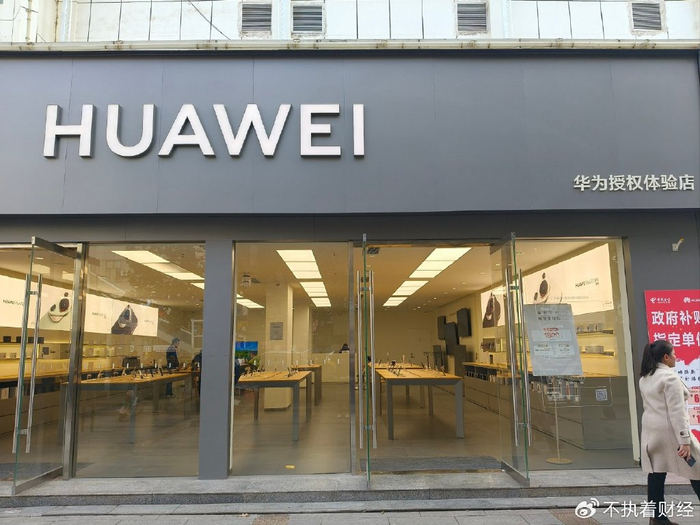
Core Viewpoint - Huawei smartphones, once a leading brand in China with a peak annual sales volume of 240 million units and over 40% market share domestically, are experiencing a decline in sales due to several key challenges faced by consumers [2]. Group 1: Reasons for Decline - Reason 1: Difficulty in purchasing new Huawei models, with consumers often unable to buy them at launch due to rapid sell-outs and scalpers marking up prices [2]. - Reason 2: Huawei's products are perceived to have lower cost-performance ratio compared to competitors, such as Xiaomi, which offers similar models at lower prices [5][6]. - Reason 3: High repair costs for Huawei devices, leading consumers to consider switching brands when repair expenses exceed a third of the device's purchase price [6]. Group 2: Market Competition and Design - Reason 4: The smartphone market is highly competitive, with a wide variety of brands available, leading to a loss of market share for Huawei as consumers explore other options [7][9]. - Reason 5: Huawei's conservative design approach does not appeal to the current consumer preference for trendy and personalized aesthetics, unlike competitors who frequently innovate in design [11].

知名相机评测机构:iPhone 17 Pro相机测试全球排第三,华为Pura 80 Ultra排第一,OPPO Find X8 Ultra全球第二
Ge Long Hui· 2025-09-23 06:05
Group 1 - The core point of the article is that the latest iPhone 17 series, particularly the iPhone 17 Pro with a 48-megapixel camera, received a score of 168 in the DXOMARK camera test, ranking third overall [1] - The top two positions in the camera test were held by Huawei Pura 80 Ultra and OPPO Find X8 Ultra, with scores of 175 and 169 respectively [1] - The iPhone 16 Pro Max ranked seventh with a score of 161, indicating a relative decline in performance compared to the new model [1] Group 2 - The iPhone 17 Pro achieved the highest score for video performance at 171, making it the best in the world for video recording capabilities [1] - Both the main camera and ultra-wide-angle video performance of the iPhone 17 Pro were rated as the best globally [1]

体验iPhone 17后,我想说苹果终于要回击国产机了
3 6 Ke· 2025-09-23 04:11
Core Insights - The iPhone 17 series has been officially launched and is experiencing high demand, particularly the standard version, which has seen a significant increase in pre-orders compared to the previous year's model [1][3][5] - The iPhone 17's pricing strategy, maintaining the same starting price as the iPhone 16 while doubling storage capacity, is seen as a strategic response to competitive pressures from domestic brands [9][10][12] - Apple's market share in China has declined, with the company now ranking third behind competitors like Vivo and Huawei, indicating increased pressure in its traditionally strong market [16][18][44] Product Performance - The iPhone 17 standard version has received over 2 million pre-orders on a single e-commerce platform, a tenfold increase compared to the iPhone 16 [1][3] - The iPhone 17 Pro features enhancements such as VC cooling, larger battery, and new design elements, contributing to its strong market presence [3][31] - The introduction of high refresh rate screens and dual-frequency GPS in the standard version marks a significant shift in Apple's product strategy, previously reserved for Pro models [9][12][42] Competitive Landscape - Domestic brands have intensified competition, leading to a decline in Apple's market share in China, where it now holds 17.4%, down from 20% year-over-year [16][18] - The aggressive pricing and feature enhancements from domestic competitors have forced Apple to adapt its strategy, including potential price reductions for the iPhone 17 [10][11][27] - The competitive landscape is expected to remain dynamic, with upcoming releases from Xiaomi, OPPO, and Vivo further challenging Apple's position [44] Market Dynamics - Apple's global smartphone shipments remain strong, with IDC data indicating it retains the top position despite a slight year-over-year decline [13][14] - The shift in consumer preferences towards more feature-rich and competitively priced domestic alternatives has prompted Apple to rethink its product offerings and pricing strategies [30][44] - The ongoing competition has led to a scenario where both Apple and domestic brands are forced to innovate and enhance their offerings, ultimately benefiting consumers [44]
天玑9500单核性能逼近苹果旗舰?vivo将首发
Guan Cha Zhe Wang· 2025-09-23 03:49
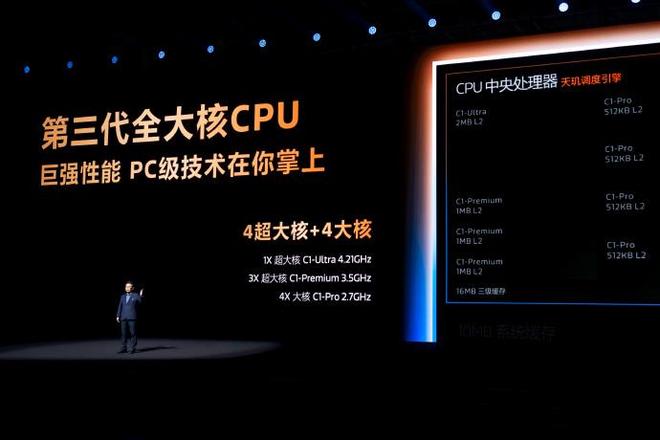
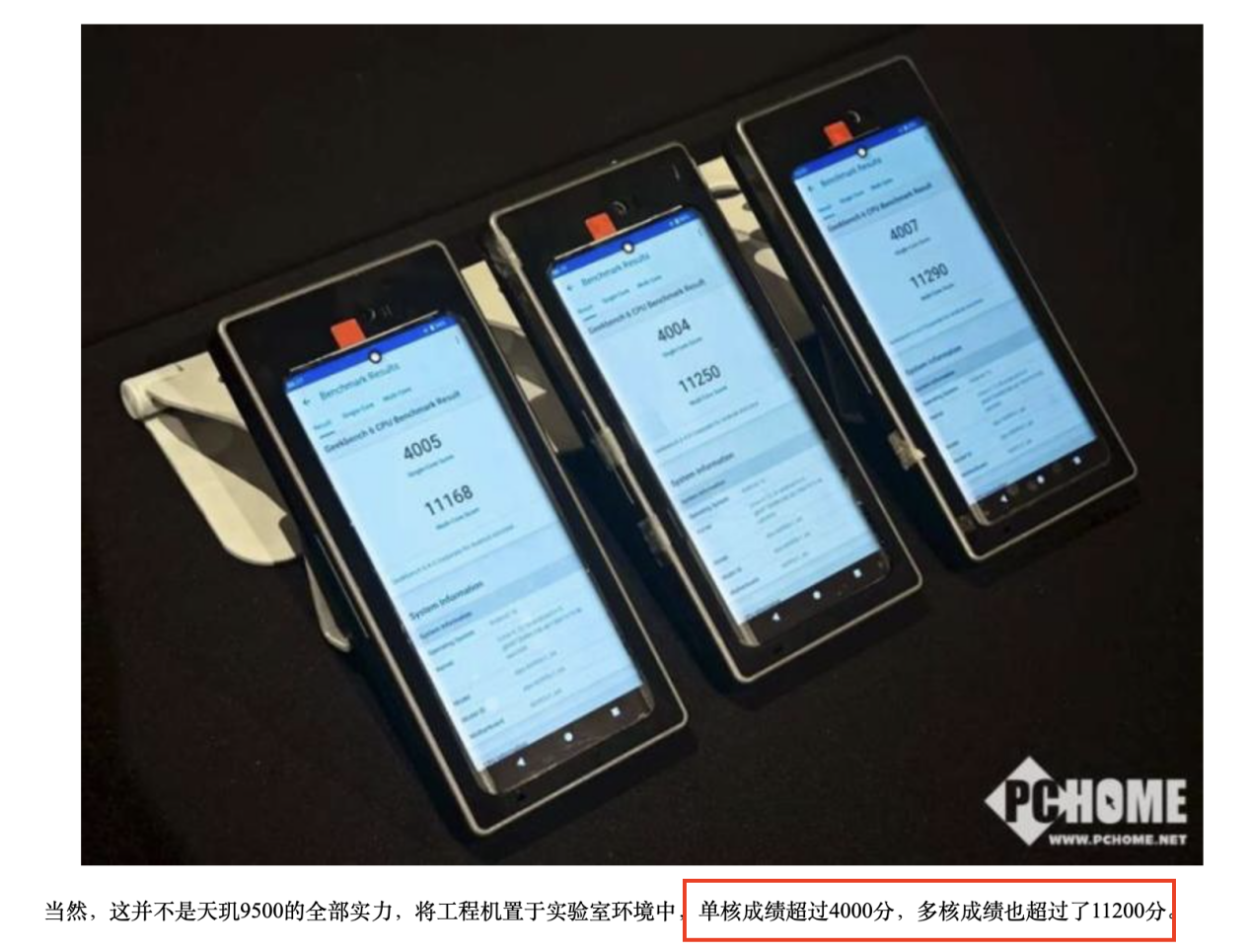
Core Viewpoint - MediaTek has launched its new flagship mobile SoC, the Dimensity 9500, which will debut in the vivo X300 series smartphones [1] Group 1: Product Features - The Dimensity 9500 utilizes TSMC's N3P process and features a full big-core CPU design, including the world's first Arm C1 series CPU cluster and G1-Ultra GPU, along with new dual NPU and ISP image processing units [1] - The CPU architecture consists of 1 C1-Ultra super core at 4.21GHz, 3 C1-Premium super cores, and 4 C1-Pro big cores, supporting 4-channel UFS4.1 flash storage [3] - Single-core performance has improved by 32% and multi-core performance by 17% compared to the previous generation, with peak power consumption for super cores reduced by 55% and multi-core peak power consumption down by 37% [3] Group 2: Performance Metrics - MediaTek's lab data shows the Dimensity 9500 achieving a GeekBench single-core score of 4007 and a multi-core score of 11217 [4] - Real-world testing by @Zealer reported a single-core score of 3610 and a multi-core score of 10765, indicating that Android flagship performance is now comparable to Apple's current flagship [4] Group 3: Market Position and Future Plans - The first smartphones featuring the Dimensity 9500 are expected to launch in Q4 2025, with vivo's X300 series and OPPO's Find X9 series confirmed to use the new chip [6] - MediaTek is negotiating with TSMC to produce some chips in the U.S. to mitigate potential tariff risks, particularly for automotive and sensitive application chips [7] - MediaTek has announced further collaboration with TSMC to be among the first to adopt TSMC's 2nm process technology, with a new SoC design expected to achieve an 18% performance increase and a 36% reduction in power consumption compared to the current N3E process [7]
雷军高端梦成,小米17系列遭友商“围攻”,只有华为、苹果做到
Sou Hu Cai Jing· 2025-09-23 03:25
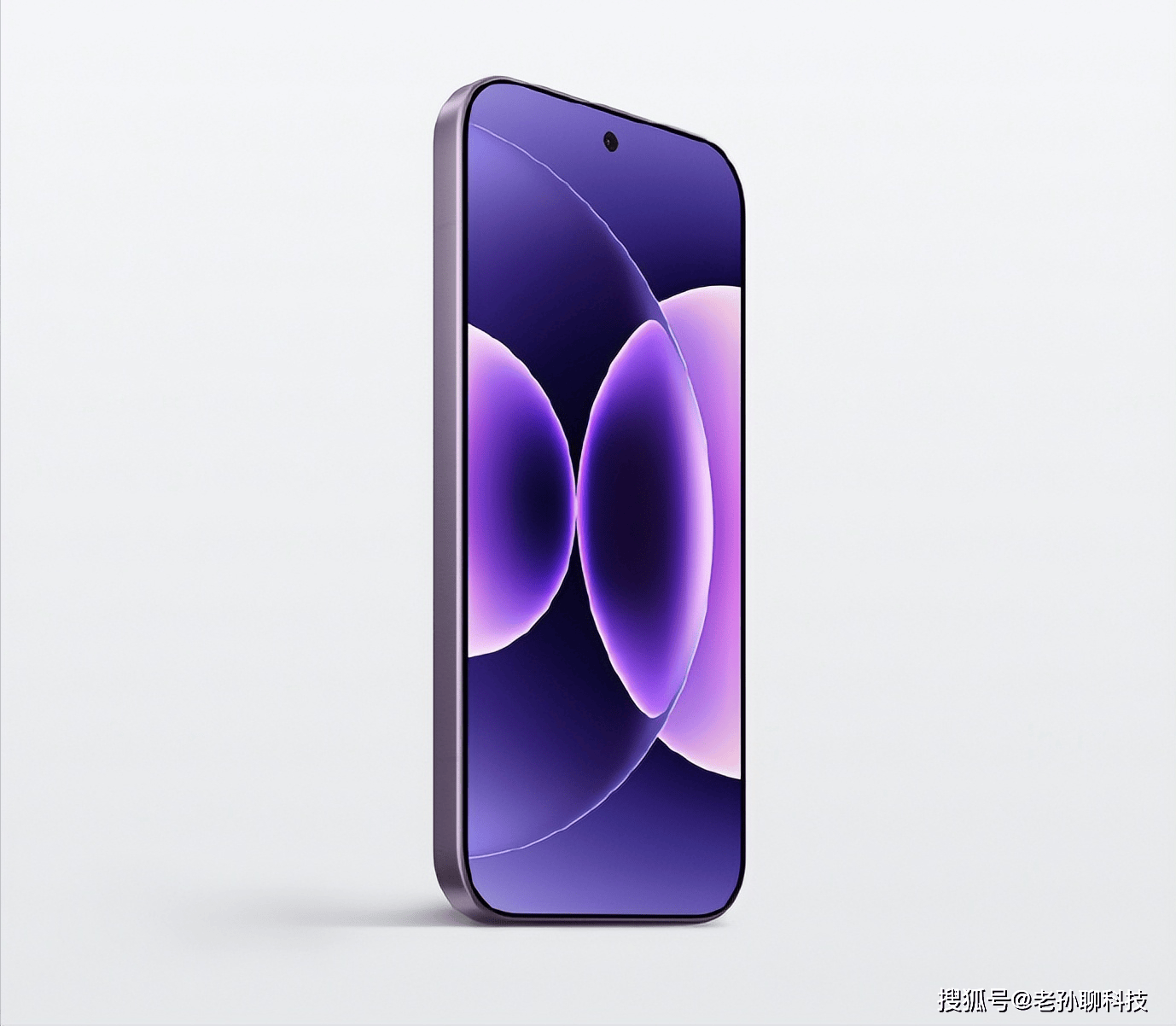
Group 1 - Xiaomi 17 series was launched on September 25, facing competitive pre-launch marketing from rivals such as OPPO, vivo, and realme, indicating a significant shift in market dynamics where competitors are aggressively vying for attention [1][5] - The renaming of Xiaomi 16 to Xiaomi 17 was officially attributed to a cross-generation upgrade, with the number "7" considered a lucky number for the company, despite initial claims of aligning with Apple's iPhone 17 series [1][3] - The Xiaomi 17 series includes three models, featuring a 6.36-inch display and a rear triple-camera setup, with the Pro and Pro Max versions offering similar specifications but differentiated by screen size and design elements [3][5] Group 2 - All models in the Xiaomi 17 series are equipped with the Snapdragon 8 Elite Gen5 processor, expected to achieve over one million units in sales during the exclusive launch period of approximately 20 days [5][9] - In contrast to competitors focusing on camera upgrades, Xiaomi's unique selling point lies in the secondary display, which may provide a competitive edge in sales [5][9] - The upcoming vivo X300 series, set to launch on October 13, will feature the Dimensity 9500 processor, which has received mixed reviews regarding its performance, particularly in gaming scenarios [5][7] Group 3 - OPPO's Find X9 series, launching on October 16, claims to balance lightweight design, imaging capabilities, and battery life, with a new design that emphasizes a slim bezel [7][9] - The realme GT8 Pro is anticipated to feature high-end specifications, including a 200-megapixel telephoto lens and a 2K display, but the market is particularly interested in its pricing strategy [9][11] - The competitive landscape is intensifying, with various brands launching products that challenge Xiaomi's market position, raising questions about the potential sales performance of the Xiaomi 17 series against its rivals [11]

天玑9500 性能出炉:单核炸裂,多核爆表,性能全面超越苹果A19 Pro
Cai Fu Zai Xian· 2025-09-23 03:03
Core Insights - The release of MediaTek's Dimensity 9500 marks a significant advancement in Android flagship SoCs, achieving record-breaking performance metrics that challenge Apple's A19 Pro [1][4][11] Performance Metrics - The Dimensity 9500 features a third-generation all-large core architecture, including a C1-Ultra core with a clock speed of 4.21GHz, three C1-Premium cores, and four C1-Pro cores, resulting in a substantial performance upgrade [4][10] - In laboratory tests, the Dimensity 9500 achieved a single-core score exceeding 4000 and a multi-core score surpassing 11000, making it the first Android chip to match Apple's single-core performance [4][7][11] - Compared to its predecessor, the Dimensity 9500 shows a 31% improvement in single-core performance and a 17% increase in multi-core performance [8][11] User Experience Enhancements - The second-generation Dimensity scheduling engine enhances user experience by improving application launch times, animation transitions, and computational management, resulting in a smoother interaction experience [10][11] - Real-world tests indicate that the Dimensity 9500's response times in application interactions and gaming are significantly faster than those of the latest iPhone 17 Pro Max, with application response times as low as 42ms [10][11] Market Implications - The competitive landscape for flagship SoCs is shifting, with Android now leading in both single-core and multi-core performance, suggesting a strong year for Android devices against Apple [11]
DeepSeek更新;OpenAI与英伟达合作丨科技风向标
2 1 Shi Ji Jing Ji Bao Dao· 2025-09-23 02:30
Group 1: Partnerships and Collaborations - OpenAI and Nvidia announced a partnership agreement, with Nvidia planning to invest up to $100 billion to support OpenAI's data center and infrastructure development, deploying at least 10 gigawatts of Nvidia systems by the second half of 2026 [2] - OpenAI is reportedly collaborating with companies like Luxshare Precision to develop a consumer-grade hardware device, likely utilizing GoerTek's MEMS silicon microphone technology [4] Group 2: Company Leadership Changes - Oracle appointed Clay Magouyrk and Mike Sicilia as co-CEOs, while the current CEO Safra Catz will serve as the executive vice chair of the board [5] Group 3: Product Developments and Innovations - Baidu's Qianfan-VL visual understanding model has been launched and is fully open-sourced, optimized for enterprise-level multimodal applications [6] - Meituan has open-sourced its first self-developed reasoning model, LongCat-Flash-Thinking, achieving over 200% improvement in training speed [8] - Huawei announced its self-developed HBM memory with a maximum capacity of 144GB and bandwidth of 4TB/s, set to be launched in 2026 [12] - The launch of the "Fenghua 3" GPU by ChipMotion, which integrates domestic open-source RISC-V CPU with CUDA-compatible GPU, covering a wide range of applications [16] Group 4: Market Movements and Financial Activities - Baidu's stock performance and the implications of its new model launch on market positioning [6] - The stock of Tianpu Co. surged by 279.73% over 14 consecutive trading days, raising concerns about its valuation relative to fundamentals [14] - Zero Gravity Aircraft Industry completed nearly $14 million in A++ round financing to support the development of new energy aircraft [19]

DeepSeek更新;OpenAI与英伟达合作丨新鲜早科技
2 1 Shi Ji Jing Ji Bao Dao· 2025-09-23 01:58
Group 1: Partnerships and Collaborations - OpenAI and Nvidia announced a partnership agreement, with Nvidia planning to invest up to $100 billion to support OpenAI's data center and infrastructure development, deploying at least 10 gigawatts of Nvidia systems by the second half of 2026 [2] - OpenAI is reportedly collaborating with companies like Luxshare Precision to develop consumer hardware, potentially utilizing GoerTek's MEMS silicon microphone technology [4] - WeRide announced a partnership with Grab to launch the Ai.R autonomous driving service in Singapore, initially deploying 11 autonomous vehicles [9] Group 2: Company Leadership Changes - Oracle appointed Clay Magouyrk and Mike Sicilia as co-CEOs, while the current CEO Safra Catz will serve as the executive vice chair of the board [5] Group 3: Product Launches and Innovations - Baidu's Qianfan launched a new open-source visual understanding model, optimized for enterprise-level multimodal applications, with versions of 3B, 8B, and 70B [6] - Meituan released its first self-developed inference model, LongCat-Flash-Thinking, which improves training speed by over 200% and reduces average token consumption by 64.5% in specific benchmarks [8] - Huawei announced its self-developed HBM memory with a maximum capacity of 144GB and a bandwidth of 4TB/s, set to launch in 2026 [12] - Chipmaker MediaTek unveiled the Dimensity 9500, featuring the latest N3P process and advanced CPU and GPU capabilities, aimed at enhancing mobile performance [15] - Chipmaker Xindong Technology launched the Fenghua 3 GPU, integrating open-source RISC-V CPU with CUDA-compatible GPU for diverse applications [16] Group 4: Financial Activities and Market Movements - Baiwei Storage announced plans to issue H-shares and list on the Hong Kong Stock Exchange to enhance its global strategy and brand image [17] - Daotong Technology plans to transfer 46% of its stake in Shenzhen Saifang Technology for a total of 109 million yuan, focusing on core business development [18] - Zero Gravity Aircraft Industry completed nearly 100 million yuan in A++ round financing to support the development of new energy aircraft [19] Group 5: Industry Trends and Insights - Brain Tiger Technology's founder highlighted that China's brain science research is transitioning from a "follower" to a "leader" stage, emphasizing the need for high-end talent and support for young researchers [11] - The domestic high-end flagship smartphone market is set for a series of new product launches, with OPPO and vivo announcing upcoming flagship models [20]
体验iPhone17后,我想说苹果终于要回击国产机了
Hu Xiu· 2025-09-22 23:40
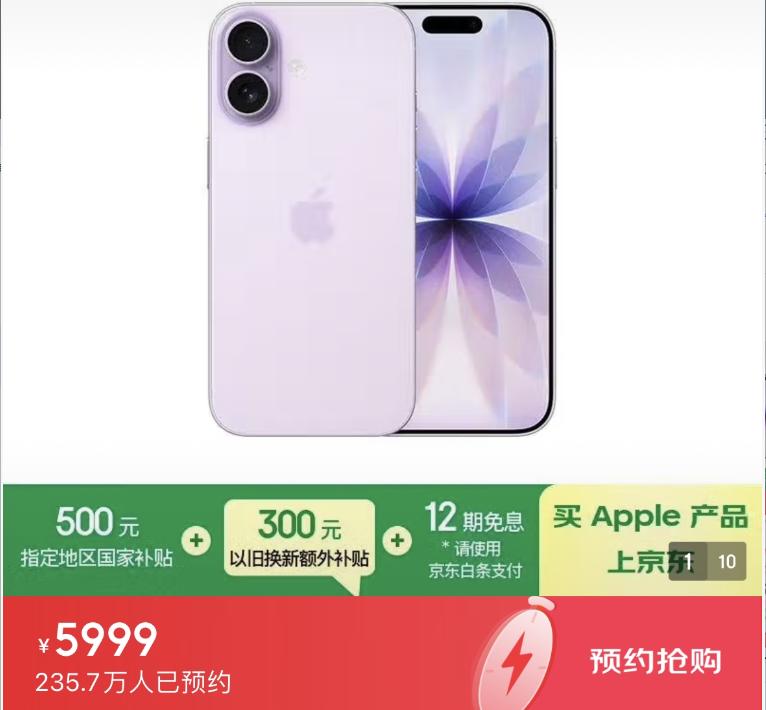
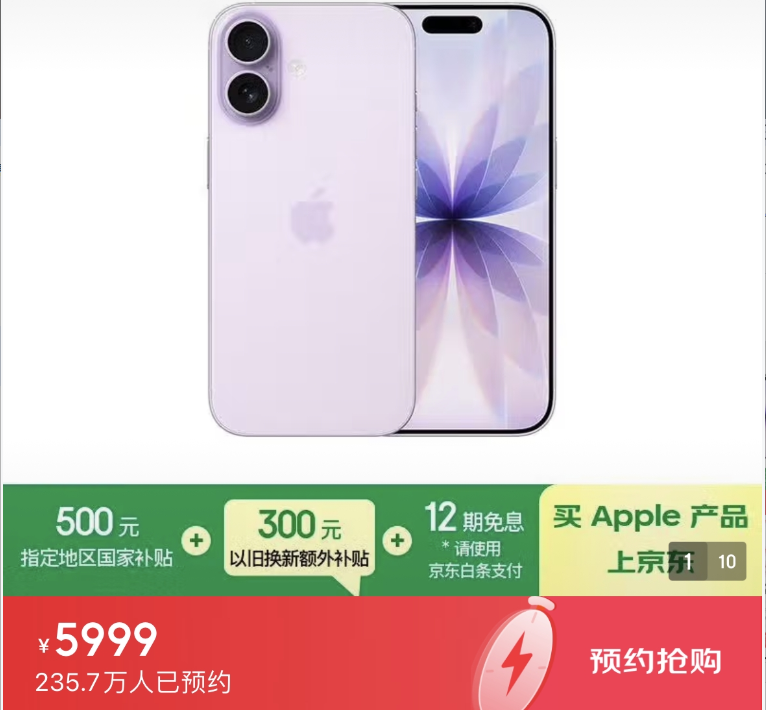
Core Insights - The iPhone 17 series has been officially released and is experiencing high demand, particularly the standard version, which has surpassed previous years' sales figures significantly [2][4][7] - The iPhone 17's pricing strategy remains competitive, with the starting price unchanged from the iPhone 16 at 5999 yuan, but with additional subsidies making it even more attractive [13][16][19] - Apple's market share in China has been declining, facing increasing pressure from domestic brands like Vivo, Huawei, and Xiaomi, which have improved their offerings and pricing strategies [9][27][29][66] Group 1: Sales Performance - The iPhone 17 standard version has received over 2 million pre-orders on a single e-commerce platform, a tenfold increase compared to the iPhone 16's pre-orders [2][4] - The iPhone 17 series is expected to revive iPhone sales, which had been struggling in the previous year [7][31] - The iPhone 17 Pro has also gained attention due to its enhanced features, including better cooling and battery performance [5][57] Group 2: Competitive Landscape - Domestic brands have been aggressively competing with Apple, leading to a significant drop in Apple's market share in China, where it fell to third place [9][27][29] - The introduction of high-refresh-rate screens and dual-frequency GPS in the standard version of the iPhone 17 marks a shift in Apple's strategy to counteract competition [14][22] - The competitive pressure has forced Apple to adopt a more aggressive pricing and feature strategy, which was previously not characteristic of the brand [10][46][66] Group 3: Market Dynamics - IDC data indicates that while Apple remains a global leader in smartphone shipments, its performance in the Chinese market is declining, with a year-over-year drop in market share [25][28] - The iPhone 17 series is seen as a response to the increasing capabilities of domestic brands, which have been able to offer similar features at lower prices [19][34][68] - The ongoing competition is expected to benefit consumers, as brands continue to enhance their offerings in response to each other [68][70]
腾讯研究院AI速递 20250923
腾讯研究院· 2025-09-22 16:01
Group 1 - MediaTek launched the new flagship 5G AI chip Dimensity 9500, which uses a third-generation 3nm process and a full big-core architecture, integrating over 30 billion transistors, with NPU performance improved by 111% and power consumption reduced by 56% [1] - The chip features a dual NPU architecture for super performance and efficiency, introducing in-memory computing design and BitNet 1.58 bit quantization inference framework, supporting on-device model training [1] - In practical applications, it supports 128K long text processing and 4K quality image generation, with flagship new devices from manufacturers like vivo and OPPO set to utilize this chip for personalized AI scenarios [1] Group 2 - OpenAI has invested $16 billion in computing resources and plans to spend $350 billion on leasing services from 2024 to 2030, with an expected annual expenditure of $100 billion by 2030 [2] - The company signed a 5-year $300 billion computing power contract with Oracle, adding an extra $100 billion for backup servers, breaking the traditional tech giants' R&D cost model of 10%-20% of revenue [2] - OpenAI announced the upcoming launch of a compute-intensive new product in the coming weeks, but Pro users will need to pay extra, leading to user dissatisfaction [2] Group 3 - Google has introduced a new research paradigm for Agents, moving beyond the traditional "plan-retrieve-generate" model, allowing Agents to draft first and iteratively learn and correct [3] - The new framework employs a "diffusion denoising" process, enabling Agents to identify information gaps based on drafts and search for evidence externally, optimizing research content repeatedly [3] - Google has also incorporated multi-version intelligent self-critique and report-level denoising technology, outperforming OpenAI's DeepResearch in tasks like GAIA, and is available for trial in Google Agentspace [3] Group 4 - DeepSeek released the ultimate Terminus version of its model DeepSeek-V3.1, addressing user feedback with improvements in two main areas [4][5] - The new version alleviates language consistency issues such as mixed Chinese and English and further optimizes the performance of Code Agent and Search Agent [5] - DeepSeek-V3.1-Terminus is now available across official apps, web platforms, mini-programs, and DeepSeek API models, with the open-source version downloadable from Hugging Face and ModelScope [5] Group 5 - The Keling 2.5 video model has achieved significant breakthroughs in motion capabilities and expression performance, accurately depicting subtle facial expression changes and complex emotions while maintaining character consistency across different scenes [6] - The model seamlessly connects actions like falling, running, and riding a motorcycle, preserving realistic environmental interaction details and understanding complex causal relationships [6] - Keling 2.5 excels in action scenes, generating high-quality parkour, jumping, combat, and explosion scenarios, with greatly enhanced continuity and physical realism, currently in gray testing for super creators [6] Group 6 - Meituan's LongCat team has released the efficient reasoning model LongCat-Flash-Thinking, achieving advanced levels in logic, mathematics, coding, and agent capabilities while maintaining extreme speed [7] - The new model introduces a pioneering domain-parallel reinforcement learning training method, achieving threefold speedup through an asynchronous elastic shared card system, and features a dual-path reasoning framework to enhance agent capabilities [7] - In reasoning benchmark tests, it outperforms open-source models and performs comparably to top closed-source models like GPT-5 in tests such as AIME and LiveCodeBench, with formal reasoning capabilities significantly ahead of all participating models in the MiniF2F-test benchmark [7] Group 7 - Baidu's Qianfan-VL visual understanding model has been fully open-sourced, offering three configurations: 3B, 8B, and 70B, supporting OCR recognition and educational applications [8] - The model was developed by Baidu's team based on open-source models and completed all computational processes on its self-developed Kunlun chip P800, supporting single-task parallel computing at a scale of 5000 cards [8] - The Qianfan-VL series demonstrates chain-of-thought capabilities, full-scene OCR recognition, and complex document understanding, performing excellently in multiple benchmark tests, and is available for free experience on Baidu Smart Cloud [8] Group 8 - The 2025 "35 Innovators Under 35" Asia-Pacific list has been released by MIT Technology Review, featuring 35 innovators from fields such as AI, robotics, and materials [10] - Innovators like Xia Fei and Min Shiyuan have made breakthroughs in artificial intelligence, including embodied intelligence and non-parametric large language models [10] - China has the highest number of honorees, with 82 individuals selected over 11 editions as of 2024, surpassing Singapore's 76, reflecting a shift in the Asia-Pacific region from technology following to innovation leadership [10] Group 9 - The core team of Nano Banana suggests that the quality of image generation models is nearing its peak, with the next challenge being to integrate the "world knowledge" of LLMs into image models to understand user intentions [11] - While the quality ceiling of existing image models is close to being reached, there is still significant room for improvement in the "lower limit," with future developments focusing on enhancing "model expressiveness" and performance in complex scenarios [11] - Future interactive interfaces will integrate text, images, and voice, but user expectations for instant "finished product" generation are unrealistic, indicating that AI models and traditional tools will coexist in professional workflows for a long time [11]