
Rokid

Search documents
与Meta正面“对抗”,苹果AI眼镜被曝加快开发进度
Xuan Gu Bao· 2025-10-13 23:36
Group 1 - Apple is developing at least two types of smart glasses, one without a display (code-named N50) for use with iPhone, and another with a display that may compete with Meta's recently released Ray-Ban Display smart glasses [1][3] - The smart glasses will run on the same visionOS operating system as Vision Pro, with compatibility for both iPhone and Mac systems, allowing for a full visionOS experience when paired with Mac and a lighter interface when connected to iPhone [1] - The industry is expected to enter a "mass production year" from 2H25 to 2027, with new product lines from companies like Meta, Apple, Xiaomi, ByteDance, and Alibaba [1][2] Group 2 - The AI smart glasses technology landscape is divided into three main camps: those focusing on light waveguide technology (like Thunder and Rokid), the "voice-first" approach from Meta and Huawei, and the mixed reality segment led by Google and Apple [2] - Companies like Rongqi Technology and GoerTek are actively involved in the smart glasses sector, with GoerTek being one of the deepest players in the field, collaborating with Xiaomi and maintaining a long-term partnership with Apple [3]

专访灵伴科技副总裁宓群:乐见技术路线之争 带屏显的AI眼镜已步入消费级时代
Mei Ri Jing Ji Xin Wen· 2025-10-11 11:57
Core Insights - The global smart glasses market has experienced explosive growth in 2023, with a 54.9% year-on-year increase in shipments in Q2 [1] - AI glasses are viewed as the next generation of human-computer interaction, with three main interaction paradigms represented by companies like Rokid, META, and Apple [1] - Major tech companies such as Alibaba and Xiaomi are entering the AI glasses market, further intensifying competition [1] Market Dynamics - META launched its first smart glasses with display capabilities in September, while Rokid's new product successfully raised $3.626 million on Kickstarter [1][4] - The competition in the AI glasses sector raises questions about whether the demand is genuine or merely a trend [1] Product Development - Rokid aims to create a global product strategy but faces challenges due to differences in facial structures across regions, necessitating adjustable designs [2] - The company is focusing on extending the camera's recording time to cater to the growing trend of long video content sharing on social media [2] Technical Challenges - Addressing high power consumption in smart glasses is a significant challenge, as users prefer lightweight designs (ideally under 30 grams) [3] - The operating system is considered crucial for optimizing user experience and power efficiency, with most global manufacturers lacking this capability [3] Consumer Insights - Rokid's consumer base includes a diverse demographic, including women and seniors, contrary to the stereotype of tech enthusiasts [5] - The company believes that AI glasses can compete with traditional eyewear by emphasizing their AI integration while maintaining similar pricing [6] Future Outlook - The goal is to make AI glasses indistinguishable from regular eyewear, with ongoing efforts to reduce weight and enhance functionality [6] - The company is optimistic about achieving a balance between cost, weight, and performance, which is essential for scaling user adoption [7] Collaboration and Ecosystem - Rokid emphasizes the importance of collaboration with partners to overcome manufacturing challenges and develop new technologies [9][10] - The company aims to build a robust ecosystem that encourages continuous innovation from developers on its platform [10] Vision for AI Glasses - Future AI glasses are expected to provide personalized, human-like services, evolving beyond traditional tool functionalities [11] - As core functionalities gain market acceptance, the penetration rate of AI glasses is anticipated to accelerate, leading to the emergence of "super apps" [11]
网龙
2025-10-09 02:00
Summary of Key Points from the Conference Call Company Overview - **Company**: NetDragon - **Industry**: Gaming and Education Technology - **Founded**: 1999, listed on Hong Kong Stock Exchange in 2007 - **Key Milestones**: - 2013: Sold 91 Wireless for $1.9 billion - 2015: Acquired Promethean, entering the education technology sector - 2023: Spun off Promethean into a separate publicly listed company, Mand AI [2][3] Core Business Segments Gaming - **Flagship IP**: "Magic Domain" characterized by: - 100% original design, enhancing legal and financial stability - Fully self-published, improving profit margins - Long-term operation with high user engagement [4] - **Revenue Growth**: - "Conquer" has over 60% of revenue from overseas, with plans for deeper localization [7] - "Soul of Heroes" saw a 10% year-over-year increase in APA due to collaboration with domestic IP [9] - **AI Integration**: - AI production centers established to enhance content adaptation and efficiency - Introduction of smart NPCs and AI-generated content to improve user experience [6][14] Education Technology - **Market Position**: - Promethean holds a 70% market share in the U.S. K12 interactive display market and 30% in Europe [11] - **User Base**: Nearly 200 million users on the AI+ education platform [2][8] - **Future Plans**: - Interconnect provincial platforms with national platforms for increased service opportunities - Collaborations with international markets, including a recent project in Thailand [8] Financial Performance - **R&D Expenses**: Decreased by 27% year-over-year in the first half of 2025 [1][17] - **Shareholder Returns**: Announced over HKD 600 million in returns through dividends and buybacks in the next 12 months [2][13] - **Profitability Outlook**: - EBITDA expected to break even by Q4 2025, with growth anticipated from 2026 to 2028 [23] Strategic Initiatives - **AI Transformation**: - Focus on developing impactful AI-native games and educational content [5][16] - **Investment Strategy**: - Recent investments in companies like Slow Point AI and Chuangqi Si to enhance AI capabilities and SaaS offerings [12] - **OpenQuest Academy Collaboration**: - Aims to leverage AI infrastructure for global educational content creation [10] Market Trends and Challenges - **Gaming Market**: - Adjustments in "Magic Domain" game mechanics led to a double-digit increase in monthly active users [26] - Anticipated revenue growth from new projects and regional expansions [27] - **Education Market**: - Post-pandemic demand fluctuations have led to a slowdown, but a recovery is expected as hardware needs renewal [21][22] Additional Insights - **Team Integration**: - AI production centers are enhancing team collaboration and efficiency across different projects [6][7] - **SaaS Growth**: - New product launches are expected to increase SaaS subscription rates, contributing to overall profit margins [24] This summary encapsulates the key points discussed in the conference call, highlighting the company's strategic direction, financial performance, and market positioning within the gaming and education technology sectors.
销量暴涨107%却难进寻常家,AR眼镜真火还是虚火?
Tai Mei Ti A P P· 2025-10-07 12:47
Core Insights - The AR glasses market is experiencing significant growth, with Meta's recent launch of the Ray-Ban Display showing strong sales and high demand, indicating a robust interest in AR technology [1][2] - Despite the hype surrounding AR glasses, there are substantial challenges regarding market penetration, user experience, and product acceptance that need to be addressed for widespread adoption [1][10] Market Growth - According to IDC, global smart glasses shipments are expected to reach 12.8 million units by 2025, representing a 26% year-on-year growth, with China's market projected to hit 2.75 million units, a 107% increase [2] - CINNO Research reported that in the first half of 2025, sales of consumer-grade AI/AR glasses in China reached 262,000 units, marking a 73% year-on-year increase, setting a historical high [2] - The AR/VR industry saw 66 financing deals in the first half of this year, totaling 55.98 billion yuan, highlighting the sector's attractiveness to investors [2] Technological Advancements - Continuous technological improvements, such as the application of MicroLED and OLED display technologies, have enhanced the clarity and realism of AR glasses [3] - Innovations in optical technology, like waveguide technology, have made lenses lighter and improved user comfort [3] - The integration of AI technologies has empowered AR glasses with advanced interactive capabilities, including voice and image recognition [3] Application Potential - AR glasses show significant potential across various sectors, including entertainment, office collaboration, education, and healthcare, catering to diverse user needs [4] - In entertainment, users can enjoy immersive experiences, while in healthcare, AR glasses can assist in surgeries and remote diagnostics [4] Competitive Landscape - Major tech companies like Apple, Google, Huawei, and Xiaomi are entering the AR glasses market, leveraging their strengths in chip development and brand influence [5][6] - Emerging companies such as Rokid and XREAL are also making strides, focusing on niche markets and technological advantages [6][7] Consumer Challenges - Despite the market's enthusiasm, AR glasses face low market penetration due to high prices, with products like Apple's Vision Pro starting at 29,999 yuan, making them unaffordable for many consumers [10] - User feedback indicates significant dissatisfaction with product performance, with complaints about high prices and unmet expectations leading some to label AR glasses as "the most regrettable purchase of the year" [11][12] Ecosystem and Support Issues - The lack of a comprehensive application ecosystem limits the functionality of AR glasses, as users report a scarcity of compatible apps [13] - After-sales service remains a challenge, with limited support networks for repairs and maintenance, complicating the user experience [14] - Rapid technological advancements raise concerns about product obsolescence, further deterring potential buyers [14] Conclusion - The AR glasses market is at a critical juncture, with high demand and technological advancements driving interest, but significant barriers to widespread adoption remain [15] - Addressing issues related to ecosystem development, user experience, and product affordability will be essential for the industry to realize its full potential and achieve mass-market penetration [15]



浙江博物馆推出AR眼镜导览 “浙江一万年”文物“活”起来
Zhong Guo Xin Wen Wang· 2025-10-04 00:22
Core Insights - The Zhejiang Museum has launched an AR (Augmented Reality) guided tour service called "Zhejiang Ten Thousand Years" in collaboration with Rokid, a domestic technology company, aiming to enhance the museum experience by integrating AR technology with cultural exhibitions [1][2] Group 1: Technology Integration - The AR guided tour utilizes Rokid AR glasses, employing spatial perception and virtual-real fusion technology to achieve centimeter-level recognition and understanding of the exhibition environment [1] - Unlike traditional QR code scanning or image recognition, the system incorporates point cloud spatial recognition, SLAM real-time positioning and modeling, and 6DoF (six degrees of freedom) interaction [1] Group 2: Historical Context and Content - The "Zhejiang Ten Thousand Years" AR system covers a comprehensive history of Zhejiang civilization, from the Shangshan culture and Hemudu culture to the Wuyue rivalry and the unification of the Qin and Han dynasties [2] - Each AR point is designed based on rigorous archaeological research to ensure historical authenticity, allowing visitors to experience significant historical moments and artifacts [2] Group 3: Cultural Impact and Modernization - The AR guided tour represents a technological upgrade in exhibition methods, aiming to "bring cultural relics to life" and expand cultural expression and dissemination through cutting-edge technology [2] - The project serves as a forward-looking "Zhejiang model" for the digital protection and innovative utilization of cultural heritage, contributing to the modernization of cultural undertakings [2]
机器人接商演爆单,中国具身智能从“网红”转型实用
第一财经· 2025-09-30 10:14
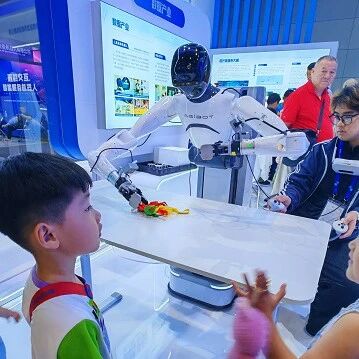
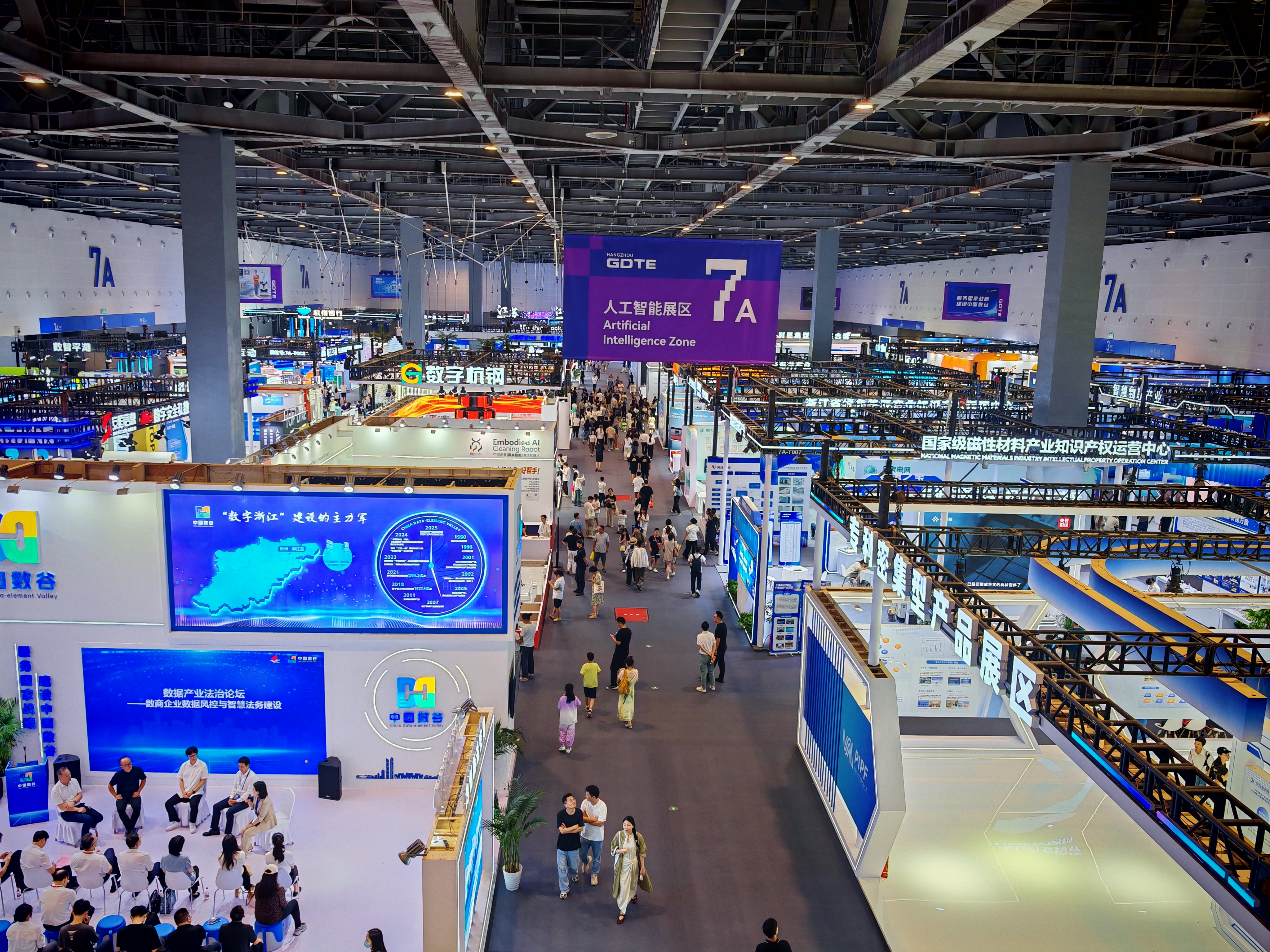
Core Viewpoint - The article highlights the rapid growth and innovation in the embodied intelligence robotics sector, particularly showcased at the recent Global Digital Trade Expo, emphasizing the integration of artificial intelligence with physical entities and the emergence of new applications in various industries [3][4][12]. Summary by Sections Digital Trade Expo Highlights - The fourth Global Digital Trade Expo attracted 257,000 visitors, a 28.5% increase from the previous year, with 1,812 participating companies, marking a 17.2% growth [3][12]. - The expo featured a significant focus on the integration of digital trade and artificial intelligence, with the AI exhibition area expanding to nearly one-third of the total space, hosting over 330 AI companies [3][12]. Embodied Intelligence Robotics - Embodied intelligence combines AI with physical entities, enabling robots to understand causality and develop common sense through interaction with their environment [8][12]. - A new competitor in the cleaning robot market is the embodied intelligence cleaning robot, which can perform 3D space cleaning using advanced methods rather than traditional wiping [11][12]. - The industry is in its early stages of technological breakthroughs and scaling production, with government support increasing for innovation in this sector [12][16]. Market Trends and Innovations - The demand for embodied intelligence robots is rising, with companies like Xingwuzhong planning to scale production next year while focusing on real-world data accumulation for product improvement [12][16]. - The Zhejiang province has gained a competitive edge in the embodied intelligence robotics industry, particularly in quadruped robots, although it still lags behind major cities like Beijing and Shanghai [16][17]. Sales and Orders - The expo resulted in a procurement amount of 30.9 billion yuan, doubling from the previous year, with 82% of orders in AI, cultural exports, and cross-border e-commerce [16][17]. - Notable orders included over 1,600 units of cleaning robots and approximately 300 million yuan in orders for the "Turing No. 1" series [16][17]. Other Technological Developments - The article also discusses the rising popularity of AI glasses, with a new model selling 40,000 units in just five days [18][19]. - Drones are expanding into civil applications, with companies reporting rapid growth in their civil business and significant order volumes for heavy-lift drones [25][26].
机器人接商演爆单,中国具身智能从“网红”转型实用
Di Yi Cai Jing· 2025-09-29 12:17
Group 1: Industry Overview - The fourth Digital Trade Expo concluded on September 29, attracting 257,000 visitors, a 28.5% increase from the previous year, with 1,812 participating companies, up 17.2% [1][16] - The expo highlighted the deep integration of digital trade and artificial intelligence, with the AI exhibition area occupying nearly one-third of the total space, doubling in size compared to previous years [1][16] - The "embodied intelligence" sector is gaining momentum, with a focus on the integration of AI with physical entities, leading to advancements in various applications, including cleaning robots and data collection robots for manufacturing [2][5][10] Group 2: Company Highlights - Star Species Robotics received over 1,600 orders for its "Turing 1" series cleaning robots, amounting to approximately 300 million yuan, with a notable order of 200 units from a client in the UAE [1][16] - The company has developed a new cleaning robot capable of 3D space cleaning, differentiating itself from traditional floor cleaning robots by using high-temperature treatment methods [10][11] - The company is focusing on B2B clients, particularly in public spaces, and aims to gather real-world data to enhance product development and expand into new application scenarios [10][11] Group 3: Market Trends - The demand for embodied intelligence robots is on the rise, with significant support from funding and policies aimed at technological innovation [11] - The industry is still in its early stages of technological breakthroughs and large-scale production, with a need for more data from real-world applications to drive development [11][13] - The Zhejiang province is leveraging its digital economy and manufacturing ecosystem to gain a competitive edge in the embodied intelligence robot sector, although it still lags behind major cities like Beijing and Shanghai [16]

“科技新特产”成杭州消费新趋势
Hang Zhou Ri Bao· 2025-09-29 02:31
Core Insights - The emergence of a "Technology Life Experience Hall" in Hangzhou showcases various innovative products, reflecting a growing consumer interest in smart and high-quality living solutions [1][2] - The sales of technology products have surged in the Wulin business district and Wen San Digital Life Street, indicating a strong demand for health and fitness-related technology as the holiday season approaches [1][3] Group 1: Technology Products - The "Technology Life Experience Hall" features over 30 local tech companies, highlighting products aimed at diverse scenarios such as sports, health, and elderly care [1] - Notable products include the AI health assessment device by Qiaolangzhong, which provides personalized health recommendations in 30 seconds, and the TOVIGOR AI fitness device that creates a compact home gym [2] - The smart exoskeleton developed by Cheng Tian Technology and Zhiyuan Research Institute is designed to assist users in walking and outdoor activities, showcasing advancements in wearable technology [2] Group 2: Market Trends - The demand for tech products is evident, with items like the AI smart glasses selling out quickly, indicating a trend towards integrating technology into daily life [2][3] - The Wen San Digital Life Street has also seen significant sales, with the Rokid flagship store reporting sold-out status for its new eyewear, reflecting the popularity of innovative tech solutions [3] - The "Technology New Specialty" initiative in Hangzhou aims to merge technology with cultural consumption, contributing to the city's goal of becoming an international consumption center [1]
Counterpoint:2025上半年全球VR头显出货量同比下滑14% AR智能眼镜有望迎来强劲增长
智通财经网· 2025-09-26 01:20
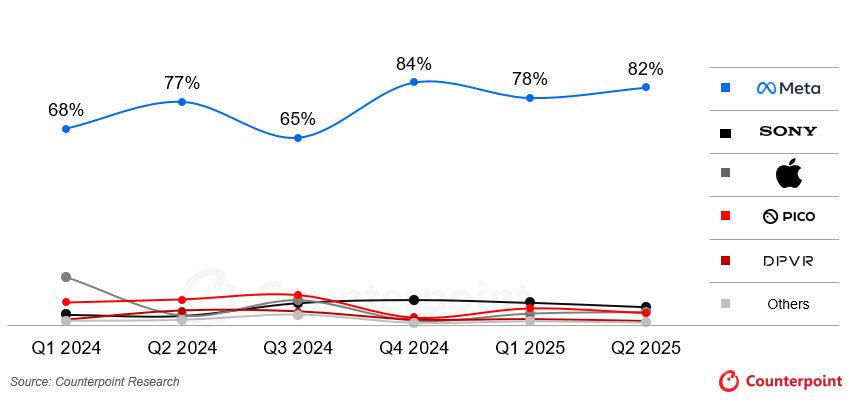
Core Insights - The global VR headset shipments are expected to decline by 14% year-on-year in the first half of 2025 due to continued weak demand in the consumer market [1] - Meta maintains a dominant position in the VR market, holding approximately 80% market share in the first half of 2025 [1] - The AR smart glasses market is projected to experience significant growth, with a compound annual growth rate (CAGR) of 69% from 2024 to 2027, driven by increased investments from major tech companies [1] VR Headset Market - The overall competitive landscape in the VR market remains stable, with few new product launches from major OEMs [1] - Meta continues to lead the market significantly, indicating a strong brand presence and product acceptance [1] AR Smart Glasses Market - Global AR smart glasses shipments increased by 50% year-on-year in the first half of 2025, signaling a recovery in market sentiment [3] - Birdbath technology-based AR smart glasses dominate the market with a 78% share, while waveguide technology-based glasses account for about 17% [3] - The average selling price of waveguide AR glasses is approximately 27% higher than that of more mature Birdbath products [3] Key Products and Innovations - Xreal One is the best-selling model among Birdbath technology products in the first half of 2025, followed by RayNeo Air 3s and RayNeo Air 3 [7] - RayNeo Air 3s features a competitive price of approximately $269 and significant improvements in optical systems [7] - Even Realities G1, a waveguide technology product, has shown strong sales despite its higher price point of $599 due to its lightweight and stylish design [7] Competitive Landscape - Xreal and RayNeo together hold over 60% of the global AR smart glasses market share in the first half of 2025 [8] - RayNeo surpassed competitors in Q2 2025 with multiple new product launches, including the RayNeo Air 3s and RayNeo X3 Pro [8] - Upcoming products like Xreal One Pro and Rokid Glasses are expected to enhance competition in the AR market [9] Future Outlook - The AR smart glasses market is anticipated to become more competitive in the second half of 2025, with new product launches expected to reshape market dynamics [9] - Notable upcoming products include Meta Ray-Ban Display and Alibaba's Quark "AR+AI" glasses, which are expected to increase the market share of waveguide products [9]
紫建电子(301121) - 重庆市紫建电子股份有限公司2025年9月25日投资者关系活动记录表
2025-09-25 10:16
Group 1: Acquisition and Business Expansion - The acquisition of Ningbo Qixiang enhances the company's capabilities in the consumer electronics market, particularly in electric vehicle charging communication technology [1][3] - The company aims to integrate resources from both entities to expand into emerging consumer battery markets, projecting significant growth potential [3][4] - The company has completed the acquisition of 51% of Ningbo Qixiang, which is now included in the consolidated financial statements [4] Group 2: Financial Performance and Market Strategy - In the first half of 2025, overseas sales revenue reached 186 million, accounting for 34.07% of total revenue, with a year-on-year growth of 19.71% [2][5] - The core business of lithium-ion batteries constitutes 97.48% of total revenue, but the gross margin is only 20.48% [5][6] - The company is focusing on reducing customer concentration and expanding into new sectors such as smart wearables and medical devices [2][6] Group 3: Research and Development Investments - The company invested 150 million in the Wanxiu large-capacity consumer product battery project and 40.8 million in the R&D center by June 30, 2025 [4] - R&D expenditure accounted for 12.53% of total revenue in the first half of 2025, indicating a strong commitment to innovation [4] - The company is actively pursuing advancements in solid-state battery technology and has achieved several patents in this area [4][6] Group 4: Product Development and Market Positioning - The company is enhancing its product offerings in Bluetooth headsets and smart wearable devices to maintain competitiveness [2][5] - Efforts are being made to improve profit margins through product upgrades and efficient production management [4][5] - The company is establishing long-term partnerships with leading brands in various sectors, including smart wearables and drones [2][3]