
天弘基金

Search documents
标的指数国防军工行业占比99%,航空航天ETF天弘(159241)拉升涨超3%,国睿科技、中航沈飞涨停
2 1 Shi Ji Jing Ji Bao Dao· 2025-06-09 02:43
Group 1 - The military industry sector is experiencing renewed activity, with the Aerospace ETF Tianhong (159241) rising by 3.05% and trading volume exceeding 270 million yuan, indicating active market participation [1] - Key stocks within the Aerospace ETF include Guorui Technology and AVIC Shenyang Aircraft Corporation, both hitting the daily limit, while other stocks like Zhenxin Technology and Sichuan Chuangxin Electronics also saw gains [1] - The Aerospace ETF closely tracks the Guozheng Aerospace Index, which has over 99% weight in the defense and military industry, with 73% of its weight focused on core sectors such as aerospace and aviation equipment [1] Group 2 - According to AVIC Securities, the development of unmanned equipment, anti-unmanned systems, and electronic countermeasures in China is still in its early stages but is expected to drive sustained high growth in the military sector in the medium to long term [2] - Military intelligence is identified as a key area for gaining a competitive edge on the battlefield, involving various operational aspects such as intelligence processing, decision support, and electronic countermeasures [2] - Huafu Securities predicts significant growth in both domestic and foreign demand from 2025 to 2027, emphasizing the importance of military development and recommending three main lines of focus: domestic trade, foreign trade, and self-control [2]


浮动费率基金密集自购 累计金额已达7000万元
2 1 Shi Ji Jing Ji Bao Dao· 2025-06-09 02:35
Core Viewpoint - Several fund companies in China are purchasing their own newly launched floating rate funds, indicating confidence in the long-term stability and health of the capital market and their investment management capabilities [1][3][4]. Group 1: Fund Companies' Self-Purchases - On June 9, China International Fund announced a plan to invest 20 million yuan in its newly launched floating rate fund, "China International Fund Rui'an Mixed Securities Investment Fund" [1]. - Other leading public fund institutions, including China Europe Fund, Bosera Fund, and Orient Securities Asset Management, have also announced self-purchases, with a cumulative investment amount reaching 70 million yuan [3]. - Manulife Fund announced on June 7 that it would invest 10 million yuan in its "Manulife Smart Navigation Mixed Securities Investment Fund" [3]. - On June 3, Xingzheng Global Fund stated it would invest 20 million yuan in its "Xingzheng Global Heqi Mixed Securities Investment Fund" [3]. - China Europe Fund committed 10 million yuan to its floating rate fund, "China Europe Large Cap Smart Selection Mixed Initiated Fund," with a holding period of no less than three years [3]. - Bosera Fund announced investments of 10 million yuan each in two of its equity funds on May 28, one of which is a floating rate fund [3]. - Orient Securities Asset Management stated it would invest 10 million yuan in its "Orient Red Core Value Mixed Fund" [3]. - Tianhong Fund also announced a 10 million yuan investment in its floating rate fund, "Tianhong Quality Value Mixed Fund" [4]. Group 2: Purpose and Industry Trends - The introduction of floating rate products aims to alleviate the issue where funds do not generate profits for investors while fund companies do, and to promote high-quality development within the fund industry [4]. - Industry insiders view the recent reforms in public fund fees, particularly the launch of floating rate products, as a significant exploration and attempt to drive further high-quality development in the industry [5]. - According to CITIC Securities, the weighted management fee rates of various fund products have significantly decreased compared to the end of 2022, indicating a successful fee reduction trend [5]. - The fund industry in China still has considerable room for further fee reductions compared to overseas markets, suggesting that the practice of fee reform and product innovation is ongoing [5]. - Future developments in floating rate funds may extend to bond funds, with fixed income + products being prioritized [5]. - Huabao Securities noted that the asymmetric fee structure of new floating rate products will enhance the importance of performance benchmarks, which may influence investors' decisions [5].

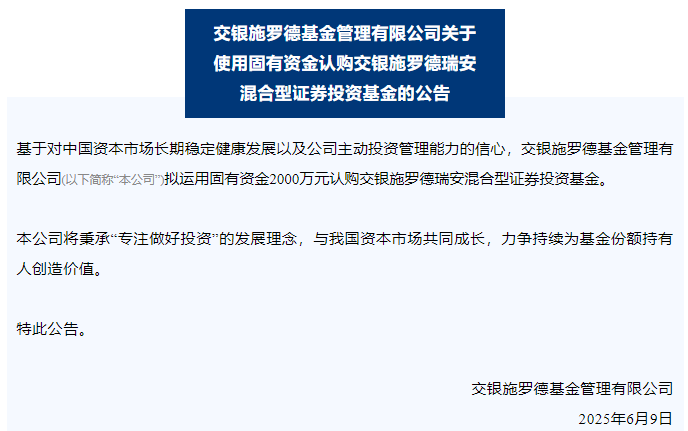
印尼拟采购中国歼十战机,航空航天ETF天弘(159241)开盘大涨1.67%,机构:海外冲突加剧或加快空天装备出口
Sou Hu Cai Jing· 2025-06-09 02:15
Group 1 - The core viewpoint of the news highlights the strong performance of the aerospace sector, with the CN5082 index rising by 1.92% and key stocks like AVIC Shenyang Aircraft (600760) increasing by 9.36% [1] - The Aerospace ETF Tianhong (159241) has shown a significant increase of 1.67%, with a trading volume of 12.29 million yuan and a turnover rate of 6.33% [1] - Indonesia is evaluating the feasibility of purchasing Chinese-made J-10 fighter jets to modernize its air force while considering budget efficiency [1] Group 2 - Huatai Securities indicates that global military spending and frequent geopolitical conflicts suggest a substantial upward cycle in the military trade market, with China entering a net surplus phase in military trade [2] - The main export products from China include aircraft, ships, armored vehicles, and missiles, attributed to the high performance and cost-effectiveness of domestically developed military products [2] - The ongoing political conflict between India and Pakistan is expected to strengthen the global military trade logic, leading to a breakthrough in the defense and military market [2] Group 3 - The Aerospace ETF Tianhong has attracted a total of 18.81 million yuan in the last four trading days [3] - The maximum drawdown since the establishment of the Aerospace ETF Tianhong is 0.72%, with a relative benchmark drawdown of 0.22% [3] - The management fee for the Aerospace ETF Tianhong is 0.50%, and the custody fee is 0.10%, making it one of the lowest in comparable funds [3] Group 4 - As of May 30, 2025, the top ten weighted stocks in the CN5082 index account for 52.51% of the total index, with companies like Guoke Technology (002625) and AVIC Shenyang Aircraft (600760) among the leaders [3]


IPO受理提速,头部券商持续加码北交所;公募REITs总市值首破2000亿元 | 券商基金早参
Mei Ri Jing Ji Xin Wen· 2025-06-09 02:06
Group 1 - The A-share IPO market showed signs of warming in May, with a total of 16 IPO applications accepted across three exchanges, surpassing the total of 11 from the first four months of the year. The Beijing Stock Exchange (BSE) accounted for nearly 70% of these applications, with 18 companies [1] - The BSE has become a competitive arena for leading brokerages, with seven out of the top ten underwriters for IPOs in 2024 being major firms. The merger of Guotai Junan and Haitong Securities has further solidified the presence of top brokerages in this space [1] - The acceleration of IPO approvals, particularly at the BSE, indicates a favorable policy environment and market vitality, leading to an expansion of financing channels for companies while increasing competition among brokerages [1] Group 2 - The issuance of floating fee funds has seen a surge, with companies like交银施罗德 and宏利基金 announcing significant self-purchases, indicating a trend where self-investment becomes a standard practice for new fund launches [2] - The record high in fund issuance, with equity funds making up over 40%, reflects growing market confidence and is likely to support related fund management companies and brokerage businesses, potentially driving more capital into equity assets [2] - The overall market sentiment has improved, with investors showing increased interest in sectors such as technology and consumption, contributing to a positive outlook for the stock market [2] Group 3 - The total market value of public REITs has surpassed 200 billion yuan for the first time, reaching 201.99 billion yuan as of June 5, 2025, with the Shanghai Stock Exchange accounting for 67% of this value [3] - The total fundraising scale for public REITs has reached 179.5 billion yuan, with the Shanghai Stock Exchange contributing 121.6 billion yuan, indicating a strong market presence [3] - The growth in public REITs market value reflects an increasing recognition of infrastructure and real estate assets, enhancing the financing capabilities of companies issuing REITs and attracting more investment into related sectors [3]



交银施罗德2000万元自购旗下浮费基金
news flash· 2025-06-09 00:55
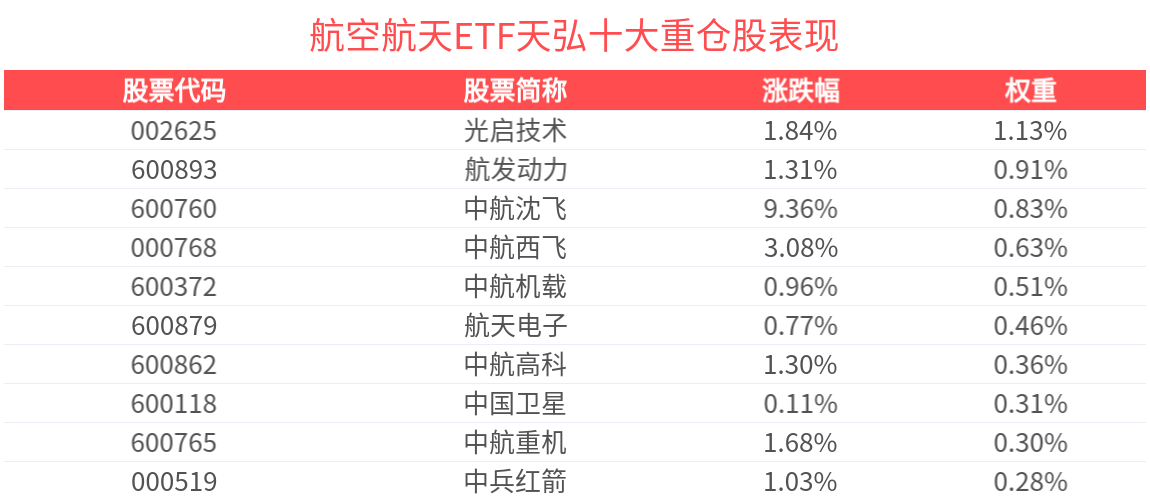
Core Viewpoint - The company,交银施罗德基金, has announced a self-purchase of 20 million yuan in its own floating fee fund, reflecting confidence in the long-term stability and healthy development of the Chinese capital market [1] Group 1: Company Actions - 交银施罗德基金 plans to use its own funds amounting to 20 million yuan to subscribe to the ongoing issuance of the交银施罗德瑞安混合 fund [1] - The self-purchase has become a standard practice among floating fee funds, with several other fund companies, including 东方红资管, 天弘基金, 博时基金, 中欧基金, and 兴证全球基金, also announcing similar self-purchases or employee co-investments ranging from 10 million to 20 million yuan [1]
忽然发现了一种融资新范式
叫小宋 别叫总· 2025-06-08 23:47
Core Viewpoint - The article discusses a new paradigm for startup financing, emphasizing the relationship between limited partners (LPs) and general partners (GPs) in investment, and the perceived inequities in access to investment opportunities between retail investors and institutional investors [1][2]. Group 1: Investment Structure - LPs provide capital while GPs manage investments, similar to how retail investors use platforms like Ant Financial to invest in stocks and bonds [1]. - The author proposes a hypothetical scenario where retail investors should have priority access to initial public offerings (IPOs) over institutional investors, arguing that retail investors pay management fees and should not be at a disadvantage [1][2]. Group 2: Equity and Access - The article highlights the unfair advantage that institutional investors and insiders, such as executives, have in accessing lower-priced shares before public offerings, which retail investors cannot access [2]. - It questions the compliance of allowing certain entities, like Ant Financial and its executives, to buy shares at lower prices compared to retail investors, suggesting a need for more equitable access to investment opportunities [2][3]. Group 3: Market Dynamics - The author illustrates the dynamics of investment rounds in startups, where initial rounds are often dominated by institutional investors, leaving retail investors to enter at higher valuations [3]. - The article notes that top-tier institutions are willing to invest in later rounds at higher prices, indicating a market structure that favors established players over smaller investors [3].

发行两周 亮点十足 新型浮动费率基金火热销售进行时
Zhong Guo Zheng Quan Bao· 2025-06-08 20:52
Core Insights - The new floating rate funds have seen significant sales success within just two weeks of issuance, with multiple banks reporting sales exceeding 1 billion yuan, and some surpassing 10 billion yuan [1][2] - The Oriental Red Core Value Mixed Fund has already exceeded its fundraising cap of 2 billion yuan, with a subscription confirmation rate of approximately 94.03% [2][3] - A trend of self-purchase by fund companies has emerged, with Manulife Fund investing 10 million yuan in its own floating rate fund, reflecting a commitment to shared interests and risk with investors [1][5] Fund Sales Performance - As of June 6, several banks, including SPDB, Bank of China, and others, reported that their sales of new floating rate funds exceeded 1 billion yuan, with SPDB and Bank of China surpassing 10 billion yuan [2] - The first batch of 16 floating rate funds launched on May 27 has seen strong initial subscription, with many funds achieving over 1 billion yuan in subscriptions by June 6 [2][3] Fund Company Actions - Multiple fund companies have announced self-purchases of their floating rate funds, with amounts ranging from 10 million to 20 million yuan, indicating confidence in the market [5][6] - The self-purchase actions by companies like Oriental Red Asset Management and Tianhong Fund demonstrate a commitment to aligning interests with investors [5][6] Fund Characteristics - The new floating rate funds have varied performance benchmarks, with some using the CSI 500 Index as a benchmark, while others target the CSI 300 Index or the CSI 800 Index [4] - The introduction of floating rate funds is seen as a response to the policy aimed at linking management fees to fund performance, marking a new approach in the industry [6]
单日成交额不足百万元 超180只ETF流动性堪忧
Shang Hai Zheng Quan Bao· 2025-06-08 18:07
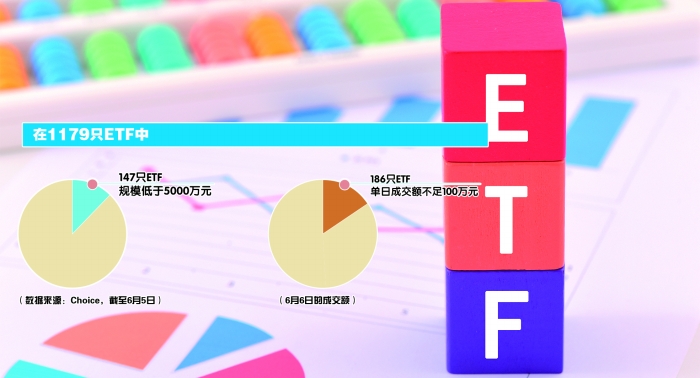
Core Viewpoint - The ETF market is facing significant challenges due to low liquidity and a high number of ETFs struggling to maintain their scale, leading to potential liquidation risks for many funds [2][3][4]. Group 1: Current Market Situation - Over 180 ETFs have daily trading volumes below one million yuan, with some even below ten thousand yuan, indicating a liquidity crisis [2][3]. - As of June 5, among 1179 ETFs, 147 have assets below 50 million yuan, and 39 have assets below 20 million yuan, with some ETFs having only a few hundred thousand yuan [3][6]. - The liquidity of ETFs is critical, especially during market volatility, as low liquidity can lead to "liquidity exhaustion" [4][5]. Group 2: Competitive Landscape - The ETF market exhibits a significant disparity in scale, particularly among core broad-based indices like the CSI 300 ETF, where the top four ETFs exceed 100 billion yuan, while many others struggle to reach 10 million yuan [6][7]. - The head effect is pronounced, with larger ETFs attracting more capital, while smaller ETFs often go unnoticed, leading to a continuous decline in their scale [7][8]. - Many fund companies are facing intense competition and are unable to cover costs, with a significant portion of ETFs operating at a loss [8]. Group 3: Need for Differentiation - Industry experts emphasize the necessity for fund companies to pursue differentiated strategies rather than blindly entering the ETF market [8][9]. - There is a call for innovative product designs that cater to specific investor needs, such as stable income products for insurance funds, and the development of thematic ETFs [9]. - The potential for innovation in ETF products is vast, with strategies like options for downside protection and transparent active ETFs gaining traction in overseas markets [9].
创历史新低!160万亿存款动手?
Ge Long Hui A P P· 2025-06-08 10:39
Core Viewpoint - The yield of money market funds is declining significantly, with major funds experiencing a drop of 30-50 basis points compared to the previous year, indicating a shift in the investment landscape as residents seek higher returns amid low interest rates [1][2][7]. Group 1: Current Yield Trends - As of June 6, 2023, the 7-day annualized yield of Yu'ebao reached a historical low of 1.18%, down from 1.56% a year ago [1][5]. - The top 15 money market funds show a general decline in yields, with most funds experiencing a decrease of 30-50 basis points compared to the previous year [2][5]. Group 2: Market Dynamics and Asset Allocation - The report from Everbright Wealth indicates that the proportion of financial assets in Chinese residents' portfolios has been increasing, reaching 54.6% in 2021 and projected to exceed 100% in 2024, marking a significant shift from non-financial assets [7][9]. - There is a noted trend of residents reallocating deposits towards higher-yielding investments such as stocks and wealth management products, as evidenced by a decrease in RMB deposits in April 2023 [9][11]. Group 3: Future Outlook - The money market fund sector is expected to face challenges as market interest rates decline further, potentially leading to a slowdown in the growth of fund sizes [13]. - The shift towards diversified asset allocation is becoming essential as reliance on deposit interest diminishes, prompting a need for investors to embrace volatility and risk [13][22].

红利风格投资价值跟踪(2025W23):红利风格缩量,ETF资金小幅净流入
Xinda Securities· 2025-06-08 08:15
Quantitative Models and Construction Methods 1. Model Name: Dividend Timing Model - **Model Construction Idea**: This model uses macroeconomic indicators such as the 10-year US Treasury yield, domestic M2 growth, and the M1-M2 scissors difference to predict the relative excess return of the CSI Dividend Index compared to the Wind All A Index[8][12] - **Model Construction Process**: - The model incorporates three key indicators: 1. **Global Liquidity**: 10-year US Treasury yield 2. **Internal Liquidity**: Domestic M2 year-on-year growth 3. **Domestic Economic Expectations**: Domestic M1-M2 year-on-year scissors difference - Historical data from 2010 onward is used to calculate the annualized excess return of the timing strategy, which is 8.14%[8] - **Model Evaluation**: The model demonstrates strong predictive power for excess returns, but its performance in 2025 YTD shows a negative excess return of -5.36%, indicating potential short-term challenges[8] 2. Model Name: Regression-Based Valuation Model - **Model Construction Idea**: This model uses the CSI Dividend Index's absolute and relative PETTM valuation levels to predict future absolute and excess returns[19][21] - **Model Construction Process**: - **Absolute Valuation**: - The absolute PETTM valuation of the CSI Dividend Index is calculated using a weighted factor adjustment to align with its dividend yield characteristics - Historical data shows a correlation coefficient of -29.66% between the absolute PETTM percentile and future absolute returns, with a regression T-statistic of -15.61[19] - Regression formula: $ y = -0.281x + 0.2635 $ - $y$: Future absolute return - $x$: Absolute PETTM percentile[23] - **Relative Valuation**: - The relative PETTM is calculated as the ratio of the CSI Dividend Index's PETTM to the Wind All A Index's PETTM - Historical data shows a correlation coefficient of -34.10% between the relative PETTM percentile and future excess returns, with a regression T-statistic of -18.23[21] - Regression formula: $ y = -0.1233x + 0.0984 $ - $y$: Future excess return - $x$: Relative PETTM percentile[30] - **Model Evaluation**: The model effectively identifies valuation extremes, with higher PETTM levels indicating greater downside risk. However, the current valuation levels suggest limited upside potential[19][22] 3. Model Name: Price-Volume Regression Model - **Model Construction Idea**: This model uses price and volume metrics, such as the weight of stocks above the 120-day moving average and trading volume percentiles, to predict future returns[25][31] - **Model Construction Process**: - **Price Dimension**: - The weight of CSI Dividend Index constituents above the 120-day moving average is calculated - Historical data shows a correlation coefficient of -43.92% between this weight and future absolute returns, with a regression T-statistic of -20.70[25] - Regression formula: $ y = -0.2344x + 0.2115 $ - $y$: Future absolute return - $x$: Weight above the 120-day moving average[27] - **Volume Dimension**: - Absolute trading volume percentiles are calculated for the CSI Dividend Index - Historical data shows a correlation coefficient of -39.91% between trading volume percentiles and future absolute returns, with a regression T-statistic of -21.87[31] - Regression formula: $ y = -0.3821x + 0.3434 $ - $y$: Future absolute return - $x$: Trading volume percentile[31] - **Model Evaluation**: The model highlights the importance of price and volume extremes in predicting returns. Current metrics suggest moderate upside potential[25][31] 4. Model Name: Dividend 50 Optimized Portfolio - **Model Construction Idea**: This portfolio combines high dividend yield stocks with a linear multi-factor model to enhance capital gains while maintaining a stable dividend style exposure[45] - **Model Construction Process**: - High dividend yield stocks are selected as the base - A linear multi-factor model is applied to optimize capital gains - Barra style factor constraints are used to ensure consistent dividend style exposure - Timing adjustments are made based on the three-dimensional dividend timing model to further enhance returns[45] - **Model Evaluation**: The portfolio demonstrates strong performance, with significant excess returns over the CSI Dividend Index[45] --- Model Backtest Results 1. Dividend Timing Model - Annualized excess return since 2010: 8.14%[8] - 2025 YTD excess return: -5.36%[8] 2. Regression-Based Valuation Model - **Absolute Valuation**: - Current absolute PETTM: 9.35x - 3-year percentile: 98.53% - Predicted future absolute return: -1.34%[19][22] - **Relative Valuation**: - Current relative PETTM: 0.49x - 3-year percentile: 72.36% - Predicted future excess return: 0.92%[22][30] 3. Price-Volume Regression Model - **Price Dimension**: - Weight above 120-day moving average: 57.03% - Predicted future absolute return: 7.78%[25][27] - **Volume Dimension**: - Absolute trading volume percentile: 47.40% - Predicted future absolute return: 16.23%[31] - Relative trading volume percentile: 7.21% - Predicted future excess return: 0.81%[32] 4. Dividend 50 Optimized Portfolio - **Performance Metrics**: - 1-year absolute return: 9.53% - 1-year excess return: 6.20% - 3-month absolute return: 6.04% - 3-month excess return: 2.91%[46]