
易方达

Search documents
ETF午评:稀土ETF易方达领涨6.1%
Nan Fang Du Shi Bao· 2025-08-25 04:32
Group 1 - The ETF market showed mixed performance on the 25th, with the rare earth ETFs leading the gains [2] - Efund's rare earth ETF (159715) rose by 6.10%, while the Jiashi rare earth ETF (516150) increased by 5.89%, and another rare earth ETF (159713) gained 5.82% [2] - On the downside, the Kexin 50 ETF from Fuguo led the declines with a drop of 3.9%, followed by the Kexin chip design ETF (588780) which fell by 3.05%, and the Kexin chip ETF index (588920) decreased by 2.62% [2]


恒生科技ETF易方达(513010)涨3.6%,市场对9月降息的乐观情绪升温
Sou Hu Cai Jing· 2025-08-25 03:27
Core Viewpoint - The Hong Kong stock market has seen significant gains, with the Hang Seng Index rising over 2% to reach a new high since 2021, driven by optimistic sentiment regarding potential interest rate cuts by the Federal Reserve [1] Group 1: Market Performance - The Hang Seng Technology Index increased by nearly 3%, while the E Fund Hang Seng Technology ETF (513010) rose by 3.6% today, marking a year-to-date increase of 29.6% [1] - As of August 25, the price-to-earnings ratio of the Hang Seng Technology Index stood at 21.77, which is at the 23.11% percentile since the index's inception [1] Group 2: Economic Context - Optimism in the market has been fueled by comments from Federal Reserve Chairman Jerome Powell at the Jackson Hole symposium, leading to increased expectations for a rate cut in September [1] - The current environment of ample liquidity and low interest rates has highlighted the valuation advantages of technology stocks [1] Group 3: Investment Insights - The E Fund Hang Seng Technology ETF tracks the Hang Seng Technology Index, providing exposure to key Chinese technology assets, including Tencent, NetEase, Alibaba, SMIC, and Xiaomi, with a low comprehensive fee rate of 0.25% [1] - According to Guotai Junan Securities, potential interest rate cuts by the Federal Reserve may improve the current pressure on the Hong Kong dollar exchange rate, making Hong Kong stocks, particularly in the technology sector, more attractive for capital inflows due to their unique asset advantages and greater elasticity benefiting from the AI cycle [1]




港股消费板块高开高走,新消费标的纳入重要指数,关注港股消费ETF易方达(513070)布局机会
Mei Ri Jing Ji Xin Wen· 2025-08-25 02:29
Core Viewpoint - The Hong Kong consumer sector is experiencing positive momentum, with significant gains in key stocks and the recognition of new consumption brands in major indices [1] Group 1: Market Performance - The CSI Hong Kong Stock Connect Consumer Theme Index rose by 1.8% as of 10:05 AM, with notable increases in stocks such as Li Ning (over 5%), Alibaba-W, and Miniso (over 4%), and Meituan-W and Lao Pu Gold (over 2%) [1] - The inclusion of Pop Mart in the Hang Seng Index, effective from September 8, indicates a growing market acceptance of new consumption brands [1] Group 2: Industry Trends - The new consumption sector is showing strong performance, exemplified by Pop Mart's projected revenue of 13.88 billion yuan for the first half of 2025, representing a year-on-year growth of 204%, and an adjusted net profit of 4.71 billion yuan, up 372% year-on-year [1] - The CSI Hong Kong Stock Connect Consumer Theme Index includes leading companies across various sectors such as tourism, trendy toys, e-commerce, and consumer electronics, with a rolling P/E ratio of 21.3, which is below the 20th percentile since its launch in 2020 [1] Group 3: Investment Opportunities - The E Fund Hong Kong Consumer ETF (513070) offers T+0 trading and a low management fee of 0.15% per year, providing investors with an opportunity to capitalize on the trends of quality and personalized consumption [1]
“翻倍基”扎堆!头部公募布局思路引关注
券商中国· 2025-08-24 23:32
Core Viewpoint - The A-share market is experiencing a significant bull market, with the Shanghai Composite Index reaching a nearly 10-year high and the total market value of A-shares surpassing 100 trillion yuan, indicating a strong upward trend in the market [2][3]. Group 1: Market Performance - As of August 18, 2023, the number of funds with over 100% returns has surged to 128, a significant increase from 21 at the end of June [3][5]. - The average daily addition of "doubling funds" is 6-7, with a record 21 new "doubling funds" on the day the Shanghai Composite Index hit a near 10-year high [2][3]. - The median return of non-monetary funds in the past year is 17%, with 125 funds achieving returns of 100% or more [2][3]. Group 2: Fund Types and Performance - Active equity funds dominate the "doubling fund" category, with 99 such products, accounting for nearly 80% of the total [5]. - Among active funds, 59 "doubling funds" are mixed equity funds, while flexible allocation, QDII, and stock funds (excluding index funds) have 16, 11, and 8 "doubling funds," respectively [5]. - Passive index funds have also shown strong performance, with 29 index funds achieving over 100% returns, representing 22% of the total [8]. Group 3: Sector Performance - The technology sector, particularly AI, robotics, and semiconductors, has seen a significant increase in "doubling funds," with 46 such funds in this category [10]. - The pharmaceutical and biotechnology sectors have produced 26 "doubling funds," driven by favorable policies and strong stock performance [11]. - The North Exchange and Hong Kong markets have also contributed to the rise of "doubling funds," with 20 and 25 funds, respectively, achieving over 100% returns [11][12]. Group 4: Fund Management and Strategy - Leading public fund companies have effectively captured structural opportunities, with over 60 products from firms like Huaxia, Fuguo, and E-Fund returning over 50% in the past year [13]. - Fund managers have demonstrated strong active management capabilities, allowing them to navigate market fluctuations and capitalize on sector rotations [14][15]. - The trend towards low-cost ETFs is increasing, as investors seek stable returns amid market volatility, further enhancing the appeal of these investment vehicles [15].

[8月24日]美股指数估值数据(全球股票市场反弹;美元会继续降息么;全球指数星级更新)
银行螺丝钉· 2025-08-24 13:53
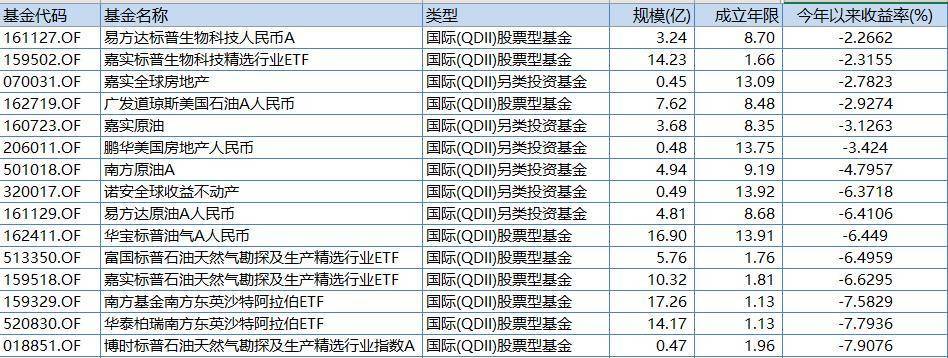
Core Viewpoint - The article discusses the valuation of global stock indices, U.S. Treasury indices, and the impact of the Federal Reserve's interest rate policies on global markets, highlighting the potential investment opportunities and market trends. Group 1: Market Overview - The global stock market experienced fluctuations, with a notable increase of 0.8% over the week, returning the global stock index rating to 3.0 stars [10][11][12]. - The U.S. stock market saw a slight increase of 0.54%, while non-U.S. markets performed even better, with the Chinese market leading globally [13][15][20]. - The A-share market surged over 3%, reaching a rating of 4.3 stars, indicating strong performance [17]. Group 2: Impact of Federal Reserve Policies - Recent discussions within the Federal Reserve regarding interest rate cuts have influenced market movements, contributing to a rebound in global stock markets [18][21]. - The decline in U.S. interest rates has led to increased liquidity, benefiting risk assets like stocks, and causing the U.S. dollar to depreciate against other currencies [19][24][36]. - The article notes that if the Federal Reserve continues to lower rates, it will positively impact A-shares and Hong Kong stocks, although the effect may not be as pronounced as in previous instances [29][30]. Group 3: Valuation Insights - The article provides a valuation table for various global stock indices, highlighting metrics such as price-to-earnings ratios, price-to-book ratios, and dividend yields [59][61]. - It emphasizes that certain indices are undervalued and suitable for dollar-cost averaging investments, while others are overvalued [62]. Group 4: Investment Products - The article mentions the limited availability of funds for investing in overseas markets within mainland China, contrasting with the wider variety available abroad [3][4]. - A global index advisory portfolio has been introduced, which diversifies investments across U.S., UK, Hong Kong, and A-share indices [42]. - The article also discusses the constraints on purchasing these investment products, with daily limits on investment amounts [44].
易方达医疗保健行业混合A近一周下跌0.94%
Sou Hu Cai Jing· 2025-08-24 03:41
Group 1 - The core viewpoint of the article highlights the performance of the E Fund Healthcare Industry Mixed A Fund, which has shown significant returns over various time frames [1] - As of August 24, 2025, the latest net value of the fund is 4.7380 yuan, with a weekly return of -0.94%, a three-month return of 31.94%, and a year-to-date return of 55.55% [1] - The fund was established on January 28, 2011, and as of June 30, 2025, it has a total scale of 3.944 billion yuan [1] Group 2 - The top ten stock holdings of the fund include companies such as Heng Rui Medicine, Rejig Bio, Xin Li Tai, BeiGene-U, Hai Si Ke, and others, with a total holding percentage of 58.14% [1] - The fund manager is Yang Zhenshao, who oversees the investment strategy and portfolio management [1]





易方达港股通红利混合A近一周上涨1.00%
Sou Hu Cai Jing· 2025-08-24 03:35
Core Insights - The core viewpoint of the article highlights the performance and key details of the E Fund Hong Kong Stock Connect Dividend Mixed A Fund, including its recent returns and major holdings [1] Fund Performance - The latest net value of E Fund Hong Kong Stock Connect Dividend Mixed A is 0.8695 yuan [1] - The fund has achieved a weekly return of 1.00%, a three-month return of 17.18%, and a year-to-date return of 23.60% [1] Fund Details - E Fund Hong Kong Stock Connect Dividend Mixed A was established on March 7, 2018, and is managed by Tang Bolun [1] - As of June 30, 2025, the fund's total scale is 2.656 billion yuan [1] Major Holdings - The top ten stock holdings of the fund include: Longyuan Power, China Mobile, Sinopec Refining, Sinochem Fertilizer, Beijing Enterprises Water Group, Mengniu Dairy, Xinhua Winshare, Sinopec Kantons, Datang Renewable, and Sichuan Chengyu [1] - The combined proportion of the top ten holdings is 33.37% [1]
部分产品年内收益超140%!QDII基金亮眼 趁势扩容 多家机构排队入局
Sou Hu Cai Jing· 2025-08-23 11:36
Core Viewpoint - The demand for global asset allocation is rising, with QDII funds showing strong performance, as 93% of them have achieved positive returns this year, particularly those focused on the Hong Kong pharmaceutical sector, with some funds exceeding 100% returns [1][2][4]. Group 1: QDII Fund Performance - As of the latest data, there are 314 QDII funds with a total size of 633.48 billion yuan, and 93% of these funds have achieved positive returns this year [1][2]. - The average returns for different types of QDII funds this year are as follows: mixed funds at 29%, stock funds at 22%, alternative investment funds at 17%, and bond funds at 3.6% [2]. - The top-performing QDII funds are primarily invested in the Hong Kong pharmaceutical sector, with the highest returns recorded at 142.57%, 107.47%, and 107.18% for specific funds [2][3]. Group 2: Market Trends and Drivers - The strong performance of Hong Kong stocks is attributed to three main factors: robust macroeconomic conditions in China, a subtle shift in the international environment, and the certainty of growth in specific sectors such as AI and innovative pharmaceuticals [4]. - The Hong Kong stock market has outperformed major global markets, driven by a rebound in the Hang Seng Index and the Hang Seng Tech Index [3][4]. Group 3: QDII Quota Expansion - The State Administration of Foreign Exchange has approved an additional QDII investment quota of 3.08 billion USD, bringing the total approved quota to 170.87 billion USD [5]. - There is a growing interest among institutions to apply for QDII qualifications, with 12 institutions currently in the application process, indicating a strong appetite for global asset allocation [5][6]. - Recent limitations on QDII fund subscriptions have been observed, as several funds have suspended or limited large subscriptions due to high demand exceeding the newly allocated quotas [6].
机构风向标 | 天合光能(688599)2025年二季度已披露前十大机构累计持仓占比45.83%
Xin Lang Cai Jing· 2025-08-23 01:46
Group 1 - Trina Solar (688599.SH) reported its semi-annual results for 2025, with 21 institutional investors holding a total of 1.006 billion shares, representing 46.14% of the company's total share capital as of August 22, 2025 [1] - The top ten institutional investors collectively hold 45.83% of the shares, with a slight decrease of 0.46 percentage points compared to the previous quarter [1] Group 2 - In the public fund sector, four funds increased their holdings, accounting for a 0.90% increase, while two funds saw a slight decrease in holdings [2] - Seven new public funds were disclosed during this period, including several ETFs focused on the Sci-Tech Innovation Board [2] - One foreign fund, Hong Kong Central Clearing Limited, reduced its holdings by 0.60% compared to the previous quarter [2]

沪指本周连续上攻创近10年新高,A500ETF易方达(159361)、沪深300ETF易方达(510310)等助力布局核心资产
Sou Hu Cai Jing· 2025-08-22 14:16
Market Performance - The three major A-share indices collectively strengthened this week, with the Shanghai Composite Index rising by 3.5%, surpassing 3700 and 3800 points, and reaching a nearly ten-year high. The total market turnover exceeded 2 trillion yuan for several consecutive days [1] - The CSI 300 Index increased by 4.2%, the CSI A500 Index rose by 4.3%, the ChiNext Index gained 5.9%, and the STAR Market 50 Index surged by 13.3%. The Hang Seng China Enterprises Index saw a modest increase of 0.5% [1][3] Sector Performance - In terms of sector performance, semiconductor, cloud gaming, securities, and CPO sectors experienced gains, while banking, gas, and aquaculture sectors faced adjustments [1] - The STAR Market 50 Index is characterized by a significant representation of "hard technology" leaders, with over 50% in semiconductors and nearly 75% combined in medical devices, photovoltaic equipment, and software development [4] Index Valuation Metrics - The rolling P/E ratios for the indices are as follows: CSI 300 at 13.7x, CSI A500 at 15.9x, ChiNext at 37.4x, STAR Market 50 at 153.2x, and Hang Seng China Enterprises at 10.4x [3] - The rolling P/E ratio percentiles indicate that the CSI 300 and CSI A500 indices are relatively inexpensive, with percentiles of 59.7% and 63.5% respectively, while the ChiNext and STAR Market 50 indices are at higher percentiles, indicating they are relatively more expensive [3][5]
