荣耀

Search documents
欧洲智能手机市场整体承压,荣耀逆势增长11%领跑行业
Guan Cha Zhe Wang· 2025-08-29 13:10
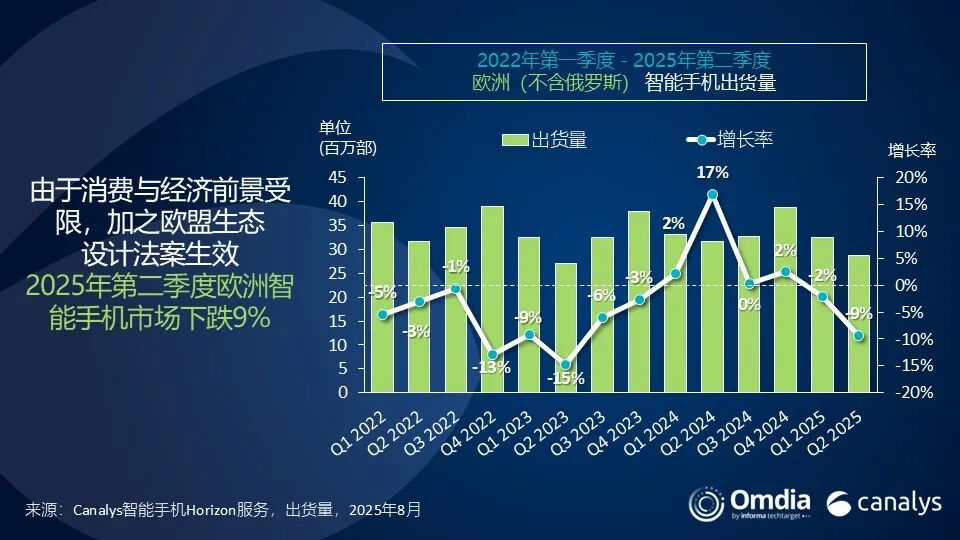
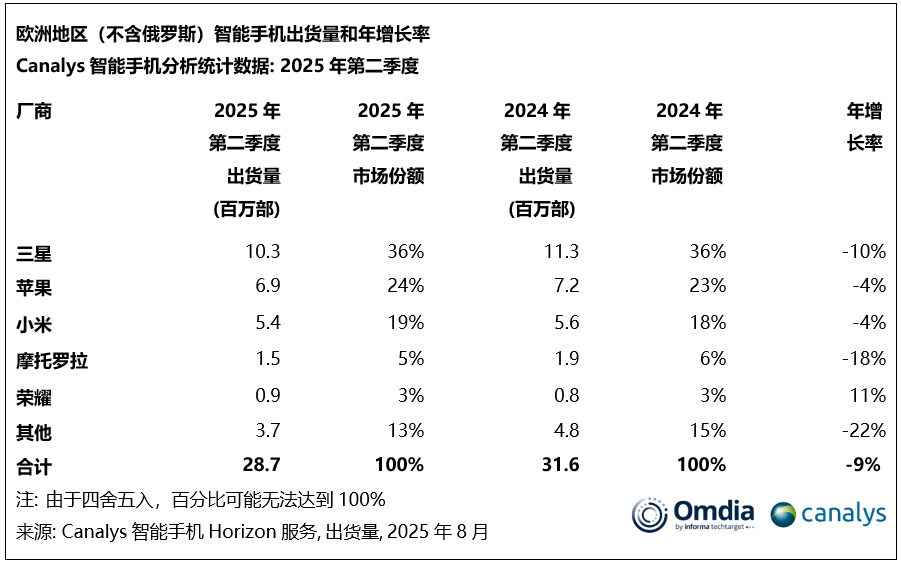
根据Canalys(现并入Omdia)最新数据,2025年第二季度欧洲智能手机市场出货量同比下降9%,整体环境面临挑战。在此背景 下,荣耀逆势实现11%的同比增长,以90万部的出货量稳居市场前五,展现出强劲的品牌韧性与市场竞争力。 荣耀的逆势表现,源于对技术创新的坚持与用户需求的深度洞察。据悉,8月28日,荣耀Magic V5海外版正式在欧洲上市,这款 旗舰产品将搭载离线、实时翻译功能,为跨语言沟通场景提供便捷支持;而该功能的核心技术已获国际权威认可——近日,荣 耀联合上海交通大学完成的相关端侧AI语音研究论文,已在国际语音顶会INTERSPEECH上发表,印证了其技术的前沿性。 在阿尔法战略引领下,荣耀长期深耕端侧AI领域,面对全球智能手机市场的机遇与挑战,荣耀凭借对用户需求的深刻洞察与持 续的技术投入,逐步建立起差异化的全球竞争力。此次荣耀Magic V5海外上市与技术成果的落地,正是荣耀将学术与技术研究 转化为用户体验的又一实践,也为其在海外市场的持续发展奠定基础。未来,荣耀将继续以技术创新为驱动,为全球消费者带 来更优质的智能终端体验。 | 欧洲地区(不含俄罗斯)智能手机出货量和年增长率 | | | ...

荣耀折叠屏欧洲市占率突破三成 中国科技出海重塑高端市场格局
Huan Qiu Wang Zi Xun· 2025-08-29 09:56
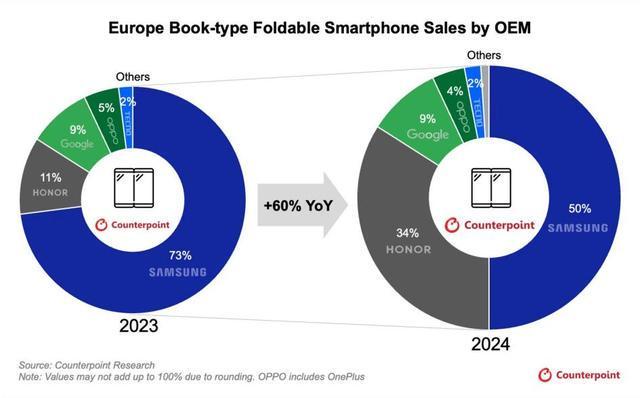
Group 1 - The foldable smartphone market is becoming a vibrant growth area, with a projected 37% year-on-year increase in sales in Europe for 2024 [1] - Chinese manufacturers are rapidly rising in this market, with Honor, OnePlus, and Transsion launching their own foldable smartphones, leading to Samsung's market share dropping from 98% in 2022 to 73% in 2023 [1] - Honor is recognized as the fastest-growing brand in the European foldable smartphone market, with a staggering 377% year-on-year sales growth and a market share increase to 34% [1] Group 2 - Honor's Magic V5, launched on August 28, 2025, aims to reclaim technological leadership with its lightweight design and advanced features [3] - The Magic V5 features the world's first on-device voice large model, enabling real-time translation in multiple languages without the need for internet connectivity [5] - Honor's commitment to R&D is evident, with over 70% of its global team focused on innovation, filing over 300 patents monthly, and achieving an R&D revenue ratio of 11.5% [5] Group 3 - Honor's expansion into Southeast Asia, particularly Indonesia, has resulted in a 121% year-on-year increase in smartphone shipments in Q2 [6] - The company is breaking into high-end markets with a combination of robust hardware and intelligent software, supported by a user-centered and research-driven innovation system [6] - The journey from following to leading in niche markets reflects the strategic determination of Chinese tech firms to innovate and compete globally [6]
赛道Hyper | 荣耀Magic V系列折叠屏重塑欧洲市场
Hua Er Jie Jian Wen· 2025-08-29 07:31
Core Insights - Honor's new foldable flagship Magic V5 was launched in London, featuring the world's first on-device voice large model for efficient AI call translation, marking a new offensive in the European high-end market [1][10] - Honor is leveraging foldable screen products to establish competitiveness in the global high-end market, with a projected 377% year-on-year sales growth in the European foldable screen market in 2024, increasing its market share to 34%, second only to Samsung [2] - The success in Europe reflects not only product breakthroughs but also the strategic logic and execution capabilities of Chinese brands in the global high-tech market [4] Market Strategy - Honor's strategy in the high-end foldable screen market is based on technological innovation and differentiated design rather than price competition, directly challenging existing market structures [8] - The European high-end foldable screen market has been dominated by Samsung's Galaxy Z series, which has established a strong brand recognition and service system [6][7] - Honor's approach combines foldable screens with AI technology to create new value spaces in niche scenarios, shifting consumer focus towards innovation and experience rather than brand history or price [13] Product Features - The domestic version of Honor Magic V5 is recognized for its lightweight design and high performance, being referred to as a "PC that fits in your pocket," making AI terminals a reality [9] - The overseas version of Magic V5 features the world's first on-device voice large model, enabling offline AI call translation, enhancing cross-language communication [10][15] - The innovative features of Magic V5 cater to the extreme demands of European high-end users for portability, durability, and user experience [11] Global Expansion - Honor's strategic breakthrough in the European market is part of a broader global strategy, with significant growth in Southeast Asia and the Middle East, where smartphone shipments increased by 121% and 95% year-on-year, respectively [3][18] - The company's multi-market strategy allows for risk diversification and enhances long-term growth potential, with different regions serving distinct strategic functions [20] Brand Positioning - Honor's brand narrative has shifted from "Made in China" to "Innovation from China," emphasizing its technological advancements and unique value propositions [5][34] - The integration of foldable screens and AI capabilities not only enhances user experience but also drives hardware, software, and service innovation, forming a comprehensive competitive advantage [30][29] - Honor's marketing strategy includes leveraging social media, local KOL partnerships, and community operations to convey its brand story, enhancing international recognition [24][25] Future Outlook - As foldable screen technology matures and AI integration continues, Honor has significant expansion opportunities in the European and global high-end markets [26] - The company plans to deepen user engagement, expand experience store coverage, and continuously innovate while adjusting product offerings to meet regional market demands [27] - Honor's comprehensive strategy demonstrates that sustainable internationalization involves creating unique value through technology, user experience, and academic validation, rather than relying solely on product exports [35]

传音被小米“打伤”了
Jing Ji Guan Cha Wang· 2025-08-29 07:20
Core Viewpoint - The global smartphone market is experiencing a slight decline in shipments, with Africa being viewed as the last untapped market by major smartphone manufacturers. However, Transsion Holdings has reported a significant drop in revenue and net profit, marking the first decline since its IPO in 2019 [1][2]. Group 1: Company Performance - Transsion Holdings reported a revenue of 29.077 billion yuan in the first half of 2025, a year-on-year decrease of 15.86%, and a nearly 60% drop in net profit [1]. - The company attributes its performance decline to product rhythm, intense market competition, and supply chain costs, with market competition being a particularly significant factor [1][2]. - Transsion's market share in Africa has remained stable at around 50% since surpassing Samsung in 2017, but it is now facing increased competition from rivals like Xiaomi, OPPO, and others [1][2]. Group 2: Competitive Landscape - Xiaomi has rapidly increased its market share in Africa from single digits in 2019 to 14.4% by Q2 2025, positioning itself as the third-largest player behind Transsion and Samsung [2]. - The competition is intensifying, with various brands targeting both high-end and low-end segments, particularly the sub-$100 market where Transsion has traditionally dominated [3][4]. - Xiaomi's strategy includes not only competitive pricing but also better specifications at similar price points, directly challenging Transsion's product offerings [3]. Group 3: Market Expansion and Challenges - Transsion has been expanding into South Asia, Latin America, and the Middle East since 2016, with non-African markets contributing 65% of revenue by 2024 [5]. - Despite this growth, profitability in these new markets is significantly lower than in Africa, with a gross margin of 17.66% compared to 28.59% in Africa [5]. - The company is also investing in mid-to-high-end products to target the emerging middle class in new markets, with R&D spending reaching 1.362 billion yuan in the first half of 2025 [5][6]. Group 4: New Business Ventures - Transsion has been developing its electric two-wheeler business for nearly three years, launching the TankVolt brand in Uganda and expanding into other African countries [6]. - In 2025, the company partnered with ZMC Solar Energy to enter the energy storage market in Iraq, indicating a diversification strategy beyond smartphones [6].


中信建投:卫星、火箭、应用共振 关注卫星互联网产业链投资机会
智通财经网· 2025-08-29 03:49
Core Viewpoint - The Ministry of Industry and Information Technology (MIIT) has issued guidelines to promote the development of the satellite communication industry, aiming for over 10 million satellite communication users by 2030, with a focus on direct-to-cell (DTC) satellite communication to unlock market potential [1][2][10]. Summary by Relevant Sections Overall Requirements - The guidelines emphasize optimizing business access to enhance application scenarios, foster technology industries, and improve resource supply, aiming to release the development potential of China's satellite communication industry [2][4]. Application Areas - The guidelines advocate for accelerating the construction and application of satellite internet systems, encouraging diverse network access services in remote and complex regions, and promoting integration with various industries such as agriculture, transportation, and urban governance [3][4]. International Cooperation - The guidelines support enterprises in applying for international satellite communication codes and expanding international markets, integrating satellite communication cooperation into frameworks like the Belt and Road Initiative [3][4]. Standard System - The guidelines propose building an open and shared satellite communication standard system and actively participating in international standard organizations [3]. Funding Support - The guidelines suggest leveraging industrial funds to support key enterprises in the satellite communication sector and encourage local governments to establish dedicated funds [4]. Business Access Optimization - The guidelines recommend establishing new satellite communication businesses and expanding access for private enterprises, promoting various commercial cooperation methods to invigorate the satellite communication market [4]. Direct-to-Cell (DTC) Development - DTC satellite communication is highlighted as a key area for market expansion, allowing ordinary smartphones to connect directly to satellites, thus broadening the user base from industry to public consumers [5][6][10]. Current Developments - The U.S. has made significant strides in DTC with SpaceX's plans for satellite deployment, while China has achieved breakthroughs in technology and is preparing for large-scale commercial applications [8][9][10].

传音“下南洋”:今年出货增速夺冠 高端化或成下一战|东盟观察
2 1 Shi Ji Jing Ji Bao Dao· 2025-08-28 23:48
Core Insights - Transsion Holdings has emerged as a significant player in the Southeast Asian smartphone market, achieving a shipment volume of 4.5 million units in Q2 2023, capturing an 18% market share and surpassing Samsung, which previously held the top position [1][10] - The company has demonstrated a remarkable 17% year-on-year growth rate, leading the regional market in growth despite an overall decline of 1% in smartphone shipments in Southeast Asia [1][10] - Transsion's strategy focuses on emerging markets with large populations and low smartphone penetration, avoiding competition in saturated high-end markets [1][3][4] Market Dynamics - Chinese smartphone manufacturers have rapidly expanded in Southeast Asia, with their market share exceeding 60%, driven by competitive pricing and localized products [2][9] - The Southeast Asian market, characterized by a young population and increasing middle-class consumers, presents significant growth opportunities for smartphone brands [4][9] - Transsion's entry into Southeast Asia began in Indonesia, where smartphone penetration was below 40%, allowing the company to target underserved markets [5][6] Competitive Strategy - Transsion has adopted a localized approach, leveraging its experience from Africa to establish distribution networks through small local dealers, enhancing its bargaining power [3][5][6] - The company has focused on online sales and community engagement, utilizing social media and e-commerce platforms to reach consumers effectively [7][10] - Differentiation in product offerings is key, with Transsion's brands TECNO, Infinix, and itel targeting distinct consumer segments, from budget-conscious buyers to tech-savvy youth [10][11] Future Outlook - As competition intensifies with other Chinese brands like OPPO and Xiaomi, Transsion plans to enhance its product offerings in imaging, AI, and charging technologies to meet the demands of higher-end consumers [2][15] - The company is also exploring high-end market segments, with plans to invest in innovative product designs and features, including foldable smartphones [15][16] - The shift towards higher-value markets is seen as essential for sustaining growth, especially as entry-level market profits diminish [15][16]
上海龙旗科技股份有限公司 关于2025年度“提质增效重回报” 行动方案的半年度评估报告
Zheng Quan Ri Bao· 2025-08-28 23:32
Core Viewpoint - The company, Shanghai Longqi Technology Co., Ltd., is committed to enhancing its operational quality and investor returns through its "Quality Improvement and Efficiency Enhancement Action Plan" for 2025, despite facing challenges in the macroeconomic environment [1][2]. Group 1: Business Performance - In the first half of 2025, the company achieved operating revenue of 19.908 billion yuan, a year-on-year decrease of 10.65%, while net profit attributable to shareholders was 356 million yuan, an increase of 5.01% [2]. - The company launched multiple new smartphone products in international markets and experienced robust growth in its tablet and AIoT businesses [3]. Group 2: Strategic Focus - The company adheres to a long-term strategy, emphasizing global expansion and continuous R&D innovation, focusing on the "1+2+X" product strategy to integrate AI technology with smart terminals [2][3]. - The company has established a strong R&D team with over 4,000 personnel and holds 169 invention patents, 475 utility model patents, and 110 design patents [6]. Group 3: ESG and Sustainable Development - The company is dedicated to building a modern governance structure and enhancing its ESG capabilities, having received an AA rating in the latest ESG assessment by Wind [4]. - The company has published its ESG report for 2024, showcasing its commitment to environmental protection, social responsibility, and corporate governance [4]. Group 4: Shareholder Returns - The company has implemented a stable cash dividend policy, distributing 228.8 million yuan in cash dividends to shareholders in 2024 [7]. - In the first half of 2025, the company repurchased 7,499,937 shares, accounting for 1.61% of its total share capital, with a total expenditure of approximately 299.8 million yuan [8]. Group 5: Investor Relations - The company emphasizes transparent communication with investors, participating in various forums and utilizing visual reports to enhance understanding of its operations [9]. - The company achieved a 100% response rate to investor inquiries on the Shanghai Stock Exchange's interactive platform [9]. Group 6: Corporate Governance - The company has strengthened its governance mechanisms, including the cancellation of the supervisory board and the establishment of a worker representative director [11]. - The company has revised its internal governance documents to enhance operational efficiency and governance standards [11][12].
万咖壹联(01762.HK)上半年经调整净利润增10.3%至5180万元 海外收益大幅增长
Ge Long Hui· 2025-08-28 11:38
Core Insights - The company reported strong financial performance for the first half of 2025, with revenue reaching RMB 1.713 billion, a year-on-year increase of 39.0% [1] - Gross profit was RMB 177 million, up 29.2% year-on-year, while adjusted EBITDA was RMB 73.9 million, reflecting a 7.6% increase [1] - Adjusted net profit stood at RMB 51.8 million, marking a 10.3% year-on-year growth [1] Business Expansion - The company's overseas strategy has expanded its business footprint beyond China, with overseas revenue now exceeding half of the domestic market revenue for Chinese game developers [1] - There is potential for further growth in the overseas revenue segment, which could become a major source of income for the company [1] Strategic Partnerships and AI Development - The company is currently engaged in mobile advertising service strategic partnerships with six leading smartphone manufacturers, including Huawei, Xiaomi, OPPO, vivo, Honor, and Apple [1] - Increased investment in AI research and development has significantly enhanced the effectiveness of mobile advertising, strengthening business partnerships and core competitiveness [1] Future Growth Areas - The company's AI precision marketing and advertising business will continue to focus on the mobile gaming sector while also exploring other new growth areas [2] - To achieve rapid expansion in potentially high-growth new business areas, the company will consider internal team development, incubation, or external acquisitions [2]
“非洲手机之王”利润消失之谜
Guo Ji Jin Rong Bao· 2025-08-28 11:16
Core Viewpoint - Transsion Holdings, known as the "King of Mobile Phones in Africa," is facing significant growth challenges, as indicated by its latest semi-annual report showing a clear decline in mobile phone sales [1] Financial Performance - For the reporting period, Transsion Holdings achieved operating revenue of approximately 29.077 billion yuan, a year-on-year decrease of 15.86% [3] - The net profit attributable to shareholders was about 1.213 billion yuan, down 57.48% year-on-year, while the net profit after deducting non-recurring gains and losses was 897 million yuan, reflecting a decline of 63.04% [3] - In contrast, the first half of 2024 saw operating revenue grow by 38.07% to 34.558 billion yuan, with net profit increasing by 35.70% to 2.852 billion yuan [4] Market Position and Competition - Transsion's smartphone business generated revenue of 24.389 billion yuan, accounting for 85.99% of total revenue, while feature phones contributed 1.704 billion yuan, or 6.00% [5] - The company held a 12.5% market share in the global mobile phone market, ranking third among global brands, with a 7.9% share in the global smartphone market, ranking sixth [5] - The majority of Transsion's sales, 99.83%, came from overseas markets, primarily in Africa, South Asia, Southeast Asia, the Middle East, and Latin America [5] Regional Performance - Africa remains Transsion's core market, with revenue from this region reaching 22.719 billion yuan, but showing only a 2.97% year-on-year growth, down from 6.74% the previous year [9][10] - The gross margin in the African market decreased by 1.46 percentage points to 28.59% due to intensified competition [9][10] Competitive Landscape - The African mobile phone market has become increasingly competitive, with companies like Xiaomi, Realme, OPPO, and Honor intensifying their efforts, leading to a loss of market share for Transsion [9][11] - Despite still leading the African market with a 51% share and 9.7 million units shipped in Q2 2025, Transsion's growth rate was only 6%, while competitors like Xiaomi and Honor reported growth rates of 32% and 161%, respectively [11]
Canalys:2025年第二季度欧洲智能手机出货量下降9%至2870万部
智通财经网· 2025-08-28 11:15
Core Insights - The European smartphone market (excluding Russia) is experiencing a decline, with Q2 2025 shipments down 9% year-on-year to 28.7 million units, making it the worst-performing region globally [1][8] - Samsung remains the market leader with a 36% share, but its shipments fell 10% to 10.3 million units, impacted by EU regulations [1][8] - Apple ranks second with 6.9 million units shipped, a 4% decline, while Xiaomi saw a strong rebound in Italy, shipping 5.4 million units [1][8] Market Dynamics - The market is characterized by weak consumer demand and conservative inventory strategies among channels, influenced by new EU eco-design regulations [3][5] - The top five manufacturers now hold a record 87% market share, highlighting the importance of brand differentiation and scale for sustainable business models [5] - Direct sales channels are gaining traction as consumers seek better interaction with brands, while open market channels are driven by price considerations [5] Future Outlook - The smartphone market in Europe is expected to return to growth by 2026, driven by replacement demand for low-end devices and increasing consumer interest in AI applications [7] - Long-term growth projections remain modest, with an expected CAGR of 1.7% until 2029, emphasizing the need for manufacturers to understand evolving consumer purchasing motivations [7]