大疆

Search documents
机构认为人形机器人落地是硬道理!“全市场唯一百亿规模”机器人ETF(562500)盘中巨量成交超14亿,惊现“倒车接人”盛况!
Mei Ri Jing Ji Xin Wen· 2025-08-07 06:14
Group 1 - The core viewpoint of the news highlights the resilience of the robotics ETF (562500), which has shown a decline of 0.84% but managed to recover from a maximum intraday drop of 1.58%, indicating strong market interest and liquidity with a trading volume of 1.416 billion yuan [1] - DJI has launched its first generation of sweeping robot flagship product, the DJI ROMO series, which integrates drone-like environmental perception and intelligent path planning capabilities for home cleaning [1] - CITIC Securities emphasizes the importance of practical application scenarios and precision sensors for humanoid robots, noting that while current valuations reflect high shipment expectations, global shipment volumes are projected to be only 10,000 to 20,000 units by 2025 [1] Group 2 - The robotics ETF (562500) is the only robot-themed ETF in the market with a scale exceeding 10 billion yuan, covering various segments such as humanoid robots, industrial robots, and service robots, facilitating investors' access to the entire robotics industry chain [2]

大疆这回可真冤枉
半佛仙人· 2025-08-07 05:53
Core Viewpoint - The article discusses the competitive landscape between DJI's new robot vacuum, DJI ROMO, and the home cleaning services offered by JD.com, highlighting how JD's aggressive pricing undermines the value proposition of high-tech cleaning devices [3][6]. Group 1: Product Comparison - DJI ROMO features advanced technology, including dual 180-degree fisheye cameras and three radars, but faces challenges from JD's low-cost cleaning services [3][4]. - The article emphasizes that while robot vacuums can perform specific tasks, they cannot match the comprehensive cleaning services provided by human cleaners, who can handle a variety of household chores [4][6]. Group 2: Market Dynamics - JD's subsidized cleaning services can be as low as 50 yuan for two hours, making it economically unfeasible for consumers to choose a robot vacuum priced in the thousands [6][7]. - The article draws parallels between the current market situation and previous price wars in other industries, suggesting that aggressive pricing strategies can disrupt established high-tech products [7]. Group 3: Consumer Behavior - Consumers may prefer the immediate and versatile services of human cleaners over the limited functionality of robot vacuums, despite the latter's technological advancements [4][6]. - The article illustrates that the subjective experience of hiring a cleaner can provide more value than owning a robot vacuum, as cleaners can perform multiple tasks beyond just vacuuming [6].



深圳参与制定三千余项国际标准
Xin Lang Cai Jing· 2025-08-07 04:12
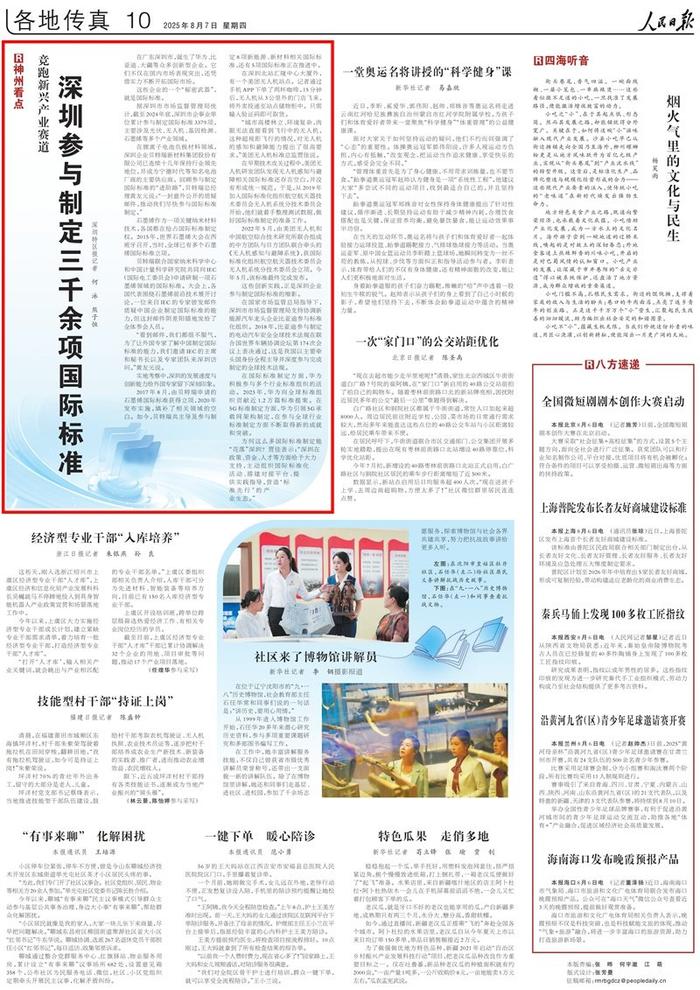
Group 1 - The core viewpoint of the article highlights the success of innovative companies in Shenzhen, such as Huawei, BYD, and DJI, which excel in both domestic and international markets due to their involvement in international standards [1] Group 2 - As of the end of 2024, Shenzhen's enterprises and institutions have participated in the development of a total of 3,379 international standards, primarily in emerging industries like photovoltaics, drones, genetic testing, and graphene [1]
五年前,对王兴兴的一次未公开访谈
Hu Xiu· 2025-08-07 03:42
Core Insights - The article discusses the journey of Yushun Technology, a leading consumer robotics company, as it approaches its IPO, highlighting the foresight of its founder Wang Xingxing and the investment from Xiangfeng [1][4]. Group 1: Company Overview - Yushun Technology has evolved from a niche player in quadruped robotics to a market leader, surpassing its international counterpart Boston Dynamics in performance and sales [5]. - The company focuses on quadruped robots, which are seen as more practical for integration into human life compared to bipedal robots [11][12]. Group 2: Founder Insights - Wang Xingxing is characterized as a pragmatic idealist, emphasizing the importance of understanding the technology and market needs while maintaining flexibility in achieving goals [2][3]. - His approach to robotics development involves a deep understanding of technical details and a commitment to producing components in-house to avoid pitfalls in the complex development process [2][30]. Group 3: Market Position and Strategy - Yushun's strategy includes targeting practical applications for its robots, with a focus on affordability and user-friendly designs to encourage adoption in everyday life [25][36]. - The company aims to reduce costs through structural optimization and efficient production processes, with a target price point that could make quadruped robots accessible to a broader audience [25][26]. Group 4: Technological Development - Yushun has a strong emphasis on self-research and development, with proprietary innovations in key components like drive systems and sensors, which are crucial for maintaining competitive advantages [29][30]. - The company has accumulated a significant number of patents in the quadruped robotics field, indicating a robust intellectual property strategy [29]. Group 5: Future Outlook - Wang envisions a future where quadruped robots are commonplace in households, capable of performing various tasks and enhancing human interaction [9][11]. - The company is positioned to capitalize on the growing interest in AI and robotics, with plans for continuous product iteration and market expansion [36][62].
独家 | 五年前,对王兴兴的一次未公开访谈
投中网· 2025-08-07 02:33
Core Viewpoint - The article highlights the visionary leadership of Wang Xingxing, the founder of Yuzhu Technology, and the company's significant advancements in the field of quadruped robots, positioning it as a leader in the consumer robotics sector as it approaches its IPO [3][4]. Group 1: Wang Xingxing's Insights and Philosophy - Wang Xingxing demonstrates a clear understanding of the complexities involved in robotics development, emphasizing the importance of mastering technical details and exploring all possibilities to avoid pitfalls in future developments [4][5]. - He believes in the principle of "slow is fast," advocating for in-house production of components to ensure quality and control over the technology [5]. - Wang is described as being stubborn about goals but flexible in methods, focusing on practical needs and ensuring the company survives before pursuing larger ambitions [6]. Group 2: Market Position and Competitive Advantage - Yuzhu Technology has established itself as a leading player in the quadruped robotics market, with significant advancements in performance and sales, surpassing its international counterparts like Boston Dynamics [7]. - The company has a strong first-mover advantage and a rich patent portfolio, which provides a competitive edge in the rapidly evolving robotics industry [23][31]. - Wang emphasizes the importance of cost reduction through structural optimization and in-house production, aiming for a price point that makes quadruped robots accessible to the general public [19][20]. Group 3: Future Outlook and Technological Trends - The company is optimistic about the future integration of quadruped robots into everyday life, predicting that they will become common in households within the next few years [10][12]. - Wang highlights the potential for AI advancements to enhance the capabilities of robots, positioning Yuzhu to capitalize on emerging trends in the robotics and AI sectors [4][28]. - The article discusses the ongoing evolution of robotics technology, with a focus on the shift from hydraulic to electric systems, which is seen as essential for broader adoption [15][16]. Group 4: Company Culture and Management Approach - Yuzhu Technology maintains a flat organizational structure, prioritizing product-oriented management to streamline processes and enhance efficiency [36][37]. - Wang's management philosophy is rooted in rational decision-making, focusing on practical outcomes and the overall optimization of products rather than individual component perfection [39][42]. - The company aims to foster a culture centered around technology and product development, ensuring that all organizational efforts align with these core values [38].

深圳参与制定3000余项国际标准
Ren Min Wang· 2025-08-07 02:13
Core Viewpoint - Shenzhen has become a hub for innovative companies like Huawei, BYD, and DJI, excelling in both domestic and international markets through active participation in the formulation of international standards [20][21]. Group 1: International Standards Participation - As of the end of 2024, Shenzhen enterprises have participated in the formulation of 3,379 international standards, covering various industries such as photovoltaics, drones, gene testing, and graphene [20]. - The company BetterRay has maintained a leading position in the lithium-ion battery anode material sector for over a decade and is a major supplier to well-known battery manufacturers like CATL [20]. - BetterRay's involvement in international standard formulation was catalyzed by a critical email that prompted them to engage in the process [20][21]. Group 2: Technological Innovations - The graphene international standard initiated by BetterRay was officially established in 2017 and filled a significant gap in the field [22]. - Meituan's drone delivery service exemplifies the need for advanced perception and obstacle avoidance capabilities in complex urban environments, leading to the establishment of international standards in this area [22][23]. - The international standard for drone perception and obstacle avoidance systems was officially published in May 2023, following collaborative efforts between Chinese and Japanese teams [23]. Group 3: Supportive Ecosystem - Shenzhen's success in international standard formulation is attributed to strong support in policies, funding, and talent, fostering an ecosystem that prioritizes standards [25]. - BYD's participation in the global technical regulations for electric vehicle safety was recognized at the United Nations World Forum, showcasing China's leadership in international standardization [24]. - Huawei contributed nearly 12,000 standard proposals to global standard organizations in 2023, demonstrating its active role in shaping industry standards [24].

大疆跨界扫地机器人:堆料足但难出头,背后藏着更大的野心
Tai Mei Ti A P P· 2025-08-07 02:01
Core Viewpoint - DJI has entered the vacuum cleaner market with its ROMO series, leveraging its expertise in drone technology, but faces challenges in competing with established brands due to pricing and product performance issues [2][4][12]. Group 1: Market Context - The global smart vacuum cleaner market shipped 5.096 million units, showing a year-on-year growth of 11.9%, with the top five manufacturers holding a 63.4% market share, an increase of 3.5% from the previous year [4]. - The vacuum cleaner market has a low penetration rate compared to traditional home appliances, indicating significant growth potential [12]. - The top five brands in the market, including Ecovacs and Xiaomi, dominate over 90% of the market share, highlighting the competitive landscape [12]. Group 2: Product Features and Performance - The ROMO series features a transparent design that reflects DJI's industrial aesthetics and includes advanced obstacle avoidance technology, utilizing dual fisheye vision sensors and solid-state LiDAR [5][7]. - Despite its strong design and technology, the ROMO series is criticized for its cleaning capabilities, using a disc mop system rather than more advanced options like roller mops, which are common in mid-to-high-end products [9][15]. - Initial sales figures indicate strong consumer interest, with over 2,000 units sold on JD.com and more than 1,000 on Taobao, leading to some versions being sold out [9][20]. Group 3: Strategic Intent and Future Aspirations - DJI's entry into the vacuum cleaner market is seen as a strategic move to diversify its product offerings, with potential future developments in humanoid robots hinted at [3][17]. - The company has been planning this move since 2020, indicating a long-term strategy rather than a spontaneous decision [14]. - The integration of advanced technologies from its drone expertise into household products is viewed as a potential advantage, but the company must overcome significant marketing and competitive challenges in this new sector [15][16].

OpenAI估值达5000亿美元;华为再起诉传音丨新鲜早科技
2 1 Shi Ji Jing Ji Bao Dao· 2025-08-07 01:49
Group 1: OpenAI Developments - OpenAI is reportedly negotiating a secondary sale of employee stock, with a valuation of approximately $500 billion, up from $300 billion in the last funding round [2] - OpenAI announced that ChatGPT will no longer respond to user inquiries about whether to break up with partners, shifting its role to guiding users in their decision-making process [6] Group 2: Legal and Patent Issues - Huawei has filed a lawsuit against Transsion Holdings in Germany for allegedly infringing on a European patent related to image display technology, marking the second legal action against the company [3] Group 3: Corporate Actions and Financial Performance - NVIDIA's CEO Jensen Huang sold approximately 225,000 shares for nearly $39.78 million, with a remaining holding of about 73.45 million shares [5] - Microsoft has initiated a new round of layoffs in Washington state, bringing the total number of layoffs in the state this year to 3,160, as part of its strategy to focus on growth areas [9] - Snap reported second-quarter revenue of $1.34 billion, with a net loss of $262.6 million, leading to a 15% drop in stock price due to lower-than-expected average revenue per user [12] - Uber announced a $20 billion stock buyback plan and projected third-quarter total order value to exceed Wall Street expectations, with second-quarter revenue of $12.7 billion, up 18% [13] Group 4: Technology and Innovation - AMD has opened its first ROCm lab in Nanjing, China, aimed at promoting the development of ROCm in key sectors such as AI and smart manufacturing [8] - DJI launched its first robotic vacuum, the DJI ROMO, with three models priced between 4,699 and 6,799 yuan, featuring advanced environmental sensing and intelligent path planning capabilities [16]
低空经济,正在快速起飞
Huan Qiu Wang· 2025-08-07 01:33
Core Insights - The National Development and Reform Commission (NDRC) is promoting the high-quality development of the low-altitude economy, emphasizing a principle of localized development and prioritizing safety [1][4] - The low-altitude economy is recognized as a significant growth point for China's economy, with a broad development outlook supported by both policy and market forces [4][6] Policy and Market Support - Recent policies have led to the issuance of 110 regulations related to the low-altitude economy by Q2 2025, covering various aspects such as airspace management and infrastructure development [4] - The introduction of special bonds for the low-altitude economy is seen as an innovative financing tool for local governments, addressing the challenges of high initial investment and long return cycles in emerging industries [3][6] Industry Structure - The low-altitude economy encompasses a long industrial chain, covering nearly 20 industries and over 300 application scenarios, divided into upstream, midstream, and downstream sectors [4] - Upstream focuses on infrastructure, including aircraft development and energy solutions; midstream involves aircraft operation and services; downstream caters to consumer needs with applications like aerial tourism and logistics [4] Market Growth and Projections - The low-altitude economy market is projected to reach 1.5 trillion RMB by 2025, with an expected annual growth rate of 15% to 20% over the next decade [6][8] - The number of low-altitude economy-related enterprises in China surpassed 86,500 by May 2025, with a significant increase in new registrations [6][8] Investment Trends - The low-altitude economy has become a hot spot in the primary market, with 52 investment cases in the first half of 2025, reflecting a 48.6% year-on-year increase [7] - New low-altitude economy industry funds established in 2025 exceeded 14, with a total amount exceeding 50 billion RMB [7] Technological Advancements - Significant technological breakthroughs have been achieved in the low-altitude economy, including the development of hydrogen-powered drones and advanced logistics drones [8] - A multi-level talent training system is being established, with 55 universities involved in low-altitude economy talent cultivation by July 2025 [8] Strategic Recommendations - The low-altitude economy is experiencing a comprehensive implementation from macro-level national planning to micro-level local subsidies and infrastructure projects, suggesting a positive outlook for related sectors [9]
大疆与影石,一场“同类”之间的第二曲线博弈
3 6 Ke· 2025-08-07 00:40
Core Insights - The competition between DJI and Insta360 will revolve around products, channels, brands, and supply chains, with both companies entering each other's core business areas [1][4] - DJI has launched its first panoramic camera, Osmo 360, while Insta360 is preparing to release a panoramic drone, indicating a direct competition in the imaging tools market [1][3] Industry Trends - New imaging tools, including drones, action cameras, and panoramic cameras, are evolving from niche products for extreme sports enthusiasts to mainstream creative tools for the general public [5][7] - The market for consumer-grade handheld smart imaging devices has grown from 16.43 billion yuan in 2017 to 36.47 billion yuan in 2023, with a compound annual growth rate of 14.2% [8] Competitive Landscape - DJI's pricing strategy for Osmo 360 is aggressive, with the base model priced at 2,999 yuan, while Insta360 has reduced the price of its panoramic camera to 3,298 yuan [9][12] - Both companies are leveraging their respective strengths: DJI utilizes its ecosystem and supply chain advantages, while Insta360 focuses on continuous innovation and user-friendly experiences [12][13] Product Development - DJI and Insta360 are both committed to enhancing user experience through innovative features, with DJI emphasizing hardware compatibility and Insta360 focusing on software and user engagement [13][16] - The introduction of AI in imaging tools is seen as a significant opportunity for growth, with Insta360 exploring AI integration for enhanced user experience [8][17] Strategic Positioning - Both companies are seeking to expand their product lines and explore new growth opportunities, with DJI entering new markets such as robotic vacuum cleaners and Insta360 diversifying its product offerings [17] - The competition is characterized by a shared commitment to innovation and product quality, with both companies aiming to avoid significant weaknesses in their offerings [16][17]