上海家化

Search documents
关于美妆新增长,吕义雄/黄锦峰/唐毅等20+行业大咖给出了答案|品观2025中国化妆品年会
3 6 Ke· 2025-11-28 07:31
Core Insights - The beauty industry is entering a new life cycle characterized by a general decline, making growth a rare capability [3][4] - Understanding the new cycle's operational logic is essential for finding growth paths amidst industry fluctuations [4][5] Industry Trends - The 2025 China Cosmetics Annual Conference highlighted the industry's transformation and invited over 300 speakers to share insights on growth [4][5] - The event attracted over 2,000 attendees and 20,000 online viewers, indicating a strong desire for answers regarding growth in an uncertain environment [5] Company Strategies - UpBeauty's CEO emphasized sustainable growth based on quality scale, activated organizational mechanisms, and clear strategic layouts, targeting over 10 billion yuan in sales by 2025 [16][17] - Yatsen's CEO shared a threefold growth strategy focusing on global R&D systems, multi-brand operations, and resilient learning organizations, achieving positive growth for four consecutive quarters [19][20] - Shanghai Jahwa's strategy includes focusing on core brands, brand building, online presence, and efficiency, resulting in double-digit growth in the first half of the year [21][24] - Pechoin's CEO highlighted the importance of entering the medical beauty sector to overcome growth challenges, leveraging a comprehensive ecosystem for product offerings [25][27] - Weibo Haitai's founder discussed the necessity of adapting to change as a core driver for industry development, predicting a shift from ingredient promotion to effect-based payment models [30][34] Future Outlook - The industry is expected to see significant growth in aerosol cosmetics, with projections of 900 million units by 2030 [51][56] - The trend towards precision skincare driven by scientific methodologies is anticipated to reshape the market landscape [61][63] - The integration of AI in the beauty industry is expected to enhance innovation and efficiency, with many companies investing in AI technologies [65][67] Market Opportunities - The potential for Chinese brands to expand internationally is significant, with a focus on localizing products and establishing a strong brand presence abroad [40][45] - The emphasis on emotional and experiential aspects of consumer engagement is becoming increasingly important for brand differentiation and growth [81][82]


国信证券:商贸零售行拥抱变局聚新势 重塑价值觅转机
智通财经网· 2025-11-28 01:29
Core Viewpoint - The retail industry is experiencing increased market volatility as of the end of 2025, with a focus on capturing new consumption trends and expectations for a reversal of traditional consumption challenges [1] 2025 Review - In the first nine months of 2025, the total retail sales reached 36,587.7 billion yuan, reflecting a year-on-year growth of 4.5%, with retail sales of consumer goods excluding automobiles growing by 4.9% [2] - By category, cosmetics sales grew by 3.9%, while gold and jewelry sales surged by 11.5% due to a low base last year and rising gold prices [2] - Cross-border e-commerce imports and exports reached approximately 2,060 billion yuan, marking a 6.4% increase, demonstrating resilience despite external impacts such as tariffs [2] - The consumption landscape shows structural highlights in sectors like pets, trendy toys, personal care, and jewelry, driven by insights into new consumer demands and product innovation [2] - The new consumption industry trends and expectations for a reversal in traditional consumption challenges are identified as the two main themes, with a positive market performance at the beginning of the year followed by a cooling trend later on [2] 2026 Outlook - New markets will be explored domestically, including customer return during offline channel adjustments and new dividends from innovative business models like instant retail, while overseas expansion remains crucial for Chinese brands [3] - New demands will focus on insights into emerging consumer preferences, emphasizing emotional and practical value in products, and exploring innovation through IP+ and AI+ [3] - A platform-based approach is necessary due to intensified competition, requiring companies to create mechanisms for continuous growth through both internal and external opportunities [3] Investment Recommendations - For beauty and personal care, focus on leading companies with room for product innovation and those with platform capabilities for iterative growth, such as Shangmei Co., Proya, and others [4] - In the gold and jewelry sector, companies with differentiated designs and expansion potential are expected to benefit, including Chao Hong Ji and Chow Tai Fook [4] - For cross-border e-commerce, leading firms expanding in target markets and new categories will see sustained fundamental catalysts, such as Small Commodity City and Anker Innovations [4] - In offline retail, companies showing initial operational improvements should be monitored, including Jiajiayue and Miniso [4]
商贸零售行业2026年投资策略:拥抱变局聚新势,重塑价值觅转机
Guoxin Securities· 2025-11-27 14:52
Core Insights - The report maintains an "outperform" rating for the retail sector, highlighting the potential for recovery in consumer demand and the importance of adapting to new market conditions [1][4][10] 2025 Industry Review - In the first three quarters of 2025, China's retail sales reached 365,877 billion yuan, growing by 4.5% year-on-year, with non-automotive retail sales increasing by 4.9% [2][10] - The cosmetics sector saw a stable growth of 3.9%, while gold and jewelry sales surged by 11.5% due to low base effects and rising gold prices [2][26] - Cross-border e-commerce imports and exports amounted to approximately 2.06 trillion yuan, reflecting a growth of 6.4% despite external pressures [2][33] 2026 Outlook - New markets will be explored, including offline channel adjustments and innovations in instant retail, alongside continued overseas expansion opportunities [3][61] - New consumer demands will focus on emotional and practical value, leveraging AI and IP for product innovation [3][66] - A platform-based approach is necessary to ensure sustainable growth amid intensifying competition and shorter product life cycles [3][66] Investment Recommendations - The report suggests focusing on leading companies in beauty care, gold and jewelry, cross-border e-commerce, and offline retail, with specific recommendations for companies like Up Beauty, Chow Tai Fook, and Yonghui Superstores [4][34] - The beauty care sector is expected to benefit from product innovation and platform capabilities, while gold and jewelry companies are advised to capitalize on differentiated designs [4][45] - Cross-border e-commerce firms are projected to thrive as external tariff impacts diminish, with recommendations for companies like Anker Innovations and Focus Technology [4][54] Consumer Behavior Trends - The report notes a structural shift in consumer preferences, with a growing emphasis on emotional value and product differentiation, particularly among younger demographics [3][78] - Instant retail is identified as a significant growth area, with the market expected to exceed 2 trillion yuan by 2030 [3][80] Cross-Border E-commerce Insights - Cross-border e-commerce continues to show resilience, with exports to the EU growing by 8.4% while exports to the US declined by 17% due to tariff impacts [33][87] - Successful brands in overseas markets are those that effectively combine global branding with localized operational strategies [87]




净利润翻番后,上海家化在CS渠道下出一步新棋
FBeauty未来迹· 2025-11-27 14:10
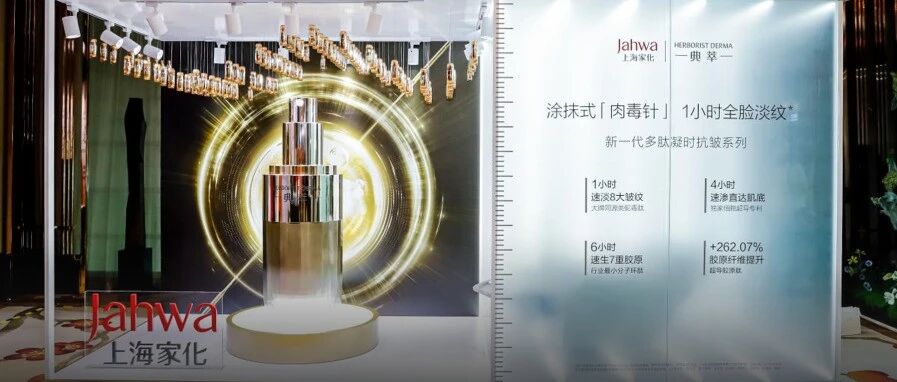
Core Viewpoint - Shanghai Jahwa is focusing on the CS channel after a significant increase in net profit in the first three quarters, aiming to leverage its product and channel strengths to reshape the entire value chain from brand to consumer [3][6]. Group 1: Market Insights - The CS channel has shown resilience and potential for growth, with many consumers still preferring in-store experiences and interactions with staff [4]. - The latest data indicates a recovery in the CS channel, with retail sales of cosmetics reaching 328.82 billion yuan in the first three quarters of 2025, a year-on-year increase of 3.9% [8]. - Despite a 2.8% decline in total sales, the decrease has narrowed significantly, indicating a shift towards the efficacy skincare era where in-store experiences are crucial for consumer trust [8][9]. Group 2: Strategic Initiatives - Shanghai Jahwa has recognized the importance of the CS channel and is implementing a dual strategy focusing on efficacy skincare and enhancing the in-store experience [11]. - The company has introduced the "Golden Chain Plan," a digital activation and incentive mechanism aimed at rebuilding the value chain of the CS channel [18][20]. - The plan addresses three key challenges: driving foot traffic to stores, simplifying product selection, and resolving pricing discrepancies between online and offline channels [19]. Group 3: Product Development - The new generation of peptide products from the brand "Dian Cui" is designed to meet the high demand for effective skincare solutions, drawing inspiration from medical beauty treatments [21]. - The unique technology behind the new products, such as the环二肽-1, offers significant advantages in terms of efficacy and penetration, enhancing the overall consumer experience [23][25]. - The comprehensive anti-aging system developed by the brand includes multiple active ingredients that work synergistically to improve skin quality, showcasing the brand's commitment to innovation [26]. Group 4: Future Outlook - The integration of the Golden Chain Plan and the new peptide series represents a systematic innovation around the CS channel, aiming to create a complete growth engine by aligning product, technology, experience, and data [29]. - This new operational structure is expected to enhance the CS channel's capabilities, making it more adaptable to modern retail demands [30]. - The anticipated launch of the new products in January 2026 is expected to generate significant market interest and potentially lead to the emergence of new bestsellers in the CS channel [30].
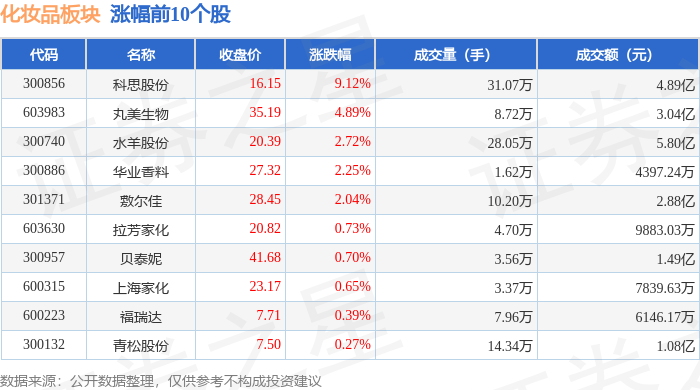
化妆品板块11月27日涨1.6%,科思股份领涨,主力资金净流出2533.51万元
Zheng Xing Xing Ye Ri Bao· 2025-11-27 09:13
Core Viewpoint - The cosmetics sector experienced a 1.6% increase on November 27, with Keshare leading the gains, while the overall market showed mixed results with the Shanghai Composite Index rising by 0.29% and the Shenzhen Component Index declining by 0.25% [1] Group 1: Market Performance - The Shanghai Composite Index closed at 3875.26, up 0.29% [1] - The Shenzhen Component Index closed at 12875.19, down 0.25% [1] - The cosmetics sector's individual stock performance is detailed in a table, highlighting significant gainers such as Keshare with a 9.12% increase [1] Group 2: Individual Stock Performance - Keshare (300856) closed at 16.15 with a 9.12% increase and a trading volume of 310,700 shares, amounting to a transaction value of 489 million yuan [1] - Marubi Biological (603983) closed at 35.19, up 4.89%, with a trading volume of 87,200 shares and a transaction value of 304 million yuan [1] - Other notable performers include Water Sheep (300740) with a 2.72% increase and a transaction value of 580 million yuan [1] Group 3: Capital Flow Analysis - The cosmetics sector saw a net outflow of 25.34 million yuan from institutional investors and 82.57 million yuan from retail investors, while individual investors contributed a net inflow of 108 million yuan [2] - A detailed table shows the capital flow for individual stocks, indicating that LaFang (603630) had a net inflow of 5.96 million yuan from institutional investors [3] - Other stocks like Shanghai Jahwa (600315) and Huaye Fragrance (300886) also experienced varying degrees of net inflow and outflow from different investor categories [3]



上美股份涨超6% 美妆双十一大促总量稳增 公司等国货头部品牌仍能保持较快增速
Zhi Tong Cai Jing· 2025-11-27 06:33
Core Viewpoint - The stock of Shangmei Co., Ltd. (02145) has risen over 6%, currently trading at 89.7 HKD, with a transaction volume of 41.05 million HKD, reflecting strong performance in the beauty sector during the recent Double Eleven shopping festival [1] Group 1: Industry Performance - The 2025 Double Eleven shopping festival saw e-commerce retail sales reach nearly 2.4 trillion CNY, marking a year-on-year growth of over 10% [1] - The beauty market during Double Eleven exhibited characteristics of "steady overall growth, with high growth concentrated in specific subcategories and core channels" [1] - Taobao and Tmall channels led the beauty market with a GMV share of 61.3% [1] Group 2: Company Performance - Shangmei Co., Ltd. reported significant growth in its Double Eleven performance, with its total sales across all channels increasing by 145% year-on-year [1] - Sales on Tmall increased by 52%, while sales on Douyin surged by 268% [1] - According to Dongfang Securities, Shangmei Co., Ltd. ranked first in the beauty brand category on Douyin across various metrics, indicating a strong brand presence and momentum [1]
港股异动 | 上美股份(02145)涨超6% 美妆双十一大促总量稳增 公司等国货头部品牌仍能保持较快增速
智通财经网· 2025-11-27 06:31
Core Viewpoint - The article highlights the strong performance of Up Beauty Co., Ltd. during the 2025 Double Eleven shopping festival, showcasing significant growth in sales and market share within the beauty sector [1]. Company Performance - Up Beauty Co., Ltd. saw its stock price increase by 6.03%, reaching HKD 89.7, with a trading volume of HKD 41.05 million [1]. - The company reported a 145% year-on-year increase in total sales across all channels during the Double Eleven event, with specific growth rates of 52% on Tmall and 268% on Douyin [1]. Industry Insights - The overall e-commerce retail sales during the 2025 Double Eleven period reached approximately CNY 2.4 trillion, marking a year-on-year growth of over 10% [1]. - The beauty market during this event demonstrated a trend of "steady overall growth, with high growth concentrated in specific subcategories and core channels" [1]. - Tmall's channel dominated the beauty market with a GMV share of 61.3% [1]. - Key beauty brands, including Up Beauty Co., Ltd., experienced significant growth rates on Tmall, with increases of 65.5%, 86.2%, 13.0%, 21.1%, and 42.7% for various companies [1].
研判2025!中国爽肤水行业发展历程、市场政策、产业链图谱、市场规模、竞争格局及发展趋势分析:国产品牌加速突围,抢滩步伐加速[图]
Chan Ye Xin Xi Wang· 2025-11-27 01:48
Overview - The consumption of toner in China is expanding beyond female consumers as male skincare awareness increases, leading to a new growth point in the market [1][9] - The sales revenue of toner in China reached 20.863 billion yuan in 2021, with a year-on-year growth of 2.98%, but is projected to decline to 17.865 billion yuan in 2024, a decrease of 3.25% [1][10] - High-end toners account for approximately 55.47% of the market, while mass-market toners make up about 44.53% [1][10] Industry Development - The toner industry in China has evolved from basic cleansing products to a mature category with diverse sub-segments, entering a phase of high-quality development characterized by multiple innovations [4] - The rise of "ingredient-focused" consumers has led to the popularity of natural plant extracts and additive-free formulations, while new technologies like micro-ecological skincare and nano-encapsulation enhance product efficacy [4] - Online channels such as e-commerce and live streaming have emerged, allowing both domestic and international brands to expand their reach, while offline stores upgrade consumer experiences through smart skin testing [4] Market Policies - The Chinese government has implemented a series of regulations to enhance the development of the cosmetics industry, including guidelines for production quality management and safety assessments, pushing the toner industry towards standardization and sustainability [6] Industry Chain - The upstream of the toner industry includes suppliers of raw materials like glycerin, hyaluronic acid, and packaging materials, while the midstream involves research and production, and the downstream encompasses various sales channels including e-commerce and retail [4][8] Consumer Insights - The core consumer group for toners in China is predominantly female, accounting for 87.6%, but the male consumer segment is growing, with increasing acceptance of refreshing and non-greasy products [8] - The age demographic shows that consumers aged 18-35 represent over 68.3% of the market, with younger consumers particularly influenced by online marketing and product safety [8] Competitive Landscape - The toner market in China is highly competitive, featuring both international brands like L'Oréal and Shiseido, and domestic players such as Proya and Beitaini, with the latter gaining market share through high cost-performance ratios [10][11] - Proya, for instance, focuses on technology-driven skincare targeting young professional women, while Beitaini offers a range of skincare and cosmetic products, achieving significant revenue growth [11][12] Future Trends - The toner market is expected to move towards more specialized products catering to specific skin types and conditions, with a focus on "no-additive" formulations and the use of gentle, natural ingredients [14] - Brands will increasingly emphasize ingredient transparency and safety, enhancing consumer trust through clear sourcing and testing information [14]

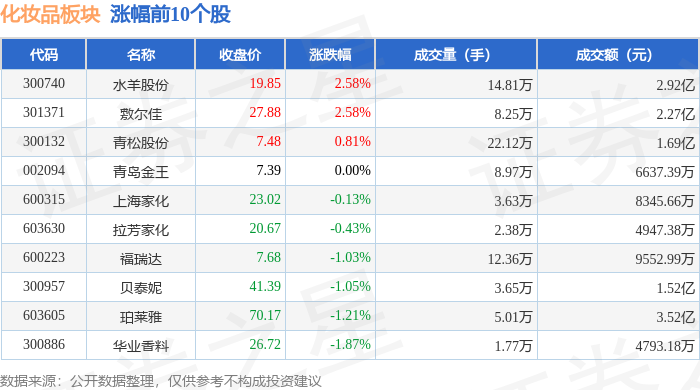
化妆品板块11月26日跌1.1%,科思股份领跌,主力资金净流入795.52万元
Zheng Xing Xing Ye Ri Bao· 2025-11-26 09:12
Market Overview - The cosmetics sector experienced a decline of 1.1% on November 26, with Kesheng Co. leading the drop [1] - The Shanghai Composite Index closed at 3864.18, down 0.15%, while the Shenzhen Component Index closed at 12907.83, up 1.02% [1] Individual Stock Performance - Notable gainers included: - Shuiyang Co. (300740) with a closing price of 19.85, up 2.58% [1] - Fulejia (301371) also rose by 2.58% to 27.88 [1] - Major decliners included: - Kesheng Co. (300856) fell by 4.88% to 14.80 [2] - Marubi Bio (603983) decreased by 2.95% to 33.55 [2] - Jiahen Home (300955) dropped by 2.85% to 37.84 [2] Trading Volume and Capital Flow - The cosmetics sector saw a net inflow of 7.95 million yuan from institutional investors, while retail investors contributed a net inflow of 7.35 million yuan [2] - However, there was a net outflow of 15.30 million yuan from speculative funds [2] Detailed Capital Flow Analysis - Key stocks with significant capital flow: - Jiahen Home (300955) had a net inflow of 18.65 million yuan from institutional investors, but a net outflow of 19.54 million yuan from retail investors [3] - Fulejia (301371) saw a net inflow of 12.12 million yuan from speculative funds, despite a net outflow from retail investors [3] - Other stocks like Qingdao King (002094) and Shanghai Jahwa (600315) also experienced mixed capital flows, indicating varied investor sentiment [3]



深度 | 蔓迪港股递表,引爆防脱“新战局”
FBeauty未来迹· 2025-11-25 14:18
Core Insights - The core viewpoint of the article is that the power dynamics in China's anti-hair loss market have shifted from traditional daily chemical brands to pharmaceutical companies, driven by a growing consumer base and evolving market demands [4][5]. Market Dynamics - The anti-hair loss market in China has seen a significant transformation, with over 300 million people affected by hair loss, particularly among the 26-35 age group, indicating a shift from a minor issue to a widespread concern [4]. - Pharmaceutical companies, particularly those with OTC pipelines and dermatological resources, have emerged as the primary players in the market, leading to a dual oligopoly dominated by Sanofi's Mandi and Zhendong Pharmaceutical's Dafeixin [4][8]. - The market for anti-hair loss products has reached 5.247 billion yuan in sales within the first ten months of 2025, reflecting a year-on-year growth of over 47% [10][13]. Brand Strategies - Pharmaceutical companies are creating a new narrative of "anti-hair loss = medicine + consumer," leveraging high margins and professional barriers while extending their product lines into daily care categories [5][19]. - Brands like Mandi and Dafeixin are combining pharmaceutical and cosmetic products, promoting them through "scientific anti-hair loss salons" to capture consumer interest [6][9]. Competitive Landscape - Traditional daily chemical brands are struggling, with companies like Bawang reporting a significant decline in profits despite a slight revenue increase, highlighting a structural challenge in the market [8]. - The consumer focus has shifted from "shampoo for hair loss" to "medical treatment and scalp management," indicating a demand for more scientifically-backed solutions [9][10]. Emerging Trends - The average price of anti-hair loss products has risen to over 113 yuan, suggesting consumers are willing to invest more in effective scalp care solutions [13]. - New brands such as EHD and Off&Relax are gaining traction, with EHD leading in sales at 371 million yuan, showcasing a trend towards professional and functional care [16][18]. Future Directions - To compete effectively, beauty brands must transition from traditional narratives to scientific and medical language, focusing on the mechanisms behind hair loss and scalp health [19][23]. - The integration of devices with hair care products is emerging as a trend, with brands like Kérastase introducing scalp care devices that enhance treatment efficacy [25][27]. Conclusion - The anti-hair loss market is evolving into a sector characterized by scientific, medical, and long-term management approaches, with pharmaceutical companies redefining the rules and traditional brands being compelled to adapt [19].