OPPO

Search documents
科技大事件 丨 小红书被网信办约谈整改;京东回应「王腾将入职小米采销岗」
Sou Hu Cai Jing· 2025-09-12 04:23
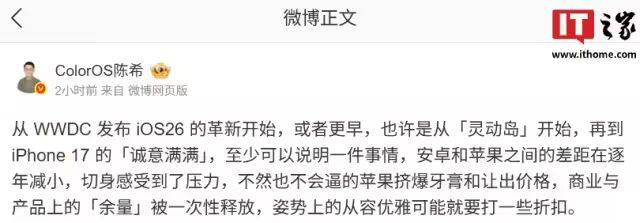
Group 1: Apple Developments - Apple challenges the Australian court ruling, asserting it does not hold a monopoly in the App Store market globally [1] - The Australian court previously ruled that Apple abused its market dominance in iOS app distribution and in-app payments, citing the prohibition of sideloading apps and alternative payment methods [1] - Apple plans to launch six new products by the end of 2025, including a new Apple TV featuring the A17 Pro chip and enhanced capabilities [2] Group 2: New Product Features - The new Apple TV will support Wi-Fi 7 and may include a FaceTime camera, although this is not confirmed [2] - The updated HomePod mini will feature an S9 chip, improved sound quality, and potentially new color options [2] - The next generation of AirTag is expected to triple its tracking range and include anti-tampering features [2] Group 3: AirPods and iPhone Innovations - Apple is set to introduce a real-time translation feature for AirPods, which will not initially be available to European users [3] - The iPhone Air represents Apple's vision of a seamless glass design, as envisioned by Steve Jobs [4] - The iPhone Air is designed to be extremely thin at 5.6 mm, with enhanced durability features to prevent bending [5] Group 4: Industry Reactions - OPPO's design director commented on the iPhone 17's significant upgrades, noting that the gap between Android and Apple is narrowing [7] - The iPhone 17 standard model will support 120Hz refresh rates for the first time, while the iPhone Air will feature a 6.5-inch screen [8]


年营收超千亿,小米背后的“隐形冠军”如何崛起 |活力中国调研行
Xin Lang Cai Jing· 2025-09-12 04:08
Core Viewpoint - Huakin Technology, the world's largest electronic ODM, is expanding its international presence and diversifying its product offerings, with significant growth in overseas markets and a strong focus on R&D and innovation [1][4][8]. Group 1: Company Overview - Huakin Technology has an annual shipment volume exceeding 200 million terminal devices and reported nearly 110 billion yuan in revenue last year [1]. - The company went public on the Shanghai Stock Exchange in August 2023 and plans to initiate a Hong Kong IPO in August 2025 to accelerate its international strategy [1]. - Huakin's major clients include renowned brands such as Samsung, OPPO, Xiaomi, and Lenovo [1]. Group 2: Global Expansion Strategy - The company has established a global manufacturing footprint with bases in Dongguan, Nanchang, Vietnam, India, and Mexico, each focusing on different product lines and market needs [1][4]. - The Vietnam base achieves over 2 million units shipped monthly, while the Indian base is expected to exceed 1 million units in 2024, focusing on smartphones and wearables [4][6]. - The Mexican base aims to enhance delivery capabilities for high-end products in the North American market [4]. Group 3: Technological Development - Huakin Technology has invested 14.75 billion yuan in R&D over the past three years, with a 30% increase in R&D spending in the first half of 2025 [8]. - The company has built a robust R&D network across multiple locations, with R&D personnel constituting 28.4% of its workforce [8]. - As of the end of 2024, Huakin has received 5,950 intellectual property authorizations, including 1,330 effective invention patents [8]. Group 4: Market Position and Growth - Huakin Technology transitioned from an IDH to an ODM model, achieving a compound annual growth rate of 50% from 2011 to 2013, and became the top global smartphone ODM in 2013 [6]. - The company is actively seeking new growth avenues in AIoT and smart automotive sectors, expanding its product range to over ten categories [7]. - The integration of local industry chains in regions like Zhangjiang has provided Huakin with a conducive environment for innovation and talent acquisition [9].

Canalys:预计2026年折叠屏智能手机出货量将实现同比激增51% 并将持续带动2027年的市场动能
智通财经网· 2025-09-12 03:37
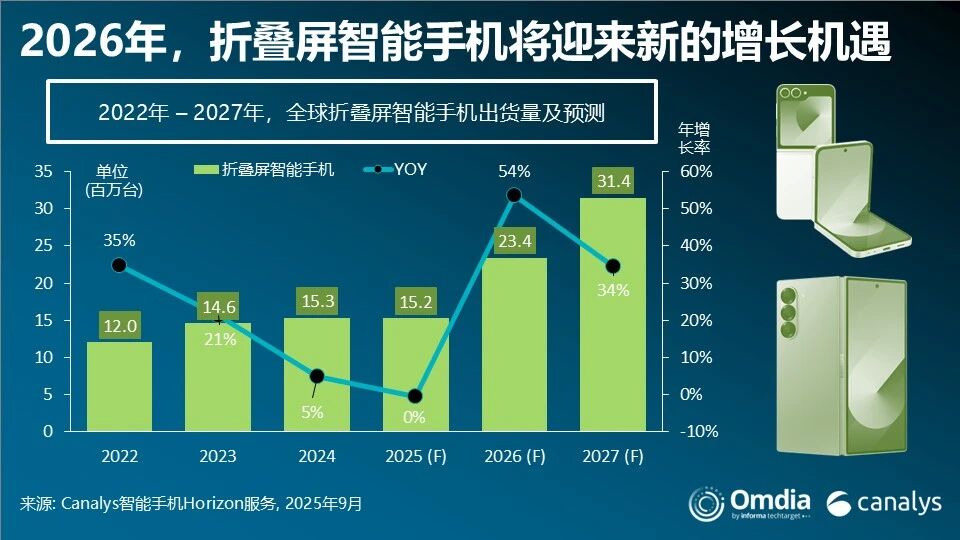
Core Insights - Despite recent positive responses to new foldable devices, global foldable smartphone shipments are expected to remain flat at approximately 15.2 million units for the year, with 2026 anticipated to be a turning point for growth [1][4] - The foldable smartphone market is projected to see a significant year-on-year increase of 51% in shipments by 2026, driven by intensified competition and more affordable clamshell models [1] - The foldable smartphone segment remains a niche market, accounting for only 1.0-1.5% of global shipments, but it holds substantial strategic value and revenue potential for manufacturers [8][10] Market Dynamics - In the first half of 2025, global shipments of foldable smartphones are expected to remain stable at around 6.6 million units, with China showing a notable growth of 32.8%, primarily driven by Huawei's Mate and Pura X series [4] - The U.S. market, while growing at a more modest rate of 7%, is led by the Motorola Razr 2025 series [4] - The foldable smartphone market is characterized by a low single-digit percentage of the overall smartphone market, raising questions about its role in manufacturers' business strategies [4] Innovation and Strategy - Foldable smartphones serve as a testbed for hardware innovation and brand differentiation, allowing manufacturers to showcase their technological leadership and engineering capabilities [7] - The average selling price (ASP) of foldable devices is significantly higher than standard smartphones, with book-style foldables priced 289% higher and clamshell models 123% higher than traditional devices [13][16] - Samsung's Galaxy Z Fold7, priced at approximately $1,899, generates revenue equivalent to about 15 entry-level Galaxy A06 4G devices, highlighting the high revenue potential of foldable devices [10] Consumer Perception and Adoption - A consumer study indicated that while 96% of respondents are aware of foldable smartphones, nearly 40% expressed disinterest, often due to budget constraints or unmet needs [11][13] - The adoption of foldable smartphones faces challenges related to user interaction and the need for behavioral changes, as consumers must rethink how they engage with their devices [13] - Manufacturers are exploring enterprise applications for foldable devices, emphasizing productivity advantages in professional settings, such as multitasking and document editing [14] Future Outlook - The foldable smartphone market is expected to evolve, with manufacturers needing to address barriers to adoption and enhance consumer experiences through innovative retail strategies [11][14] - The focus on high-end markets and brand differentiation will continue to drive the strategic importance of foldable devices, even as they remain a small segment of overall smartphone sales [15]
2026年,折叠屏智能手机迎来关键年
Canalys· 2025-09-12 03:03
Core Insights - The foldable smartphone market is experiencing a wave of new releases in 2025, with manufacturers addressing concerns about device thickness and weight through advanced engineering technologies [1][4] - Despite increased competition, global shipments of foldable smartphones remained stable at around 6.6 million units in the first half of 2025, with a notable 32.8% year-on-year growth in the Chinese market [4] - The foldable smartphone segment is expected to see significant growth in 2026, with a projected 51% year-on-year increase in shipments, driven by intensified competition and more affordable flip models [4][12] Market Dynamics - The foldable smartphone category remains a niche market, accounting for only 1.0-1.5% of global shipments, but its revenue contribution and strategic value are disproportionately high [7][11] - Samsung's product strategy exemplifies this, as its Galaxy Z Fold7 generates revenue equivalent to approximately 15 entry-level Galaxy A06 4G devices, highlighting the high average selling price (ASP) of foldable devices [11] Consumer Perception and Adoption Challenges - A consumer study revealed that while 96% of respondents are aware of foldable smartphones, nearly 40% expressed disinterest, primarily due to budget constraints or unmet needs [12][14] - Key challenges for broader adoption include changing consumer behavior, high pricing, and the need for effective marketing strategies that emphasize user experience and trust [14][12] Strategic Implications for Manufacturers - Foldable smartphones are becoming a strategic lever for manufacturers to drive high-end branding, differentiation, and long-term profitability, despite their limited market scale [11][7] - Companies are exploring enterprise applications for foldable devices, positioning them as productivity tools rather than mere consumer novelties [14][12]
2026年买新能源车恢复征税!至少缴5%;曝哪吒汽车因流量服务欠费将断网,通信流量商回应;NASA禁止中国公民参与项目丨雷峰早报
雷峰网· 2025-09-12 00:29
Key Points - The article discusses the upcoming changes in the taxation policy for electric vehicles in China, indicating a shift from full tax exemption to a reduced tax rate starting in 2026, reflecting the maturity of the market [4] - It highlights the recent regulatory actions against Xiaohongshu for failing to manage harmful content, emphasizing the government's focus on maintaining a healthy online ecosystem [6] - The article mentions the delay in the launch of the iPhone Air in China due to regulatory requirements, with Apple working closely with authorities to expedite the process [11] - It reports on the stock buyback by the founder of ZhiMi Technology, indicating strong cash flow and operational health, which is a common practice among tech companies to consolidate control [12] - The article notes the establishment of vehicle research institutes by Geely for its brands, indicating a strategic move to enhance product development and brand differentiation [17] - It covers the significant investment by Alibaba in an AI video generation startup, highlighting the growing trend of integrating AI into various sectors, particularly in video content creation [20][21] - The article discusses the comments from Ant Group's CEO regarding the company's stance on virtual currencies, emphasizing compliance and risk management [22] - It mentions the legal actions taken by Li Auto against malicious online campaigns aimed at damaging its brand reputation, showcasing the challenges faced by companies in maintaining their public image [24]

手表的压力测试其实是骗你的,准确率约等于算命
Hu Xiu· 2025-09-11 23:54
Core Viewpoint - The accuracy of stress monitoring by smartwatches and apps is questioned, as many users report discrepancies between their perceived stress levels and the readings from these devices [4][12][55]. Group 1: User Experiences - Many users have shared experiences where their smartwatches inaccurately indicated high stress levels during relaxed situations or low stress during stressful times [6][11][14]. - The inconsistency in stress readings has led to skepticism about the reliability of these devices [4][12]. Group 2: Measurement Methodology - Smartwatches typically measure stress through heart rate variability (HRV), which reflects the variation in time between heartbeats rather than just heart rate [17][33]. - A healthy heart rate shows variability, while a low HRV indicates stress, but this can be influenced by both psychological and physiological factors [29][36]. Group 3: Physiological Influences - Factors such as caffeine intake, exercise, and alcohol consumption can also lower HRV, leading to misleading stress readings from smartwatches [37][40][44]. - Emotional states, such as excitement or anxiety, can similarly affect HRV, complicating the interpretation of stress levels [45][46]. Group 4: Research Findings - A study involving 781 students found that the stress levels reported by smartwatches did not align with the participants' self-reported stress, indicating a disconnect between device readings and actual psychological states [49][54]. - The study highlights that wearable devices measure a broad physiological load rather than specific psychological stress [57]. Group 5: Industry Insights - There is a lack of clarity in how manufacturers communicate the capabilities of their devices, often leading to misconceptions about their ability to measure psychological stress accurately [61][64]. - While some developers provide accurate explanations of HRV, others may mislead users into believing their devices can precisely monitor psychological stress [62][66]. Group 6: Practical Implications - Understanding the limitations of HRV measurements can help users appreciate the broader context of their physiological state rather than relying solely on these readings for psychological insights [70][71]. - Smartwatches and apps can still serve a purpose in providing general health insights, but they should not be solely relied upon for accurate psychological stress assessment [68][73].

OPPO与小红书成立实验室 Find X9首发4K超清实况照片
Sou Hu Cai Jing· 2025-09-11 23:29
Core Points - OPPO and Xiaohongshu have established the "Image Innovation Joint Laboratory" to enhance imaging capabilities based on Xiaohongshu's "Original Picture Direct Output" technology [1][3] - The collaboration will focus on producing 4K ultra-clear live photos, static images, HDR effects, and Dolby Vision videos, with results expected to be integrated into OPPO's upcoming flagship Find X9 series [1][5] - The partnership marks a strategic upgrade from previous collaborations, including the launch of the "OPPO 2025 Imaging Competition" and a comprehensive support for OPPO's imaging technologies on Xiaohongshu's platform [3][5] Group 1 - The joint laboratory aims to create a seamless experience from shooting to viewing and sharing, specifically enabling 4K ultra-clear live photo functionality [5] - The collaboration has already shown positive market feedback and has fostered deep trust and understanding between the two companies [5] - The partnership builds on previous initiatives, such as the support for live photo features on the Reno12 series, enhancing user experience in capturing and sharing moments [3]

AI芯片业+半导体,最受资金追捧的产业链受益公司
Sou Hu Cai Jing· 2025-09-11 16:42
Group 1 - The semiconductor sector in A-shares has become one of the best-performing segments, with a significant increase of 23.84% in August, outperforming the Shanghai Composite Index's 10.33% rise [1][8] - The domestic semiconductor industry reported a year-on-year revenue growth of 13.87% and a net profit increase of 23.99% in the latest quarter, with integrated circuits and semiconductor equipment showing particularly strong performance [1][17] - Notable companies in the A-share market that saw significant gains in August include Cambricon (110%), Dongxin Technology (82%), and Shengke Communication (78%) [1][10] Group 2 - Globally, the semiconductor industry continues to see differentiated demand, with AI-related hardware investments remaining high. In July 2025, global semiconductor sales grew by 20.6% year-on-year, marking 21 consecutive months of growth [2][28] - Major cloud service providers in North America, including Google, Microsoft, Meta, and Amazon, increased their capital expenditures by 69% year-on-year in Q2, while Chinese internet giants like Alibaba, Tencent, and Baidu saw a combined capital expenditure increase of 168% [2][28] - The semiconductor equipment and materials sectors also showed strong performance, with equipment revenue growing by 42.87% year-on-year in Q2 2025 [2][20] Group 3 - The consumer electronics market is recovering, with increased shipments of smartphones and PCs, and a rise in the penetration rate of AI PCs and AI smartphones expected in the second half of the year [3][28] - Major smartphone manufacturers, including Samsung, Apple, and Xiaomi, continue to lead the global market, while domestic brands like Huawei and Vivo maintain stable performance [3][28] - The semiconductor industry is currently undergoing a new wave of technological innovation and accelerated domestic substitution, with companies like Cambricon and Haiguang Information positioned to benefit from increased funding inflows [3][26] Group 4 - In Q2 2025, the domestic AI computing chip manufacturers showed impressive performance, with Cambricon's revenue skyrocketing by 4425% year-on-year and a net profit increase of 325% [25][27] - The global GPU market is projected to grow from $43.6 billion in 2023 to $274.2 billion by 2029, with a compound annual growth rate of 33.2% [25][26] - The demand for AI computing chips is expected to continue rising, driven by major cloud service providers and internet companies investing heavily in self-developed chips [25][26]


智能手机高端化成行业发展新引擎
Zheng Quan Ri Bao· 2025-09-11 16:14
Core Insights - The global smartphone market is undergoing a transformation, with the high-end smartphone segment becoming a new growth engine, projected to grow by 8% year-on-year in the first half of 2025, surpassing the overall smartphone market growth of 4% [1][2] Group 1: High-End Market Growth - The high-end smartphone market saw Apple leading with over 62% market share and a 3% increase in sales, primarily driven by emerging markets, although its share in China is being challenged by Huawei and Xiaomi [2] - Consumer reliance on smartphones has reached unprecedented levels, making them central to digital life, which encourages investment in higher-performance and more durable devices [2] - The market is nearing saturation, with the high-end segment emerging as the primary growth area, shifting competition from market share to high-value users and profit margins [2] Group 2: AI Integration in Smartphones - AI capabilities are rapidly becoming standard in high-end smartphones, with devices featuring generative AI expected to account for over 80% of high-end smartphone sales by the first half of 2025 [4] - Major brands are focusing on AI as a key differentiator, with Apple integrating AI into its iOS ecosystem, Samsung promoting AI features through its GalaxyAI series, and Google leveraging its AI-native advantages [4] - Chinese brands like Huawei, Xiaomi, OPPO, and vivo are competing in AI imaging, fast charging, and foldable screens, accelerating their presence in the global high-end market [4] Group 3: Strategic Shifts in Competition - The competition in the smartphone industry is shifting from hardware specifications to AI-driven user experiences, with companies collaborating with major AI model providers to enhance software capabilities [5] - The rapid adoption of AI signifies a shift in competitive focus, where the ability to deliver innovative and useful AI experiences will determine success in the high-end market [5] - Companies are encouraged to move beyond fierce competition in the low-end market and invest in technological innovation and experience upgrades to define their future brand value [5]
支付宝“AI付”来了
Shang Hai Zheng Quan Bao· 2025-09-11 12:36
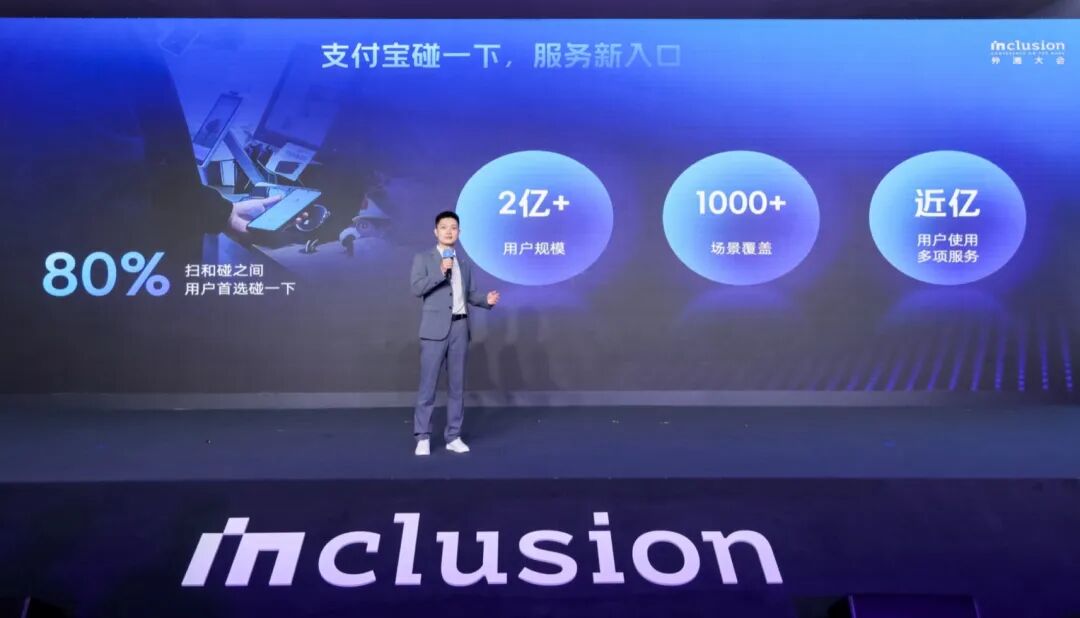
Core Insights - Alipay's "Tap to Pay" feature has surpassed 200 million users, doubling the speed of user acquisition to reach this milestone in just four months [1][3] - The launch of the first domestic "AI Payment" service was announced, with the initial implementation in the "Lucky AI" ordering assistant at Luckin Coffee [1][3] User Growth and Engagement - The "Tap to Pay" feature achieved over 100 million users within 321 days of its launch, setting a new growth record in the payment sector [3] - Nearly 100 million users have utilized at least two "Tap to Pay" services, indicating strong engagement [3] - The feature supports over 1,000 different scenarios, including food ordering, package collection, and interactive red envelopes, showcasing its versatility [3] Ecosystem Development - Smart devices such as smart glasses and smartwatches have been integrated into the "Tap to Pay" ecosystem [3] - A "Tap to Pay Application Ecosystem Alliance" was launched with ten major smart hardware manufacturers, including Huawei, OPPO, and Xiaomi, to enhance the ecosystem [3] Future Projections - The Chief Technology Officer of Ant Group's Digital Payment Division predicts that natural interaction payments could exceed 50% in the next five years, with a tenfold increase in diverse smart device payments [4] - The market for more intelligent AI payment solutions is expected to reach a trillion-level scale [4]