
中国平安

Search documents
年初即“补血”!近三年险企发债规模连破千亿
2 1 Shi Ji Jing Ji Bao Dao· 2026-01-05 11:18
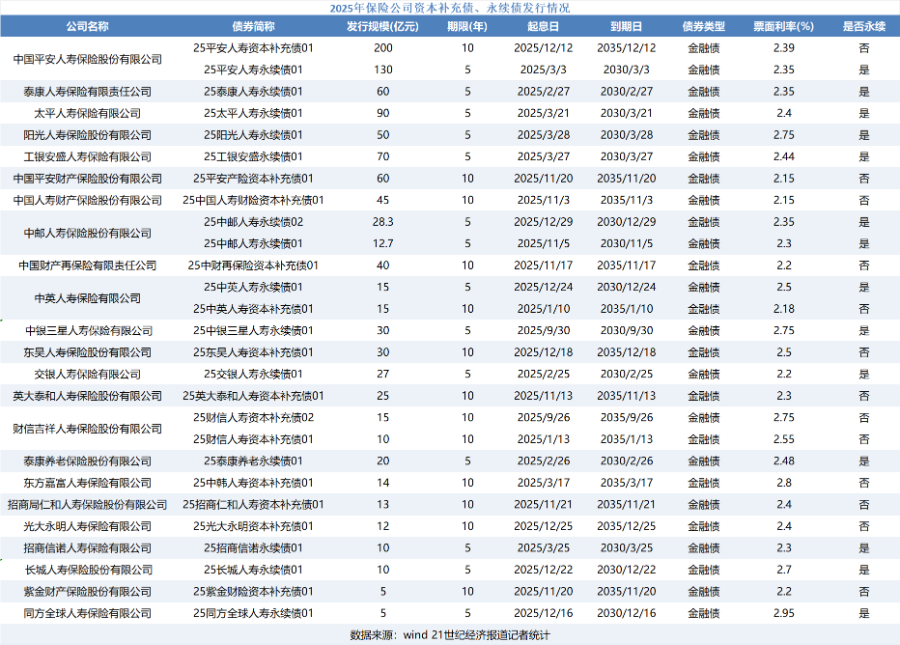
Core Insights - The approval of capital supplement bonds for China United Life Insurance Co. and Great Wall Life Insurance Co. marks the first such issuance in 2026, reflecting ongoing capital pressures in the insurance industry [1][2] - The insurance sector has seen bond issuance exceeding 100 billion yuan annually for the past three years, indicating a trend of capital supplementation driven by regulatory requirements and market conditions [1][4] Regulatory Environment - The issuance of capital supplement bonds is governed by regulations established by the People's Bank of China and the former China Insurance Regulatory Commission, allowing insurance companies to bolster their capital [3] - The "Solvency II Phase II" rules have increased capital management challenges for insurance companies, particularly in a low-interest-rate environment [6][7] Market Dynamics - In 2025, 23 insurance companies issued a total of 1,042 billion yuan in capital supplement and perpetual bonds, with perpetual bonds accounting for 558 billion yuan and capital supplement bonds for 484 billion yuan [4] - The average interest rates for capital supplement and perpetual bonds issued in 2025 did not exceed 3%, with the highest being 2.95% and the lowest at 2.15%, reflecting a favorable borrowing environment [10] Financial Health - As of Q3 2025, the comprehensive solvency adequacy ratio for insurance companies was approximately 186.3%, a decline of 13.1 percentage points from the previous year, indicating increased capital pressure [6] - The core solvency adequacy ratio also decreased by 4.8 percentage points to about 134.3%, highlighting the impact of regulatory changes on capital adequacy [6] Long-term Considerations - While bond issuance provides immediate capital relief, the effective utilization of these funds is crucial for long-term sustainability, especially in a challenging investment environment [8] - The industry faces an "asset shortage," necessitating careful management of capital to ensure that returns cover costs [8]

沪指开年放量冲破4000点 公募超百只新品打响春季攻势
Xin Lang Cai Jing· 2026-01-05 11:16
1月5日,A股开启了2026年的新征程。Choice数据显示,首个交易日,保险板块(申万二级行业分类) 延续去年的抢眼表现,持续走高,最终以6.17%的涨幅位居A股申万二级行业分类所有板块首位。 五家 A股保险上市公司在1月5日均收获超过5%的涨幅。其中,新华保险、中国太保全天涨幅分别为8.87%及 7.52%,收盘价分别为75.88元/股及45.06元/股,均再次打破去年12月创下的股价历史新高。另外,中国 平安当日以72.36元/股收盘,亦再创2021年3月以来的最高价。(第一财经) ...



新年开市保险板块涨超6%,2026年估值将进一步提升
Di Yi Cai Jing· 2026-01-05 10:59
五家A股保险上市公司在1月5日均收获超过5%的涨幅。其中,新华保险(601336.SH;01336.HK)、中 国太保(601601.SH;02601.HK)全天涨幅分别为8.87%及7.52%,收盘价分别为75.88元/股及45.06元/ 股,均再次打破去年12月创下的股价历史新高。另外,中国平安(601318.SH;02318.HK)当日以72.36 元/股收盘,亦再创2021年3月以来的最高价。 【#新年开市保险板块涨超6%#,2026年估值将进一步提升】1月5日,A股开启了2026年的新征程。 Choice数据显示,首个交易日,保险板块(申万二级行业分类)延续去年的抢眼表现,持续走高,最终 以6.17%的涨幅位居A股申万二级行业分类所有板块首位。 ...
12连阳,沪指创33年最长连阳纪录!机构资金和各路游资纷纷出手,A股春季躁动行情渐入高潮,高盛高呼高配中国股票
Jin Rong Jie· 2026-01-05 10:47
整体看,A股交投气氛十分活跃,机构资金和各路游资纷纷出手,各有斩获。 数据显示,多家机构席位出现在了蓝色光标、盐湖股份、海格通信、西测测试的龙虎榜中,此外A股实 力游资章建平也出现在蓝色光标龙虎榜中,单日买入了6482.08万元,卖出了2.59亿元。 12连阳,沪指创33年最长连阳纪录,A股春季躁动行情渐入高潮! 1月5日,A股迎来2026年首个交易日,三大指数全天高开高走,截至收盘,沪指涨1.38%,报4023.42 点,深成指涨2.24%,报13828.63点,创业板指涨2.85%,报3294.55点,科创50指数涨4.4%,报1403.41 点。与此同时,资金纷纷疯狂涌入A股,今日沪深两市合计成交额25463.47亿元,较上一个交易日放量 5011亿。 值得注意的是,沪指在2025年末已经走出11连阳的强势走势。在今日A股实现开门红之后,沪指从2025 年12月17日至2026年1月5日的12个交易日中,成功实现12连阳,创下A股1993年以来最长连阳纪录。最 近33年间A股最长连阳纪录为11天,分别在2006年以及2017-2018年出现过。A股最长连阳纪录为99天, 但彼时A股才处于起步阶段,市场体 ...


2025年主动权益产品排名出炉,广发基金6只产品年度跌幅超过10%
Xin Lang Cai Jing· 2026-01-05 10:38
Core Insights - In 2025, approximately 75 actively managed equity funds achieved a net value increase of over 100%, but there was significant disparity, with several funds reporting negative returns exceeding 10% [2][8] - Among the underperformers, six funds from GF Fund were highlighted, all managed by Wang Mingxu, indicating a potential issue with his management strategy [2][8] Fund Performance Analysis - Wang Mingxu managed a total of eight funds, with six showing negative annual returns, including the flagship fund, GF Domestic Demand Growth, which reported a -16.31% return for the year [10] - The fund underwent a significant style shift in its holdings throughout 2025, moving from a focus on real estate, liquor, and banking stocks in Q1 to a more diversified approach in Q2, yet the results remained unsatisfactory [3][11] Managerial Challenges - Wang Mingxu's management faced criticism as his long-held fund, GF Domestic Demand Growth, became a significant underperformer despite his overall fund management experience and a reported best-term return of 115.25% [10] - The fund's quarterly reports indicated attempts to adjust the portfolio by selling overvalued stocks and increasing positions in high-end liquor and IT services, but these adjustments did not yield the desired improvement in performance [4][11] Performance of Other Managers - Zheng Chengran, another manager at GF Fund, also faced challenges, with his funds showing a wide performance range; one fund achieved over 70% returns while five others fell below 20% [5][12] - His investment strategy included a mix of sectors that did not align with his expertise, leading to underwhelming results, particularly in the healthcare and steel sectors [12]
未出险,车险续保“涨了1000多块”!发生了什么?
Xin Lang Cai Jing· 2026-01-05 10:32
Core Insights - The article highlights a significant increase in car insurance premiums for drivers who have not made any claims, contradicting the previous trend where premiums would typically decrease for "good drivers" [1][7][13] - The rise in premiums is attributed to regulatory changes aimed at curbing aggressive price competition among insurance companies, leading to a return to more reasonable pricing levels [1][11][12] Industry Overview - The car insurance market includes mandatory liability insurance and optional commercial insurance, with approximately 372 million vehicles covered under mandatory insurance and over 100 million under commercial insurance as of 2024 [10] - The overall car insurance comprehensive cost ratio is projected to be around 97.9% by the end of 2024, indicating that many insurers are operating at a loss due to rising claims costs [12] Factors Influencing Premium Increases - Industry factors include regulatory measures that set lower limits on pricing coefficients, reducing the discounts previously available to consumers [11][12] - Individual factors affecting premium rates include driving habits, accident history, vehicle price, and various costs associated with vehicle maintenance and repairs [11][12] Consumer Sentiment - Many consumers express dissatisfaction with the premium increases, particularly those who have not made claims, leading to concerns about the fairness of the insurance pricing system [13][14] - There is a call for greater transparency in the pricing structure, with suggestions to clearly outline discounts and incentives on insurance policies to rebuild consumer trust [13][14]
A股市场迎来“开门红”,保险板块强势,脑机接口概念爆发
Zheng Quan Shi Bao· 2026-01-05 10:29
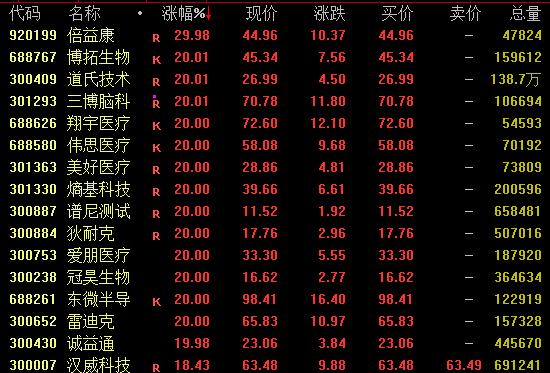
今日(1月5日),亚太主要股指全线大涨,日经225指数收盘上涨2.97%报51832.8点,韩国综合指数上 涨3.43%报4457.52点,续创历史新高。 A股市场迎来"开门红",主要股指放量大涨,沪指12连阳,涨超1%重返4000点上方;科创50指数大涨超 4%。 具体来看,两市股指高开高走,创业板指涨近3%,科创50指数大涨超4%。截至收盘,沪指涨1.38%报 4023.42点,深证成指涨2.24%,创业板指涨2.85%,科创50指数涨4.4%,沪深北三市合计成交25674亿 元。 全A近4200股飘红,保险板块强势,新华保险大涨近9%,中国太保涨超7%,双双创出新高;人脑工程 概念爆发,倍益康、三博脑科、翔宇医疗、伟思医疗等逾10股涨停;创新药概念强势,乐普医疗、冠昊 生物等涨停,百济神州涨超10%;存储芯片概念活跃,恒烁股份、普冉股份等涨停;AI应用概念崛起, 当虹科技、蓝色光标等涨停。此外,锋龙股份连续7日涨停,雷科防务、南兴股份分别收获4连板和3连 板。 值得注意的是,今日A股市场近20股成交额超过100亿元,其中中国卫星、三花智控分别成交194.5亿 元、192.1亿元,分别位居成交额第一和第二 ...




新年开市,保险股涨超6%再居首,2026年估值将进一步提升
Di Yi Cai Jing· 2026-01-05 10:25
Core Viewpoint - The insurance sector in A-shares has shown strong performance at the beginning of 2026, with a notable increase in stock prices driven by favorable policies and improved asset-liability management [1][3]. Group 1: Market Performance - On January 5, 2026, the insurance sector recorded a 6.17% increase, leading all A-share sectors [1]. - Five A-share insurance companies saw stock price increases of over 5%, with New China Life Insurance and China Pacific Insurance rising by 8.87% and 7.52%, respectively [1]. - China Ping An also reached its highest price since March 2021, closing at 72.36 yuan per share [1]. Group 2: Policy and Market Drivers - The stock price increase is attributed to a series of supportive policies in 2025, which have enhanced the asset-liability dynamics within the insurance sector [3]. - In December 2025, regulatory changes optimized risk factors for long-term stock holdings by insurance companies, signaling a positive outlook for further market entry [3]. - The insurance industry is currently in the "New Year" period, which is crucial for life insurance liabilities, with over 20% of annual premium income typically generated in January [3]. Group 3: Valuation Insights - Analysts indicate that the P/EV (Price to Embedded Value) ratios for major A-share insurance companies remain low, ranging from 0.68 to 0.99 as of December 31 [4]. - There is an expectation for the valuation of insurance stocks to gradually recover towards 1.0 P/EV in 2026 [4].

2026人身险经营8大推演:渠道+产品+投资……怎么变?
Xin Lang Cai Jing· 2026-01-05 10:10
Core Insights - The year 2025 marks a significant transformation in the life insurance industry, influenced by external macroeconomic pressures, declining interest rates, and the acceleration of digitalization and AI technologies. The competitive landscape is increasingly polarized, with leading companies expanding their advantages while smaller firms face multiple challenges [1][41]. Group 1: Regulatory Changes and Cost Management - The "reporting and operation integration" policy will be further refined in 2026, requiring life insurance companies to align reported costs with actual expenses, promoting fair competition and healthy development [2][44]. - The insurance industry is expected to reduce costs by over 300 billion yuan in 2024, primarily within the life insurance sector, as a result of regulatory pressures [2][3]. - The introduction of new regulations will lead to more detailed cost management and a shift towards rational product design, focusing on customer value and sustainable profitability [4][45]. Group 2: Channel Dynamics - The bancassurance channel has become a key growth driver for the industry, with its share of new business premiums rising to approximately 65% by 2025, driven by banks' increasing focus on wealth management [5][10][52]. - Despite the growth, the bancassurance model still faces challenges in professionalization, particularly in addressing deeper customer needs such as family protection and retirement planning [11][53]. - The individual insurance sector is experiencing significant difficulties, with a projected decline in new business premiums of around 5% in 2025, necessitating a focus on professionalization to retain agents and improve average premiums [12][56]. Group 3: Product Trends - The long-term decline in interest rates and the recovery of the capital market are expected to drive the growth of participating insurance products, as traditional high-guarantee products lose appeal [17][18]. - The implementation of DRG/DIP reforms is anticipated to enhance the mid-tier medical insurance market, with a focus on innovative products that cater to unmet healthcare needs [20][22]. - The aging population is creating new growth opportunities in pension insurance, with a significant increase in the elderly demographic expected to drive demand for retirement products [23][26]. Group 4: Investment and Asset Management - The insurance sector has seen a recovery in investment returns, with a notable increase in equity holdings, although market volatility poses challenges for stable operations [33][34]. - New asset-liability management regulations are set to be implemented, emphasizing the need for a robust governance structure and regular reporting to address the pressures on solvency [36][38]. - The industry is increasingly relying on perpetual bonds and capital-raising measures to alleviate solvency pressures, with a focus on maintaining a stable yield curve [37][38]. Group 5: Technological Integration - The integration of AI and advanced technologies is expected to reshape the insurance value chain, enhancing customer insights and enabling personalized product recommendations [39][40]. - The shift towards a customer-centric approach in sales and marketing is being reinforced by regulatory encouragement for professional sales practices [30][32]. - The industry is moving towards a model of precise and consultative marketing, which is anticipated to improve overall efficiency and customer satisfaction [29][30].
盘点2025 | 万亿健康险转型深水区:政策破局、生态重构
Xin Lang Cai Jing· 2026-01-05 10:10
Core Insights - The establishment of the Ping An Health Management Company marks a significant step in the transformation of the health insurance sector, reflecting a shift towards a "managed care" model and the reconstruction of a new ecosystem in health insurance [1][16] - As of November 2025, the cumulative premium for commercial health insurance reached 943.9 billion yuan, with a year-on-year growth of 2.3%, indicating a stable market but falling short of the 2 trillion yuan target set for 2025 [1][16] - The Chinese commercial health insurance market is at a crossroads, focusing on high-quality development driven by regulatory guidance and innovation in health management and product offerings [1][16] Market Structure - The commercial health insurance market is maintaining stability amid slowing growth, with a shift in focus from scale expansion to quality improvement [3][18] - In the first 11 months of 2025, life insurance companies accounted for 76.8% of health insurance premiums, totaling 725.2 billion yuan, but their growth rate has stagnated, while property insurance companies saw a 10.2% increase in premiums [3][18] - The market's stability is evidenced by a monthly premium of 49.6 billion yuan in November 2025, with life insurance companies contributing 40.2 billion yuan and property insurance companies 9.4 billion yuan [3][18] Policy Support - Regulatory measures have been pivotal in driving the transformation of the health insurance industry, with multiple initiatives launched to enhance product standards and payment reforms [4][19] - The "Guiding Opinions on Promoting the High-Quality Development of Health Insurance" issued on September 30, 2025, outlines a vision for the role of health insurance in the national health security system by 2030 [4][19] - The policy emphasizes the integration of health insurance with health management, aiming to create a new health service guarantee system that combines prevention, management, and protection [4][19] Product Innovation - The health insurance sector is entering a phase of deep product innovation, with a focus on dual attributes of "protection + returns" in dividend insurance products [7][22] - Personal account-based long-term medical insurance is highlighted as a key area supported by policy, addressing the industry's challenges with traditional short-term medical insurance [7][22] - The mid-to-high-end medical insurance market is expanding, with major players enhancing their offerings to include comprehensive solutions beyond mere reimbursement [8][23] Ecosystem Reconstruction - The competition in the health insurance industry is shifting towards building an ecosystem, with a consensus on the "insurance + health management" model [10][26] - Major insurance companies are establishing health management firms to create a comprehensive health service system, moving from post-claim reimbursement to full-cycle health management [10][26] - The establishment of health management companies by leading insurers is seen as a localized innovation of the mature "managed care" model from developed markets, aiming to enhance service quality and sustainability [12][27] Technological Empowerment - The application of new technologies such as AI, big data, and blockchain is deepening in the health insurance sector, enhancing efficiency across product design, underwriting, and customer service [13][28] - Ping An has integrated AI into its health strategy, creating a comprehensive service system that covers various health service scenarios [13][28] - The focus on digitalization and the development of personalized health management platforms are expected to improve user experience and support dynamic pricing and risk control [13][28]
