
平安银行

Search documents
股份行三杰的“马拉松”:谁在远虑、谁在阵痛、谁在苦练?
Nan Fang Du Shi Bao· 2025-09-05 04:16
Group 1 - The core viewpoint of the articles emphasizes that the banking sector, particularly joint-stock banks, is facing significant challenges in a low-interest-rate environment, leading to increased competition and pressure on profit margins [2][6][15] - As of mid-2025, 42 A-share listed banks reported a year-on-year growth in operating income and net profit attributable to shareholders of 1.0% and 0.8%, respectively, indicating a slight recovery from the first quarter [2] - Joint-stock banks experienced a decline in revenue growth of -2.3% and a net profit growth of only 0.3%, highlighting the pressure they face compared to state-owned and city commercial banks [2][15] Group 2 - The concept of banking as a marathon rather than a sprint was reiterated by the president of China Merchants Bank, Wang Liang, emphasizing the importance of balancing short-term and long-term interests for sustainable development [4][6] - Wang Liang noted that the bank's operating income for the first half of the year was 169.97 billion yuan, a decrease of 1.72% year-on-year, while net profit attributable to shareholders was 74.93 billion yuan, a slight increase of 0.25% [6] - Other banks, such as Ping An Bank and CITIC Bank, also reported declines in revenue and net profit, with Ping An Bank's revenue down 10.0% and net profit down 3.9%, indicating a broader trend across the sector [8][10] Group 3 - The emphasis on long-term value creation and quality growth is becoming a mainstream perspective among banks, moving away from a focus on scale [8][10] - CITIC Bank's president, Lu Wei, stated that the bank is focusing on quality and efficiency rather than short-term profits, with a net profit growth of 2.78% despite a revenue decline of 2.99% [10] - Other bank leaders echoed similar sentiments, advocating for sustainable development and a focus on risk management rather than aggressive competition [10][15] Group 4 - The joint-stock banks are facing increasing market concentration, with large banks holding 43.7% of the total assets in the banking sector, which is significantly higher than the growth rate of joint-stock banks [15] - This trend suggests that joint-stock banks and smaller banks are experiencing a reduction in market share and may need to adopt more effective strategies to compete [15][16] - The ongoing challenges highlight the need for banks to explore resilience and adaptability in their operations to navigate the evolving financial landscape [16]





险资最新重仓股出炉!这一行业受青睐
Zhong Guo Zheng Quan Bao· 2025-09-05 03:18
Group 1 - The core viewpoint of the articles indicates that insurance capital is increasingly favoring bank stocks, with a significant presence in the top ten shareholders of over 700 stocks as of the end of Q2 2025 [1][3] - As of the end of Q2 2025, insurance capital held a total of 730 stocks, with a total shareholding of 61.919 billion shares and a market value of 628.985 billion yuan, both of which increased compared to the end of Q1 2025 [3] - Among the top ten heavy holdings of insurance capital, six are bank stocks, including Minsheng Bank, SPDB, Zhejiang Bank, Huaxia Bank, Industrial Bank, and China Merchants Bank [3] Group 2 - Insurance capital has shown a preference for high-dividend stocks and sectors such as transportation, telecommunications, and public utilities, with significant increases in holdings in these areas [4][5] - In Q2, insurance capital increased its holdings in CITIC Bank, Beijing-Shanghai High-Speed Railway, and China Telecom, with each seeing an increase of over 200 million shares [4] - The insurance sector is focusing on optimizing equity investment structures, particularly in high-dividend and new productive capacity stocks, with an emphasis on technology innovation, advanced manufacturing, and new consumption sectors [5]
反洗钱专业委员会举办“普及《反洗钱法》 助力金融安全”主题宣传活动
申万宏源证券上海北京西路营业部· 2025-09-05 03:15
Core Viewpoint - The article emphasizes the importance of public awareness and education regarding anti-money laundering and anti-fraud measures, particularly in light of the newly revised Anti-Money Laundering Law in China [2][16]. Group 1: Event Overview - The event titled "Promoting the Anti-Money Laundering Law to Enhance Financial Security" was organized by the Anti-Money Laundering Professional Committee in collaboration with the Shenzhen Public Security Bureau [2]. - The event took place at the Bijia Mountain Sports Park and involved 15 financial institutions, including banks, securities, and insurance companies, creating a comprehensive financial publicity matrix [3][6]. Group 2: Public Engagement - Approximately 800 citizens participated in the event, with over 3,000 promotional brochures distributed [6]. - The event featured various interactive activities, including games and educational materials, aimed at making learning about anti-money laundering engaging and accessible [12][14]. Group 3: Educational Content - A key highlight was a lecture by a police officer from the Shenzhen Public Security Bureau, who discussed common scams and money laundering tactics, enhancing public understanding of these issues [8][10]. - The interactive garden event allowed citizens to engage in fun activities while learning about the new Anti-Money Laundering Law and related fraud prevention measures [12][14]. Group 4: Future Initiatives - The Anti-Money Laundering Professional Committee plans to continue organizing similar events to strengthen public awareness and support for anti-money laundering and anti-fraud efforts [16].

长江红利回报混合型发起式A:2025年上半年末股票仓位提升17.44个百分点
Sou Hu Cai Jing· 2025-09-05 02:28
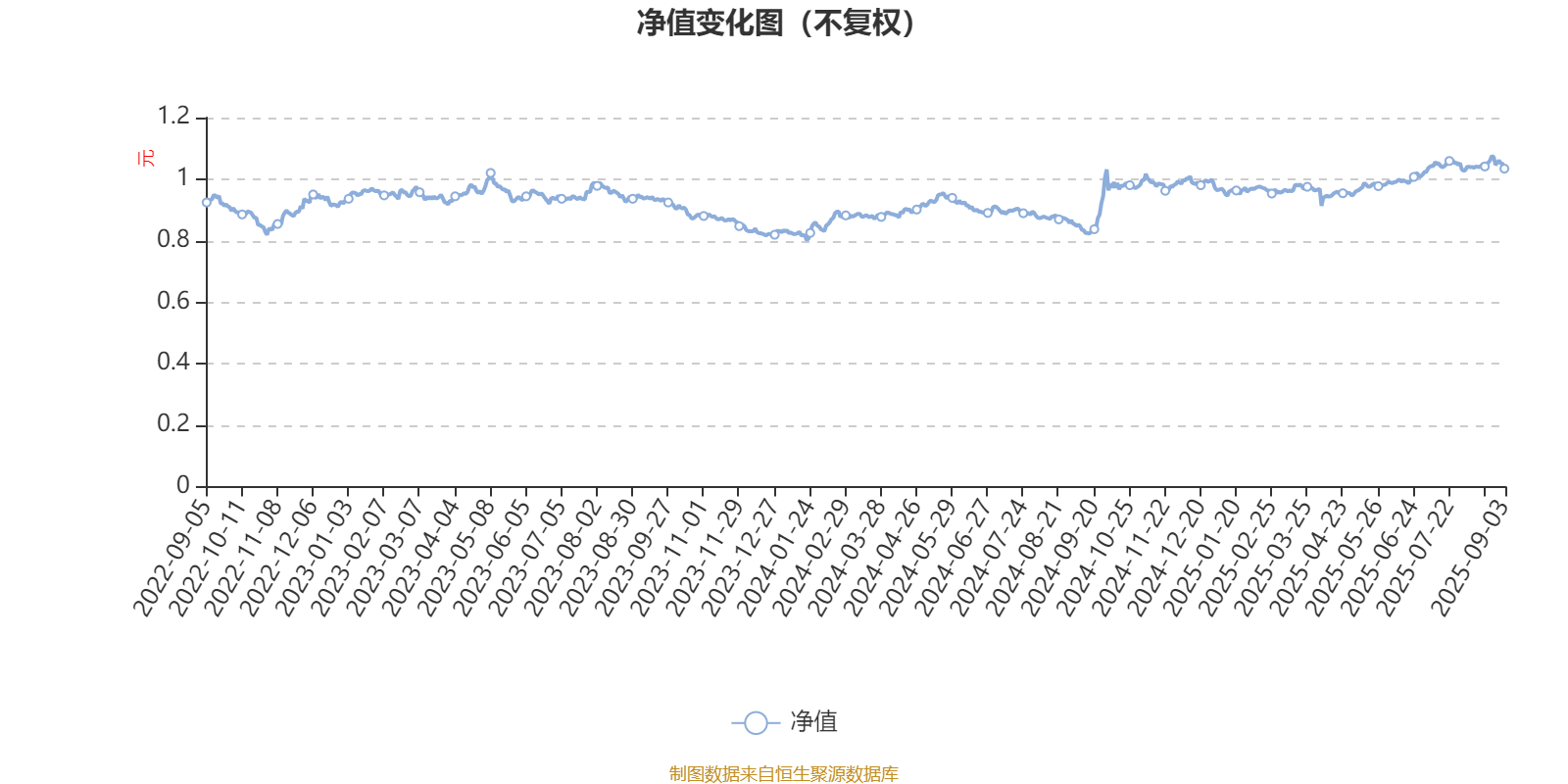
Core Viewpoint - The AI Fund Changjiang Dividend Return Mixed Fund A (013934) reported a profit of 2.1244 million yuan for the first half of 2025, with a weighted average profit per fund share of 0.0144 yuan, and a net asset value growth rate of 2.11% during the period [3]. Group 1: Fund Performance - As of September 3, the fund's unit net value was 1.034 yuan, with a recent three-month net value growth rate of 4.70%, ranking 573 out of 607 comparable funds [5]. - The fund's six-month net value growth rate was 8.01%, ranking 552 out of 607, while the one-year growth rate was 21.28%, ranking 536 out of 604 [5]. - Over the past three years, the fund's net value growth rate was 12.59%, ranking 175 out of 495 [5]. Group 2: Fund Management Insights - The fund manager indicated that the logic of incremental capital is expected to continue, with new structural opportunities represented by "anti-involution" being noteworthy [3]. - The manager emphasized the importance of focusing on high-dividend stocks to contribute excess returns to the fund portfolio [3]. Group 3: Valuation Metrics - As of June 30, 2025, the fund's weighted average price-to-earnings (P/E) ratio was approximately 9.69 times, significantly lower than the industry average of 33.74 times [11]. - The weighted average price-to-book (P/B) ratio was about 0.68 times, compared to the industry average of 2.47 times, and the weighted average price-to-sales (P/S) ratio was approximately 0.54 times, against an industry average of 2.07 times [11]. Group 4: Growth Metrics - For the first half of 2025, the fund's weighted average revenue growth rate was -0.07%, and the weighted average net profit growth rate was -0.1% [17]. - The weighted annualized return on equity was 0.07% [17]. Group 5: Fund Composition and Holdings - As of June 30, 2025, the fund had a total of 2,098 holders, with a total of 127 million shares held [33]. - The top ten holdings included China Shenhua, Everbright Bank, Minsheng Bank, China Ping An, Industrial Bank, China Pacific Insurance, Ping An Bank, China Railway Construction, China State Construction, and Kweichow Moutai [37].
公告速递:西部利得天添富货币基金A类份额暂停通过平安证券股份有限公司申购、转换转入、定期定额投资
Sou Hu Cai Jing· 2025-09-05 01:43
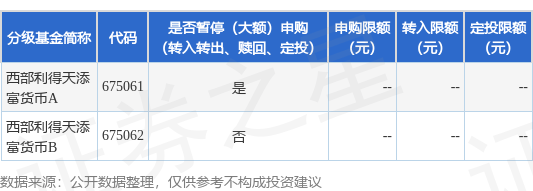
Group 1 - The core point of the announcement is that Western Lide Fund Management Co., Ltd. has decided to suspend the subscription, conversion, and regular investment of the A-class shares of the Western Lide Tian Tian Fu Money Market Fund through Ping An Securities Co., Ltd. starting from September 5, 2025, to ensure the stable operation of the fund and protect the interests of fund holders [1][2] - The specific details of the suspension include that the A-class shares will not accept large-scale subscriptions, conversions, or regular investments through Ping An Securities, while redemptions and conversions out of the fund will continue to be processed normally during this suspension period [1] - The fund management will announce the time for resuming the subscription, conversion, and regular investment of the A-class shares through the mentioned channel in a future notice [2] Group 2 - The announcement includes a table detailing the status of the sub-funds, indicating that the A-class shares are suspended for large-scale subscriptions while the B-class shares are not affected [1] - Other channels for subscription, conversion, and regular investment of the A-class shares will continue to operate according to the fund management's relevant business announcements [2]
揭秘银行薪酬: 24家银行上半年 人均月薪超3万元
Sou Hu Cai Jing· 2025-09-05 01:30
Core Viewpoint - The banking sector in A-shares has regained its position as the largest sector with a market value of 11.31 trillion yuan, surpassing the electronics sector, while the salary situation of banking employees has also drawn attention [1] Salary Overview - The average monthly salary in the banking industry for the first half of 2025 is 30,200 yuan, a slight increase of 1,300 yuan year-on-year, reversing a trend of a 5,300 yuan decrease in the same period last year [2][3] - The top tier of banks, including joint-stock banks and strong city commercial banks in eastern regions, have an average monthly salary exceeding 45,000 yuan, with specific banks like China Merchants Bank and Nanjing Bank reporting 50,500 yuan and 48,200 yuan respectively [2] Salary Distribution - The second tier consists of state-owned banks with average monthly salaries ranging from 25,000 to 30,000 yuan, with Bank of China at 28,200 yuan and China Construction Bank at 26,200 yuan [3] - The third tier includes some rural and city commercial banks in remote areas, with average salaries below 25,000 yuan, such as Zhengzhou Bank and Xi'an Bank at 24,700 yuan and 22,800 yuan respectively [3] Management Salary Trends - A notable trend is the decrease in salaries for key management personnel across many banks, with 33 out of 42 A-share listed banks reporting a year-on-year decline in management salaries, with the highest drop reaching 82.4% [5][6] - For instance, Zhengzhou Bank's management salary total fell from 103.88 million yuan to 59.57 million yuan year-on-year [5] Salary Structure Reform - Many banks are emphasizing salary structure reform, focusing on value creation and incentivizing young employees to work in grassroots positions [7] - The "reverse salary recovery" mechanism is being established to enhance performance-based pay and mitigate operational risks, with banks like Zhengzhou Bank and China Merchants Bank implementing measures to recover performance-related pay under certain conditions [8] Industry Salary Context - The salary levels of listed banks do not represent the overall banking industry, as there are over 4,000 banking institutions in China, with many smaller banks having significantly lower average salaries compared to listed banks [9]
行长集体表态“反内卷”,恶性竞争时代将终结?
Xin Lang Cai Jing· 2025-09-05 00:12
从监管出手整治内卷式竞争,到多家银行高管在业绩发布会上公开表态"反内卷",现如今, 一场针对行业内卷的变革正在逐步改变着商业银行的竞争逻辑。 自中央经济工作会议提出综合整治内卷式竞争以来,"反内卷"已经成为银行业的共识。 在上市银行近期召开的2025中期业绩发布会上,多名高管提及"反内卷",据不完全统计,至 少包括邮储银行、中信银行、招商银行、平安银行、兴业银行、华夏银行、民生银行、浙商 银行、杭州银行等在内的九家上市银行。其中,有的高管明确表态"未来将持续降本增效, 不搞内卷式竞争";有的则从理念上进行根本转变,提出"加强宣导、严格约束,让价格内卷 回归价值服务"。 在多位银行高管看来,银行业过度内卷扰乱金融秩序,"反内卷"有利于银行业存贷款、中间 业务实现更加高质量、可持续的发展,为行业创造更为健康的市场环境。 银行如何做好"反内卷"? 坚持理性定价与风险定价 近年来,"内卷"已频繁出现在企业竞争的语境当中,由此出现的价格战也屡见不鲜。 在近期业绩发布会上,包括邮储银行、中信银行、招商银行、平安银行、兴业银行、华夏银 行、民生银行、浙商银行、杭州银行等在内的多家上市银行高管均表示,将积极执行"反内 卷"相 ...
桥水变成了中国的金融爱马仕
阿尔法工场研究院· 2025-09-05 00:07
Core Viewpoint - Bridgewater Associates has become a highly sought-after hedge fund in China, akin to a luxury brand, with wealthy investors eager to invest substantial amounts to gain access to its products [2][3]. Group 1: Performance and Strategy - Despite a lackluster long-term performance globally, Bridgewater's business in China has thrived, achieving a return rate exceeding 35% in 2024, even amidst market downturns [2][3]. - The firm employs an "All Weather Plus" strategy, combining risk parity with active management, which has contributed to a 40% growth in assets under management, surpassing 55 billion yuan [2][10]. - In the first seven months of 2024, Bridgewater's onshore fund in China reported an 18% return, bringing its annualized return since inception in 2021 close to 20% [10]. Group 2: Market Position and Competition - Bridgewater's growth in China contrasts sharply with the struggles faced by many international asset management firms, which are either underperforming or unable to capture market share from local giants [6][10]. - Competitors like D.E. Shaw and Two Sigma manage only 5 to 10 billion yuan, significantly less than Bridgewater's assets [6]. - The high demand for Bridgewater's products has led to a competitive environment, with banks like China Merchants Bank and CITIC Bank limiting the amount clients can invest, further fueling investor frustration [3][11]. Group 3: Brand Recognition and Leadership - Brand recognition and strong performance are key factors driving capital inflow into Bridgewater's funds in China, despite the absence of founder Ray Dalio in daily operations [7]. - The current CEO, Nir Bar Dea, continues to lead the firm, maintaining its positive outlook on the Chinese market [7]. Group 4: Investor Sentiment and Behavior - Investors are increasingly willing to hold Bridgewater funds due to their low drawdown and stable returns, reflecting a desire for security in investment choices [12]. - The competitive nature of acquiring Bridgewater funds has led to a surge in demand, with reports of significant oversubscription for new fund offerings [11].
上市股份银行半年净利2781亿增0.3% 总资产73.38万亿平均不良率1.3%
Chang Jiang Shang Bao· 2025-09-04 23:40
Core Insights - The overall performance of listed commercial banks remained stable in a complex external environment during the first half of 2025, with total operating income of 777.42 billion yuan, a year-on-year decrease of approximately 2%, and net profit of 278.125 billion yuan, a slight increase of 0.3% [1][2] Financial Performance - Among the 10 listed banks, only Shanghai Pudong Development Bank and Bohai Bank achieved both revenue and profit growth, indicating a polarized performance trend [2] - The highest operating income was recorded by China Merchants Bank at 169.969 billion yuan, with a net profit of 74.93 billion yuan, followed by Industrial Bank and CITIC Bank with net profits of 43.141 billion yuan and 36.478 billion yuan respectively [2] - Seven banks experienced a decline in operating income, while three banks, including Shanghai Pudong Development Bank, achieved positive growth rates of 2.62%, 7.83%, and 8.14% respectively [2] Interest Income and Fee-Based Income - In the context of declining market interest rates and intensified competition, seven banks reported a year-on-year decrease in net interest income, with only China Merchants Bank, Shanghai Pudong Development Bank, and Minsheng Bank showing growth [3] - The net interest margin for listed banks ranged from 1.32% to 1.88%, with Minsheng Bank being the only bank to see an increase in net interest margin, reaching 1.39% [3] - Four banks, including Industrial Bank and CITIC Bank, reported growth in fee and commission income, while Bohai Bank and Zhejiang Commercial Bank saw significant declines [3] Investment Income - Despite challenges in traditional business revenue growth, investment income showed a positive trend, with eight banks reporting increases, particularly Everbright Bank with a 33.41% year-on-year growth [4] Asset Quality - As of June 30, 2025, the total assets of the 10 listed banks reached 73.38 trillion yuan, with most banks achieving steady asset expansion [5] - The average non-performing loan (NPL) ratio for the listed banks was approximately 1.3%, with four banks showing a decrease compared to the end of 2024 [6] - The NPL ratios for major banks like China Merchants Bank and Ping An Bank improved slightly, while others like Minsheng Bank and Bohai Bank saw slight increases [6] Provision Coverage - Only China Merchants Bank had a provision coverage ratio exceeding 400%, at 410.93%, while several other banks maintained coverage ratios above 200% [7] - Plans for mid-year dividends have been announced by several banks, including China Merchants Bank and Minsheng Bank, with specific cash dividend amounts and payout ratios detailed [7]



银行利润 “省”出来
Shang Hai Zheng Quan Bao· 2025-09-04 23:39
Core Viewpoint - The banking industry is focusing on cost reduction and efficiency improvement through structural adjustments, personnel optimization, and digital transformation to achieve higher quality outcomes [1][2][7]. Group 1: Cost Reduction Strategies - Many banks have improved profits by optimizing costs, with half of the 42 A-share listed banks reporting a year-on-year decline in cost-to-income ratios [2][3]. - In the first half of the year, banks reduced deposit interest rates and cut labor costs, leading to a stabilization and recovery of profits [3]. - Among the 42 A-share listed banks, 26 reported a decrease in cost-to-income ratios, with notable declines from Xi'an Bank and Postal Savings Bank [3]. Group 2: Specific Cost Management Actions - Banks are managing deposit structures to lower interest expenses, with 40 banks reporting a year-on-year decrease in interest expenses, and 33 of them seeing reductions exceeding 5% [3]. - For example, Zhejiang Commercial Bank reported a 10.95% decrease in interest expenses, while Postal Savings Bank cut management expenses significantly [3][4]. - Shanghai Pudong Development Bank reduced annual rental costs by 9.444 million yuan through property management [5]. Group 3: Future Improvement Paths - The industry recognizes that true cost reduction and efficiency improvement require a focus on restructuring business models, optimizing human resources, and embracing digital transformation [7]. - Banks are encouraged to prioritize low-capital, low-cyclical business segments to enhance profitability [7]. - Digital transformation is seen as essential for process reengineering and efficiency enhancement, allowing banks to focus on complex business operations [7].
