中国中免

Search documents
免税消费政策再优化,激发免税消费活力
HUAXI Securities· 2025-11-03 03:15
Investment Rating - The industry rating for tourism retail is "Recommended" [2][4] Core Insights - The new policies aim to enhance the flexibility of duty-free operations by expanding product categories, relaxing approval processes, and improving service delivery, thereby stimulating duty-free shopping consumption [2] - The recent announcement on October 17 regarding Hainan's duty-free shopping policy includes an expansion of the product range, allowing domestic goods sales, adjusting the shopping age, and extending the applicable population, which is expected to boost duty-free consumption [3] - The continuous release of favorable duty-free shopping policies is anticipated to invigorate consumption in both offshore and inbound duty-free sectors, with significant growth potential for city duty-free stores [4] Summary by Sections Policy Overview - The new policies effective from November 1, 2025, include four core upgrades: empowering domestic products, expanding product categories, decentralizing approval processes, and optimizing services [1] - Specific product categories added include mobile phones, drones, sports goods, health foods, over-the-counter drugs, and pet foods [2] Hainan Duty-Free Policy Adjustments - The number of duty-free product categories has increased from 45 to 47, with new inclusions such as pet supplies and portable musical instruments [3] - Domestic products like clothing, ceramics, and tea can now be sold in duty-free stores, treated as exports for tax purposes [3] Investment Recommendations - The report identifies key beneficiaries of the new policies, including China Duty Free Group, Wangfujing, Hainan Airport, and others, suggesting potential performance improvements for these companies [4]




中国中免20251031
2025-11-03 02:36
Summary of Conference Call on China Duty-Free Industry Industry Overview - The conference call discusses the duty-free industry in China, particularly focusing on China Duty Free Group (CDFG) and its performance amid new policies and market conditions [2][3][4]. Key Points and Arguments 1. **Impact of New Duty-Free Policies** The recent implementation of new duty-free policies is expected to significantly enhance conversion rates and drive the expansion of duty-free businesses, especially benefiting pilot stores in Beijing and Shanghai, with rapid growth anticipated in 2026 [2][3]. 2. **Performance of China Duty Free Group (CDFG)** CDFG's profits have declined from approximately 10 billion in previous years to around 4 billion in 2025 due to intensified channel competition, consumer downgrade, and the crackdown on purchasing agents. However, the new policies and the closure of Hainan's offshore market are expected to boost performance, with profits projected to reach between 5 billion to 6 billion in 2026 [2][4][5]. 3. **Benefits to Other Licensed Companies** Other licensed companies such as Zhuhai Duty Free, Wangfujing, and Hainan Airlines Group are also expected to benefit from the new offshore and exit optimization policies. Wangfujing is projected to reduce losses to around 400 million in 2026, while Hainan Airlines Group is anticipated to gain from its affiliate's development in Hainan [2][6]. 4. **Investment Timing** The current period is considered a favorable time for investing in duty-free concept stocks, as valuations are relatively low with noticeable marginal changes. It is recommended to allocate investments in large companies like CDFG for relative returns, especially with potential stock price improvements expected around the Spring Festival [2][7]. 5. **Consumer Impact of Hainan Closure** The closure of Hainan has not resulted in lower consumer goods tax rates but has created price advantages through the offshore duty-free framework. This change has limited consumer benefits but presents significant opportunities for licensed companies, particularly large firms like CDFG [2][8]. 6. **Market Trends and Seasonal Factors** The overall market trend for 2026 is optimistic, with expectations of improving data. However, attention should be paid to potential seasonal weaknesses in data post-Spring Festival, as well as monthly data changes, key time points, and government regulatory movements [2][3][9]. Additional Important Insights - The new policies have notably increased market attention and are expected to enhance the purchasing process for returning travelers, which could lead to a substantial increase in sales at city duty-free stores [3]. - Investors are advised to monitor the performance of smaller companies like Wangfujing and Hainan Airlines Group, assessing their valuations based on specific circumstances [7].
廖市无双:当前状态下,多空双方谁更占优?
2025-11-03 02:35
Summary of Conference Call Notes Industry or Company Involved - The discussion primarily revolves around the Chinese stock market, specifically focusing on major indices such as the Shanghai Composite Index, ChiNext Index, and the STAR Market (科创50). Core Points and Arguments 1. **Market Status and Key Levels** The Shanghai Composite Index has broken a critical trend line but has not stabilized above 3,950 points, which remains a significant threshold. The ability to hold above 3,936 points will determine if the upward five-wave structure continues [1][4][11]. 2. **ChiNext Index Performance** The ChiNext Index reached a new high but showed signs of fatigue. If it fails to hold above 3,171 points, it may face downward pressure and potential MACD divergence [1][3][12]. 3. **Brokerage Sector Influence** The brokerage sector acts as a market sentiment amplifier, significantly impacting overall market risk appetite. However, the sector's performance this week has been indecisive, necessitating close monitoring [1][5][15]. 4. **Sector Performance Disparity** There is a notable divergence in sector performance, with cyclical industries leading while the technology sector shows significant internal differences. The consumer sector appears weak, reflecting uncertainty in policy interpretations following the Fourth Plenary Session [1][10][19]. 5. **Investment Strategy Recommendations** It is advised not to make significant reductions or increases in positions but to consider portfolio rebalancing, favoring brokerages and cyclical sectors while watching for rebound opportunities in the consumer sector [1][17][19]. 6. **Impact of New Public Fund Regulations** New regulations for public funds will limit positive feedback mechanisms, leading to a more balanced market style and a return to fundamental stock selection. This shift will require institutional investors to adjust their strategies [1][19][21]. 7. **Market Volatility and Strategy Adjustments** The failure of momentum strategies in the current market environment suggests adopting equal-weighted index strategies or quantitative approaches to enhance performance against benchmarks [1][25][26]. 8. **Future Market Outlook** There is confidence in the overall index direction, with expectations of reaching the 4,130 to 4,200 range before the Lunar New Year. However, the current market structure allows for some rebalancing actions [1][18]. Other Important but Possibly Overlooked Content 1. **Market Reaction to Recent Events** The market's reaction to recent events has been complex, with the Shanghai Composite Index showing a jump but subsequently retreating, indicating a lack of strong momentum [1][6][10]. 2. **Investment Sentiment and Performance Metrics** Despite the ChiNext Index's recent highs, the overall market sentiment remains weak, with over 70% of stocks not showing significant gains, highlighting poor profitability across the board [1][16][22]. 3. **Sector-Specific Observations** The performance of specific sectors such as banking, real estate, and consumer goods has been lackluster, which may be tied to recent policy interpretations and market conditions [1][10][17]. 4. **Long-term Strategy for Brokerages** Brokerages are seen as having a strong potential for recovery, with a reasonable risk-reward profile, suggesting a strategic focus on this sector moving forward [1][15]. 5. **Market Dynamics and Feedback Mechanisms** The current market dynamics are influenced by feedback mechanisms that could lead to extreme trends, which the new regulations aim to mitigate, thus changing the investment landscape [1][21][22].
十五五规划,提振消费将是系统性大工程
2025-11-03 02:35
Summary of Key Points from Conference Call Records Industry Overview - The conference call discusses the **Chinese consumer market** and various sectors including **home appliances**, **textiles and apparel**, **food and beverage**, and **high-end consumption** [1][2][3][4][5][6][7][8][9][10][11][12][13][14][15][16][17][18][19][20][21][22][23][24][25][26][27][28][29][30][31][32][33][34][35][36][37][38][39]. Core Insights and Arguments Government Initiatives - The **15th Five-Year Plan** emphasizes enhancing consumer spending through measures such as promoting employment, increasing wage income, stabilizing expectations, and improving the social security system [1][4][6]. - Short-term measures include a **central subsidy** of **300 billion** in 2025, with expectations for continued large-scale subsidies in 2026, albeit with a broader scope to avoid over-reliance on subsidies [1][5][6]. Consumer Market Trends - The consumer market has shifted from a bull market post-2020 to a prolonged bear market starting in 2021, primarily due to weakened purchasing power and consumption downgrade [2]. - The **A-share** consumer sector has lagged, while the **Hong Kong stock market** saw a rise in new consumption sectors in late 2024 and early 2025 [2]. Sector-Specific Insights - **Home Appliances**: Companies like **Midea** and **Haier** are expected to grow due to international competitiveness and channel reforms, despite concerns over subsidy reductions [1][13]. - **Television Industry**: **Hisense** and **TCL** are positioned to benefit from increased Mini LED penetration, enhancing brand positioning and average pricing [1][14]. - **Textiles and Apparel**: The sector is undergoing structural upgrades with rising demand for health-oriented and fashionable clothing. Despite fluctuations in overseas demand, international expansion is expected to improve order situations by 2026 [1][22][24][25]. - **Food and Beverage**: Investment opportunities lie in new consumption channels and health-oriented products, with policy support expected to stimulate demand [3][37][38]. Long-term Market Outlook - The overall market outlook for 2026 is cautious, with expectations of improved overseas business due to China's efficiency in the supply chain and technological advancements [12]. - The **high-end consumption market** is anticipated to benefit from wealth improvements and policy optimizations, particularly in sectors like luxury goods and entertainment [32]. Additional Important Insights - The **service consumption sector** is highlighted as a crucial employment channel, with increased supply in events like concerts and sports benefiting from policy optimizations [3][31]. - The **internationalization of Chinese consumer industries** is progressing, with significant competitiveness in technology and manufacturing sectors, although challenges remain in textiles and apparel [11][24][27]. - The **outdoor apparel market** is emerging as a growth area, with traditional brands expanding their product lines [26]. - The **packaging industry** is experiencing consolidation, with major players like **Aoruijin** and **Baosteel** capturing significant market share [18]. This summary encapsulates the key points discussed in the conference call, providing a comprehensive overview of the current state and future outlook of the Chinese consumer market and related industries.
大市调整难挡资金热情!全市场唯一养老ETF(516560)微跌0.23%现持续溢价交易
Xin Lang Ji Jin· 2025-11-03 02:28
Group 1 - The only pension ETF in the market (516560) experienced a slight decline of 0.23% after a small opening, with a trading volume of 3.8 million yuan, significantly higher than the previous day's total volume, indicating active buying interest [1][2] - Over the past four days, there has been a cumulative net inflow of 3.06 million yuan into the pension ETF (516560), reflecting a strong buying momentum [1] - The ETF tracks the CSI Pension Industry Index, which includes companies involved in various sectors related to elderly care, such as hospitality, healthcare, and insurance [4] Group 2 - China Bank has been actively engaging with local governments and enterprises to enhance the pension industry, launching specialized services to strengthen the pension financial service system [3] - The Shanghai Minhang District has opened a senior care technology experience hall, showcasing over 110 smart elderly care products from more than 60 companies, promoting innovation in the "elderly care + technology" sector [3] - Future strategic focus will be on building a comprehensive service system for the elderly and children, improving the elderly care service system, and developing long-term care insurance [3] Group 3 - The pension ETF (516560) is designed to reflect the overall performance of the pension industry chain, with its top ten weighted stocks including companies like Ecovacs, Changbai Mountain, and New China Life Insurance [4] - The index for the pension ETF was established on December 31, 2004, and its historical performance is based on the current composition of the index [5]


国信证券晨会纪要-20251103
Guoxin Securities· 2025-11-03 02:07
证券研究报告 | 2025年11月03日 | 晨会纪要 | | --- | | 数据日期:2025-10-31 | 上证综指 | 深证成指沪深 | 300 指数 | 中小板综指 | 创业板综指 | 科创 50 | | --- | --- | --- | --- | --- | --- | --- | | 收盘指数(点) | 3954.79 | 13378.21 | 4640.66 | 14359.78 | 3894.66 | 1415.52 | | 涨跌幅度(%) | -0.80 | -1.13 | -1.47 | -0.30 | -0.67 | -3.13 | | 成交金额(亿元) | 10311.04 | 12866.87 | 6807.12 | 4592.33 | 5915.29 | 949.50 | 【重点推荐】 行业与公司 登海种业(002041.SZ) 财报点评:玉米种业短期景气低迷,Q3 末合同负 债同比-11% 【常规内容】 宏观与策略 宏观周报:宏观经济周报-从"短期促销"到"长效治本" 宏观周报:多资产周报-如何看待铜价创历史新高? 固定收益专题研究:短期纯债基金三季报分析-规模缩水,杠杆 ...
大消费行业周报(10月第5周):白酒调整出清待改善信号-20251103
Century Securities· 2025-11-03 01:40
Investment Rating - The report indicates a neutral investment rating for the consumer sector, with a focus on the potential recovery signals in the liquor industry [4]. Core Insights - The consumer sector showed mixed performance in the last week, with retail, textiles, and home appliances showing positive growth, while food and beverage, and beauty care sectors faced declines [4]. - A new policy from the Ministry of Commerce aims to enhance duty-free shopping, which is expected to boost consumer spending and attract overseas consumption back to domestic markets [4]. - The liquor industry is undergoing a period of adjustment, with major players like Kweichow Moutai showing stable revenue despite a weak consumption backdrop, while smaller regional brands are struggling with high inventory and declining profits [4]. Summary by Sections Market Weekly Review - The consumer sector's performance varied, with retail (+1.63%), textiles (+1.04%), and home appliances (+0.74%) gaining, while food and beverage (-0.23%) and beauty care (-2.21%) declined [4]. - Key stocks that led gains included Richen Co. (+17.79%) and Dechang Co. (+18.35%), while ST Chuntian (-7.92%) and Stone Technology (-12.34%) were among the biggest losers [4]. Industry News and Key Company Announcements - The Ministry of Commerce and other departments issued a notice to improve duty-free store policies, effective November 1, which includes expanding product categories and easing approval processes [4][15]. - The liquor sector is experiencing accelerated adjustments, with Kweichow Moutai reporting Q3 revenue of 39.81 billion yuan (up 0.35% YoY) and net profit of 19.22 billion yuan (up 0.48% YoY), while smaller brands face significant profit declines due to high inventory levels [4][18]. - Various companies reported their Q3 earnings, with notable performances including Jinbo Biological (+31.1% YoY revenue growth) and Midea Group (+10.06% YoY revenue growth) [17][19].


29股获融资净买入额超1亿元 中国建筑居首
Zheng Quan Shi Bao Wang· 2025-11-03 01:20
Group 1 - On October 31, among the 31 primary industries tracked by Shenwan, 13 industries experienced net financing inflows, with the computer industry leading at a net inflow of 664 million yuan [1] - Other industries with significant net financing inflows included public utilities, transportation, construction decoration, media, and non-bank financials [1] Group 2 - A total of 1,726 individual stocks received net financing inflows on October 31, with 174 stocks having net inflows exceeding 30 million yuan [1] - Among these, 29 stocks had net financing inflows exceeding 100 million yuan, with China State Construction leading at a net inflow of 377 million yuan [1] - Other notable stocks with high net financing inflows included Xunwei Communication, BlueFocus Communication Group, China Pacific Insurance, China Merchants Energy Shipping, 360 Security Technology, Sungrow Power Supply, OFILM Group, and China Duty Free Group [1]

中国中免(601888):25Q3业绩边际改善,政策持续利好
Haitong Securities International· 2025-11-03 01:15
Investment Rating - The report assigns an "Outperform" rating to China Tourism Group Duty Free, indicating an expected relative return exceeding 10% over the next 12-18 months [20][21]. Core Insights - The company reported a marginal improvement in Q3 2025 results, with revenue of RMB 11.71 billion, a year-on-year decline of 0.4%, and a net profit of RMB 452 million, down 28.9% year-on-year [1][7]. - Hainan's offshore duty-free sales showed signs of recovery, with September sales reaching RMB 1.73 billion, marking a 3.4% year-on-year increase, the first positive growth in nearly 18 months [2][8]. - The company has implemented its first interim dividend, distributing RMB 2.5 per 10 shares, totaling RMB 517 million, which is 16.95% of the net profit for the first three quarters [4][11]. Summary by Sections Financial Performance - For Q3 2025, the company achieved a gross profit margin of 32.0%, which remained stable year-on-year, while the net profit margin was 3.86%, down 1.55 percentage points year-on-year [2][9]. - The total revenue for the first three quarters was RMB 39.86 billion, reflecting a 7.3% year-on-year decline, with a net profit of RMB 3.052 billion, down 22.1% year-on-year [1][7]. Market Developments - The company is expanding its operations with new downtown duty-free stores in Shenzhen, Guangzhou, and Chengdu, adopting a dual-track operation model that integrates local culture [3][10]. - Recent policy adjustments in Hainan's offshore duty-free shopping are expected to enhance consumer experience and boost sales, with the number of duty-free shopping categories increasing from 45 to 47 [5]. Strategic Initiatives - The company is focusing on enhancing the integration of duty-free shopping with cultural tourism, creating a composite model that includes experience and social interaction [3][10]. - Ongoing projects, such as the third phase of Sanya International Duty-Free City, are progressing steadily, contributing to the company's long-term growth strategy [3][10].
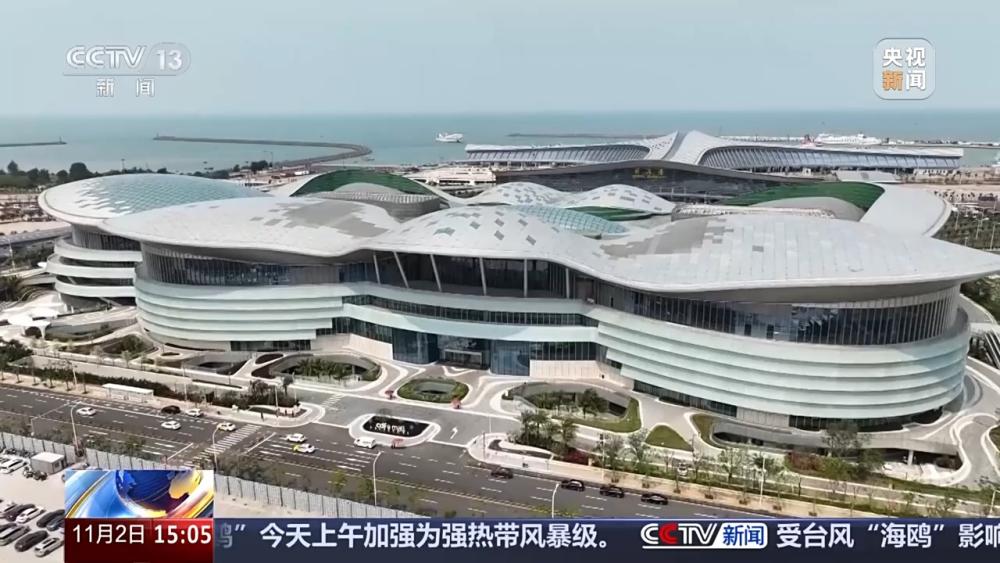
海南离岛免税有新政!落地首日一起感受新消费
Yang Shi Xin Wen Ke Hu Duan· 2025-11-03 00:39
Core Points - The new duty-free policy in Hainan officially took effect on November 1, introducing significant changes in product categories, service groups, and purchase restrictions, while also raising expectations for the operational efficiency of duty-free entities [1][5] - The first day of implementation saw various domestic brands available in the duty-free stores, allowing island residents and tourists to benefit from VAT and consumption tax refunds [1][3] Product Categories - The new policy expands the product categories to 47, including pet supplies and portable musical instruments, while allowing six categories of domestic goods such as clothing and accessories to be sold duty-free [5] - Tourists with outbound travel plans can enjoy a duty-free allowance of 100,000 yuan per year without limit on the number of purchases [5] Consumer Experience - Local residents can purchase 15 categories of "immediate purchase and pick-up" duty-free goods throughout the year, with an annual limit of 100,000 yuan, enhancing convenience for frequent shoppers [5][6] - Duty-free stores have implemented measures to help consumers understand the policy changes, including electronic displays and customer service personnel available for inquiries [8] Operational Enhancements - The new policy not only broadens the product structure but also optimizes the shopping experience through measures like "immediate purchase and pick-up," with plans to introduce more new products and create immersive shopping environments linked to Hainan's tourism resources [10]