荣耀

Search documents
折叠屏手机火热 荣耀推出Magic V Flip2
2 1 Shi Ji Jing Ji Bao Dao· 2025-08-21 14:04
Core Viewpoint - The launch of the new foldable smartphone Honor Magic V Flip2 at a starting price of 5499 yuan signifies the ongoing competition in the foldable smartphone market, with major players like Honor and potential entrants like Apple driving innovation and consumer interest [1] Group 1: Product Features - The Honor Magic V Flip2 features a vertical fold design, measuring 6.9mm in thickness when opened and 15.5mm when folded, weighing approximately 204g [1] - The device is equipped with a 200 million pixel ultra-clear main camera and a 50 million pixel 120° ultra-clear wide-angle lens [1] Group 2: Market Trends - Leading smartphone manufacturers, including Honor, are increasingly investing in the foldable smartphone segment, with Apple expected to launch its own foldable device next year [1] - TrendForce predicts that if Apple enters the market, consumer interest and acceptance of foldable products among high-end users will likely increase rapidly, injecting innovation into the smartphone industry [1] Group 3: Market Projections - TrendForce estimates that global foldable smartphone shipments will reach 19.8 million units by 2025, maintaining a penetration rate of approximately 1.6%, consistent with 2024 figures [1]
今年出货或达1980万台!折叠屏手机,为啥越卖越火?
2 1 Shi Ji Jing Ji Bao Dao· 2025-08-21 12:42
Core Insights - The popularity of foldable smartphones is increasing, with global shipments expected to reach 19.8 million units by 2025, representing a market penetration rate of approximately 1.6% [1] Group 1: Consumer Preferences - Consumers are increasingly attracted to foldable smartphones not only for their innovative form factor but also due to continuous improvements in product experience [2] - Lightweight design has become a key focus for manufacturers, exemplified by the Honor Magic V5, which measures only 8.8mm in thickness and weighs 217g, comparable to traditional smartphones [2] - Battery life remains a significant concern, with 48.65% of consumers expressing a desire for improved standby time in foldable smartphones [2] Group 2: Technological Advancements - To address "battery anxiety," foldable smartphones are being equipped with larger batteries and advancing battery technology [3] - Strategic initiatives by smartphone brands in 2025 will focus on practical AI applications, imaging breakthroughs, innovation in foldable designs, and ecosystem collaboration [3] - The integration of AI technology allows foldable smartphones to assist users in various tasks, enhancing efficiency [3] Group 3: Manufacturing Efficiency - The production of foldable smartphones involves complex structures and craftsmanship challenges, yet advancements in smart manufacturing enable the assembly of a device in just 28.5 seconds at Honor's Shenzhen facility [4] Group 4: Future Outlook - The combination of lightweight foldable designs, advanced AI capabilities, and long-lasting batteries positions foldable smartphones as a potential solution for efficient living [5]
国补叠加618带动销量爆发 苹果、小米、华为跻身“全球品牌中国线上500强”
Zheng Quan Shi Bao Wang· 2025-08-21 09:12
人民财讯8月21日电,国补叠加618大促双重拉动,二季度手机品牌销量迎来爆发。8月20日,由北京大 学国家发展研究院编制,阿里巴巴淘天集团提供技术支持的2025年二季度"全球品牌中国线上500强 (CBI500)"榜单发布,手机品牌表现亮眼,苹果、小米,华为、vivo、OPPO、荣耀等均冲进TOP50, 其中苹果凭借稳定的整体表现,综合评分最高,位列上榜品牌第一。 ...


字节跳动否认将推“豆包手机”
Ju Chao Zi Xun· 2025-08-21 07:48
Group 1 - ByteDance is reportedly developing an AI phone called "Doubao," with ZTE as the ODM manufacturer, planned for internal testing by the end of this year or early next year, but the company has denied any plans to launch a phone product [2] - This is the third time in a year that ByteDance has been rumored to enter the mobile phone business, with previous denials regarding collaborations with Nubia and the hiring of former Honor CEO Zhao Ming [3] - ByteDance's hardware exploration dates back to the acquisition of Smartisan's team and patents in late 2018, leading to the establishment of the "New Stone Laboratory," which has since shifted focus to educational hardware after initial products underperformed [3] Group 2 - With the rise of generative AI technology, ByteDance is increasing its hardware efforts, focusing on partnerships and ecosystem empowerment rather than developing its own devices [4] - In 2024, ByteDance fully acquired headphone manufacturer Oladance and launched the AI-enabled smart headphones "Ola Friend," while also collaborating with Yingmu Technology for smart glasses [4] - ByteDance's current strategy indicates a preference for being an AI technology and service provider, embedding its capabilities into various hardware rather than manufacturing its own devices [4]

手表消费大变天
3 6 Ke· 2025-08-21 04:13
Core Viewpoint - The luxury watch market in China, particularly for European brands like Rolex, is experiencing a significant decline, with prices dropping and consumer interest shifting towards domestic and smartwatches [3][4][5]. Group 1: Market Trends - The resale value of Rolex watches has decreased by nearly one-third from March 2022 to March 2025, reaching a four-year low [3]. - Other high-end brands such as Vacheron Constantin, Piaget, and Patek Philippe are also facing price pressures, indicating a broader market trend away from luxury watches as "hard currency" [3][4]. - The export value of Swiss watches to mainland China fell by 26% last year, while exports to Hong Kong dropped by 19%, highlighting a significant market contraction [7]. Group 2: Consumer Behavior - The middle-class consumer segment, which has been a major growth driver for luxury goods, is showing a rapid decline in spending on luxury watches, with 45% of middle-class consumers reporting decreased spending on luxury items [10][13]. - A survey indicated that 80% of consumers who are reducing their luxury purchases believe that luxury goods lack cost-effectiveness, leading to a shift in spending priorities [13]. - The traditional consumer base for luxury watches is evolving, with younger consumers from tech and healthcare sectors seeking more personalized and value-driven products [14]. Group 3: Domestic Brands and Smartwatches - Domestic brands like Seagull and Fiyta are gaining traction, with Fiyta's sales of a co-branded watch with the film "The King of the Sky" increasing by 63% [19]. - Smartwatches from brands like Huawei and Xiaomi are rapidly capturing market share, with Huawei leading the market with a 34.2% year-on-year growth in shipments [15]. - The shift towards smartwatches and domestic brands reflects a broader cultural change, as younger consumers prioritize functionality and value over traditional luxury branding [16][19]. Group 4: Industry Performance - Swatch Group, which owns brands like Omega and Longines, reported a 14.6% decline in net sales to 6.74 billion Swiss francs for 2024, with net profit plummeting over 70% to 220 million Swiss francs [5][7]. - The overall market for luxury goods in China is projected to be below 2022 levels, indicating a challenging environment for luxury brands [10].


今年暑假,全国「最火的商场」都在这了!
3 6 Ke· 2025-08-21 02:45
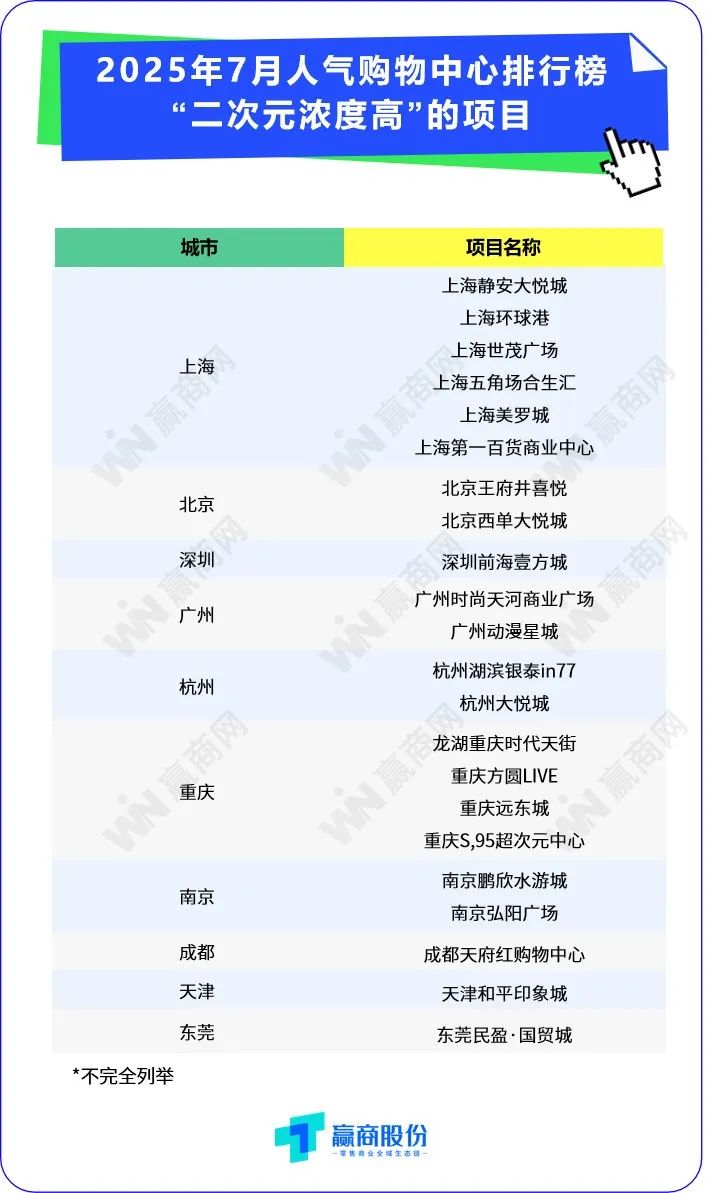
Core Insights - In July, the average foot traffic in shopping malls across the country increased by 7%, with popular malls showing even more significant growth [1] - The average daily foot traffic for the 390 popular shopping malls listed in the "2025 July Popular Shopping Center Rankings" was approximately 88,000, representing a 10% increase compared to the previous month [2] Group 1: Foot Traffic Trends - The average daily foot traffic for the top 43 popular malls in various cities was about 126,000 in June, with 36 malls maintaining their ranking and 7 moving up from the second to fourth positions [2][3] - The increase in foot traffic is attributed to the summer vacation tourism surge, with a 10 percentage point rise in the proportion of malls located in city-level business districts [2] Group 2: Popular Themes and Activities - Over 25 malls featured "anime" themes or characteristics, with many actively introducing trendy brands and organizing anime-related events to attract the student demographic during summer [4] - Family-oriented activities gained popularity, with malls offering creative parent-child events and promotions such as free parking and group purchase packages, enhancing their appeal to family customers [5] Group 3: New Store Openings and Economic Trends - The "first store economy" continues to thrive, with malls exploring new brand openings and events to boost foot traffic, while also integrating ticketing scenarios with shopping experiences to stimulate market potential [5] - The "fat store" concept, featuring high-quality supermarkets, has emerged as a new attraction strategy, with several malls undergoing supermarket renovations to enhance customer experience [5] Group 4: Notable Projects and Rankings - Shanghai Jing'an Joy City ranked as the top large project, recognized as one of the hottest "anime" malls, with a significant increase in search volume for "anime malls" in the region [14] - The Shanghai Bund Central Plaza made its debut on the rankings, featuring a giant dinosaur MR theme park that attracted considerable attention [15] - The popularity of the Guangzhou Fashion Tianhe Commercial Plaza reached its highest historical ranking, hosting multiple major anime events [44] Group 5: Regional Highlights - The Shanghai Nanjing East Road business district saw a surge in popularity, with eight projects listed, including the first-time ranked Shanghai Bund Central Plaza and Shanghai Hongyi International Plaza [12] - In Chengdu, the "ticket economy" is being actively developed, with various promotional activities linked to events and exhibitions to enhance consumer engagement [36]
深圳如何稳外贸、促消费?打造高能级国际贸易枢纽,有哪些政策礼包落定?
Nan Fang Du Shi Bao· 2025-08-20 23:13
Core Viewpoint - Shenzhen is focusing on enhancing its international trade hub status amidst changing global dynamics and uncertainties, with a strong emphasis on reform and innovation to maintain economic resilience and growth [7][8][9]. Group 1: Economic Performance - Shenzhen's foreign trade import and export volume is projected to exceed 4.5 trillion yuan in 2024, maintaining its position as the leading city in the country, with exports achieving a "32 consecutive months" growth [9]. - In the first half of 2025, Shenzhen's foreign trade continued to show robust growth, with an average annual compound growth rate exceeding double digits over the past five years [9][10]. Group 2: Policy Initiatives - The "2025 Shenzhen Foreign Trade Support Policy" and "2025 Shenzhen Service Trade Development Support Policy" were introduced to mitigate external shocks and support enterprises in expanding markets [11][12]. - Shenzhen is implementing 29 policy measures across five areas to enhance cross-border trade facilitation, covering goods trade, digital trade, green trade, and financial services [12][13]. Group 3: Trade and Investment Strategies - The city aims to attract global capital, enterprises, technologies, and talents while promoting Shenzhen products and services internationally [10][11]. - Shenzhen is focusing on developing high-quality service trade platforms and enhancing the integration of service and goods trade [10][12]. Group 4: Consumer Market Dynamics - The "old-for-new" consumption policy has benefited over 11 million people, generating sales exceeding 41.26 billion yuan in the first half of the year [16][17]. - Various promotional activities have been organized to stimulate consumption, with over 795 events held, contributing to a vibrant consumer market [17][18]. Group 5: Future Outlook - Shenzhen plans to continue enhancing its consumption environment by expanding duty-free shops and promoting new retail formats [19]. - The city is set to leverage national-level pilot city initiatives to further stimulate consumption and develop new consumption growth points [19].

开发者新的选择!OPPO、vivo、小米、荣耀联合推出隐私权限新标准
36氪· 2025-08-20 09:31
Core Viewpoint - The article discusses the launch of a new privacy permission system by five major smartphone manufacturers in collaboration with Google, aimed at enhancing user privacy within the Android ecosystem [3][6][12]. Group 1: Privacy Permission System - The new privacy permission system allows for the reasonable opening of 19 categories of privacy data, significantly improving privacy protection capabilities in the Android ecosystem [3][12]. - The system emphasizes a dual-track approach to data and access, balancing privacy protection with user convenience [16][24]. - A unified permission review platform has been established to evaluate the rationality of permission requests and to prevent misuse [17][18]. Group 2: Industry Collaboration - The collaboration among OPPO, vivo, Xiaomi, Honor, and Lenovo signifies a shift towards a unified standard in the Android ecosystem, enhancing user experience [6][22]. - The Mobile Intelligent Terminal Ecological Alliance (ITGSA) plays a crucial role in this initiative, aiming to provide clear privacy protection guidelines for developers and applications [21][24]. - The involvement of Google indicates a transition in the Android ecosystem towards a collaborative model between manufacturers and the system [24][25]. Group 3: User Experience and Developer Impact - The new system allows users to have more precise control over their data sharing, which will shift the core competitive advantage of applications back to functionality and user experience [24]. - Developers can now integrate with a unified standard interface, reducing the effort required for multi-platform adaptation and allowing them to focus on delivering better services [24][25]. - The introduction of system controls, such as the Photo Picker, enables applications to access only selected data, thus enhancing user privacy while maintaining core functionalities [15][16].

传音“自救”
3 6 Ke· 2025-08-20 08:36
Core Insights - Transsion, a leading mobile phone manufacturer in Africa, faces increasing competition and challenges in maintaining profitability despite revenue growth [2][10][11] - The company is exploring new business opportunities and markets, including high-end smartphones and various digital products, to sustain growth [14][19] Group 1: Market Overview - Transsion launched its first dual-SIM feature phone, Tecno T780, in Africa in 2007, achieving over 20 million units sold that year [1] - The African mobile phone market, initially a blue ocean, has become increasingly competitive, with Transsion's market share declining from 52% to 47% in early 2025 [10][11] - The smartphone penetration in Africa is growing, with a 6% increase in shipments in the first quarter of 2025 compared to the previous year [8][10] Group 2: Financial Performance - In 2024, Transsion reported a revenue of 68.715 billion yuan, a year-on-year increase of 10.31%, while net profit only slightly increased by 0.22% to 5.549 billion yuan [2] - The company's gross margin in Africa is significantly higher at 28.59% compared to other markets, indicating a strong position despite challenges [11] Group 3: Competitive Landscape - Transsion's competitors, including Xiaomi and OPPO, are increasingly localizing their strategies in Africa, leading to intensified competition [10][11] - Xiaomi's market share in Africa grew by 32% in 2024, highlighting the competitive pressure on Transsion [10] Group 4: Strategic Initiatives - Transsion is diversifying its product offerings beyond smartphones, including home appliances and digital accessories, to create a more comprehensive ecosystem [14][16] - The company is investing in R&D to enhance its product value in areas like imaging and AI, aiming to strengthen its position in the mid-to-high-end market [14][16] Group 5: Localization and Consumer Insights - Transsion's success in Africa is attributed to its deep understanding of local consumer preferences, such as tailored camera features for darker skin tones and music platforms that cater to local artists [20] - The company has established a robust distribution network and after-sales service, which are critical for maintaining its market presence [11][20]

透视深圳各区半年报:第三产业梯度分布明显,工业区逆袭“抢镜”
2 1 Shi Ji Jing Ji Bao Dao· 2025-08-20 03:48
Core Insights - The article highlights the economic performance of major cities in China, with a focus on Shenzhen, which ranks third nationally in GDP, driven primarily by the service sector [1][2]. Economic Performance - Shenzhen's GDP reached 18,322.26 billion yuan, with the tertiary sector contributing 11,806.37 billion yuan, accounting for over 60% of its GDP and growing at a rate of 6.1%, surpassing both the secondary sector and overall GDP growth [1][3]. - The South District leads the city's tertiary sector with an added value of 3,921.88 billion yuan, representing over 30% of the city's total [3][4]. Sector Analysis - The financial sector in Futian District shows strong growth, with an added value increase of 16% in the first half of the year, making up 44.8% of Shenzhen's total financial sector value [5][6]. - Emerging sectors in Futian, such as software and information technology services, have also seen significant growth, with a 16.9% increase in the first five months of the year [6]. Industrial Transformation - The article notes that traditionally industrial districts like Longgang and Baoan are experiencing a shift towards service-oriented growth, with Longgang's tertiary sector growing at 5.4% [8][10]. - Longgang's investment in information transmission and software services surged by 183.7% in the first half of the year, indicating a strong commitment to modern service industries [10]. Future Outlook - The South District plans to continue developing its artificial intelligence industry and other high-tech sectors, while Futian aims to strengthen its financial services and cultivate new growth points in the service sector [5][6].