牧原股份

Search documents
A股惊现“超级红包雨”,6600亿红利砸向投资者
3 6 Ke· 2025-10-22 09:13
Core Viewpoint - The A-share market has witnessed a significant surge in mid-term dividend announcements, with 843 companies planning to distribute a total of 662.03 billion yuan, nearly matching the total for the previous year [1][6]. Group 1: Dividend Distribution Overview - A total of 843 A-share companies have announced 850 mid-term dividend plans, amounting to 6620.26 billion yuan, which is close to last year's total mid-term dividends [1][6]. - Major companies like China Mobile and Industrial and Commercial Bank are leading with mid-term dividends exceeding 50 billion yuan each, while industry leaders such as Industrial Fulian and China CRRC have also joined the dividend distribution [3][6]. - Among the 843 companies, 442 have a market capitalization exceeding 10 billion yuan, highlighting the involvement of large-cap firms in enhancing shareholder returns [5]. Group 2: Financial Highlights - The total planned mid-term dividends of 6620.26 billion yuan is a remarkable figure, with 79 companies planning dividends over 1 billion yuan, and 14 companies exceeding 10 billion yuan, indicating a trend towards regular dividend distributions [6][10]. - The increase in dividend frequency is notable, with 7 companies planning to distribute dividends twice within the year, reflecting a shift towards more consistent shareholder returns [7]. Group 3: Factors Driving Dividend Surge - The new "National Nine Articles" policy has played a crucial role in promoting cash dividends among listed companies, mandating stricter regulations on companies with low or no dividends [9]. - Companies are showing strong profitability and cash flow, with industry leaders like Midea Group and CATL planning dividends exceeding 10 billion yuan, demonstrating their financial strength [10]. Group 4: Market Impact - The substantial mid-term dividends are expected to attract more long-term funds into the market, particularly from pension and insurance funds seeking stable returns [13]. - Consistent dividend payments can stabilize market expectations and reduce volatility, providing a "safe haven" for investors during market downturns [13]. Group 5: Investor Considerations - Investors are advised to remain cautious of potential "false dividend traps," where companies may announce high dividends despite poor financial health [15]. - Rational investment strategies are emphasized, encouraging investors to consider their risk tolerance and the overall financial health of companies when making investment decisions [16]. Conclusion - The current mid-term dividend wave in the A-share market signifies a positive shift towards enhanced shareholder returns and a more mature market environment, with expectations for continued growth in dividend distributions [17].




连降十周,猪肉为何这么便宜?
3 6 Ke· 2025-10-22 09:02
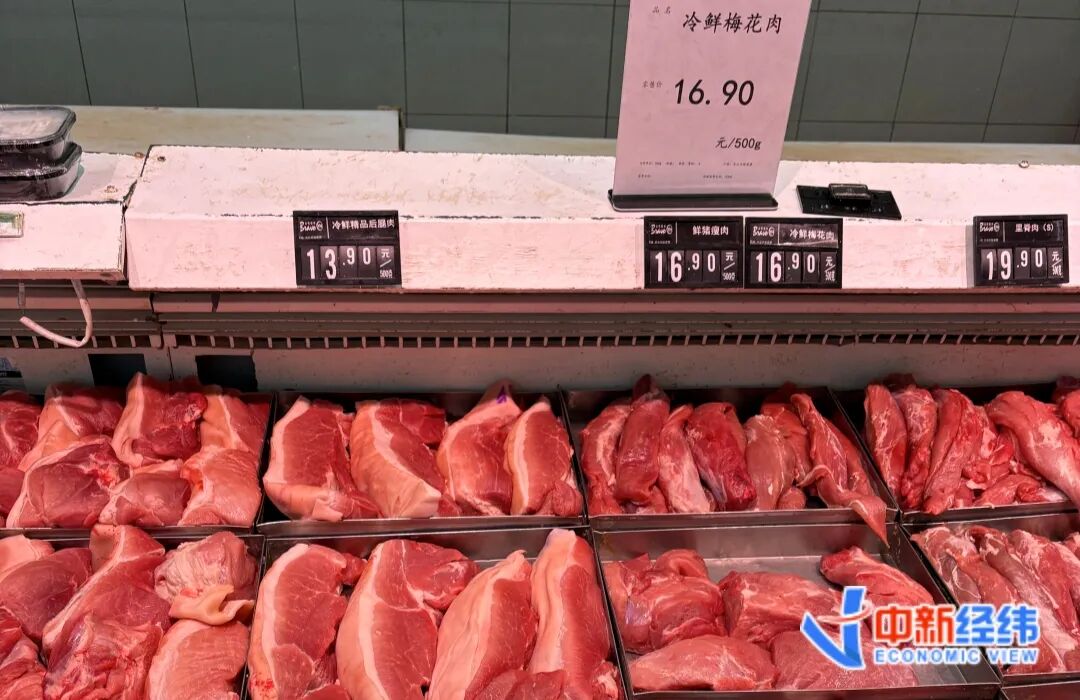
Core Viewpoint - The continuous decline in pork prices in China has raised questions about the reasons behind the drop and whether prices will continue to fall further [1][5]. Price Trends - Pork prices have been decreasing for ten consecutive weeks, with the average wholesale price dropping to 18.43 yuan per kilogram, a 3.1% decrease week-on-week and a 26.6% decrease year-on-year [5][6]. - As of October 21, the average price of pork in national wholesale markets was 17.70 yuan per kilogram, reflecting a slight decrease of 0.1% from the previous day [5]. Supply and Demand Dynamics - The decline in pork prices is primarily attributed to an increase in supply, with the average price of piglets falling to 27.23 yuan per kilogram, down 3.6% week-on-week and 26.6% year-on-year [5][6]. - The average price of live pigs has also decreased to 12.90 yuan per kilogram, a 2.8% drop week-on-week and a 29.5% drop year-on-year [5][6]. Industry Insights - Major pig farming companies such as Muyuan Foods, Wens Foodstuff Group, and New Hope Liuhe have reported declining sales prices for their products, with September figures showing a year-on-year decrease of around 30% [6][7]. - Analysts indicate that the increase in breeding sows and the high output of market pigs have led to an oversupply, contributing to the price drop [7][8]. Future Outlook - Experts predict that while pork prices may see a slight rebound due to seasonal demand increases, the overall supply remains high, limiting significant price increases [8][9]. - The expectation is that pork prices may rise in November as cooler weather boosts demand for pork products, particularly in southern regions [8][9].
养殖业板块10月22日跌1.22%,圣农发展领跌,主力资金净流出3.88亿元
Zheng Xing Xing Ye Ri Bao· 2025-10-22 08:19
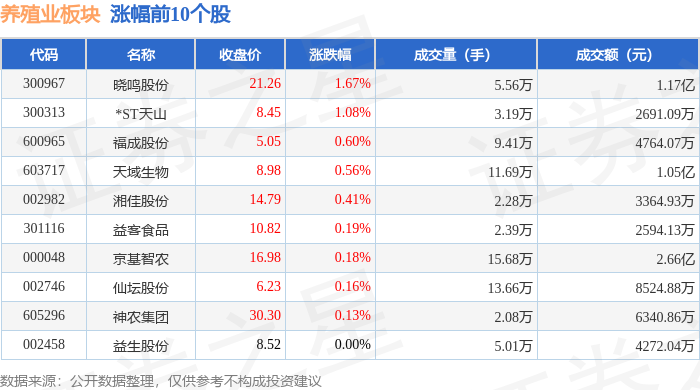
Core Insights - The aquaculture sector experienced a decline of 1.22% on October 22, with Shengnong Development leading the drop [1][2] - The Shanghai Composite Index closed at 3913.76, down 0.07%, while the Shenzhen Component Index closed at 12996.61, down 0.62% [1] Aquaculture Sector Performance - The following companies showed notable performance: - Pangming Co., Ltd. (300967) closed at 21.26, up 1.67% with a trading volume of 55,600 shares and a transaction value of 117 million [1] - Shengnong Development (002299) closed at 16.16, down 4.15% with a trading volume of 276,600 shares and a transaction value of 449 million [2] - Wens Foodstuff Group (300498) closed at 18.09, down 1.15% with a trading volume of 410,500 shares and a transaction value of 750 million [2] Capital Flow Analysis - The aquaculture sector saw a net outflow of 388 million from institutional investors, while retail investors contributed a net inflow of 211 million [2] - Notable capital flows included: - Pangming Co., Ltd. had a net inflow of 6.53 million from institutional investors, while retail investors had a net outflow of 7.21 million [3] - Wens Foodstuff Group experienced a net outflow of 2.93 million from institutional investors, with a significant net inflow of 20.58 million from retail investors [3]





A股震荡之际,这个赛道持续逆市吸金,原因何在?
Xin Lang Ji Jin· 2025-10-22 08:09
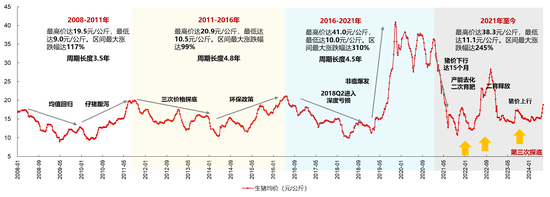
Core Viewpoint - Significant capital is flowing into the agricultural, animal husbandry, and fishery sectors, which are perceived as undervalued despite the overall market stagnation [1][4] Group 1: Industry Dynamics - The pig farming industry is currently facing substantial losses due to declining pork prices, which may lead to a significant industry reshuffle [1] - Recent government policies emphasize supply-side reforms, with major pig farming companies required to reduce production by 1 million heads by the end of the year [1] - Historical data indicates that the pig farming sector has experienced four cycles since 2006, and current prices are at a four-year low, suggesting limited downside potential [1][3] Group 2: Market Valuation - The agricultural, animal husbandry, and fishery sectors are viewed as a "golden pit" for investment, with the agricultural ETF's price-to-book ratio at 2.57, placing it in the 29.3 percentile of the last decade [4][5] - The current valuation levels are below historical averages, indicating a potential for significant upside as the industry recovers [5] Group 3: Future Outlook - Long-term projections suggest that as the market clears and supply-side policies take effect, pork prices are expected to stabilize and eventually rise [3] - The correlation between pork prices and the stock prices of pig farming companies is strong, indicating that an increase in pork prices could lead to substantial profits for these companies [3] - Investment institutions express optimism about the agricultural sector's role in food security and economic development, highlighting opportunities in large-scale farming and emerging consumer trends [6]
畜牧ETF(159867)盘中净申购1350万份,能繁母猪存栏下降
Xin Lang Cai Jing· 2025-10-22 06:12
Group 1 - The core viewpoint indicates that the pig farming industry is facing multiple pressures, including declining market prices, rising epidemic risks, and policy guidance, leading to an expected increase in the motivation for capacity reduction [1] - As of the end of Q3 2025, the number of breeding sows in China is reported at 40.35 million, a year-on-year decrease of 280,000 and a quarter-on-quarter decrease of 90,000 [1] - The Pacific Securities report highlights that the valuations of most listed breeding companies are at historical lows, suggesting significant potential for long-term investment value as they are still within the historical bottom range [1] Group 2 - As of September 30, 2025, the top ten weighted stocks in the China Livestock Breeding Index account for 66.06% of the index, with major companies including Muyuan Foods, Wens Foodstuff Group, and Haida Group [2]
生猪行业动态跟踪报告(月度):9月上市猪企出栏量同比增加环比下降,售价环比走低-20251022
Western Securities· 2025-10-22 05:18
Investment Rating - The industry investment rating is "Overweight" [5] Core Insights - In September 2025, the total number of pigs slaughtered by listed companies reached 15.2934 million, representing a year-on-year increase of 27.11% but a month-on-month decrease of 5.92% [10][11] - The significant year-on-year growth in slaughter volume is attributed to the release of new production capacity in 2024, while the month-on-month decline is due to leading companies like Muyuan and others responding to policy calls by slaughtering heavier pigs earlier [10][11] - The average selling price of pigs in September 2025 decreased by 5.42% month-on-month and 30.18% year-on-year, with the current prices being the lowest for the peak season since 2022 [19][20] - The cumulative revenue for the first three quarters of 2025 for listed pig companies was 222.871 billion, reflecting a year-on-year increase of 7.15% despite the decline in average selling prices [11][12] Summary by Sections Slaughter Volume - In September 2025, listed pig companies reported a slaughter volume of 15.2934 million pigs, with leading companies like Muyuan, Wens, and New Hope slaughtering 5.573 million, 3.3253 million, and 1.3942 million pigs respectively [10][11] - The cumulative slaughter volume for the first three quarters of 2025 was 139 million pigs, showing a year-on-year increase of 20.39% [10][11] Revenue and Pricing - The revenue for September 2025 was 21.647 billion, down 18.74% year-on-year and 10.77% month-on-month, primarily due to lower selling prices [11][12] - The average selling price for pigs in September was 13.26 yuan per kilogram, which is significantly lower than the previous year [19][20] Weight and Performance - The average weight of pigs slaughtered in September was 106.74 kg, showing a slight year-on-year increase of 0.44% but a month-on-month decrease of 0.39% [20] - Leading companies reported average weights of 126.30 kg, 113.51 kg, and 97.16 kg for Muyuan, Wens, and New Hope respectively [20]


无人配送龙头再获7亿融资,蚂蚁集团领投,美团也是股东
3 6 Ke· 2025-10-22 01:55
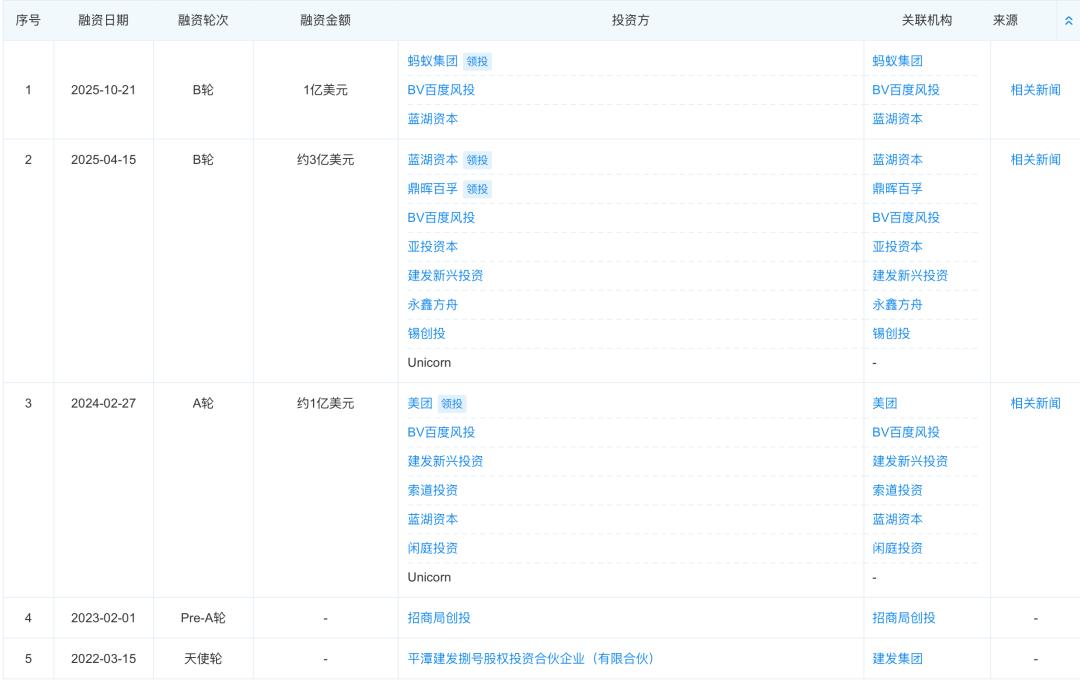
Core Insights - Jiushi Intelligent, a company focused on L4 autonomous freight technology, has completed a B4 round financing of $100 million (approximately 712 million RMB) led by Ant Group, with participation from existing and new shareholders [1][2] - The total amount raised in the B round has reached $400 million (approximately 2.848 billion RMB), making it one of the largest financing events for Chinese tech companies in 2025 and a significant event in the global L4 autonomous driving sector [1][2] - Cumulatively, Jiushi Intelligent has raised $500 million (approximately 3.56 billion RMB) across its A and B rounds [1] Financing Details - The recent financing round was led by Ant Group, with participation from Blue Lake Capital and BV Baidu Ventures among others [2] - Previous financing rounds include approximately $300 million in April 2025 and $100 million in February 2024 [2] Product and Market Position - Jiushi Intelligent is one of the earliest teams to focus on autonomous freight technology, having launched the L4 RoboVan, a new segment for medium to large autonomous freight vehicles capable of operating on urban roads [3] - The company has developed a product matrix that includes the Z2, Z5, Z8, and Z10 models, catering to various urban delivery scenarios such as express logistics, retail, and industrial logistics [5] - The Z5 series, launched in May 2023, is the world's first mass-produced L4 medium to large autonomous freight vehicle, marking a significant step towards commercializing autonomous freight on urban roads [3][5] Future Plans - Following the recent financing, Jiushi Intelligent plans to increase its investment in R&D for autonomous driving technology, focusing on product iteration, supply chain control, global market expansion, and customer service system development [1][6] - The company aims to build a smarter, more efficient, and greener global autonomous freight network [1][6]

A股龙头公司密集赴港上市 港股今年以来IPO募资总额超1900亿港元
Zhong Guo Zheng Quan Bao· 2025-10-21 21:50
Group 1 - The Hong Kong stock market has raised over 190 billion HKD in IPOs this year, ranking first globally among exchanges [1] - A total of 11 A-share companies have successfully listed on the Hong Kong Stock Exchange (HKEX) this year, with 78 more in the pipeline [1][3] - Major A-share companies like Ningde Times, Heng Rui Medicine, and Hai Tian Wei Ye have led the A+H listing trend [1][5] Group 2 - As of October 21, there are 303 companies queued for listing on the HKEX, with over 70% being mainland enterprises [2] - Among the 303 companies, 78 are already listed on A-shares, including major players like Luxshare Precision and Yangguang Electric [3] - The A+H listing model is entering a new upward cycle, driven by policy support and a recovering capital market [4][5] Group 3 - The IPO market in Hong Kong has shown strong recovery since 2025, with over 70 new stocks successfully listed this year [5][6] - The influx of A+H companies is expected to enhance liquidity and pricing efficiency in the Hong Kong market [5] - Deloitte predicts that over 80 new stocks will be listed in Hong Kong this year, with fundraising expected to reach between 250 billion to 280 billion HKD [6]
A股龙头公司密集赴港上市
Zhong Guo Zheng Quan Bao· 2025-10-21 20:18
Group 1 - The Hong Kong IPO market has raised over 190 billion HKD this year, ranking first globally among exchanges [1][2] - A total of 11 A-share companies with a market capitalization exceeding 100 billion CNY have successfully listed on the Hong Kong Stock Exchange [1][2] - The trend of A-share companies listing in Hong Kong is driven by policy support and a recovering capital market, indicating a new upward cycle for the A+H listing model [1][3] Group 2 - As of October 21, there are 303 companies queued for listing on the Hong Kong Stock Exchange, with over 70% being mainland enterprises [2][3] - Among the queued companies, 78 are already listed on A-shares, including major firms like Luxshare Precision, Sungrow Power Supply, and Muyuan Foods [2][3] - The technology sector dominates the queued listings, with nearly 60% of the companies coming from electronics, computing, communication, and power equipment industries [2] Group 3 - The influx of A+H listed companies is expected to enhance the liquidity and pricing efficiency of the Hong Kong market, improving its industry structure and international competitiveness [3][4] - Analysts predict that the A+H listing trend will attract more capital to Hong Kong, reinforcing its position as a key investment window for Chinese assets and an offshore RMB center [4] - Deloitte forecasts that over 80 new stocks will be listed in Hong Kong this year, with total fundraising expected to reach between 250 billion to 280 billion HKD [4]





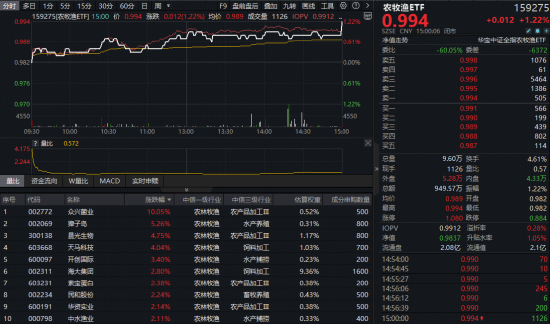
农牧渔反击!三重压力倒逼产能出清,全市场唯一农牧渔ETF(159275)收涨1.22%终结三连阴!布局时机已现?
Xin Lang Ji Jin· 2025-10-21 12:20
Core Viewpoint - The agricultural, animal husbandry, and fishery sector showed a strong rebound on October 21, with the first agricultural ETF (159275) rising by 1.22%, ending a three-day decline [1][3]. Market Performance - The agricultural ETF (159275) opened higher and maintained a positive trend throughout the day, closing with a price increase of 1.22% [1]. - Key stocks in the sector included Zhongxing Junye, which hit the daily limit, and Zhuangzidao, which surged over 5% [1]. Sector Analysis - The agricultural sector is currently experiencing a rebound, with significant gains in sub-sectors such as agricultural product processing, aquaculture, and feed processing [1]. - The sector's valuation remains relatively low, with the agricultural ETF's underlying index price-to-book ratio at 2.55, indicating a favorable long-term investment opportunity [3]. Policy Impact - Recent government policies aimed at reducing overcapacity in the pig farming industry are expected to accelerate capacity reduction in the fourth quarter, potentially leading to a price increase in the second half of next year [1][4]. - The ongoing "anti-involution" measures in the pig farming industry are expected to enhance the quality and efficiency of production, leading to a gradual elimination of outdated capacity [4]. Investment Opportunities - Analysts suggest focusing on companies with significant cost improvements and high future output elasticity, particularly in the pig farming sector [4][5]. - The agricultural ETF (159275) tracks the CSI Agricultural Index, which includes leading companies in various segments such as pig farming, feed, and planting [5].