荣耀

Search documents
字节跳动回应“豆包手机”传闻:无自研计划 聚焦AI能力开放合作
Huan Qiu Wang Zi Xun· 2025-08-20 03:23
Group 1 - ByteDance has denied rumors regarding the development of its own smartphone, "Doubao," stating that there are no plans to launch a proprietary mobile product [1][3] - The company is focused on opening its AI capabilities to various hardware manufacturers, including smartphone makers, and will collaborate on complete solutions without developing its own mobile devices [1][3] - In 2019, ByteDance acquired partial patent rights from Smartisan Technology, which led to speculation about entering the smartphone market; however, the internal team responsible for hardware has since shifted focus to educational hardware [3] Group 2 - In 2021, the "New Stone Laboratory," which was exploring smartphone development, was merged into an education hardware team, ceasing the development of unrelated products like the Smartisan phone [3] - Similar rumors have surfaced multiple times in 2023, including claims of partnerships with Nubia for AI phones and the recruitment of former Honor CEO Zhao Ming, both of which were denied by ByteDance [3] - The Doubao large model, an important AI product of ByteDance, has over 160 million cumulative users as of 2024, with an average of 800,000 new downloads daily in November and nearly 9 million daily active users [3]


长城证券:神州控股(00861)大数据+AI场景化落地 从神州迈向世界
智通财经网· 2025-08-20 00:59
Group 1 - The core viewpoint of the report is that the company is optimistic about the long-term development of Shenzhou Holdings, upgrading its rating to "Buy" due to its transformation results and growth trends driven by the "Big Data + AI" strategy [1] - Shenzhou Holdings has been focusing on the "Big Data + AI" strategy, optimizing its revenue and gross profit structure, with big data business becoming the core driver of revenue and profit growth, indicating a shift from a "resource-driven" to a "technology-enabled" business model [1] - The report highlights that the demand for data applications in vertical fields will continue to grow rapidly in the digital economy era, and the company's development framework will enhance its ability to empower industrial digital transformation through comprehensive data capabilities [1] Group 2 - The company is accelerating its global market layout alongside major domestic enterprises going overseas, with overseas business revenue reaching 929 million RMB in 2024, reflecting a compound annual growth rate of 41% from 2022 to 2024 [2] - In the first half of 2025, Shenzhou Holdings will continue to focus on the "Big Data + AI" field, launching the "Yanyun Infinity Platform" and signing multiple large client orders, indicating a positive cycle of "technology validation - scenario implementation - commercial closure" [2] - The company is expected to achieve dual enhancements in performance and valuation under the dual dividends of digital economy and industrial globalization [2]

京东:已为15万全职骑手缴纳五险一金,平台别一味规避劳动关系;小米卢伟冰:2027年进军欧洲汽车市场;字节跳动否认将推出手机产品
雷峰网· 2025-08-20 00:45
Group 1 - Li Xiang expressed deep gratitude to Wang Xing from Meituan, calling him the biggest benefactor in his entrepreneurial journey, especially during a critical financing period in 2019 when Meituan invested $300 million in Li Auto [4][5] - Meituan's stock price was struggling at the time of investment, but the decision to invest was pivotal for Li Auto's success [4][5] Group 2 - Meitu's revenue for the first half of 2025 reached 1.8 billion yuan, a year-on-year increase of 12.3%, with net profit rising 30.8% to nearly 400 million yuan, driven by AI-powered subscription services [8] - The company's stock price has surged nearly fivefold over the past year, indicating a strong recovery and market interest [8] Group 3 - JD.com has provided social insurance for over 150,000 full-time delivery riders since March 1, 2023, with an average monthly contribution of about 2,000 yuan per rider [9][10] - The company emphasizes the importance of formal labor contracts and benefits for riders, urging the industry to follow suit [9][10] Group 4 - ByteDance denied rumors of launching its own smartphone, focusing instead on providing AI capabilities to various hardware manufacturers [10][11] - The company previously acquired some patents from Smartisan Technology but has shifted its focus to educational hardware [11][12] Group 5 - Xiaomi reported a total revenue of 116 billion yuan for Q2 2025, a 30.5% year-on-year increase, with net profit rising 134.2% to 11.9 billion yuan [13] - The company plans to enter the European electric vehicle market by 2027, while also committing to not engage in price wars in its home appliance sector [13] Group 6 - Huawei's new Pura 80 series will feature a "Star Flash" car key function, enhancing vehicle access and security [16] - The technology aims to improve user experience by allowing smartphones to unlock vehicles with greater precision and speed [16] Group 7 - Anker Innovations is considering an IPO in Hong Kong, aiming to raise approximately $500 million, with plans already in motion [19][20] - The company's stock has risen over 50% this year, reflecting strong market performance [19][20] Group 8 - The mobile smart terminal ecosystem alliance, including OPPO, vivo, Xiaomi, Honor, and Lenovo, launched a privacy permission system to enhance data protection and user experience [21] - This initiative marks a significant step towards standardized privacy protection in the Android ecosystem [21] Group 9 - New Oriental Education's CEO was rumored to be under investigation, causing a significant drop in stock prices, which was later denied by the company [22] - The stock had previously reached a two-year high before the rumors surfaced, highlighting the volatility in the education sector [22] Group 10 - Apple’s official account on Xiaohongshu gained 170,000 followers within 24 hours of its launch, indicating strong engagement with the platform [24][25] - The penetration rate of iOS devices among Xiaohongshu users is nearly 50%, showcasing the platform's significance in the digital ecosystem [24][25]



荣耀出货量跌出前五 “机海战术”或走HTC老路?
Xi Niu Cai Jing· 2025-08-19 06:26
Core Insights - Concerns have been raised regarding Honor's "product ocean strategy," as the company currently has over 20 models across six series while continuing to expand its product lineup, leading to fears of following HTC's path [2] - According to Counterpoint Research, Honor's shipment volume in Q2 2025 is expected to drop by 19% year-on-year, with market share decreasing from 15.5% to 12.8%, resulting in a fall to sixth place [2] Market Performance - IDC data indicates that Honor's market share fell from 17.1% in Q1 2024 (ranking first) to 13.7% in Q4 2024 (ranking fifth), and by Q1 2025, it completely dropped out of the top five, categorized as "Others" [6] - Following Huawei's full return in the second half of 2023, Honor's position as a "substitute" has been rapidly squeezed, with Huawei holding an 18.1% market share in Q2 2025, driven by the success of its Nova 14 series and price reductions on high-end models [6] Competitive Landscape - Despite the HONOR 400 series achieving sales leadership in the 2.5K-4K price range during the 618 shopping festival, competitors like Redmi K80 have reduced prices to 2099 yuan, highlighting Honor's weak differentiation due to a lack of foundational chip technology [6] - Honor's strategy of expanding its product matrix to cover more price segments raises concerns about maintaining the competitiveness of each model, as the company currently offers over 20 models across six series [6] Financial Performance - Honor's cumulative losses in the foldable phone segment are projected to reach 2-3 billion yuan by 2024, while the Magic7 series has only sold 1.28 million units in a year, significantly lower than Huawei's Mate70 series [6]

补贴退潮,暗战升级:2025,手机江湖进入硬核时刻
3 6 Ke· 2025-08-19 01:17
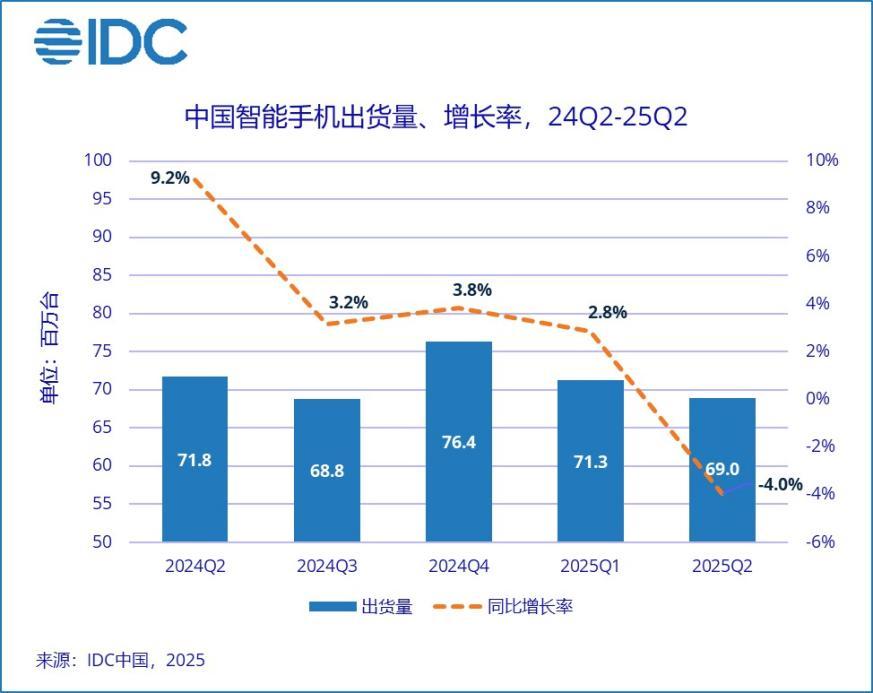
Core Viewpoint - The Chinese smartphone market in the first half of 2025 shows resilience with a slight year-on-year decline in shipments, but the second quarter experienced a notable drop, indicating a shift towards competition based on product value rather than subsidies [1][3]. Market Overview - In the first half of 2025, China's smartphone shipments reached 140 million units, a year-on-year decrease of 0.6%, with a significant 4% decline in the second quarter, breaking a six-quarter growth streak [1][3]. - Huawei regained the top market share in Q2 2025 with 18.1%, followed closely by vivo (17.3%) and OPPO (15.5%), while Xiaomi (15.1%) and Apple (13.9%) rounded out the top five [6][7]. Price War Dynamics - The smartphone market is experiencing intensified price wars, particularly in the mid-range segment (2000-4000 yuan), with major brands like Apple, Huawei, OPPO, and Xiaomi significantly reducing prices to clear inventory [4][5]. - Apple's iPhone 16 series saw price cuts exceeding 1,000 yuan, while other brands also implemented various promotional strategies to attract consumers [4]. Consumer Behavior Changes - The average smartphone replacement cycle has extended to around three years, reflecting a shift in consumer expectations towards durability and long-term value rather than just price [5]. - Consumers are now more discerning, requiring detailed comparisons and information before making purchases, indicating a deeper focus on product experience [5]. Competitive Landscape - The competition among the top five smartphone manufacturers is tight, with minimal differences in market share, making any misstep potentially impactful [6]. - Huawei's market share recovery is attributed to the return of its Kirin chips and the unique features of its HarmonyOS, while its Q2 shipments still fell by 3.4% year-on-year [8]. Brand Strategies - Vivo's focus on imaging technology has been a key strategy, but it faced a significant 10.1% decline in shipments in Q2 due to a concentrated product strategy [8]. - OPPO's dual-brand strategy aims to cover various price segments, but it also experienced a 5% decline in shipments, highlighting challenges in brand differentiation and market positioning [9]. - Xiaomi is the only top-five brand to show growth, driven by cross-industry synergies and channel expansion, although it still faces challenges in translating its technological advancements into consumer-perceived benefits [10]. Emerging Technologies - The foldable smartphone market is still niche, with a 14% year-on-year decline in shipments, but brands like Huawei lead with a 72.6% market share in this segment [11][14]. - AI integration is becoming a focal point for smartphone manufacturers, with companies like Huawei and Xiaomi enhancing their operating systems to improve user experience through AI capabilities [17][20]. Conclusion - The smartphone industry is undergoing a fundamental shift from hardware specifications to user experience and technological innovation, with a focus on addressing consumer pain points and enhancing product value [20].

相机按钮,卒
36氪· 2025-08-19 00:17
Core Viewpoint - The potential removal of the camera button from future iPhone models indicates a shift in consumer preferences and manufacturer strategies, suggesting that the feature may not provide sufficient value to justify its existence [4][40]. Group 1: Industry Trends - Recent reports from digital influencers suggest that Apple may eliminate the camera button in the next iPhone model, leading other manufacturers to reconsider their own implementations of this feature [6][8]. - Historically, non-Apple brands have been the pioneers of physical camera buttons, with models like Sony's Cyber-shot and Nokia's N series setting the standard long before Apple entered the market [11][14]. - The trend of following Apple's lead has been prevalent among domestic brands, with many adopting similar features to align with Apple's offerings, particularly in high-end models [15][17]. Group 2: Consumer Reception - The initial excitement surrounding the camera button has waned, leading to polarized opinions among users, with some viewing it as a marketing gimmick rather than a functional enhancement [25][28]. - Supporters of the camera button argue that it provides a more professional photography experience, especially in challenging conditions, while critics highlight its impracticality and the potential for accidental activation [30][33]. - The complexity of using the camera button for various functions has been criticized, as it often requires multiple steps that can disrupt the user experience compared to simpler touchscreen controls [36][39]. Group 3: Manufacturer Strategies - The decision to include or exclude the camera button reflects a broader consideration of cost versus benefit for manufacturers, with many concluding that the feature does not meet a significant consumer need [41][44]. - Apple's initial push for the camera button was likely a strategic move to differentiate its Pro series, targeting a niche market, while other brands may have followed out of competitive pressure rather than innovation [43][44]. - As market dynamics evolve, manufacturers may prioritize features that enhance core user experiences, such as battery life and connectivity, over less essential functionalities like the camera button [44].

小米荣耀等5家企业联合推出隐私权限体系
Xin Lang Ke Ji· 2025-08-18 14:46
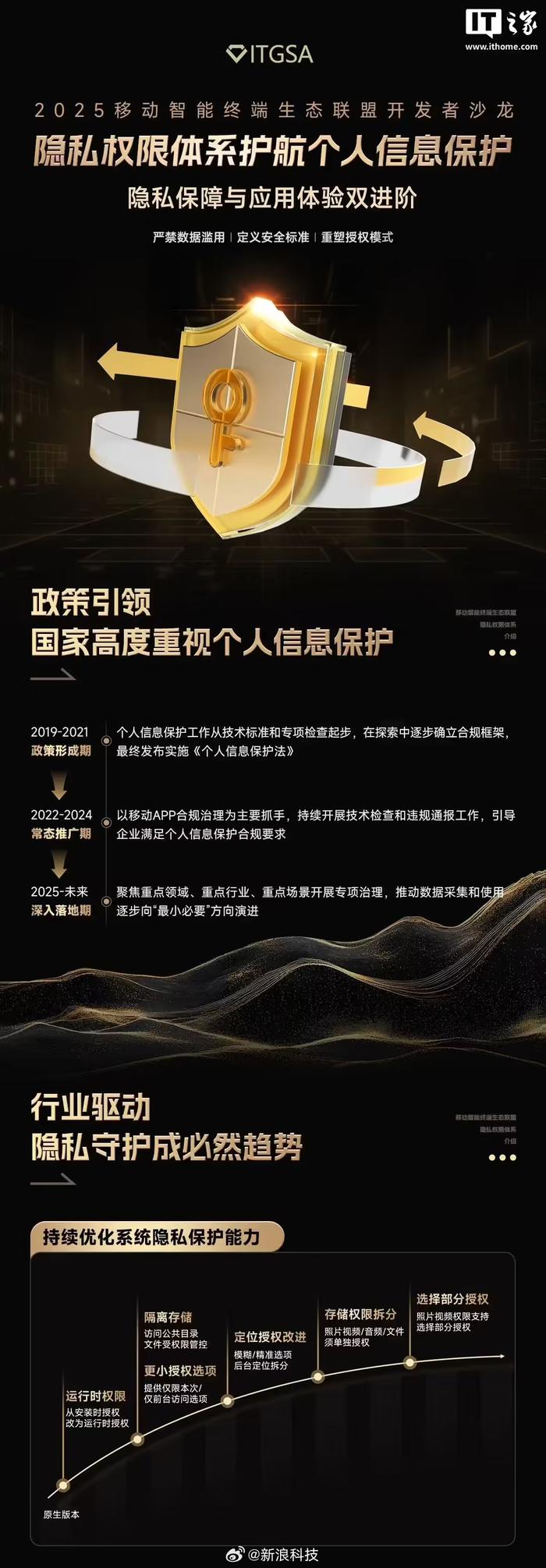
Group 1 - The core viewpoint is that five companies, including OPPO, vivo, Xiaomi, Honor, and Lenovo, have jointly launched a privacy permission system to enhance data protection while improving user experience [1] - The initiative aims to optimize system privacy protection capabilities and upgrade system permission capabilities, using system controls instead of traditional permission authorization [1] - The new privacy permission system will support a dual-track data access mechanism, ensuring transparency and control over data authorization [1] Group 2 - The timeline for personal information protection work includes three phases: policy formation (2019-2021), normalization promotion (2022-2024), and deep implementation (2025 and beyond) [3] - The focus during the normalization promotion phase will be on mobile app compliance governance, with ongoing technical inspections and violation notifications [3] - The deep implementation phase will concentrate on key areas, industries, and scenarios to promote data collection and usage towards a "minimum necessary" direction [3] Group 3 - The privacy permission system will include features such as split storage permissions, improved location authorization requiring separate consent, and runtime permissions instead of installation-time permissions [5] - The system will also provide options for limited access during runtime, allowing for more granular control over data access [5]
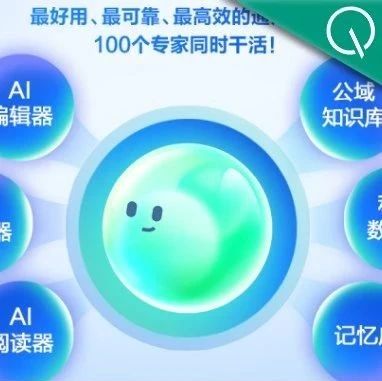
能像人类专家团一样干活的AI Agent,出现了吗?
3 6 Ke· 2025-08-18 10:16
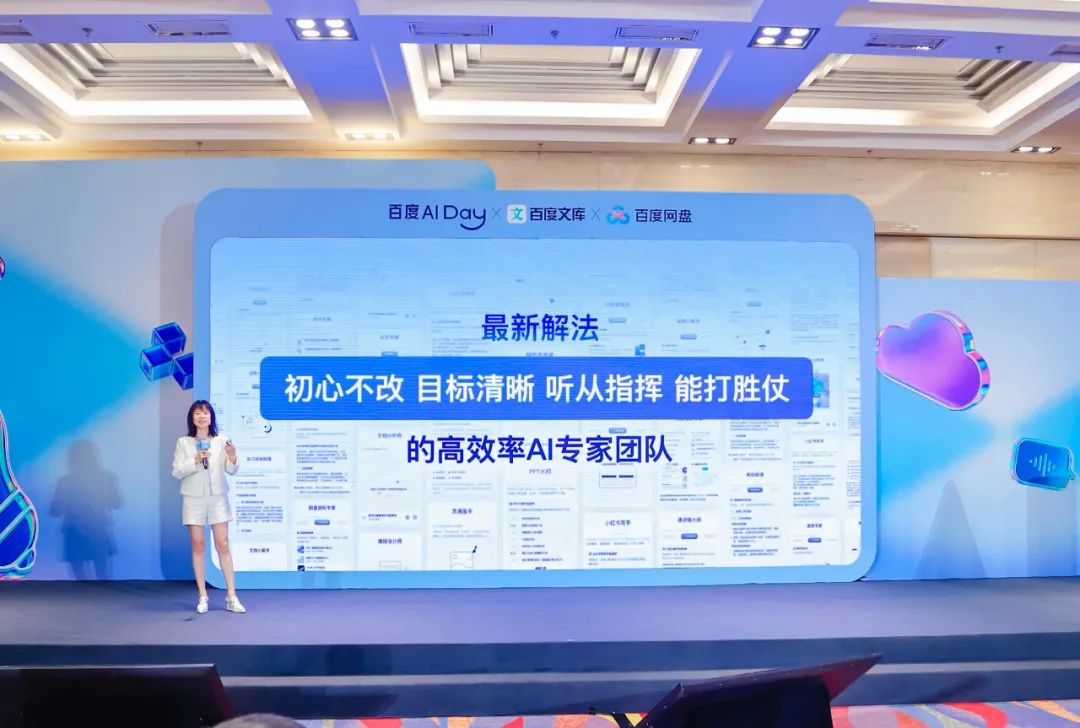
Core Insights - The emergence of AI Agents has generated significant interest, but their practical utility remains limited, with performance varying widely across different products [1][2] - The primary bottleneck for AI Agents is their single-threaded architecture, which restricts their ability to handle complex tasks simultaneously [2][3] - The introduction of GenFlow 2.0 by Baidu's Wenku has demonstrated a breakthrough in AI Agent capabilities, allowing for the parallel execution of multiple complex tasks [4][6] Group 1: AI Agent Challenges - AI Agents currently struggle with understanding complex user needs due to their linear processing approach, which leads to inefficiencies [2][3] - The slow processing speed of single-threaded Agents creates a bottleneck, affecting overall user experience and satisfaction [2][3] - Many AI Agents lack the ability to personalize and accurately match task execution with user expectations, further complicating their utility [2][3] Group 2: GenFlow 2.0 Innovations - GenFlow 2.0 utilizes a Multi-Agent architecture, consisting of over 100 specialized Agents that collaborate to complete tasks more efficiently [3][4] - The new architecture allows GenFlow 2.0 to handle complex tasks in as little as 3 minutes, significantly improving delivery speed and quality [6][14] - The system's ability to dynamically allocate tasks to specialized Agents enhances its overall effectiveness and user experience [8][10] Group 3: User Interaction and Workflow - GenFlow 2.0 shifts the interaction model from merely finding tools to assembling a team of expert Agents, improving task management [7][8] - The system incorporates user data and preferences to create a personalized experience, allowing for real-time adjustments during task execution [10][12] - This approach enables users to manage complex projects more effectively, reducing the time and effort required for task completion [12][17] Group 4: Ecosystem and Future Directions - The underlying technology of GenFlow 2.0 is supported by the newly launched Cangzhou OS, which facilitates seamless integration and collaboration among various Agents [15][16] - The MCP (Multi-Agent Communication Protocol) allows for standardized connections between Agents and external services, enhancing the ecosystem's flexibility [14][16] - The ongoing development aims to lower barriers for businesses to access AI capabilities, positioning GenFlow 2.0 as a leader in the general-purpose AI Agent market [17]

美的为年轻人打造“精神宝地” 构建“人-车-家”新智能生态
Xin Hua Cai Jing· 2025-08-18 09:26
Group 1 - The core concept of Midea's initiative is to create an ideal living space for the younger generation, termed "spiritual treasure land," which addresses both lifestyle scenarios and emotional needs [2] - Midea has partnered with companies like Honor and NIO to achieve a "human-vehicle-home" interaction, with plans for more collaborations in the future [2] - The initiative focuses on key living spaces such as bedrooms, living rooms, balconies, and kitchens, aiming to meet young people's expectations for comfort and quality [2] Group 2 - Midea emphasizes that its solutions are not just functional but also intuitive, aiming to anticipate user needs through innovations like AI and smart home integration [3] - Over the past three years, Midea has invested over 40 billion yuan in R&D, resulting in more than 90,000 global patents, forming a technology matrix that includes AI models and energy-saving solutions [3] - The company adopts a co-creation philosophy, with nearly 500 products developed based on user feedback, enhancing the emotional connection with consumers [3]

离谱!现在的Agent都卷成100个成团了?3分钟并行干完5个复杂任务,还能随时改需求
量子位· 2025-08-18 09:16
Core Viewpoint - The article discusses the launch of GenFlow 2.0, a versatile AI agent developed by Baidu that can efficiently handle multiple complex tasks simultaneously, significantly enhancing productivity in various scenarios such as education and work [5][47]. Group 1: GenFlow 2.0 Features - GenFlow 2.0 can execute 5 to 6 complex tasks in parallel, delivering results in an average of 3 minutes, which is ten times faster than mainstream agents [9][23]. - The system allows for real-time intervention during task execution, enabling users to modify requirements and ensure quality control [8][19]. - It integrates with Baidu's extensive resources, including over 1.6 billion professional documents and academic materials, ensuring that the AI has ample data to work with [7][39]. Group 2: User Experience and Applications - Users can input multiple tasks at once, and GenFlow 2.0 autonomously plans and delegates these tasks to specialized agents [16][17]. - The platform supports various applications, such as creating teaching materials, presentations, and even dynamic animations, all tailored to specific user needs [20][25]. - The system's ability to remember user preferences and historical interactions enhances its effectiveness over time [37][45]. Group 3: Technical Architecture - GenFlow 2.0 is built on the "Cangzhou OS," which facilitates seamless data flow and intelligent scheduling among agents [39][40]. - The underlying technology includes a Multi-Agent architecture that allows for dynamic task allocation based on the complexity of the tasks [43][45]. - It is designed to be compatible with third-party services through the MCP protocol, allowing for continuous enhancement of its capabilities [46][52]. Group 4: Market Position and Future Outlook - The launch of GenFlow 2.0 signifies a shift in how AI is utilized, moving from isolated tasks to collaborative project completion [53][54]. - Baidu's integration of its document and storage services creates a unique competitive advantage, forming a comprehensive ecosystem for users [54][55]. - The future vision for GenFlow 2.0 is to become a central hub that connects vast knowledge resources with diverse tools and services across various scenarios [54][55].