
DeepSeek

Search documents
AI味道太浓?新型教培正在解决这件事
3 6 Ke· 2025-06-04 12:52
Core Insights - The article discusses the evolving role of AI trainers, particularly in the context of enhancing AI's ability to understand and express human emotions and values, moving beyond mere factual accuracy to a more nuanced interaction with users [1][10][12] Group 1: AI Training and Human Interaction - AI models are currently focused on improving their intelligence by mastering standard answers, but many real-world questions lack definitive answers, necessitating a deeper understanding of human preferences and emotions [2][5] - The emergence of AI trainers, particularly those with humanities backgrounds, signifies a shift towards training AI to better perceive and respond to complex human emotions and ethical dilemmas [6][10] - The role of AI trainers is evolving from basic data labeling to creating ethical guidelines and human-like responses, indicating a growing recognition of the importance of human values in AI development [8][10][13] Group 2: Challenges in AI Responses - AI struggles with sensitive topics, such as health issues, where responses can feel mechanical and lack empathy, highlighting the need for more human-like interaction [5][17] - Ethical dilemmas, such as the classic trolley problem, illustrate the complexity of programming AI to navigate moral boundaries, as there are no universally correct answers [4][16] - The challenge of using appropriate pronouns in AI responses reflects broader issues of inclusivity and sensitivity in AI communication, which are still under discussion [3][17] Group 3: The Future of AI Training - The demand for AI trainers with strong humanities backgrounds is increasing, as companies seek to bridge the gap between machine logic and human emotional understanding [10][11] - The concept of "post-training" is gaining traction, where AI is continuously improved through the integration of high-quality data and alignment with human values [9][10] - The emergence of specialized roles, such as "human-AI interaction trainers," indicates a trend towards creating more engaging and responsible AI systems [10][11]
“多模态卷王”收缩C端业务!大模型“六小虎”战略聚焦谋出路
Zheng Quan Shi Bao Wang· 2025-06-04 11:14
Core Insights - The article discusses how large model startups are adjusting their strategies in response to competition from major tech companies and DeepSeek, focusing on narrowing their business scope to find differentiation and survival paths [1][4][7] Group 1: Company Adjustments - Jieyue Xingchen, one of the "Six Little Tigers" in large models, has shifted its focus from consumer-facing (C-end) products to terminal agents, ceasing operations of its role-playing AI product "Mao Bao Ya" [1][4] - The company has consolidated its team into the "Jieyue AI" product team, indicating a strategic pivot towards multi-modal model development and terminal agent applications [1][4][5] - The decision to stop large-scale investment in "Mao Bao Ya" reflects a broader trend among startups to reassess their growth strategies in the AI era, moving away from reliance on extensive user acquisition through advertising [4][7] Group 2: Product Development and Focus - Jieyue Xingchen, founded in April 2023 by former Microsoft VP Jiang Daxin, has been quietly developing its foundational models, releasing a trillion-parameter language model, Step-2, in March 2024 [2][3] - The company has launched 22 self-developed foundational models across various modalities, emphasizing its commitment to multi-modal capabilities as a pathway to achieving AGI (Artificial General Intelligence) [2][3] - The company has announced collaborations with leading firms like Geely, OPPO, and Zhiyuan Robotics to apply its multi-modal models in sectors such as automotive and mobile technology [5] Group 3: Industry Landscape and Competition - The competitive landscape for AI large models is intensifying, with only Jieyue Xingchen and Zhipu AI among the "Six Little Tigers" receiving ongoing attention and funding, while others face challenges such as user attrition and executive turnover [6][7] - The article highlights the need for startups to adapt quickly to the fast-paced changes in model iteration and user loyalty, as well as the difficulties in securing financing [7]

又撞了!Kimi和DeepSeek为什么总爱盯同一块蛋糕?
阿尔法工场研究院· 2025-06-04 10:21
以下文章来源于凤凰网科技 ,作者凤凰网科技 凤凰网科技 . 凤凰科技频道官方账号,带你直击真相。 作者 | 董雨晴 来源 | 凤凰网科技 与打榜同期进行的,是招聘法律相关的数据专家。 5 月,Kimi被传进军医疗赛道,实际上同样是招 聘医疗领域的相关数据专家,目标是为了提升医疗内容的信息检索质量。 近日,Kimi又悄悄上线了学术搜索。 "很明显,Kimi在加强垂直领域的能力" ,另一行业人士对记者表示。 导语 :当Kimi招聘法律专家、DeepSeek挖医学标注员,AI公司们抢的不是人才,而是用户愿 意相信的那一口"真"。 几个大模型初创企业里,Kimi当下最为安静。 "(Kimi)最核心的任务就是提升留存,或者把留存作为一个重要的衡量指标" 去年1 1 月,在Kimi 上线一周年之际,创始人兼CEO杨植麟曾在一场小型沟通会中亮相并提出了这一观点。 "有一轮大厂的钱进来后,投资人确实会要求看数据,杨植麟作为创始人肯定要在这方面用心", 接 近Kimi的人士告诉记者,根据披露,那时Kimi的月活用户突破了3 600 万,跻身国内A I 原生应用T OP3 的席位。 据记者了解, 今年杨植麟的关注重心早已发生改变 ...

阿里巴巴如何帮助中国在开源人工智能领域超越美国 — The Information
2025-06-04 01:50
Summary of Alibaba's Open-Source AI Developments Industry and Company Involved - **Company**: Alibaba Group - **Industry**: Open-source Artificial Intelligence (AI) Core Points and Arguments - **Initial Challenges**: Alibaba faced difficulties in getting its various business units to adopt its Qwen AI models, with some teams preferring to use models from other companies like Meta's Llama until 2024 [7][8][9] - **Current Position**: Alibaba has emerged as a leader in open-source AI globally, surpassing Meta's Llama in several benchmarks, and its Qwen models are now preferred by business users for their broader range and lower operational costs compared to competitors [9][10] - **Customer Adoption**: As of January 2024, over 290,000 customers across various industries, including automotive, healthcare, education, and agriculture, were using Qwen models [10][11] - **Global Expansion**: Alibaba Cloud is actively working to increase the global presence of Qwen models, with international collaborations, such as a Tokyo-based AI developer using Qwen for Japanese language models [10][11] - **Impact on AI Adoption**: The success of Qwen and DeepSeek indicates a shift in the global AI landscape, with Chinese firms starting to lead in open-source AI, which could reshape the global AI software ecosystem [13][14] Additional Important Content - **Internal Dynamics**: Alibaba's decision to allow its business units to operate autonomously has led to increased competition and innovation within the company, ultimately benefiting the development of Qwen models [26][28] - **Leadership Changes**: The appointment of Eddie Wu as CEO in September 2023 marked a renewed focus on AI strategy, with the company emphasizing the importance of Qwen models [38][41] - **Model Development**: The Qwen team has made significant strides, with the release of Qwen3 in April 2024, which includes eight open-source models designed for various tasks [58][59] - **Competitive Landscape**: Despite initial successes, the emergence of DeepSeek's R1 model has created pressure on Alibaba to continuously innovate and improve its offerings [48][50][52] - **Future Collaborations**: There is a growing trend among Alibaba's business units to collaborate on AI projects powered by Qwen3, indicating a shift towards more integrated operations [64] This summary encapsulates the key developments and strategic shifts within Alibaba's open-source AI initiatives, highlighting its competitive positioning and future potential in the global AI landscape.

环球圆桌对话:“中美人工智能决斗”是误导性叙事
Huan Qiu Wang Zi Xun· 2025-06-03 23:12
Group 1: Core Insights - The U.S. government plans to double its nuclear power capacity over the next 25 years to support AI development and maintain a competitive edge against China in technology [1][2][9] - The initiative includes simplifying approval processes, providing financial support, and promoting small modular reactor (SMR) technology to revitalize the nuclear industry [2][11] - The U.S. aims to address the increasing electricity demand driven by AI, which is projected to consume a significant portion of the national electricity supply by 2028 [11][12] Group 2: Geopolitical Context - The rhetoric surrounding the initiative emphasizes competition with China, highlighting the geopolitical motivations behind U.S. energy policies [1][2][3] - China has made significant advancements in AI, accounting for approximately 40% of global AI patent applications in 2023, prompting the U.S. to respond with energy strategies aimed at maintaining technological leadership [2][3] Group 3: Challenges in Nuclear Development - The U.S. faces multiple challenges in its nuclear energy development, including weak domestic uranium mining and processing capabilities, which hinder rapid project advancement [13][14] - High construction costs and reliance on imported infrastructure further complicate the nuclear energy expansion efforts, as evidenced by the prolonged and over-budget Vogtle project [13][14] - A shortage of skilled personnel in nuclear construction poses additional risks to the successful implementation of the nuclear revival strategy [14] Group 4: Potential for Cooperation - The discussion suggests that instead of framing the relationship with China as a zero-sum game, the U.S. should consider collaborative approaches in nuclear technology and AI governance [4][5][10] - Establishing a U.S.-China nuclear innovation alliance could facilitate joint research and development, potentially lowering global nuclear construction costs and aiding carbon neutrality goals [4][5]
AGI的不归之途
虎嗅APP· 2025-06-03 13:52
Core Insights - The article discusses the rapid advancements in AI technologies, particularly focusing on the emergence of intelligent agents and their potential to replace a significant portion of entry-level jobs, with predictions that they could take over 50% of such roles by 2026 [3][4][5]. - The competition between the US and China in AI development is intensifying, with Chinese models like DeepSeek showing significant performance improvements and closing the gap with US counterparts [5][6][11]. Group 1: AI Advancements - The introduction of advanced models such as OpenAI's o3 and Gemini 2.5 pro has accelerated the development of intelligent agents, which are now capable of handling increasingly complex tasks [3][4]. - OpenAI's annual revenue has reached $10 billion, while Anthropic's revenue has surged from $1 billion to $3 billion within six months, indicating a strong market demand for AI applications [4]. Group 2: Global AI Competition - China's DeepSeek model has surpassed Gemini 2.5 pro in performance, showcasing the rapid advancements in Chinese AI technology [5][6]. - The gap between Chinese and US AI models has narrowed from two years at the time of ChatGPT's release to less than three months, highlighting China's competitive edge in AI development [11]. Group 3: Geopolitical Implications - AI is viewed as a significant economic lever and a source of geopolitical influence by both the US and China, with both nations investing heavily in AI infrastructure and talent acquisition [36][37]. - The article suggests that the next phase of AI commercialization may not follow a "winner-takes-all" model but rather a fusion and restructuring of platforms and specialized vendors [35].

画图不再手搓!DeepSeek 新版一键生成流程图、时序图、类图~
菜鸟教程· 2025-06-03 10:34
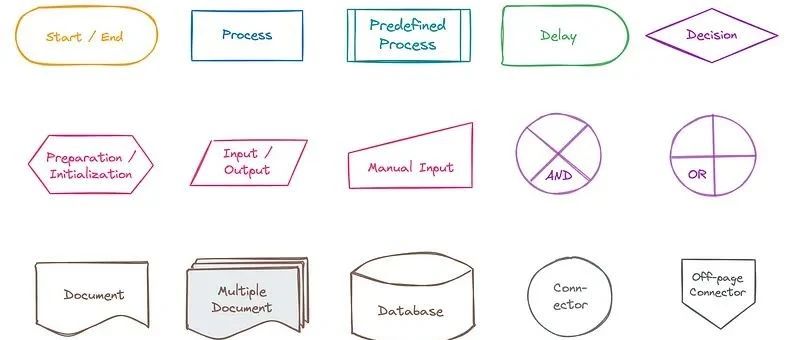
作为开发人员,我们每天都在跟各种图表打交道:系统架构图、API流程图、数据库 ER 图、部署流程图... 传统画图工具要么太复杂,要么不够专业,现在你只需要跟 AI 说一句话,就能生成专业的 Mermaid 图表,而且代码还能直接嵌入到文档里! 老路子: 翻文档 -> 手敲代码 -> 报错 -> debug -> 改样式 -> 循环N次 -> 暴躁! AI 路子: "AI,给我画个用户登录的流程图,要手机验证码和忘记密码分支!" -> 复制代码 -> 粘贴到 Mermaid Live Editor -> 完事儿! 近期 DeepSeek R1 完成小版本升级,当前版本为 DeepSeek-R1-0528 : | Benchmarks | DeepSeek-R1- | OpenAI- | Gemini-2.5- | Owen3- | DeepSeek-R1 | | --- | --- | --- | --- | --- | --- | | | 0528 | o3 | Pro-0506 | 235B | | | AIME 2024 数学竞赛 pass@1 | 91.4 | 91.6 | 90.8 | 85.7 | ...
专访科勒资本北京办公室总经理杨战:创新引领叠加市场沃土,中国硬科技资产吸引力重塑
Mei Ri Jing Ji Xin Wen· 2025-06-03 09:41
Core Insights - The private equity market in China is experiencing a moderate recovery, driven by the increasing interest of international capital in Chinese hard technology companies despite geopolitical tensions [1][3][5] - The total scale of China's private equity market has reached approximately 15 trillion yuan, indicating significant growth potential as factors such as capital influx, talent availability, and supportive policies continue to improve [1][8] Market Dynamics - There is a noticeable revival in the private equity market, with a particular focus on hard technology sectors like semiconductors and AI, which are showing resilience [3][5] - The entry of government-guided funds and military-civilian integration funds is providing stable funding sources, while the diversification of exit channels, including a resurgence in IPOs and increased M&A activity, is enhancing liquidity for existing assets [3][5] International Capital Trends - International capital is showing renewed interest in Chinese technology assets, with specific companies like Yushutech and DeepSeek becoming highly sought after [3][4] - Different regions exhibit varied capital flows, with North American funds contracting due to geopolitical factors, while European, Middle Eastern, and Southeast Asian capitals are emerging as significant contributors [4][5] Investment Landscape - The global competitiveness of Chinese technology firms is a primary factor influencing international capital's changing attitudes, as companies demonstrate leadership in various tech fields [5][6] - The expanding domestic market is positioning China as one of the largest consumer markets globally, providing substantial growth opportunities for technology companies and attracting international investment [5][6] Private Equity Market Development - The private equity secondary market in China is still in its early stages, with limited experienced buyers and a lack of participation from large state-owned assets [8][9] - The market's growth is constrained by the need for improved professional services from intermediaries and regulatory enhancements, such as easing the requirement for unanimous consent from all partners for share transfers [8][9] Future Outlook - The development of China's private equity secondary market is closely linked to the maturity of the primary market, with the potential for significant growth as various market elements mature [9]
专访心资本创始合伙人韩彦:全球创新迈入“中国时间”,国际资本重构价值版图
Mei Ri Jing Ji Xin Wen· 2025-06-03 09:28
每经记者|姚亚楠 每经编辑|李凯 赵云 全球资本正在重新发现"中国价值"。 今年以来,随着DeepSeek等中国硬科技企业在国际舞台的亮眼表现,国际投资界对中国资产的关注度 显著升温。心资本创始合伙人韩彦近期向《每日经济新闻》记者透露,他密集收到了来自世界各地投资 人的交流、咨询请求,其中有家族办公室代表直接"打飞的"来华实地考察,这种热情在以往并不多见。 "2025年很可能成为国际资本配置中国资产的关键转折点。"韩彦预判,深谙中国发展潜力的东南亚资 本、以中东国家为代表的"一带一路"合作伙伴以及在地缘政治重构中寻求新平衡的欧洲资本,将会以前 所未有的热情拥抱中国资产。"这不仅仅是短期的投资热潮,而是一个时代的开始。" 国际资本风向标转向中国 开年以来,随着DeepSeek等中国科技明星项目在全球崭露头角,韩彦开始密集收到来自世界各地投资 人、家族办公室各类交流、咨询请求,"他们迫切希望了解这些中国科技企业的最新发展动态。"韩彦 说,与过去不同的是,如今这些国际投资者不再需要他"科普"中国公司的技术实力,他们早已通过各类 报道和深度分析,清晰地认识到中国科技实力的飞速崛起。 其中,东南亚投资者的热情尤为高涨, ...
专访博原资本管理合伙人及董事长蒋红权:中国创投市场开启 “创新引力” 新周期
Mei Ri Jing Ji Xin Wen· 2025-06-03 09:28
Group 1 - The Chinese private equity market is experiencing a significant resurgence since 2025, with a notable increase in investment cases, particularly in the technology sector, which saw a 12.2% year-on-year rise in the first quarter with 2,329 investment cases [1] - Key areas of investment include hard technology, semiconductors, IT, healthcare, and machinery manufacturing, indicating a broad interest in emerging industries [1] - The revival of the market is also reflected in the increase of successful fundraising cases and the competition for star projects, signaling a renewed investor interest [1][2] Group 2 - International capital is reassessing the value of Chinese assets, driven by the emergence of star projects in AI, new energy, and robotics, which are attracting foreign investment [3][4] - The Shanghai Auto Show in 2024 marked a turning point, showcasing the rapid advancements in China's new energy vehicle market, which impressed European investors and highlighted the systemic rise of China's industrial strength [4] - The perception of "Made in China" is shifting, as foreign investors recognize the innovative capabilities of Chinese tech companies, breaking previous stereotypes [4] Group 3 - The recovery of the market is supported by a resurgence in Hong Kong IPOs, providing clearer exit paths for capital, alongside government initiatives aimed at improving the foreign investment environment [5] - Recent policies, including simplified entry processes for foreign nationals and optimized investment access, have significantly boosted investor confidence [5] - Despite the positive trends, challenges remain regarding foreign investors' understanding of Chinese regulations and the maturity of exit mechanisms, which are critical for attracting sustained investment [6] Group 4 - Bosch Group's investment strategy in China, through its venture capital arm and the establishment of博原资本, focuses on deep technology sectors and aims to create a global competitive edge for Chinese companies [8][9] -博原资本's investment logic is anchored on aligning with Bosch's core industrial ecosystem, emphasizing collaborative potential and a global perspective [8] - The firm is pursuing a dual strategy of incubation and international expansion, aiming to adapt successful Chinese business models to meet overseas market demands [9] Group 5 - The shift in international capital's focus from cost advantages to innovation capabilities marks a significant valuation revolution in the Chinese market, indicating a transition towards ecological co-construction [9][10] - The evolving landscape suggests that Chinese innovation is moving from market application to foundational technology breakthroughs, reshaping the narrative of globalization distinct from the Silicon Valley model [9]