
传音控股

Search documents
广东将加快谋划出台AI终端高质量发展行动方案
Di Yi Cai Jing Zi Xun· 2026-01-20 06:56
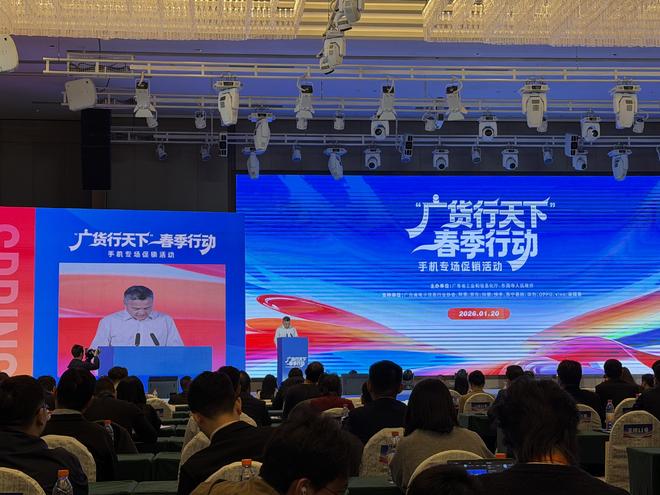
Group 1 - Guangdong has maintained the largest mobile phone industry scale in China for 35 consecutive years and plans to accelerate the development of high-quality action plans for AI terminals [2][3] - The "Guangdong Goods Go Global" spring promotional event showcased 36 AI mobile phones from leading companies like Huawei, vivo, OPPO, Honor, ZTE, and TCL, along with over 2000 products from more than 700 industry chain enterprises [1][2] - Honor's government affairs director highlighted the importance of understanding consumer psychology and the demand for "self-satisfying consumption" in the current market [1] Group 2 - In 2024, Guangdong's mobile phone production is expected to reach 683 million units, accounting for 40.9% of the national total, with one in three mobile phones sold globally originating from Guangdong [3] - Dongguan is identified as the core area of Guangdong's mobile phone industry, contributing 28.6% of the province's mobile phone production in 2024, and hosts major companies like Huawei, OPPO, and vivo [3] - By the third quarter of 2025, the combined market share of vivo, Huawei, and OPPO in the domestic market is projected to reach 47%, indicating strong market cohesion [3]

传音控股:管理层调研:AI 智能手机业务扩张;存储成本上升加剧 2026 年上半年挑战
2026-01-20 03:19
Summary of Transsion (688036.SS) Conference Call Company Overview - **Company**: Transsion Holdings - **Ticker**: 688036.SS - **Market Cap**: Rmb76.2 billion / $10.9 billion - **Current Price**: Rmb66.20 - **12-Month Price Target**: Rmb91.00, indicating an upside of 37.5% [7] Industry Insights - **Industry**: Smartphone Manufacturing - **Trends**: The smartphone market is experiencing challenges due to rising memory costs and increased competition, particularly in the budget segment [1][2] Key Points from Management 1. **AI Smartphone Expansion**: Management is optimistic about the growth of AI smartphones, particularly in budget models. The Infinix Hot 60i, priced at $115, features advanced AI functions such as DeepSeek R1 and Folax AI, which includes capabilities like auto-answering calls and real-time translation [1][2] 2. **Product Mix Upgrade**: To counteract rising memory costs, Transsion plans to upgrade its product mix and pass some costs onto consumers. The company is also looking to leverage local memory suppliers to maintain revenue growth [2] 3. **Smartphone Shipment Growth**: Recent shipment growth has slowed, with a CAGR of +35% from 2015-2021, followed by +9% from 2021-2024. The company aims to remain among the global top five smartphone manufacturers by 2025 [1] 4. **Pricing Strategy**: Management anticipates raising smartphone prices due to increased memory costs, while also expecting less aggressive pricing competition among brands due to slim margins across the industry [2] 5. **Outlook for 2026**: Despite challenges in the first half of 2026, management is positive about a better performance in the second half of the year [2] Financial Projections - **Revenue Forecast**: Expected revenue growth from Rmb68.7 billion in 2024 to Rmb99.8 billion by 2027 [7] - **Earnings Per Share (EPS)**: Projected EPS to increase from Rmb5.48 in 2024 to Rmb7.60 in 2027 [7] - **Valuation**: The target P/E multiple is set at 15.0x, aligning with industry peers, reflecting the competitive nature of the smartphone market [3] Risks - **Market Risks**: Potential risks include faster or slower-than-expected smartphone shipment growth and changes in average selling prices (ASP) [3] Conclusion - **Investment Rating**: Neutral, with a target price of Rmb91.00 based on a 2026E P/E multiple of 15.0x, indicating a fair valuation amidst market challenges [3][7]

去年中国GDP增长5%,多家手机厂商下调出货预期 | 财经日日评
吴晓波频道· 2026-01-20 00:30
Economic Overview - In 2025, China's GDP reached 1401879 billion yuan, growing by 5% year-on-year, with quarterly growth rates of 5.4%, 5.2%, 4.8%, and 4.5% respectively [2] - The industrial added value increased by 5.9%, while the service sector grew by 5.4%. Retail sales totaled 501202 billion yuan, up by 3.7% [2] - Fixed asset investment decreased by 3.8%, with a notable decline in real estate investment [3] Trade and Investment - Canada has reduced the import tax on Chinese electric vehicles to 6.1%, allowing an annual quota of 49,000 vehicles, which is a significant policy shift aimed at filling market gaps [4][5] - The adjustment in tariffs is expected to enhance the competitiveness of Chinese electric vehicles in the Canadian market, which has seen a decline in sales due to high costs and tariffs [5] Real Estate Market - In December 2025, new home prices in first-tier cities fell by 0.3%, with a notable increase in Shanghai, while overall new home sales area decreased by 8.7% year-on-year [6] - The real estate market is still in a bottoming phase, with a significant reduction in new supply and ongoing inventory pressure [7] Mobile Phone Industry - Several smartphone manufacturers, including Xiaomi and OPPO, have lowered their annual shipment forecasts due to rising storage costs, with reductions exceeding 20% for some brands [8] - The impact of rising storage prices is uneven across manufacturers, with larger firms like Apple and Samsung less affected [9] Solar Industry - Nine leading solar companies, including LONGi Green Energy and Tongwei Co., have announced expected losses for 2025, with Tongwei projecting a loss of 90 to 100 billion yuan [10] - The solar industry is facing significant challenges, including high inventory levels and price competition, leading to a prolonged period of losses [11] Wealth Disparity - The global wealth of billionaires reached a record 18.3 trillion USD in 2025, with a 16% increase in total wealth, highlighting a growing wealth gap amid stagnant poverty reduction efforts [12][13] - The AI sector's growth has significantly contributed to the increase in billionaire wealth, while ordinary residents face declining purchasing power due to inflation [13] Space Tourism - A startup has announced the opening of reservations for the world's first lunar hotel, aiming to begin operations by 2032, although the feasibility of such a project remains uncertain [14][15]





全球每卖出3部手机,就有1部产自广东
21世纪经济报道· 2026-01-20 00:24
Core Viewpoint - Guangdong produces one out of every three mobile phones sold globally, with major brands like Huawei, vivo, OPPO, Honor, and Transsion leading the market, showcasing the evolution of mobile technology in the region [1][2]. Group 1: Evolution of Guangdong Mobile Phones - The rapid evolution of mobile phones in Guangdong is driven by advancements in new technologies, materials, and manufacturing processes, resulting in significant innovations such as OPPO's fast charging technology that fully charges a battery in just 30 minutes [1]. - Breakthroughs in materials and processes have led to innovations like Huawei's "Tian Gong hinge," which achieves micron-level precision and a thickness of only 3.6 mm when unfolded, alleviating concerns about foldable screens [1]. - The automation of key material scheduling through a "mechanical matrix" in Dongguan's production lines exemplifies the collaborative ecosystem that keeps Guangdong's mobile industry at the forefront of technological advancements [1]. Group 2: New Applications and Market Expansion - Guangdong mobile phones are breaking traditional boundaries by exploring new scenarios, such as the vivo X300 Pro capturing half of the concert rental market with its 200-megapixel telephoto capabilities [2]. - The OnePlus 15 features a 165Hz ultra-high refresh rate screen, providing competitive advantages for mobile gamers, while Honor's YOYO smart assistant enhances user interaction by allowing voice commands to manage subscriptions [2]. - The integration of AI into mobile devices is transforming them into intelligent mediators between humans and the digital world, reflecting a shift in how technology can reshape lifestyles [2].

拆解粤产八大爆款手机
Xin Lang Cai Jing· 2026-01-19 23:21
Core Insights - Guangdong produces one out of every three smartphones sold globally, with major brands like Huawei, vivo, OPPO, Honor, and Transsion leading the market [1] - The evolution of smartphones in Guangdong reflects a microcosm of technological advancement, driven by new technologies, processes, materials, and equipment [1] Group 1: Technological Advancements - OPPO's fast charging technology can fully charge a smartphone battery in just 30 minutes [1] - Huawei's "Tian Gong hinge" achieves micron-level precision, with a thickness of only 3.6 mm when unfolded, alleviating concerns about foldable screen creases [1] - Automation in manufacturing, exemplified by Dongguan's smartphone production lines, enhances efficiency through a "mechanical matrix" for key material scheduling [1] Group 2: Market Expansion and Innovation - Guangdong smartphones are breaking traditional boundaries, creating impressive new scenarios, such as the vivo X300 Pro capturing half of the concert rental market with its 200 million pixel telephoto capabilities [2] - OnePlus 15 offers a 165Hz ultra-high refresh rate screen, providing competitive advantages for mobile gamers [2] - Honor YOYO smart assistant enhances user interaction by allowing voice commands to manage subscriptions, transitioning from manual operations to a smart assistant model [2] Group 3: Industry Transformation - The Guangdong smartphone industry is undergoing a profound transformation from scale advantages to systemic innovation, tackling critical technology challenges while exploring new scenarios [2] - AI is enabling smartphones to possess capabilities of perception, thought, and response, positioning these devices as intelligent intermediaries between humans and the digital world [2] - The narrative surrounding these products has shifted from mere communication tools to a reimagining of human lifestyles through technological innovation [2]
拆解粤产八大爆款手机 看顶流机型背后的“四新”力量
2 1 Shi Ji Jing Ji Bao Dao· 2026-01-19 22:39
Core Insights - Guangdong produces one out of every three smartphones sold globally, with major brands like Huawei, vivo, OPPO, Honor, and Transsion leading the market [1] - The evolution of smartphones in Guangdong reflects a microcosm of technological advancement, driven by new technologies, processes, materials, and equipment [1] - The Guangdong smartphone industry benefits from a collaborative ecosystem that supports innovation and maintains its leading position in the market [1] Group 1 - The rapid iteration of smartphones is fueled by advancements in AI, new materials, and manufacturing processes [1] - OPPO's fast-charging technology can fully charge a smartphone battery in just 30 minutes, showcasing innovation in battery technology [1] - Huawei's "Tian Gong hinge" achieves micron-level precision, allowing foldable screens to minimize crease anxiety with a thickness of only 3.6 mm when unfolded [1] Group 2 - Guangdong smartphones are expanding beyond traditional boundaries, creating impressive new use cases [2] - The vivo X300 Pro captures half of the concert rental market with its 200 million pixel telephoto capabilities, demonstrating its professional quality [2] - The Honor YOYO smart assistant enhances user interaction by allowing voice commands to manage subscriptions, representing a shift towards intelligent personal assistants [2] Group 3 - The transformation of the Guangdong smartphone industry reflects a shift from scale advantages to systemic innovation capabilities [2] - The integration of AI enables smartphones to possess sensing, thinking, and responding capabilities, positioning them as intelligent mediators between humans and the digital world [2] - The narrative surrounding these devices transcends mere communication tools, focusing on how technological innovation reshapes human lifestyles [2]
美光警告:AI引发的存储芯片短缺“前所未有”,将持续到2026年以后
Hua Er Jie Jian Wen· 2026-01-19 15:29
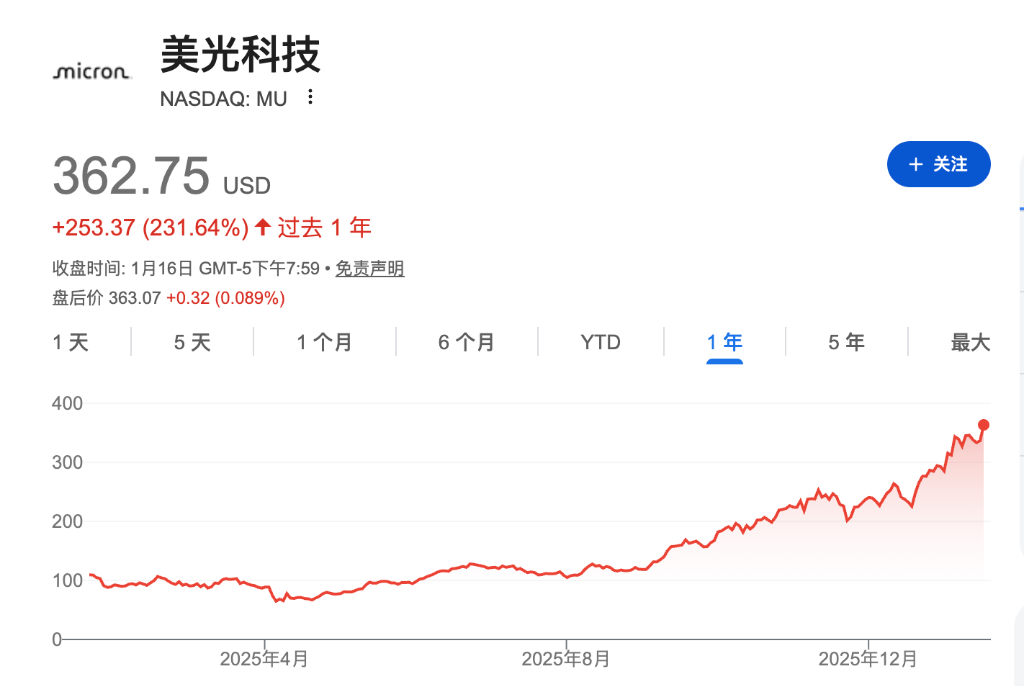
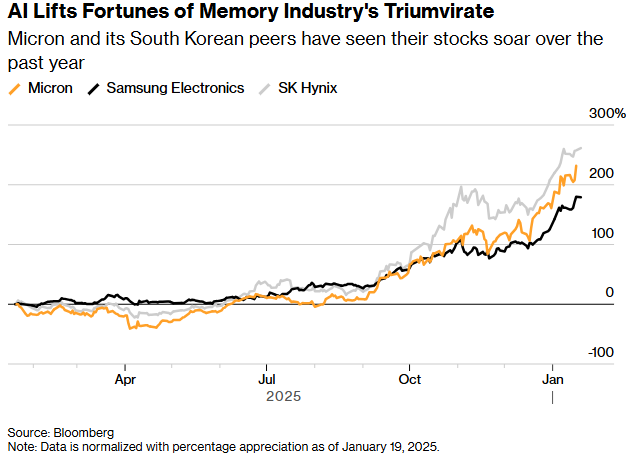
Group 1: Core Insights - Micron Technology highlights an unprecedented shortage of memory chips driven by surging demand for AI infrastructure, which is expected to persist beyond 2026 [1] - The high bandwidth memory (HBM) required for AI accelerators is consuming a significant portion of the industry's available capacity, leading to severe shortages in traditional sectors like smartphones and personal computers [1] - Major smartphone manufacturers, including Xiaomi and Oppo, have revised their 2026 shipment targets downward due to rising memory costs, with Oppo predicting a reduction of up to 20% [1] Group 2: Market Dynamics - The global memory chip giants, including Micron, SK Hynix, and Samsung Electronics, are experiencing substantial stock price increases due to the AI demand explosion, with Micron's stock rising over 231.6% in the past year [2] - SK Hynix has reported that its chip production capacity for 2026 is already sold out, while Micron's AI-focused high-end memory products have been fully booked for the year [2] Group 3: Strategic Moves - To prioritize supply for strategic clients like NVIDIA, Micron announced the termination of its popular consumer memory brand, Crucial, to focus on DRAM, which is essential for AI accelerator performance [4] - Micron is accelerating its capacity expansion in the U.S. and Asia, planning to invest $1.8 billion to acquire an existing factory site in Taiwan, which is crucial for its production capabilities [5] - The company is also advancing multiple large-scale factory projects, including a $100 billion investment in New York to build four DRAM wafer fabs, with the first wafers expected to be produced by 2030 [5]

全球每三台手机就有一台广东造 广货“粤来粤强”驶入快车道
Nan Fang Du Shi Bao· 2026-01-19 13:52
Core Viewpoint - The Guangdong smartphone industry is experiencing significant growth and transformation, establishing itself as a global leader in smartphone manufacturing and innovation, with local brands gaining substantial market share both domestically and internationally [1][2][11]. Group 1: Industry Overview - Guangdong is the most important cluster for the smartphone industry in China, leading in scale, production, and export, with a projected revenue of 1.9618 trillion yuan in 2024, accounting for 38.7% of the province's new generation electronic information industry revenue [2]. - In 2024, Guangdong's smartphone production reached 683 million units, representing 40.9% of the national total, while exports amounted to 205 million units, also leading the country [2]. - The smartphone industry in Guangdong has evolved from a manufacturing hub to a global innovation leader, with local brands capturing 38% of the global market share by 2025 [2][12]. Group 2: Brand Performance - Major Guangdong brands like Huawei, OPPO, and vivo dominate both domestic and international markets, with Huawei's global shipment reaching 48.4 million units in 2024, capturing one-third of the high-end market [3]. - OPPO's global shipments reached 104.8 million units in 2024, with its Reno series leading in the $400-$600 price segment [3]. - By 2025, six Guangdong brands are expected to be among the top ten in the global smartphone market, with market shares of 9% for vivo, 8% for Transsion, and 7% for OPPO [2]. Group 3: Global Expansion Strategies - Guangdong smartphone brands are increasingly focusing on international markets, particularly in Southeast Asia and Latin America, leveraging cultural similarities and existing market experiences for efficient penetration [4][5]. - OPPO's gradual global expansion strategy began in Thailand and has since included Indonesia and Vietnam, with plans to enter European markets [5]. - vivo's strategy emphasizes deep localization, establishing a significant retail network in Indonesia and expanding into various regions since 2014 [5]. Group 4: Technological Innovation - Guangdong smartphone companies are at the forefront of technological innovation, with significant investments in R&D, particularly in chip technology and fast charging [11]. - Huawei's self-developed Kirin 9000S chip achieved a 65% self-sufficiency rate in 2024, while OPPO's 125W fast charging technology leads globally in patent numbers [11]. - The rise of AI smartphones, with brands like Huawei and vivo integrating advanced AI capabilities, marks a new era in the industry [12]. Group 5: Manufacturing and Supply Chain - Guangdong's smartphone manufacturing ecosystem is robust, with a high concentration of electronic component manufacturers, accounting for 28% of China's total [7]. - The region's strong supply chain allows for rapid assembly and production, with average production cycles as short as 48 hours in Dongguan [9]. - Major manufacturers like Foxconn and local firms have adopted advanced manufacturing techniques, enhancing efficiency and production capabilities [8][9].
内存面临“史无前例”大缺货!美光科技(MU.US)警告芯片荒将延至2027年
Zhi Tong Cai Jing· 2026-01-19 06:45
Core Viewpoint - Micron Technology has reported an unprecedented shortage of memory chips, exacerbated by the surge in demand for high-end semiconductors required for artificial intelligence infrastructure, which is expected to persist beyond this year [1] Group 1: Supply Chain and Market Impact - The ongoing memory chip shortage is significantly impacting traditional industries such as smartphones and PCs, with manufacturers like Xiaomi and Oppo reducing their shipment targets for 2026 due to rising memory costs [1] - Counterpoint Research estimates a potential 2.1% decline in global smartphone shipments this year due to the memory chip shortage, which is also affecting PC manufacturers like Dell [2] - The demand for high-bandwidth memory (HBM) for AI accelerators is consuming a large portion of the industry's available capacity, leading to supply shortages for traditional sectors [1][2] Group 2: Company Strategies and Investments - Micron has announced plans to invest $1.8 billion in a site in Taiwan, which is crucial for its production, significantly shortening the time to bring new factories online [6] - The company is committed to transitioning 40% of its DRAM manufacturing to the U.S., supported by $6.2 billion in funding from the CHIPS Act and increased tax credits [6] - Micron is prioritizing supply to strategic enterprise customers, including Nvidia, by terminating its consumer-grade memory business [5] Group 3: Future Production Plans - Micron's $100 billion project in Syracuse, New York, aims to build four DRAM wafer fabs, with the first wafers expected to roll out by 2030 [6] - The company is also expanding its existing facilities in Boise, Idaho, and modernizing its manufacturing site in Virginia to increase production capacity [6]
开盘:三大指数集体低开 快手概念跌幅居前
Xin Lang Cai Jing· 2026-01-19 02:10
Market Overview - The three major indices opened lower, with Kuaishou concept stocks experiencing significant declines. As of the market opening, the Shanghai Composite Index was at 4090.72, down 0.27%; the Shenzhen Component Index was at 14221.93, down 0.41%; and the ChiNext Index was at 3340.94, down 0.60% [1]. Government Policies - The State Council, led by Premier Li Qiang, emphasized the need to implement special actions to boost consumption, aiming to enhance residents' consumption power and leverage consumption as a fundamental driver of economic growth [1]. - The China Securities Regulatory Commission (CSRC) highlighted the importance of maintaining market stability and preventing excessive speculation and market manipulation, while promoting long-term investment products [1]. - The People's Bank of China and the National Financial Regulatory Administration announced a minimum down payment ratio of 30% for commercial property loans, including "commercial-residential mixed-use properties" [2]. Industry Developments - The Chinese commercial rocket sector achieved a successful static ignition test of the Long March 12B rocket, marking a significant milestone in commercial space endeavors [2]. - Several smartphone manufacturers, including Xiaomi and OPPO, have reduced their annual order quantities by over 20% due to rising upstream supply chain costs [3]. - The National Energy Administration projected that China's total electricity consumption will exceed 10 trillion kilowatt-hours by 2025, marking a historic first for any single country [2]. Market Trends - There was a net outflow of 191.4 billion yuan from broad-based ETFs last week, with the CSI 300 ETF seeing the largest outflow of 103.75 billion yuan [2]. - The CSRC is drafting a regulatory framework for derivative trading, which will include counter-cyclical management measures [2]. - The establishment of a working group for commercial community service robots indicates a new phase in standardization efforts within this sector [2]. Company Announcements - Companies such as Jing Shan Light Machine and others have reported significant profit adjustments, with Jing Shan Light Machine's inflated profits exceeding 25% of the disclosed total for 2018 [6]. - Various companies, including Shenghong Technology and Guolian Minsheng, have projected substantial increases in net profits for 2025, with estimates ranging from 51% to 413% [6][7]. - Conversely, companies like Tongwei Co. and Longi Green Energy have forecasted significant losses for 2025, with expected losses of 9 to 10 billion yuan and 6 to 6.5 billion yuan, respectively [7].
