Scale AI

Search documents
37岁1200亿,他登顶今年最年轻富豪
创业家· 2025-10-01 10:37
Core Insights - Edwin Chen, a Chinese entrepreneur, is emerging as a new leader in the AI sector with his company Surge AI, which is currently raising $1 billion in its first round of financing, leading to a valuation of approximately $24 billion (about 171.2 billion RMB) [5][12][13] - Surge AI has achieved over $1 billion in annual revenue without external financing since its inception five years ago, showcasing a remarkable entrepreneurial journey in the AI industry [5][12][13] - Edwin Chen's net worth has reached $18 billion, making him the youngest billionaire on the Forbes list this year, primarily due to his 75% ownership stake in Surge AI [5][13] Company Overview - Surge AI specializes in providing data annotation services for artificial intelligence, effectively positioning itself as a "shovel seller" in the AI ecosystem [12][13] - The company has established a strong client base, including major AI players like OpenAI, Anthropic, Google, Microsoft, and Meta, which underscores its critical role in the AI development process [17] - Surge AI's growth trajectory has been bolstered by its involvement in training large language models, validating its technical capabilities and market relevance [17] Market Trends - The AI sector is witnessing a wealth creation wave, with companies like Perplexity and Mistral AI also achieving significant valuations and funding rounds, indicating a robust investment climate in AI [19][20] - The stock market reflects this trend, with companies like Nvidia and domestic AI chip firms experiencing substantial stock price increases, highlighting investor confidence in AI technologies [20][21] - Analysts caution that the current AI boom may be approaching a bubble, raising concerns about potential market corrections in the future [21]



37岁1200亿,他登顶今年最年轻富豪
Sou Hu Cai Jing· 2025-09-29 11:56
Core Insights - Edwin Chen, the founder of Surge AI, is emerging as a new leader in the AI sector, with the company currently undergoing a $1 billion Series A funding round, raising its valuation to approximately $24 billion [2][3] - Surge AI has achieved over $1 billion in annual revenue without external funding since its inception five years ago, marking a significant achievement in the AI startup landscape [4][5] - Edwin Chen's personal wealth has reached $18 billion, making him the youngest billionaire on the Forbes list this year, primarily due to his 75% ownership stake in Surge AI [5][6] Company Overview - Surge AI was founded in 2020 by Edwin Chen, who previously worked at major tech companies and hedge funds. The company specializes in providing data annotation services for AI, effectively "selling shovels" to the AI industry [4][7] - The company has not raised external capital since its founding, yet it has quietly achieved significant revenue growth, surpassing $1 billion in annual sales [4][5] - Surge AI's business model focuses on the critical need for clean data in AI model training, positioning it as an essential player in the AI ecosystem alongside competitors like Scale AI [4][8] Market Context - The AI sector is witnessing a wealth creation wave, with numerous startups achieving billion-dollar valuations, such as Perplexity and Mistral AI, which have recently secured significant funding [9][10] - The stock market is also reflecting this trend, with companies like Nvidia and domestic AI chipmakers in China experiencing substantial stock price increases [9][10] - Analysts predict that the number of millionaires created by AI in the next five years will surpass those created by the internet over the past two decades, indicating a robust growth trajectory for the industry [11]

37岁1200亿,他登顶今年最年轻富豪
华尔街见闻· 2025-09-29 11:12
Core Viewpoint - Edwin Chen, a Chinese-American entrepreneur, is emerging as a new leader in the AI sector with his company Surge AI, which is currently raising $1 billion in its first round of financing, leading to a valuation of approximately $24 billion (about 171.2 billion RMB) [4][5][12]. Company Overview - Surge AI was founded by Edwin Chen in 2020 after he left his stable job at major tech companies. The company specializes in providing data annotation services for AI, achieving over $1 billion in annual revenue without external financing [7][14]. - Edwin Chen holds 75% of Surge AI's shares, resulting in a personal net worth of $18 billion (approximately 128.1 billion RMB), making him the youngest billionaire on the Forbes list this year [5][12]. Competitive Landscape - Surge AI's main competitor is Scale AI, which recently received a $15 billion investment from Meta, raising its valuation to over $29 billion. This has also created significant wealth for its founders [8][12]. - Data annotation companies like Surge AI and Scale AI are crucial in the AI ecosystem, as they provide the "clean" data necessary for model training, regardless of technological advancements [10][11]. Industry Insights - The AI industry is experiencing a wealth creation wave, with numerous startups achieving billion-dollar valuations. For instance, Perplexity, an AI search engine, recently secured $200 million in funding, reaching a valuation of $20 billion (approximately 142.5 billion RMB) [16]. - The stock market is also reflecting this trend, with companies like Nvidia and domestic AI chip leader Cambrian Technologies seeing their stock prices soar, with Cambrian's market value surpassing 600 billion RMB [17][18]. Future Outlook - Edwin Chen believes that the future of AI holds immense potential, stating that AI could achieve groundbreaking advancements, provided it is trained on high-quality data that reflects human expertise and values [15]. - The AI sector is expected to create more millionaires in the next five years than the internet did in its first 20 years, indicating a significant growth trajectory [19].

37岁,他登顶今年最年轻富豪
投资界· 2025-09-27 11:55
Core Viewpoint - Edwin Chen, the founder of Surge AI, is emerging as a new AI mogul with a net worth of $18 billion, primarily due to the company's valuation reaching approximately $24 billion after a $1 billion funding round [2][4]. Company Overview - Surge AI was founded in 2020 by Edwin Chen, who left a stable job at major tech companies to address the overlooked issue of data annotation for AI, achieving over $1 billion in revenue without external funding [3][6]. - The company specializes in providing data annotation services, which are essential for AI model training, positioning itself as a key player in the AI ecosystem alongside competitors like Scale AI [3][4]. Financial Performance - Surge AI has achieved significant financial milestones, with annual revenues exceeding $1 billion and a valuation of approximately $24 billion [2][3]. - Edwin Chen holds about 75% of Surge AI's shares, contributing to his status as the youngest billionaire on the Forbes list [4][6]. Market Context - The AI sector is witnessing a wealth creation wave, with companies like Perplexity and Mistral AI also achieving high valuations shortly after their founding [10][11]. - The stock market reflects this trend, with companies like Nvidia and domestic AI chipmakers experiencing significant stock price increases [11][12]. Future Outlook - Edwin Chen expresses optimism about the future of AI, emphasizing the importance of high-quality data for achieving advanced AI capabilities [8]. - The AI industry is expected to continue generating wealth, with predictions that the number of millionaires created by AI in the next five years will surpass those created by the internet over the past two decades [11][12].

Palantir and IBM Look Poised to Ride the Pentagon's AI Spending Wave
The Motley Fool· 2025-09-27 07:05
Core Insights - The Pentagon is transitioning to an "AI-first enterprise," creating significant opportunities for companies and investors in the AI sector [2] - The U.S. government, particularly the Department of Defense, is increasing its investment in AI technologies, exemplified by a $100 million contract with Scale AI [2] - Palantir Technologies and International Business Machines (IBM) are highlighted as key players poised to benefit from this trend [3] Palantir Technologies - Palantir has experienced a remarkable growth of 2,300% over the last three years, turning a $10,000 investment into $240,000 [5] - The company specializes in data mining, utilizing information from various sources, including military satellites, to assist military and intelligence agencies [6] - Palantir's AI Platform enhances its products, allowing users to receive quick answers to queries, thus reducing training time for new users [7] - In Q2, Palantir achieved its first-ever $1 billion revenue quarter, marking a 48% increase year-over-year, with the U.S. government as its largest client, growing 53% from the previous year [8] International Business Machines (IBM) - IBM is recognized as a blue-chip computing company with significant AI offerings, including its Red Hat hybrid cloud solution [10] - The company provides defense simulation analytics for real-time mission planning and consulting services to modernize military units [11] - IBM secured a $576 million, 10-year contract for semiconductor technologies for military applications and a $275 million contract for semiconductor manufacturing [12] - In Q2, IBM reported $17 billion in revenue, an 8% increase from the previous year, and profits of $10 billion, up 11% [12] Industry Outlook - Both Palantir and IBM are well-positioned to capitalize on the Pentagon's increasing adoption of AI technologies, which are essential for enhancing military productivity and decision-making [13]


美国 Top 15的AI 天使投资人都投了哪些公司? | Jinqiu Select
锦秋集· 2025-09-24 09:02
Core Insights - The article discusses the top 15 angel investors in the AI sector globally, highlighting their investment patterns and the types of projects they favor [2][3]. Investment Trends - Investors focus on two main areas: infrastructure and high-value vertical scenarios. Infrastructure investments include AI Agent platforms, world models, automation development tools, and core areas like computing power and AI security [5][6]. - High-demand verticals targeted include legal, medical, financial, and manufacturing sectors, which are characterized by clear ROI and efficiency improvements [6][13]. Team Background - The majority of the founders come from top tech companies and prestigious universities, indicating a preference for technically skilled teams over those relying solely on commercial packaging [7][8]. Product Characteristics - The common feature among these projects is that they are AI-native and quickly deployable, often fundamentally rewriting industry workflows rather than merely adding AI features to existing software [9]. Platform and Scalability - A significant trend is the emphasis on platformization and scalability, with projects focusing on reusable and extensible components, aiming to create ecosystems rather than standalone tools [10]. Capital Strategy - There is a strong co-investment effect among top investors, with many companies receiving backing from multiple leading investors, indicating a consensus on promising deal flows [11]. Future Industry Hotspots - Key areas for future growth include: - Legal AI, which can revolutionize efficiency in document-heavy processes [13]. - Medical AI, addressing long-standing pain points in clinical documentation and imaging [13]. - Financial and enterprise services, focusing on high-frequency compliance needs [13]. - Industrial AI, which is gradually unlocking value in traditional sectors [14]. - AI development and infrastructure, forming the foundational layer for the ecosystem [14]. - Agents and world models, representing cutting-edge areas where investors are willing to take early-stage risks [14]. Common Traits of Top Investors - Investors typically have strong product and technical backgrounds, often being top entrepreneurs or executives themselves, which enables them to identify valuable AI applications [16][19]. - Many have held key roles in major tech companies, providing them with insights into the necessary infrastructure and business models for long-term AI platforms [17][19]. - They maintain close ties with core nodes like Y Combinator and Sequoia, allowing them to access top deal flows [20]. - Investors are often "super angels," willing to invest in pre-seed and seed rounds, ensuring they capture potential unicorns early [23].

DeepSeek成了硅谷最大的“不能说的秘密”
虎嗅APP· 2025-09-23 13:59
Core Insights - The article discusses the rapid advancements in AI technology in China, suggesting that China may surpass the US in the AI tech race due to a combination of high-quality research output and a significant number of Chinese employees in Silicon Valley companies [6][12][13]. Group 1: AI Technology and Market Dynamics - DeepSeek, a Chinese AI model, is gaining traction in Silicon Valley, with many companies opting for its localized version over established models like OpenAI or Anthropic due to its cost-effectiveness and performance [10][9]. - The AI sector is witnessing unprecedented investment, leading to the emergence of numerous unicorns with annual recurring revenues (ARR) reaching hundreds of millions in a short time [6][7]. - The cultural mindset in companies like Lovable reflects a competitive spirit, with a "997" work culture aimed at outperforming Chinese counterparts [15][14]. Group 2: Future Trends and Predictions - The next wave of innovation in China is expected to focus on soft power, including cultural exports such as films, toys, and design, which could significantly influence global perceptions of Chinese brands [23][20]. - The article highlights the potential for Chinese startups to thrive once they gain access to top-tier semiconductor technology, which is anticipated to be manufactured domestically in the near future [13][12]. - The article also notes that while AI technology is advancing rapidly, the journey towards achieving Artificial General Intelligence (AGI) remains complex and uncertain [16][11]. Group 3: Global Market Perspectives - The article emphasizes the importance of understanding cultural and regulatory differences when Chinese companies expand internationally, suggesting that they should first explore markets outside of China [19][20]. - The perception of China among younger demographics in the West is shifting positively, with increasing interest in Chinese technology and culture [20][18]. - The article concludes that while the current AI wave is significant, the long-term sustainability of many companies in this space may be challenged by market dynamics and competition [17][13].

Factbox-Companies pouring billions to advance AI infrastructure
Yahoo Finance· 2025-09-23 10:50
Investment and Partnerships - Nvidia is set to invest up to $100 billion in OpenAI, providing data center chips and gaining a financial stake in the AI company [1] - Nvidia will invest $5 billion in Intel, acquiring approximately 4% of the company after new shares are issued [2] - Oracle is in discussions with Meta for a multi-year cloud computing deal valued at about $20 billion [3] - Oracle has reportedly signed a significant cloud deal with OpenAI, where OpenAI is expected to purchase $300 billion in computing power over five years [4] - CoreWeave has signed a $6.3 billion initial order with Nvidia, ensuring that Nvidia will purchase any unsold cloud capacity [5] - Nebius Group will provide Microsoft with GPU infrastructure capacity in a deal worth $17.4 billion over five years [5] - Google has entered a six-year cloud computing deal with Meta Platforms worth over $10 billion [6] - Intel is receiving a $2 billion capital injection from SoftBank Group, making SoftBank one of the top-10 shareholders of Intel [7] - Tesla signed a $16.5 billion deal to source chips from Samsung Electronics for its next-generation AI6 chip [8] - Meta acquired a 49% stake in Scale AI for about $14.3 billion, integrating its CEO into Meta's AI strategy [8] - Google will pay $2.4 billion in license fees to Windsurf for the use of its technology under non-exclusive terms [9] - CoreWeave signed a five-year contract worth $11.9 billion with OpenAI prior to its IPO [11]



DeepSeek成了硅谷最大的“不能说的秘密”
Hu Xiu· 2025-09-23 09:13
Core Insights - The article highlights the emergence of DeepSeek as a significant player in the AI landscape, particularly in Silicon Valley, where it is considered a "can't say" secret due to its cost-effectiveness and performance compared to Western models like OpenAI and Anthropic [14][15][23] - Paddy Cosgrave, CEO of Web Summit, emphasizes that China's AI competition is likely to surpass that of the United States, driven by a combination of high citation rates in core journals and the presence of Chinese talent in Silicon Valley [11][16] - The article discusses the rapid influx of venture capital into AI, leading to the creation of numerous unicorns with substantial annual recurring revenue (ARR) in a short time [11][12] Company Insights - DeepSeek is noted for its free model that has gained widespread adoption among companies in San Francisco, even those not traditionally involved in AI [14][15] - Lovable, a European AI unicorn, achieved $100 million in ARR within eight months, showcasing the competitive landscape where companies feel the need to work harder to outperform Chinese counterparts [12][19] - The article mentions the cultural differences in work ethic, with European companies adopting a "997" work culture to compete with Chinese firms, which may escalate to "998" [19] Industry Trends - The article indicates that AI will become as ubiquitous as electricity, with companies providing the necessary infrastructure (computing power, bandwidth, storage) likely to be the most profitable [17] - It also points out that while many companies will make money in AI, only a few will reach valuations in the hundreds of billions, suggesting a potential bubble in the AI sector in the West [17] - The ongoing chip export controls from the U.S. to China are seen as a challenge for Chinese startups, yet companies like DeepSeek are still making significant advancements despite these restrictions [17][18] Cultural Insights - Cosgrave predicts that the next wave of innovation in China will focus on soft power, including cultural exports like films, anime, and toys, similar to Japan's historical trajectory [26][27] - The article illustrates a growing interest among younger generations in Western countries towards Chinese brands and culture, indicating a shift in perception [22][27]


GPT-5仅23.3%,全球AI集体挂科,地狱级编程考试,夺金神话破灭
3 6 Ke· 2025-09-22 11:27
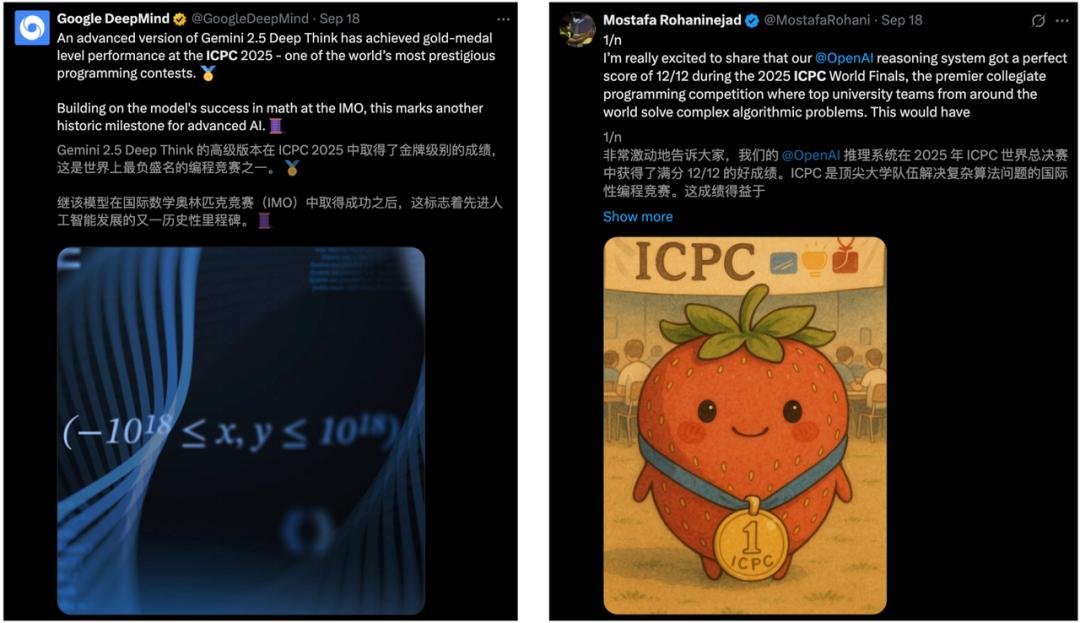
Core Insights - The newly released SWE-Bench Pro benchmark has exposed the limitations of leading AI models in coding tasks, with GPT-5 achieving only a 23.3% success rate [7][25][37] - Despite previous successes in competitions like ICPC, the latest tests indicate that AI's long-range coding capabilities remain a significant shortcoming [8][25] Benchmark Overview - SWE-Bench Pro is designed to evaluate AI programming agents against real-world engineering tasks, featuring a significant increase in task difficulty and robustness against data pollution [5][6][14] - The benchmark includes 1865 verified problems, categorized into public, commercial, and reserved sets, ensuring a diverse and challenging testing environment [18][19] Model Performance - In the SWE-Bench Pro evaluation, the top models performed poorly, with GPT-5 and Claude Opus 4.1 leading at 23.3% and 22.7% respectively, while other models scored below 15% [7][25][28] - The performance gap between public and commercial datasets is notable, with the best models scoring below 20% on commercial tasks, highlighting the challenges of enterprise-level coding [27][28] Task Complexity - SWE-Bench Pro focuses on complex tasks requiring substantial modifications across multiple files, with an average of 4.1 files and 107.4 lines of code involved in solutions [21][23] - The benchmark excludes simple tasks that only require minor code changes, ensuring that the challenges reflect real-world industrial scenarios [21][24] Error Analysis - An analysis of model failures revealed various issues, including semantic understanding problems, syntax errors, and tool usage discrepancies, indicating areas for improvement in AI coding capabilities [36] - For instance, Claude Opus 4.1 struggled with semantic understanding, while Gemini 2.5 faced tool-related errors, showcasing the multifaceted challenges in AI programming [36] Conclusion - SWE-Bench Pro represents a significant advancement in benchmarking AI coding abilities, providing a more accurate measure of performance in industrial applications [37]