大疆

Search documents
4000人的自动驾驶黄埔军校,死磕技术分享与求职交流~
自动驾驶之心· 2025-07-12 14:43
Core Viewpoint - The smart driving industry is experiencing significant growth, with companies willing to invest heavily in research and talent acquisition, indicating a robust job market and opportunities for new entrants [2][3]. Group 1: Industry Trends - The smart driving sector continues to attract substantial funding for research and development, with companies offering competitive salaries to attract talent [2]. - There is a noticeable trend of shorter technology iteration cycles in the autonomous driving field, with a focus on advanced technologies such as visual large language models (VLA) and end-to-end systems [7][11]. Group 2: Community and Learning Resources - The "Autonomous Driving Heart Knowledge Planet" aims to create a comprehensive community for knowledge sharing, focusing on academic and engineering challenges in the autonomous driving industry [3][11]. - The community has established a structured learning path covering various aspects of autonomous driving technology, including perception, planning, and control [13][15]. Group 3: Educational Offerings - The community offers a range of educational resources, including video courses, hardware tutorials, and live sessions with industry experts, aimed at both newcomers and experienced professionals [3][15]. - There are dedicated modules for job preparation, including resume sharing and interview experiences, to help members navigate the job market effectively [5][12]. Group 4: Technical Focus Areas - Key technical areas of focus include visual language models, world models, and end-to-end autonomous driving systems, with ongoing discussions about their integration and application in real-world scenarios [11][36]. - The community emphasizes the importance of understanding the latest advancements in algorithms and models, such as diffusion models and generative techniques, for future developments in autonomous driving [16][36].


长春汽博会观察:车企竞相“炫技” 服务智慧出行
Zhong Guo Xin Wen Wang· 2025-07-12 09:48
Group 1 - The 22nd Changchun International Automobile Expo opened with a focus on "new technologies, new products, and new trends" in the automotive industry, under the theme "New Quality Leading the Future" [1] - BYD and DJI showcased a jointly developed onboard drone system that assists drivers in predicting traffic conditions and enhances outdoor driving safety by surveying complex terrains [1] - The "Parking Valet" feature from Hongmeng Zhixing has evolved to allow vehicles to autonomously find parking spaces in enclosed areas, significantly simplifying the parking process [1] Group 2 - XPeng Motors presented an intelligent driving assistance system that utilizes self-developed chips and AI technology, providing reliable service even in areas without network coverage [2] - The "Instant Sense Canopy" system from Zhiji Auto uses advanced nano materials to block 99% of UV rays, allowing users to switch between shading and sun protection modes [2] - The automotive industry is increasingly transforming into intelligent mobile spaces, with innovations enhancing daily travel experiences and contributing to smart mobility solutions [2]
4000人的自动驾驶黄埔军校,死磕技术分享与求职交流~
自动驾驶之心· 2025-07-12 05:41
Core Insights - The autonomous driving industry is experiencing significant changes, with many professionals transitioning to related fields like embodied intelligence, while others remain committed to the sector due to strong funding and high salaries for new graduates [2][6] - The article emphasizes the importance of networking and community engagement for knowledge acquisition and job preparation in the autonomous driving field [3][4] Group 1: Industry Trends - The autonomous driving sector continues to attract substantial investment, with companies willing to offer competitive salaries to attract talent [2] - The technology iteration cycle in autonomous driving is becoming shorter, indicating rapid advancements and a focus on cutting-edge technologies such as visual large language models (VLM) and end-to-end systems [8][12] Group 2: Community and Learning Resources - The "Autonomous Driving Heart Knowledge Planet" is highlighted as a leading community for professionals and students in the autonomous driving field, offering resources such as video courses, technical discussions, and job opportunities [4][14] - The community provides a structured learning path covering various aspects of autonomous driving technology, including perception, planning, and machine learning [19][21] Group 3: Technical Focus Areas - Key technical areas identified for 2025 include VLM, end-to-end systems, and world models, which are crucial for the future evolution of autonomous driving technology [8][43] - The community emphasizes the integration of advanced algorithms and models, such as diffusion models and 3D generative simulations, to enhance autonomous driving capabilities [15][22]

吴婷:AI城市战争
3 6 Ke· 2025-07-12 03:32
Core Insights - The rise of AI, exemplified by DeepSeek, presents a significant opportunity for value reassessment in China and a reshuffling of urban dynamics in the country [1][2] National Strategy - The Chinese government proposed a "three-step" strategy for AI development in 2017, aiming for a core industry scale of 1.5 trillion yuan by 2020, 4 trillion yuan by 2025, and 10 trillion yuan by 2030 [3] - As of September 2024, the core AI industry scale in China has reached nearly 600 billion yuan, surpassing the 2025 target by 150% [3][4] City Comparisons - Beijing is the undisputed leader in AI, holding over 30% of national resources in talent, patents, enterprises, and financing, with a core industry scale of 300 billion yuan, accounting for half of the national total [5][6] - Shanghai has established itself as a hub for integrated circuit industries and AI chip companies, focusing on the "chip" aspect of AI, while also leading in computing power infrastructure [10][12] - Shenzhen ranks third in AI-related enterprises, with a strong manufacturing base and major tech giants like Huawei and Tencent driving innovation and ecosystem development [12][15][16] - Hangzhou is emerging as a disruptor in the AI space, particularly with the launch of DeepSeek-R1, which has significantly impacted the global AI landscape [18][19][21] Emerging Players - The "Six Little Dragons" from Hangzhou, including DeepSeek and Yushu Technology, are gaining attention for their innovative AI solutions and market share [19][20] - Zhejiang University has contributed significantly to AI research, ranking just behind Tsinghua and Peking University in terms of AI publication output [20] Competitive Landscape - Other cities like Guangzhou, Suzhou, Hefei, and Xi'an are also exploring unique pathways to develop their AI industries, highlighting the competitive nature of China's economic landscape [23][24]

中企出海如何构建“能力矩阵”
Jing Ji Guan Cha Wang· 2025-07-12 00:17
Core Insights - The new wave of globalization for Chinese enterprises is gaining momentum, with Deloitte assisting over 2,000 Chinese companies in their internationalization efforts across 96 countries in 2024, highlighting the depth and breadth of this trend [2] - Opportunities and challenges coexist in the global market, with capability building becoming a key factor for success, requiring a long-term strategic approach [2] Existing Advantages - Chinese enterprises currently possess strong advantages in technological innovation, large-scale manufacturing, and supply chain organization, which are crucial for establishing core competitiveness in international markets [3] - In technological innovation, Chinese companies lead in emerging fields such as renewable energy and artificial intelligence, with notable examples including BYD's blade battery technology and DJI's drone control systems [4] - The speed of technological iteration is essential for maintaining competitive advantage, as seen with Huawei's commitment to R&D and CATL's significant investment in battery technology [5] Manufacturing Capability - Manufacturing is a critical area for national competition, with China's mature industrial chain and cost advantages making it attractive for global markets [6] - Companies like BYD and CATL are expanding their manufacturing capabilities in Europe, establishing a high-end manufacturing presence and integrating into local supply chains [6] Supply Chain Organization - Chinese enterprises must evolve from being mere producers to leaders in supply chain organization, requiring global planning and local supplier development capabilities [7] - The case of Geely's acquisition of Proton illustrates how Chinese companies can enhance local supply chains and foster mutual growth [7] High-Level Goals - Chinese enterprises should focus on building brand value, setting standards, and gaining industry influence to transition from OEMs to globally recognized brands [8] - Anta's strategy to prioritize its main brand and Nanjing QuanFeng's commitment to developing its own brand exemplify this shift towards brand independence [8] Global Standards and Influence - Mastering technical standards is crucial for long-term competitive advantage, as seen in the case of Chinese electric vehicles in Indonesia, where adherence to European standards has limited their market competitiveness [9][10] - Companies must aim to export not only products and technologies but also standards, requiring collaboration between national strategies and corporate initiatives [10] Overall Capabilities - Compliance, cross-cultural management, and understanding international dynamics are essential capabilities for Chinese enterprises venturing abroad [12] - Compliance challenges often arise from a lack of legal knowledge and resources, necessitating a robust compliance framework [13][14] - Cross-cultural management is vital for building trust and understanding local customs, which can mitigate cultural conflicts [16][17] - Companies must develop a keen awareness of international trends and geopolitical risks to navigate potential disruptions effectively [18][19] Conclusion - The essence of going global for Chinese enterprises lies in evolving capabilities and managing increasing environmental complexities [23] - Companies must leverage their first-mover advantages and focus on strengthening their overall capabilities to thrive in the new global landscape [24]

全球独角兽,崛起大湾区
2 1 Shi Ji Jing Ji Bao Dao· 2025-07-11 11:52
Core Insights - The HuRun Research Institute released the "2025 Global Unicorn List," highlighting the growth of unicorn companies, defined as non-public companies founded after 2000 with valuations over $1 billion [1] Group 1: Unicorn Companies in the Greater Bay Area - The Greater Bay Area (GBA) is a leader in unicorn companies, with 72 unicorns, accounting for 21% of China's total [2] - The GBA's unicorns are concentrated in Shenzhen and Guangzhou, with 37 and 24 companies respectively, featuring notable firms like SHEIN and OPPO [2][4] - Over 80% of Shenzhen's unicorns are categorized as "hard tech," focusing on sectors like semiconductors and renewable energy [2][4] Group 2: Innovation and Collaboration - The GBA's strong institutional innovation and collaborative development mechanisms facilitate the free flow of innovation resources, enhancing market scale and supporting unicorn growth [3] - The region's collaborative ecosystem is characterized by shared computing power, policy integration, and industrial chain division, creating a seamless environment for "hard tech" innovation [4][5] Group 3: Unique Incubation Models - The GBA has a unique incubation model, particularly in Shenzhen, where large companies spin off high-potential business units into independent unicorns, fostering innovation [8][9] - Examples include WeLab and OPPO, which leverage cross-border data flow and proximity to enhance their market presence and operational efficiency [6][8] Group 4: Sector-Specific Growth - Guangzhou's unicorns often emerge from niche markets, benefiting from digital empowerment and innovative business models, such as ZhiJing Technology in the textile industry [10][11] - Companies like LeHe Food have successfully addressed supply chain inefficiencies, establishing themselves as leaders in their respective fields [11]
广东70家独角兽,多于印度,高过德法之和!过半主攻硬科技
Nan Fang Du Shi Bao· 2025-07-11 11:25
Group 1 - The core viewpoint of the article highlights the significant growth of unicorn companies globally, with a total of 1,523 unicorns, an increase of 70 from the previous year, and the leading positions of the US and China in this sector [2] - Guangdong province has 70 unicorns, accounting for 1 in 5 of the total unicorns in China, surpassing India's 64 unicorns and exceeding the combined total of Germany, France, and Vietnam [2][3] - Shenzhen and Guangzhou are key cities in Guangdong, with 37 and 24 unicorns respectively, showcasing rapid growth and high valuations, such as Xiyin's valuation of 365 billion RMB [2][3] Group 2 - Unicorn companies are seen as a vital resource for economic development and innovation capability, with Guangdong being a leading region due to its strong industrial base, innovation ecosystem, and continuous policy support [3] - In 2024, Guangdong's R&D expenditure is projected to be approximately 510 billion RMB, with a R&D intensity of around 3.6%, and the region has maintained the top position in national innovation capability for eight consecutive years [3] - Over 50% of the unicorns in Guangdong are focused on "hard technology," which includes high-tech fields requiring significant R&D investment and having high technical barriers [4][5] Group 3 - The semiconductor industry leads with 10 unicorns in Guangdong, followed by artificial intelligence and robotics with 7 unicorns, indicating a strong presence in these critical sectors [5] - Other significant sectors for Guangdong's unicorns include renewable energy, biotechnology, and aerospace, demonstrating their competitive market position and development potential [5] - The continuous emergence of unicorns in Guangdong reflects the province's vibrant innovation landscape and its capacity to nurture globally competitive companies [5]
大疆和影石终于“华山论剑”,谁会成谁的「垫脚石」?
3 6 Ke· 2025-07-11 03:25
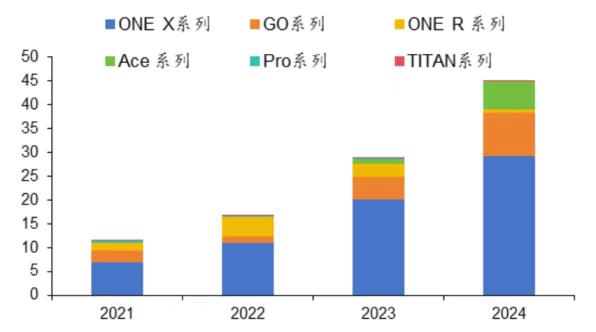
Core Insights - The competition between the companies is intense, with DJI being both a challenge and a motivator for Insta360, as highlighted by the founder's remarks on the dual nature of DJI's presence in the market [1] - Insta360 has established a strong market position in the consumer panoramic camera segment, holding a 67.2% market share, significantly ahead of competitors like Ricoh and GoPro [4] - The company is adjusting its distribution strategy to enhance its dealer system and optimize its CRM, indicating a proactive approach to competition [1][6] Company Overview - Insta360's product line includes a variety of imaging devices such as consumer and professional panoramic cameras, action cameras, and AI stabilizers, with consumer products contributing 86.59% of revenue in 2024 [2] - The ONE X series is the best-selling product line, showcasing the company's strength in the consumer market [2] Market Position - Insta360 leads the global panoramic camera market, selling 8 out of every 10 panoramic cameras worldwide, thanks to its advanced imaging technology and AI algorithms [4] - Despite its dominance in panoramic cameras, Insta360 faces strong competition from GoPro and DJI in the broader action camera market [5] Financial Performance - Insta360's revenue from the Ace series action cameras increased from 0.97 billion in 2023 to 2.76 billion in the first half of 2024, indicating strong growth [5] - The company’s revenue from non-panoramic action cameras is approximately 1.5 billion, ranking third in the market [5] Distribution Strategy - Insta360 employs a hybrid sales model combining online and offline channels, with a near 1:1 ratio in 2024, and a significant portion of sales coming from third-party e-commerce platforms [6][8] - The company collaborates with major retailers and uses a buyout sales model for most distributors, focusing on enhancing customer experience and trust [9] Marketing Strategy - Insta360 has developed a robust marketing strategy centered around KOLs and user-generated content, significantly increasing brand visibility and engagement [10][11] - The company has initiated various marketing campaigns and collaborations with influencers to enhance its brand image and reach [10] Competitive Landscape - DJI is seen as a formidable competitor, particularly in the action camera segment, with its upcoming Osmo 360 product directly competing with Insta360's offerings [14][18] - The competition has led to price wars, with DJI adopting a low-price strategy while maintaining high performance, which poses a challenge for Insta360 [19] Technological Development - Insta360's core competencies lie in its software ecosystem and advanced algorithms, which provide a competitive edge in the market [17][23] - The company is investing heavily in R&D, with over 12% of its revenue allocated to this area, and a significant portion of its workforce dedicated to research [23] Future Outlook - The market dynamics between Insta360 and DJI are expected to drive innovation and technological advancements in the imaging sector, benefiting the overall industry [26]

无人机保险“飞入”标准化时代,护航低空经济发展
Zhong Guo Jin Rong Xin Xi Wang· 2025-07-10 13:25
Core Insights - The development of the low-altitude economy is accelerating the demand for drone insurance, marking the beginning of a standardized insurance product era in China [1][2] Group 1: Policy and Market Dynamics - The introduction of the "Interim Regulations on the Flight Management of Unmanned Aerial Vehicles" in January 2024 mandates that drones must purchase liability insurance, creating a rigid demand for drone insurance in the low-altitude economy [2][3] - The current insurance rate for commercial drones is approximately 7%-10% of the drone's selling price, with higher policy amounts compared to consumer drones [3] Group 2: Market Size and Growth Potential - The existing drone application scenarios in China have reached 27, with the market size expected to reach several hundred billion yuan by 2025 [4] - The low-altitude economy insurance market is projected to reach 8 billion to 10 billion yuan by 2035, driven by emerging scenarios such as drone logistics and urban air traffic [4] Group 3: Standardization and Product Development - The standardization of drone insurance products is improving, with types including all-risk insurance for drones, third-party liability insurance, pilot accident insurance, and major equipment insurance [3][5] - The insurance industry is encouraged to establish industry data standards for drone insurance to enhance product pricing and claims mechanisms [6][7] Group 4: Future Outlook - The continuous improvement of drone insurance claims standards will help reduce operational costs for insurance companies and provide clearer options for users [7] - Collaboration among insurance companies, drone manufacturers, and regulatory bodies is essential for refining insurance products and services to support the growth of the low-altitude economy [7]
大P人刘靖康如何管理3000人的影石
创业邦· 2025-07-10 03:22
Core Viewpoint - The article discusses the growth and challenges faced by Insta360, a company that has evolved from a small team to over 3,000 employees in ten years, highlighting its recent IPO on the Sci-Tech Innovation Board and the competitive landscape it faces, particularly against DJI in the action camera market [3][4]. Company Growth and Development - Insta360 was founded ten years ago and has grown significantly, now employing over 3,000 people [3]. - The company successfully went public on the Sci-Tech Innovation Board a month prior to the article's publication [3]. Leadership and Management Style - Founder Liu Jingkang is described as unconventional, often disregarding traditional management practices and preferring a more spontaneous approach [4][5]. - Liu's management style includes holding numerous meetings, where team members are expected to come prepared with questions and solutions [7][9]. - He aims to transition from being the primary product manager to a more strategic management role, focusing on organizational structure and decision-making processes [16][17]. Product Development and Market Strategy - The company has faced intense competition from DJI, particularly in the action camera segment, and is exploring new product lines, including drones [4][5]. - The Ace series, launched in late 2023, represents Insta360's first direct competition with established products from GoPro and DJI [13]. - The company has learned from past product launches, such as the Nano camera, which initially attracted attention but failed to sustain growth due to a lack of clear target users [14]. Innovation and User-Centric Approach - Insta360 emphasizes the importance of understanding user needs and adapting products accordingly, as seen in the development of the ONE X series, which successfully combined features of both action and panoramic cameras [14][17]. - The company has implemented a "Summer Rain Plan" to encourage creativity and resource sharing among departments, allowing for more agile project execution [18][19]. Organizational Structure and Culture - The company has adopted a matrix organizational structure to enhance collaboration across different functions, allowing for more independent product development teams [16][20]. - There is a focus on standardizing processes and learning from past experiences to improve product quality and service consistency [20][22]. - The company values employee development and aims to prioritize employee growth over shareholder returns, reflecting a progressive management philosophy [26].