
华金证券

Search documents
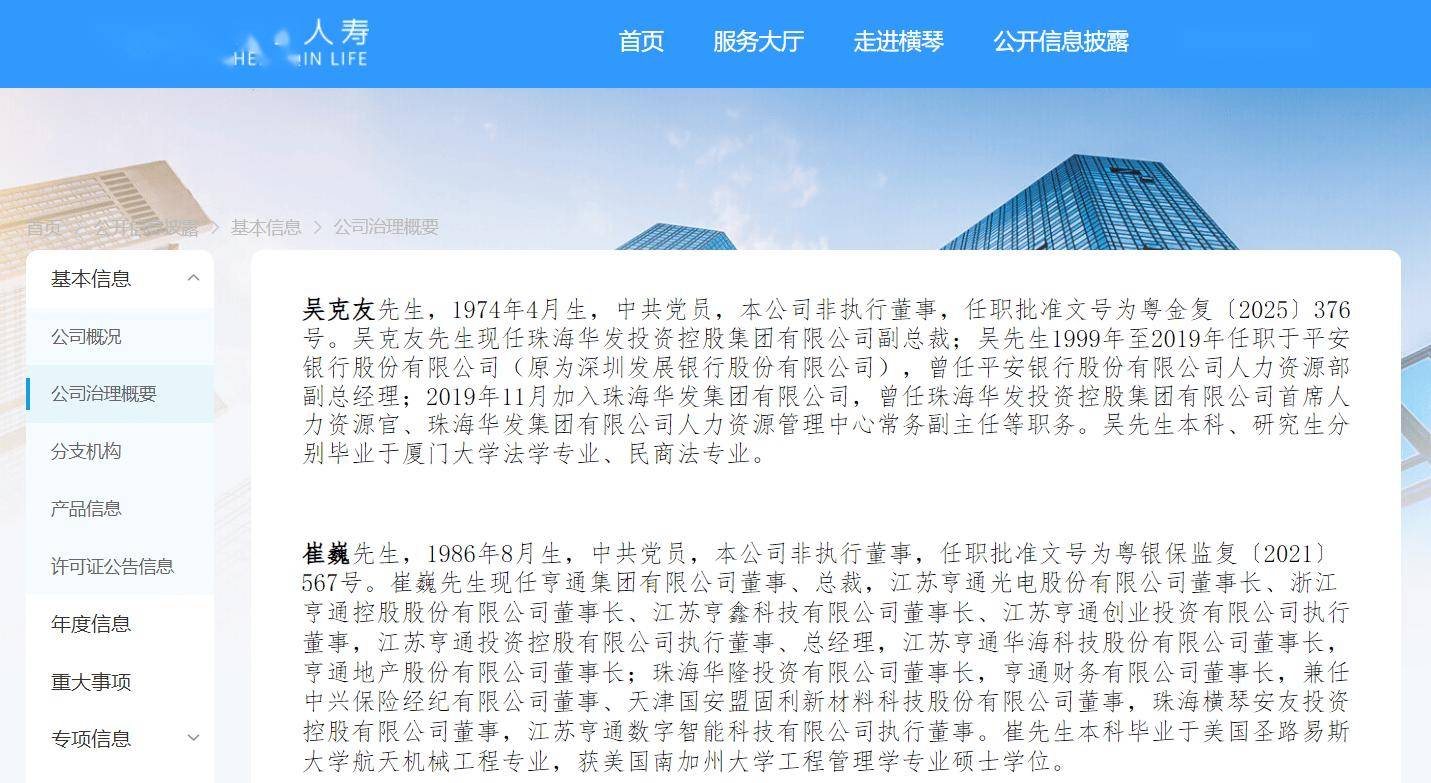
华金证券党委书记、总裁燕文波拟调任横琴人寿出任董事长
Sou Hu Cai Jing· 2026-02-11 13:31
公开信息显示,燕文波,出生于1974年,2021年12月起任华金证券党委书记、总裁。其于1996年入职原君安证券,后出任上海浦东科创有限公司投资部经 理、原民生证券人力资源部总经理、原联合证券机构客户部总经理。2006年加入国海证券,2011年8月至2021年10月任副总裁,分管投行业务并兼任国海富 兰克林基金董事等职。 钱仲华,1962年7月生,2024年7月起任横琴人寿执行董事、董事长。其于1981年7月起先后从事财政局、纪检委等公务工作,曾任太保寿险副总经理、总经 理、党委副书记,太保集团总审计师、审计负责人,审计中心党委书记等职。 2月11日,横琴人寿官网董事简历更新,已无钱仲华 据券商中国,华金证券党委书记、总裁燕文波拟调任横琴人寿,接任董事长,原董事长钱仲华据称于1月22日在董事会上请辞并获得批准。 ...

A股近十年节后首日6涨4跌
第一财经· 2026-02-11 12:45
Core Viewpoint - The article discusses the investment strategy of holding stocks versus holding cash during the upcoming long Chinese New Year holiday, with a prevailing sentiment among institutions favoring "holding stocks" due to expectations of a spring market rally post-holiday [3][10]. Market Performance - A-shares are currently in a state of consolidation, with the Shanghai Composite Index and Shenzhen Component Index showing slight increases of 2.89% and 2.43% respectively from February 3 to February 11 [5]. - On February 11, the Shanghai Composite Index rose by 0.09% to close at 4131.99 points, while the Shenzhen Component Index fell by 0.35% to 14160.93 points [6]. Historical Trends - Over the past decade, the Shanghai Composite Index has experienced 6 increases and 4 decreases on the first trading day after the Spring Festival, with notable declines in 2017 and 2020 [7]. - The average increase for the Wind All A-shares index in the first 10 trading days after the Spring Festival from 2017 to 2025 is 3.3%, compared to an average decline of 1.3% in the 10 trading days before the holiday [8]. Investment Strategies - The strategy of holding stocks during the holiday is supported by several analysts, citing factors such as a potential recovery in market sentiment and government policies aimed at boosting domestic demand [10][11]. - Analysts suggest that the technology sector, particularly TMT (Technology, Media, and Telecommunications), tends to perform better post-holiday, with a high success rate in the first 5 and 10 trading days after the Spring Festival [8][13]. Sector Focus - Key sectors to watch include materials such as non-ferrous metals, basic chemicals, and construction materials, as well as technology fields like semiconductors and artificial intelligence, which are aligned with the "14th Five-Year Plan" [12].
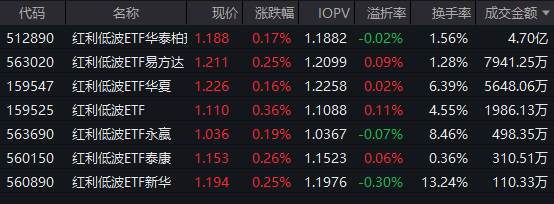
红利低波ETF华泰柏瑞(512890)流通规模突破301亿元 机构建议“持股过节” 高股息板块配置逻辑更清晰
Xin Lang Cai Jing· 2026-02-11 09:02
Market Overview - On February 11, the A-share market exhibited a volatile trend, with the ChiNext Index dropping over 1% and the Shanghai Composite Index slightly rising by 0.09% [1][6] - In this market environment, the Huatai-PB Low Volatility ETF (code: 512890) increased by 0.17%, closing at 1.188 yuan, with a turnover rate of 1.56% and a transaction amount of 470 million yuan, ranking first among similar ETFs in terms of transaction volume [1][6] ETF Performance - As of February 11, the Huatai-PB Low Volatility ETF has accumulated a total transaction volume of 23.061 billion yuan over 28 trading days this year, with an average daily transaction of 824 million yuan [2][7] - Fund flow data indicates that as of February 10, the ETF saw a net inflow of 880 million yuan over the last 10 trading days, 3.472 billion yuan over the last 20 days, and 4.470 billion yuan over the last 60 days, with a circulating scale of 30.128 billion yuan [2][7] Investment Recommendations - Recent recommendations from various institutions suggest a "hold stocks over the holiday" strategy, indicating that the A-share market's performance before the Spring Festival may influence post-holiday trends [4][9] - Huajin Securities noted that the current spring market is not yet over, with expectations for improved economic and corporate profit forecasts during the Spring Festival, and a neutral risk appetite anticipated [4][9] - Zhongtai Securities emphasized that the configuration logic for high-dividend sectors is becoming clearer, with expectations for policy measures related to growth stabilization and consumption promotion to gradually materialize after the Spring Festival [4][9] ETF Characteristics - The Huatai-PB Low Volatility ETF was established on December 19, 2018, with a benchmark of the CSI Low Volatility Index [4][9] - As of February 10, 2026, the ETF has achieved a return of 79.95% over the past five years, outperforming its benchmark and ranking 51st among 909 funds [4][9] - Investors can participate through a systematic investment plan to smooth out volatility risks, and those without stock accounts can access it through its off-market linked funds [4][9]
券商营业部转型探微:让居民“闲钱”托举稳稳的幸福
Xin Hua She· 2026-02-11 07:46
Core Viewpoint - The article discusses the transformation of brokerage firms' business models in response to changing investor behavior, emphasizing the shift towards wealth management and personalized investment strategies to meet the needs of individual investors [1][3][4]. Group 1: Investor Behavior Changes - Investors are increasingly focusing on asset preservation and risk control rather than chasing high short-term returns, with a significant portion of their portfolios allocated to fixed-income products [1][3]. - There is a noticeable decline in investors seeking specific product inquiries and an increase in those looking for comprehensive investment strategies, indicating a deeper understanding of wealth management [3][4]. - Experienced investors are now more inclined to engage in long-term financial planning, including allocations to retirement funds and other long-duration products [4]. Group 2: Role of Brokerage Firms - Brokerage firms are evolving from traditional roles of account opening and product sales to providing high-quality wealth management services, emphasizing personalized investment advice and ongoing strategy adjustments [4][5]. - The demand for professional financial advice is rising, with investors relying on brokers to help navigate the complexities of investment choices and reduce anxiety associated with blind selection [4]. - The transformation of the investment advisory role is critical, as investors now expect a higher level of professionalism and expertise from their advisors to enhance their investment experience [4].

A股“春节效应”引关注 机构建议持股过节
Jin Rong Shi Bao· 2026-02-11 01:43
Group 1 - The core viewpoint of the articles suggests that investors are advised to "hold stocks during the festival" based on historical patterns, improving fundamentals, and potential recovery in risk appetite [1][2][3] - Historical data indicates a significant "Spring Festival effect" in the A-share market, with an 81% probability of the Shanghai Composite Index rising in the week before the festival and a 76% probability in the week after [2][6] - Multiple securities firms, including Dongwu Securities and Huajin Securities, believe that the current market conditions, characterized by a gradual reduction of suppressive factors, will create space for a post-festival rally [2][3] Group 2 - The market style typically shifts significantly before and after the Spring Festival, with a preference for defensive sectors like banks and food and beverage before the festival, and a transition to cyclical and growth stocks afterward [4][6] - Historical quantitative data shows that the CSI 300 Index (representing large caps) outperforms the CSI 2000 Index (representing small caps) in the week before the festival, while the reverse is true in the week after [4] - Analysts from Galaxy Securities note that the market is currently exhibiting typical "pre-festival risk aversion," with funds moving away from high-valuation technology and cyclical sectors towards value and consumption themes [4][8] Group 3 - Despite the optimistic outlook for the Spring Festival market, potential risks remain, particularly from external uncertainties that could impact post-festival market sentiment [5][6] - The upcoming long holiday may lead to a short-term market fluctuation as some funds may choose to exit the market to avoid overseas volatility [6][8] - Analysts emphasize the need to monitor two main areas: uncertainties in overseas markets, including fluctuations in Federal Reserve policy and geopolitical tensions, and potential short-term liquidity shocks from pre-festival fund exits [8]
新春走基层丨券商营业部转型探微:让居民“闲钱”托举稳稳的幸福
Zhong Guo Zheng Quan Bao· 2026-02-11 00:03
Group 1 - The core viewpoint of the articles highlights a significant shift in investor behavior towards more stable and diversified asset management strategies, moving away from high-risk, short-term trading approaches [1][2][3] - Investors are increasingly seeking personalized financial planning and investment advice, indicating a growing reliance on professional wealth management services [3] - The trend shows that experienced investors are focusing on long-term financial products, such as pension funds, reflecting a broader change in financial awareness among residents [3][4] Group 2 - There is a noticeable increase in inquiries about stable investment directions and robust portfolio construction among investors, suggesting a demand for more structured financial guidance [2][3] - The transformation of brokerage services is evident, as firms are shifting from traditional product sales to comprehensive wealth management services that include personalized adjustments and ongoing support [3] - The role of investment advisors is evolving, requiring them to be more professional and knowledgeable to meet the increasing sophistication of investors [3]
券商营业部转型探微:让居民“闲钱” 托举稳稳的幸福
Zhong Guo Zheng Quan Bao· 2026-02-10 23:19
农历腊月二十二,阳光洒满上海淮海中路,一串串红灯笼沿街悬挂。春节临近,年味渐浓。位于淮 海国际广场31楼的光大证券淮海中路营业部,仍有一拨拨投资者前来办理业务。 刚在该营业部办理完业务的陈先生告诉中国证券报记者,他做投资已有十多年的时间,在经历过几 轮市场周期后,心态发生了明显转变。他说:"以前总想着追涨停、博短期高收益,现在无论是买股票 还是买理财产品,都更注重资产的保值增值和风险控制。"目前,陈先生配置的固收类产品占比过半, 权益类投资兼顾科技成长与高股息蓝筹,且通过ETF工具分散投资风险。 在王海的建议下,周磊的配置逐渐有了变化,以货币基金作为"安全垫",新增"固收+"、多元资产 组合等中低波动产品,并通过ETF和可转债间接参与权益市场。"回撤小、睡得着,年化收益反而比以 前强。更关键的是,我再也不用天天盯盘,也能把精力放到本职工作及陪伴家人上,这才是双赢。"如 今,周磊成了王海所在营业部的"义务宣传员",常带同事来咨询资产配置方案。 光大证券淮海中路营业部相关负责人告诉记者,近年来,居民理财意识普遍增强,更加追求资产多 元化配置,对基金、股票、保险等多种金融产品有配置需求。个人投资者对专业理财服务的依 ...
券商营业部转型探微: 让居民“闲钱” 托举稳稳的幸福
Zhong Guo Zheng Quan Bao· 2026-02-10 23:15
Core Insights - The investment mindset of individual investors is shifting towards risk control and asset preservation rather than chasing high short-term returns [1][3] - There is a growing demand for personalized financial planning and investment advice among individual investors, reflecting a deeper reliance on professional wealth management services [3] Group 1: Changing Investor Behavior - Investors are increasingly focusing on diversified asset allocation, with a significant portion of their investments in fixed-income products and low-volatility options [1][2] - The trend shows a decline in the number of investors seeking specific product inquiries, while more are looking for comprehensive investment strategies [1][3] Group 2: Role of Financial Advisors - Financial advisors are becoming essential as investors seek tailored investment solutions and guidance to navigate the complexities of the market [3] - The transformation of brokerage services is evident, moving from traditional product sales to providing high-quality wealth management services that include ongoing personalized adjustments [3] Group 3: Long-term Investment Planning - There is an increasing awareness among investors about the importance of long-term financial planning, including retirement and education funds [4] - Investors are learning to adopt a patient approach to investing, valuing stability and peace of mind over constant market monitoring [4]
让居民“闲钱” 托举稳稳的幸福
Zhong Guo Zheng Quan Bao - Zhong Zheng Wang· 2026-02-10 23:04
Group 1 - The core viewpoint of the articles highlights a significant shift in investor behavior towards more conservative and diversified asset management strategies, focusing on risk control and long-term stability rather than short-term gains [1][2][3] - Investors are increasingly seeking personalized financial planning and investment advice, indicating a growing reliance on professional wealth management services [3][4] - The transformation in investor attitudes presents both challenges and opportunities for financial institutions, necessitating a shift from traditional product sales to comprehensive wealth management services [3][4] Group 2 - There is a notable trend of investors, such as Mr. Chen and Mr. Zhou, moving towards asset allocation strategies that prioritize fixed-income products and diversified investments through ETFs, reflecting a desire for lower volatility and more stable returns [1][2] - The demand for customized investment solutions is rising, with investors expressing a need for tailored advice that aligns with their individual financial goals and life circumstances [3] - Financial institutions are adapting to these changes by enhancing their advisory roles, focusing on providing ongoing support and personalized adjustments to investment strategies [3][4]
让居民“闲钱”托举稳稳的幸福
Zhong Guo Zheng Quan Bao· 2026-02-10 20:21
Core Viewpoint - The article highlights a significant shift in the investment behavior of individual investors in Shanghai, moving from high-risk, short-term trading strategies to a more cautious approach focused on asset preservation and diversified investment portfolios [1][3]. Group 1: Changes in Investor Behavior - Investors are increasingly prioritizing asset preservation and risk control over chasing high short-term returns, with a notable shift towards fixed-income products [1]. - There is a growing trend among investors to seek personalized investment strategies and professional financial advice, reflecting a deeper understanding of the capital markets [3]. - The reliance on professional financial advisors has increased, as investors look for tailored solutions to manage their wealth effectively [3]. Group 2: Investment Strategies - Investors are diversifying their portfolios, with a significant portion allocated to fixed-income products, while also incorporating equity investments through ETFs to mitigate risks [1]. - The trend of using "solid income+" products and multi-asset combinations is becoming more common, as investors seek lower volatility and stable returns [2]. - There is a notable increase in the demand for long-term investment products, such as pension funds, indicating a shift towards more strategic financial planning [3]. Group 3: Role of Financial Advisors - The role of financial advisors is evolving from merely selling products to providing comprehensive wealth management services that include personalized adjustments and ongoing support [3]. - Financial advisors are now expected to be highly knowledgeable and capable of offering tailored advice that aligns with the dynamic financial goals of investors [3]. - The transformation in the advisory role is essential to meet the increasing sophistication and expectations of investors in the current market environment [3].