
卫材

Search documents
商保创新药药房遇冷,这些进口药院内渗透快
Di Yi Cai Jing· 2026-01-21 13:48
Core Insights - The sales of commercial insurance innovative drugs remain concentrated in public hospitals in a few provinces such as Beijing and Shanghai, with a low proportion of sales through pharmacies [1][5] - As of January 20, 2023, 99 new basic medical insurance drugs were sold in 12,198 designated medical institutions, while 14 commercial insurance innovative drugs were sold in 223 institutions [1][5] Group 1: Sales Data and Trends - Over 70% of commercial insurance innovative drugs have recorded sales, but the specific sales performance varies among the 14 drugs [2] - Alzheimer's disease treatment drugs have the highest penetration in the hospital market, with drugs like Lecanemab and Donanemab achieving sales in 158 and 46 institutions respectively [2] - Multiple anti-tumor drugs are also penetrating the hospital market, with drugs like Ipilimumab and Lurbinectedin being sold in 35 and over 10 institutions respectively [2] Group 2: Challenges and Market Dynamics - Five innovative drugs have not yet formed sales in designated medical institutions, including CAR-T products priced between 990,000 to 1,300,000 yuan per injection [3] - The lack of sales does not imply that these drugs are not benefiting from the supportive policies for commercial insurance innovative drugs [3] - The transition from "hospital entry" to "sales" involves several factors, including physician prescriptions and patient payments, which may hinder the sales volume of these drugs [3] Group 3: Policy and Implementation - Most provinces have clarified that the entry of commercial insurance innovative drugs into hospitals will follow the guidelines of "nationally negotiated drugs" [4] - There is a push for the inclusion of all 19 drugs in the commercial insurance innovative drug directory into the procurement lists of hospitals, which may improve access for patients [4] - The integration of commercial insurance innovative drugs with the dual-channel policy of medical insurance is essential for enhancing confidence in the allocation of these drugs in hospitals [5]
百健(BIIB.US)押注家用阿尔茨海默病药物 称将成对抗礼来(LLY.US)的“制胜筹码”
Zhi Tong Cai Jing· 2026-01-14 13:29
Core Insights - The CEO of Biogen, Chris Viehbacher, stated that the home injectable version of Leqembi, developed in collaboration with Eisai, will be a "key advantage" against competitors like Eli Lilly's similar therapies [1] - Biogen and Eisai are expected to receive U.S. approval by mid-year, allowing patients to use Leqembi at home from the start, which could significantly drive growth [1][2] Group 1: Market Competition - Eli Lilly's Kisunla has quickly captured market share despite being launched over a year later than Leqembi, with both companies nearly splitting the new patient market [1] - Biogen believes that the subcutaneous injection will be more appealing to patients compared to infusion treatments [1] Group 2: Growth Potential - The growth of Leqembi has been moderate due to systemic bottlenecks, such as competition for infusion beds between Alzheimer's and cancer patients [2] - New blood testing technologies that accelerate patient diagnosis may also contribute to growth [2] - Biogen and Eli Lilly aim to demonstrate the benefits of early treatment through clinical trials, potentially expanding the market significantly [2] Group 3: Corporate Strategy - Since taking over as CEO, Viehbacher has cut hundreds of jobs and reduced expenses while diversifying the company's R&D and commercial pipeline [2] - Biogen acquired Reata Pharmaceuticals for $7.3 billion in 2023, gaining access to Skyclarys, the first approved treatment for the rare neurological disease Friedreich's ataxia [2] - Viehbacher indicated that Biogen may pursue more acquisitions, although he believes that transaction values are unlikely to exceed $5 billion [3]


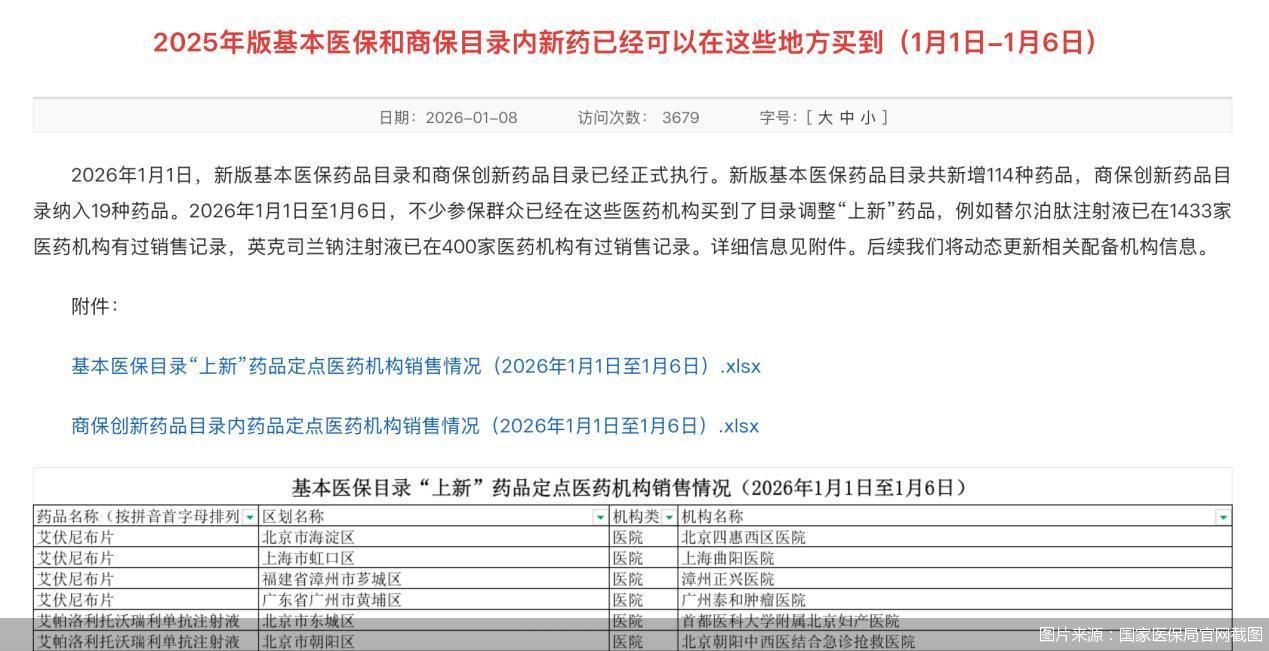
新医保目录实施一周:创新药“首单”频现
Bei Jing Shang Bao· 2026-01-08 15:45
Core Insights - The new medical insurance directory has entered a substantial implementation phase, with multiple innovative drugs, including Tislelizumab and Fuzhengzhu, being covered by insurance in various hospitals, indicating a rapid reduction in access barriers for patients [1][3] - The adjustment includes 114 new drugs and introduces a commercial health insurance innovative drug directory for 2025, marking a significant shift towards a multi-tiered insurance payment system [1][3] Group 1: Innovative Drug Inclusion - The new medical insurance directory reflects increased support for "true innovation" with 124 unique products included, showcasing a strong emphasis on high clinical value [3][4] - Notable drugs like Tislelizumab, the first targeted therapy for thyroid eye disease, and Fuzhengzhu, a biological agent for psoriasis, have been rapidly integrated into the insurance system, filling long-standing treatment gaps [3][4] - Heng Rui Medicine is highlighted as a major beneficiary, with 20 products and indications adjusted, including 10 new drugs, enhancing patient access to innovative therapies [3][4] Group 2: Biotech Sector Impact - Companies like BeiGene, Innovent Biologics, and Kangfang Biotech are also benefiting from the new directory, accelerating their commercialization processes [4] - BeiGene is the only company with two products included in the first commercial insurance innovative drug directory, addressing unmet needs in cholangiocarcinoma and neuroblastoma [4] - Innovent Biologics has expanded its offerings to 12 innovative drugs under the new directory, creating a robust product matrix [4] Group 3: Shift in R&D Strategies - The introduction of the commercial insurance innovative drug directory is seen as a solution to the payment challenges faced by high-value innovative drugs, encouraging companies to focus on true innovation rather than me-too products [5][6] - The directory allows for a second market for high-priced therapies, with price reductions between 15% and 50%, which is less severe than the typical cuts seen in basic insurance [6][7] - This dual-directory model is expected to drive pharmaceutical companies to align their R&D strategies with real-world clinical needs, particularly in oncology and rare diseases [7][9] Group 4: Drug Exclusions - The adjustment also involved the removal of 29 drugs from the insurance directory, including Benalutide injection, which faced competition from more effective alternatives [8][9] - This "one in, one out" approach aims to enhance the efficiency of insurance fund usage by prioritizing high-demand and effective medications [9]


新版医保目录实施一周:创新药“首单”频现,患者用药门槛降低
Bei Jing Shang Bao· 2026-01-08 08:10
Core Insights - The new medical insurance directory has entered a substantial implementation phase, with several innovative drugs, including Tislelizumab and Fuzhengzhu, being prescribed under insurance in various hospitals, indicating a reduction in access barriers for patients [1] - The adjustment includes 114 new drugs and introduces a commercial health insurance directory for innovative drugs, marking a significant shift towards a multi-tiered insurance system [1][5] - The rapid inclusion of innovative drugs in the insurance directory reflects increased support for "true innovation" with high clinical value [5] Group 1: New Drug Inclusion - The new medical insurance directory has added 124 unique products, including Tislelizumab, the first targeted drug for thyroid eye disease, and Fuzhengzhu, a biological agent for psoriasis [5] - Heng Rui Medicine is a major beneficiary, with 20 products and indications adjusted, including 10 new drugs entering the directory for the first time [5][6] - Other biotech companies like BeiGene and Innovent Biologics have also benefited, with multiple products included in the new directory, enhancing their commercialization prospects [7] Group 2: Commercial Health Insurance Directory - The introduction of the commercial health insurance directory provides a secondary market for high-value innovative drugs, with price reductions ranging from 15% to 50%, which is less severe than the basic insurance cuts [9] - The directory aims to improve accessibility for high-priced drugs while ensuring adequate returns for pharmaceutical companies [9] - Notable CAR-T therapies have been included in the commercial directory, overcoming previous barriers to entry, with prices for these therapies exceeding 1 million yuan [8][10] Group 3: Market Dynamics and Drug Exits - The adjustment process has also seen the removal of 29 drugs from the insurance directory, including Benarutide, which faced competition from more effective alternatives [12][14] - The dynamic adjustment mechanism emphasizes the need for drugs to demonstrate clinical value, reinforcing a "can enter, can exit" policy [14] - Companies are encouraged to shift from "me-too" products to genuine innovations, focusing on high-value areas such as oncology and rare diseases [10][14]



复星医药:预计2029年完成上市后确证性临床试验
Mei Ri Jing Ji Xin Wen· 2025-12-23 12:50
Core Viewpoint - Fosun Pharma is acquiring a controlling stake in Green Valley Pharmaceutical for approximately 14.12 billion yuan, despite the core product, Manzotai Capsules, being suspended from production and sales. The acquisition has raised concerns in the capital market regarding the timeline for the product's re-entry into the market [1][2]. Group 1: Acquisition Details - Fosun Pharma's acquisition will result in it holding 53% of Green Valley's shares through its subsidiary and a special purpose vehicle (SPV) [2]. - The acquisition involves a combination of stock transfer and subscription to new registered capital, with Fosun Pharma's subsidiary expected to hold 51% of Green Valley's shares [2]. - The payment for the acquisition will be made in installments, with an initial payment of 6.35 billion yuan on the closing date and the remaining amount contingent on Green Valley's future R&D progress [3]. Group 2: Clinical Trial Progress - The revised post-marketing confirmatory clinical trial for Manzotai Capsules has been approved by the National Medical Products Administration, with an estimated completion of subject enrollment by the end of 2027 and data readout in early 2029 [1][4]. - As of December 15, 2025, 580 subjects have been enrolled in the clinical study, with 1,370 more needed to complete the trial [4]. - The clinical trial design has been updated to extend the double-blind treatment period from 36 weeks to 48 weeks and increase the sample size from 1,312 to 1,950 [3]. Group 3: Financial and Compliance Aspects - Green Valley Pharmaceutical has faced administrative penalties for improper promotional practices, resulting in a fine of 400,000 yuan, but this has not significantly impacted its operations [6]. - An audit by Ernst & Young revealed no hidden large debts or misuse of funds within Green Valley, indicating a stable financial condition [6][7]. - The acquisition is not expected to have a significant impact on Fosun Pharma's consolidated profits in the short term, as Green Valley's assets and liabilities represent a small fraction of Fosun's total [7].
《财经》特稿:创新药商保破冰
3 6 Ke· 2025-12-23 10:46
Core Insights - The introduction of the commercial health insurance innovative drug directory aims to address the mismatch between high-cost innovative drugs and patient affordability, particularly in the context of rare diseases and cancer treatments [1][2][3] Group 1: Policy Developments - The National Medical Insurance Administration announced the establishment of a commercial health insurance innovative drug directory, which will include 19 drugs, including CAR-T therapies and treatments for rare diseases [1][2] - The directory is designed to complement the basic medical insurance system, allowing for a multi-tiered medical security framework that supports the development of commercial health insurance [2][3] - The commercial health insurance innovative drug directory is expected to serve as a transitional pool for innovative drugs, allowing them to be included in commercial insurance before potentially entering the basic medical insurance system [2][14] Group 2: Drug Inclusion and Pricing - Five CAR-T products have been included in the commercial health insurance innovative drug directory, which has been a focal point in recent negotiations due to their high costs [2][4][5] - The pricing negotiations for these drugs have reportedly been more favorable than those for basic medical insurance, with some products achieving significant price reductions [5][8] - The directory aims to reduce the financial burden on patients, potentially saving them hundreds of thousands of yuan in out-of-pocket expenses for treatments like CAR-T [6][7] Group 3: Challenges and Considerations - The implementation of the commercial health insurance innovative drug directory faces challenges, including the need for coordination among stakeholders, data integration, and collaboration between medical institutions and payment systems [3][10][13] - The effectiveness of the directory in providing access to patients will depend on the efficiency of medical institutions in adopting these drugs, as inclusion in the directory does not guarantee availability in hospitals [13][15] - The sustainability of this new mechanism relies on the risk management capabilities of commercial insurance providers and the effective integration of commercial and basic medical insurance systems [15] Group 4: Market Opportunities - The establishment of the commercial health insurance innovative drug directory opens significant market opportunities for commercial health insurance, particularly in designing specialized insurance products for high-value innovative drugs [3][12] - The directory is expected to enhance the clinical use of innovative drugs and improve the overall return on investment in research and development for pharmaceutical companies [15][16] - The introduction of this directory aligns with the broader goal of expanding the health service industry in China, with projections indicating a total scale of 16 trillion yuan by 2030 [3]
创新药商保破冰
Xin Lang Cai Jing· 2025-12-23 09:51
Core Viewpoint - The introduction of the commercial health insurance innovative drug directory marks a substantial phase of collaboration between medical insurance and commercial insurance, opening a market-oriented payment channel and enhancing the accessibility of innovative drugs [1][21]. Group 1: Policy and Implementation - The national medical insurance bureau has added a commercial health insurance innovative drug directory, which includes 19 drugs, effective from January 1, 2026 [2][23]. - The directory focuses on highly innovative drugs with significant clinical value that exceed the basic medical insurance coverage, aiming to complement the basic insurance system [2][23]. - The commercial health insurance innovative drug directory is expected to serve as a "transition pool" for innovative drugs, allowing them to first enter the commercial insurance directory before considering inclusion in the basic medical insurance [3][36]. Group 2: Drug Inclusion and Impact - Notable drugs included in the directory are five CAR-T products, which have been a focal point in previous medical insurance negotiations due to their high costs, often exceeding one million yuan [2][25]. - The inclusion of CAR-T products is anticipated to significantly reduce the out-of-pocket expenses for patients, potentially saving them hundreds of thousands of yuan [7][27]. - The directory also includes treatments for rare diseases and high-profile conditions like Alzheimer's disease, reflecting a commitment to support vulnerable patient groups [8][28]. Group 3: Challenges and Considerations - The implementation of the commercial health insurance innovative drug directory faces challenges such as balancing the interests of pharmaceutical companies, insurance costs, and patient accessibility [3][24]. - There is a need for improved data integration and actuarial foundations to support long-term efficacy data and claims risk models for innovative drugs [3][24]. - The collaboration between medical institutions and payment systems requires breakthroughs to ensure the effective entry of directory drugs into hospitals [3][24]. Group 4: Market Opportunities - The launch of the commercial health insurance innovative drug directory opens significant market opportunities for commercial health insurance, with a focus on designing specialized insurance products for high-value innovative drugs [4][24]. - The directory is expected to enhance the clinical medication level and overall research return rates in the industry, particularly benefiting leading innovative pharmaceutical companies [20][37]. - The mechanism is seen as a step towards a multi-layered and collaborative medical insurance system in China, although its long-term sustainability will depend on effective risk management by commercial insurance institutions [19][36].
逾14亿元押注停产“九期一”,何时能重新上市?复星医药回应监管函:预计2029年完成上市后确证性临床试验
Mei Ri Jing Ji Xin Wen· 2025-12-23 05:37
Core Viewpoint - Fosun Pharma is acquiring a controlling stake in Green Valley Pharmaceutical for approximately 14.12 billion RMB, despite the core product, Manzamine Sodium Capsule, being off the market due to regulatory issues. The acquisition has raised concerns in the capital market regarding the timeline for the product's return to commercialization [2][3][4]. Group 1: Acquisition Details - The acquisition will be executed through a combination of stock transfer and subscription to new registered capital, resulting in Fosun Pharma holding 51% of Green Valley Pharmaceutical [4]. - The payment for the acquisition will be made in installments, with an initial payment of 635 million RMB at the time of closing, and the remaining amount contingent on the progress of Green Valley's research and development [4]. - Green Valley's founder will pledge 10% of the company's shares post-acquisition to mitigate potential risks [4]. Group 2: Clinical Trial and Product Timeline - The revised post-marketing confirmatory clinical trial for Manzamine Sodium Capsule has been approved, with full enrollment expected by the end of 2027 and data readout in early 2029 [2][7]. - The product has been off the market since November 2024 due to the expiration of its registration certificate and will require successful completion of the clinical trial and regulatory approval before resuming sales [7][8]. Group 3: Financial and Compliance Status - Green Valley Pharmaceutical has faced regulatory scrutiny, including a 400,000 RMB fine for improper promotional practices, but this has not significantly impacted its operations [9][10]. - An audit revealed no hidden large debts or misuse of funds within Green Valley, indicating a stable financial position prior to the acquisition [10][12]. - As of September 30, 2025, Green Valley's assets and liabilities were 806 million RMB and 795 million RMB, respectively, which have a limited impact on Fosun Pharma's overall financial structure [12]. Group 4: Market Competition and Future Risks - The market for Alzheimer's treatments is competitive, with six other drugs already approved, which may affect the sales performance of Manzamine Sodium Capsule upon its return to the market [8]. - The timeline for the product's re-commercialization has been extended to around 2029, raising concerns about market dynamics and reimbursement conditions at that time [8].
万亿市场掀热浪,医药企业群雄逐鹿
Xin Lang Cai Jing· 2025-12-22 02:51
Core Insights - The article discusses the growing importance of consumer healthcare products in addressing chronic health issues like obesity, insomnia, hair loss, myopia, and low immunity, emphasizing the need for pharmaceutical companies to align products with consumer demands and establish effective sales channels [1] Group 1: Market Trends and Company Strategies - Pharmaceutical companies are increasingly entering the consumer healthcare sector, with notable examples including Novo Nordisk's semaglutide and Eli Lilly's tirzepatide, which have generated significant revenue [1] - Sanofi's product, Lybrel, is expected to become a star product in the Chinese market by 2025, showcasing the potential for online sales growth [1] - Three Life Pharmaceuticals' Mandi International is set to go public in Hong Kong, with its minoxidil hair loss treatment dominating the Chinese market, projecting revenue growth from 982 million to 1.455 billion yuan from 2022 to 2024, representing a compound annual growth rate of 21.7% [1] Group 2: Product Performance and Market Position - Mandi's hair loss treatment accounted for over 90% of its total revenue from 2022 to mid-2025, highlighting the substantial market for hair loss products in China [1] - Compared to service-oriented companies like Yonghe Medical, Mandi demonstrates superior profitability in the consumer healthcare sector, indicating that product-based companies can achieve higher margins [1] Group 3: Innovations in Consumer Healthcare - Eisai's Lybrel has gained traction due to its novel mechanism of action, which avoids the regulatory constraints of traditional sedative-hypnotics, and its partnership with JD Health enhances its market reach [2][3] - The dual orexin receptor antagonists (DORAs) used in Lybrel promote natural sleep by inhibiting the overactive orexin system, reducing dependency and side effects associated with traditional sleep medications [2] Group 4: Market Opportunities and Challenges - The consumer healthcare market in China has reached a trillion yuan scale, with early entrants gaining brand influence and market share, while new entrants face challenges in competing against established players [5] - There are still unmet needs in various segments such as osteoporosis, sports rehabilitation, and skin care, suggesting opportunities for new products in the consumer healthcare space [6]
一日豪掷200亿!除了Dupixent,赛诺菲还剩什么?
Xin Lang Cai Jing· 2025-12-17 04:30
Core Insights - Sanofi has made significant investments totaling $2.74 billion in a single day, indicating a strategic shift towards high-risk, high-reward biotech assets amid a challenging market environment [1][4][5] Group 1: Neuroscience Strategy - Sanofi's $1.04 billion collaboration with ADEL focuses on an early-stage Alzheimer's disease antibody, ADEL-Y01, which targets acetylated Tau protein, differentiating itself from existing Aβ antibody treatments [2][3] - The investment in ADEL-Y01 represents a long-term gamble, as it is currently in Phase I clinical trials and may take 7-10 years to reach market approval [2][3] - The urgency for this investment is partly due to the recent setbacks faced by Sanofi's flagship drug Tolebrutinib, which has encountered clinical pauses due to liver damage risks, creating pressure to diversify its neuroscience pipeline [2][4] Group 2: Immunology Concerns - The $1.7 billion partnership with Dren Bio aims to reduce Sanofi's reliance on Dupixent, its leading drug, which poses risks associated with dependency on a single product [3][4] - Dren Bio's technology focuses on a novel approach to immune response by targeting myeloid cells to clear pathogenic B cells, representing a shift from traditional suppression strategies [3] - The collaboration carries inherent risks, as platform deals in the industry are known for their uncertainty, and Sanofi's past performance in internal immunology research has raised concerns about its ability to effectively leverage Dren's technology [3][4] Group 3: Strategic Transition - The divestment of Sanofi's consumer health business, Opella, marks a decisive shift away from stable cash flows towards high-risk biotech investments, reflecting a commitment to innovation [4][5] - This transition leaves Sanofi without a safety net, increasing vulnerability to failures in its new high-stakes projects in neuroscience and immunology [4][5] - The recent investments are seen as a gamble that underscores the management's determination to transform the company, but also highlights the lack of mature assets in its core therapeutic areas [5][6]
