
武田

Search documents
亚盛医药董事长杨大俊:以持续创新筑根基 全球布局启新程
Zhong Guo Zheng Quan Bao· 2026-01-23 23:15
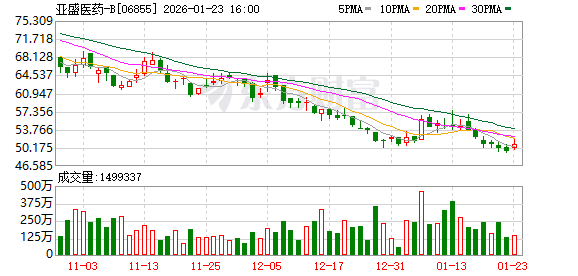
Core Insights - The company aims to transform into a biopharmaceutical enterprise by focusing on clinical needs and leveraging its expertise in apoptosis pathways and innovative drug development [2][4] Company Overview - Established in 2009, the company specializes in developing innovative drugs for unmet clinical needs in oncology, with a strong pipeline including key products like APG-3288, a next-generation BTK-targeted protein degrader [2][4] - The company has successfully launched two major Class 1 new drugs: Nairike, approved in 2021, and Lishengtuo, expected to be approved in July 2025 [2][3] Product Highlights - Lishengtuo breaks the nine-year monopoly of AbbVie’s Bcl-2 inhibitor Venetoclax, representing a significant achievement after 21 years of development [3][4] - Nairike addresses limitations of first and second-generation treatments for chronic myeloid leukemia, filling a domestic treatment gap [4][10] Clinical Development - The company is conducting over 40 clinical trials globally, including three global Phase III studies for Nairike and four for Lishengtuo, with significant milestones achieved in regulatory approvals [6][7] - Lishengtuo is the only Bcl-2 inhibitor currently advancing in Phase III trials for high-risk myelodysplastic syndromes (MDS) [7] Global Expansion Strategy - The company emphasizes a dual approach of clinical and business development, with significant partnerships, including a major collaboration with Takeda for Nairike [8][9] - The company plans to list on NASDAQ in January 2025, marking a significant step in its global market strategy [8] Financial Performance - In the first half of 2025, the company reported revenues of 234 million yuan, with Nairike sales reaching 217 million yuan, a 93% increase year-on-year due to its inclusion in the national medical insurance directory [9][10] - The company has over 3 billion yuan in cash reserves, indicating strong financial health [10] Commercialization Strategy - The company has developed a short- and long-term commercialization plan for Nairike, partnering with established firms to enhance market penetration [10][11] - Following the launch of Lishengtuo, the company has signed agreements with major pharmaceutical distributors to expedite its market entry [10] Future Outlook - The company plans to expand its commercial team significantly, aiming for 400 members by 2026, to enhance its market presence in the hematology oncology sector [11] - The focus will remain on advancing key global clinical projects and integrating Lishengtuo into the medical insurance system [11]

亚盛医药董事长杨大俊: 以持续创新筑根基 全球布局启新程
Zhong Guo Zheng Quan Bao· 2026-01-23 22:30
Core Insights - The company aims to transform into a biopharmaceutical enterprise by focusing on innovative drug development and global commercialization, driven by clinical needs [1][10] - The company has established a strong pipeline of innovative drugs targeting unmet clinical needs, particularly in oncology [2][3] Company Overview - Founded in 2009, the company specializes in developing innovative drugs for oncology and other areas with unmet clinical needs, leveraging expertise in apoptosis pathways and protein degradation [2] - The company has successfully launched two major first-class innovative drugs: Nairike and Lishengtuo, with the former being the first third-generation BCR-ABL inhibitor in China [2][3] Product Highlights - Lishengtuo, as China's first original Bcl-2 inhibitor, is expected to break the monopoly of AbbVie’s Venetoclax, with a projected global sales of $2.6 billion in 2024 and over $3 billion in 2025 [3] - Nairike has been recognized for addressing limitations of previous treatments for chronic myeloid leukemia, with ongoing global clinical trials [3][5] Research and Development Strategy - The company’s R&D pipeline is guided by three core criteria: focusing on unmet clinical needs, emphasizing disease biology, and ensuring drug viability [4] - The company adheres to a principle of "early failure, low-cost failure" to balance R&D investment and output [4] Global Expansion and Clinical Trials - The company is conducting over 40 clinical trials globally, including three pivotal Phase III studies for Nairike and four for Lishengtuo [5][6] - The company has received approvals from the FDA and EMA for several clinical studies, marking significant milestones in its internationalization efforts [5][6] Commercialization Strategy - The company reported a revenue of 234 million yuan in the first half of 2025, with Nairike sales reaching 217 million yuan, a 93% increase year-on-year [8] - The company has established partnerships with major pharmaceutical distributors to enhance the commercialization of Lishengtuo, achieving rapid market penetration [9] Future Outlook - The company plans to expand its commercial team significantly, aiming to enhance market share and patient accessibility for its core products [9] - The transition to a biopharmaceutical company will rely on self-generated sales profits to fund ongoing innovation, distinguishing it from traditional biotech models [10]
以持续创新筑根基 全球布局启新程
Zhong Guo Zheng Quan Bao· 2026-01-23 21:02
Core Insights - The company aims to transform into a biopharmaceutical enterprise by focusing on clinical needs and leveraging global commercialization strategies [1][5] Company Overview - Established in 2009, the company specializes in innovative drugs targeting unmet clinical needs in oncology, with a strong emphasis on apoptosis pathways and protein degradation [1][2] - The company has developed a rich pipeline of high-value innovative drugs, including the new generation BTK-targeted protein degrader APG-3288, which is a highlight of its global innovation strategy [1][2] Product Development - The company has successfully launched two major Class 1 new drugs: Nairike, approved in 2021, and Lishengtuo, expected to be approved in July 2025 [1][2] - Lishengtuo breaks the nine-year monopoly of AbbVie’s Bcl-2 inhibitor Venetoclax, with a broader approval scope for chronic lymphocytic leukemia (CLL) patients compared to its predecessor [2][3] Clinical Trials and Research - The company is conducting over 40 clinical trials globally, including three global Phase III trials for Nairike and four for Lishengtuo, with significant milestones achieved in international regulatory approvals [3][4] - Nairike's global Phase III trials have received approval from both the FDA and EMA, marking a significant step in the company's internationalization efforts [3][4] Commercialization Strategy - The company has established a dual approach to commercialization, focusing on both short-term and long-term strategies for its products [6][7] - For Nairike, a partnership with Sinopharm was formed to leverage existing commercial resources, while Lishengtuo will be marketed independently by the company [6][7] Financial Performance - In the first half of 2025, the company reported revenues of 234 million yuan, with Nairike's sales reaching 217 million yuan, a 93% increase year-on-year due to its inclusion in the national medical insurance directory [5][6] - The company has over 3 billion yuan in cash reserves, indicating strong financial health [5] Future Outlook - The company plans to expand its commercial team significantly, aiming for a team of 400 by 2026, to enhance market penetration and patient accessibility [7] - The transition to a biopharmaceutical company will rely on self-generated sales profits to fund ongoing innovation, distinguishing it from traditional biotech firms that depend on investor funding [7]
医药行业周报:关注小核酸药物上游配套产业链-20260119
Huaxin Securities· 2026-01-19 07:03
Investment Rating - The report maintains a "Recommended" investment rating for the pharmaceutical industry as of January 19, 2026 [1] Core Insights - 2025 marked a significant year for Chinese innovative drugs going global, with a total transaction amount of $135.655 billion, including $7 billion in upfront payments and 157 deals, setting historical highs. The trend continues into 2026, with notable licensing agreements from companies like Yilian Biotech and Rongchang Biotech, indicating strong global competitiveness for Chinese innovative drugs [2] - Major companies are increasingly investing in the small nucleic acid field, with significant acquisitions and clinical approvals. For instance, China National Pharmaceutical Group acquired Hangzhou Hejiya Biopharmaceutical for 1.2 billion RMB, while international firms like Novartis and GSK are also advancing in this area [3] - The GLP-1 market is expected to grow despite new pricing systems, with ongoing collaborations and new product launches anticipated in 2026. The market for GLP-1 drugs is projected to remain robust due to the large patient population for weight loss and diabetes [4] - The oral autoimmune drug market is gaining attention, with promising results from Takeda's new TYK2 inhibitor for psoriasis. Other domestic companies are also advancing in this space, exploring new targets for oral small molecules [5] - The brain-computer interface sector is poised for industrialization, with companies like Neuralink set to produce devices in 2026. Domestic advancements and regulatory support are enhancing the potential for this technology in medical applications [6] - The ZAP-X radiation therapy device is expected to capture a significant market share in China, with rapid growth projected in non-invasive tumor radiation treatment, driven by increasing clinical recognition and adoption [8] Summary by Sections Industry Trends - The pharmaceutical sector is witnessing a resurgence in interest towards innovative drugs, with a notable increase in the innovative drug index by 8.97% since early January 2026, outperforming the CSI 300 index by 6.77 percentage points [2] Company Recommendations - Recommended companies include: - **Yuekang Pharmaceutical** and **Sunshine Nuohua** in the small nucleic acid space - **Yahong Pharmaceutical** and **Yifang Biotechnology** in the autoimmune sector - **Zhongsheng Pharmaceutical** in the GLP-1 market - **Baiyang Pharmaceutical** for ZAP-X radiation therapy - **Meihao Medical** for brain-computer interface technology [10] Market Opportunities - The non-invasive tumor radiation treatment market is projected to grow from 27.2 billion RMB in 2018 to 59.4 billion RMB by 2024, with a compound annual growth rate of 13.9% [8]




JPM 2026:AI破局,肥胖引爆,巨头血战新王座
Xin Lang Cai Jing· 2026-01-15 14:15
Core Insights - 2026 is identified as a pivotal year for transformation and output in the global biopharmaceutical industry, with major companies revealing strategic developments at the JMP conference [1] - The industry is experiencing extreme differentiation, with ADC and GLP-1 seen as key growth engines for the next five years, while mRNA, siRNA, and RLT are transitioning from concepts to clinical norms [1][9] - The BD strategies are becoming more precise, with 2025's small-scale acquisitions starting to yield results, and the logic behind mergers and acquisitions in 2026 expected to diversify [1] Hot Track Dynamics: Dual Drivers of Technology Iteration and Indication Expansion - ADC remains a leading player in the oncology sector, with Merck advancing multiple ADC assets through collaboration with Daiichi Sankyo [12] - BeiGene views ADC as a core technology and is actively promoting drug accessibility globally [12] - Eli Lilly has completed several ADC-related transactions to enhance its capabilities in cancer treatment [12] Weight Management Market Transition - The weight management market is shifting from simple weight loss to comprehensive management of metabolic syndrome, with Eli Lilly focusing on AI-driven drug discovery and direct patient engagement [14] - Roche's acquisition of Carmot Therapeutics enhances its pipeline with new metabolic therapies [14] - Sanofi is expanding the indications for its core asset Dupixent and advancing its autoimmune pipeline [14] Key Corporate Strategic Planning: Core Track Deepening and Platform Layout - Eli Lilly's strategy focuses on obesity and AI-driven drug development, with a projected investment of up to $1 billion in collaboration with NVIDIA [15] - Pfizer aims to maximize core transaction value and apply AI across its business chain, targeting a $150 billion market in obesity by 2030 [15] - Amgen is accelerating the integration of biotechnology and AI, with a focus on rare diseases and partnerships in China [16] BD Trends: Core Logic of Track Reinforcement and Ecological Synergy - The pharmaceutical industry is seeing a concentration of mergers and acquisitions in ADC and bispecific antibodies, with major companies acquiring key assets and technology platforms [17] - Big Pharma is shifting from scale expansion to pipeline restructuring to avoid revenue cliffs due to upcoming patent expirations [18] - The focus is on mid-stage assets with immediate Phase 3 potential, which are expected to have a premium advantage over early-stage assets [18] Industry Outlook - The biopharmaceutical industry is entering an "innovation harvest period" from 2026 to 2030, with GLP-1 drugs evolving into comprehensive metabolic management platforms [19] - The market for GLP-1 receptor agonists in China is projected to reach approximately 38.3 billion yuan by 2030 [19] - The commercialization of cutting-edge therapies is approaching a "singularity," with advancements in cell and gene therapies and RNA therapies expected to overcome production and reimbursement challenges [19][20]


医药行业周报:创新出海迎来开门红-20260111
Huaxin Securities· 2026-01-11 13:03
Investment Rating - The report maintains a "Recommended" rating for the pharmaceutical industry as of January 11, 2026 [3] Core Insights - 2025 marked a significant year for Chinese innovative drugs going overseas, with total transaction amounts reaching $135.655 billion, including $7 billion in upfront payments and 157 deals, setting historical highs [4] - The innovative drug index saw a 35.31% increase in 2025, outperforming the CSI 300 index by 17.65% [4] - The trend of Chinese innovative drugs going global is expected to strengthen in 2026, with significant deals such as the one between Yilian Biotech and Roche for the YL201 project, which includes a $570 million upfront payment [4] - The small nucleic acid drug sector is experiencing breakthroughs, with GSK's Bepirovirsen showing positive results in Phase III trials for chronic hepatitis B, potentially becoming the first drug to achieve functional cure [5] - The report highlights the importance of oral autoimmune drugs, with Takeda's TYK2 inhibitor showing promising results in treating moderate to severe plaque psoriasis [6] - The brain-computer interface technology is entering a critical industrialization phase, with companies like Neuralink set to produce devices in 2026, supported by favorable policies and clinical trials in China [8] - The ZAP-X radiotherapy device is expected to capture a significant market opportunity in China, with the non-invasive tumor radiotherapy market projected to grow from RMB 27.2 billion in 2018 to RMB 59.4 billion by 2024 [10] Summary by Sections 1. Pharmaceutical Market Tracking - The pharmaceutical industry index underperformed the CSI 300 index by 2.13% over the past week, ranking 25th among 31 industry indices [28] - Over the past month, the pharmaceutical industry index also lagged behind the CSI 300 by 5.42%, ranking 27th [29] 2. Pharmaceutical Sector Trends and Valuation - The current PE (TTM) for the pharmaceutical industry index is 36.95, above the five-year historical average of 31.12 [52] 3. Recent Research Achievements - The report includes various deep-dive studies on topics such as the growth of biological agents and oral drugs, and the impact of policy support on the inhalation drug industry [55] 4. Important Industry Policies and News - Recent policies include the issuance of the fourth batch of encouraged generic drug directories by the National Medical Products Administration [57] - Significant news includes GSK's announcement of positive Phase III results for Bepirovirsen and Yilian Biotech's licensing agreement with Roche [58][59]



医药生物行业周报:创新药2026前瞻,出海从元年到大年,货与船并重:关注点从BD到CDP-20251231
Guohai Securities· 2025-12-31 10:33
Investment Rating - The report maintains a "Neutral" rating for the pharmaceutical and biotechnology industry [1]. Core Insights - The focus of the industry is shifting from "Business Development (BD)" to "Clinical Development Partnerships (CDP)" as companies aim to enhance their clinical development capabilities for overseas markets. The report emphasizes the importance of core assets and suggests that the industry is entering a strong alpha phase, with a continued positive fundamental outlook despite uncertainties in international expansion [2][12]. - The pharmaceutical sector has underperformed compared to the broader market, with a year-to-date return of 14.29% against the Shanghai Composite Index's 18.36%, indicating a 2.09 percentage point lag [2][3]. - The current valuation of the pharmaceutical sector is 32.9 times PE based on 2026 earnings forecasts, which represents a 37% premium over the overall A-share market (excluding financials). The TTM valuation stands at 29.1 times PE, below the historical average of 35.0 times PE [2][27]. Summary by Sections Recent Performance - For the week of December 22 to 26, 2025, the Shanghai Composite Index rose by 1.95%, while the pharmaceutical sector declined by 0.18%, ranking 25th among 31 sub-industries. The performance of various pharmaceutical sub-sectors was as follows: chemical pharmaceuticals (0.05%), biological products (-0.10%), medical devices (0.08%), pharmaceutical commerce (-1.66%), traditional Chinese medicine (-0.67%), and medical services (-0.25%) [2][8]. Market Dynamics - The report notes that the pharmaceutical sector's performance has been relatively weak, with a year-to-date return lagging behind the broader market. The report suggests that the recent adjustments in the pharmaceutical sector are seen as healthy and that the underlying logic for innovative drugs and devices remains unchanged [2][3]. Valuation Metrics - The report highlights that the pharmaceutical sector's current valuation is 32.9 times PE based on 2026 earnings forecasts, which is a 37% premium compared to the overall A-share market (excluding financials). The TTM valuation is 29.1 times PE, which is below the historical average of 35.0 times PE [2][27]. Key Companies and Developments - The report identifies key companies to watch, including Sanofi, Innovent Biologics, and others, indicating their significance in the ongoing developments within the industry [2][35].
从“借船出海”到“造船远航”:2025药企出海十大关键词
Xi Niu Cai Jing· 2025-12-29 09:34
Core Insights - The article discusses the transformation of Chinese pharmaceutical companies from merely selling products to actively participating in global value chains, with a significant increase in outbound licensing deals reaching over $100 billion by November 2025, a 75% increase year-on-year [3][4]. Group 1: Major Transactions - In 2024, major deals like Hengrui's $5 billion GLP-1 product and a $12.5 billion upfront payment from Pfizer to 3SBio for a dual antibody drug highlight the trend of billion-dollar collaborations becoming standard [4][6]. - Hengrui's partnership with GSK for $12.5 billion includes not only current products but also options for 11 early-stage projects, indicating a shift towards long-term strategic partnerships [4][10]. Group 2: Licensing Strategies - Chinese companies are moving from "one-off sales" to retaining rights in core markets while sharing rights in other regions, allowing them to benefit from both local and global markets [5][6]. - The new strategy involves keeping rights for the Greater China region while sharing development costs and rights for other markets, enhancing long-term revenue potential [6][10]. Group 3: Innovative Drug Categories - Antibody-drug conjugates (ADCs) and dual antibodies are emerging as key areas for Chinese companies, with significant deals reflecting their growing importance in the global market [6][7]. - The shift from traditional cancer drugs to innovative metabolic drugs like GLP-1 is notable, with companies like FOSUN and Hansoh making substantial deals in this area [14][15]. Group 4: Independent Global Expansion - Companies are increasingly opting for "self-driven" global expansion rather than simply licensing out, as seen with Kangfang Biopharma's approach to leading its own global clinical trials [8][9]. - This strategy, while riskier, offers higher potential returns compared to traditional licensing agreements [9]. Group 5: Platform-Based Collaborations - The trend is shifting from selling individual products to offering entire R&D platforms, as demonstrated by Hengrui's collaboration with GSK, which includes options for future projects [10][11]. - This model allows companies to monetize their ongoing research capabilities, enhancing their value proposition to partners [10][11]. Group 6: Regulatory and Pricing Developments - The introduction of a drug pricing registration system by China's National Healthcare Security Administration is expected to alleviate concerns about domestic pricing affecting global pricing strategies [12][13]. - This regulatory change has led to increased foreign investment in Chinese R&D, with a 28% year-on-year growth in 2025 [13]. Group 7: Market Valuation Changes - The market's evaluation criteria for Chinese innovative drug companies have shifted from focusing on generic drug revenues to assessing the value of outbound pipelines and global clinical progress [19][21]. - The average price-to-earnings ratio for innovative drug companies in China has risen significantly, reflecting a revaluation of their market potential [21].

加科思刷新国产小分子新药出海交易金额
Xin Lang Cai Jing· 2025-12-23 09:04
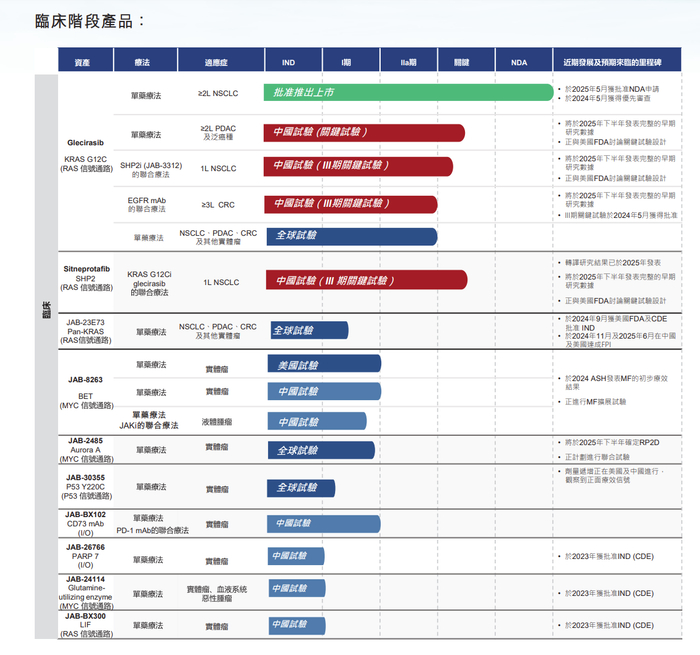
Core Viewpoint - The collaboration between Gakos Pharma and AstraZeneca for the Pan-KRAS inhibitor JAB-23E73 marks a significant milestone in the domestic small molecule oncology drug licensing market, with a total transaction value potentially reaching $19.15 billion [1][2]. Group 1: Collaboration Details - Gakos Pharma has entered into a partnership with AstraZeneca, granting the latter exclusive rights to JAB-23E73 outside of China, while both companies will co-develop and commercialize the product in the Chinese market [1]. - The agreement includes an upfront payment of $100 million and potential milestone payments up to $19.15 billion, along with a share of net sales in markets outside China [1][2]. Group 2: Product and Market Context - JAB-23E73 is an innovative Pan-KRAS inhibitor targeting various KRAS mutation subtypes, currently undergoing Phase I clinical trials in China and the U.S. KRAS mutations account for approximately 23% of all cancer patients [1][2]. - The global market for KRAS inhibitors is still in its early stages, with no approved Pan-KRAS inhibitors to date, presenting a significant commercial opportunity for Gakos Pharma [4][6]. Group 3: Company Background and Financials - Gakos Pharma was established in 2015 and focuses on developing breakthrough drugs in the KRAS and SHP2 inhibitor fields [2]. - The company reported revenues of 45.7 million yuan in the first half of the year, primarily from milestone payments, while incurring a loss of 59 million yuan, indicating a narrowing loss compared to the previous year [8][9]. Group 4: Competitive Landscape - AstraZeneca has a strong track record in oncology, with notable products generating significant sales, such as the EGFR inhibitor Osimertinib, which had global sales of approximately $6.5 billion in 2023 [5]. - The collaboration with Gakos Pharma is part of AstraZeneca's strategy to penetrate the KRAS market, which is considered a "blue ocean" opportunity [5].
医药生物行业跟踪周报:银屑病口服TYK2/IL23双雄并立格局确立,建议关注益方生物,诺诚健华,海思科等-20251222
Soochow Securities· 2025-12-21 23:30
Investment Rating - The report maintains a "Buy" rating for the pharmaceutical and biotechnology sector [1] Core Insights - The oral treatment landscape for psoriasis has established a dual leadership pattern with TYK2 and IL23 inhibitors, highlighting the potential of companies like Yifang Biopharma, Nocankang, and Haishike [1][16] - The A-share pharmaceutical index has shown a year-to-date increase of 14.49%, while the Hang Seng Healthcare Index has surged by 65.28% [4][9] - The report emphasizes the importance of innovative drugs, with a ranking of preferred sub-industries: innovative drugs > research services > CXO > traditional Chinese medicine > medical devices > pharmacies [10][12] Industry Trends - The report notes that the A-share pharmaceutical index has underperformed relative to the CSI 300 index, with a slight decrease of 0.14% this week [4][9] - The report highlights the strong performance of the medical commercial sector (+4.94%) and medical devices (+1.16%) this week, while the chemical pharmaceuticals sector saw a decline of -1.74% [4][9] - The report identifies key companies to watch in the TYK2 space, including Yifang Biopharma and Nocankang, as well as those involved in oral IL23 treatments like Haishike [16][12] Company-Specific Recommendations - Recommended companies in the innovative drug sector include: - Yifang Biopharma - Nocankang - Haishike - Heng Rui Medicine - Bai Jie Shen Zhou - Shi Yao Group - Zai Jian Medicine - Di Zhe Medicine [12][16] - In the CXO and research services sector, recommended companies include: - WuXi AppTec - Hao Yuan Medicine - Aopumai - Kingsray Biotech [12] - For traditional Chinese medicine, companies to focus on include: - Zuo Li Pharmaceutical - Fang Sheng Pharmaceutical - Dong E E Jiao [12] Market Performance - The report indicates that the A-share pharmaceutical index has shown a year-to-date increase of 14.49%, while the Hang Seng Healthcare Index has increased by 65.28% [4][9] - The report also notes that the medical commercial sector has performed well this week, with a gain of 4.94% [4][9]

