
维奈克拉

Search documents
扭亏为盈后百济神州股价却跌跌不休
Guo Ji Jin Rong Bao· 2026-02-27 23:53
Core Viewpoint - Despite achieving profitability in 2025, the stock price of BeiGene has experienced a significant decline, raising concerns among investors about future performance and market competition [1][3]. Financial Performance - In 2025, BeiGene reported total revenue of 38.205 billion yuan, a year-on-year increase of 40.4% - The net profit attributable to shareholders was 1.422 billion yuan, marking a turnaround from a loss of 5.379 billion yuan in the previous year - The adjusted net profit, excluding non-recurring items, was 1.381 billion yuan [1]. Stock Market Reaction - On February 26, 2025, BeiGene's Hong Kong stock price fell sharply, closing down 9.16% at 200 HKD, resulting in a market capitalization drop below 300 billion HKD - The stock continued to decline on February 27, closing at 192.3 HKD, a further decrease of 1.08%, with a market cap of 296.3 billion HKD - The A-share market also saw a decline, with a closing price of 263.44 CNY on February 26, down 5.65%, and a further drop to 257.7 CNY on February 27, down 2.18% [1]. Product Performance and Market Competition - BeiGene's core product, Zebrutinib (Brukinsa), is expected to face challenges in 2026, with sales projections falling short of expectations - In 2025, Zebrutinib generated revenue of 39.3 billion yuan, accounting for 73.5% of the company's total revenue, with a year-on-year growth rate of 48.8% - However, the quarterly growth rate for Zebrutinib in Q4 2025 was only 10.1%, significantly lower than the 20% growth in Q2 [3]. Competitive Landscape - Zebrutinib is facing increased competition, particularly from AstraZeneca's Acalabrutinib and Johnson & Johnson's Ibrutinib - AstraZeneca has recently launched a combination therapy involving Acalabrutinib, which has gained approval in key markets, posing a threat to Zebrutinib's market share [4]. Future Prospects - BeiGene's second major product, Tislelizumab (PD-1 inhibitor), is projected to have a global sales figure of 5.297 billion yuan in 2025, with an 18.6% year-on-year increase - The company plans to submit a new indication application for Tislelizumab in 2026, which could enhance its market position [6]. - Another product, Sotorasib (BCL-2 inhibitor), has received breakthrough therapy designation from the FDA and is expected to be a new growth driver in 2026, potentially offsetting the slowdown in Zebrutinib's growth [7].

亚盛医药董事长杨大俊:以持续创新筑根基,全球布局启新程
Zhong Guo Zheng Quan Bao - Zhong Zheng Wang· 2026-01-24 04:37
Core Insights - The company, Ascentage Pharma, is focused on addressing unmet clinical needs in oncology and has established a strong positioning in global innovation through its deep expertise in apoptosis pathways and related drug development [1][2] Pipeline and Product Development - Ascentage Pharma has developed a rich pipeline of innovative drugs, including the next-generation BTK-targeted protein degrader APG-3288, which is a highlight of its global innovation strategy [2] - The company has successfully launched two major Class 1 new drugs: Nilotinib, approved in 2021 as China's first third-generation BCR-ABL inhibitor, and Lisenglitazone, set to be approved in July 2025 as China's first domestically developed Bcl-2 inhibitor [2][3] - Lisenglitazone is expected to break the nine-year monopoly of AbbVie’s Bcl-2 inhibitor Venetoclax, with a broader approval scope for chronic lymphocytic leukemia (CLL) patients compared to Venetoclax [3] Research and Development Strategy - The company adheres to two core principles: focusing on unmet clinical needs and ensuring true innovation, which have been pivotal in the successful launch of its core products [3] - Ascentage Pharma employs a rigorous pipeline selection process based on three criteria: addressing unmet clinical needs, emphasizing disease biology research, and ensuring drug viability [4] Global Development and Commercialization - The company is conducting over 40 clinical trials globally, including three global Phase III trials for Nilotinib, which have received approval from the FDA and EMA [5][6] - Ascentage Pharma has established significant partnerships, including a major collaboration with Takeda for Nilotinib, which has provided substantial financial benefits and enhanced brand recognition [6] - The company plans to list on NASDAQ in January 2025, becoming the first biopharmaceutical company to achieve dual listing in Hong Kong and the U.S., which is crucial for attracting international investors [7] Financial Performance and Market Strategy - In the first half of 2025, Ascentage Pharma reported revenues of 234 million yuan, with Nilotinib sales reaching 217 million yuan, a 93% increase year-on-year due to its inclusion in the national medical insurance directory [8] - The company has developed a dual approach for commercializing its products, partnering with established firms for initial market entry while building its own commercialization team for long-term growth [8][9] - Following the approval of Lisenglitazone, the company quickly signed agreements with major pharmaceutical distributors to facilitate rapid market entry and patient access [9] Future Outlook - Ascentage Pharma aims to expand its commercialization team significantly, from over 200 to 400 members by 2026, to enhance market presence and patient accessibility [9] - The company plans to accelerate multiple key global Phase III clinical projects and push for the inclusion of Lisenglitazone in the medical insurance directory, continuing its global innovation strategy [9]
亚盛医药董事长杨大俊:以持续创新筑根基 全球布局启新程
Zhong Guo Zheng Quan Bao· 2026-01-23 23:15
Core Insights - The company aims to transform into a biopharmaceutical enterprise by focusing on clinical needs and leveraging its expertise in apoptosis pathways and innovative drug development [2][4] Company Overview - Established in 2009, the company specializes in developing innovative drugs for unmet clinical needs in oncology, with a strong pipeline including key products like APG-3288, a next-generation BTK-targeted protein degrader [2][4] - The company has successfully launched two major Class 1 new drugs: Nairike, approved in 2021, and Lishengtuo, expected to be approved in July 2025 [2][3] Product Highlights - Lishengtuo breaks the nine-year monopoly of AbbVie’s Bcl-2 inhibitor Venetoclax, representing a significant achievement after 21 years of development [3][4] - Nairike addresses limitations of first and second-generation treatments for chronic myeloid leukemia, filling a domestic treatment gap [4][10] Clinical Development - The company is conducting over 40 clinical trials globally, including three global Phase III studies for Nairike and four for Lishengtuo, with significant milestones achieved in regulatory approvals [6][7] - Lishengtuo is the only Bcl-2 inhibitor currently advancing in Phase III trials for high-risk myelodysplastic syndromes (MDS) [7] Global Expansion Strategy - The company emphasizes a dual approach of clinical and business development, with significant partnerships, including a major collaboration with Takeda for Nairike [8][9] - The company plans to list on NASDAQ in January 2025, marking a significant step in its global market strategy [8] Financial Performance - In the first half of 2025, the company reported revenues of 234 million yuan, with Nairike sales reaching 217 million yuan, a 93% increase year-on-year due to its inclusion in the national medical insurance directory [9][10] - The company has over 3 billion yuan in cash reserves, indicating strong financial health [10] Commercialization Strategy - The company has developed a short- and long-term commercialization plan for Nairike, partnering with established firms to enhance market penetration [10][11] - Following the launch of Lishengtuo, the company has signed agreements with major pharmaceutical distributors to expedite its market entry [10] Future Outlook - The company plans to expand its commercial team significantly, aiming for 400 members by 2026, to enhance its market presence in the hematology oncology sector [11] - The focus will remain on advancing key global clinical projects and integrating Lishengtuo into the medical insurance system [11]

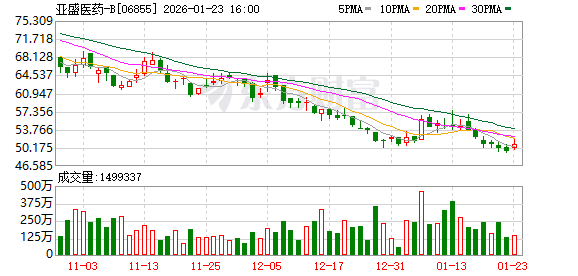
亚盛医药董事长杨大俊: 以持续创新筑根基 全球布局启新程
Zhong Guo Zheng Quan Bao· 2026-01-23 22:30
Core Insights - The company aims to transform into a biopharmaceutical enterprise by focusing on innovative drug development and global commercialization, driven by clinical needs [1][10] - The company has established a strong pipeline of innovative drugs targeting unmet clinical needs, particularly in oncology [2][3] Company Overview - Founded in 2009, the company specializes in developing innovative drugs for oncology and other areas with unmet clinical needs, leveraging expertise in apoptosis pathways and protein degradation [2] - The company has successfully launched two major first-class innovative drugs: Nairike and Lishengtuo, with the former being the first third-generation BCR-ABL inhibitor in China [2][3] Product Highlights - Lishengtuo, as China's first original Bcl-2 inhibitor, is expected to break the monopoly of AbbVie’s Venetoclax, with a projected global sales of $2.6 billion in 2024 and over $3 billion in 2025 [3] - Nairike has been recognized for addressing limitations of previous treatments for chronic myeloid leukemia, with ongoing global clinical trials [3][5] Research and Development Strategy - The company’s R&D pipeline is guided by three core criteria: focusing on unmet clinical needs, emphasizing disease biology, and ensuring drug viability [4] - The company adheres to a principle of "early failure, low-cost failure" to balance R&D investment and output [4] Global Expansion and Clinical Trials - The company is conducting over 40 clinical trials globally, including three pivotal Phase III studies for Nairike and four for Lishengtuo [5][6] - The company has received approvals from the FDA and EMA for several clinical studies, marking significant milestones in its internationalization efforts [5][6] Commercialization Strategy - The company reported a revenue of 234 million yuan in the first half of 2025, with Nairike sales reaching 217 million yuan, a 93% increase year-on-year [8] - The company has established partnerships with major pharmaceutical distributors to enhance the commercialization of Lishengtuo, achieving rapid market penetration [9] Future Outlook - The company plans to expand its commercial team significantly, aiming to enhance market share and patient accessibility for its core products [9] - The transition to a biopharmaceutical company will rely on self-generated sales profits to fund ongoing innovation, distinguishing it from traditional biotech models [10]
以持续创新筑根基 全球布局启新程
Zhong Guo Zheng Quan Bao· 2026-01-23 21:02
Core Insights - The company aims to transform into a biopharmaceutical enterprise by focusing on clinical needs and leveraging global commercialization strategies [1][5] Company Overview - Established in 2009, the company specializes in innovative drugs targeting unmet clinical needs in oncology, with a strong emphasis on apoptosis pathways and protein degradation [1][2] - The company has developed a rich pipeline of high-value innovative drugs, including the new generation BTK-targeted protein degrader APG-3288, which is a highlight of its global innovation strategy [1][2] Product Development - The company has successfully launched two major Class 1 new drugs: Nairike, approved in 2021, and Lishengtuo, expected to be approved in July 2025 [1][2] - Lishengtuo breaks the nine-year monopoly of AbbVie’s Bcl-2 inhibitor Venetoclax, with a broader approval scope for chronic lymphocytic leukemia (CLL) patients compared to its predecessor [2][3] Clinical Trials and Research - The company is conducting over 40 clinical trials globally, including three global Phase III trials for Nairike and four for Lishengtuo, with significant milestones achieved in international regulatory approvals [3][4] - Nairike's global Phase III trials have received approval from both the FDA and EMA, marking a significant step in the company's internationalization efforts [3][4] Commercialization Strategy - The company has established a dual approach to commercialization, focusing on both short-term and long-term strategies for its products [6][7] - For Nairike, a partnership with Sinopharm was formed to leverage existing commercial resources, while Lishengtuo will be marketed independently by the company [6][7] Financial Performance - In the first half of 2025, the company reported revenues of 234 million yuan, with Nairike's sales reaching 217 million yuan, a 93% increase year-on-year due to its inclusion in the national medical insurance directory [5][6] - The company has over 3 billion yuan in cash reserves, indicating strong financial health [5] Future Outlook - The company plans to expand its commercial team significantly, aiming for a team of 400 by 2026, to enhance market penetration and patient accessibility [7] - The transition to a biopharmaceutical company will rely on self-generated sales profits to fund ongoing innovation, distinguishing it from traditional biotech firms that depend on investor funding [7]
又出血液肿瘤新药,百济神州股价微跌,“创新药一哥”能再造爆款?
3 6 Ke· 2026-01-06 12:12
Core Viewpoint - The approval of the BCL-2 inhibitor Sotorakra by BeiGene marks a significant advancement in the treatment of hematologic malignancies, with potential implications for the competitive landscape of BCL-2 inhibitors in the market [1][3]. Company Developments - BeiGene's Sotorakra has received approval for two indications: treatment of adult patients with previously treated chronic lymphocytic leukemia/small lymphocytic lymphoma (CLL/SLL) and mantle cell lymphoma (MCL) [1]. - The approval came just eight months after the new drug application was accepted by the NMPA, indicating a rapid development timeline [1]. - Sotorakra is positioned as a next-generation BCL-2 inhibitor, designed to block the BCL-2 protein that aids tumor cell survival, and has shown strong efficacy and specificity in clinical trials [1][2]. Clinical Trial Results - Early clinical trials of Sotorakra combined with Zebutini have demonstrated unprecedented rates of undetectable minimal residual disease in treatment-naive CLL patients [2]. - Recent data from five clinical studies indicate significant clinical benefits for Sotorakra, suggesting its potential as a cornerstone therapy for various B-cell malignancies [2]. Market Landscape - The global BCL-2 inhibitor market is projected to reach $5.2 billion by 2028, with the Chinese market expected to reach 1.4 billion yuan [5]. - The approval of Sotorakra follows the approval of another BCL-2 inhibitor, Lisatoclax, from Ascentage Pharma, indicating a growing presence of Chinese companies in the BCL-2 space [3][5]. - The competitive landscape is intensifying as multiple Chinese pharmaceutical companies, including Innovent Biologics and Zai Lab, are developing BCL-2 inhibitors [3][4]. Financial Performance - BeiGene's Zebutini has become a significant revenue driver, with global sales reaching $1.3 billion in 2023, marking a 129% year-over-year increase [6]. - In the first half of 2025, BeiGene reported a revenue of 17.52 billion yuan, a 46% increase year-over-year, largely driven by Zebutini sales [6][7]. - The company is under pressure to identify the next blockbuster product as Zebutini's growth may slow down in the future [7].
百济神州20251013
2025-10-13 14:56
Summary of BeiGene Conference Call Company Overview - **Company**: BeiGene - **Industry**: Biotechnology and Pharmaceuticals Key Points and Arguments 1. **Global Commercialization Strategy**: BeiGene adopts a global commercialization strategy, leveraging Chinese patient resources and efficient clinical execution to reduce costs and accelerate global clinical trials, collaborating with international pharmaceutical companies like Novartis and Amgen [2][3] 2. **Core Product - Zanubrutinib**: Zanubrutinib has been approved in over 70 countries globally, becoming the leading BTK inhibitor for new patients in the U.S., surpassing the first-generation BTK inhibitor ibrutinib, significantly driving revenue growth for the company [2][5] 3. **Expansion into Solid Tumors**: BeiGene has made significant progress in the solid tumor field, with upcoming data releases for ADC, ProTech, and CDK, marking the company's transition from a focus on hematological malignancies to a broader oncology treatment approach [2][5] 4. **Clinical Trial Efficiency**: The company utilizes the cost and efficiency advantages of clinical trials in China, with 25% of global clinical patients from China and over 40% from Europe and North America, supporting simultaneous domestic and international product registrations [2][7] 5. **Upcoming Milestones**: Key milestones in the coming years include data readouts for ADC, ProTech, and CDK, as well as the submission of a BCL-2 inhibitor for U.S. market approval, which is expected to enhance the cure rate for frontline lymphoma patients [2][8] 6. **Unique Position in Chinese Innovation Drug Industry**: BeiGene is the only independent innovative drug company with global R&D and commercialization capabilities, making it a rare entity in the A-share and Hong Kong markets [3] 7. **Comprehensive Treatment Landscape**: In hematological malignancies, BeiGene has established a complete treatment portfolio including BTK, CDK, and BCL-2 inhibitors, with zanubrutinib expected to capture over 50% of the U.S. market share for CLL [4][12] 8. **BCL-2 Inhibitor Development**: The company is developing a new generation BCL-2 inhibitor, which is expected to achieve significant sales, potentially reaching $3 to $5 billion, and is currently undergoing global Phase III clinical trials [14][22] 9. **CDK Inhibitor Market**: BeiGene's CDK4/6 inhibitors are crucial in breast cancer treatment, with the global market exceeding $13 billion and projected to reach $16 to $18 billion [17][21] 10. **Broad Oncology Pipeline**: The company is actively developing treatments for various solid tumors, including lung and gastrointestinal cancers, with multiple products in clinical stages [20] Other Important but Overlooked Content 1. **Zanubrutinib's Competitive Edge**: Zanubrutinib's success is attributed to its superior product profile, showing better progression-free survival (PFS) and safety compared to ibrutinib, and being included in treatment guidelines [11][12] 2. **Impact of IRA Legislation**: The IRA legislation may have long-term effects on drug pricing, but currently, zanubrutinib has not faced price pressure, and its annual price has increased [13] 3. **Market Positioning**: BeiGene's international management team and shareholder structure, including significant overseas funds, support its global operations and strategic positioning [6][22] This summary encapsulates the critical insights from the conference call, highlighting BeiGene's strategic initiatives, product developments, and market positioning within the biotechnology industry.

中国银河证券:创新靶向疗法驱动 血液瘤慢病化趋势显现
Zhi Tong Cai Jing· 2025-08-21 06:11
Group 1 - The complexity of hematological tumors presents numerous investment opportunities in various subtypes of treatment [1] - The market for hematological tumors is expanding due to innovative therapies, with significant product launches expected [1] - The number of long-term patients is increasing, with approximately 4 million patients globally having survived five years or more as of 2022, which is three times the number of new patients [1] Group 2 - Future development directions for hematological tumor treatment include improving efficacy, reducing recurrence, and optimizing administration [2] - Acute leukemias like AML and ALL primarily use chemotherapy or targeted combination therapies to enhance survival rates [2] - CAR-T therapy shows high remission rates for aggressive lymphomas and multiple myeloma, providing more treatment options for patients [2] Group 3 - The competition in the targeted drug market for hematological tumors has entered a new phase, with a focus on technological iterations and exploration of new targets [3] - In the BTK field, new products are emerging to compete in the post-resistance market, with Zebutinib outperforming Ibrutinib [3] - The BCL-2 domain is seeing advancements with differentiated designs and optimized dosing strategies to gain competitive advantages [3]

中国银河给予医药行业推荐评级:创新靶向疗法驱动,血液瘤慢病化趋势显现
Mei Ri Jing Ji Xin Wen· 2025-08-21 02:58
Core Viewpoint - The report from China Galaxy recommends the pharmaceutical industry, highlighting the significant growth potential in the hematological oncology market driven by innovative therapies and the increasing number of long-term patients [1] Group 1: Market Dynamics - The hematological oncology market is expanding due to advancements in precision diagnostics, prognostic stratification, immunotherapy, and targeted therapies, leading to improved survival rates and quality of life for patients [1] - According to WHO, the number of long-term patients with hematological malignancies reached approximately 4 million in 2022, which is three times the number of new patients, indicating a growing market for treatments [1] - The market is expected to see blockbuster products, with global sales of Daratumumab exceeding $10 billion in 2024, and both Ibrutinib and Lenalidomide surpassing $5 billion in sales [1] Group 2: Treatment Trends - Future treatment directions for hematological malignancies focus on improving efficacy, reducing relapse rates, and optimizing administration methods, particularly in acute leukemias and chronic leukemias [2] - In chronic myeloid leukemia (CML), the use of BCR-ABL TKI therapy is being explored to overcome resistance through technological iterations and new targets [2] - CAR-T therapy is providing more treatment options for patients with high relapse rates, particularly in aggressive lymphoma and multiple myeloma [2] Group 3: Competitive Landscape - The targeted drug market for hematological malignancies is entering a new competitive phase, with innovations in BTK inhibitors and BCL-2 inhibitors leading the way [3] - Zebutinib has outperformed Ibrutinib, establishing itself as a leading product in the BTK space, while the market for post-resistance treatments is becoming increasingly competitive [3] - In the BCL-2 space, advancements in dosing and differentiated designs are giving products like Lisocabtagene Maraleucel a competitive edge [3] Group 4: Investment Opportunities - The complexity of hematological malignancies presents numerous investment opportunities, particularly as treatment approaches evolve towards chronic disease management [4] - Companies to watch include BeiGene, which is covering the CLL/SLL indications with a comprehensive product matrix, and Innovent Biologics, which is building a diversified product portfolio centered around Orelabrutinib [4] - Ascentage Pharma is focusing on third-generation BCR-ABL inhibitors and BCL-2 inhibitors to create differentiated competitive advantages [4]
血液瘤药物行业深度报告:创新靶向疗法驱动,血液瘤慢病化趋势显现
Yin He Zheng Quan· 2025-08-21 02:42
Investment Rating - The report maintains a "Buy" rating for the blood cancer drug industry [3][6]. Core Insights - The blood cancer market is expanding due to innovative therapies, with significant advancements in precision diagnosis, prognosis stratification, and targeted therapies such as CAR-T and TCE, leading to improved patient survival and quality of life [5][8]. - The number of patients with blood cancer who have survived for five years or more is approximately 4 million globally, which is three times the number of new patients, indicating a growing market for long-term treatments [5][13]. - The high cost of blood cancer drugs and the emergence of blockbuster products are driving market growth, with several drugs expected to exceed $10 billion in sales by 2024 [5][17]. Summary by Sections 1. Blood Cancer Market Expansion - The proportion of new blood cancer patients is less than 10% of all new cancer cases, with a steady increase in incidence rates [8]. - Blood cancer patients have a long survival period, resulting in a large population of existing patients [13]. - The high cost of blood cancer treatments contributes to the frequent emergence of blockbuster drugs [17]. 2. Clinical Diagnosis and Treatment of Blood Cancer - Blood cancers are classified based on cell origin, differentiation, and affected sites, including leukemia, lymphoma, and multiple myeloma [19][20]. - Treatment for acute leukemia primarily involves chemotherapy or targeted combination therapies to improve survival rates [24]. - Lymphoma treatment varies by subtype, with Rituximab being a cornerstone therapy [23]. - Multiple myeloma treatment focuses on CD38 monoclonal antibodies, with ongoing exploration of solutions for relapsed and refractory cases [23]. 3. Analysis of Popular Targets and Therapies - The BTK field is seeing intense competition, with new products emerging to address resistance issues [5]. - The BCL-2 area is advancing with differentiated designs and optimized dosing strategies [5]. - The BCR-ABL TKI domain is witnessing the introduction of third-generation inhibitors that show superior efficacy [5]. 4. Company Profiles - BeiGene is focusing on a comprehensive product matrix to cover CLL/SLL indications [5]. - Innovent Biologics is building a diversified product portfolio centered around Oubreti [5]. - Ascentage Pharma is developing third-generation BCR-ABL inhibitors and BCL-2 inhibitors to create competitive advantages [5]. - Diligent Pharma is innovating with a globally first high-selectivity JAK1 inhibitor and a dual-target LYN/BTK inhibitor [5]. 5. Investment Recommendations - The blood cancer sector presents numerous investment opportunities due to its complexity and the variety of treatment subfields [5]. - The long survival cycle of blood cancer patients and the high costs of drug treatments indicate a significant market potential [5].

